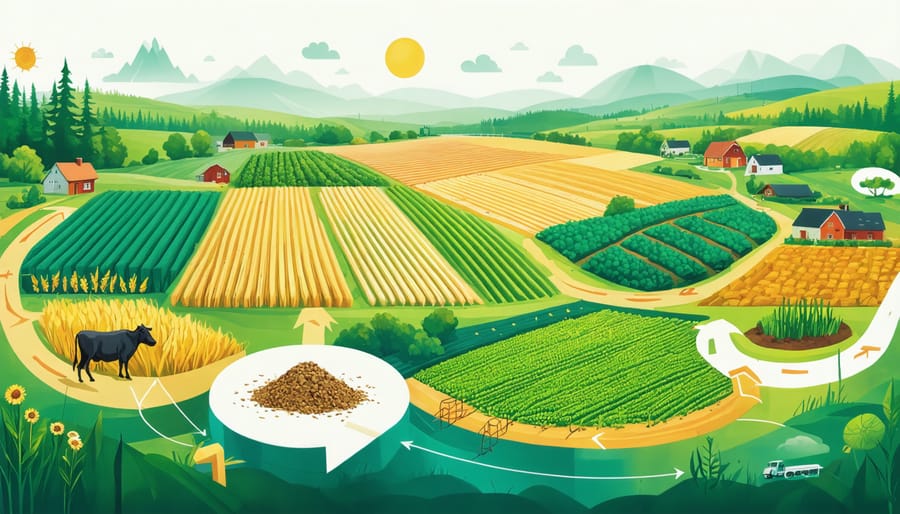
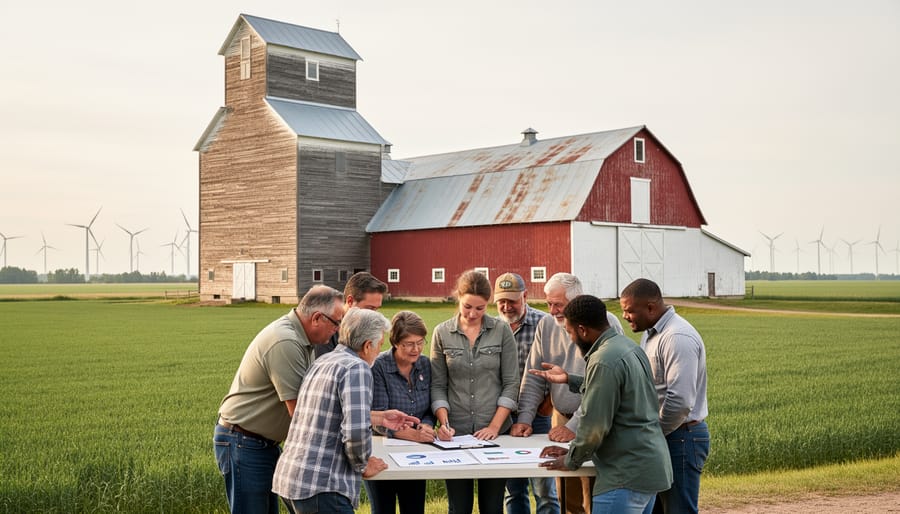
The seven cooperative principles are a global framework that guides how cooperatives operate democratically, distribute benefits equitably, and reinforce community resilience. For rural producer cooperatives across Canada, these principles aren’t abstract ideals. They’re the operating rules that determine how grain elevators share profits, how dairy co-ops set milk prices, and how equipment-sharing networks make decisions that affect every member’s bottom line.
Established by the International Cooperative Alliance in 1995 and rooted in the 1844 Rochdale pioneers’ vision, these principles have proven particularly valuable for agricultural producers. They offer a tested alternative to conventional corporate structures, one where farmers retain control over processing, marketing, and supply chains instead of surrendering leverage to distant shareholders.
Canadian farmers considering or already participating in cooperative structures face practical questions: How does one-member-one-vote work when operations scale to hundreds of members? What does “member economic participation” actually mean for your share capital and patronage dividends? How can a cooperative maintain its commitment to community while competing with multinational agribusinesses?
This article breaks down each of the seven principles with a focus on their real-world application in rural Alberta and similar agricultural regions. You’ll see how these guidelines translate into governance structures, financial models, and day-to-day operations. Through case studies from Alberta cooperatives, expert perspectives from agricultural economists, and answers to the questions farmers ask most often, you’ll gain a clear understanding of how these principles create sustainable livelihoods and stronger rural communities in 2026.
What the 7 Co-op Principles Mean for Rural Producers
The seven cooperative principles aren’t just corporate bylaws, they’re the DNA of every successful producer cooperative in Canada. First articulated in 1844 by the Rochdale Society of Equitable Pioneers in England and refined over generations, the ICA established seven principles that now guide over three million cooperatives serving more than one billion members worldwide. For Canadian farmers, these aren’t abstract ideals. They’re the practical guardrails that keep your grain elevator accountable to you, ensure your voice counts equally whether you farm 160 acres or 16,000, and guarantee that profits flow back to the people doing the actual work.
What makes these principles different from typical business models is their focus on people over profit maximization. Investor-owned corporations exist to generate returns for shareholders; cooperatives exist to serve member needs. That fundamental shift changes everything, from how decisions get made to where surplus revenue goes at year-end.
- Voluntary and Open Membership
- Anyone who can use the co-op’s services and accepts membership responsibilities can join, regardless of farm size, background, or social status.
- Democratic Member Control
- One member, one vote, your 200-acre mixed operation has the same say as your neighbour’s 5,000-acre grain farm.
- Member Economic Participation
- Members contribute fairly to capital, control how surplus is used, and receive returns based on how much they use the co-op, not how much they invested.
- Autonomy and Independence
- Co-ops remain self-governing organizations controlled by their members, even when partnering with outside entities.
- Education, Training, and Information
- Co-ops invest in teaching members, staff, and the public about cooperative principles and sustainable farming practices.
- Cooperation Among Cooperatives
- Co-ops strengthen the movement by working together through local, regional, national, and international structures.
- Concern for Community
- Co-ops work for sustainable development of their communities through policies approved by members, supporting the rural fabric beyond just business transactions.
In Alberta’s farming communities, these principles translate to concrete outcomes. They’re why your local feed co-op stocks the specialized inputs you need even when margins are tight, why patronage dividends land in your account after harvest, and why board meetings focus on long-term soil health instead of quarterly earnings. They create a business structure designed to weather price volatility, climate uncertainty, and market consolidation, built for the long haul, not the quick exit.
How the Principles Work in Practice
Voluntary and Open Membership
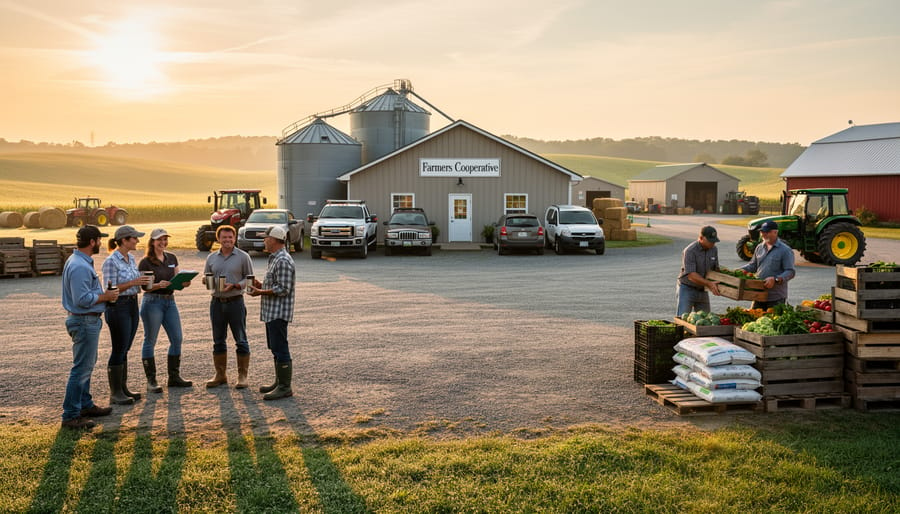
The first cooperative principle ensures that any farmer who can genuinely use a co-op’s services, and accepts the responsibilities that come with membership, can join, regardless of their operation’s size, background, or social standing. Agricultural cooperatives in Alberta do not screen applicants based on gender, ethnicity, political views, or farm scale. A 40-hectare organic vegetable grower and a 2,000-hectare grain operation have equal right to membership in a marketing co-op serving both.
In practice, “voluntary” means no one is forced to join or prevented from leaving. “Open” means the door stays unlocked for new members as the co-op’s capacity allows. Most rural producer co-ops set minimal practical requirements: proof of active farming, agreement to deliver products or purchase supplies according to co-op rules, and payment of a membership share, typically a modest capital contribution that is refundable upon departure.
This openness creates immediate benefits. Diverse membership brings varied expertise, broader market intelligence, and resilience when one commodity or region faces hardship. A grain co-op with members across different soil zones and crops spreads risk and strengthens collective bargaining power. Inclusion also ensures the co-op reflects the community it serves, making decisions that work for the full spectrum of local agriculture rather than a narrow subset.
Democratic Member Control

In a traditional corporation, voting power follows investment, the more shares you own, the more say you have. Agricultural cooperatives flip this model: under the one member, one vote principle, every farmer gets equal voice at the table, whether they operate 50 acres or 5,000. This democratic structure prevents wealth concentration from dictating cooperative strategy and ensures decisions reflect the collective needs of the membership, not the priorities of the largest producers.
In practice, this plays out through annual general meetings where members elect the board of directors, approve financial statements, and vote on major policy changes like capital investment or sustainability commitments. A grain co-op in central Alberta, for instance, might see small-scale organic farmers and large conventional operations debating climate adaptation measures on equal footing. The board typically represents diverse farm sizes and production methods, chosen through elections that give every member the same ballot power.
Between annual meetings, many cooperatives maintain ongoing participation through regional advisory committees, commodity-specific forums, and online feedback channels. This structure keeps decision-making grounded in farm-level realities rather than distant boardroom assumptions. The result is slower consensus-building than corporate hierarchies allow, but decisions tend to stick because members shaped them directly.
Member Economic Participation
Member Economic Participation means farmers contribute fairly to their co-op’s capital and share in the financial results based on how much they use the cooperative, not how much they invested. When you join an agricultural co-op in Alberta, you typically purchase membership shares, equity that builds the cooperative’s working capital. Unlike investor-owned businesses where returns follow investment size, co-ops return surplus earnings as patronage dividends proportional to your actual use of services or volume of product marketed through the co-op.
Most Alberta grain marketing co-ops, for instance, calculate patronage on bushels delivered. If you ship 10,000 bushels and your neighbour ships 5,000, you receive twice the dividend regardless of identical share purchases. This structure rewards active participation and aligns benefits with real farm activity.
Members also vote on surplus allocation: how much gets distributed as cash patronage, how much stays as retained earnings for infrastructure upgrades, and what portion funds community initiatives or member education programs. Retained patronage, earnings kept in the co-op and credited to individual member accounts, strengthens long-term financial stability while building your equity stake over time.
This principle ensures smaller operations aren’t dominated by larger investors, maintaining the democratic character that makes cooperatives distinctly farmer-controlled.
Autonomy and Independence
Autonomy and independence means rural producer cooperatives control their own future, even when working with outside partners. The fourth cooperative principle ensures members maintain decision-making authority over their organization’s direction, policies, and operations. No external investor, government agency, or corporate partner can dictate how the co-op serves its farmer-members.
This principle becomes critical when cooperatives accept grants, enter supply agreements, or form partnerships. Alberta grain co-ops, for example, might secure government funding for infrastructure upgrades or negotiate contracts with multinational grain buyers. The principle requires that these arrangements never compromise member governance. Funding cannot come with strings that shift control away from the membership, and commercial partnerships must respect the co-op’s autonomy to set quality standards, pricing strategies, and service priorities.
The balance is practical, not ideological. Cooperatives need capital, technical expertise, and market access that external relationships provide. What matters is preserving the members’ right to accept or reject these arrangements through democratic vote, ensuring partnerships serve farmer interests rather than external agendas. Strong governance policies, transparent agreement reviews, and member education help cooperatives evaluate opportunities without surrendering the self-determination that makes them cooperatives in the first place.
Education, Training, and Information
The fifth cooperative principle commits co-ops to ongoing education for members, elected representatives, managers, and employees, along with informing the general public about the nature and benefits of cooperation.
In Alberta’s agricultural co-ops, this translates into practical programming that keeps farmers current on both cooperative management and farming innovation. Many co-ops run winter workshop series covering topics like regenerative grazing techniques, financial literacy for farm businesses, and understanding co-op financial statements. Board development programs prepare member-directors for governance responsibilities they might not encounter on their own operations.
Staff training ensures employees can serve members effectively, whether that means agronomists staying current on integrated pest management or warehouse staff learning new safety protocols. This investment in people strengthens service quality across the membership.
Knowledge-sharing takes multiple forms: field days where members showcase successful practices on their own farms, quarterly newsletters explaining co-op performance and market conditions, and informal peer networks that help new farmers learn from experienced ones. Some co-ops partner with agricultural colleges or extension services to deliver research-backed information directly to their communities.
This principle recognizes that informed members make better decisions, both for their individual operations and for the cooperative as a whole. It also builds public understanding of how cooperatives contribute to rural economic resilience and food security.
Cooperation Among Cooperatives
Agricultural cooperatives don’t operate in isolation. The sixth principle recognizes that co-ops become stronger when they work together, creating networks that amplify individual members’ voices and resources. In Canada’s agricultural sector, this collaboration takes several practical forms.
Regional marketing alliances allow smaller co-ops to negotiate better terms with buyers and access markets they couldn’t reach alone. Grain cooperatives across the Prairies, for instance, often coordinate logistics and storage capacity to reduce costs and improve efficiency for all members.
Shared service arrangements are common in Alberta, where equipment co-ops pool expensive machinery purchases or processing co-ops share quality testing laboratories. This reduces capital requirements while maintaining high standards across multiple operations.
Advocacy coalitions give farming cooperatives collective influence on agricultural policy. The Canadian Co-operative Association and provincial federations coordinate efforts on issues like supply management, trade agreements, and climate adaptation funding, amplifying the concerns of thousands of producer-members through unified representation.
Knowledge exchange networks connect co-ops facing similar challenges. A dairy processing co-op in Ontario might share waste reduction strategies with counterparts in Quebec, accelerating sustainable practice adoption across the sector without each organization solving problems from scratch.
Concern for Community
The seventh principle, Concern for Community, extends a cooperative’s mission beyond the immediate interests of its members to the broader health of the region it serves. For rural producer co-ops in Alberta, this means channeling resources, expertise, and infrastructure toward goals that benefit entire communities, whether members or not.
Agricultural co-ops routinely invest in public goods that individual farms cannot tackle alone. A grain marketing co-op might fund upgrades to rural roads or rail infrastructure that improve logistics for everyone in the area. A dairy processing co-op may sponsor community recreation facilities or volunteer fire departments, recognizing that vibrant towns attract the next generation of farmers. These contributions stabilize rural economies by keeping services and amenities local rather than letting them erode.
Environmental stewardship is another expression of this principle. Co-ops frequently lead watershed protection projects, regenerative agriculture pilot programs, or pollinator habitat restoration efforts that extend far beyond their members’ field boundaries. They understand that soil health, water quality, and biodiversity support the long-term viability of the entire farming region.
Food security initiatives also fall under this principle. Co-ops donate surplus production to food banks, support farm-to-school programs, or create affordable access points for fresh local food in underserved areas. They recognize that healthy communities sustain healthy agricultural economies.
By anchoring this principle in their governance, rural producer co-ops position themselves as stewards of place, not just economic entities, building social capital and resilience that outlast any single harvest or market cycle.
Types of Rural Producer Co-ops Using These Principles
The seven cooperative principles guide a diverse range of agricultural cooperatives across Canada, each applying these values to meet specific producer needs. Understanding the different types helps farmers identify which cooperative model best serves their operation while maintaining the democratic, member-focused structure that defines all 7 producer cooperatives in the sector.
- Marketing cooperatives pool members’ grain, livestock, or specialty crops to negotiate better prices and access larger markets while maintaining farmer ownership throughout the supply chain.
- Supply cooperatives provide bulk purchasing power for inputs like seed, fertilizer, fuel, and equipment, reducing costs through collective buying and distributing savings as patronage dividends.
- Processing cooperatives transform raw agricultural products into value-added goods, from dairy processing plants to specialty crop facilities, keeping more profit in farmers’ hands.
- Multi-purpose cooperatives combine marketing, supply, and sometimes processing functions under one membership structure, offering comprehensive support for diverse farm operations.
Marketing co-ops remain particularly common in Alberta’s grain sector, where they help producers navigate volatile commodity markets and transportation challenges. Supply co-ops serve farms of all sizes, from small organic operations to larger conventional enterprises, proving that the one-member-one-vote principle works regardless of purchase volume.
Processing cooperatives demonstrate exceptional value-added success when members collaborate on product development, quality standards, and market positioning. Alberta’s pulse and hemp processing cooperatives exemplify this model, turning commodity crops into branded products while maintaining farmer control over pricing and sustainability practices. Each cooperative type adapts the seven principles to its specific context, but all share the fundamental commitment to member ownership, democratic governance, and community benefit that distinguishes cooperatives from investor-owned businesses.
Where These Principles Support Sustainable Livelihoods

The seven cooperative principles work together as a system that transforms how rural producers build long-term economic security and environmental stewardship. When democratic control combines with member economic participation, farmers gain negotiating power that secures fair prices for their products while sharing the costs and risks of sustainable transitions. Alberta grain marketing co-ops demonstrate this well: members collectively invest in modern storage facilities and testing equipment, then share patronage dividends based on volume marketed rather than capital contributed. This structure allows smaller operations to access the same market premiums and risk management tools as larger farms.
Environmental benefits emerge when the education principle meets cooperation among cooperatives. Alberta livestock co-ops have organized joint workshops on rotational grazing and soil health, enabling members to adopt climate-smart practices with shared technical support and reduced individual learning costs. When multiple co-ops collaborate on conservation projects, they achieve landscape-scale carbon reduction and biodiversity improvements no single farm could accomplish alone. Member-driven governance ensures these environmental initiatives align with practical farm realities rather than external mandates.
Social resilience grows from the concern for community principle combined with open membership. Red Deer area processing co-ops invest patronage returns in local infrastructure, from community internet projects supported by rural digital funding to renewable energy installations through partnerships with rural electric co-ops. These investments strengthen the entire region’s economic base while creating pathways for younger farmers to enter agriculture with cooperative support networks already in place.
The autonomy principle protects this integrated approach from short-term pressures. When co-ops maintain member control while accessing government sustainability programs or corporate partnerships, they can pursue multi-generational strategies that balance profitability with land stewardship and community vitality. Diversified vegetable co-ops in southern Alberta show this balance clearly, using retained earnings to fund both climate adaptation infrastructure and member training programs that build knowledge alongside physical assets.
Common Questions About Co-op Principles in Practice
Farmers considering cooperative membership often wonder how the seven principles translate into day-to-day operations. Here are answers to questions we hear most frequently from Alberta producers.
How do co-ops balance profit and principle?
Co-ops generate surplus through efficient operations but distribute it based on member use rather than investment size, ensuring profits serve members equitably. Boards regularly review both financial performance and adherence to cooperative values when making strategic decisions.
Can large operations and small farms truly have equal voice?
The one-member-one-vote principle ensures equal voting power regardless of farm size, though larger operations naturally contribute more volume and capital. Many Alberta co-ops address this by structuring patronage dividends proportionally while maintaining democratic governance through equal voting rights.
How do principles ensure environmental accountability?
The “concern for community” principle obligates co-ops to consider environmental impact beyond member interests, while “education, training, and information” supports collective adoption of sustainable practices. Member control means farmers decide environmental priorities together rather than having them imposed externally.
What happens when members disagree on sustainability priorities?
Democratic governance means sustainability decisions go through member discussion, committee review, and votes at annual general meetings. Co-ops often start with voluntary programs that demonstrate benefits before requiring broader participation, building consensus gradually.
These questions reflect real concerns producers face when evaluating whether cooperative structures align with their farm’s needs. The principles provide a framework, but successful co-ops adapt them to their specific membership and regional context. Most Alberta agricultural co-ops hold information sessions or mentorship programs where prospective members can see how principles work in practice before committing. The transparency required by democratic governance means current members can explain both successes and challenges openly, helping newcomers make informed decisions about whether cooperative membership fits their operation’s goals.

The seven cooperative principles aren’t abstract ideals, they’re working tools that Alberta’s rural producers use daily to build resilient farms and thriving communities. When farmers embrace voluntary membership, democratic control, and shared economic participation, they create businesses that answer to their needs, not distant shareholders. When they commit to education, inter-cooperative collaboration, and community concern, they strengthen the entire agricultural sector.
These principles have guided Canadian cooperatives through decades of market volatility, climate challenges, and rural depopulation. They work because they align economic success with environmental stewardship and social responsibility. A grain co-op that reinvests patronage dividends in precision agriculture technology benefits individual members while reducing collective environmental impact. A processing co-op that shares knowledge about regenerative practices lifts the whole region.
If you’re farming in Alberta and feel the squeeze of consolidation, volatile markets, or isolation, cooperative membership offers a proven alternative. You don’t have to build sustainability alone. The principles provide the framework; your fellow producers provide the collective power. Together, you can create the agricultural future your community needs, one rooted in shared ownership, mutual benefit, and genuine stewardship of the land.