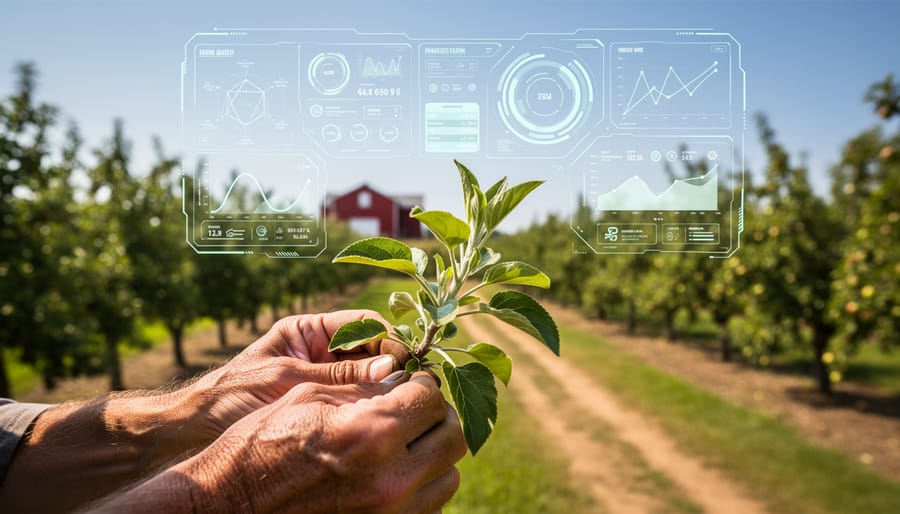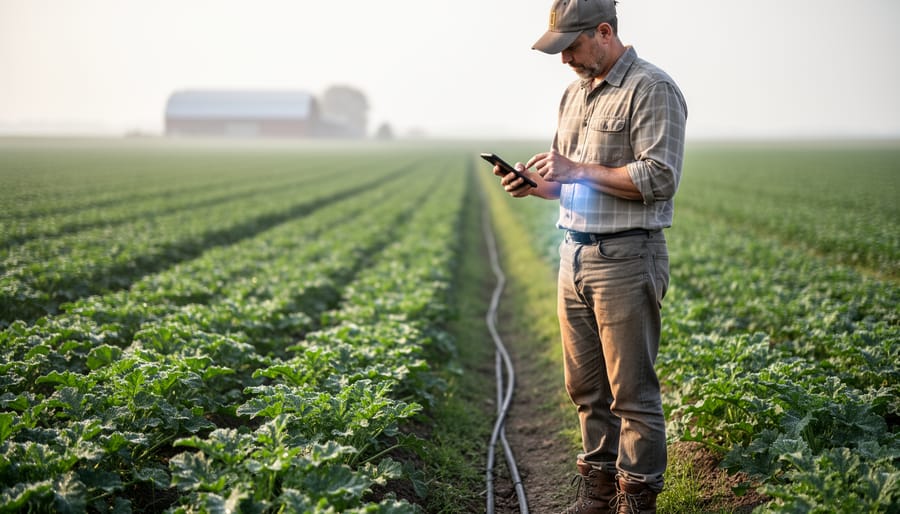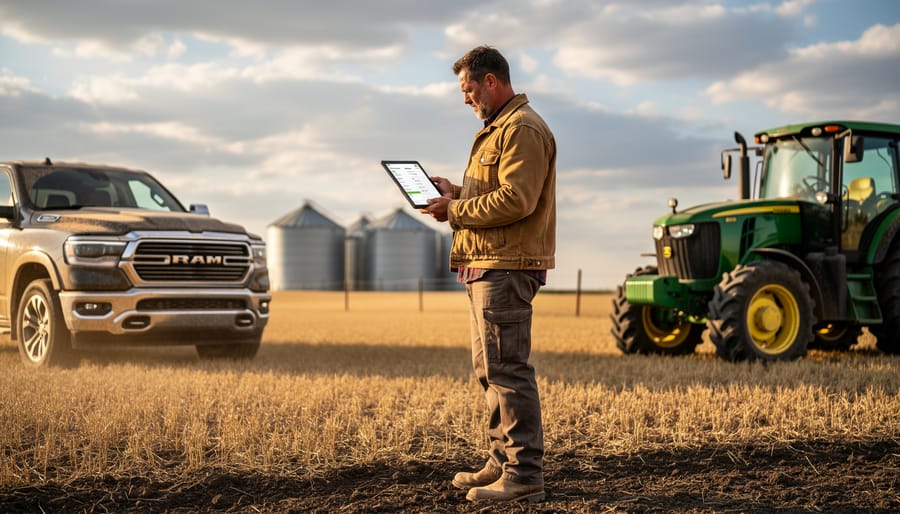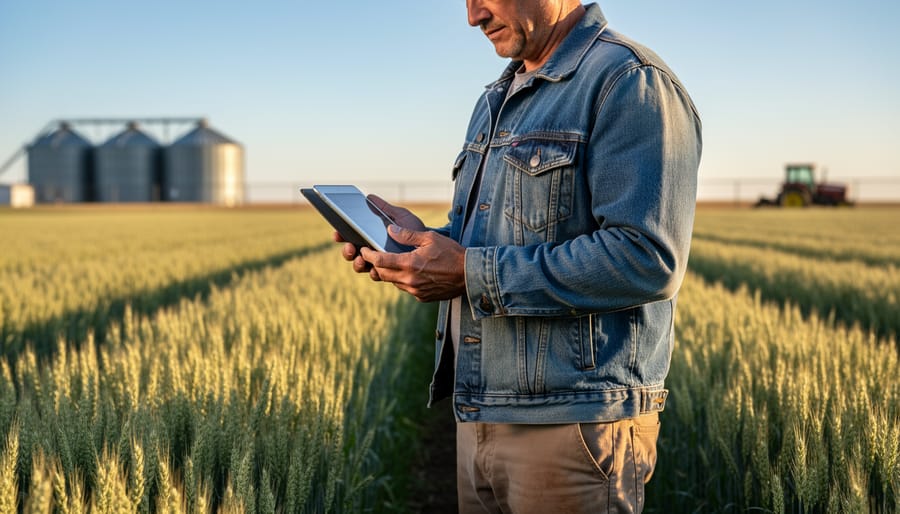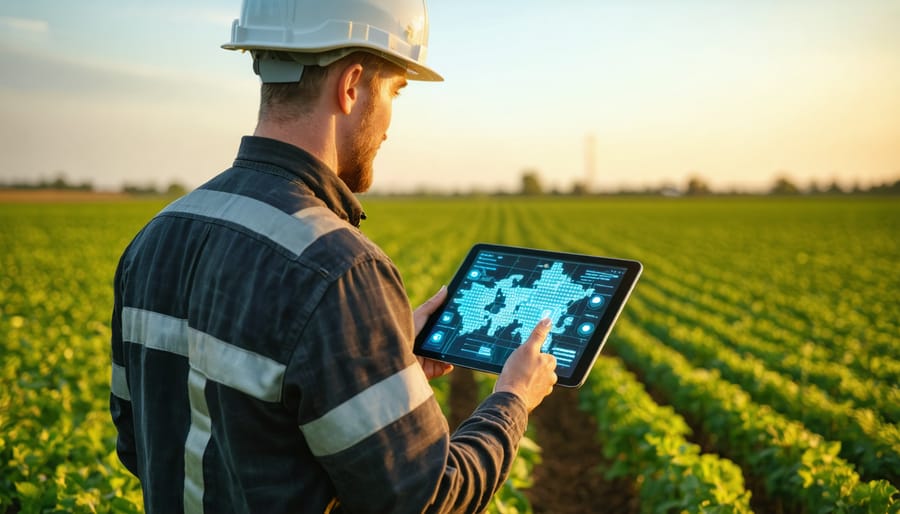
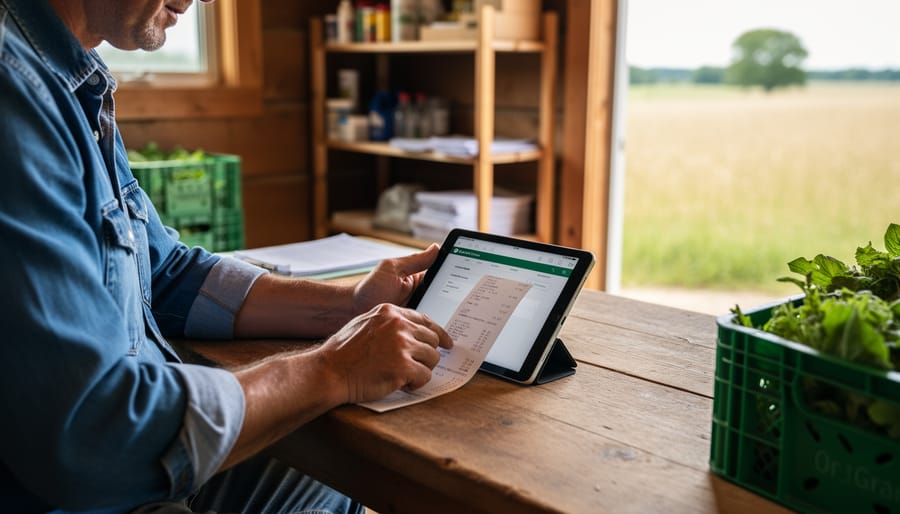
Track your certification paperwork digitally by scanning inspection reports, input receipts, and field logs into cloud-based platforms that automatically organize documents by category and deadline—eliminating the stress of lost paperwork during audit season. Set up automated reminders for critical compliance tasks like buffer zone inspections and organic input renewals, ensuring you never miss a regulatory requirement that could jeopardize your certification status.
Canadian organic farmers are discovering that digital organization platforms transform certification from an overwhelming administrative burden into a manageable routine. The traditional filing cabinet approach—with paper records scattered across the kitchen table, truck cab, and barn office—creates unnecessary risk when CFIA or certification body auditors arrive. Digital solutions built specifically for organic farming practices now offer Alberta farmers centralized record-keeping that meets Canadian Organic Standards while saving 15-20 hours monthly on administrative work.
Consider how Medicine Hat vegetable grower Sarah Chen approached her third-year recertification: instead of recreating her Organic System Plan from fragmented notes, she accessed three years of digitized field histories, input purchases, and harvest data in minutes. Her certification body completed the review in half the usual time because every required document appeared organized and accessible.
The shift to digital organization is not about abandoning farming for screens—it is about reclaiming time for actual farm work while building audit-ready compliance systems that protect your organic integrity and market access.
The Traditional Organic Certification Burden
For Canadian farmers pursuing organic certification, the traditional paper-based system can feel overwhelming, particularly during peak growing seasons when your focus should be in the field. The conventional certification process typically involves managing hundreds of pages of documentation annually, from field records and input receipts to harvest logs and sales documentation. Many Alberta farmers report spending 40-60 hours per year just on certification paperwork alone—time that could be spent on farm operations or family.
The paperwork burden extends beyond simple record-keeping. You need to maintain detailed logs of every input applied, track buffer zones between conventional and organic fields, document your crop rotation plans, and keep meticulous records of livestock feed sources and veterinary treatments. Miss one receipt or forget to log a single field activity, and you risk compliance issues during your annual inspection.
Compliance tracking becomes increasingly complex as your operation grows. Sarah Chen, an organic grain farmer near Lethbridge, describes her pre-digital experience: “I had filing cabinets full of paper records. When audit season approached, I’d spend entire weekends cross-referencing documents, hoping I hadn’t missed anything critical. The stress was exhausting.”
Audit preparation adds another layer of anxiety. Certification bodies require you to present organized, readily accessible records that demonstrate full compliance with Canadian Organic Standards. Scrambling to locate specific documents from months earlier, verifying that all required signatures are in place, and ensuring calculations are accurate creates significant mental strain. For smaller operations without dedicated administrative staff, this burden can become a genuine barrier to maintaining certification or discouraging new farmers from pursuing organic production altogether.
What Are Digital Organic Certification Platforms?
Key Features That Matter to Your Farm
When evaluating digital farm management tools for organic certification, focus on these core capabilities that directly impact your farm’s compliance success.
Document management stands as the foundation. Your platform should centralize all certification records—from field maps and crop rotation plans to input receipts and harvest logs. Look for systems that let you upload photos directly from your phone when you’re documenting compost applications or weed management practices. Alberta organic farmer Sarah Chen shared in a recent interview that having all her documents in one searchable location cut her audit preparation time from three days to just four hours.
Real-time compliance tracking transforms how you stay certified. The right platform monitors your organic status continuously, flagging potential issues before they become problems. For example, it should alert you if buffer zone requirements aren’t met or if your three-year transition period documentation has gaps. This proactive approach means fewer surprises during annual inspections.
Automated reporting saves significant time during busy seasons. Quality platforms generate required reports for certification bodies with a few clicks, pulling data from your daily entries. You should be able to produce organic system plans, field history reports, and transaction logs without manual spreadsheet work.
Audit preparation tools streamline the most stressful part of certification. Look for features that create audit-ready document packages, generate timeline views of your farm activities, and provide checklists ensuring nothing gets overlooked during inspector visits.
How These Systems Actually Work
Getting started with digital certification platforms is more straightforward than you might think. Here’s how they typically work in your day-to-day farming operations.
You’ll begin by creating your farm profile, entering basic information about your operation—hectares under cultivation, crops grown, and livestock numbers if applicable. Most platforms guide you through this setup with simple prompts, similar to filling out an online banking form.
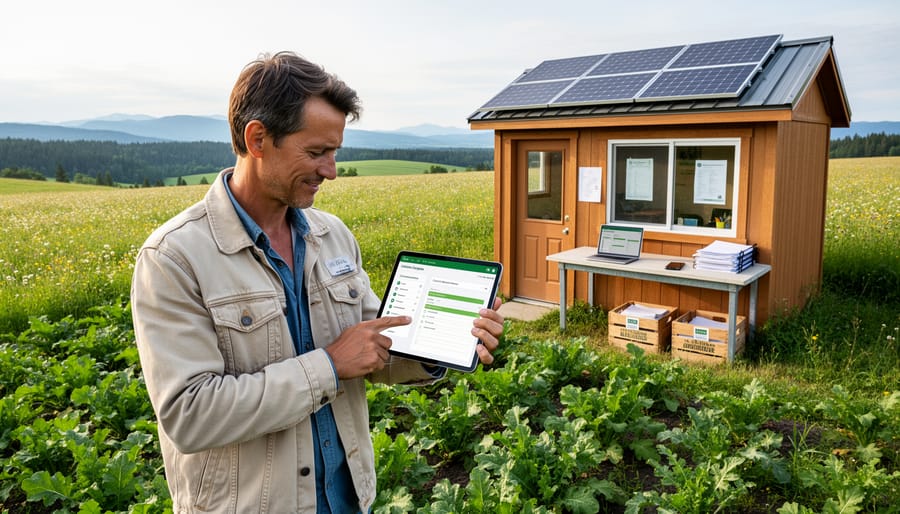
Daily and weekly tasks become part of your routine. When you apply compost to your fields, you log it immediately using your smartphone or tablet. Record the date, quantity in kilograms or litres, the field location, and the product used. The same goes for pest management activities, equipment cleaning, and harvest records. Many farmers find it easiest to log activities right from the field, taking just two to three minutes per entry.
The platform automatically organizes your records into categories your certifier needs. When you purchase organic seeds or approved inputs, you can photograph receipts and upload them directly. The system stores these documents in the correct folders, eliminating the shoebox of paper receipts many of us are familiar with.
As certification inspection approaches, the platform generates reports summarizing your entire year of activities. Your inspector can review everything digitally, often reducing on-farm inspection time. For annual renewal, you’ll update any changes to your operation and confirm your records are complete. The system flags any missing documentation, so you’re never caught off guard during the certification process.
Real Benefits for Canadian Organic Farmers
Time and Cost Savings You Can Measure
Canadian organic farmers using digital organization platforms report measurable time savings that directly impact their bottom line. On average, farms switching from paper-based systems save 8-12 hours per week on record-keeping tasks alone. That translates to roughly 50 hours monthly that can be redirected to actual farming operations.
Consider the numbers: A 200-acre organic vegetable operation in southern Alberta reduced administrative time from 15 hours to just 4 hours weekly after adopting a digital system. Their certification preparation, which previously took 40 hours over two weeks, now requires only 12 hours. The cost savings? Approximately $3,200 annually in reduced administrative labour, plus another $800 saved on printing, filing supplies, and physical storage.
For livestock operations, the metrics are equally compelling. Digital field management cuts input tracking time by 60-70%, while automated report generation reduces certification prep by half. One mixed grain and cattle farm near Red Deer documented saving $2,400 yearly just by eliminating duplicate data entry and reducing errors that required correction.
The efficiency gains extend beyond hours saved. Farms report 40% faster response times to auditor requests, 85% reduction in missing documentation issues, and virtually eliminated time spent searching for records. These improvements mean fewer delays during certification reviews and reduced stress during audit season. As digital tools revolutionizing farms become more accessible, even smaller operations find the investment pays for itself within the first year through measurable time and cost reductions.
Better Compliance and Peace of Mind
Maintaining organic certification requires meticulous record-keeping and adherence to strict standards. Digital organization platforms significantly reduce compliance risks by providing real-time visibility into your farm operations. When every input, practice, and harvest is logged immediately, you’re far less likely to miss critical documentation that auditors require.
Consider the experience of a mixed vegetable operation near Red Deer, Alberta. Before adopting digital tracking, the farm manager discovered during their annual audit that several seed purchase receipts were missing, creating unnecessary stress and delays. After implementing a digital system, all inputs are photographed and uploaded instantly, with automatic alerts if required documentation is incomplete.
Real-time tracking helps you catch potential compliance issues before they become problems. If a field treatment is logged that doesn’t align with organic standards, the system can flag it immediately rather than during your audit months later. This early detection gives you time to investigate, correct course, or document exceptions properly.
Audit preparation transforms from a week-long scramble into a simple data export. Digital platforms generate comprehensive reports showing your complete operation history, sorted by field, crop, or time period. Canadian certification bodies increasingly appreciate this organized approach, as it streamlines their review process too.
The peace of mind is invaluable. You’ll sleep better knowing your certification isn’t at risk due to lost paperwork or forgotten documentation. For many Alberta farmers, this reduced stress alone justifies the investment in digital organization tools.
Alberta Case Study: One Farm’s Digital Transition
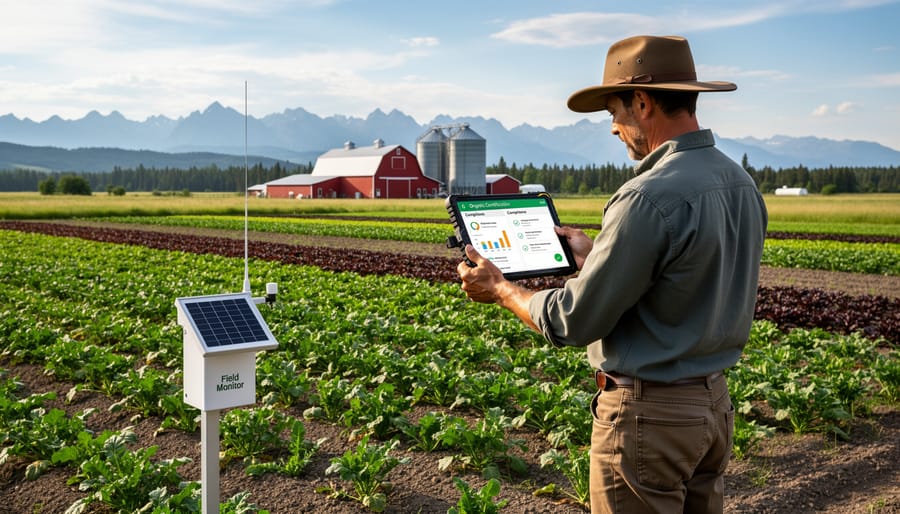
When Sarah Chen took over her family’s 65-hectare organic vegetable operation near Lethbridge in 2019, she inherited filing cabinets stuffed with paper records dating back fifteen years. Like many Alberta organic farmers, she spent countless hours each year preparing for organic certification audits, tracking down receipts, and cross-referencing handwritten field logs with supplier invoices.
Before implementing a digital certification platform in early 2021, Sarah’s certification preparation consumed approximately 80 hours annually. Her record-keeping system relied on physical binders organized by year, with separate folders for input purchases, field activities, harvest records, and sales documentation. Finding specific information often meant searching through multiple binders, and she lived in constant worry that a misplaced receipt could jeopardize her certification.
The transition to digital record-keeping began with considerable hesitation. Sarah worried about the learning curve and whether the platform would accommodate her operation’s complexity, which included crop rotation across 30 different vegetable varieties. The initial setup phase required two full days to input historical data and configure the system for her specific crops and field layout.
The first challenge emerged during spring planting when Sarah struggled to enter real-time data while working in muddy fields. She solved this by investing in a waterproof tablet case and using voice-to-text features for quick field notes. Another hurdle involved training her seasonal workers to photograph and upload delivery receipts immediately rather than handing her crumpled papers at day’s end.
By the end of her first full season using the platform, measurable improvements became evident. Certification preparation time dropped to 12 hours, an 85 percent reduction. The digital system automatically cross-referenced inputs with approved organic lists, catching two potentially non-compliant products before purchase. During her 2022 audit, the inspector completed the review in half the usual time, commenting that the organized digital records made verification straightforward.
Perhaps most significantly, Sarah now spends saved hours analyzing production data rather than hunting for documents. The platform’s reporting features revealed that three of her lower-yielding fields shared similar soil characteristics, prompting targeted soil amendments that boosted yields by 18 percent the following season. What began as a compliance tool evolved into a farm management asset that drives profitability.
Expert Perspective: What Certification Bodies Say
We spoke with Sarah Mitchell, a certified organic inspector with over 15 years of experience working across Alberta and Saskatchewan, about how digital platforms are transforming the certification landscape. “The shift to digital systems has been remarkable,” Sarah explains. “What used to take weeks of paper shuffling and phone tag now happens in days, sometimes hours.”
Sarah works with several certification bodies that have adopted digital platforms, and she’s witnessed the benefits firsthand. “Farmers can upload their field maps, input records, and harvest data directly into the system. I can review everything before I even drive out to the farm, which means our on-site visits are more focused and productive.” This preparation time matters especially during Alberta’s compressed growing season when every day counts.
From the certifier’s perspective, digital platforms reduce administrative burden significantly. “We’re seeing about 40 percent less time spent on paperwork processing,” Sarah notes. “That means certification bodies can handle more applications without sacrificing thoroughness, and those savings often get passed to farmers through lower fees.”
The transparency works both ways. “Farmers tell me they appreciate seeing exactly where their application stands in the review process. No more wondering if their paperwork got lost or when they’ll hear back.” The platforms also help catch errors early. “The system flags missing information or inconsistencies immediately, so farmers can fix issues before they delay certification.”
Sarah emphasizes that digital doesn’t mean impersonal. “We still visit every farm, still build those relationships. Technology just handles the tedious parts, freeing us to focus on what matters—helping farmers succeed with their organic operations and ensuring consumers can trust the certified organic label.”
Choosing the Right Platform for Your Operation
Essential Questions to Ask Before Signing Up
Before committing to any digital organization platform, ask these critical questions to ensure it meets your operation’s needs.
Start with Canadian certification compatibility. Does the platform align with Canadian Organic Standards and integrate with certification bodies operating in Canada? Some systems are designed primarily for international markets and may not include the specific documentation formats required by Canadian certifying agents. Confirm that the platform supports metric measurements and Canadian regulatory requirements.
Examine the pricing structure carefully. Look beyond the monthly subscription fee to understand what’s included. Are there additional costs for features like document storage, user accounts, or certification body access? Some platforms charge per hectare managed, while others offer flat rates. For many Alberta farmers, a transparent pricing model that scales with farm size makes budgeting easier.
Support availability matters significantly, especially during critical periods like harvest or audit preparation. Ask about customer service hours, response times, and whether support staff understand Canadian organic certification processes. Is there a Canadian-based support team familiar with regional challenges?
Clarify data ownership policies. Your farm records remain your property, and you should be able to export all data if you switch platforms. Check whether you can download records in common formats like PDF or CSV files.
For rural areas with limited connectivity, offline functionality is essential. Can you enter field observations, record inputs, or update plans without internet access? The platform should sync data automatically once you’re back online, ensuring no information is lost during those inevitable connectivity gaps that many Canadian farms experience.
Making the Transition Smoothly
Moving from paper files to a digital organization system doesn’t have to be overwhelming. Start by selecting one certification cycle to digitize first rather than transferring years of records at once. Many Alberta farmers find success beginning with their current season’s planting records and input purchases, which gives you immediate benefits while learning the platform.
Schedule dedicated time for data entry, ideally during slower farm periods. Breaking the task into 30-minute sessions over several weeks feels more manageable than marathon entry days. Take photos of existing paper documents as backups before disposal, storing them on an external drive for peace of mind.
Team training is essential for smooth adoption. Most digital platforms offer free onboarding sessions—take advantage of these. Ron Friesen, an organic grain farmer near Lethbridge, recommends having all family members or staff who handle record-keeping join the initial training together. This ensures everyone understands the system and can support each other.
Notify your certification body before making the switch to confirm they accept digital records in the format your chosen platform provides. Most certifiers welcome digital submissions as they streamline their review process too. Your organic certification compliance remains intact throughout the transition when you maintain parallel records for one cycle, giving you confidence before fully committing to digital.
Common Concerns and How to Address Them
Making the shift to digital record-keeping can feel daunting, especially when you’re managing a busy farm operation. Let’s address the most common concerns Alberta farmers share about adopting digital certification platforms and explore practical solutions.
Technology barriers often top the list of worries. Many farmers tell us they’re comfortable with tractors and spreadsheets but uncertain about new software. The good news? Today’s digital platforms are designed with farmers in mind, not computer programmers. Most systems offer free trial periods where you can explore features at your own pace. Start by digitizing just one aspect of your operation, like harvest records or input tracking, before expanding. Several Canadian platforms also provide phone support with staff who understand agricultural terminology and workflows.
Internet connectivity in rural areas remains a legitimate challenge. However, modern platforms address this through offline functionality. You can enter data throughout your day without internet access, and the information automatically syncs when you’re back in range. Some farmers keep a tablet in their truck and update records during lunch breaks or at the end of the day when they’re closer to the farmyard where connectivity is stronger.
Data security concerns are entirely valid when your certification depends on accurate records. Reputable platforms use bank-level encryption and store information on Canadian servers, which means your data falls under Canadian privacy laws. Always verify that any platform you consider is compliant with organic certification body requirements and offers regular automated backups. Your data is often more secure in the cloud than in a filing cabinet vulnerable to fire, flood, or simple misplacement.
The learning curve varies by person, but most farmers report feeling comfortable within two to three weeks of regular use. Consider attending regional workshops offered by certification bodies or connecting with neighbouring farmers already using digital systems. Learning alongside your community makes the transition easier and builds your support network.
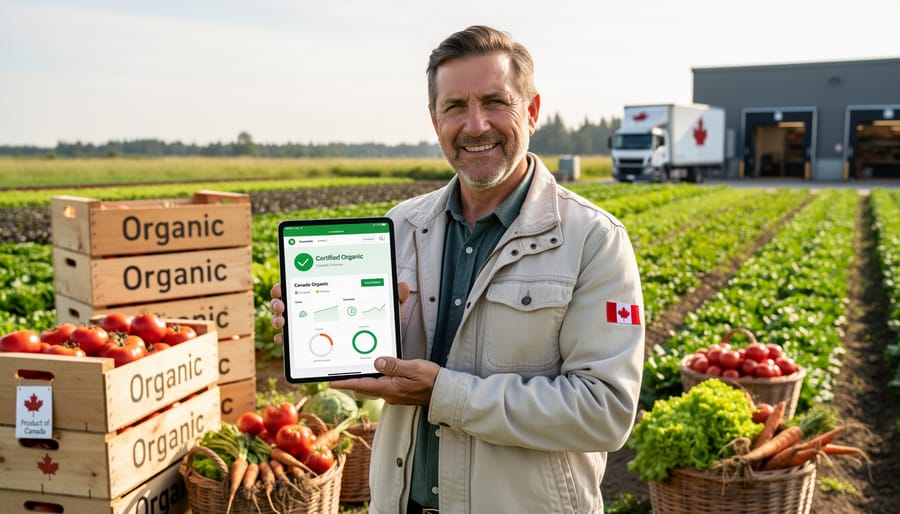
Digital certification platforms represent more than just administrative convenience—they’re a practical investment in the future of sustainable agriculture across Canada. For farmers committed to organic practices, these tools reduce paperwork burden while strengthening your farm’s compliance foundation, allowing you to focus energy where it matters most: in the field and with your crops.
The shift toward digital record-keeping aligns perfectly with broader sustainability initiatives gaining momentum throughout Alberta and beyond. When you streamline your certification process, you’re not only saving time measured in hours per week, but you’re also contributing to an agricultural system that values transparency, traceability, and environmental stewardship. Consider Mark Henderson, an organic grain producer near Red Deer, who reduced his annual certification preparation time from three weeks to just five days after adopting a digital platform. “The system pays for itself in time saved, and my records are actually more thorough now,” he shared.
As Canada’s organic sector continues expanding—growing by 8.4 percent annually according to recent industry data—the farmers who embrace practical digital solutions position themselves for long-term success. Whether you’re certified organic now or considering the transition, exploring digital platforms demonstrates the same forward-thinking approach that drew you to sustainable farming in the first place.
Take that next step. Research available platforms, request demonstrations, and talk with fellow farmers in your region who’ve made the switch. Your commitment to organic agriculture deserves tools that support rather than complicate your mission. The future of sustainable farming is digital, accessible, and ready for your operation.