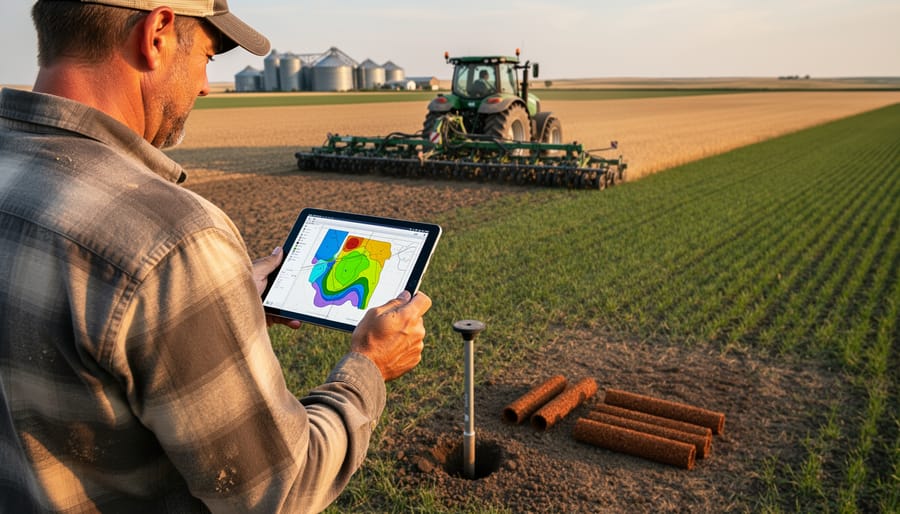
Canadian farms spend an average of $15,000 to $50,000 annually on energy costs, with grain dryers, livestock facilities, and irrigation systems consuming the bulk. Installing solar panels, wind turbines, or biogas digesters can slash these expenses by 40-70% while generating stable, long-term income through net metering programs and renewable energy credits. Alberta’s agricultural producers are uniquely positioned to capitalize on this shift, with abundant solar resources averaging 1,350-1,450 kWh per installed kilowatt annually and consistent wind patterns across prairie regions.
The financial case for renewable energy in agriculture has never been stronger. Federal programs like the Canadian Agricultural Partnership provide cost-share funding up to 50% for qualifying renewable energy projects, while provincial incentives and accelerated capital cost allowances reduce upfront investment barriers. Payback periods for solar installations now average 7-10 years, with system lifespans exceeding 25 years. Wind turbines offer similar returns in suitable locations, and anaerobic digesters transform manure management challenges into revenue streams by producing electricity, heat, and nutrient-rich fertilizer simultaneously.
This article examines proven renewable energy technologies for Canadian farms, breaks down realistic costs and returns with regional case studies, and provides a step-by-step implementation roadmap. Whether you’re exploring options or ready to commit, you’ll find the practical guidance needed to make informed decisions that strengthen both your operation’s profitability and environmental stewardship.
The Real Cost of Energy on Canadian Farms
Where Your Energy Dollars Actually Go
Understanding where your energy dollars flow is the first step toward meaningful savings. For most Alberta farms, four major categories dominate the energy bill, each presenting unique opportunities for renewable integration.
Irrigation systems typically rank as the largest energy consumer, especially for crop operations across southern Alberta. A pivot irrigation system on a 65-hectare quarter section can consume 50,000 to 70,000 kWh annually, translating to $5,000 to $8,000 in electricity costs. Peak demand charges during critical summer months add another layer of expense. Improving irrigation efficiency through renewable power can significantly reduce these costs while maintaining crop yields.
Grain drying operations create seasonal but substantial energy spikes. A typical 20,000-bushel grain dryer can burn through 200 to 300 gigajoules of natural gas per harvest season, costing $2,000 to $4,000 depending on moisture levels and weather conditions. High-temperature dryers for canola and wheat demand consistent, reliable power sources.
Livestock operations face year-round climate control expenses. A 200-head dairy barn in central Alberta might spend $12,000 to $18,000 annually on ventilation, heating, and cooling systems. Hog barns with temperature-sensitive young stock can see similar or higher costs, with winter heating being particularly demanding.
Equipment operation, including tractors, combines, and utility vehicles, rounds out the energy picture. While individual pieces vary, fuel costs for a mid-sized grain operation commonly exceed $30,000 annually. Together, these four categories create both challenges and opportunities for renewable energy adoption.
Renewable Energy Options That Make Sense for Your Operation
Solar Power: More Than Just Sunny Days
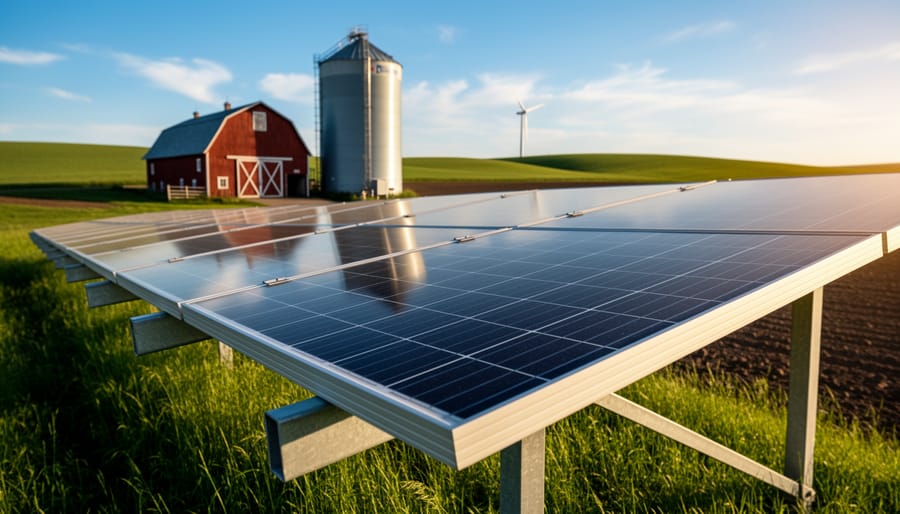
Solar panels aren’t just for rooftops in sunny California. Alberta farms are finding success with solar despite our reputation for long winters and variable weather. Modern photovoltaic systems actually perform well in cold temperatures, and snow reflection can boost energy production. Plus, our summer growing season delivers those extended daylight hours when farm operations need power most.
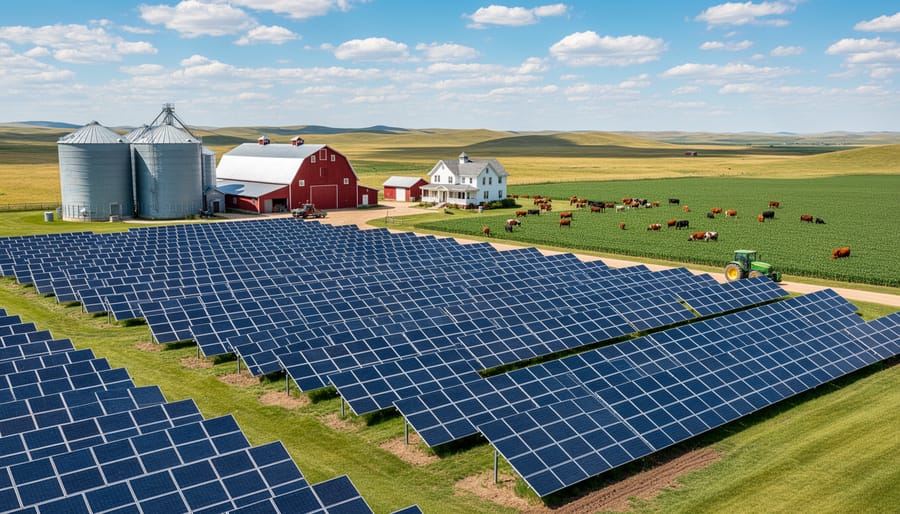
You have two main installation options to consider. Ground-mounted systems work well if you have available land that isn’t prime agricultural soil. These arrays can be positioned for optimal sun exposure and are easier to maintain and expand over time. Building-integrated systems mount on barn roofs, machinery sheds, or grain storage facilities, making use of existing structures without taking land out of production.
Trevor McDonald, who runs a 600-hectare grain operation near Lethbridge, installed a 25-kilowatt ground-mount system in 2021. “We’re powering our entire irrigation setup during peak season,” he explains. “The system generates maximum power exactly when our pumps are running hardest. It’s like the sun and crops are on the same schedule.”
Beyond irrigation, solar installations can run grain dryers, ventilation fans, lighting systems, and workshop equipment. Many Alberta farmers are coupling solar with battery storage to handle evening chores or early morning operations. The key is matching your system size to your actual energy consumption patterns. Start by reviewing your utility bills from the past year to understand when and where you use the most electricity.
Wind Energy for Prairie Operations
Alberta’s prairie landscape offers exceptional potential for wind energy integration, with some of the strongest and most consistent wind resources in Canada. For agricultural operations, small to medium-scale wind turbines ranging from 10 kW to 100 kW can significantly offset electricity costs while providing long-term energy independence.
The ideal farm locations for wind power share common characteristics: elevated terrain with minimal obstructions, average wind speeds exceeding 4 metres per second, and sufficient distance from neighboring properties to minimize noise concerns. Southern Alberta producers particularly benefit from prevailing westerly winds that create reliable generation patterns throughout the year.
Mark Henderson, a grain farmer near Pincher Creek, installed a 50 kW turbine in 2019 that now powers his entire irrigation system and grain handling equipment. “Our wind resource assessment showed we had class 4 winds, which made the investment viable,” Henderson explains. “The turbine generates about 60% of our annual electricity needs.”
Before investing, conduct a professional wind resource assessment over at least one year to establish accurate production estimates. Consider grid connection requirements, municipal setback regulations typically requiring 300 to 500 metres from property lines, and potential power purchase agreements if you plan to sell excess electricity back to the grid.
Biogas and Biomass: Turning Waste Into Watts
Agricultural operations generate significant organic waste, but innovative farmers across Canada are transforming this challenge into opportunity through biogas and biomass systems. These technologies convert manure, crop residues, and other farm waste into valuable energy sources while addressing environmental concerns.
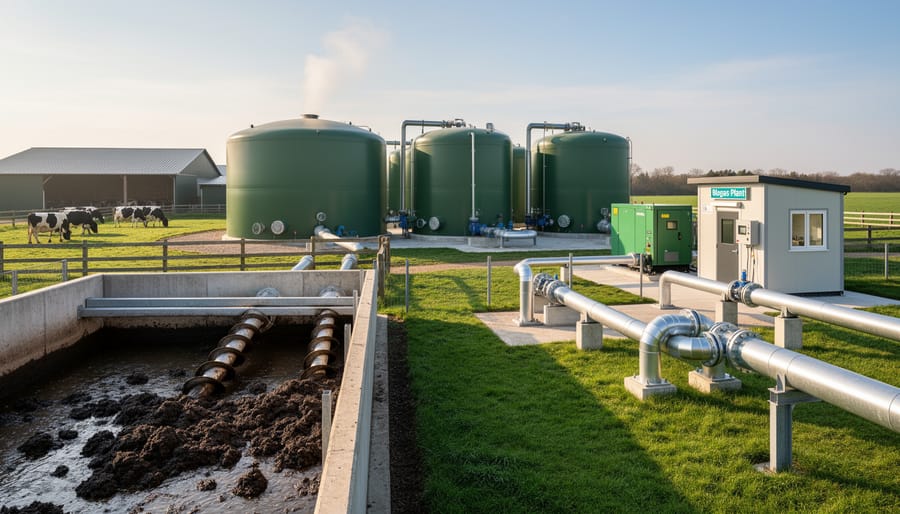
Anaerobic digesters represent a particularly promising solution for livestock operations. These enclosed systems break down manure in oxygen-free environments, producing biogas rich in methane that can generate electricity, heat barns, or fuel equipment. Alberta farmer Jim Schneider installed a digester on his 500-head dairy operation in 2021, now producing enough electricity to power his entire farm plus 40 neighbouring homes. “Beyond the energy savings, we’ve eliminated our manure storage odours and created nutrient-rich fertilizer as a byproduct,” Schneider explains.
For crop producers, biomass systems offer similar benefits by converting straw, corn stover, and other agricultural residues into heat or electricity. These materials, once burned in fields or left to decompose, become fuel sources that reduce reliance on natural gas and diesel. A 2023 University of Alberta study found that biomass heating systems can reduce energy costs by 30-45% for greenhouse and grain drying operations.
Both technologies integrate seamlessly into circular farm systems, where waste streams become inputs for energy production. Federal and provincial programs, including Agriculture and Agri-Food Canada’s Agricultural Clean Technology Program, provide funding support up to 50% for qualified projects, making these systems increasingly accessible for Canadian farms of various sizes.
Geothermal and Micro-Hydro Opportunities
For farms with access to suitable water resources or ground temperatures, geothermal and micro-hydro systems offer reliable renewable options worth exploring. Geothermal heat pumps can efficiently heat and cool greenhouses, livestock barns, and processing facilities by tapping into stable underground temperatures. In Alberta, several greenhouse operations have successfully reduced heating costs by 40-60% using geothermal systems, though installation requires careful site assessment and upfront investment.
Micro-hydro power generation suits farms with consistent water flow from streams or irrigation systems. Even modest elevation drops can generate electricity for daily operations. A Saskatchewan grain farm recently installed a 5-kilowatt micro-hydro system on their irrigation canal, producing enough power to run grain dryers and shop equipment year-round. These systems require minimal maintenance once installed and can operate continuously, providing baseload power that complements solar or wind installations. Consult with renewable energy specialists to assess your property’s geothermal or hydro potential before proceeding.
The Economics: Payback Periods and Long-Term Savings
Government Programs and Incentives You Should Know About
Canadian farmers have access to several funding streams that can significantly reduce the upfront costs of renewable energy installations. Understanding these programs is essential when exploring agricultural financing options for your operation.
The Canadian Agricultural Partnership offers cost-share funding through provincial programs like Alberta’s On-Farm Energy Management Program, which provides up to 25% reimbursement for energy assessments and efficiency upgrades, including renewable energy systems. Recent projects have seen farmers receive $15,000 to $50,000 in support for solar installations.
The federal Emissions Reduction Alberta program specifically targets agricultural operations looking to reduce greenhouse gas emissions through renewable energy adoption. This initiative has funded biomass digesters and solar arrays across the province, with grants ranging from $100,000 to $500,000 for qualifying projects.
The Accelerated Capital Cost Allowance allows farmers to depreciate renewable energy equipment at faster rates, improving cash flow in early years. Class 43.2 assets, which include solar panels and small-scale wind turbines, can be depreciated at 50% annually.
Alberta farmers should also investigate the Agriculture Financial Services Corporation loan programs, which offer competitive interest rates for renewable energy infrastructure. These loans often complement grant funding, making large-scale projects more feasible.
Many rural municipalities now offer property tax exemptions or rebates for renewable energy installations, adding another layer of financial benefit to your investment.
Alberta Farms Already Making It Work
Grain Farm Solar Success in Southern Alberta
The Henderson family, operating a 1,200-hectare grain farm near Lethbridge, Alberta, installed a 50-kilowatt solar array in 2021, becoming a local example of practical renewable energy implementation. The system, mounted on their main shop building, cost $85,000 before federal and provincial incentives reduced their net investment to approximately $52,000.
Their solar installation now generates about 65,000 kilowatt-hours annually, offsetting roughly 70 percent of their farm’s electricity consumption. This translates to annual savings of $6,500 on their power bills, providing a projected payback period of eight years. The family reports that their utility costs have become more predictable, helping with cash flow planning during volatile grain markets.
Beyond the financial benefits, farm operator Mark Henderson notes unexpected operational advantages. “The panels provide shade for equipment storage, and we’ve seen reduced cooling costs in the shop during summer,” he explains. The system requires minimal maintenance—just an annual inspection and occasional panel cleaning.
The Hendersons recommend that interested farmers start with an energy audit to identify consumption patterns and determine optimal system sizing. They also emphasize working with certified installers familiar with agricultural applications, as farm operations present unique considerations regarding dust, equipment vibration, and structural requirements.
Dairy Operation Turns Manure Into Energy
Lund’s Legacy Farm near Red Deer demonstrates how dairy operations can transform waste management challenges into revenue opportunities. The 450-cow operation installed an anaerobic digester in 2021, processing approximately 45 tonnes of manure daily to generate biogas for electricity production.
The system powers the entire farm operation while feeding surplus electricity back to Alberta’s grid, generating an additional $75,000 annually in energy credits. Farm owner Janet Lund reports that the digester has dramatically reduced odour complaints from neighbours and improved nutrient management on their land.
Beyond energy production, the farm benefits from high-quality digestate fertilizer that’s easier to handle and apply than raw manure. The closed system also reduces greenhouse gas emissions by capturing methane that would otherwise escape into the atmosphere.
The initial investment of $850,000 qualified for federal and provincial grants covering 40% of costs. Lund projects full payback within eight years, considering energy savings, electricity sales, and reduced fertilizer purchases. She notes that consistent dairy waste streams make digesters particularly viable for operations with 300 or more cows, though smaller farms can explore cooperative models to share infrastructure costs.
Planning Your Farm’s Energy Transition
Conducting Your Farm Energy Audit
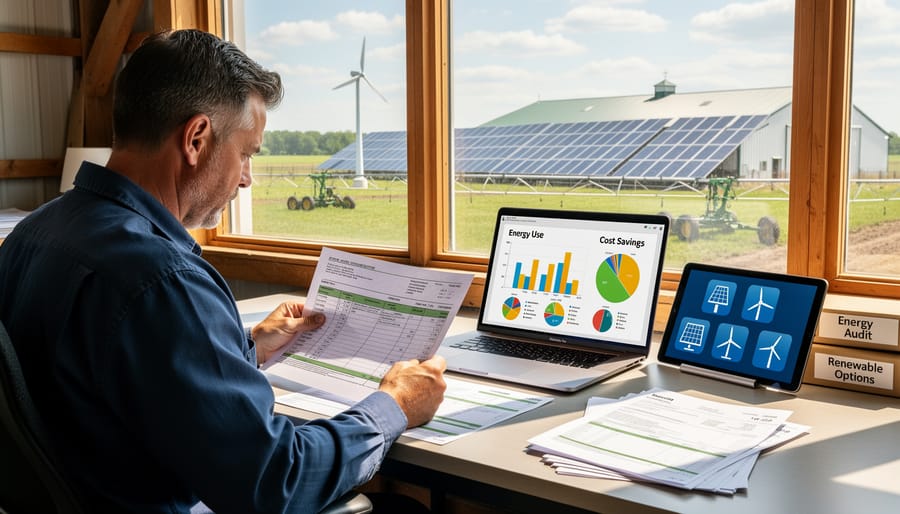
Start by gathering 12 months of utility bills to understand your baseline energy consumption. Look for patterns in your usage—many Alberta operations see peak demands during winter heating or summer irrigation seasons. Create a simple spreadsheet tracking kilowatt-hours (kWh) and costs month by month.
Walk your property with a notepad, documenting every energy-consuming system: grain dryers, irrigation pumps, livestock barns, cold storage, and equipment charging stations. Note the wattage and typical operating hours for each. This inventory reveals where your energy dollars actually go.
“We discovered our grain drying consumed 40 percent of our annual electricity,” shares Tom Hendricks, a mixed grain farmer near Lethbridge. “That single insight directed our entire renewable strategy toward biomass heating.”
Consider timing alongside volume. If your highest consumption aligns with daylight hours, solar becomes particularly attractive. Operations requiring consistent overnight power might prioritize wind or explore battery storage solutions.
Match your findings against available resources. Assess your land’s solar exposure, average wind speeds, and access to organic waste for biogas systems. This practical approach ensures you’re investing in technologies that genuinely fit your operation’s rhythm and geography, rather than chasing trends that don’t align with your actual needs.
Working With the Right Partners
Selecting the right professionals can make or break your renewable energy project. Start by looking for installers certified by the Canadian Renewable Energy Association or holding specific provincial credentials. In Alberta, contractors familiar with Agricultural Operation Practices Act requirements will help ensure compliance from day one.
Ask potential partners about their experience with agricultural installations specifically. Farm operations present unique challenges like dust, livestock, and variable terrain that differ from residential projects. Request references from other farming operations and visit completed installations if possible.
Key questions to ask contractors include: What warranties do you offer on equipment and installation? How do you handle system maintenance and emergency repairs? Can you provide detailed performance projections based on my specific location and energy usage patterns? What financing options do you recommend, and do you assist with grant applications?
Manitoba farmer James Kowalchuk emphasizes the importance of post-installation support: “Our solar installer comes out quarterly for system checks and has been invaluable for optimizing performance. That ongoing relationship matters.”
Consider engaging an independent energy consultant before signing contracts. They can review proposals objectively and ensure you’re getting fair pricing. Agricultural engineering firms with renewable energy divisions understand both farming operations and energy systems, making them valuable partners throughout your project.
Beyond the Power Bill: Additional Benefits
While reducing your monthly power bill is a significant advantage, on-farm renewable energy delivers value that extends well beyond immediate cost savings. Understanding these additional benefits can help you make a more informed investment decision.
Energy independence ranks among the most valuable benefits, particularly for Alberta operations where weather events and grid demands can affect power reliability. When you generate your own electricity, you’re less vulnerable to rate increases and supply disruptions during critical periods like harvest or calving season. Many farmers report peace of mind knowing their essential operations can continue even during power outages.
Renewable energy installations contribute significantly to building farm resilience against economic and environmental uncertainties. This resilience strengthens your operation’s long-term viability while demonstrating environmental stewardship to your community.
Financial opportunities through carbon credit opportunities provide another revenue stream. Canadian programs increasingly recognize on-farm renewable energy as eligible for carbon offset credits, creating additional income potential from your sustainability investments.
Property values often increase with renewable energy infrastructure. Prospective buyers recognize the operational advantages and reduced overhead costs these systems provide. Saskatchewan realtor Jennifer Martin notes that farms with established solar or wind systems typically sell faster and command premium prices.
Marketing advantages shouldn’t be overlooked either. Consumer demand for sustainably-produced food continues growing, and renewable energy gives you a compelling story to share. Many operations successfully leverage their clean energy investments in direct marketing, securing premium prices and strengthening customer loyalty. This differentiation becomes increasingly valuable as sustainability becomes a purchasing priority for Canadian consumers.
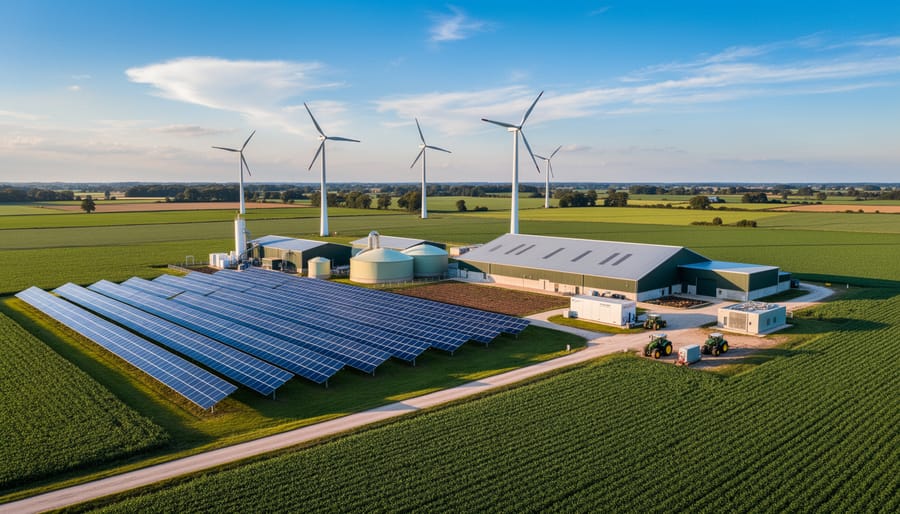
The transition to renewable energy represents a genuine opportunity to transform Alberta farms into more resilient, profitable operations while contributing to environmental stewardship. As we’ve explored throughout this article, the technology exists, the financial incentives are available, and fellow farmers across Alberta are already proving that renewable energy works in real-world agricultural settings.
The economic case is clear: while upfront costs require careful planning, the long-term savings on energy bills, combined with available grants and tax incentives, make renewable energy investments increasingly viable for farms of all sizes. Solar panels, wind turbines, and biomass systems aren’t experimental anymore—they’re proven technologies delivering measurable returns for Canadian farmers.
Perhaps most importantly, you don’t need to overhaul your entire operation overnight. Start with a professional energy assessment to understand your farm’s specific consumption patterns and renewable potential. This single step costs little but provides the foundation for informed decision-making about which technologies align with your operation’s unique needs and resources.
Your farm’s energy independence journey begins with one conversation, one assessment, one decision. The question isn’t whether renewable energy can work for Alberta agriculture—it’s when you’ll take that first step toward a more sustainable and economically secure future for your operation.