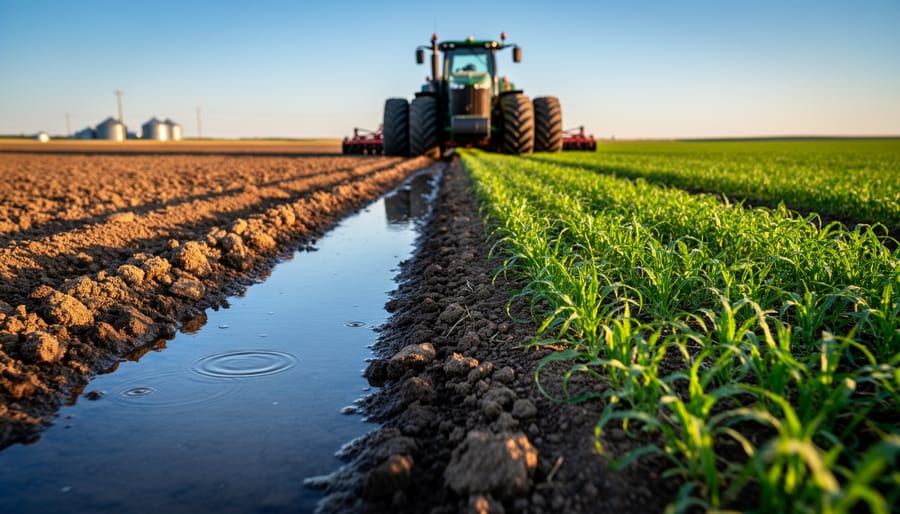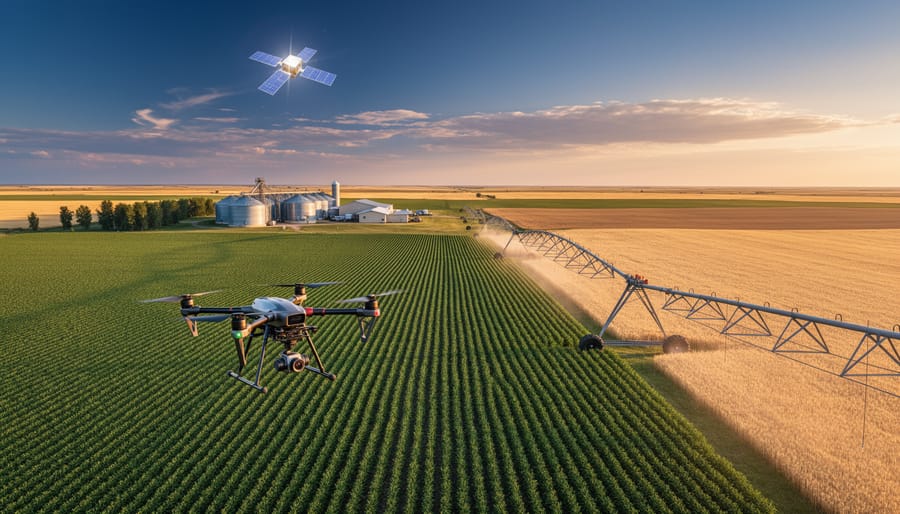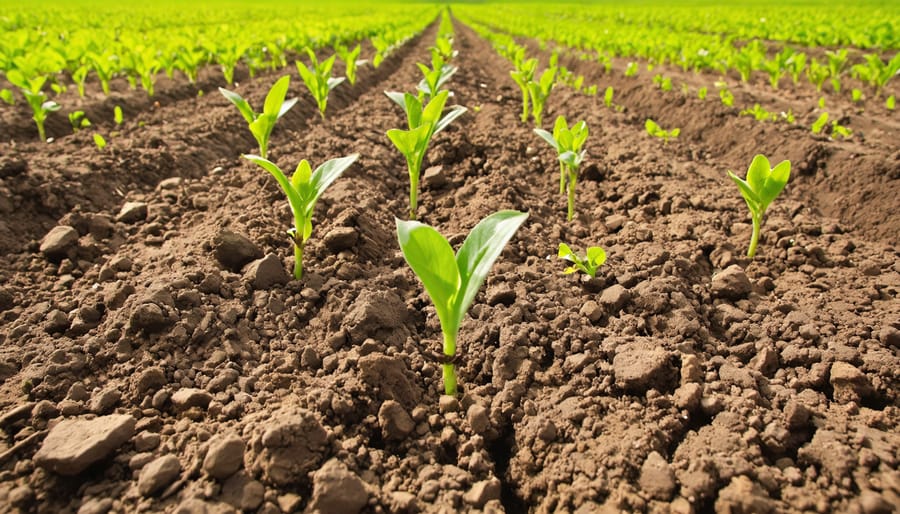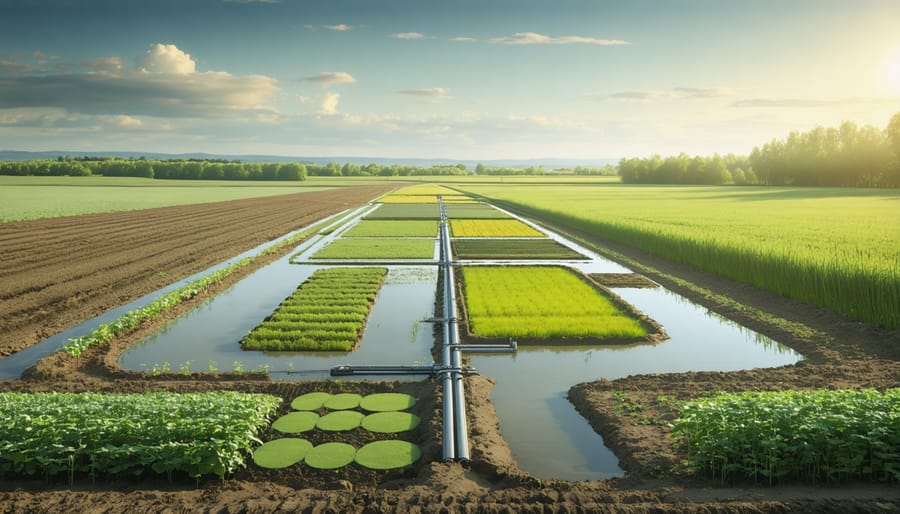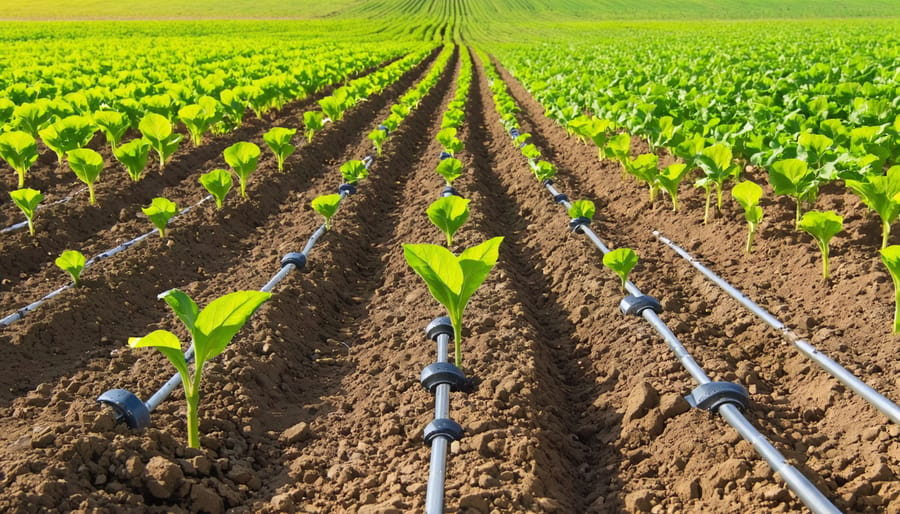
Choose your irrigation method based on your crop type, soil conditions, and water availability—not generic recommendations that ignore Alberta’s unique climate challenges. Surface flooding works efficiently for level fields growing forage crops, delivering water through controlled channels that spread across paddocks. Drip irrigation targets individual plant root zones through buried tubes or surface lines, reducing water waste by up to 60% compared to traditional sprinklers while maintaining consistent soil moisture for high-value vegetables and orchards. Sprinkler systems cover large acreages quickly, making them ideal for grain operations where you need flexible coverage patterns, though they demand higher energy inputs and lose 15-30% of water to evaporation during Alberta’s dry, windy summers. Subsurface drip irrigation—the most advanced option—places water delivery lines 15-45 centimeters below ground, eliminating surface evaporation entirely while preventing weed growth and disease spread.
Your selection directly impacts long-term profitability, with subsurface systems requiring $2,500-$4,000 per hectare upfront but delivering 20-30 year lifespans and the lowest ongoing water costs. Southern Alberta producers near Lethbridge have documented 40% water savings switching from pivot sprinklers to subsurface drip on potato operations, while maintaining yields and reducing fertilizer runoff. Each method integrates differently with water conservation strategies you’re already implementing—subsurface and drip systems pair naturally with soil moisture monitoring, while surface methods benefit from precise land leveling and timing adjustments. Understanding these four approaches gives you the framework to match technology with your operation’s specific soil types, water rights, crop rotation plans, and labour availability, ensuring every irrigation dollar generates maximum agronomic return.
Understanding Subsurface Irrigation: Why It Matters for Canadian Farmers
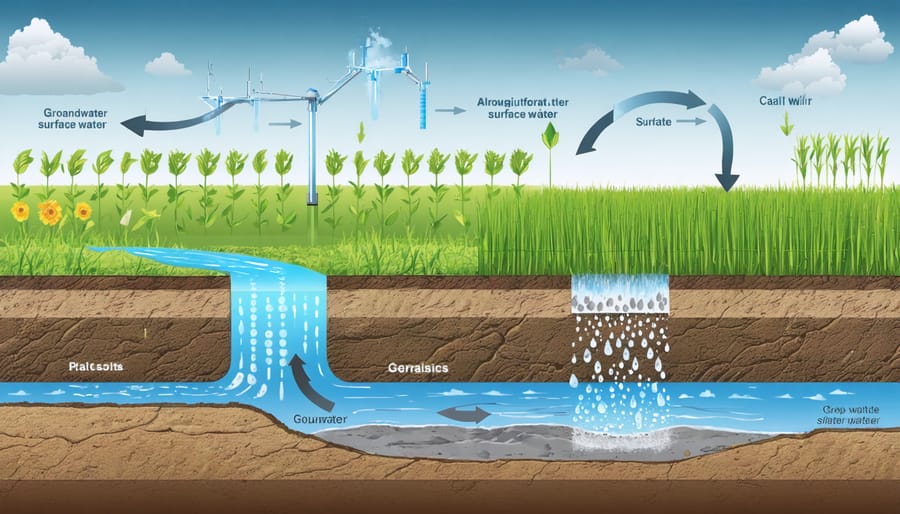
Subsurface irrigation delivers water directly to plant root zones through buried pipes or tubes, making it one of the most efficient irrigation methods available to Canadian farmers. Unlike surface irrigation that applies water on top of the soil, subsurface systems operate below ground level, typically at depths between 20 to 60 centimetres. This fundamental difference creates significant advantages for water conservation and crop productivity.
For Alberta farmers facing increasingly variable precipitation patterns and growing pressure on water resources, subsurface irrigation offers a practical solution. The system minimizes water loss through evaporation, which can account for up to 30 percent of applied water in traditional surface methods. By delivering moisture directly to root zones, you’re ensuring that nearly every drop reaches your crops rather than the atmosphere.
The benefits extend beyond water savings. Subsurface irrigation keeps surface soil drier, reducing weed germination and fungal disease pressure. Your equipment can operate in fields even during irrigation cycles since the soil surface remains firm and accessible. This flexibility proves especially valuable during critical timing windows for spraying or harvesting.
Alberta’s diverse soil conditions respond particularly well to subsurface approaches. Whether you’re managing the clay loams of central Alberta or sandier soils in southern regions, subsurface systems can be tailored to match your soil’s water-holding capacity and infiltration rates. The controlled delivery prevents the runoff and ponding issues common with surface irrigation on sloped or heavy clay fields.
According to research from the University of Alberta, producers using subsurface drip irrigation reported 20 to 40 percent reductions in water use compared to conventional methods while maintaining or improving yields. Rick Thompson, a canola producer near Lethbridge, shares his experience: “We’ve seen more uniform crop emergence and healthier plants throughout the season. The initial investment felt significant, but the water savings and yield consistency have made it worthwhile.”
Understanding these principles helps you evaluate whether subsurface irrigation aligns with your operation’s specific needs and long-term sustainability goals.
Method 1: Drip Irrigation Below Ground
How Subsurface Drip Systems Work
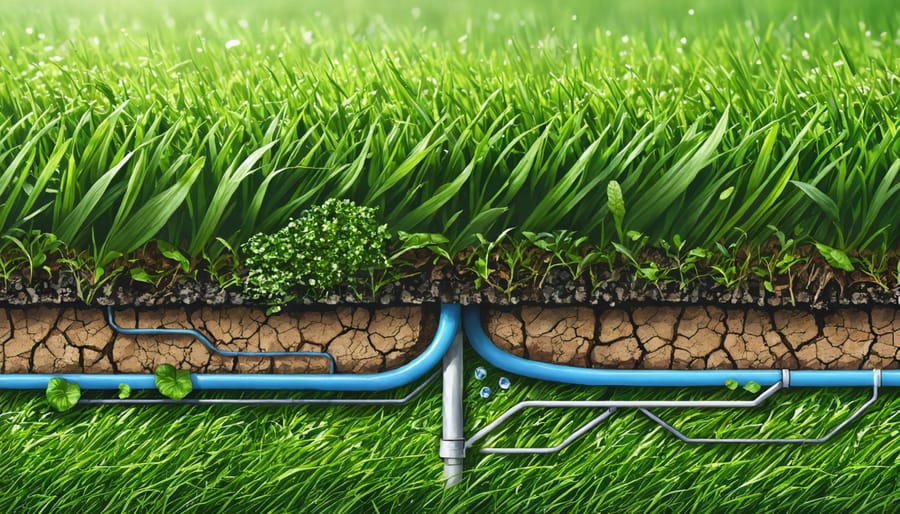
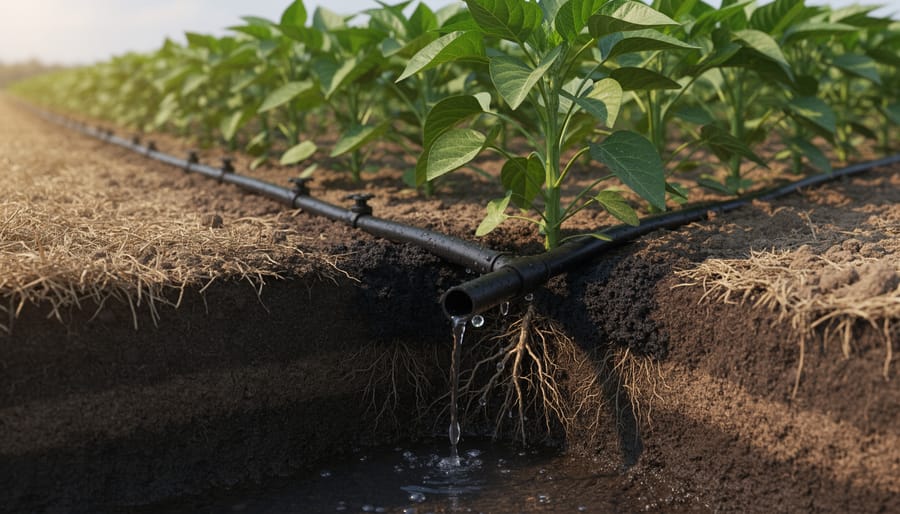
Subsurface drip irrigation delivers water directly to crop root zones through a network of buried drip lines, making it one of the most efficient methods available to Canadian farmers. The system consists of polyethylene tubing installed 15 to 45 centimetres below the soil surface, with spacing between lines typically ranging from 75 to 150 centimetres depending on your crop type and soil characteristics.
Emitters built into the tubing release water at controlled rates, usually between 0.6 to 2.3 litres per hour. These emitters are spaced along the line at intervals of 30 to 60 centimetres, creating a continuous moisture zone that encourages healthy root development. The water moves through soil pores via capillary action, wetting the soil in a bulb-shaped pattern around each emitter.
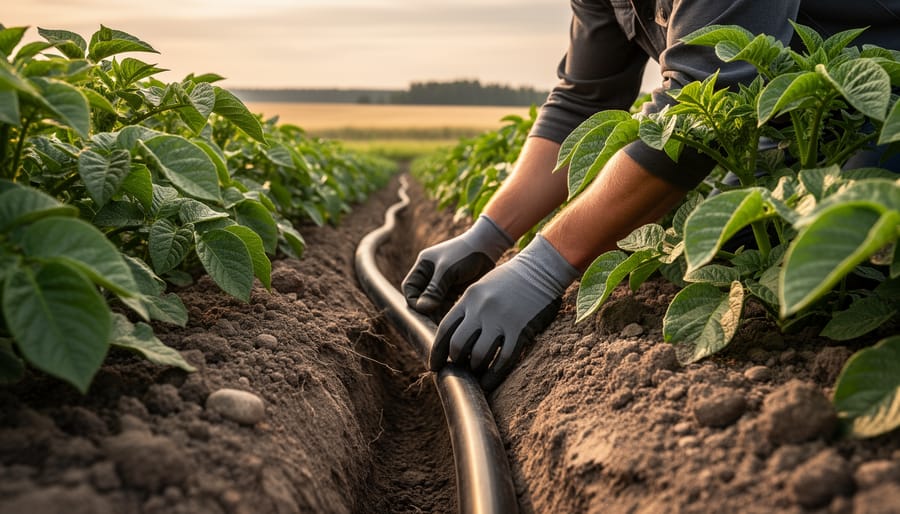
Installation depth matters significantly for Alberta conditions. Shallow placement at 15 to 20 centimetres works well for vegetable crops, while depths of 30 to 45 centimetres suit perennial crops and help prevent freeze damage during our harsh winters. Saskatchewan farmer James Chen reports his subsurface system has reduced water usage by 35 percent compared to pivot irrigation while maintaining consistent yields across his potato operation, demonstrating the practical benefits many producers experience with proper installation.
Best Applications for Alberta Conditions
Subsurface drip irrigation performs exceptionally well across Alberta’s diverse growing conditions, particularly for high-value crops that benefit from precise water management. Vegetable producers growing potatoes, carrots, and onions have seen remarkable results, as these root crops thrive when moisture is delivered directly to the root zone without saturating the soil surface. Field crops like canola and sugar beets also respond well to SDI, especially in areas where water conservation is essential.
Soil type plays a crucial role in SDI success. Medium-textured loam soils provide ideal conditions, allowing water to spread laterally from drip lines while maintaining good drainage. Clay soils require careful management to prevent waterlogging, while sandy soils may need closer emitter spacing to ensure adequate coverage. Conducting a soil assessment before installation helps optimize your system design and emitter placement.
A standout example comes from Green Acres Vegetable Farm near Lethbridge, where owner Sarah Chen implemented SDI across 50 hectares of mixed vegetables in 2021. “We were hesitant about the upfront investment, but the water savings alone paid for half the system in two years,” Sarah explains. “Our carrot yields increased 23 percent, and we’ve virtually eliminated surface runoff issues that used to plague us during heavy irrigation cycles.”
The farm’s clay-loam soils initially presented challenges, but working with an irrigation specialist to adjust emitter depth and spacing resulted in uniform moisture distribution. Sarah notes that frost protection capabilities have become an unexpected benefit during Alberta’s unpredictable spring weather, providing confidence during critical growing periods.
Installation and Maintenance Realities
Understanding the practical realities of irrigation installation helps you budget accurately and maintain system longevity. Setup costs vary significantly—gravity-fed flood systems may require just $250-$500 per hectare for basic infrastructure, while subsurface drip installation typically ranges from $2,500-$4,000 per hectare including labour and materials.
For Alberta conditions, winterization is essential. Before freeze-up, flush all lines thoroughly and drain low points to prevent rupture damage. Saskatchewan farmer Tom Hendricks shares his approach: “We blow compressed air through drip lines each October and store above-ground components in heated storage—it’s saved us thousands in replacement costs.”
Preventing clogging requires regular attention. Install filtration systems appropriate to your water source—screen filters for surface water, disc filters for wells. Monthly flushing during growing season keeps emitters clear, while annual system inspections catch issues early.
Develop a maintenance calendar: spring system checks, mid-season pressure tests, and fall winterization. Budget approximately 10% of installation costs annually for repairs and upgrades. This proactive approach extends system life from 10 to 20-plus years, maximizing your investment while ensuring consistent crop performance throughout each growing season.
Method 2: Subsurface Perforated Pipe Systems
Design and Installation Fundamentals
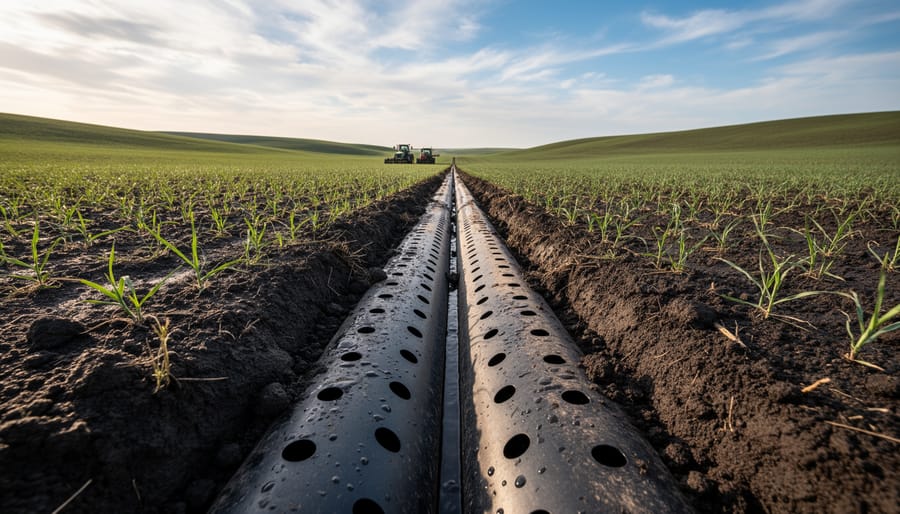
Successful subsurface irrigation in Alberta requires careful attention to installation fundamentals that account for our unique prairie conditions. Pipe depth typically ranges from 20 to 45 centimeters below the soil surface, with deeper placement protecting against freeze-thaw damage during our harsh winters. Many Alberta farmers have found success at 30-35 centimeters, balancing frost protection with efficient water delivery to crop root zones.
Lateral spacing depends on your soil type and crop requirements. Clay-heavy prairie soils generally need 75-100 centimeter spacing, while sandier soils may require closer placement at 50-75 centimeters to ensure adequate coverage. A gentle slope of 0.1 to 0.5 percent helps maintain proper drainage and prevents waterlogging.
Material selection matters significantly in our climate. Polyethylene drip tape offers affordability but typically lasts 3-5 years, making it suitable for annual crops. For permanent installations, consider thicker-walled PVC or polyethylene tubing rated for temperature extremes. John Peterson, an irrigation specialist from Lethbridge, recommends materials rated to -40°C minimum for Alberta conditions.
Before installation, conduct soil testing across your field to identify variations in texture and drainage patterns. This information guides spacing decisions and helps optimize your system layout for maximum efficiency and longevity in prairie soils.
When Perforated Pipes Make Sense
Perforated pipes work exceptionally well on medium to large farms, typically 50 hectares and above, where the initial installation costs can be spread across substantial acreage. They’re particularly suited to grain crops like wheat, canola, and barley, as well as forage production where uniform moisture distribution is essential but precision watering isn’t critical.
Soil conditions matter significantly. These systems perform best in loamy soils with good drainage. Heavy clay soils can restrict water movement, while very sandy soils may lead to excessive downward percolation rather than lateral distribution. Ideal depth ranges from 30 to 60 centimetres below the surface.
Compared to drip systems, perforated pipes offer simpler maintenance with fewer emitters to clog, making them attractive for extensive field operations. However, they provide less precise water control and aren’t ideal for high-value vegetables or crops requiring varied moisture zones.
A grain operation near Lethbridge, Alberta, installed perforated pipes across 200 hectares of spring wheat. The farmer reports consistent yields with 25 percent less water than flood irrigation previously used, and minimal maintenance requirements over five growing seasons. The system’s durability in freezing conditions proved particularly valuable for Alberta’s climate.
Managing Water Flow and Distribution
Effective water distribution starts with proper system design and regular monitoring. Install drip tape at consistent depths of 20-30 cm below the surface to ensure uniform coverage across your field. Space emitters according to your soil type—closer spacing in sandy soils (30 cm intervals) and wider in clay soils (60 cm intervals) helps maintain even moisture distribution.
Root intrusion remains a common challenge for Alberta growers. Consider using drip lines with physical root barriers or chemical treatment to prevent blockages. Flushing your system at the start and end of each season removes sediment buildup that can affect water flow.
Soil moisture sensors provide valuable data for irrigation scheduling. Place sensors at multiple depths within your root zone to track water movement patterns. Many Alberta producers find success combining sensor data with weekly visual inspections, checking for dry patches or oversaturated areas. This hands-on approach helps you fine-tune your system and catch distribution problems early, ensuring your crops receive consistent moisture throughout the growing season while maximizing water efficiency.
Method 3: Capillary Irrigation Systems
The Science Behind Capillary Rise
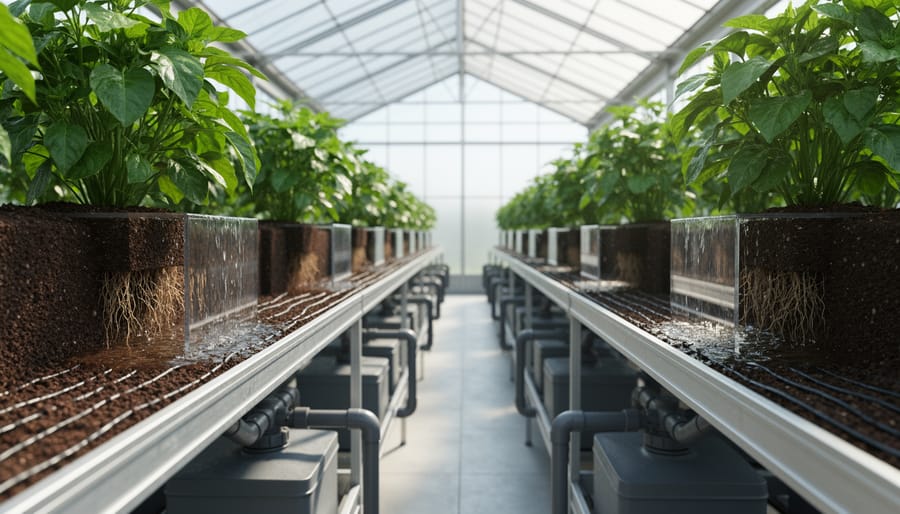
Capillary action works like a natural pump, drawing water upward through tiny spaces between soil particles. This happens because water molecules are attracted to soil particles and to each other, creating an upward pull that defies gravity. Think of it like water climbing up a paper towel – the smaller the spaces, the higher water can rise.
For Alberta farmers, understanding your soil texture is essential. Fine-textured soils like clay and loam, with their smaller pore spaces, can pull water up to 2 metres. Sandy soils, with larger pores, typically manage only 30-60 centimetres of rise. This difference significantly impacts how well capillary irrigation performs on your land.
Several factors influence effectiveness: soil moisture content, salt levels, and soil compaction all play roles. Dr. Sarah Chen, a soil scientist working with southern Alberta producers, notes that “capillary rise works best when soil moisture stays between 40-60% of field capacity.” Temperature also matters – frozen ground in our Canadian winters stops capillary movement entirely, making this method most reliable during growing season.
Practical Applications for Small-Scale and Specialty Crops
Subsurface irrigation methods offer particular advantages for greenhouse operations and specialty crop production, where precision and efficiency directly impact profitability. These systems excel in controlled environments where high-value crops like tomatoes, peppers, and cucumbers benefit from consistent moisture delivery without wetting foliage, reducing disease pressure common in humid greenhouse conditions.
For organic producers, subsurface drip irrigation supports certification requirements by minimizing water contact with edible portions of crops and reducing weed pressure through targeted water delivery. This approach aligns well with integrated pest management strategies that many Alberta organic farmers employ.
“We installed subsurface drip in our greenhouse three years ago, and the results have been transformative,” shares Michael Chen, who operates a 2-hectare greenhouse near Lethbridge. “Our water use dropped by 35 percent, and we’ve seen virtually no fungal issues on our tomato crops since switching from overhead irrigation. The initial investment was significant, but with our premium organic certification, the return came faster than expected.”
Specialty berry producers have also found success with these methods, particularly when growing strawberries and raspberries where fruit quality depends heavily on consistent soil moisture without excessive wetness. The precise control allows growers to adjust irrigation schedules based on crop stage, maximizing both yield and marketable quality in high-value production systems.
System Setup and Optimization
Proper system setup starts with thorough soil assessment and precise installation depth. For subsurface drip systems, place lines 15-30 centimeters below the surface, depending on your crop’s root zone. Alberta farmer Jim Patterson from Lethbridge found that mapping his field’s soil variability before installation reduced water waste by 28 percent in his first season.
Water reservoir management requires regular monitoring of filtration systems and pressure levels. Clean filters monthly during peak growing season and check for sediment buildup that can clog emitters. Maintain consistent pressure between 55-100 kilopascals for optimal performance.
Common troubleshooting issues include uneven water distribution and air locks in lines. If you notice dry patches, flush your system and inspect for damaged or blocked emitters. Prevention is key—install air release valves at high points and conduct seasonal system checks before and after frost periods. Saskatchewan irrigation specialist Dr. Maria Chen recommends keeping detailed maintenance logs to identify patterns and predict component replacement needs, extending your system’s lifespan while maintaining efficiency throughout Alberta’s challenging growing conditions.
Method 4: Subsurface Clay Pot (Olla) Irrigation
Ancient Wisdom Meets Modern Agriculture
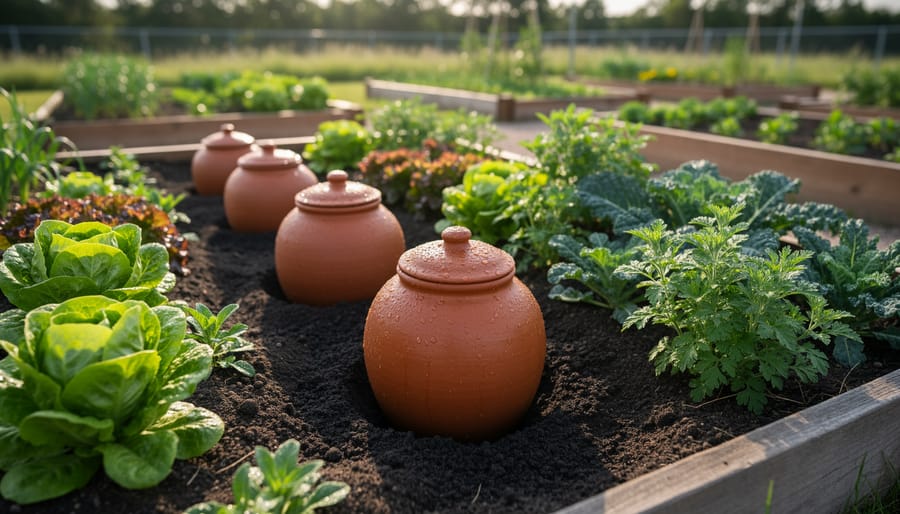
Olla irrigation represents one of humanity’s oldest water-saving techniques, with archaeological evidence tracing its use back over 4,000 years to ancient China and North Africa. This time-tested method employs unglazed clay pots buried in the soil near plant roots. Farmers fill these vessels with water, which gradually seeps through the porous clay walls directly into the root zone at a rate determined by the plants’ water uptake.
The system’s elegance lies in its simplicity and efficiency. As soil dries, capillary action draws water through the clay at precisely the rate plants need it, eliminating runoff and evaporation losses. When soil moisture is adequate, seepage slows naturally.
Today’s renewed interest stems from growing water scarcity concerns and the push toward regenerative agriculture. Manitoba farmer Sarah Chen reports 70% water savings compared to conventional drip systems in her market garden, while maintaining superior plant health. The method particularly appeals to small-scale operations and organic growers seeking low-tech, sustainable solutions that require minimal infrastructure investment and zero electricity.
Practical Use in Canadian Market Gardens
Olla irrigation works particularly well for warm-season crops like tomatoes, peppers, squash, and melons in Canadian market gardens. For optimal results, space ollas 60-90 cm apart for shallow-rooted vegetables and up to 120 cm for deeper-rooted plants like tomatoes. Each olla typically waters a radius of approximately 45-60 cm, depending on soil type and plant requirements.
Water savings are impressive, with olla systems reducing water consumption by 50-70% compared to overhead irrigation while maintaining excellent crop yields. This efficiency proves especially valuable during Alberta’s increasingly unpredictable summer rainfall patterns.
Sarah Chen, who operates a certified organic market garden near Okotoks, Alberta, implemented ollas across her 0.4-hectare tomato production area in 2022. “The difference was remarkable,” she shares. “Not only did we cut our water use by nearly 60%, but we saw fewer disease issues since the foliage stayed dry. The initial investment in ceramic pots paid for itself within one growing season through reduced water costs and healthier plants.”
Chen recommends starting small with 10-15 ollas to learn proper filling schedules before expanding. She fills her ollas every 3-4 days during peak summer heat, adjusting based on soil moisture monitoring and plant observation.
Scaling Considerations and Limitations
Ollas excel in small-scale applications like market gardens or raised beds, requiring minimal initial investment ($15-30 per vessel) but considerable labor for installation and refilling every 3-7 days. For properties under 0.2 hectares, this hands-on approach builds intimate knowledge of soil moisture patterns. However, scaling beyond 50 ollas becomes impractical compared to automated subsurface drip systems.
Alberta farmer Sarah Chen found ollas ideal for her heritage tomato operation but switched to drip tape when expanding to commercial production. Cost-effectiveness shifts dramatically at scale: while ollas cost less upfront, subsurface drip irrigation offers better returns on larger acreages through reduced labor and consistent delivery across 2-20 hectares. Choose ollas when prioritizing water conservation in small, high-value plantings. Transition to mechanized subsurface methods when labor availability or field size demands efficiency over the growing season.
Comparing the Four Methods: Which System Fits Your Farm?
Choosing the right irrigation method for your farm requires balancing several factors unique to your operation. Let’s break down how surface drip, subsurface drip, micro-sprinklers, and soaker hoses compare across key decision points.
When it comes to initial investment, surface drip and soaker hose systems are the most budget-friendly, typically costing $500-$1,500 per hectare. Micro-sprinklers fall in the mid-range at $1,200-$2,500 per hectare, while subsurface drip represents the highest upfront cost at $2,000-$4,000 per hectare. However, don’t let initial numbers tell the whole story.
Operating costs shift the equation considerably. Subsurface drip systems, once installed, require minimal maintenance and deliver exceptional water efficiency—often reducing water use by 30-50 percent compared to conventional methods. “We saw our water bills drop significantly within the first season,” shares Margaret Chen, who manages a 50-hectare vegetable operation near Lethbridge. Surface drip and soaker hoses cost less upfront but may need annual replacement, particularly in Alberta’s harsh winter conditions.
Labor requirements vary substantially. Soaker hoses and surface drip demand regular monitoring and seasonal removal for protection against freeze-thaw cycles. Subsurface systems, permanently installed below ground, require minimal intervention once established. Micro-sprinklers need periodic cleaning but generally handle Alberta’s conditions well.
Farm size and crop type matter tremendously. Small-scale operations under 10 hectares often find soaker hoses perfectly adequate for row crops and garden vegetables. Mid-sized farms between 10-50 hectares typically benefit from surface drip or micro-sprinklers, especially for high-value crops like berries or greenhouse production. Larger operations exceeding 50 hectares increasingly favor subsurface drip for field vegetables and permanent plantings.
Alberta-specific considerations include freeze protection, soil types, and growing season length. Clay-heavy soils common in central Alberta work exceptionally well with subsurface drip, while sandier soils in southern regions may benefit from micro-sprinklers’ broader coverage pattern.
Your decision framework should prioritize water efficiency needs, available capital, crop value, and long-term farm plans. High-value permanent crops justify subsurface investment, while annual rotations might favor flexible surface systems. Consider starting small with one method, gathering real-world data from your specific conditions, then scaling what works best for your operation.
Soil-Water Management Best Practices for Subsurface Systems
Successfully managing soil and water with subsurface systems requires attention to several key factors that directly impact your crop yields and long-term soil health. The good news is that with the right approach, these systems can actually improve your soil quality over time.
Start by monitoring soil moisture levels at multiple depths. Installing sensors at 15 cm, 30 cm, and 60 cm gives you a complete picture of water distribution and helps prevent over-irrigation. Many Alberta farmers using drip tape systems check their sensors daily during peak growing season, adjusting irrigation schedules based on real-time data rather than fixed timers.
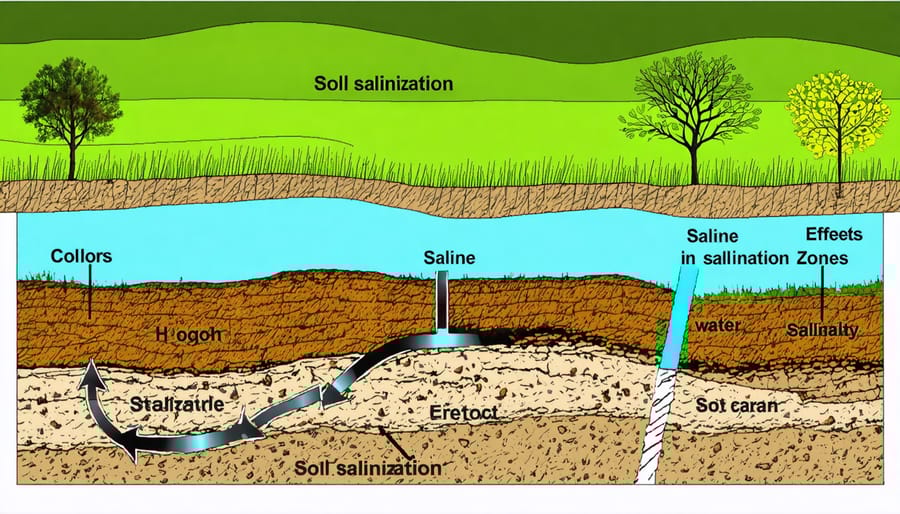
Salt management becomes especially important with subsurface systems. Without regular rainfall to flush salts downward, preventing salt accumulation requires periodic deep watering cycles every two to three weeks during the growing season. This leaching fraction, typically 10-15% extra water, carries salts below the root zone.
Maintaining soil structure is equally critical. Subsurface irrigation works best when combined with organic amendments like compost or cover crop residues, which improve water infiltration and reduce compaction around emitters. A producer near Lethbridge shared that incorporating composted manure in spring improved his drip system’s efficiency by 20% within one season.
For prairie conditions, seasonal adjustments are essential. Reduce irrigation frequency by 40-50% during cooler spring and fall periods, and increase monitoring during chinook events when unexpected warm spells can rapidly dry soils. Winter preparation involves flushing lines and protecting shallow installations from freeze-thaw cycles.
Consider integrating precision technology for optimal soil moisture management. Modern controllers can automatically adjust irrigation based on weather data, soil sensors, and crop growth stages, reducing water use while maintaining yields. This combination of technology and traditional soil stewardship creates resilient, productive systems suited to Alberta’s unique climate challenges.
Getting Started: Implementation Steps for Alberta Farmers
Transitioning to a new irrigation system starts with understanding your baseline conditions. Begin by conducting comprehensive soil and water tests to determine texture, infiltration rates, salinity levels, and water quality. Alberta Agriculture and Irrigation offers testing services through approved laboratories, providing data essential for selecting the right method for your operation.
Your choice between drip tape, subsurface drip (SDI), clay pot systems, or wicking beds depends on several factors: crop type, field size, water availability, and budget. For row crops exceeding 40 hectares, SDI typically offers the best return on investment. Smaller diversified operations may benefit from the flexibility of drip tape or the sustainability of clay pot systems for high-value crops.
Finding reliable suppliers in Canada is straightforward, with companies like Netafim Canada, Jain Irrigation, and regional distributors providing equipment and installation support. Many offer consultation services to help design systems tailored to Alberta’s climate and soil conditions. Connect with local irrigation specialists who understand prairie agriculture and can recommend configurations proven in similar operations.
Financial support makes implementation more accessible. The Canadian Agricultural Partnership offers cost-sharing programs covering up to 50 percent of eligible expenses for water management infrastructure. Alberta’s On-Farm Climate Action Fund provides additional support for projects reducing greenhouse gas emissions through efficient irrigation. Contact your regional Agricultural Service Board for application assistance.
Starting with a pilot project minimizes risk while building your expertise. Dedicate one to two hectares to test your chosen method, monitoring performance throughout a full growing season. This approach allows you to refine management practices before scaling up.
Leverage local knowledge by connecting with irrigation districts, attending field days hosted by extension services, and joining farmer networks. These connections provide practical insights that complement technical information, helping you implement irrigation solutions that truly work for your operation.
Subsurface irrigation represents a significant step forward in water conservation and agricultural productivity for Canadian farmers. Throughout this exploration of four distinct methods—drip tape, deep subsurface drip, capillary wick systems, and clay pot irrigation—we’ve seen how these technologies can reduce water consumption by 30-50% while improving crop yields and soil health. The benefits are clear: less evaporation, targeted root zone delivery, reduced weed pressure, and more efficient nutrient uptake.
However, choosing the right system depends entirely on your specific situation. Consider your crop types, soil characteristics, field size, water quality, and available budget. A small-scale organic vegetable operation near Edmonton might find clay pot irrigation ideal, while a large grain producer in southern Alberta could benefit from deep subsurface drip systems. There’s no one-size-fits-all solution, and that’s perfectly okay.
You don’t have to navigate these decisions alone. Alberta Agriculture and Irrigation offers regular workshops on modern irrigation technologies, bringing together farmers who’ve already made the transition and experts who understand our unique climate challenges. Local agricultural extension offices provide consultations to help assess your land’s suitability for different systems, and many equipment suppliers offer demonstration projects before you commit to full-scale installation.
The time to act on sustainable water management is now. Start small if needed, perhaps with a test plot, and learn what works best for your operation. Your investment in efficient irrigation today protects both your farm’s future productivity and the water resources our entire agricultural community depends on.