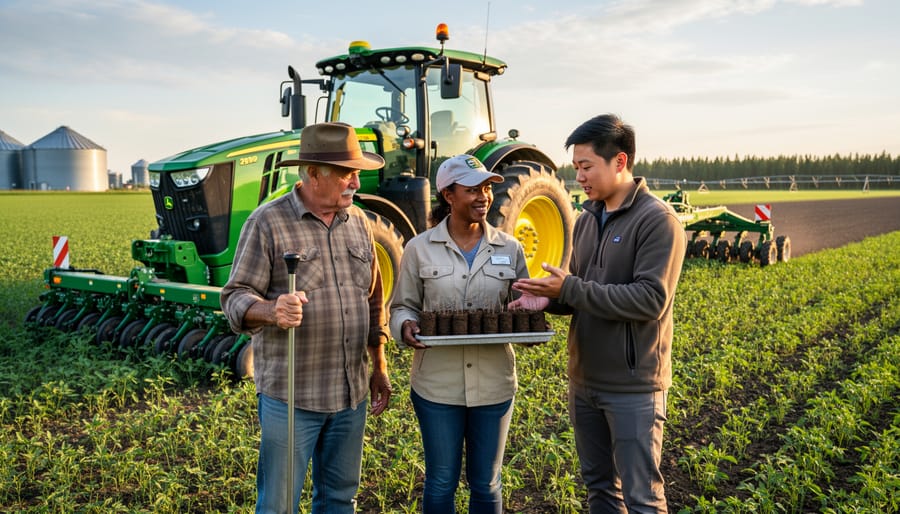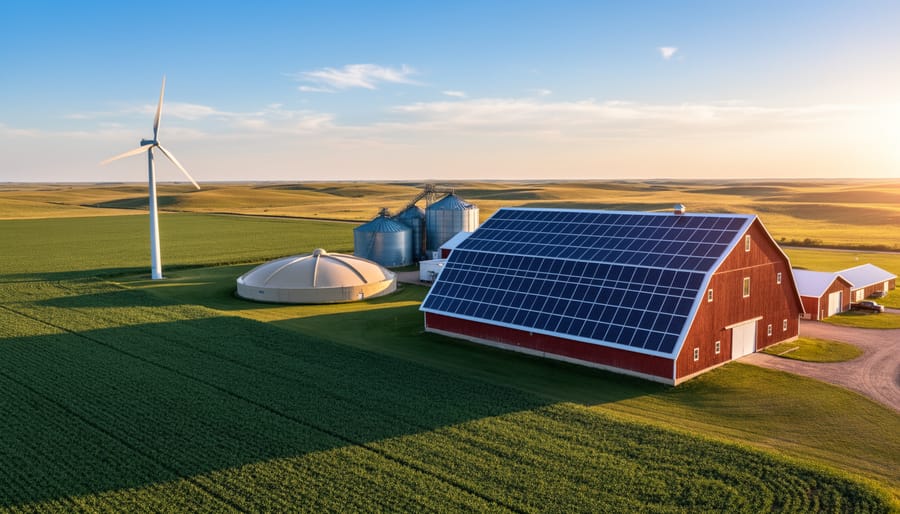
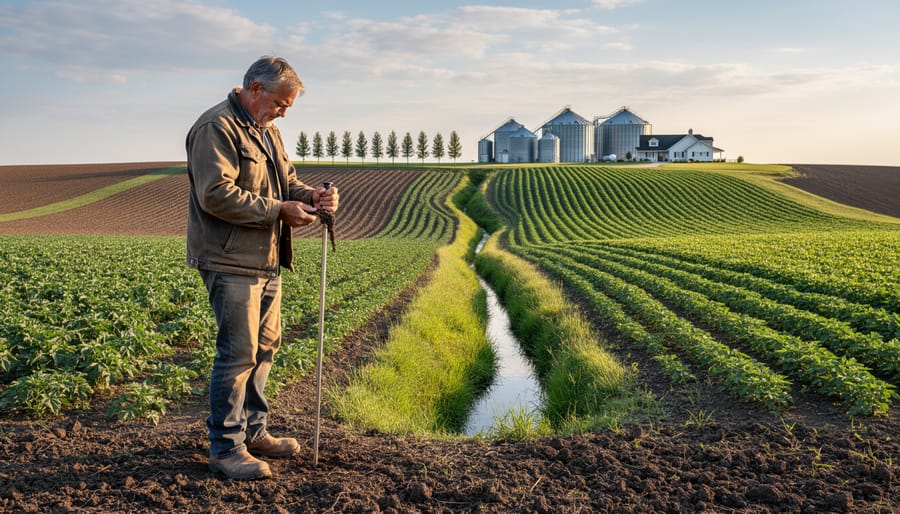
Examine your farm’s participation in sustainability programs through the lens of policy longevity rather than immediate payouts. Programs that survived past three funding cycles—like Ontario’s Environmental Farm Plan, which has operated since 1993—share critical design elements: flexible timelines that accommodate crop rotations, retroactive recognition of existing conservation practices, and payment structures tied to verified outcomes rather than paperwork completion. Identify whether current incentives you’re considering offer multi-year commitments with inflation adjustments, a telltale sign of structural stability that protects your investment in practice changes.
Calculate the true cost-benefit by tracking what neighbouring farms experienced when programs ended abruptly. Manitoba’s Sustainable Agriculture Initiative termination in 2012 left 340 producers mid-transition, having invested in infrastructure for practices they could no longer afford to maintain. This pattern repeats when policies lack dedicated long-term funding sources or sunset clauses that trigger automatically. Request budget allocation details and legislative backing before committing resources to new initiatives.
Prioritize programs with built-in adaptation mechanisms responding to climate variability and market shifts. Alberta’s Agricultural Carbon Offset system demonstrates this approach by adjusting protocols every two years based on producer feedback and emerging science, maintaining relevance for participating farms since 2007. Ask program administrators specific questions about review cycles, stakeholder consultation processes, and historical amendment records—bureaucratic details that directly determine whether today’s sustainable practice remains supported through tomorrow’s policy landscape.
What Policy Sustainability Really Means for Canadian Farmers
The Three Pillars of Lasting Farm Policy
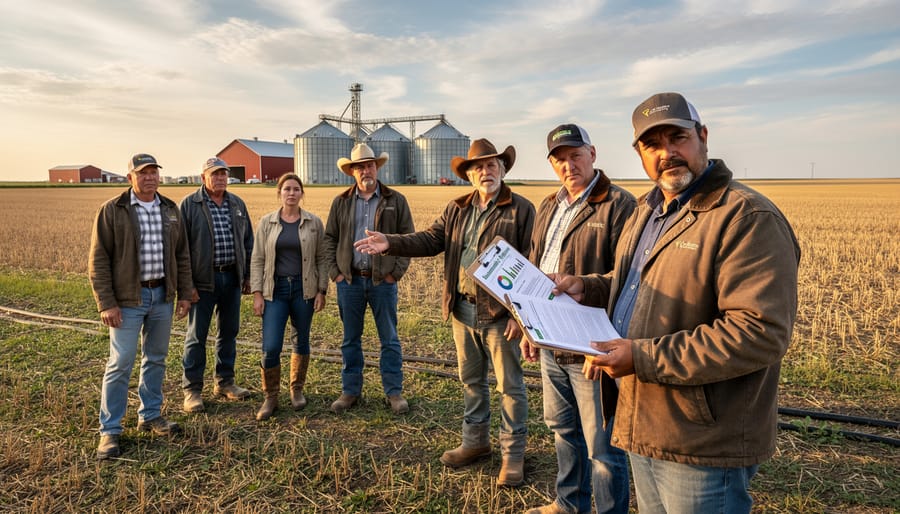
When farm sustainability incentives collapse after a few years, it’s rarely because the programs themselves were flawed. More often, they lacked the structural foundation needed to weather political shifts and budget pressures. Three core pillars determine whether incentive programs become reliable fixtures or temporary experiments.
Economic viability stands as the first pillar. Programs must demonstrate clear return on investment, not just for participating farmers but for the broader agricultural economy. Alberta’s Agricultural Carbon Offset program survived because it quantified carbon sequestration value, creating tangible economic benefits that justified continued funding. When programs require farmers to adopt climate-smart farming practices without demonstrating financial payback within three to five years, political support typically erodes. The most durable incentives balance upfront costs with measurable long-term savings in input costs, soil health improvements, or premium market access.
Administrative consistency forms the second pillar. Programs with straightforward application processes, predictable payment schedules, and minimal bureaucratic complexity maintain farmer participation across political transitions. Dr. Sarah Mitchell, agricultural policy researcher at the University of Alberta, notes that “farmers won’t commit to multi-year sustainability transitions if program rules change annually or reimbursement processes become unreliable.” Successful provincial programs establish dedicated administrative teams and standardized protocols that remain stable regardless of ministerial changes.
The third pillar, political support, requires building coalitions beyond single parties or ministers. When programs gain backing from farm organizations, environmental groups, and rural economic development agencies simultaneously, they develop immunity to election cycle disruptions. This cross-sector support transforms sustainability incentives from political initiatives into agricultural infrastructure that multiple stakeholders defend. Programs embedded in legislation rather than ministerial discretion show significantly higher survival rates beyond five-year horizons.
The Real Cost of Policy Instability: An Alberta Case Study
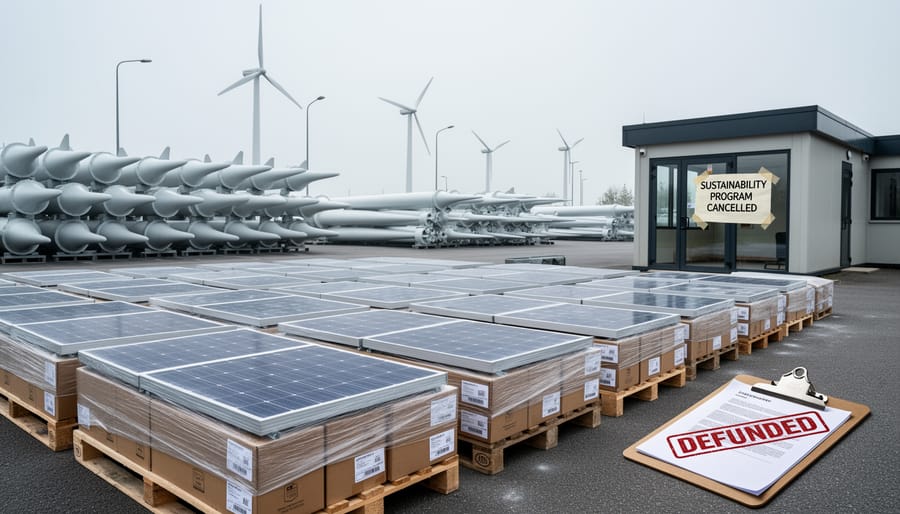
When Alberta’s Agricultural Carbon Offset Program underwent significant restructuring in 2019, the ripple effects reached farms across the province in ways that continue to shape decision-making today. The program had provided reliable incentives for farmers adopting reduced tillage systems and cover cropping, but when funding mechanisms shifted and eligibility requirements changed dramatically, many operations found themselves mid-transition with uncertain financial footing.
Take the experience of the Davidson family near Lethbridge. In 2017, they invested $85,000 in new no-till equipment and began converting 400 hectares to conservation practices, banking on offset payments that were projected through 2022. When program changes reduced their expected payments by nearly 60% in year three, they faced tough choices about continuing their transition or reverting to conventional practices to recover costs faster.
Agricultural extension specialists across Alberta report similar stories. Dr. Jennifer Walsh from Olds College documented how 40% of participating farms in her regional study either slowed or halted conservation adoption following the program changes. The issue wasn’t just lost revenue but the erosion of trust in long-term planning.
The Peace Country Cattlemen’s Association experienced comparable challenges with riparian restoration incentives. Members had committed to multi-year fencing projects and alternative watering systems, with program support covering roughly 50% of implementation costs. When provincial budget reallocations led to the program’s suspension in 2020, ranchers were left with partially completed projects and outstanding material costs.
What makes these situations particularly challenging is the biological timeline of agricultural change. Soil health improvements from reduced tillage typically require five to seven years before measurable benefits emerge. Cover crop systems need at least three seasons to optimize. When policy support disappears during this establishment period, farmers bear the full financial risk during the most vulnerable phase.
The economic impact extends beyond individual operations. Equipment dealers in central Alberta reported that uncertainty around program continuity directly influenced purchasing decisions. When farmers can’t confidently predict policy support, they defer major investments, affecting the entire agricultural supply chain.
These Alberta experiences highlight a fundamental disconnect: conservation transitions operate on ecological timelines measured in years and decades, while policy cycles often shift with annual budgets and political transitions. The real cost isn’t just measured in lost payments but in the reluctance of farmers to commit to future environmental initiatives, even when agronomically sound.
Building Incentives That Farmers Actually Use
Matching Incentive Timelines to Farm Reality
Farm operations run on biological timelines and financial cycles that don’t neatly align with annual government funding announcements. A cattle producer rotating between canola, barley, and forage needs multi-year planning certainty. When incentive programs operate on single-year budgets with unpredictable renewal, farmers face impossible decisions about whether to invest in sustainable practices.
Consider the reality of purchasing conservation tillage equipment. A farmer in central Alberta might need $150,000 for appropriate machinery, with that investment amortized over 10-15 years. When programs offer one-year cost-share funding without guaranteed renewal, the math simply doesn’t work. The same challenge applies to cover crop rotations that take 3-5 years to show soil health improvements, or perennial crop transitions that require patience through establishment years.
Successful incentive design matches these farm realities. Payment schedules should accommodate seasonal cash flow patterns, recognizing that grain farmers receive most income at harvest while livestock producers have more regular revenue streams. Programs supporting equipment investment cycles need commitment periods reflecting actual depreciation timelines.
Saskatchewan’s Environmental Farm Plan demonstrates this alignment well, offering five-year commitments that let farmers genuinely integrate sustainable practices into their rotation planning. When Bruce Patterson adopted reduced tillage in 2018, he knew the program would support him through the transition period until soil structure improved and input costs decreased.
Policy sustainability means recognizing that farm changes aren’t instantaneous projects but gradual transformations requiring patient, predictable support structures.
Reducing Paperwork Without Losing Accountability
Farm operators juggle countless responsibilities, from managing crop rotations to maintaining equipment, leaving little time for paperwork. Yet accountability remains essential for ensuring taxpayer dollars support genuine environmental outcomes. The key lies in verification methods that respect farmers’ time while maintaining program credibility.
Technology offers promising solutions. Digital platforms now allow producers to submit geo-tagged photos from smartphones, documenting practices like cover cropping or riparian buffer establishment without extensive form-filling. Alberta’s Environmental Farm Plan program demonstrates this approach, enabling farmers to track improvements through simple online interfaces rather than complex paper trails.
Risk-based verification represents another effective strategy. Instead of auditing every participant annually, programs can focus intensive reviews on high-value projects or random samples while using self-reporting for routine compliance. This mirrors how agricultural lending institutions assess applications, concentrating resources where verification matters most.
Ontario’s Environmental Stewardship Program has successfully implemented third-party verification through agronomists who already visit farms for other services. This bundled approach means one farm visit serves multiple purposes, reducing disruption while maintaining independent oversight.
The most sustainable programs recognize that farmers are partners, not adversaries. When verification processes respect agricultural realities—like conducting field visits during appropriate seasons or offering flexible submission deadlines around planting and harvest—participation rates improve. Simple attestation clauses, where farmers confirm practice adoption under penalty of ineligibility, can effectively balance trust with accountability for lower-risk activities. These streamlined approaches acknowledge that excessive bureaucracy ultimately undermines both program participation and long-term environmental goals.

Flexible Standards That Respect Regional Differences
Effective policy design recognizes that Alberta’s diverse agricultural landscape demands flexibility rather than rigid, uniform requirements. A grain farm in the Peace Country faces entirely different challenges than a livestock operation in southern Alberta or a market garden near Edmonton. Soil types vary from heavy clay to sandy loam, growing seasons shift by weeks depending on location, and access to markets and infrastructure differs dramatically between regions.
Successful sustainable policies build in regional adaptations that acknowledge these realities. Rather than mandating specific practices, strong programs establish outcome-based standards that farmers can meet through various approaches suited to their conditions. For example, a soil health incentive might measure carbon sequestration or organic matter increases instead of requiring identical cover crop species across all zones.
This flexibility proves essential for sustainable farming transitions, allowing producers to innovate within their unique contexts. A rancher managing native prairie in Zone 2 shouldn’t follow the same guidelines as someone farming irrigated land in Zone 3.
Regional advisory committees, composed of local farmers and agronomists, can help shape policy implementation to reflect ground-level knowledge. These groups ensure programs remain practical and achievable across different environments while maintaining core sustainability objectives.
When policies respect regional differences, they gain farmer buy-in and achieve better environmental outcomes. This approach builds trust and demonstrates that policymakers understand agriculture’s complexity, creating programs farmers actually want to participate in rather than viewing as bureaucratic impositions disconnected from their daily realities.
How to Create Financial Stability in Incentive Programs
Multi-Year Funding Commitments: Lessons from Successful Programs
Successful long-term farm programs share a common characteristic: dedicated, predictable funding. In Canada, the Agricultural Policy Framework (APF) series demonstrates this principle. Since 2003, the federal-provincial-territorial agreements have provided five-year funding commitments, allowing programs like the Environmental Farm Plan to become established fixtures in farm business planning across provinces including Alberta.
“Multi-year funding creates the certainty farmers need to make major investments,” explains Dr. Sarah Thompson, agricultural economist at the University of Alberta. “When producers know a program will exist for at least five years, they can plan equipment purchases, infrastructure changes, and business transitions with confidence.”
Internationally, New Zealand’s Sustainable Farming Fund has operated continuously since 2000 with dedicated funding legislation. The program survived multiple government changes because funding was built into agricultural legislation rather than annual budgets. This structural protection proved essential for resilience.
The Ontario Soil and Crop Improvement Association’s programs offer another Canadian example. By securing funding through both government commitments and industry partnerships, they created multiple revenue streams that protected against budget cuts. When provincial funding fluctuated, industry contributions maintained program continuity.
Quebec’s Prime-Vert program similarly benefits from legislated funding requirements tied to environmental outcomes rather than political cycles. This approach has enabled consistent support for beneficial management practices since 2013.
The key lessons are clear: successful programs secure funding through legislation rather than discretionary budgets, establish multi-year agreements that span election cycles, and diversify funding sources to reduce vulnerability. These structural elements transform temporary initiatives into reliable foundations for farm sustainability transitions.
What Farmers Can Do to Support Sustainable Policy Design
Farmers and agricultural communities hold significant power in shaping the incentive programs that affect their livelihoods. Your practical experience and local knowledge are invaluable resources that policymakers need to create programs that actually work on the ground.
Start by connecting with agricultural associations in your region. Organizations like the Agricultural Producers Association of Saskatchewan or the Alberta Wheat Commission regularly participate in policy consultations and can amplify your voice. These groups often have established relationships with government agencies and understand how to present farmer perspectives effectively. If you’re not already a member, consider joining associations relevant to your specific sector or region.
When government agencies announce consultations or request feedback on proposed programs, take the time to respond. Your input matters more than you might think. Share specific details about what works and what doesn’t on your farm. Rather than general statements, provide concrete examples: “The 60-day application window doesn’t align with seeding season” is more actionable than “The timeline is too short.”
Volunteer for pilot programs whenever possible. These early-stage initiatives give you direct influence over program design while providing real-world testing conditions. Pilot participants often have ongoing communication with program designers, creating opportunities to suggest adjustments before full rollout. Plus, you’ll gain firsthand knowledge of new practices or technologies with reduced risk.
Document your experiences with current incentive programs, both positive and negative. Keep records of application processes, payment timelines, administrative burdens, and actual outcomes. This data becomes powerful evidence when advocating for improvements. Consider sharing these experiences through farmer networks, online forums, or direct communication with your local Member of Parliament or provincial representatives.
Collaborate with neighboring farms to identify common challenges and successes. When multiple producers present consistent feedback, policymakers recognize patterns that need addressing. Form informal discussion groups or join existing peer networks focused on sustainable agriculture to strengthen your collective voice and ensure the next generation of farm policies reflects real farming realities.
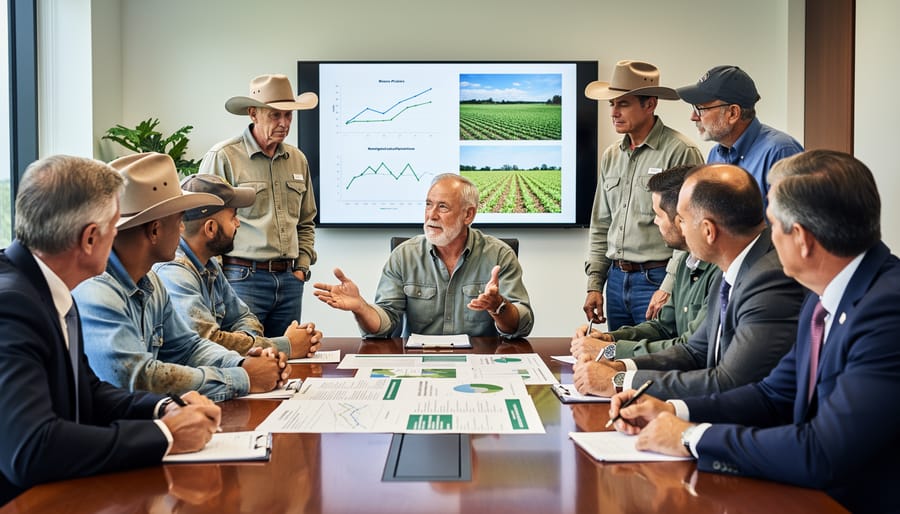
Policy sustainability isn’t something governments can create in isolation. The most effective and enduring farm incentive programs are built on a foundation of collaboration, where farmer voices shape design from the ground up. When policies reflect the realities of your operations—accounting for regional climate variations, crop diversity, market pressures, and the actual costs of implementing change—they stand a far better chance of surviving budget cycles and political shifts.
Your experience matters. Whether you’ve participated in existing programs or watched them fail to address your needs, that knowledge is invaluable. Policymakers need to hear about what works on actual Alberta land, not just in theory. Community support amplifies this impact. When farming organizations, agricultural groups, and rural municipalities advocate together for realistic program design, they create the political will necessary for sustained funding and adaptive management.
The truth is, you’re not just recipients of policy—you’re key architects of what works. Every conversation with program administrators, every survey response, every community meeting where you share honest feedback about transition to sustainable practices helps build better programs. Alberta farmers have always been innovators, adapting to challenges with practical solutions. That same innovation applies to policy development. By engaging actively in program design, sharing data from your operations, and building coalitions around shared needs, you ensure that sustainability incentives actually support the transitions they promise to fund—creating lasting change that benefits both your land and your livelihood.