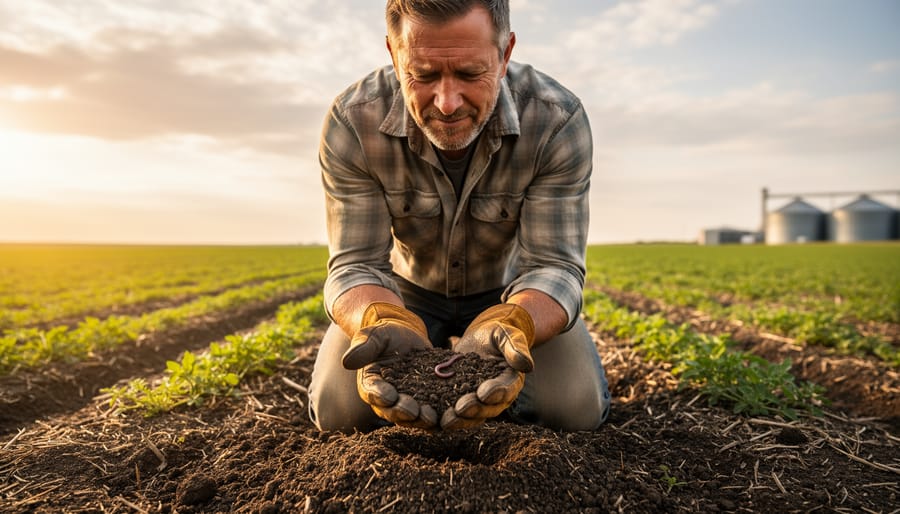
Integrated seed solutions are a whole-system approach to seed: choosing varieties suited to your land, saving and testing your own seed where it makes sense, and tying those choices to soil health, crop rotation and local knowledge. Instead of treating seed as a once-a-year purchase, you manage it as a living part of the farm, one that adapts as your fields, climate and markets change.
Why does it work? Seed that fits your soil, your frost dates and your management style tends to establish more evenly and handle a rough season better. A variety bred for a different region may look good on paper, but it won’t always perform on a quarter section near Lacombe or Peace River. Good seed decisions start with what your own fields are telling you.
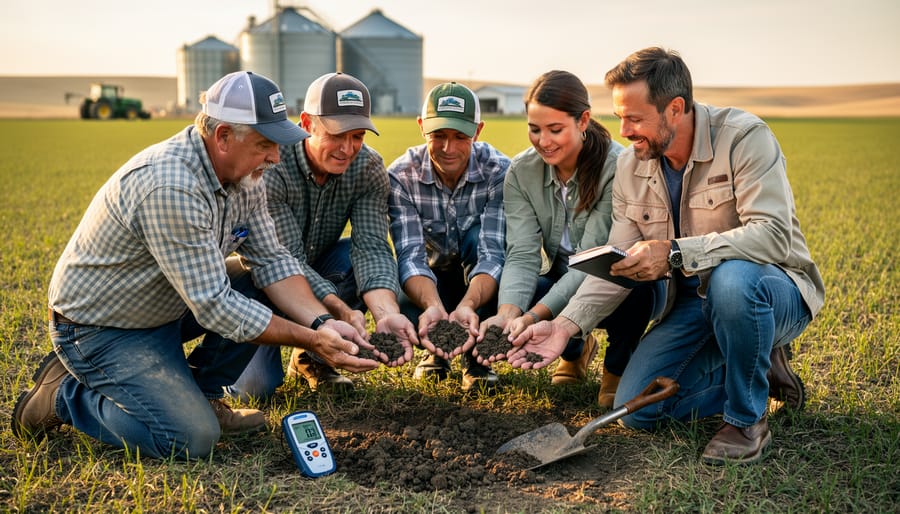
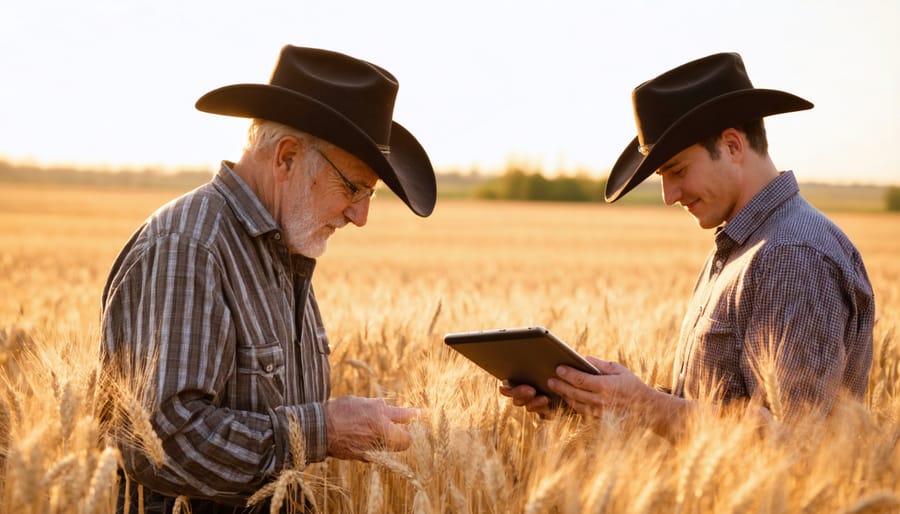
This approach also depends on people. Seed-saving habits, variety trials and hard-won lessons about what grows well in Alberta’s short seasons are often learned across generations, and communities are passing down farm wisdom in ways that strengthen entire seed systems.
Below, you’ll find a clear starting sequence, a Canadian case study and insight from an expert voice, so you can put integrated seed solutions to work on your own acres, one practical step at a time.
What Integrated Seed Solutions Mean on an Alberta Farm
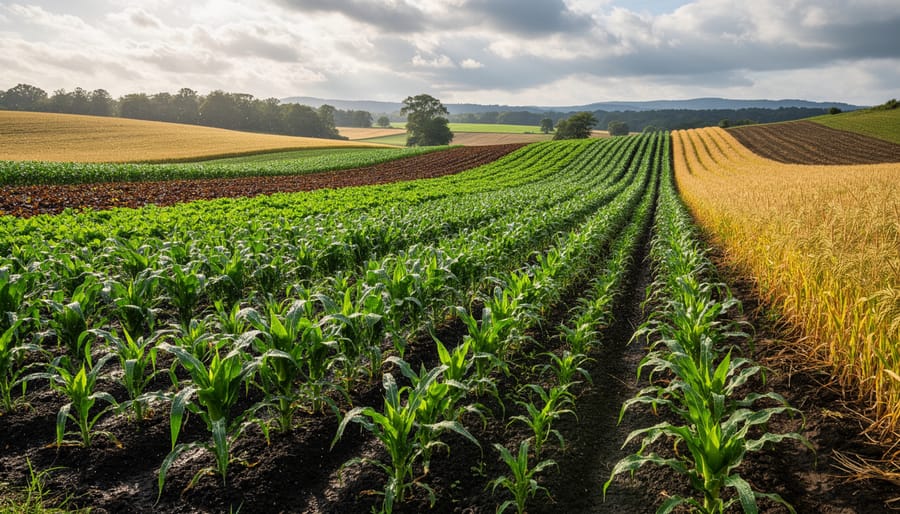
Why Seed Systems Matter for Resilience
Seed is where every crop decision begins. The variety you plant shapes how well a stand establishes, how it handles a dry spell, and how much it contributes to soil cover and organic matter once the season ends. When seed is dependable and well matched to your land, yield stability and farm income tend to follow.
Alberta offers a particular kind of opportunity here. Frost-free windows can be short, and precipitation swings from one year to the next, sometimes within a single season. Rather than treating that as a barrier, many growers use it as a reason to be deliberate about seed. A variety that matures a week earlier, or one that tolerates a dry July, can make the difference between a comfortable harvest and a stressful one.
Relying on one variety or one source concentrates risk. Spreading it out works better, and research on seed diversification increases resilience supports that idea. Mixing varieties and crops across fields means a bad break in the weather rarely hits everything at once.
The takeaway is simple: strengthen the starting point, and the rest of the farm benefits.
The Building Blocks of an Integrated Approach
An integrated approach works because each piece supports the others. Here are the five building blocks most Alberta operations start from.
Locally adapted varieties. Varieties bred or selected for short seasons and variable moisture tend to reach maturity ahead of the first fall frost. Check days to maturity, lodging resistance and performance in your own soil type, not just the regional average.
On-farm seed saving and cleaning. Saving seed from your best-performing fields gives you a supply that is already tuned to your land. Cleaning removes weed seeds and shrunken kernels, and a simple germination test before seeding confirms what you are actually planting.
Community seed exchanges. Neighbours, local seed-growing groups and exchanges let you trade varieties, share results and fill gaps when a supplier runs short. They also widen the genetic pool you can draw on without a big upfront cost.
Crop diversity and rotation. Rotating cereals, pulses and oilseeds breaks pest and disease cycles and spreads weather risk across different crops. A pulse in the rotation can also contribute nitrogen for the crop that follows, which supports soil health over time.
Ongoing education. Seed systems keep changing, so learning needs to be continuous. Workshops, field days and peer conversations help you refine each of the practices above as conditions shift.
You don’t need all five on day one. Many farms begin with one or two, such as a small variety trial and a germination test on 10 to 20 hectares, then add layers as confidence and results grow.
How Education and Outreach Make Seed Solutions Stick
Workshops, Field Days and Podcasts: Where Farmers Are Learning
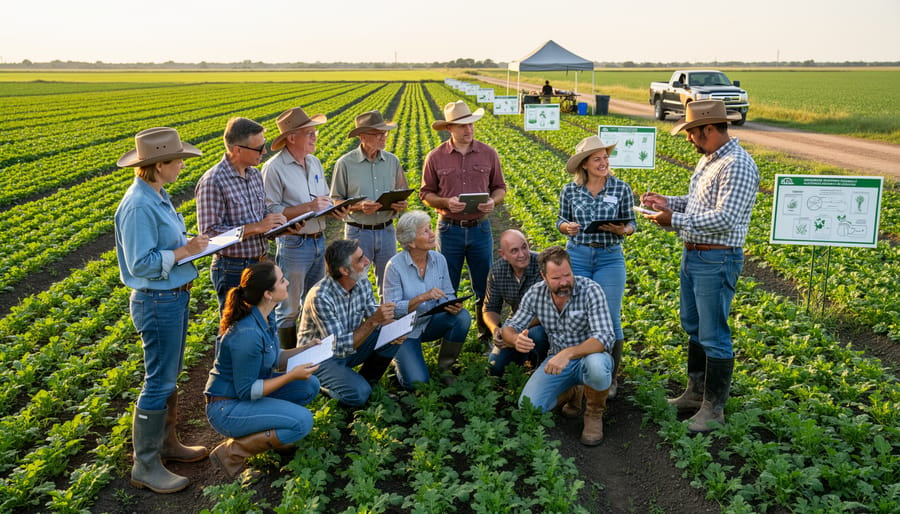
Busy seasons leave little room for long courses, so the formats that stick tend to be short, hands-on and close to home. Each one supports a different piece of the seed system.
Workshops are where the practical skills live. A half-day session on cleaning, drying and germination testing lets you handle the equipment, see what a good sample looks like and ask questions on the spot. You head home able to test your own seed, not just talk about it.
Field days cover variety trials. Walking side-by-side plots with the growers who planted them shows you how different varieties handle Alberta’s moisture swings and short seasons, and which ones deserve a small trial on your own land. It’s the same spirit behind [farm-based learning](https://organicagcentre.ca/agro-education-and-outreach/how-farm-based-learning-transforms-albertas-next-gen-farmers/), where the field itself becomes the classroom. Younger growers get a version of this too, and the [4-H learning model](https://organicagcentre.ca/agro-education-and-outreach/how-the-4-h-learning-model-transforms-farm-education-in-alberta/) shows how learning by doing builds confidence early.
Podcasts fill the gaps in your schedule. Listening to a seed grower or agronomist while you’re in the tractor or driving to town gives you expert conversation without adding a single meeting to your calendar. Many farmers use an episode to spark an idea, then follow it up at a workshop or field day.
Together, these formats let you learn at the pace your operation allows.
Expert Voices From the Field
Some of the best lessons about seed systems never make it into a manual. They come from the people who walk the fields every spring and fall, and who’ve learned what works on Alberta soil through trial, error and a lot of conversations with neighbours.
[Interview content to be sourced: this space is reserved for a conversation with an Alberta seed grower, agronomist or soil specialist. Quotes and attributions will be added only after a real interview has been completed and approved by the interviewee.]
When we sit down with a guest, we plan to explore a few themes:
– How they decide which varieties earn a spot on their acres, and what they track during the season to judge performance.
– What their seed cleaning, testing and storage routine looks like, including the equipment and timing that fit a working farm.
– How soil health practices and crop rotation shape their seed choices from year to year.
– Where they turn for learning and support, whether that’s a local seed network, a field day or a trusted peer.
– What they’d tell a farmer just starting to build a more connected seed system.
Interview-style content like this is a core part of how we share knowledge, whether in written form or through the podcast. Hearing directly from someone who has made integrated practices part of daily operations makes the ideas feel less abstract and a lot more doable.
If there’s an Alberta grower or specialist whose story deserves a spotlight, we’d love to hear the suggestion.
Putting Integrated Seed Solutions to Work: A Practical Starting Sequence
Choosing and Trialing Locally Adapted Varieties
Start with what your own fields tell you. Soil type, drainage, organic matter and the length of your frost-free window narrow the field of candidates fast. A variety that matures a week too late in a cool year costs more than one that yields slightly less but finishes on time. Ask neighbours, local seed growers and extension staff which varieties hold up in your area, then pick two or three to test against the one you already trust.
Keep the trial simple and fair. Seed each variety in side-by-side strips of the same width, on the same soil, with the same seeding rate (in kilograms per hectare), depth (in centimetres), fertility and timing. Strips of about 0.2 to 0.5 hectares work well on most operations, and repeating them in two spots on the field helps separate variety differences from patchy soil. Pay attention to the ground underneath, too, since practices that build soil carbon can change how a variety performs from one field to the next.
Write everything down. Record emergence date, days to maturity, lodging, disease pressure, yield and grain quality for each strip. A notebook or a simple spreadsheet is plenty. After two seasons you will have your own data to lean on, not just a seed catalogue’s promises.
Saving, Testing and Storing Seed Well
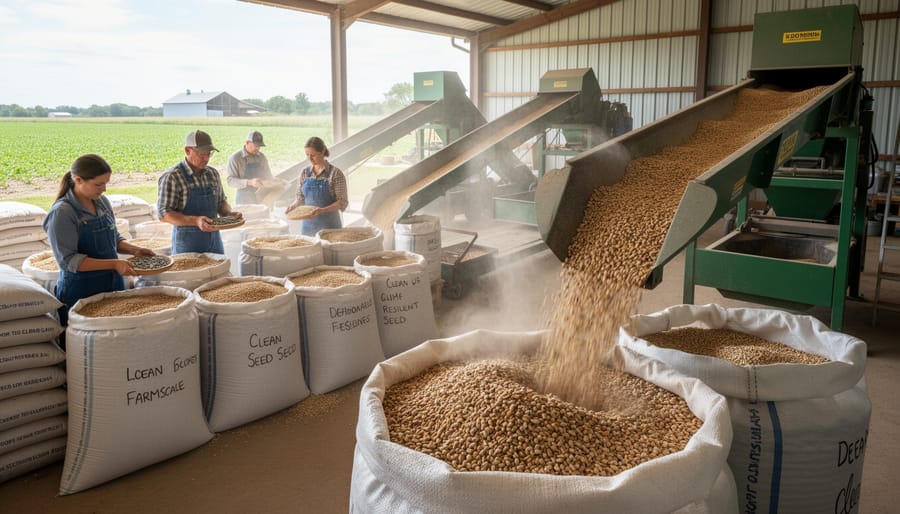
Saving your own seed can cut input costs and keep a variety adapted to your fields, but it only pays off if the seed is clean, dry and viable. Start by cleaning out weed seeds, chaff and shrivelled kernels with a screen or small fanning mill. Heavier, plump seed generally germinates better and emerges stronger.
Dry seed before it goes into storage. Cereals and pulses keep best at around 13 to 14 percent moisture or lower. Damp seed heats up, moulds and loses vigour quickly. Spread it thin on a tarp in a dry, ventilated spot if it needs a little more time.
Always run a germination test before seeding. Count out 100 seeds, wrap them in a damp paper towel, keep them at room temperature, and count sprouts after about a week. Anything below roughly 90 percent means you should raise your seeding rate or rethink using that lot. Adjust your seeding rate in kilograms per hectare to match the result.
Store seed in sealed, rodent-proof bins in a cool, dry place, ideally below 15°C. Cool temperatures slow ageing and discourage insects.
Saved seed makes sense for open-pollinated varieties you know perform well on your land. Buy certified seed when you want a new variety, need guaranteed purity, or can’t clean and test properly.
Alberta Case Study: A Farm Building Seed Resilience Step by Step
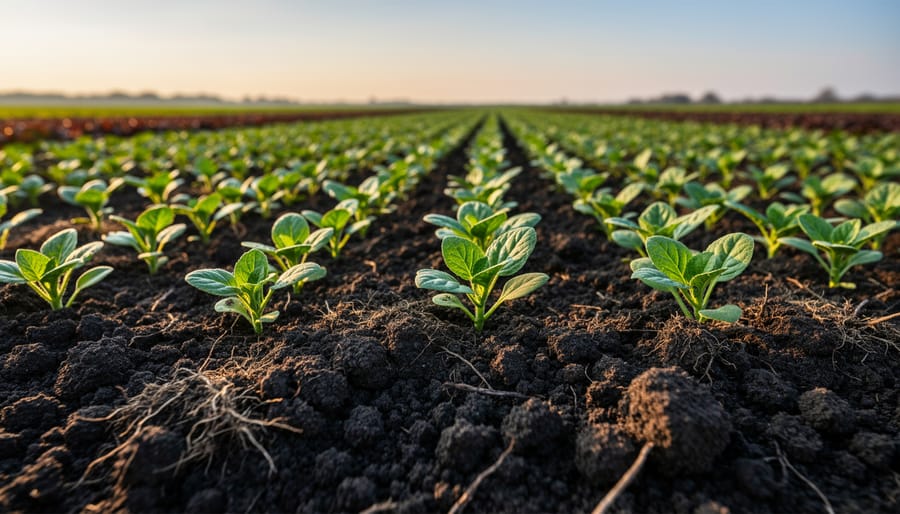
Alberta farms that have built seed resilience rarely do it in one leap. They stack small changes, and the story below shows how that sequence tends to unfold. This is a composite illustration, not a documented account of one named operation. If you’d like a verified example for publication, the details here are a placeholder to be replaced with a real farm’s permission-based story and its actual results.
Picture a mixed grain operation in central Alberta that had relied on purchased seed and one dominant cereal variety. After a dry spring followed by an early frost, the family wanted more options. They started small: a 2-hectare trial block comparing three locally adapted varieties side by side, with the same seeding depth (about 3 to 4 centimetres) and the same record sheet for emergence, vigour and harvest.
At the same time, they added a pulse crop to their rotation and began leaving more residue on the field to protect soil moisture. Neighbours joined them at a local field day, and a workshop on germination testing gave them the confidence to save and clean seed from their best-performing block.
| Practice | What changed | What the farm learned |
|---|---|---|
| Variety selection | Moved from one main variety to a small side-by-side trial | Local performance data beat assumptions |
| Crop rotation | Added a pulse crop between cereal years | Diversity spread risk across the season |
| Soil health | Kept more residue cover on fields | Better moisture holding in dry spells |
| Seed saving | Cleaned and germination-tested seed from the trial block | Testing first makes saved seed a safe choice |
| Community learning | Joined field days and shared notes with neighbours | Peer input shortened the learning curve |
The lesson isn’t any single practice. It’s the connection between them. Trials gave the farm evidence, soil practices protected the investment, and community learning made each step less risky. Starting on a small block meant mistakes stayed cheap, and every season added useful data to build on.
Common Questions About Integrated Seed Solutions
Farmers tend to ask the same handful of questions when they first look at integrated seed solutions. Here are the ones that come up most, with practical answers you can act on this season.
Does saved seed work for my crops?
It works well for self-pollinating crops like wheat, barley, oats and peas, as long as you clean it, test germination and keep the stand free of disease. Hybrids won’t breed true, so buy certified seed for those and save only where it makes sense.
How do I start with limited time or acreage?
Begin with one small trial, such as a 0.5 to 1 hectare block of a locally adapted variety planted beside your usual one. Record emergence, vigour and yield, then decide whether to scale up the following year.
How does this connect to soil health and carbon goals?
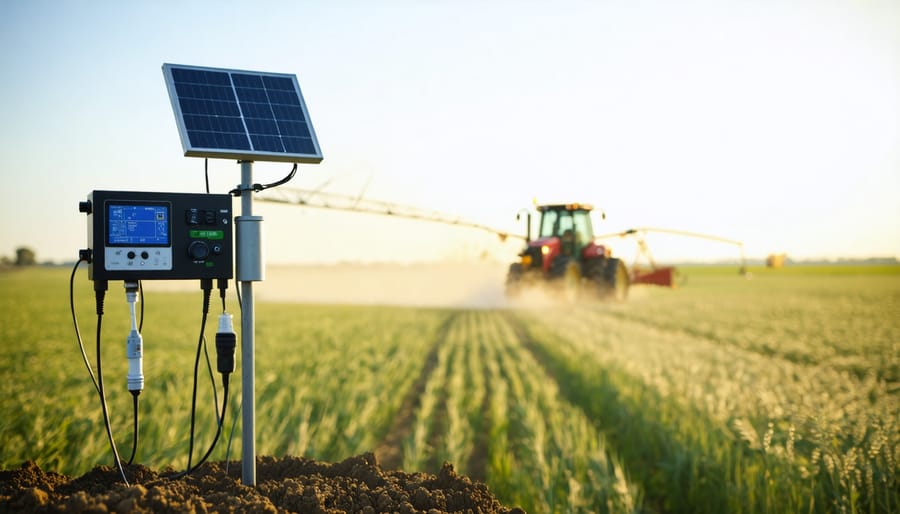
Diverse rotations and well-adapted varieties support stronger root systems and more ground cover, which feed soil biology and organic matter over time. Pairing seed choices with practices like reduced tillage and cover crops builds on that benefit, and smart water management helps those crops make the most of every millimetre of moisture.
Where can I find workshops and seed networks in Alberta?
Check regional field days, agricultural society events and farmer-led learning groups, and tune in to the Agro-Education and Outreach podcast for upcoming sessions. Neighbours who already save seed are often your best starting point.
Regulations and seed quality standards deserve a quick note of their own. Selling seed in Canada comes with requirements around variety registration, labelling and grade standards, so confirm what applies before you move any seed off your farm. Seed kept for your own use is simpler, but some varieties carry plant breeders’ rights or contract terms that limit saving, so read the fine print on what you buy.
Whatever you grow, a germination test is cheap insurance. Many labs can run one for a modest fee, and the result tells you the right seeding rate in kilograms per hectare so you aren’t guessing at establishment. A test paired with clean, dry, cool storage goes a long way toward consistent stands year after year.
Resilient seed systems aren’t built in a single season or with a single big decision. They grow out of connected practices: the variety you trial, the seed you clean and store, the soil you look after, and the neighbours you swap notes with. Each piece makes the others stronger.
So start small. Pick one step that fits your operation this year. Maybe that’s a side-by-side trial on a couple of hectares, a germination test on saved seed, or a conversation with a nearby grower about what’s been working in your area. You don’t need to overhaul anything. A modest, well-recorded trial teaches you more than a big leap made without data.
You also don’t have to figure it out alone. Agro-Education and Outreach for Resilient Seed Systems exists to put practical knowledge, and good company, within reach. Come along to an upcoming workshop, get your hands on seed cleaning and testing, and ask the questions that matter on your farm. Tune in to the podcast during a long haul or a drive between fields, and hear how other Alberta growers are approaching the same challenges.
Then pass it on. Share what you learn, the wins and the lessons, with the people down the road. That’s how seed knowledge has always travelled on the Prairies, and it’s how stronger, more dependable seed systems get built, one farm and one conversation at a time.