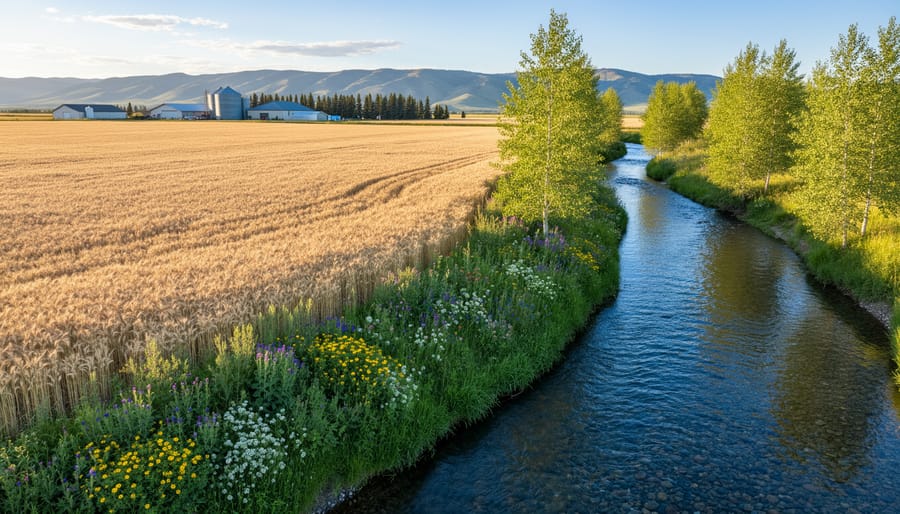
Every spring across Alberta, approximately 27 million kilograms of pesticides are applied to farmland, and a significant portion of these chemicals inevitably find their way into our rivers, lakes, and groundwater. The Bow River, which supplies drinking water to over 1.5 million Albertans, regularly shows detectable pesticide residues, particularly during peak application seasons. For farmers, this isn’t just an environmental concern—it’s a direct threat to water sources you rely on for irrigation, livestock, and your own families.
Agricultural runoff containing atrazine, glyphosate, and neonicotinoids has been linked to contaminated rural wells, declining fish populations in Prairie waterways, and increased treatment costs for municipal water systems. When pesticides leach into groundwater or wash into surface water through rain and snowmelt, they can persist for years, affecting drinking water quality and aquatic ecosystems that support biodiversity essential to healthy farms.
The financial implications are mounting too. Alberta farmers near contaminated water sources face increased scrutiny, potential liability issues, and growing pressure from consumers demanding pesticide-free produce. Meanwhile, water treatment facilities are passing rising purification costs onto ratepayers, creating tension between agricultural and urban communities.
Organic farming practices offer a proven pathway forward. Canadian organic farmers have demonstrated that building healthy soil, implementing strategic crop rotations, and using natural pest management can maintain productivity while protecting water quality. This isn’t about abandoning modern agriculture—it’s about adapting practices that safeguard the water resources your operation depends on for generations to come.
The Real Cost of Pesticide Pollution in Canadian Water Systems
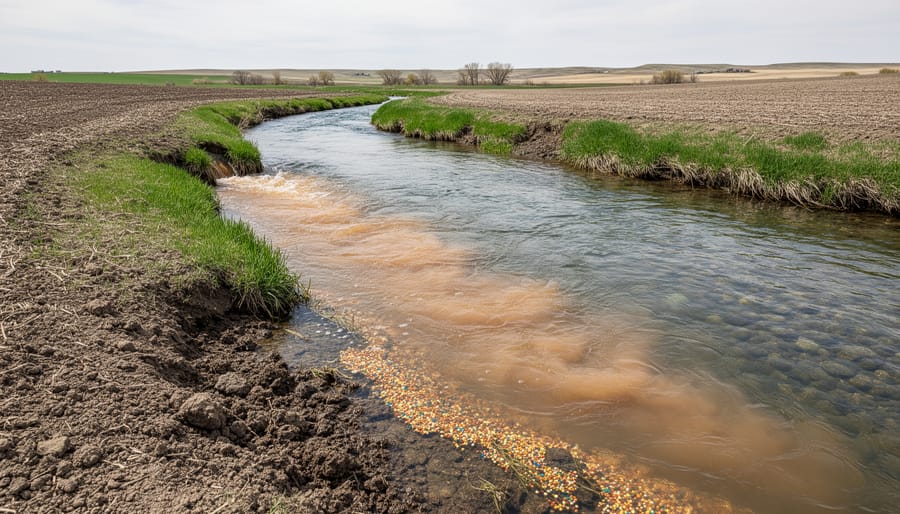
How Pesticides Move from Field to Water
Understanding how pesticides reach our water systems starts right in the field. In Alberta’s prairie conditions, three main pathways carry these chemicals from cropland to water sources: runoff, leaching, and drift.
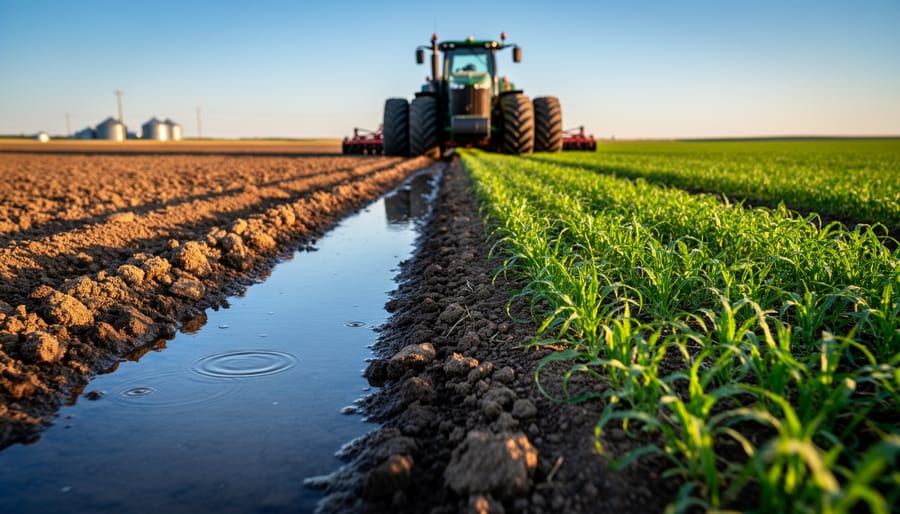
Runoff occurs when rain or snowmelt carries pesticides across the soil surface into nearby streams, dugouts, and rivers. On the prairies, this happens most dramatically during spring melt when frozen ground prevents water absorption. Those intense summer thunderstorms we experience can also wash pesticides directly off fields before they break down or absorb into soil. Fields with slopes, compacted soil, or minimal vegetation cover face higher runoff risks.
Leaching happens when pesticides move downward through soil layers, eventually reaching groundwater. Sandy or coarse-textured soils common in parts of southern Alberta allow faster chemical movement than clay-based soils. Heavy irrigation or excessive rainfall accelerates this process. Some pesticides bind tightly to soil particles and stay put, while others dissolve easily in water and travel deeper.
Drift describes pesticide movement through the air during application. Prairie winds can carry spray droplets or dust particles hundreds of metres from target fields. This particularly affects water bodies during spring and summer application seasons when winds are strong and temperatures warm. Smaller droplet sizes travel farther, potentially contaminating dugouts, ponds, and wetlands.
Local agronomist Sarah Chen from Lethbridge explains, “Timing matters enormously. Applying pesticides just before heavy rain essentially guarantees water contamination. Checking your seven-day forecast isn’t just good practice—it’s water protection.”
What This Means for Your Farm and Community
Pesticide contamination affects more than environmental statistics—it directly impacts your daily farm operations and community health. Contaminated dugouts and wells compromise livestock water sources, potentially affecting animal health and productivity. Saskatchewan farmer Dale Petersen discovered pesticide residues in his irrigation water in 2019, forcing costly filtration system installations and raising concerns about crop quality certification.
For Alberta producers, downstream impacts matter significantly. Your water management decisions affect neighbouring farms, rural communities, and municipal water sources. The Bow River watershed, serving over 1.5 million Albertans, receives agricultural runoff from thousands of farms, making collective stewardship essential.
Consider the financial implications: contaminated water sources require remediation costs averaging $15,000-$50,000 per farm, according to Alberta Agriculture data. Additionally, communities are increasingly demanding transparency about agricultural practices, affecting market access and consumer trust.
Environmental health specialist Dr. Maria Chen from the University of Alberta notes that children in rural areas show measurably higher pesticide exposure markers during spring application seasons. Preventing water pollution protects not only your operation’s future but also your family’s immediate health and your community’s long-term sustainability.
Why Organic Farming Methods Protect Water Quality
Natural Pest Management That Keeps Water Clean
Transitioning away from synthetic pesticides doesn’t mean sacrificing crop yields. Alberta farmers are successfully implementing natural pest management strategies that protect water quality while maintaining productive operations.
Biological controls form the foundation of effective natural pest management. These involve introducing or encouraging organisms that naturally prey on crop pests. For example, parasitic wasps control aphid populations, while predatory beetles manage cutworms. Randy Morrison, who operates a 240-hectare mixed farm near Lacombe, reports, “Since introducing beneficial nematodes three years ago, our wireworm damage has dropped by 60 percent, and we’ve eliminated soil insecticides completely.”
Companion planting offers another practical approach. Growing specific plant combinations naturally deters pests and attracts beneficial insects. Planting aromatic herbs like dill and cilantro among vegetable rows attracts hoverflies and lacewings, which feed on aphids. Marigolds planted around field edges repel various beetles and nematodes.
Preventive strategies reduce pest pressure before problems develop. Crop rotation breaks pest life cycles by removing their preferred host plants. Cover cropping with species like clover or vetch improves soil health, creating more resilient plants naturally resistant to pest damage. Regular field scouting enables early detection when manual removal or targeted biological interventions remain effective.
These integrated approaches work synergistically. When you build healthy soil, encourage beneficial insects, and use strategic planting patterns, pest populations naturally stabilize without chemical intervention. The result protects groundwater, surface water, and aquatic ecosystems while reducing input costs and meeting growing consumer demand for pesticide-free products.
Building Soil That Filters and Protects
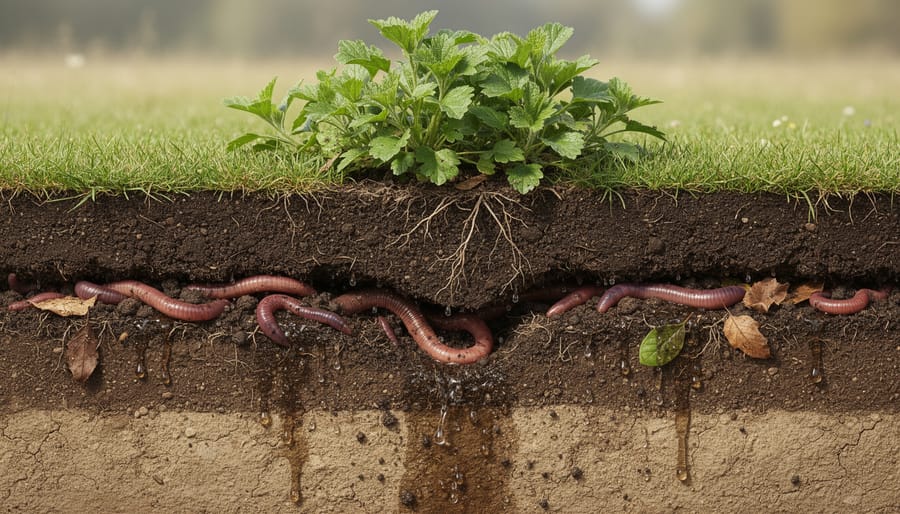
Healthy soil acts as your farm’s first line of defense against water contamination. When you build organic matter through practices like cover cropping, composting, and reduced tillage, you’re creating a natural filtration system that protects both surface and groundwater from pollutants.
Organic soil management dramatically improves water infiltration rates. Research from Alberta shows that soils with 5% organic matter can absorb up to 40% more water than those with 2% organic matter. This increased absorption means less runoff carrying potential contaminants into nearby streams and dugouts.
The structure matters too. Organic farming practices encourage soil aggregation, creating pore spaces that allow water to move through the soil profile while filtering out particles and pollutants. Think of it as millions of tiny water treatment plants working across your fields.
Sarah Mitchell, an organic grain farmer near Lacombe, saw runoff on her conventional fields reduced by 60% within three years of transitioning to organic management. “Our soil now absorbs spring melt and heavy rains instead of channeling water off the fields,” she explains. “We’re not just protecting the creek downstream; we’re holding that moisture for our crops.”
Every 1% increase in soil organic matter can help your soil hold an additional 170,000 litres of water per hectare. That’s water staying on your farm, filtering naturally through biological activity, rather than running off and potentially carrying pollutants to water sources your neighbors depend on.
Proven Strategies Alberta Farmers Use to Prevent Water Contamination
Buffer Zones and Riparian Area Management
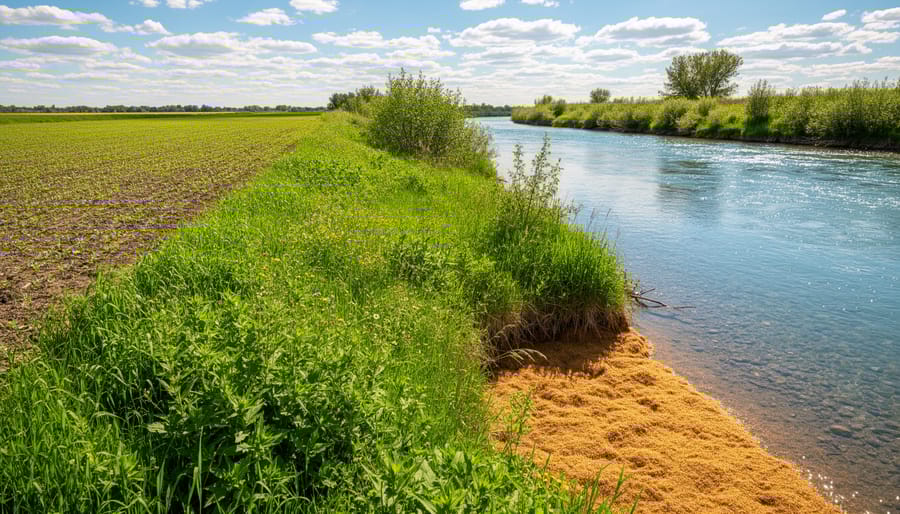
Establishing vegetated buffer zones along water bodies, ditches, and field edges creates a natural defense against pesticide runoff while enhancing farm biodiversity. These protective strips filter contaminants, stabilize soil, and complement bioinfiltration systems already working on your land.
For Alberta conditions, aim for buffer widths of 10 to 30 meters depending on slope and proximity to water sources. Steeper terrain and areas closer to streams require wider buffers. A mix of native grasses, shrubs, and trees provides optimal filtration. Consider species like blue grama grass, western wheatgrass, and native willows, which thrive in prairie climates and establish strong root systems.
Plant grasses at 30 to 45 centimeter spacing, with shrubs placed 1 to 2 meters apart. Trees should be positioned 3 to 5 meters apart to allow proper canopy development. This layered approach maximizes water infiltration and contaminant absorption.
Manitoba farmer Dale Rothnie found that establishing buffer zones reduced sediment runoff by 70 percent within two growing seasons. His experience shows that patience during establishment pays dividends in long-term water protection.
Maintenance involves minimal mowing, typically once annually after nesting season to protect wildlife. Avoid chemical applications within buffers, and periodically assess for invasive species. These areas require less intensive management than crop fields while delivering significant environmental benefits. Provincial programs through Alberta Agriculture may offer cost-sharing for buffer establishment, making this practice financially accessible for operations of all sizes.
Cover Cropping to Reduce Runoff
Cover crops serve as one of your most effective tools for preventing pesticide movement into water systems. These strategic plantings protect soil between cash crop seasons, acting as a living shield that reduces erosion and captures chemicals before they reach waterways.
In Alberta’s climate, selecting the right cover crop makes all the difference. Winter-hardy options like fall rye establish quickly before freeze-up, providing early spring coverage when runoff risk peaks with snowmelt. For shorter windows, oats grow rapidly and create dense root systems that improve soil and water conservation. Many Alberta farmers have found success with radish-oat blends, where radishes break up compaction while oats stabilize the surface.
Timing your seeding proves crucial. Aim to establish cover crops within two weeks after harvest to maximize root development before winter. This root mass creates channels that increase infiltration by up to 30%, meaning more water soaks in rather than running off carrying pesticide residues.
Jim Patterson, an organic grain farmer near Lacombe, shares his experience: “We started using fall rye after barley harvest. The difference was immediate—our spring meltwater stays on the field instead of flooding the low areas where it used to pool with chemical residues.”
Managing cover crops requires minimal input. Most Alberta producers terminate them in spring through cultivation or natural winter-kill, incorporating organic matter that further improves soil structure. This creates a positive cycle where each season’s cover crop enhances the next year’s water-holding capacity, progressively reducing runoff risks and protecting nearby water sources from contamination.
Water Management Infrastructure on Organic Farms
Protecting water quality starts with smart infrastructure that works with your land’s natural features. Even on organic farms where synthetic pesticides aren’t used, sediment and organic matter from fields can still impact waterways, making these practices valuable for all producers.
Grassed waterways serve as natural filters along drainage paths. Plant native grass species like smooth brome or northern wheatgrass in low-lying areas where water naturally flows. These establish deep root systems that slow runoff and trap particles. Alberta farmer Tom Hendricks installed 200 metres of grassed waterways on his Red Deer County operation and saw noticeable water clarity improvements within two seasons.
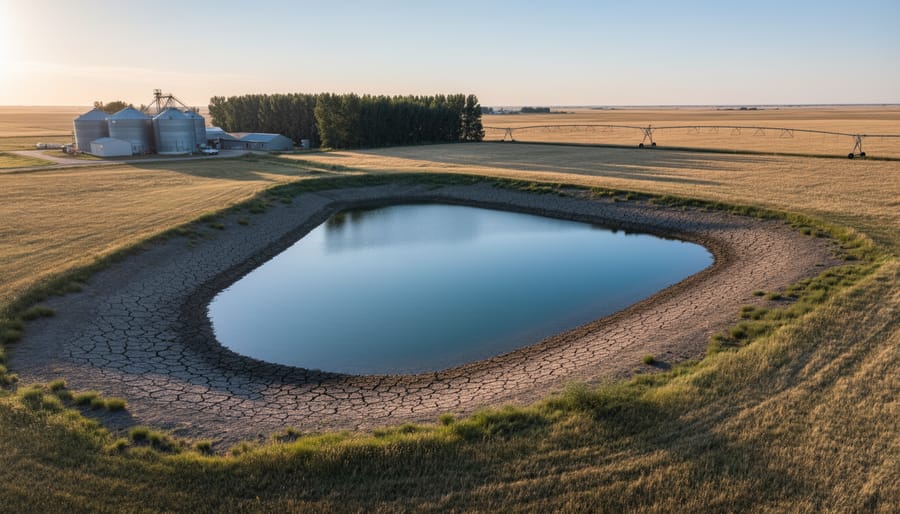
Retention ponds act as settlement basins before water exits your property. Design them to hold runoff for 24 to 48 hours, allowing suspended materials to settle. Position these strategically at field edges or near drainage outlets. “We built three small retention ponds for under $8,000, and they’ve made a huge difference in what leaves our farm,” shares organic grain producer Sarah Chen from Lacombe County.
Drainage management involves directing field runoff through vegetated buffer zones before it reaches ditches or streams. Maintain these buffers at minimum 10-metre widths with dense perennial vegetation. Control tile drainage outflows to slow release rates during peak runoff periods, reducing the volume of material carried downstream.
Monitoring and Testing Your Water Quality
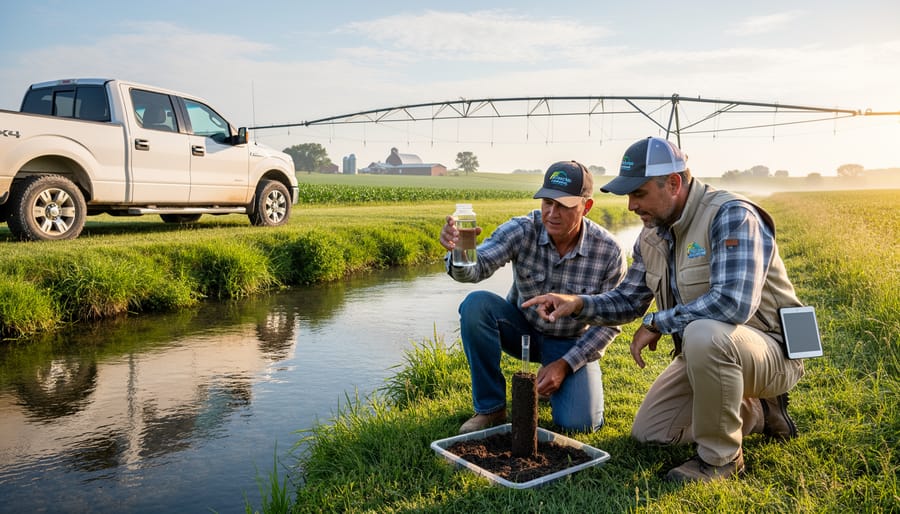
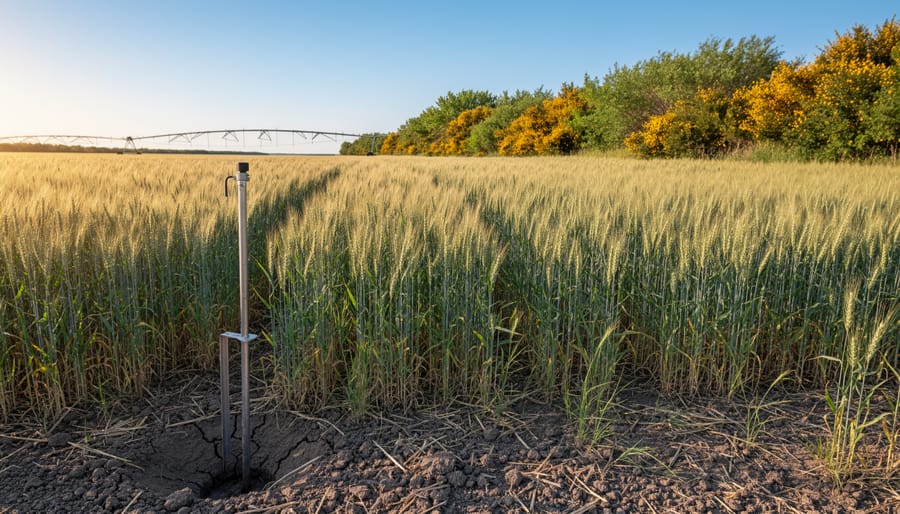
Testing your water regularly helps you understand the impact of your farming practices and track improvements over time. Start with baseline testing before making changes, then monitor quarterly during growing season and annually thereafter.
You can collect samples yourself using clean containers, following proper protocols to avoid contamination. Alberta Agriculture and Irrigation offers water testing through accredited laboratories, with some regional districts providing subsidized testing for agricultural producers. Basic tests should include nitrate levels, phosphorus, and common pesticide residues relevant to your area.
Understanding your results is straightforward. Compare your numbers against Canadian drinking water guidelines and Alberta Surface Water Quality Guidelines. Nitrate levels above 10 mg/L or detectable pesticide residues indicate potential concerns worth addressing.
Track your data in a simple spreadsheet or notebook, noting seasonal patterns and changes following practice modifications. Many Alberta farmers have seen measurable improvements within two growing seasons of implementing organic practices.
Seek expert help when results show persistent contamination, you’re near sensitive areas like municipal watersheds, or you’re planning major transitions. The Growing Forward program and regional agrologists provide free consultations to help interpret results and develop action plans tailored to your operation.
Making the Transition: From Conventional to Water-Safe Practices
Your First Year: Where to Start
Starting your journey toward reducing pesticide runoff doesn’t mean overhauling your entire operation overnight. Focus on these practical first steps that deliver measurable water quality improvements while keeping your farm productive.
Begin with a water assessment. Walk your property after rainfall to identify where water flows and pools. Mark areas within 30 metres of dugouts, creeks, or drainage ditches—these become your priority zones. Many Alberta farmers find that protecting just 10-15% of their land near water sources creates significant impact.
Next, establish pesticide-free buffer strips along waterways. Even a 3-metre buffer can reduce pesticide runoff by 50-70%. Plant native grasses like western wheatgrass or smooth brome, which establish quickly and require minimal maintenance. Saskatchewan farmer Tom Henderson saw noticeable water clarity improvements within six months of installing buffers around his quarter-section.
Review your current pesticide applications critically. Which products do you use out of habit versus necessity? Agricultural extension specialist Dr. Maria Chen recommends keeping detailed records of application rates, weather conditions, and timing. This data helps identify where you’re over-applying or spraying when rain threatens.
Consider integrated pest management for one crop this season. Scout fields weekly, use economic thresholds before spraying, and explore biological controls. Alberta farmer cooperatives report that members typically reduce pesticide use by 25-40% in their first year using IPM, with no yield loss.
These foundational steps create immediate wins while building knowledge and confidence for deeper changes ahead.
Financial Support and Resources for Canadian Farmers
Transitioning to water-protective farming practices doesn’t mean going it alone. Canadian farmers have access to substantial financial support designed to make sustainable transitions affordable and achievable.
The federal Canadian Agricultural Partnership offers cost-share programs covering up to 70% of eligible expenses for beneficial management practices that protect water quality. This includes funding for equipment upgrades, soil testing, and implementation of buffer zones. Agriculture and Agri-Food Canada also provides technical assistance through agrologists who can assess your operation and recommend tailored solutions.
For Alberta farmers specifically, the province’s On-Farm Climate Action Fund supports regenerative organic practices through direct payments for adopting nitrogen management strategies and cover cropping. The Alberta Environmental Farm Plan program offers free environmental assessments plus grants up to $100,000 for implementing recommended improvements.
Organic certification costs are partially covered through Growing Forward programs, with support ranging from $1,500 to $3,000 annually during your transition period. The Organic Federation of Canada maintains updated databases of available funding opportunities, searchable by province and farm size.
Local agricultural service boards across Alberta provide free workshops on integrated pest management and water stewardship, connecting you with experienced mentors who’ve successfully made similar transitions. Many credit unions now offer preferential loan rates for environmental farm improvements, recognizing the long-term value these investments bring to your operation and community watershed.
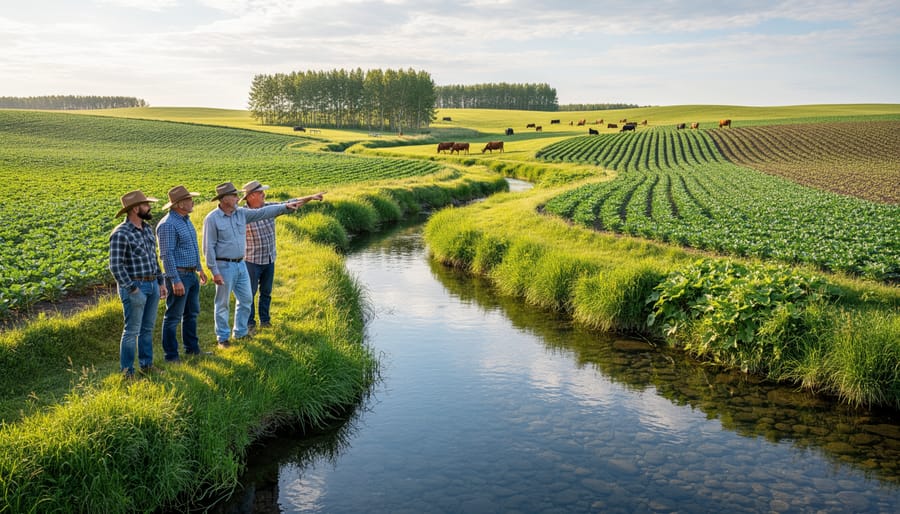
Success Stories: Alberta Farms Leading the Way
Three Alberta operations demonstrate that eliminating pesticide runoff can work alongside strong financial performance.
At Sunridge Organic Farm near Edmonton, owner Mark Harrison transitioned 200 hectares from conventional wheat and canola to certified organic production in 2018. Within three years, water testing in adjacent wetlands showed zero pesticide residues compared to detectable levels before the transition. “We worried about yields initially, but our margins actually improved,” Harrison explains. “Organic premiums offset the 15 percent yield reduction, and our input costs dropped by 40 percent.” The farm now generates $450,000 annually, up from $380,000 pre-transition.
Southern Alberta’s Green Valley Ranch took a different approach. The 150-hectare mixed vegetable operation installed a comprehensive buffer system along the Oldman River watershed in 2019. Dr. Sarah Chen, an agricultural water specialist at the University of Alberta, monitored the results. “Their 10-metre native grass buffers captured 95 percent of potential sediment runoff,” she notes. “Water samples downstream showed pesticide levels dropped by 87 percent within one growing season.” Owner Janet Kowalski reports production increased by 12 percent due to improved soil health and beneficial insect populations attracted to buffer plantings.
Peace Country’s Northern Grains Collective represents the cooperative model. Five neighboring farms covering 800 hectares coordinated their pesticide phase-out between 2017 and 2020. Shared equipment purchases reduced individual investment costs by 60 percent. Water monitoring by Alberta Environment and Parks documented a 92 percent reduction in herbicide detection rates in nearby Battle River tributaries.
“These aren’t isolated success stories,” says Dr. Chen. “They’re replicable models. The key factors were careful planning, utilizing available transition support programs, and connecting with existing organic farming networks for mentorship.”
Each operation accessed Growing Forward funding and provincial environmental stewardship grants, which covered 30 to 50 percent of transition costs. Their combined experience proves that protecting water quality strengthens rather than compromises farm economics.
Protecting Alberta’s water resources through organic farming practices isn’t just an environmental choice—it’s an investment in the future of our agricultural communities. Every hectare converted to organic management represents cleaner groundwater, healthier aquatic ecosystems, and reduced treatment costs for municipalities downstream. The connection is clear: when we eliminate synthetic pesticides from our fields, we directly protect the water sources that sustain our families, livestock, and crops.
The farmers across Alberta who have already made this transition demonstrate that water-safe farming is both achievable and economically viable. Their experiences show that organic methods don’t mean sacrificing productivity—they mean farming smarter, building resilient soil systems, and creating operations that sustain both land and water for generations to come.
Your journey toward water-safe farming can start today with a single practical step. Consider attending a workshop through the Organic Alberta organization, where you’ll connect with experienced farmers who’ve navigated this transition successfully. Reach out to your regional agriculture office to learn about available funding programs and technical support specific to pesticide reduction and water protection initiatives.
The collective impact of individual farm decisions creates watershed-level change. When neighbouring operations adopt organic practices, the benefits multiply—reducing chemical loads in shared water systems and strengthening the entire community’s agricultural resilience. Your choice to farm without synthetic pesticides contributes to a larger movement protecting Alberta’s most precious resource while maintaining the productive, profitable operations our region depends on. The resources, knowledge, and community support are available—the next step is yours.