Rotate your crops strategically to break pest life cycles—moving canola away from previous brassica plantings disrupts flea beetle populations by up to 70%, while alternating cereals with legumes naturally suppresses root diseases without additional inputs. Scout fields twice weekly during critical growth stages, documenting pest numbers against established economic thresholds rather than spraying preventatively; Alberta farmers using threshold-based decisions reduce insecticide applications by 40% while maintaining yields.
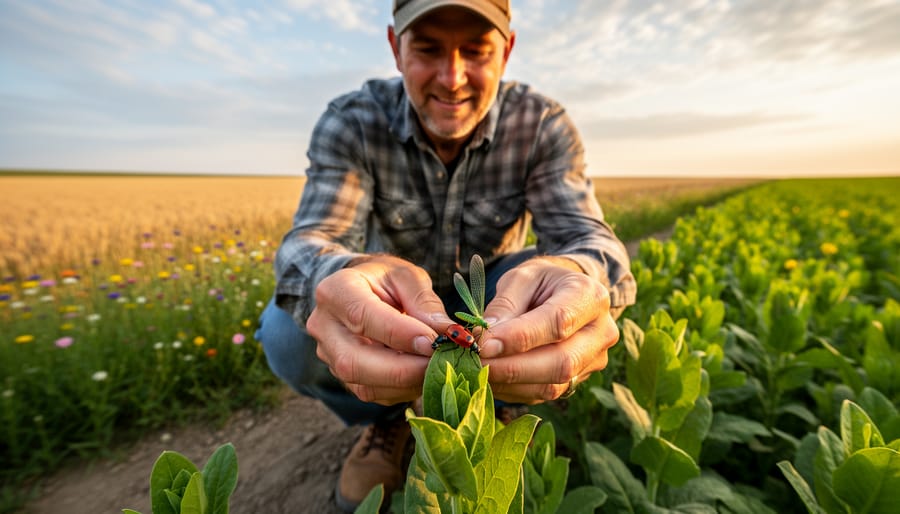
Introduce beneficial insects like parasitic wasps and lacewings that naturally control aphids and caterpillars—these biological control agents establish permanent populations when you preserve field margins with native flowering plants. Time your seeding to give crops a competitive advantage; planting wheat in early May allows seedlings to outpace wheat stem sawfly damage, a strategy proven effective across the Prairies with minimal cost.
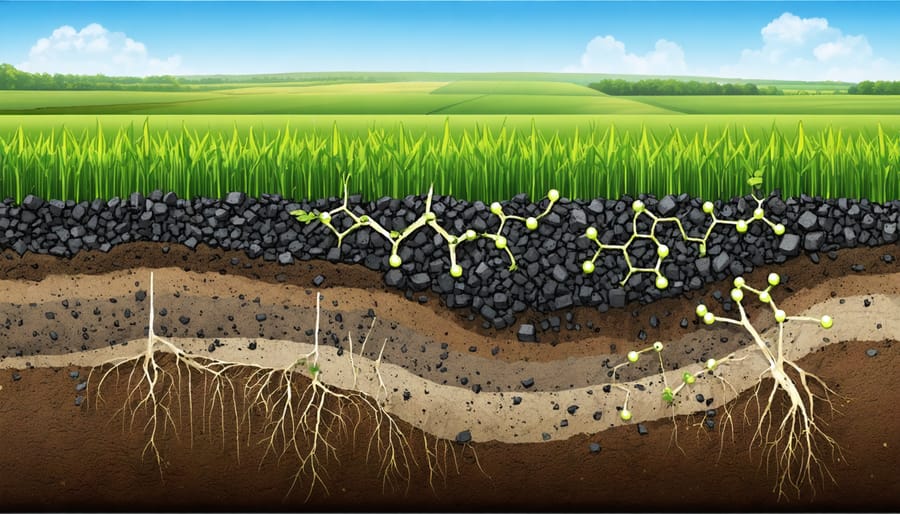
Build soil health through cover cropping and reduced tillage to create robust plant defense systems—healthier plants withstand pest pressure better and require fewer chemical interventions. Monitor weather patterns and pest development models specific to Alberta’s climate zones; knowing when bertha armyworm moths arrive lets you target interventions precisely when larvae are most vulnerable, maximizing control while minimizing environmental impact.
Sustainable pest management isn’t about eliminating every insect from your fields—it’s about maintaining pest populations below economically damaging levels using the most effective, least disruptive methods available. This integrated approach combines cultural practices, biological controls, and strategic chemical use only when necessary. Alberta producers face unique challenges from chinook-disrupted winters to short growing seasons, but these same conditions create opportunities for innovative pest management that protects both profitability and environmental health.
The transition to sustainable practices starts with understanding your specific pest pressures, available tools, and regional resources supporting this shift in farm management philosophy.
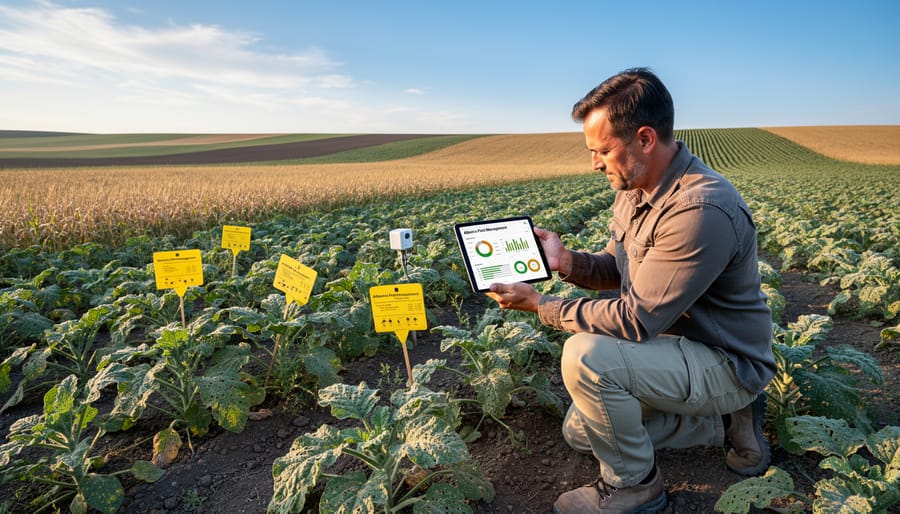
Why Alberta’s Pest Challenges Demand a Different Approach
The Real Cost of Chemical Dependency
The financial burden of chemical-dependent pest management often catches Alberta farmers by surprise. A typical canola operation might spend $60-$80 per acre annually on insecticides and fungicides, with costs climbing to $100+ per acre during heavy infestation years. When you’re managing 500 acres, that’s $30,000 to $50,000 leaving your bottom line each season.
Beyond immediate expenses, there’s the hidden toll on your land. Doug Cartwright, an agronomist based near Lethbridge, has observed concerning trends: “We’re seeing fields where beneficial insect populations have dropped by 70% over a decade of intensive chemical use. When you lose those natural predators, you actually need more pesticides, not less. It becomes a cycle that’s hard to break.”
The environmental costs extend to water quality and soil health. Repeated applications can reduce beneficial soil microorganisms by up to 50%, weakening the natural nutrient cycling that builds long-term fertility. Several Alberta watersheds now show detectable pesticide residues during spring runoff, raising concerns about aquatic ecosystems.
Equipment wear adds another layer of expense. Sprayers, protective gear, and application machinery require constant maintenance and replacement, typically adding $8,000-$12,000 annually to operational costs for mid-sized farms.
Perhaps most concerning is the resistance issue. Alberta has documented resistance to common insecticides in flea beetles and diamondback moths, meaning farmers often need to apply products twice or switch to more expensive alternatives. This treadmill effect makes chemical dependency increasingly unsustainable both economically and practically.
What’s Changing in Alberta’s Pest Landscape
Alberta’s pest landscape is shifting in ways that demand our attention and adaptive strategies. Recent provincial surveys reveal that climate warming is extending growing seasons by 10-14 days across the prairies, creating favorable conditions for pests previously limited by cold winters. We’re seeing increased populations of diamondback moths, bertha armyworms, and wheat midge in areas where they were once marginal threats.
“The traditional pest calendar our parents used doesn’t apply anymore,” shares Tom Richardson, an integrated pest management specialist with Alberta Agriculture. “We’re documenting earlier emergence dates and additional pest generations within a single season.”
Herbicide resistance presents another critical challenge. Kochia resistant to multiple herbicide groups now appears on over 60 percent of surveyed fields in southern Alberta, while Group 2-resistant wild oats continue spreading northward. These climate-driven changes require us to think beyond chemical-only approaches.
The clubroot pathogen affecting canola has expanded from 38 municipalities in 2019 to over 60 by 2023, demonstrating how quickly pest pressures can evolve. Meanwhile, milder winters are allowing pests like the wheat stem sawfly to survive in previously inhospitable regions.
These shifts aren’t reasons for alarm but rather opportunities to strengthen our management approaches. Understanding these emerging patterns helps us make informed decisions about crop rotations, variety selection, and integrated control strategies that work with Alberta’s changing environment rather than against it.
The Four Pillars of Sustainable Pest Management
Prevention: Building Pest-Resistant Systems from the Ground Up
The foundation of sustainable pest management starts well before pests arrive. By building resilient farming systems from the ground up, you can significantly reduce pest pressure and minimize intervention needs throughout the growing season.
Crop rotation remains one of your most powerful preventive tools. Alberta farmer Marcus Chen from Lacombe has seen dramatic reductions in pest populations by implementing a four-year rotation that disrupts pest life cycles. “We rotate canola, wheat, peas, and barley,” Chen explains. “Breaking up host plant availability forces pests to relocate or perish.” This approach works particularly well against wireworms and root maggots common in Alberta soils.
Variety selection deserves careful attention when planning your growing season. Choose cultivars bred for pest resistance and adapted to Alberta’s growing conditions. Disease-resistant wheat varieties and aphid-tolerant canola lines can reduce pest establishment by up to 40 percent compared to conventional varieties. Your local seed supplier can recommend varieties proven in your specific region.
Habitat management creates an ecosystem that supports beneficial insects while making your fields less attractive to pests. Consider establishing perennial strips along field edges or maintaining hedgerows that provide shelter for predatory insects. These natural allies include ground beetles, lacewings, and parasitic wasps that keep pest populations in check.
Soil health practices form the cornerstone of pest-resistant systems. Healthy soil produces vigorous plants better equipped to withstand pest pressure. Focus on increasing organic matter through cover cropping, reducing tillage, and diversifying your rotation. Research from Olds College demonstrates that farms with higher soil organic matter experience fewer pest outbreaks and recover faster when problems occur.
Monitoring: Know Your Enemy (and When They’re Coming)
Effective pest management starts with knowing what you’re up against and when action is truly necessary. Regular field scouting is your first line of defense, allowing you to catch problems early and make informed decisions rather than reactive ones.
Start by walking your fields at least once weekly during the growing season, following a consistent pattern that covers representative areas. Check 20 to 30 plants or locations per field, documenting what you find. Alberta Agriculture recommends focusing on field edges first, as many pests enter from borders. Look under leaves, examine stems, and dig around roots depending on your target pest.
Economic thresholds are game-changers for sustainable management. These are science-based numbers that tell you when pest populations justify treatment costs. For example, canola typically tolerates one to two flea beetles per plant at the cotyledon stage before yield loss occurs. Treating below this threshold wastes money and disrupts beneficial insects unnecessarily.
Provincial resources make pest identification straightforward. The Alberta Insect Pest Monitoring Network provides weekly updates on pest activity across regions, helping you anticipate problems. Your local agricultural fieldman can assist with identification and threshold guidance specific to your area.
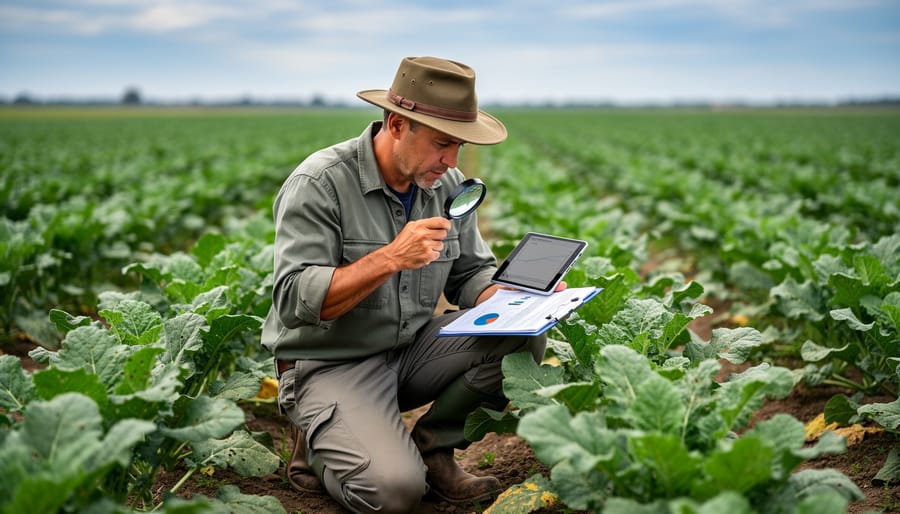
Consider investing in diagnostic tools like sweep nets for grasshoppers, pheromone traps for specific moth species, or simple hand lenses for closer inspection. Many farmers find smartphone apps helpful for quick field identification, though nothing replaces experience and local expertise. Keep detailed records of pest pressure, weather conditions, and intervention timing. These patterns become invaluable for predicting and preventing future infestations, reducing your reliance on reactive treatments over time.
Intervention: The Right Tool at the Right Time
Think of pest management like a toolbox where you reach for the gentlest, most specific tool first. This approach, called the intervention hierarchy, helps you control pests effectively while protecting beneficial insects, soil health, and your bottom line.
Start with mechanical and cultural controls as your first line of defense. These include physical barriers like row covers, trap crops that lure pests away from main plantings, and timing your seeding to avoid peak pest pressure. Many Alberta grain farmers have found success adjusting planting dates to sidestep flea beetle damage in canola. Crop rotation remains one of the most powerful tools, breaking pest life cycles naturally.
When mechanical methods need support, biological controls come next. This means working with nature’s pest managers like parasitic wasps, predatory beetles, and beneficial nematodes. These natural pest control methods establish long-term balance in your fields. Rob Hanson, an organic producer near Lacombe, introduced parasitic wasps to manage aphids in his greenhouse operation, reducing his pest populations by 70 percent within two seasons.
Chemical interventions serve as your last resort, used only when monitoring shows pest populations exceeding economic thresholds. When necessary, choose targeted products with low environmental impact, applied precisely where needed. Spot spraying instead of blanket applications can reduce chemical use by 60 to 80 percent while maintaining effectiveness. This selective approach protects beneficial insects and keeps your certification options open.
Proven Strategies Alberta Farmers Are Using Right Now
Biological Controls That Work in Short Growing Seasons
Alberta’s short growing season demands strategic timing when introducing biological controls, but several proven options thrive in our climate. Understanding which beneficial organisms work best and when to deploy them can significantly reduce pest pressure without synthetic chemicals.
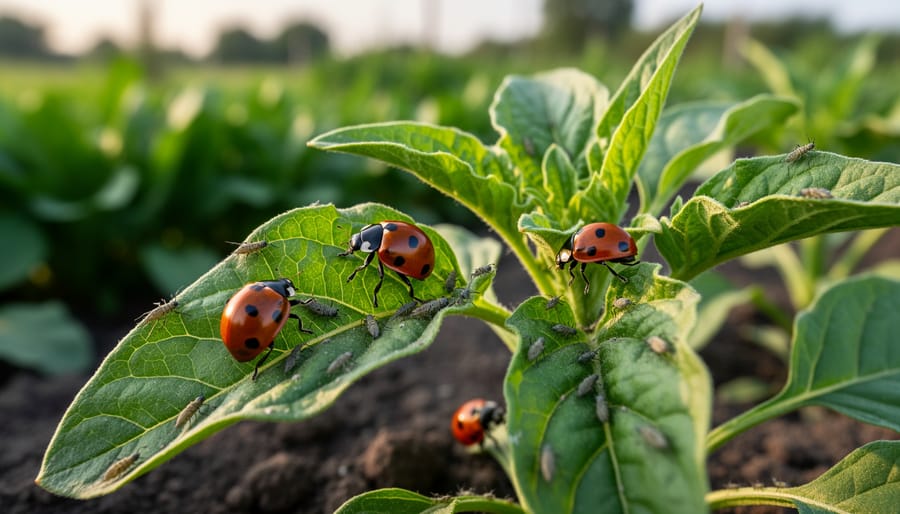
Ladybugs and lacewings are reliable predators for aphid control, effective even in cooler conditions typical of Alberta springs. Release them early morning or evening when temperatures are moderate, ideally when aphid populations first appear rather than waiting for heavy infestations. Local suppliers like Beneficial Insectary in Ontario ship throughout Canada, though sourcing from Prairie-based distributors reduces transit time and stress on insects.
Parasitic wasps, particularly Trichogramma species, excel at controlling cabbage worms and other caterpillars in vegetables and canola. These tiny beneficial insects work well in Alberta’s climate when released at egg-laying stages of target pests, typically late May through June. University of Alberta research confirms these wasps establish successfully even with our temperature fluctuations.
Microbial controls offer excellent options for short seasons. Bacillus thuringiensis (Bt) remains effective in temperatures as low as 15°C, making it suitable for early-season applications. Beauveria bassiana, a naturally occurring fungus, controls grasshoppers and flea beetles when applied during warm, humid periods common in July and August.
For implementation success, maintain habitat for beneficial insects by preserving field margins with native flowering plants. These Alberta pest control strategies require patience, as biological controls typically need two to three weeks to establish populations. Start with small test areas to understand timing and effectiveness before scaling up across your entire operation, adjusting applications based on accumulated growing degree days rather than calendar dates.
Cultural and Mechanical Methods That Save Time and Money
Before reaching for chemical solutions, consider these field-proven methods that work with Alberta’s climate while protecting your bottom line.
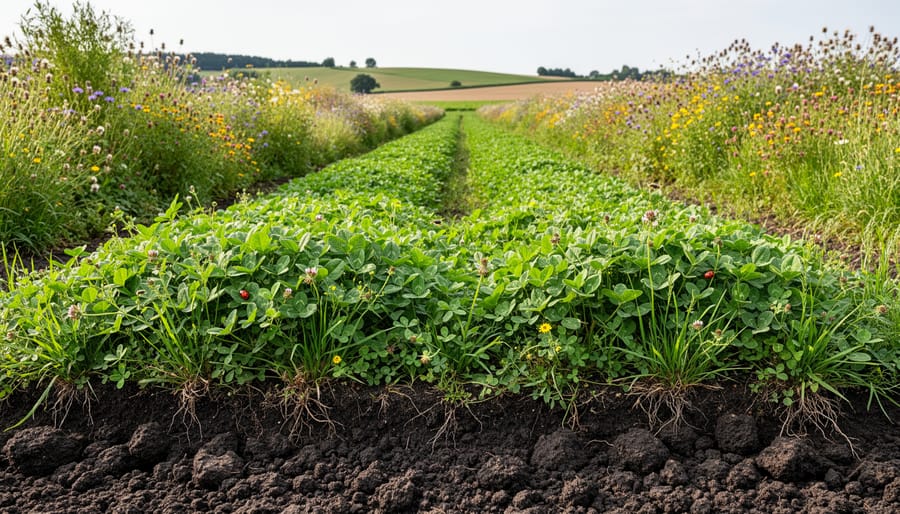
Cover cropping offers multiple pest management benefits. Winter rye or hairy vetch planted after harvest suppresses weeds, disrupts pest life cycles, and builds soil health simultaneously. Many Alberta farmers report reduced herbicide costs of 30-40% after establishing consistent cover crop rotations. These crops also attract beneficial insects that naturally control aphids and other common pests.
Timing your tillage strategically can eliminate pest problems before they escalate. Fall tillage exposes overwintering insects to harsh prairie winters, while delayed spring tillage allows ground beetles time to establish populations that prey on cutworms and other early-season pests. “We’ve cut our insecticide applications in half just by adjusting when we work the soil,” shares Tom Richardson, a central Alberta grain producer who’s refined this approach over fifteen years.
Trap cropping uses small sacrificial plantings to lure pests away from main crops. A few rows of canola around your field perimeter can concentrate flea beetles, making spot treatments more effective and reducing overall pesticide use by up to 60%.
Physical barriers like row covers protect high-value vegetables from insects while creating favorable microclimates in our short growing season. Floating row covers also extend your season by several weeks, adding economic value beyond pest control.
These methods require planning rather than products, turning your management calendar into your most valuable pest control tool.
Strategic Chemical Use: Less Can Be More
When chemical intervention becomes necessary, strategic use makes all the difference in protecting both your crops and the environment. The key is selecting the right product, applying it at the optimal time, and rotating your approach to maintain long-term effectiveness.
Start by choosing selective pesticides that target specific pests while preserving beneficial insects. Products with narrow spectrum activity minimize collateral damage to your field’s natural pest control team. Alberta farmer James Petersen from Lacombe reduced his chemical applications by 40% after switching to selective options and timing applications based on pest life cycles rather than calendar dates.
Application timing is critical. Scout your fields regularly and apply treatments only when pest populations reach economic thresholds. Early morning or late evening applications reduce drift and maximize effectiveness while protecting pollinators during their active hours.
Rotate between different pesticide modes of action to prevent resistance development. Using the same chemical class repeatedly allows pest populations to adapt. Plan a three-year rotation strategy, documenting what you use and when.
Remember, chemicals work best as one tool within your integrated pest management program. Combine strategic applications with biological controls, crop rotation, and cultural practices. Dr. Sarah Chen from Alberta Agriculture recommends treating chemical use as your backup plan, not your first response. This integrated approach protects your investment while building resilient, sustainable farming systems for the long term.
Making the Transition: A Practical Roadmap for Your Farm
Starting Small: Your First Season
You don’t need to overhaul your entire operation in year one. Start with one manageable change that fits your current workflow and build from there. Many Alberta growers find success by choosing a single focus area to test the waters.
Begin with baseline monitoring. Walk your fields weekly during growing season and record what you see – pest types, numbers, locations, and any beneficial insects present. Use simple sticky traps or pheromone traps to track populations over time. This data becomes invaluable for understanding your specific pest pressures and timing interventions effectively.
Consider introducing one biological control agent that addresses your primary pest challenge. For example, if aphids are your biggest concern, releasing ladybugs or lacewings in a test section of your operation lets you evaluate their effectiveness without major investment.
Crop rotation offers another accessible entry point. Even a simple shift – like alternating canola with wheat instead of continuous cropping – disrupts pest life cycles and reduces pressure naturally. Track your results throughout the season, noting any differences in pest levels compared to previous years.
Remember, sustainable pest management is a learning process. Your first season is about gathering information and building confidence with new approaches that will shape your long-term strategy.
Resources and Support Available in Alberta
Alberta farmers have excellent local resources to support their transition to sustainable pest management practices. Alberta Agriculture and Irrigation offers comprehensive extension services, including on-farm consultations, pest identification support, and region-specific recommendations through their network of agricultural fieldmen and specialists stationed across the province.
The Alberta Crop Industry Development Fund provides research support and funding opportunities for innovative pest management projects. Farmers can also connect with the Organic Alberta Co-operative and the Canadian Organic Growers Association for specialized guidance on organic farming in Alberta and biological pest control strategies.
Several professional consultants specializing in integrated pest management operate throughout the province, offering customized solutions for diverse cropping systems. The Olds College Centre for Innovation hosts workshops and certificate programs focused on sustainable agriculture practices.
Local farmer networks and commodity groups regularly organize field days and information sessions where producers share experiences and learn from one another. The Alberta Farm Fresh Producers Association facilitates connections between farmers implementing innovative pest management approaches. Online resources through the Alberta Government’s Agriculture Portal provide access to pest monitoring tools, forecasting models, and current research findings tailored to Alberta’s unique climate zones and growing conditions.
What to Expect: Timeline and Results
Transitioning to sustainable pest management is a process that requires patience and realistic expectations. Most Alberta farmers see initial results within the first growing season, though full system benefits typically emerge over two to three years as beneficial insect populations establish and soil health improves.
During the first year, expect to invest time in baseline monitoring and learning new scouting techniques. Initial costs may include beneficial insect releases, trap purchases, and consultation fees, typically ranging from $50 to $150 per acre depending on your approach. However, many farmers report reducing pesticide costs by 30 to 40 percent within two seasons.
According to Mike Chen, an integrated pest management specialist working with Alberta growers, “The transition period is when you build knowledge and resilience into your system. Early adopters often see reduced pest pressure by year two as natural predator populations stabilize.”
Measurable benefits include decreased input costs, improved crop quality, and enhanced pollinator activity. Financial returns generally become evident in year two, with many operations achieving break-even or better by year three. Keep detailed records throughout your transition to track progress and identify what works best for your specific conditions. Remember that sustainable pest management is an investment in long-term farm health and profitability.
Real Alberta Success Stories
When Jim Kowalski took over his family’s 800-hectare grain operation near Lethbridge five years ago, he inherited a serious flea beetle problem that was costing him roughly $15,000 annually in insecticide applications and crop losses. Traditional spray schedules weren’t keeping pace with resistance issues, and he knew something had to change.
Jim started by working with an agronomist to establish field monitoring protocols. They set up yellow sticky traps at strategic locations and committed to checking them twice weekly during critical growing periods. This simple step allowed him to time interventions precisely when pest populations reached economic thresholds rather than spraying preventatively.
He also diversified his canola rotation, extending it from a two-year to a four-year cycle and incorporating barley and field peas. The results speak for themselves: flea beetle pressure dropped by approximately 60 percent within three growing seasons, and Jim reduced his insecticide use by nearly 70 percent. His input costs decreased by $9,000 annually while yields remained stable.
Sarah Chen faced different challenges on her mixed vegetable farm outside Red Deer. Aphids were damaging her high-value crops, particularly her specialty lettuce varieties destined for farmers’ markets. Chemical solutions weren’t practical given her organic certification goals and the short harvest windows.
Sarah invested in biological controls, introducing beneficial insects including ladybugs and lacewings. She also redesigned her field layout, creating pollinator strips between vegetable rows using native Alberta wildflowers like purple prairie clover and wild bergamot. These strips provided habitat for beneficial insects year-round.
The transformation took two seasons to fully establish, but Sarah now reports 75 percent fewer aphid-related crop losses. Her pollinator strips have attracted natural predators that manage multiple pest species, and the wildflowers have become a marketing feature that resonates with customers. She’s increased her profit margins by 22 percent while building soil health simultaneously.
Near Olds, cattle rancher Mark Davidson tackled grasshopper infestations threatening his pastureland. Rather than broad-spectrum spraying, he worked with Alberta Agriculture and Forestry extension services to implement targeted bait stations in grasshopper breeding areas identified through careful scouting. He also adjusted his grazing rotation to allow insect-eating birds better access to affected areas.
Mark’s approach reduced grasshopper damage by 80 percent while protecting the beneficial insects his pasture ecosystem needs. His cost per hectare for pest management dropped from $12 to under $4, proving that sustainable methods can deliver both environmental and economic wins for Alberta producers.
Sustainable pest management represents a significant opportunity for Alberta farmers to strengthen both their bottom line and their land’s long-term health. By reducing input costs, improving soil quality, and building natural resilience into your operation, these practices create lasting economic value while protecting the environment for future generations. The data speaks clearly: producers who’ve adopted integrated approaches consistently report lower chemical expenses, improved yields over time, and greater operational flexibility.
Remember, transitioning to sustainable pest management is a journey, not a destination. You don’t need to overhaul your entire operation overnight. Start with one field, one practice, or one growing season. Scout regularly, keep detailed records, and build relationships with beneficial insects and natural predators. Each small step forward contributes to meaningful change.
Your next steps are straightforward: connect with your local agronomist to assess your current pest pressures, attend a workshop on integrated pest management through Alberta Agriculture, and talk with neighbouring producers who’ve already started this transition. Join online farming communities where Alberta growers share real-world experiences and practical advice.
Alberta farmers have always been innovators, adapting to challenges with resilience and ingenuity. By embracing sustainable pest management, you’re not just protecting your own operation—you’re contributing to a stronger, more sustainable agricultural community across the province. Together, we’re proving that economic success and environmental stewardship go hand in hand.