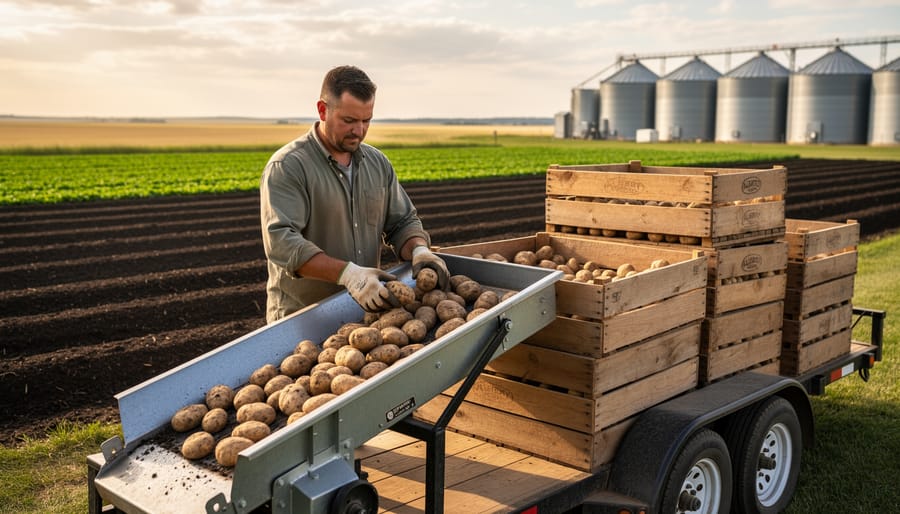
Every harvest season, Canadian farms generate thousands of tonnes of unmarketable produce, crop residues, and packaging waste—yet most of this material holds untapped value. The zero waste hierarchy provides a proven framework for transforming post-harvest losses into revenue streams while reducing environmental impact and operational costs.
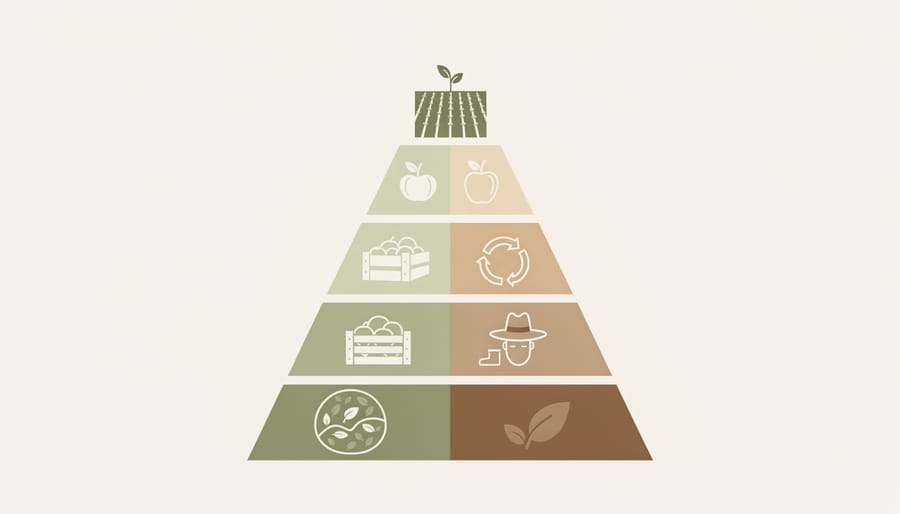
This strategic approach ranks waste management options from most to most preferred: refuse unnecessary inputs first, then reduce what you use, reuse materials wherever possible, recycle components into new products, rot organic matter through composting, and only as a last resort, dispose of what remains. Unlike traditional waste management that focuses solely on disposal, this hierarchy prioritizes prevention and resource recovery—keeping valuable nutrients, materials, and potential income on your operation rather than in landfills.
For Alberta farmers managing grain, livestock, or horticultural operations, implementing this hierarchy means examining every stage from harvest to market. A potato grower might redirect cosmetically imperfect tubers to processing contracts rather than discarding them. A grain operation could convert chaff and screenings into livestock bedding or biomass fuel. Vegetable producers can establish relationships with local food banks, processors, or livestock farmers for grades that don’t meet fresh market standards.
The financial impact proves substantial. Manitoba producer Sarah Chen reduced post-harvest waste costs by 40 percent within two years by applying hierarchy principles to her vegetable operation, primarily through market diversification and on-farm composting. Her experience demonstrates that zero waste strategies aren’t just environmentally responsible—they’re economically smart.
The following framework breaks down each hierarchy tier with specific applications for Canadian post-harvest contexts, providing actionable strategies you can implement this season.
Understanding the Zero Waste Hierarchy for Farm Operations
Why Traditional Waste Management Falls Short on Farms
For many Canadian farms, traditional waste management means hauling organic matter to landfills or burning it on-site. While these methods seem straightforward, they come with hidden costs that impact both your bottom line and the environment.
Landfill disposal fees in Alberta typically range from $80 to $120 per tonne, and these costs continue rising annually. When you factor in fuel, labour, and equipment for hauling crop residues, spoiled feed, or culled produce, expenses add up quickly. A mid-sized grain operation might spend $3,000 to $5,000 annually just on waste removal.
The environmental toll is equally concerning. Organic waste in landfills produces methane, a greenhouse gas 25 times more potent than carbon dioxide. Meanwhile, burning agricultural waste releases particulate matter and contributes to air quality issues, particularly during harvest season when multiple operations burn simultaneously.
Perhaps most significantly, traditional disposal treats valuable resources as garbage. That spoiled silage contains nutrients your soil needs. Those vegetable culls could feed livestock or become compost. By discarding these materials, farms lose potential revenue streams and soil amendments they’d otherwise purchase.
Progressive zero waste organizations recognize these limitations and promote circular approaches that transform waste into resources, which we’ll explore through the zero waste hierarchy framework.
The Hierarchy Applied to Post-Harvest Waste
The zero waste hierarchy gives you a practical roadmap for tackling post-harvest waste on your farm. Let’s break down each tier with examples from Alberta operations.
At the top sits prevention and reduction. This means growing what you can actually sell and minimizing excess. A vegetable grower near Edmonton reduced culled produce by 18% simply by improving harvest timing and handling techniques. For packaging, consider whether you need that extra plastic wrap or if reusable crates work better.
Next comes reuse. Those slightly misshapen carrots? They’re perfect for value-added products like soups or juices rather than heading to the compost. Seed company bags can become storage containers, and wooden pallets often get second lives as farm structures. One Lethbridge producer started a “seconds market” selling cosmetically imperfect produce at farm gate, turning potential waste into revenue.
Recycling follows when reuse isn’t possible. Cardboard boxes, plastic containers, and metal components can enter municipal recycling streams. Some Alberta co-ops now offer agricultural plastic recycling programs specifically for farmers.
Recovery involves extracting remaining value. Composting transforms organic matter into soil amendments, while some operations capture water from washing stations for irrigation. A grain farm near Red Deer reported saving 40,000 litres monthly through water recovery systems.
Disposal sits at the bottom, reserved only for materials with no other option. By working through each tier systematically, you’ll find most post-harvest waste has alternatives to the landfill.
Refuse: Preventing Waste Before It Happens
Smart Harvest Timing and Planning
Timing your harvest correctly is one of the most effective strategies for reducing post-harvest losses and supporting waste prevention goals. Alberta farmers have refined their approach by combining traditional knowledge with modern technology to determine optimal harvest windows.
Start by implementing regular field assessments in the weeks leading up to harvest. Walk your fields every three to four days to monitor crop maturity indicators specific to your produce. For grain crops, moisture content testing becomes critical—aim for 13-15% moisture for cereals to minimize drying costs and storage issues. Many Alberta producers now use portable moisture meters for quick, accurate readings.
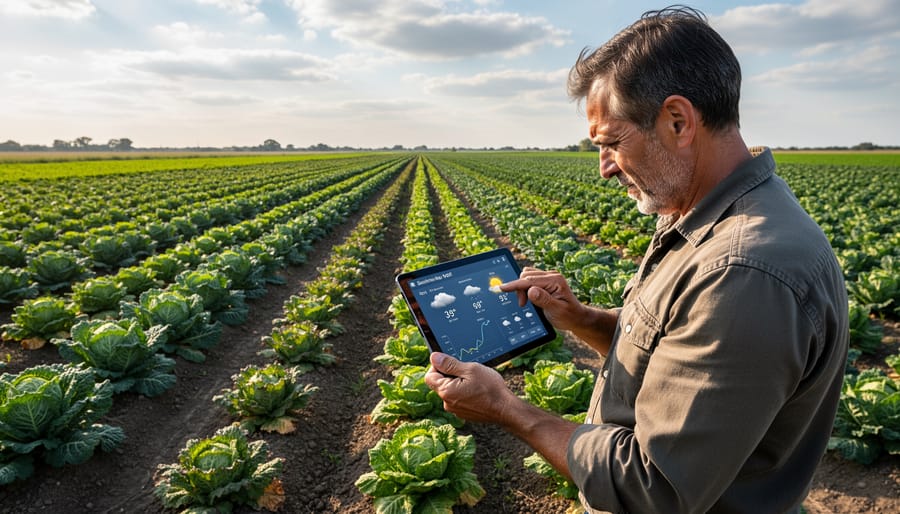
Weather monitoring deserves serious attention in your planning process. Subscribe to localized agricultural weather services that provide seven to ten day forecasts. Pay particular attention to precipitation predictions and temperature fluctuations, as unexpected rain on mature crops can lead to quality degradation and increased waste. Some farmers in central Alberta report success using weather apps designed specifically for agricultural operations, which send alerts when conditions threaten crop quality.
Create a harvest priority list based on crop maturity stages and weather vulnerability. Vegetables like lettuce and leafy greens should move to the top of your schedule when they reach peak maturity, as they deteriorate rapidly. Root vegetables typically offer more flexibility.
Consider forming harvest-sharing arrangements with neighboring farms. This collaborative approach allows you to access additional equipment and labour during tight harvest windows, ensuring crops come off the field at their optimal time rather than when logistics finally align.
Rethinking Packaging and Supply Inputs
The first step in the zero waste hierarchy is refusing what you don’t need in the first place. For agricultural operations, this means taking a hard look at how products arrive at your farm and questioning every piece of packaging.
Start by having direct conversations with your suppliers. Many distributors are willing to switch from single-use cardboard boxes to returnable plastic totes when customers request it. Dr. Sarah Chen, an agricultural sustainability specialist at the University of Alberta, notes that “farmers have more negotiating power than they realize. Suppliers want to keep your business, and many are already exploring reduced-packaging options.”
Consider transitioning to bulk delivery systems wherever possible. Instead of receiving seeds in multiple small bags, request larger containers that minimize packaging per kilogram. Some Alberta grain farmers have successfully negotiated with chemical suppliers to use refillable containers, returning empty drums for cleaning and reuse rather than disposal.
For inputs like twine, tarps, and irrigation supplies, establish relationships with suppliers who offer take-back programs. Several agricultural co-ops across Canada now collect used bale wrap and silage bags for recycling, but the best option is choosing reusable alternatives when they exist.
Track your packaging waste for one season to identify the biggest culprits. You might discover that switching just two or three products to minimal-waste options eliminates a significant portion of your refuse stream. Document your packaging reduction efforts as well, since some provincial programs offer recognition or support for farms implementing sustainable practices. Small changes in procurement can create substantial waste reductions across an entire growing season.
Reduce: Minimizing Unavoidable Waste Streams
Post-Harvest Handling Best Practices
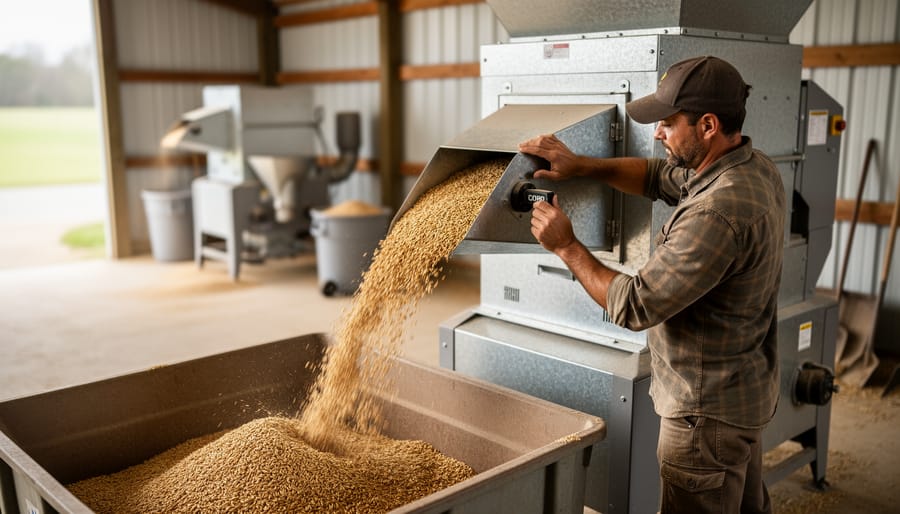
Reducing waste starts the moment crops leave the field. Proper post-harvest handling can prevent up to 30% of losses that typically occur during sorting, cleaning, and storage phases.
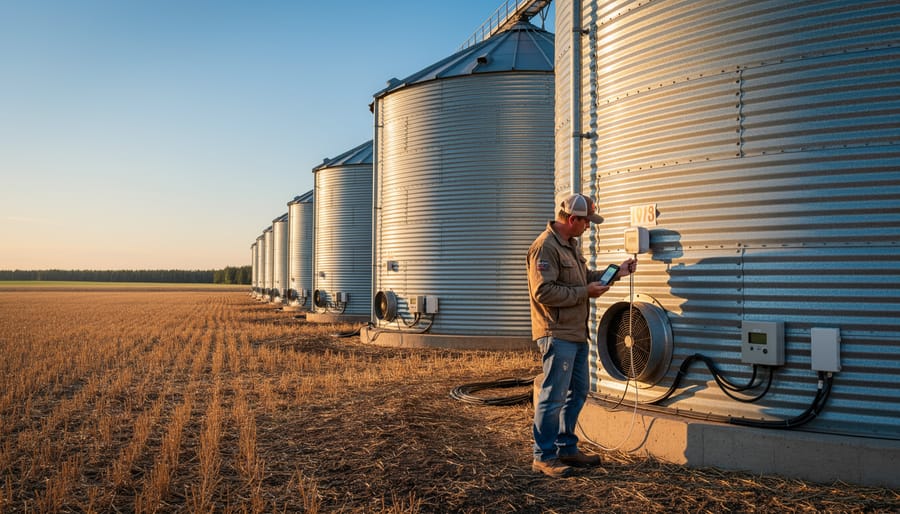
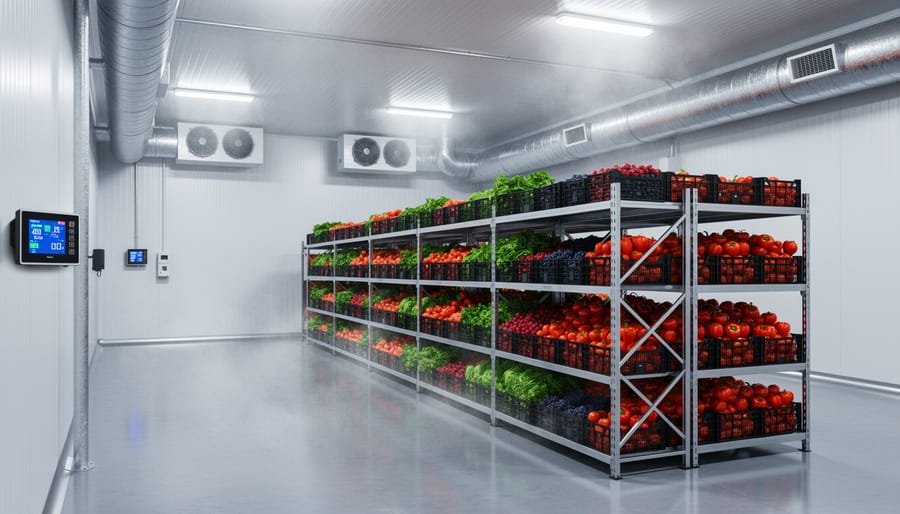
Temperature control is your first line of defense against spoilage. Different crops have specific storage requirements—potatoes thrive at 4-7°C, while tomatoes need 12-15°C to maintain quality. Investing in reliable thermometers and monitoring systems pays dividends quickly. Alberta grower Janet McPherson from Red Deer reduced her carrot losses by 22% simply by maintaining consistent 0-2°C storage temperatures with 95% humidity levels.
Handle produce gently during sorting and cleaning to minimize bruising. Physical damage creates entry points for pathogens and accelerates deterioration. Train your team on proper handling techniques and use padded surfaces where possible. Consider implementing size-graded sorting tables that reduce the number of times each item is touched.
Humidity management varies significantly by crop type. Root vegetables require 90-95% relative humidity, while onions and garlic need drier conditions at 65-70%. Install humidity monitors in your storage facilities and adjust ventilation accordingly.
Clean and sanitize all equipment between batches to prevent cross-contamination. Regular maintenance of cooling systems ensures consistent performance when you need it most. These foundational practices position you to maximize value from every harvest while working toward zero waste goals.
Extending Shelf Life Through Proper Storage
Proper storage isn’t just about keeping produce fresh—it’s a cornerstone of waste prevention that protects your harvest investment while reducing loss. By maintaining optimal temperature and humidity conditions, you can significantly extend shelf life and preserve quality from field to market.
Temperature control makes the most immediate impact. Most vegetables store best between 0-4°C, while many fruits prefer slightly warmer conditions around 10°C. Investing in reliable cold storage pays for itself through reduced spoilage rates and extended selling windows.
A compelling example comes from Lethbridge, Alberta, where Sunridge Farms implemented a cost-effective cold storage solution in 2021. Facing 18% post-harvest losses on root vegetables, farm manager Jennifer Chen partnered with a local refrigeration specialist to retrofit an existing barn with insulated panels and energy-efficient cooling units. The total investment of $42,000 seemed daunting initially, but results proved remarkable.
“Within the first season, we reduced our carrot and potato losses to just 4%,” Chen shares. “The extended storage capacity meant we could sell into winter markets when prices peak. We recouped our investment in 14 months.”
The key factors in their success included proper air circulation design, humidity monitoring systems, and strategic product separation to prevent ethylene cross-contamination. They also implemented simple practices like regular temperature logging and prompt removal of any deteriorating produce to prevent spread.
For farmers starting smaller, even basic improvements like shade structures, ventilated bins, and root cellars provide measurable benefits without major capital outlays.
Reuse: Finding Second Lives for Farm Materials
On-Farm Applications for Culled Produce
Culled produce doesn’t have to mean wasted opportunity. Many Alberta farms are finding creative ways to keep imperfect fruits and vegetables in productive use while turning organic waste into profit.
Value-added processing offers excellent potential for produce that won’t make retail shelves. Consider transforming blemished tomatoes into sauces, irregular carrots into juices, or cosmetically imperfect berries into jams. These products often command premium prices at farmers’ markets and through direct-to-consumer channels.
Animal feed represents another practical solution. Many livestock operations welcome clean, safe culled produce as supplemental feed, reducing costs for both parties. Root vegetables, leafy greens, and fruit culls can provide nutritious additions to animal diets.
Community partnerships create meaningful connections while addressing food security. Alberta’s food rescue programs, including partnerships with Edmonton’s Food Bank and Calgary’s Fresh Routes, have successfully redirected thousands of kilograms of nutritious produce to families in need. These circular agricultural practices strengthen local food systems while reducing landfill waste. Contact your regional food bank to explore donation opportunities that may also provide tax benefits for your operation.
Reusable Systems for Packaging and Water
Returnable container programs offer Alberta farmers a practical way to cut packaging waste while reducing costs. Instead of single-use bins and crates, consider partnering with other local producers to share durable, washable containers that cycle between farm, processor, and market. Several vegetable growers in southern Alberta have successfully implemented pooled crate systems, reducing their packaging expenses by up to 40% annually while eliminating cardboard waste entirely.
Closed-loop water systems represent another smart investment for post-harvest operations. These systems capture, filter, and recirculate wash water used in cleaning produce, reducing water consumption by 60-80%. A greenhouse operation near Lethbridge installed a three-stage filtration system that processes their wash water, cutting their water bills significantly while maintaining food safety standards. The initial setup cost was recovered within two growing seasons through reduced municipal water charges.
Start small by auditing your current packaging and water use. Track how many containers you discard weekly and measure water volumes during washing operations. Contact your regional agricultural service board about cost-share programs for water recirculation systems. Many Alberta municipalities offer grants for water conservation infrastructure that can offset installation costs. Connect with neighboring farms to explore shared container programs, creating efficiencies through collaboration while building community resilience.
Recycle and Rot: Closing the Loop on Organic Waste
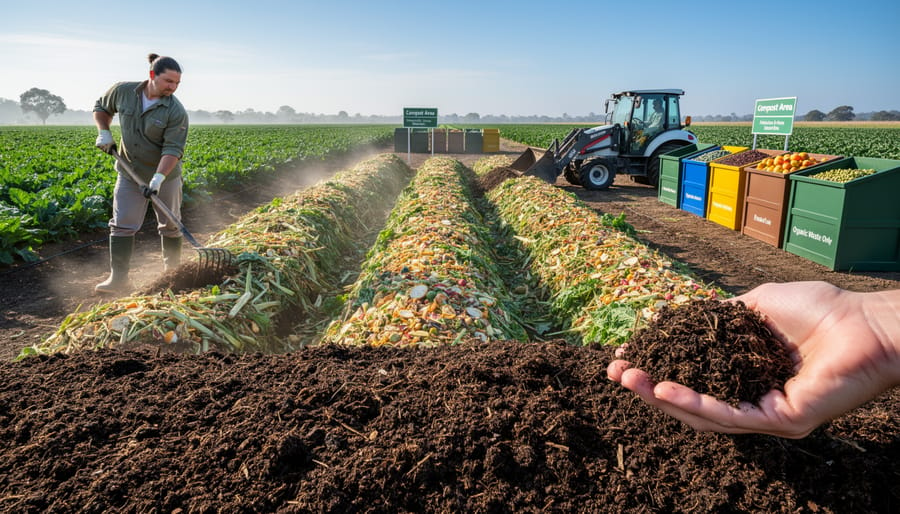
Composting Systems That Work for Canadian Climates
Managing organic waste through composting makes practical sense for Alberta farms, but our climate demands adapted approaches. Cold winters, variable spring conditions, and short growing seasons require systems that maintain microbial activity even when temperatures drop.
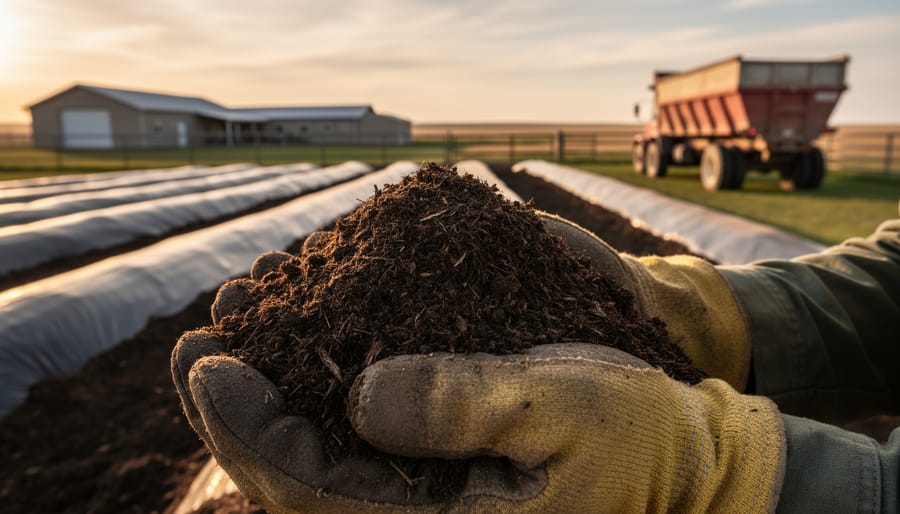
The windrow composting method works exceptionally well here. Build rows approximately 1.2 to 1.5 metres high and 3 to 4 metres wide, which allows the pile’s core to retain heat even during cold snaps. Position windrows in sheltered locations with good drainage to prevent waterlogging during spring melt. Turn piles every two to three weeks during active composting months (May through October) to introduce oxygen and maintain temperatures between 55°C and 65°C.
Winter composting is achievable with proper planning. Before freeze-up, create insulated static piles using straw bales as windbreaks and covering material. These systems slow down but don’t completely stop decomposition. “We’ve had success maintaining 15°C to 20°C core temperatures throughout January by building larger volumes before winter,” explains Tom Brennan, who manages Alberta’s proven composting systems at a Peace Region operation.
Balance your carbon-to-nitrogen ratio at approximately 30:1 by mixing crop residues with nitrogen-rich materials like vegetable culls. Monitor moisture levels—your compost should feel like a wrung-out sponge. Keep a simple log tracking turning dates, temperatures, and material inputs to refine your process year over year. Properly managed systems produce finished compost in four to six months during warm seasons, extending to eight to ten months when including winter periods.
Recycling Programs and Material Recovery
Rural Alberta farmers have several practical recycling options that can transform post-harvest waste into recovered resources, though logistics and economics require careful planning.
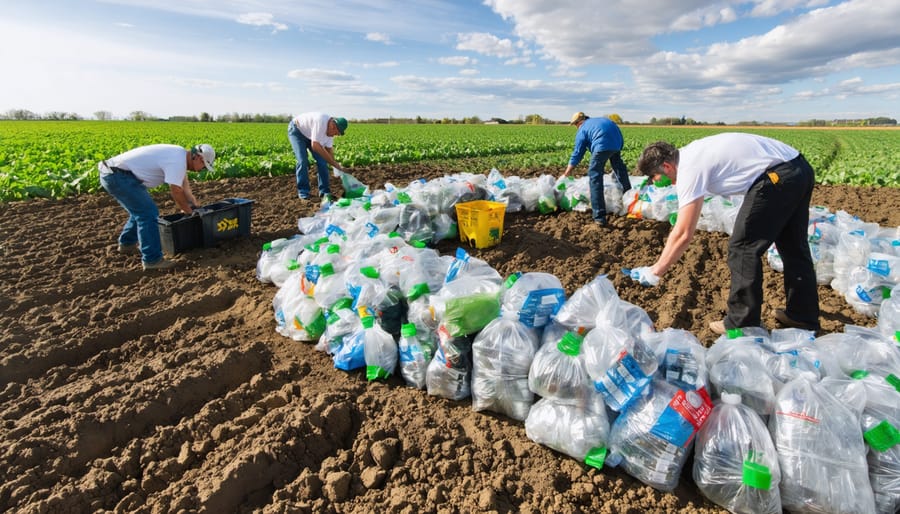
Agricultural plastics, including silage wrap, grain bags, and greenhouse films, can be recycled through programs like the Alberta Ag-Plastic Recycling Group. This initiative operates collection events across the province where farmers can drop off clean, bundled plastics free of charge. The key to successful participation is proper preparation: shake out debris, remove soil and organic matter, and bundle materials tightly. Some farmers coordinate with neighbours to share transportation costs to collection sites, making the process more economical.
Cardboard and packaging materials from inputs like seed bags and fertilizer boxes are widely accepted through municipal recycling programs. Many agricultural suppliers also offer take-back programs for specific packaging types. The challenge in rural areas is often the distance to recycling depots. Consider storing materials until you have a full load, or timing recycling trips with other town errands to reduce fuel costs.
For specialized materials like pesticide containers, the Alberta Used Oil Management Association provides CleanFARMS collection sites. Properly rinsed containers are accepted at numerous agricultural retailers across the province, eliminating disposal fees and environmental concerns.
The economic reality is straightforward: while recycling requires upfront effort in sorting and transportation, it typically costs less than landfill tipping fees. Jason Melnychuk, a grain farmer near Vegreville, notes that organizing an annual recycling haul with three neighbouring farms reduced his waste management costs by approximately 40 percent while recovering valuable storage space on his operation.
Creating Your Farm’s Zero Waste Action Plan
Conducting a Waste Audit
Before you can improve your waste management, you need to understand what you’re currently discarding. A waste audit doesn’t have to be complicated—think of it as taking inventory of what leaves your operation instead of what comes in.
Start by selecting a typical week during your busiest season. Designate separate collection areas or bins for different waste categories: organic matter (culled produce, plant material), packaging materials, plastics, metals, and general refuse. Have your team sort materials as they go, which makes tracking easier than retroactive sorting.
Weigh each category daily using a simple platform scale, recording measurements in kilograms. Many Alberta farmers find that photographing their waste bins provides helpful visual documentation of problem areas. Track not just volume, but also the source—are culls happening during harvest, grading, or storage?
Jim Harynuk, who grows potatoes near Taber, discovered through his audit that 30% of his waste came from oversized tubers that didn’t meet retail specifications. This single insight led him to adjust his variety selection and fertility program, cutting waste by half the following season.
Your audit results will reveal your biggest opportunities. Focus on the categories with the highest volume or those that represent the greatest financial loss. This baseline data becomes your roadmap for applying the zero waste hierarchy effectively across your operation.
Setting Achievable Goals and Measuring Progress
Moving from planning to action means setting targets you can actually achieve on your farm. Start small and build momentum rather than attempting a complete overhaul overnight.
Begin by establishing baseline measurements. For one month, track your current waste output. How many kilograms of rejected produce leave your operation weekly? What percentage of harvest containers are single-use? Document these numbers honestly. Alberta farmer Jim Chen from Red Deer started his zero waste journey by simply weighing discarded potatoes for two weeks, discovering he was losing $1,200 monthly in marketable product.
Choose one or two specific, measurable goals for your first quarter. Instead of “reduce waste,” aim for “divert 25% of Grade B carrots to processing contracts” or “replace 50 plastic crates with reusable bins.” These concrete targets give you clear direction.
Track meaningful metrics that connect to your bottom line. Monitor kilograms of waste diverted from landfill, dollars saved through reduced disposal fees, and new revenue from previously wasted products. Create a simple spreadsheet or use your phone to log weekly progress. Many Alberta producers find that seeing even modest savings, like $200 monthly from composting programs, reinforces their commitment.
Celebrate your wins, no matter how small. Diverted your first tonne from landfill? Share it with your team. Found a buyer for cosmetically imperfect apples? That’s progress worth acknowledging. These incremental victories build confidence and demonstrate that zero waste principles work in real farming operations.
Review and adjust your goals quarterly. What worked? What didn’t? Use these insights to set your next achievable target, gradually expanding your zero waste practices across your entire post-harvest operation.
Expert Insights: What’s Working in Alberta
We reached out to agricultural professionals across Alberta who are leading the charge in waste reduction, and their experiences offer valuable guidance for farmers looking to implement zero waste principles.
“The biggest shift happens when producers stop seeing crop residue and byproducts as waste,” explains Jennifer Morrison, an agricultural extension agent with Alberta Agriculture and Irrigation. “I’ve worked with grain farmers who now view their straw as a revenue stream rather than a disposal problem. They’re baling it for livestock bedding or selling it to mushroom operations. It’s prevention in action—nothing enters the waste stream at all.”
Dale Friesen, who operates a 2,000-acre mixed farm near Lethbridge, discovered creative reuse opportunities that transformed his operation’s efficiency. “We started composting our cull potatoes with livestock manure and crop residue. Within two years, we’d reduced our commercial fertilizer costs by 35 percent while improving soil structure. The initial investment in composting infrastructure paid for itself faster than we expected.”
Morrison emphasizes that Alberta farmers aren’t navigating these changes alone. “The Canadian Agricultural Partnership offers cost-share funding for waste reduction equipment and infrastructure. We’ve helped producers access grants covering up to 50 percent of composting systems, grain drying upgrades, and storage improvements. Many farmers don’t realize these resources exist.”
Tom Chen, a sustainability consultant working with vegetable growers in the Edmonton region, highlights the importance of starting small. “I always recommend farmers tackle one level of the hierarchy first. Maybe that’s improving your grading system to reduce cosmetic culls, or finding a livestock producer who’ll take your vegetable scraps. Build confidence with early wins, then expand your approach.”
The experts agree that collaboration amplifies results. “Join your local agricultural association or commodity group,” Morrison advises. “Farmers sharing equipment, coordinating collection routes for recycling, or partnering on anaerobic digestion projects achieve what individuals can’t alone. The community support makes implementation much more manageable.”
Adopting the zero waste hierarchy in your post-harvest operations isn’t about achieving perfection overnight. It’s about making consistent progress, one manageable step at a time. Every kilogram of waste diverted from the landfill represents both environmental stewardship and economic opportunity. When you reduce spoilage, you’re protecting your investment. When you find markets for cull produce or transform waste into compost, you’re creating new revenue streams. The financial benefits of implementing even one tier of the hierarchy can be substantial, from reduced disposal costs to improved operational efficiency.
Start where it makes the most sense for your operation. Perhaps you’re already composting but could explore food donation partnerships for produce that doesn’t meet commercial standards. Maybe there’s potential to adjust your grading systems to reduce refusal rates. You don’t need to tackle the entire hierarchy at once. Choose one tier that aligns with your current resources and capacity, implement it well, then build from there.
The beauty of this framework is that it’s flexible. A grain operation in southern Alberta will apply these principles differently than a vegetable farm in the Fraser Valley, and that’s exactly how it should be. Adapt the hierarchy to fit your crops, your scale, and your regional context.
You’re not alone in this journey. Connect with your local agricultural societies, extension services, and sustainability networks. Many communities have food recovery organizations actively seeking farm partnerships. Your provincial agriculture department can provide guidance on waste management regulations and available supports. Fellow farmers who’ve already started implementing these practices are often your best resource for practical advice.
The path to zero waste starts with a single step. What will yours be?