Imagine trying to share your organic certification records with three different buyers, each demanding data in a completely different format—spreadsheets that don’t talk to each other, paper forms that can’t be searched, and software systems that refuse to communicate. This frustration mirrors exactly what American healthcare faced before creating the United States Core Data for Interoperability (USCDI), a standardized framework that now allows patient information to flow seamlessly between hospitals, clinics, and specialists across the country.
For Canadian organic farmers, particularly in Alberta where diverse operations range from grain farms to livestock producers, this healthcare solution offers a compelling blueprint. USCDI established a common language for data exchange, ensuring critical information moves efficiently without costly custom integrations or manual re-entry. The agriculture sector faces identical challenges: certification bodies, supply chain partners, retailers, and government agencies all request farm data, yet no universal standard exists to streamline these exchanges.
The organic AgTech landscape desperately needs this interoperability. Your soil test results, crop rotation histories, input applications, and harvest data currently sit trapped in isolated systems. When a processor requests traceability documentation or a certification auditor needs five years of field records, you’re manually compiling information from multiple sources—losing valuable time during peak season.
By understanding how USCDI solved healthcare’s data chaos, organic producers can advocate for similar agricultural standards while implementing immediate practical solutions. This framework thinking transforms how you approach farm data management today, preparing your operation for tomorrow’s connected agricultural ecosystem where information flows as freely as your commitment to sustainable practices demands.
What USCDI Actually Is (In Plain Language)
The Healthcare Problem That Farmers Face Too
Picture this scenario: You visit your family doctor in Red Deer for a routine checkup, then see a specialist in Calgary a month later. Despite being part of the same healthcare system, the specialist can’t access your recent test results because the two offices use different record-keeping systems. You end up repeating tests, wasting time and money.
Sound frustrating? This exact challenge happens on Canadian farms every day, just with different data.
When you use one system to track soil health, another for livestock records, a separate spreadsheet for crop rotations, and yet another tool for organic certification documentation, you’re dealing with the same fragmentation problem that plagues healthcare. Your valuable farm data sits in silos, unable to communicate with each other.
The United States Core Data for Interoperability, or USCDI, emerged from healthcare’s recognition that fragmented patient records create real problems. It established standard ways for different medical systems to share essential information seamlessly.
Agriculture faces an identical challenge. A Saskatchewan organic grain farmer interviewed for this article noted spending four hours weekly manually transferring data between their farm management software, certification tracking, and financial systems. The healthcare model of data interoperability offers a proven framework Canadian agriculture can adapt.
Just as patients benefit when doctors can access complete medical histories, farmers benefit when their precision agriculture tools, organic certification platforms, and financial management systems communicate effectively. The question isn’t whether agriculture needs better data integration, but how we implement it practically for Canadian operations.
Core Elements of USCDI That Matter for AgTech
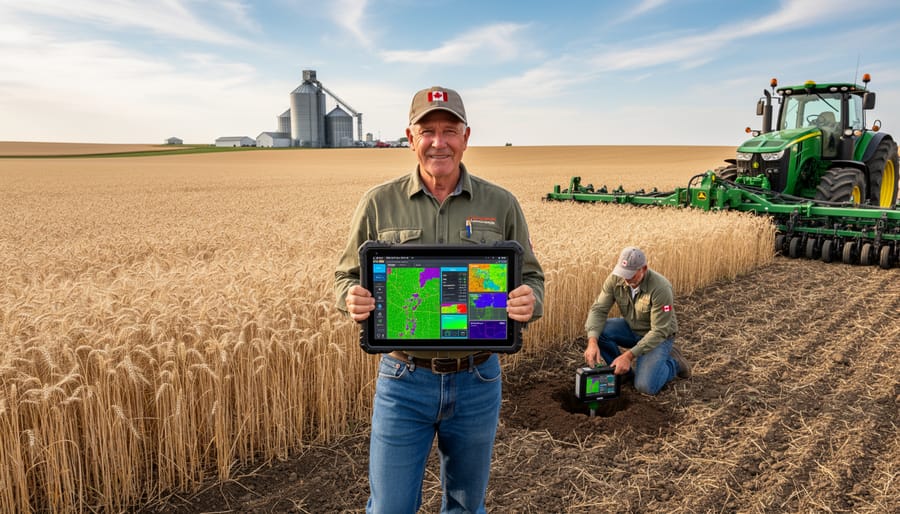
USCDI was built around three core pillars that translate surprisingly well to agriculture: standardized data classes, common vocabulary, and clear interoperability requirements. Think of these as the building blocks that let different systems talk to each other, much like establishing a common language between your soil sensors, weather stations, and farm management software.
Standardized data classes organize information into consistent categories. In healthcare, this means grouping patient vitals, medications, and allergies in predictable ways. For AgTech, imagine organizing your farm data into similar buckets: soil health metrics (pH, organic matter, nitrogen levels), crop performance data (yield per hectare, pest pressure, harvest timing), and input tracking (seed varieties, organic amendments applied, water usage). When your precision agriculture tools use these same categories, sharing data between platforms becomes straightforward rather than a headache.
Common vocabulary ensures everyone defines terms identically. A soil moisture reading of 25 percent means the same thing whether your sensor is from Brand A or Brand B. This matters enormously when you’re comparing data across seasons or sharing insights with your agronomist. For Canadian organic farmers, this could mean standardized codes for organic-approved inputs or consistent measurements for compost application rates.
Interoperability requirements set the technical standards for how systems exchange information. Rather than manually re-entering data from your yield monitor into your crop planning software, systems built on these principles communicate automatically. A farmer near Lethbridge, Alberta recently shared how adopting interoperable farm management tools cut his administrative time by six hours weekly, letting him focus on actual fieldwork during the critical growing season. This connectivity transforms isolated data points into actionable farm intelligence.
Why Agriculture Borrowed From Healthcare’s Playbook
The Data Chaos on Modern Farms
Picture this: Your tractor’s precision planting system records seed placement data in one proprietary format, while your soil moisture sensors store information in another. Meanwhile, your weather station collects critical climate data that never connects with either system, and your organic certification paperwork sits in a filing cabinet—completely disconnected from the digital world.
This isn’t a hypothetical scenario. It’s the daily reality for many North American farmers, including those across the Prairies. A 2023 study of Manitoba and Saskatchewan farms found that producers using three or more agricultural technologies spent an average of 8 hours weekly manually transferring data between systems—time that could be spent actually farming.
Consider the compliance challenges. When an organic certifier requests documentation about input applications, field histories, and soil health metrics, farmers often scramble to piece together information from multiple sources. One Alberta organic grain producer shared that preparing for annual certification required exporting data from five different platforms, manually reconciling timestamps, and recreating field maps because systems couldn’t share spatial data.
The equipment incompatibility extends beyond the farm gate too. Agronomists often can’t access their clients’ real-time field data, forcing farmers to screenshot or manually share information during critical decision-making windows. When seconds matter during a pest outbreak or nutrient deficiency, these communication barriers can mean the difference between a successful intervention and crop loss.
This fragmentation isn’t just frustrating—it’s costly and undermines the potential of agricultural technology to improve sustainability and profitability.
What Healthcare Got Right
Healthcare’s success with USCDI offers a practical roadmap for agriculture. The healthcare sector faced similar challenges you might recognize: scattered data across multiple providers, incompatible systems, and frustrated patients unable to access their own health records. Sound familiar to tracking crop data across different farm management platforms?
Three key elements made USCDI work, and these same principles are now transforming agricultural data management. First, mandatory data exchange requirements meant healthcare providers had to share information in standardized formats, ending the era of data silos. Second, standardized vocabularies ensured a blood pressure reading meant the same thing whether recorded in Vancouver or Calgary. Finally, regulatory backing through government policy gave these standards real teeth.
For agriculture, this translates directly to your operation. Imagine seamlessly transferring soil test results, yield data, and organic certification records between your equipment, agronomist, and buyer without manual re-entry or compatibility issues. Early adopters in Ontario’s organic vegetable sector report saving up to eight hours weekly on administrative tasks alone.
The lesson is clear: interoperability isn’t just possible, it’s proven. Healthcare demonstrated that industry-wide data standards, backed by clear policies and common definitions, create efficiency without sacrificing individual operation needs. Agriculture doesn’t need to reinvent the wheel, just adapt it to our fields.
Data Interoperability Standards Taking Shape in Organic AgTech
Canadian Organic Standards and Data Requirements
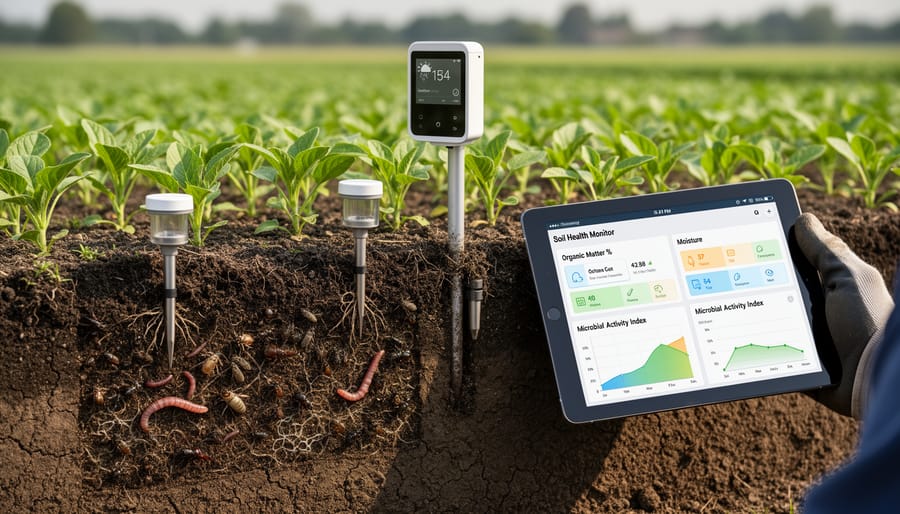
For Alberta’s organic farmers, navigating the Canadian Organic Standards (COS) involves extensive documentation and regular compliance verification. Currently, many producers manage certification requirements through disconnected systems—spreadsheets tracking inputs, paper records of field activities, and separate files for audit preparation. This fragmented approach creates opportunities for errors and makes the certification process more time-consuming than necessary.
Interoperable data systems modeled after frameworks like USCDI could transform how organic farmers maintain COS compliance. Imagine a digital farm management platform where every field operation automatically generates certification-ready documentation. When you record applying an approved pest control product, the system instantly verifies it against the Permitted Substances List and logs the application details in a format your certifying body recognizes.
Sarah McKenzie, an organic grain producer near Lethbridge, participated in a pilot program testing integrated compliance tracking. “Instead of scrambling before my annual inspection, I now have a complete audit trail available year-round,” she explains. “The system flags potential non-compliance issues immediately, giving me time to address them rather than discovering problems during inspection.”
For certifying bodies, standardized data formats mean faster, more accurate verification processes. Inspectors could access structured farm data that clearly demonstrates adherence to buffer zone requirements, crop rotation practices, and input usage—all formatted consistently across operations.
The potential extends beyond individual farms. Alberta’s organic sector could benefit from aggregated, anonymized data showing regional compliance patterns, helping identify common challenges and opportunities for producer education. This collaborative approach strengthens the entire organic community while reducing administrative burden on individual farmers, making organic certification more accessible and sustainable for operations of all sizes.
What Interoperable Farm Data Actually Looks Like in Practice
Case Study: Alberta Grain Farm’s Data Integration Journey
When the McLeod family started farming 800 hectares of wheat and canola near Lacombe, Alberta in 2018, they struggled with a familiar problem: their equipment, software, and service providers couldn’t talk to each other. Their precision seeding equipment tracked one set of data, their grain monitoring system tracked another, and their soil testing lab provided results in yet another format entirely.
“We were spending eight to ten hours every week manually entering data from one system into another,” explains Tom McLeod, who manages the farm’s technology alongside his father. “It was frustrating and led to mistakes that cost us money.”
The turning point came in 2021 when the McLeods partnered with an agricultural technology consultant to implement interoperable systems based on open data standards. The approach mirrored principles similar to healthcare’s data standardization efforts, creating a common language for their agricultural data.
The implementation wasn’t without challenges. Initial setup required investment in compatible software interfaces and training for all three family members involved in farm operations. Some legacy equipment needed hardware upgrades to enable data sharing. The farm also had to establish clear protocols about who could access which data and how it would be secured.
However, the results spoke for themselves. Within the first growing season, the McLeods reduced their data management time by 75 percent. More importantly, the integrated system revealed patterns they’d never noticed before. By connecting soil moisture data with yield monitors and weather tracking, they identified under-performing zones and adjusted their variable rate fertilizer application accordingly.
“Our input costs dropped by $18,000 in the first year while our yields stayed consistent,” Tom notes. “But the real benefit is having confidence in our decisions. When all your data works together, you can see the whole picture instead of just fragments.”
The farm now uses this integrated approach for crop rotation planning, equipment maintenance scheduling, and even their organic certification documentation, demonstrating how data interoperability creates value across every aspect of modern farming operations.
How These Standards Benefit Canadian Organic Farmers Right Now
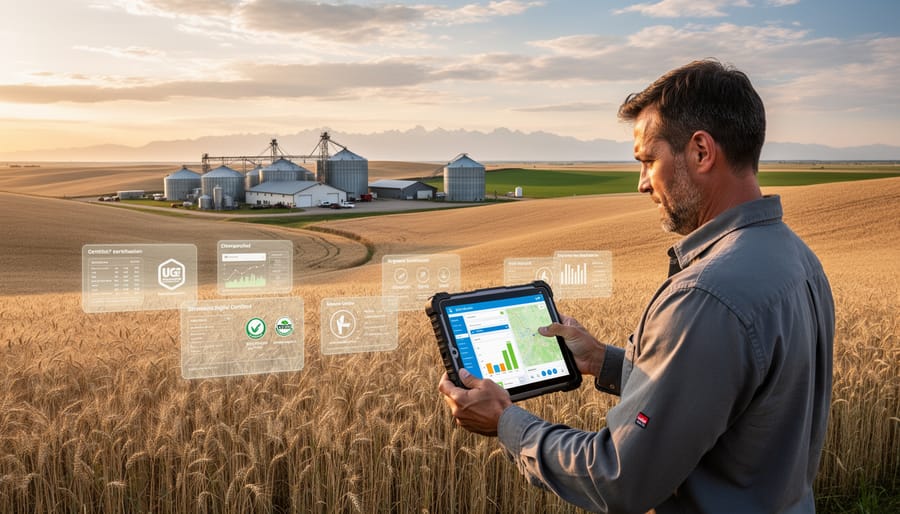
While standardized data systems might sound like a future concept, Canadian organic farmers are already experiencing tangible benefits from improved data interoperability right now. Let’s look at how these standards are making a real difference on the ground.
The most immediate advantage? Significantly less paperwork. Farmers using interoperable systems report spending up to 40 percent less time on administrative tasks. Instead of manually entering the same information into multiple platforms—your organic certification software, your crop planning tool, and your financial records—connected systems share this data automatically. One Alberta grain farmer told us she’s reclaimed nearly eight hours per week that she previously spent on duplicate data entry.
Certification audits have become notably smoother too. When your soil health data, input records, and harvest information all live in connected systems that speak the same language, pulling together audit documentation becomes straightforward. Organic certification bodies increasingly accept digital records from standardized platforms, meaning you’re not scrambling to compile paper trails or reconcile conflicting information from different sources. Several Canadian organic producers have reported their annual audits now take half the time they used to.
Better decision-making happens when you can see the complete picture. Integrated data systems let you spot patterns you might otherwise miss—like correlating specific soil amendments with yield improvements across multiple seasons, or identifying which crop rotations best support both soil health and profitability. You’re working with information, not just raw data.
Perhaps most exciting for many producers is improved access to carbon credit programs. These programs require detailed, verifiable records of your farming practices—exactly what standardized data systems excel at providing. As carbon markets expand across Canada, farmers with well-organized, interoperable data systems are positioned to participate more easily and potentially generate new revenue streams from their sustainable practices.
The key takeaway? These benefits aren’t theoretical. They’re happening now for early adopters who’ve embraced standardized data practices. As more agricultural technology providers adopt these interoperability standards, these advantages will only become more accessible to farmers across Canada’s organic sector.
Getting Your Farm Ready for Interoperable Systems
Questions to Ask Your AgTech Suppliers
Before investing in equipment or software, protect your operation’s future by asking suppliers these essential questions:
Can your system export data in open, standardized formats like CSV or JSON? This ensures you’re not locked into proprietary systems that limit your flexibility.
Which data standards does your platform support? Look for compatibility with emerging agricultural data frameworks similar to healthcare’s interoperability models.
Will I retain full ownership of my farm data? Clarify whether you can access, transfer, or delete your information at any time without penalties.
How does your sensor technology or software integrate with other systems? Request specific examples of third-party tools that work seamlessly with their platform.
What APIs are available for data sharing? Open APIs allow different systems to communicate, essential for building a connected farm management ecosystem.
Can you demonstrate data portability? Ask for a live demonstration showing how easily data transfers between platforms.
Consider interviewing other farmers who’ve successfully implemented interoperable systems. Manitoba organic producer Sarah Chen notes, “Asking these questions upfront saved us from replacing incompatible equipment just two years later.” Your suppliers should welcome these conversations—hesitation may signal future limitations.
The digital transformation sweeping through agriculture isn’t just about adopting new technology—it’s about taking control of your operation’s most valuable asset: data. While USCDI originated in healthcare, its core principles of interoperability, standardization, and data ownership are reshaping how farmers interact with agricultural technology. For Canadian organic producers, especially those navigating Alberta’s diverse growing conditions, these emerging standards represent a significant opportunity to lead in sustainable, data-driven farming.
The farms already implementing interoperable systems are seeing tangible results. Better yield predictions, reduced input waste, streamlined certification processes, and improved market access are becoming the norm rather than the exception. These aren’t massive industrial operations with unlimited budgets—they’re family farms and mid-sized organic operations that recognized the value of connecting their data ecosystem early.
As standards organizations develop agriculture-specific interoperability frameworks, now is the time to position your operation for success. Start by auditing your current technology stack. Which platforms talk to each other? Where are you manually re-entering data? What information could improve your decision-making if it were more accessible? These questions will guide your path forward.
The good news is you don’t need to overhaul everything overnight. Begin with one integration that addresses your biggest pain point—whether that’s linking soil monitoring to fertility planning or connecting field records to organic certification documentation. Each step builds momentum and demonstrates value.
Canadian organic farmers have always been innovators, adapting global practices to local conditions while maintaining environmental stewardship. Embracing data interoperability is simply the next evolution of that tradition. Your willingness to engage with these emerging standards today will determine your competitive advantage tomorrow. Take the first step, ask questions, and connect with others on this journey. Your digital future in agriculture starts now.