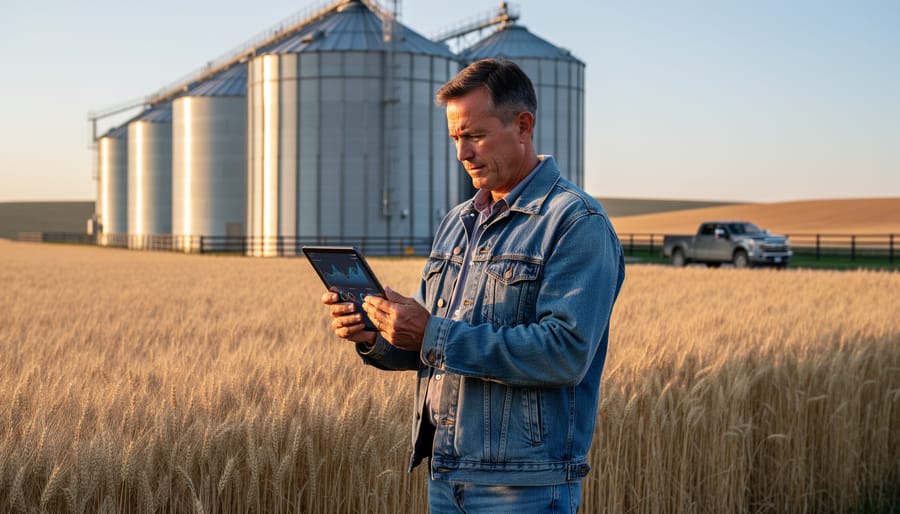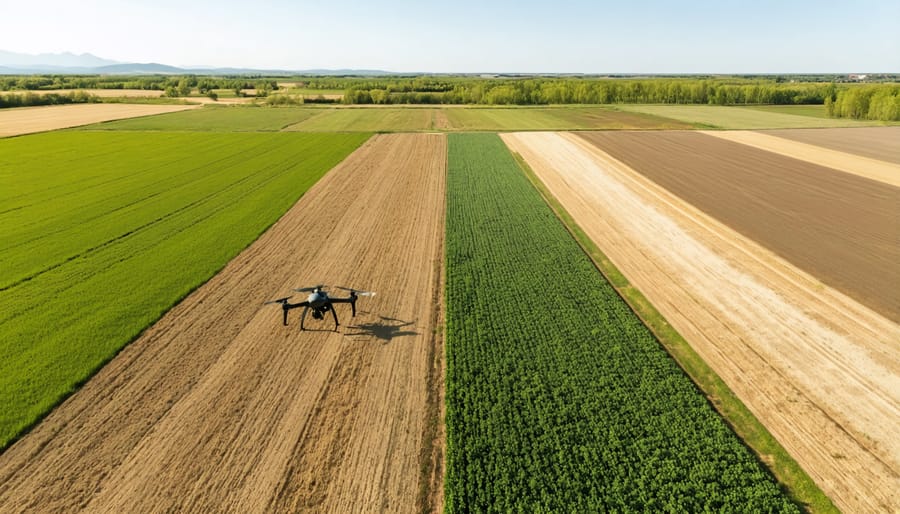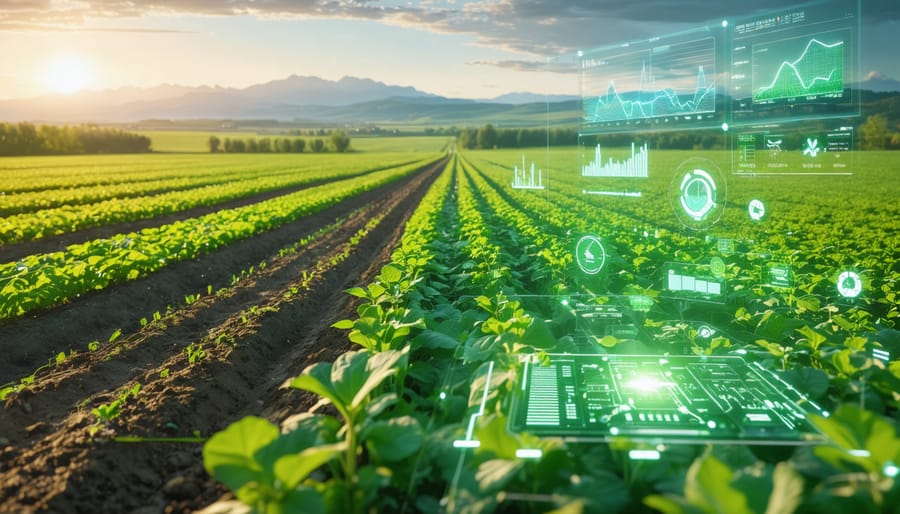
Verify your operation meets Quality Assurance International standards by reviewing their comprehensive organic certification requirements at least six months before harvest—QAI, one of North America’s largest USDA-accredited certifiers, operates across Canada and requires detailed documentation of your soil management, crop inputs, and pest control methods spanning a minimum three-year transition period.
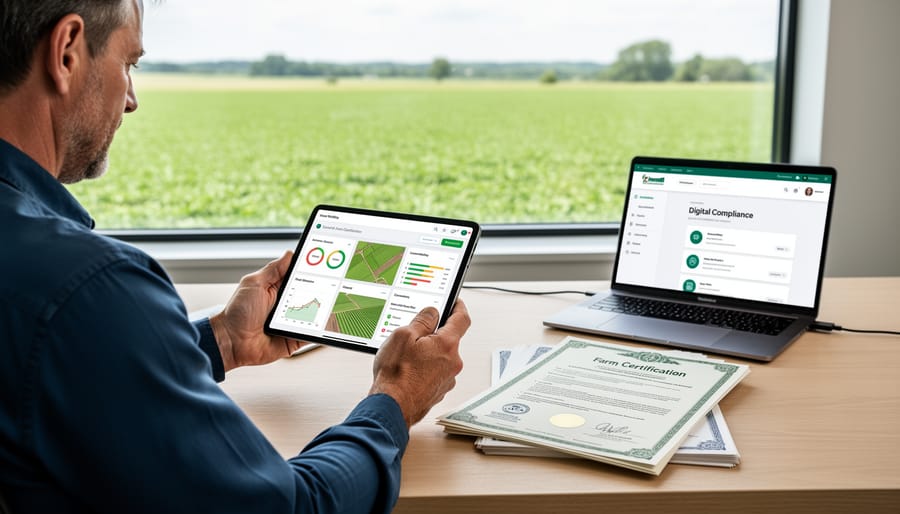
Implement digital farm management platforms specifically designed for organic certification to reduce paperwork burden by 60-70%. Modern software solutions allow you to track field activities, input purchases, and harvest records in real-time while automatically generating the reports QAI inspectors require during annual audits. Alberta grain farmers using these systems report cutting certification preparation time from weeks to days, freeing valuable hours during peak season.
Calculate your certification investment against market premiums before committing—QAI certification costs typically range from $750 to $2,000 annually depending on operation size, but certified organic products command 20-40% price premiums in Canadian markets. Saskatchewan vegetable growers consistently report positive returns within 18-24 months of certification, particularly when selling directly to consumers or through local organic cooperatives.
Contact QAI-certified farmers in your region to understand practical challenges specific to Canadian growing conditions. The transition period proves most demanding, requiring meticulous record-keeping while managing crops without synthetic inputs. Manitoba producers emphasize that joining provincial organic associations provides mentorship opportunities and shared knowledge about approved inputs suitable for prairie climates, making the certification journey manageable even for first-time applicants.
What Is QAI Organic Certification and Why It Matters to Canadian Farmers
QAI’s Role in the Canadian Organic Landscape
Quality Assurance International operates as a CFIA-recognized certification body, meaning organic products certified by QAI meet Canada’s stringent regulatory requirements under the Safe Food for Canadians Regulations. This recognition is crucial for Canadian farmers because it ensures your QAI-certified products can carry the Canada Organic logo and access both domestic and international markets seamlessly.
The CFIA maintains a list of approved certification bodies, and QAI’s inclusion demonstrates its compliance with Canadian Organic Standards. For Alberta farmers, this means you can work with QAI while remaining fully aligned with federal requirements—there’s no need to pursue separate Canadian certification if you choose QAI as your certifying agent.
What makes QAI particularly valuable in the Canadian context is its dual recognition. Beyond CFIA approval, QAI holds accreditation from the USDA’s National Organic Program, which opens doors for Canadian producers looking to export to American markets. This dual framework simplifies the certification journey for farmers operating across the border or planning future expansion.
When selecting QAI, you’re choosing a certification body that understands both Canadian regulatory expectations and the practical realities of farming in diverse climates. Their experience with Canadian operations means they’re familiar with regional challenges, from crop rotation strategies suited to prairie conditions to documentation requirements that align with provincial agricultural programs.
What QAI Certification Requires from Your Farm
Obtaining QAI certification requires commitment to thorough documentation and transparency throughout your farming operation. The process begins with completing a detailed organic system plan that outlines every aspect of your production methods, from soil management to pest control strategies. This plan serves as your operational blueprint and must align with organic farming best practices recognized under both Canadian and USDA standards.
Your record-keeping system needs to track all inputs used on your farm, including seeds, fertilizers, and soil amendments. You’ll document field activities, harvest dates, yields, and sales records. QAI inspectors review these records to verify compliance, so maintaining accurate, up-to-date documentation is essential. Many Alberta farms have successfully streamlined this requirement using digital platforms that organize records efficiently.
Annual on-site inspections are mandatory. During these visits, QAI inspectors examine your fields, storage facilities, and equipment while reviewing your documentation. They’ll verify buffer zones between organic and conventional areas, typically requiring 8 metres of separation to prevent contamination. Inspectors also assess your knowledge of organic standards and your farm’s adherence to your approved organic system plan.
The certification process includes fees based on your farm’s gross organic sales and acreage. Beyond the initial certification, you’ll need to maintain ongoing compliance through regular updates to your organic system plan and continued adherence to prohibited substance lists. This systematic approach ensures your operation consistently meets the rigorous standards that make organic certification meaningful to consumers.
The Traditional Certification Challenge: Paper Trails and Compliance Headaches
Time and Resource Costs of Manual Compliance
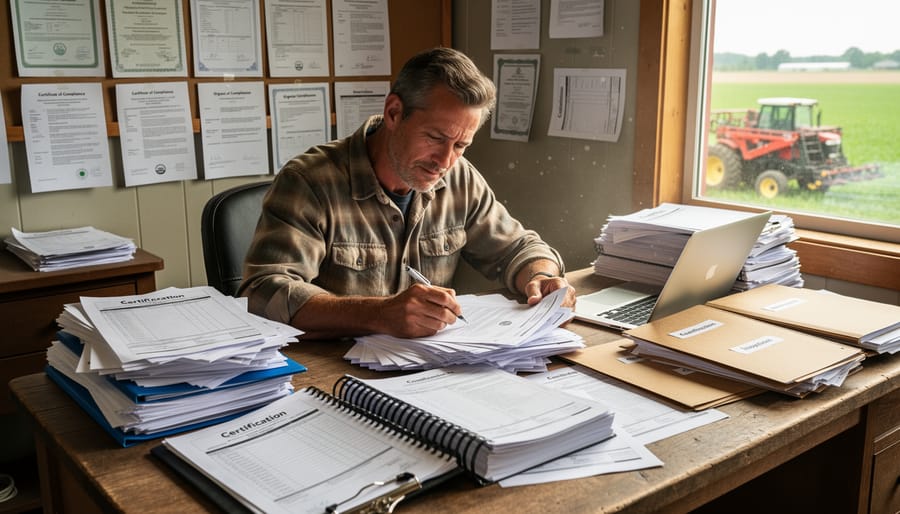
Traditional organic certification processes demand significant time investments from farm operators. Alberta farmers pursuing QAI certification typically spend 40-80 hours annually on paperwork alone, according to conversations with certified producers in the Peace River region. This includes maintaining detailed field logs, tracking inputs, documenting crop rotations, and preparing for annual inspections.
Consider a mid-sized grain operation near Lethbridge: the operator estimates dedicating two full weeks each year to assembling records, responding to auditor requests, and managing compliance documentation. For diversified operations with livestock and crops, this burden increases substantially. Many farmers report the administrative load peaks during spring planting and fall harvest—precisely when time is most precious.
The financial costs extend beyond direct certification fees. Farm managers often hire temporary administrative help or sacrifice billable hours to complete compliance tasks. One vegetable grower near Edmonton calculated spending approximately 1,200 dollars annually in lost productivity while managing certification paperwork manually. These resource demands can discourage smaller operations from pursuing organic certification, despite market advantages.
Digital platforms now offer practical solutions to reduce this burden, allowing farmers to capture compliance data in real-time rather than reconstructing records months later. This shift can reclaim valuable hours during critical growing seasons.
Common Certification Stumbling Blocks
Many Canadian farmers pursuing QAI organic certification encounter similar roadblocks that can extend the approval timeline. Understanding these common challenges helps you prepare more effectively and avoid unnecessary delays.
Incomplete or inconsistent record-keeping ranks as the most frequent issue. QAI requires detailed documentation of every input used, field activities, and harvest data dating back at least three years. Alberta producer Sarah Chen shared in a recent interview that her initial application was delayed six weeks because her transition period records lacked specific application dates for approved soil amendments.
Buffer zone documentation often creates confusion, especially for smaller operations near conventional farms. You need to demonstrate adequate separation—typically 7.5 to 15 metres depending on circumstances—and provide maps showing neighbouring land uses. Many applicants underestimate the detail required in these boundary descriptions.
Contamination prevention plans also cause stumbling blocks. QAI wants to see clear protocols for equipment cleaning, storage separation, and preventing commingling during harvest and transport. Generic plans typically get rejected; reviewers look for operation-specific procedures that address your unique circumstances.
Lastly, unclear labelling intentions or misunderstanding allowed ingredients can trigger resubmissions. Processing operations particularly struggle here, as every ingredient must be verified as compliant with Canadian organic standards. Taking time to verify inputs before applying saves considerable frustration later.
How Digital Organic Certification Platforms Work
Core Features That Simplify Compliance
Modern digital platforms designed for organic certification streamline the complex documentation requirements that QAI and other certifying bodies demand. These tools transform what used to be a paper-heavy, time-consuming process into a manageable system that fits into your daily farm operations.
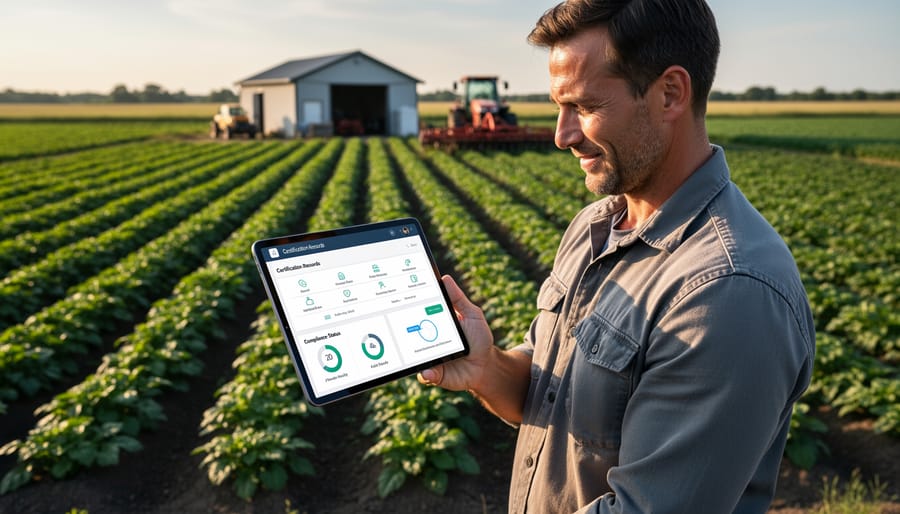
Digital record-keeping features allow you to log inputs, field activities, and harvest data directly from your smartphone or tablet. Instead of filling out paper forms at the end of a long day, you can quickly enter information in real-time, ensuring accuracy and completeness. This capability is particularly valuable during Alberta’s busy growing season when time is precious.
Automated reminder systems help you stay ahead of critical deadlines. Whether it’s your annual certification renewal, quarterly reporting requirements, or inspector visit preparation, these notifications ensure nothing falls through the cracks. Many farm management software platforms integrate these reminders with your existing calendar systems.
Centralized document storage keeps all your organic system plans, input receipts, field maps, and past inspection reports in one secure, searchable location. This means when your QAI inspector requests documentation, you can access it within seconds rather than hunting through filing cabinets.
Traceability tracking features connect your entire production chain, from seed source to final sale. This creates clear audit trails that demonstrate compliance and support your organic integrity claims.
Direct communication portals let you message inspectors, submit documentation, and receive feedback without the delays of traditional mail or email chains, making the certification process more collaborative and transparent.
Integration with QAI Requirements
Modern digital farm management tools built for organic certification are specifically designed to mirror QAI’s documentation requirements, making compliance significantly more manageable for Canadian producers. These platforms incorporate QAI’s Organic System Plan templates directly into their interfaces, guiding you through each required component from field histories to input documentation.
The best systems automatically generate reports that match QAI’s preferred formats, eliminating the guesswork around what information needs to be submitted. For instance, when you log a compost application of 2,500 kilograms per hectare in the platform, it captures not just the quantity but also the source verification, application date, and field location in exactly the format QAI inspectors expect to see.
Saskatchewan farmer Jennifer Kowalski shared in a recent interview how her platform’s QAI-aligned features reduced her annual recertification paperwork from three days to just four hours. The system maintained her three-year field rotation records, tracked allowable inputs against the QAI approved substances list, and flagged any potential compliance issues before her inspection.
These platforms also sync with QAI’s audit schedules, sending you reminders about documentation deadlines and inspection preparation timelines. Many offer mobile apps that let you photograph input labels or document practices in real-time, ensuring nothing gets missed during busy field seasons. This integration transforms certification from an overwhelming administrative burden into a manageable part of your regular farm operations.
Real Benefits for Alberta Organic Farmers
Time Savings You Can Actually Measure
Digital record-keeping platforms deliver measurable time savings throughout your certification journey. For small operations under 10 hectares, farmers typically save 8-12 hours annually by eliminating manual paperwork and streamlining transaction logs. Mid-sized farms between 10-50 hectares often report 15-25 hours saved each year, primarily through automated record templates and built-in compliance tracking.
Consider the experience of an Alberta grain producer who reduced their annual QAI documentation time from 32 hours to just 14 hours after adopting a cloud-based management system. The platform automatically generated field activity reports and maintained continuous compliance records, eliminating the last-minute scramble before inspection visits.
For larger operations exceeding 50 hectares, the savings multiply significantly. One Saskatchewan organic dairy operation documented 40+ hours saved annually through digital inventory tracking and automated supplier verification. Their certification coordinator noted that real-time data entry by field staff eliminated duplicate record-keeping and reduced errors that previously required time-consuming corrections.
The key advantage extends beyond initial certification. During annual renewals, digital platforms allow inspectors to review pre-organized records remotely, cutting on-site inspection time by 30-40 percent. This efficiency benefits your operation while maintaining the thorough verification QAI requires for organic integrity.
Improved Record Accuracy and Audit Readiness
Digital record-keeping transforms how organic farmers prepare for QAI inspections. Instead of scrambling through paper files and handwritten logs, modern platforms centralize all certification documentation in one accessible location. This systematic approach significantly reduces the compliance errors that can delay certification or trigger additional inspector visits.
When preparing for annual inspections, digital systems generate comprehensive reports that match exactly what QAI inspectors need to review. Your input records, harvest logs, and processing documentation are already organized according to certification standards. Alberta farmer Jennifer Morrison from Red Deer reports that her inspection preparation time dropped from three stressful weeks to just two focused days after adopting digital management tools.
These platforms also enhance traceability and transparency throughout your operation. Timestamped entries create an audit trail that demonstrates consistent compliance rather than last-minute documentation efforts. Inspectors appreciate the clear data presentation, often completing their reviews more efficiently.
The stress reduction is tangible. Rather than worrying whether you’ve captured every required detail, you can approach inspections confidently knowing your records are complete and accessible. This peace of mind lets you focus on what matters most—growing quality organic products for Canadian consumers.
Case Study: An Alberta Grain Farm’s Digital Transition
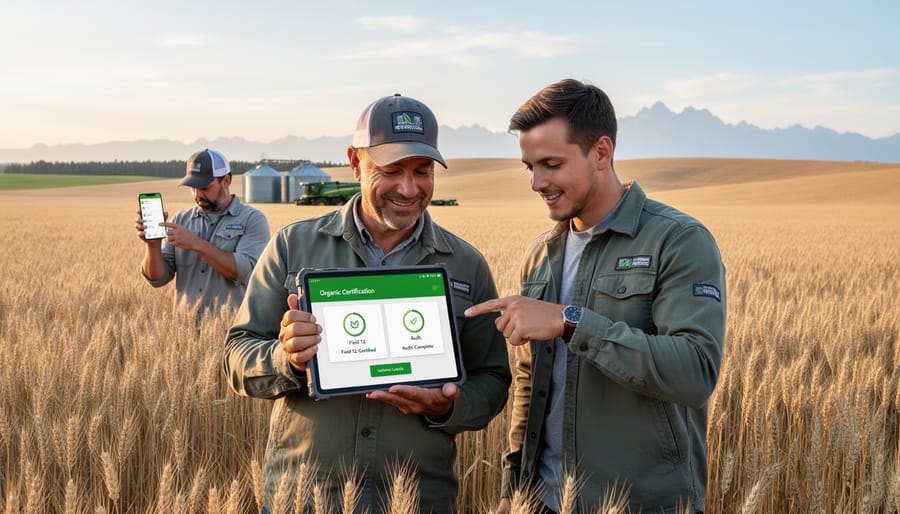
When Clearwater Farms near Red Deer faced mounting paperwork challenges during their third year of QAI certification, owners Janet and Michael Chen decided it was time for a change. Like many Alberta organic farmers, they initially managed their 200-hectare operation using paper files and spreadsheets.
The transition to a digital certification platform took approximately two months. Janet recalls the initial hesitation: “We worried about the learning curve, but our certifier walked us through the setup.” The farm now uses cloud-based software to track field inputs, document crop rotations, and upload photos directly from their smartphones.
The results were immediate. Annual audit preparation time dropped from three weeks to four days. Michael notes, “Everything’s in one place. When our inspector arrives, we pull up records instantly instead of shuffling through binders.”
The platform’s GPS mapping feature proved particularly valuable, helping them demonstrate buffer zone compliance between conventional and organic fields. Their annual certification renewal now happens seamlessly, with automatic reminders ensuring no documentation deadlines are missed. The investment of 600 dollars annually has freed up countless hours for actual farming.
Choosing the Right Digital Platform for Your Operation
Must-Have Features vs. Nice-to-Haves
When evaluating digital platforms for QAI organic certification management, understanding which features are essential versus beneficial helps you make a smart investment for your operation.
Must-have features form the foundation of effective certification management. First, comprehensive record-keeping capabilities that track inputs, field activities, and harvest data are non-negotiable. Your platform should generate audit-ready reports that align with both QAI and Canadian Organic Standards requirements. Document storage with version control ensures you maintain required records for the five-year period mandated by certifiers. Mobile accessibility allows you to record activities in real-time from the field, reducing errors and saving hours of office work. Integration with existing farm management systems prevents duplicate data entry and maintains accuracy across your operation.
Nice-to-have features enhance efficiency but aren’t deal-breakers initially. Advanced analytics dashboards provide deeper insights into certification compliance trends over time. Automated reminders for upcoming inspections or renewal deadlines offer convenience. Multi-user access with permission levels benefits larger operations with multiple team members. Integration with weather stations or soil sensors adds precision but requires additional investment. Customizable templates for organic system plans save time during annual updates.
A Manitoba grain producer shared that starting with essential features and adding capabilities as their certified acreage expanded proved more cost-effective than purchasing a comprehensive system upfront. Focus on your current needs while ensuring the platform can scale with your organic journey.
Cost Considerations and Return on Investment
Digital platform costs for organic certification management typically range from $200 to $1,500 annually, depending on features and farm complexity. Before investing, consider your farm’s specific needs and potential time savings.
For smaller operations under 50 acres, basic record-keeping platforms around $200-400 yearly often provide sufficient functionality. Mid-sized farms between 50-200 acres usually benefit from comprehensive platforms costing $600-900 annually, which include document management, compliance tracking, and audit preparation tools. Larger operations may require custom solutions with premium support.
To calculate your return on investment, consider the time you currently spend on paperwork. If certification prep takes 40 hours annually at a conservative value of $25 per hour, that’s $1,000 in labour costs. A platform reducing this time by 50% saves $500 yearly while improving accuracy and reducing audit stress.
Alberta farmer James Richardson from a 120-acre vegetable operation shared his experience: “Our platform costs $750 yearly, but it cut my certification prep time from six weeks to two. That freed me up during our busiest season, which alone made it worthwhile.”
Consider also the hidden costs of errors or missed documentation during audits, which can delay certification or require expensive corrective actions. Quality platforms help prevent these costly mistakes, making them valuable insurance for your organic status.
Start with platforms offering free trials to assess fit before committing financially.
Making the Transition: Practical Steps to Go Digital
Getting Your Records Ready
Before transitioning to any digital platform, you’ll want to get your current records in order. Start by gathering all your organic certification documents in one place – this includes field maps, input receipts, harvest logs, and previous QAI inspection reports. Many Alberta farmers find it helpful to create a simple filing system organized by year and category.
Next, review your records for completeness. QAI requires documentation of everything from seed sources to pest management practices. If you notice gaps, now is the time to fill them in while the information is still fresh. Consider scanning paper documents using a smartphone or flatbed scanner, saving files with clear, consistent names like “2024_Field3_SoilTest.pdf” to make searching easier later.
Create a basic spreadsheet listing your fields, crop rotations, and input applications over the past three years. This organizational step makes data entry much smoother when you’re ready to move to a digital platform. Saskatchewan organic farmer Maria Chen shares: “I spent one weekend organizing five years of paper records. It seemed overwhelming at first, but having everything sorted made the digital transition surprisingly straightforward.”
Remember, you don’t need perfect records to start – just organized ones that tell your farm’s organic story clearly.
Training and Adoption Tips
Getting your team comfortable with digital certification tools doesn’t have to be overwhelming. Start by designating one person as your “system champion”—someone tech-savvy who can learn the platform first and then guide others. Many organic farmers in Alberta have found success using a gradual rollout approach: begin by digitizing just one aspect of your record-keeping, like field logs or input tracking, before expanding to full certification management.
Take advantage of training resources offered by your chosen platform. Most providers include video tutorials, webinars, and customer support specifically designed for farmers without extensive tech backgrounds. Schedule short, regular practice sessions with your team—15 minutes daily works better than marathon training days that lead to information overload.
Consider connecting with nearby certified operations already using digital tools. A Saskatchewan grain farmer interviewed for this piece shared that visiting a neighbour’s farm to see the system in action made adoption feel achievable rather than intimidating. The peer-to-peer learning approach builds confidence quickly.
Remember that transitioning to digital certification management is an investment in your operation’s future. Most farmers report that initial learning curves of two to three weeks pay off through time savings during actual audits and improved year-round organization. Start during your quieter season to reduce pressure and allow everyone to learn at a comfortable pace.
Expert Perspective: What Certification Professionals Say
Digital platforms are transforming how organic certification works, and professionals on the front lines are noticing significant improvements. We spoke with several certification inspectors and QAI-affiliated experts who shared their experiences with these technological changes.
“The shift to digital record-keeping has made our job considerably more efficient,” explains Sarah Chen, an organic inspector with fifteen years of experience working across Western Canada. “When farmers use digital platforms, we can review their documentation before arriving on-site, which means inspection visits are more focused and productive. We spend less time hunting for paperwork and more time discussing meaningful compliance issues.”
Chen notes that farms using digital systems typically have 30-40% fewer documentation-related non-conformances during inspections. “The platforms catch missing information early, prompting farmers to address gaps before the official inspection.”
Mark Dubois, a certification coordinator who works with Alberta producers, emphasizes the communication benefits. “Digital platforms create a transparent record of all interactions between farmers and certifiers. There’s no confusion about what was requested or when documents were submitted. This clarity reduces anxiety for farmers and speeds up the entire certification timeline.”
From QAI’s perspective, digital adoption supports more consistent standards application. “When data is digitized, we can identify patterns and provide better guidance to producers,” shares inspection team lead Jennifer Thompson. “We’ve seen compliance rates improve because farmers receive timely feedback rather than discovering issues during annual inspections.”
These experts agree that while the initial learning curve exists, farmers who embrace digital certification tools typically find the annual renewal process becomes progressively easier. The investment in learning these platforms pays dividends through reduced administrative burden and faster certification decisions.
Pursuing QAI certification doesn’t have to feel overwhelming when you leverage the digital tools and community resources available to Canadian organic farmers. The platforms we’ve explored throughout this article transform what once seemed like mountains of paperwork into manageable, streamlined processes that fit into your existing farm routines. By digitizing record-keeping, automating compliance tracking, and centralizing documentation, these tools free you to focus on what matters most—growing healthy crops and building soil health for the long term.
The transition to organic certification supports broader sustainability goals beyond the certificate itself. Many Alberta farmers who’ve completed the process report improved soil quality, reduced input costs over time, and stronger connections with consumers who value transparency. Digital platforms enhance these benefits by providing data insights that help you make informed decisions about crop rotation, input management, and resource efficiency.
If you’re considering QAI certification, start by connecting with Canadian Organic Growers or your provincial organic association. These networks offer mentorship programs pairing experienced certified farmers with newcomers, providing invaluable guidance through the certification journey. Many organizations also host workshops specifically addressing digital platform adoption, helping you select tools that match your operation’s size and goals.
Remember, you’re not alone in this transition. The Canadian organic community continues to grow, with farmers across Alberta and beyond sharing knowledge, troubleshooting challenges, and celebrating successes together. Take that first step—reach out, explore available platforms, and join a network committed to supporting sustainable agriculture for future generations.