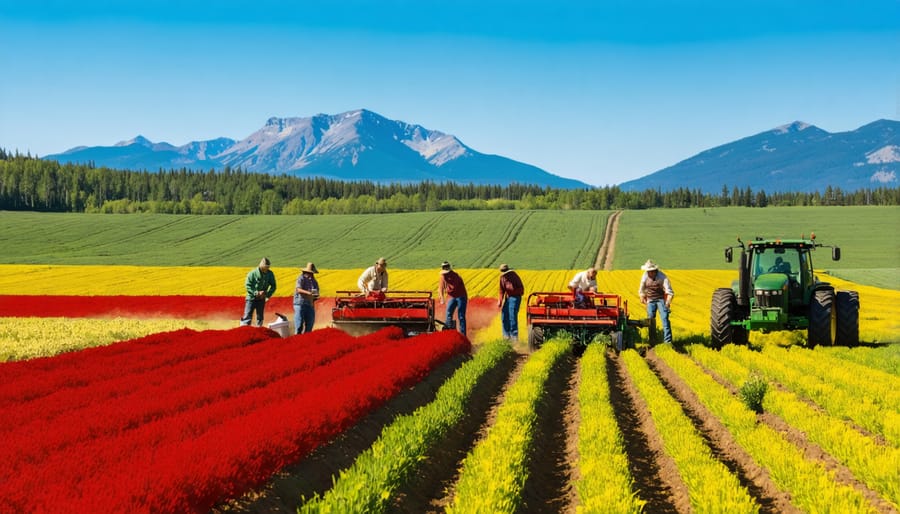
A sustainable supply chain means every step of getting your product from field to consumer protects environmental resources, treats workers fairly, and maintains economic viability for everyone involved. For Canadian farmers, this extends beyond organic certification or carbon footprinting. It encompasses soil health practices that preserve productivity for future generations, fair wages and safe conditions for seasonal workers, transparent pricing that sustains your operation through market fluctuations, and reliable relationships with processors and distributors who share these values.
The conversation around supply chain sustainability has shifted dramatically in recent years. What once seemed like a marketing buzzword now directly affects market access, premium pricing opportunities, and long-term farm profitability. Major food retailers and processors across Canada increasingly require sustainability verification from suppliers, while consumers willing to pay more for responsibly produced food create tangible economic incentives.
Understanding sustainable supply chains matters because you’re likely already implementing many of these practices without the formal language or recognition. The Prairie farmer who adopted reduced tillage to prevent erosion, hired local youth at competitive wages, and partnered with a regional processor committed to fair pricing has built sustainability into operations organically. The challenge lies in documenting these efforts, connecting them to broader supply chain requirements, and capturing their full economic value.
This article clarifies what sustainability means in practical agricultural terms, demonstrates why it strengthens rather than burdens farm businesses, and provides actionable steps for building or strengthening sustainable supply chain relationships. Through Canadian examples and expert insights, you’ll see how farms similar to yours turned sustainability from abstract concept into competitive advantage.
What Makes a Supply Chain Truly Sustainable
The Missing Piece: Social Equity
When you think about sustainability, soil health and carbon footprints might come to mind first. But there’s another critical component that determines whether your supply chain is truly sustainable: social equity in agriculture. This means ensuring that every person involved in bringing food from field to table is treated fairly and has access to the resources they need to thrive.
Social equity starts with fair compensation. Farm workers, equipment operators, processing facility staff, and transportation workers should all receive living wages that reflect the value of their contributions. In Canada, this means wages that account for our cost of living and provide stability for families.
Safe working conditions are non-negotiable. This includes proper training, protective equipment, reasonable work hours, and protocols that prevent injury. Whether it’s your own crew or workers further down the supply chain, everyone deserves to return home safely each day.
Community support extends beyond the farm gate. Sustainable supply chains contribute to local economies, support rural infrastructure, and invest in the next generation through training programs and mentorship opportunities. For Alberta farmers, this might mean partnering with local agricultural colleges or creating apprenticeship programs.
Indigenous partnerships represent a crucial aspect of social equity in Canadian agriculture. This involves meaningful consultation, respect for traditional knowledge, and equitable benefit-sharing when working on or near Indigenous lands. Many Alberta producers are discovering that Indigenous land management practices offer valuable insights for sustainable farming.
Equitable access to resources means removing barriers that prevent smaller operations, women farmers, and newcomers from participating fully in agricultural markets. This includes fair access to capital, technology, distribution networks, and decision-making processes that shape the industry’s future.
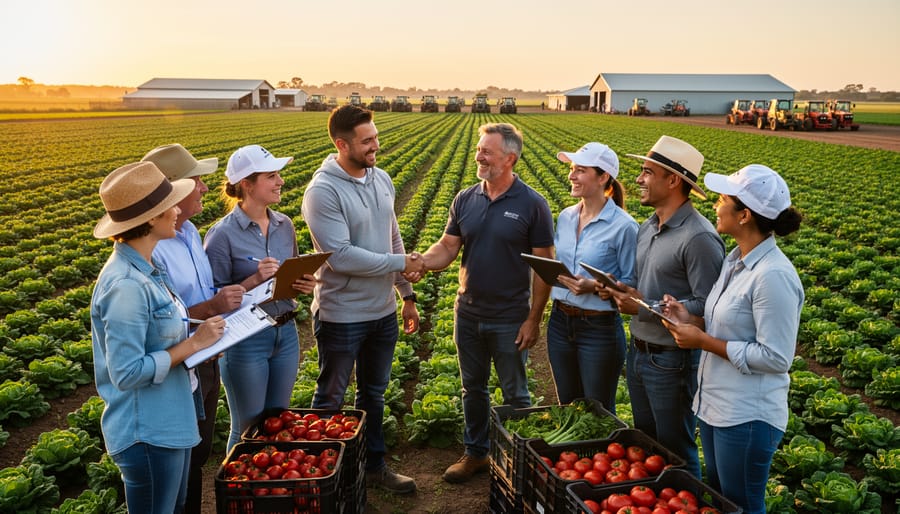
How Social Equity Strengthens Your Farm’s Supply Network
Reliable Labor Reduces Costly Disruptions
A stable, fairly-treated workforce forms the backbone of any sustainable supply chain, yet many Canadian farmers face mounting challenges with labor turnover that disrupt operations and drain resources. When workers receive competitive wages, safe working conditions, and respectful treatment, they’re more likely to stay, creating continuity that benefits everyone involved.
The numbers tell a compelling story. According to the Canadian Agricultural Human Resource Council, Alberta’s agriculture sector faces an estimated shortage of over 5,000 workers annually, with turnover rates in some operations reaching 40 percent. Each time a worker leaves, you’re not just losing a pair of hands – you’re losing accumulated knowledge about your operation, equipment, and livestock or crops.
The financial impact hits hard. Training a new farm worker typically costs between $2,500 and $5,000 when you factor in reduced productivity during the learning curve, supervisor time, and potential mistakes. For a mid-sized operation replacing even five workers annually, that’s up to $25,000 in direct costs, not counting delayed tasks or quality issues during transitions.
Progressive farms across Alberta are addressing this by benchmarking wages against local standards, providing year-round employment where possible, and investing in worker housing and safety equipment. One mixed farming operation near Lethbridge reduced turnover by 60 percent after implementing a profit-sharing program and guaranteed minimum hours for seasonal workers.
This approach doesn’t just reduce disruptions – it builds institutional knowledge. Experienced workers spot problems earlier, handle equipment more carefully, and work more efficiently, creating measurable improvements in your bottom line while strengthening the human foundation of your supply chain.
Community Partnerships Open New Markets
Building relationships with Indigenous communities and local partners isn’t just the right thing to do—it opens doors to new markets and valuable traditional knowledge that strengthens your entire operation. When you engage authentically with Indigenous partners, you gain access to centuries of land stewardship practices while creating economic opportunities that benefit everyone involved.
Local community engagement creates direct pathways to consumers who value ethical sourcing. Restaurants, institutions, and retailers increasingly seek suppliers with demonstrated community partnerships, particularly those involving Indigenous collaboration. These relationships differentiate your products in crowded markets and often command premium pricing.
Consider the partnership between Alberta grain farmers and local Indigenous communities near Lethbridge. Farmers worked with Blackfoot knowledge keepers to implement rotational grazing patterns based on traditional land management. This collaboration led to improved soil health, reduced input costs by 15 percent, and opened contracts with regional food service companies specifically seeking Indigenous partnership products. The farmers gained market access while community members secured employment and revenue sharing.
Knowledge exchange flows both ways. Indigenous partners often share insights about native plant species, water conservation, and seasonal patterns that commercial agriculture has overlooked. Meanwhile, farmers provide employment opportunities and share modern processing techniques.
Start small by reaching out to local band councils or Indigenous business networks. Attend community events, listen more than you speak, and approach partnerships with genuine long-term commitment. The Canadian Agricultural Partnership offers funding specifically for Indigenous collaboration projects, making initial investments more manageable. These relationships take time to develop, but the market advantages and operational knowledge you gain make them worthwhile investments in your farm’s future.

Fair Practices Protect Your Reputation
Today’s consumers are increasingly making purchasing decisions based on values, not just price. Research shows that 73% of Canadian consumers now consider ethical practices when buying food products, and this number climbs even higher for organic purchases. For farmers in Alberta and across Canada, this shift represents both an opportunity and a responsibility. How you treat workers, support your community, and ensure fair conditions throughout your supply chain directly impacts your ability to access premium markets and build lasting customer loyalty.
The organic sector particularly feels this scrutiny. Consumers choosing organic products are already demonstrating their willingness to pay more for production methods that align with their values. They naturally extend these expectations to include social considerations, wanting assurance that the people growing, harvesting, and processing their food are treated fairly. This creates a powerful market advantage for producers who can authentically demonstrate their commitment to social equity.
Fair labor practices protect your farm’s reputation in concrete ways. When your operation maintains safe working conditions, pays fair wages, and respects worker rights, you’re building insurance against the reputational damage that can devastate agricultural businesses overnight. In our connected world, news of poor treatment travels fast through social media and consumer networks. Conversely, positive stories about ethical practices become powerful marketing tools that money can’t buy.
Major retailers and food service companies now require social compliance audits as part of their supplier agreements. Without documentation of fair practices, you may find yourself excluded from lucrative markets regardless of your product quality. Canadian farmers who proactively implement social equity measures are securing their market access for the long term, while those who delay face increasing barriers to entry in premium channels that offer better returns on investment.
Implementing Social Equity in Your Supply Chain
Start With Your Direct Relationships
Building a sustainable supply chain starts right where you are – with the people and businesses you already work with. Before looking at distant suppliers or complex certification programs, take stock of your immediate agricultural network.
Begin by mapping your direct relationships. Who supplies your seeds, feed, equipment, and services? Which buyers purchase your products? List these partnerships and assess the strength of each connection. Strong supplier relationships built on fair pricing, timely payments, and open communication form the foundation of sustainability.
Next, evaluate your labor practices honestly. Are seasonal workers paid fairly and provided safe working conditions? Do you offer training opportunities? Even small operations can make meaningful improvements here. Consider creating written agreements that outline wages, hours, and safety protocols – this protects everyone involved.
Use this practical checklist to assess your current state:
– Do you pay suppliers within agreed timelines?
– Are your workers compensated at or above industry standards?
– Do you maintain open dialogue with buyers about pricing pressures?
– Have you documented safety procedures for all farm tasks?
– Do local community members know about employment opportunities on your farm?
– Are you sourcing locally where practical and cost-effective?
Community engagement matters too. Participating in local farmers’ markets, hosting farm tours, or partnering with agricultural schools strengthens your supply chain’s social dimension. These connections create mutual support networks that prove invaluable during challenging seasons.
Start small. Pick one relationship to strengthen this month. Perhaps it’s having an honest conversation with your grain buyer about pricing, or improving communication with your equipment supplier. Each positive step builds momentum toward a genuinely sustainable operation.

Partner With Organizations That Share Your Values
Choosing the right partners throughout your supply chain can make or break your sustainability goals. When selecting processors, distributors, and input suppliers, look beyond price points to find organizations that genuinely prioritize social equity and environmental responsibility.
Start by asking potential partners direct questions about their labor practices, wages, and workplace safety standards. Request documentation of their sustainability commitments and track records. Many Canadian suppliers now embrace fair trade practices, ensuring workers receive living wages and safe conditions throughout the supply chain.
Consider working with B Corporation certified businesses, which meet rigorous social and environmental standards. While this certification is growing in Canada, you can also look for suppliers with Fair Trade Canada or Organic Canada certifications, which include social equity components in their standards.
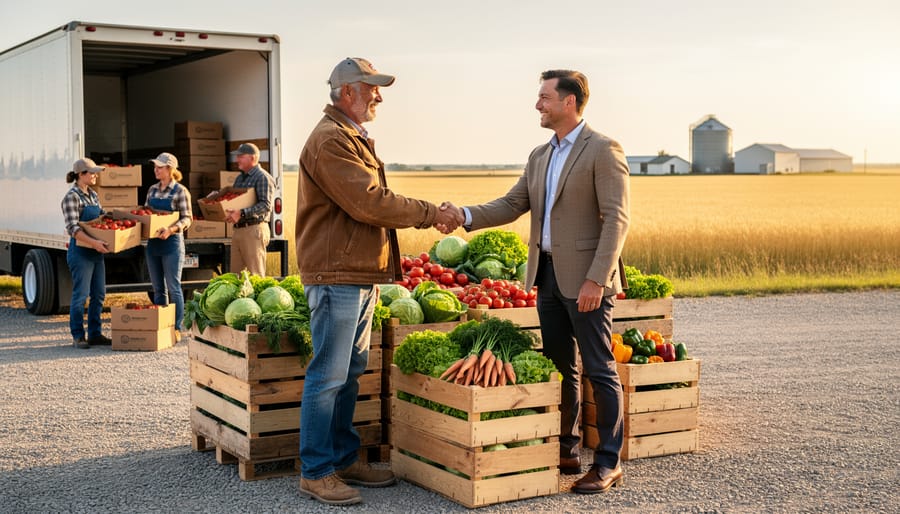
Cooperative models offer another powerful approach. Alberta farmers have found success partnering with processor and distributor cooperatives that share profits more equitably and give producers a voice in decision-making. These co-ops often prioritize local sourcing and transparent pricing structures.
Don’t overlook your input suppliers either. Seed companies, fertilizer dealers, and equipment suppliers that invest in sustainable innovation and treat their employees fairly deserve your business. Some Alberta producers have formed buying groups to negotiate collectively with suppliers who demonstrate strong social responsibility.
Take time to visit potential partners’ facilities when possible. Seeing their operations firsthand reveals more than any certification document. Strong partnerships built on shared values create supply chains that benefit everyone involved, from farmworkers to end consumers.
Measure What Matters
Tracking your progress toward social equity doesn’t require expensive consultants or complex software systems. For most small to medium farms in Alberta, simple metrics can tell you whether your efforts are making a real difference.
Start with employee retention rates as your baseline measurement. Calculate the percentage of workers who return season after season, or for year-round operations, track how many team members stay beyond their first year. If you had 10 employees last season and 7 returned this year, that’s a 70% retention rate. Farms with strong social equity practices typically see retention rates above 75%. When retention improves, you’ll notice it in your bottom line too—reduced training costs, better crop knowledge among workers, and fewer production delays.
Track your community investment by documenting both financial contributions and time spent. This includes donations to local food banks, sponsorship of 4-H programs, hosting farm tours for schools, or participating in farmers’ markets. Even small amounts matter. One Manitoba grain farmer I spoke with sets aside 2% of annual revenue for community initiatives, whether that’s $500 or $5,000 depending on the year. The consistency matters more than the dollar amount.
Supplier diversity offers another straightforward metric. Count how many of your suppliers are Indigenous-owned businesses, women-led operations, or local family farms versus large multinational corporations. Set a goal to increase this percentage annually. For example, if you purchase seed, equipment parts, and feed from 20 different suppliers, aim to source from at least 3-4 diverse suppliers within two years.
Create a simple spreadsheet to track these three metrics quarterly. Note the numbers, add brief comments about what changed, and review trends annually. You’ll quickly identify what’s working and where you need to adjust your approach. Many Alberta farmers find that sharing these metrics at local agricultural association meetings creates accountability and sparks helpful conversations with peers facing similar challenges.
The key is consistency in measurement rather than perfection in data collection. Even rough estimates tracked over time reveal meaningful patterns.
Real Stories From Alberta’s Sustainable Farms
Two Alberta farming operations demonstrate how integrating social equity creates measurable value while revolutionizing agricultural supply chains.
Riverbend Organic Farm, located near Leduc, transformed their 160-hectare operation by prioritizing worker welfare alongside environmental practices. Owner Sarah Chen implemented a profit-sharing model where seasonal workers receive 15 percent of net profits above baseline production targets. This approach reduced worker turnover by 78 percent over three years, saving approximately $42,000 annually in recruitment and training costs. The farm also partnered with local Indigenous communities to source traditional seed varieties, creating a cultural exchange program that employs five part-time consultants. Product sales increased 34 percent as consumers responded positively to the farm’s transparent supply chain story. Chen notes that initial implementation required investment in proper worker housing and benefits, but these costs were offset within 18 months through improved productivity and premium pricing.
Prairie Roots Cooperative near Red Deer took a different approach by forming a producer-owned network of 12 small farms. Each member commits to fair labour standards including living wages starting at $18.50 per hour, guaranteed hours during growing season, and access to mental health resources. The cooperative negotiated collectively with processors and retailers, securing contracts that pay 22 percent above conventional market rates. This premium directly funds their enhanced worker programs while maintaining competitive pricing for consumers. The model created 47 full-time equivalent positions across member farms, with 89 percent of workers reporting job satisfaction in their annual survey. The cooperative’s shared equipment program reduced individual capital costs by 40 percent, making sustainable practices more financially accessible. Their success attracted $250,000 in grant funding for expanding training programs, demonstrating how social equity initiatives can open new revenue streams while building resilient rural communities.
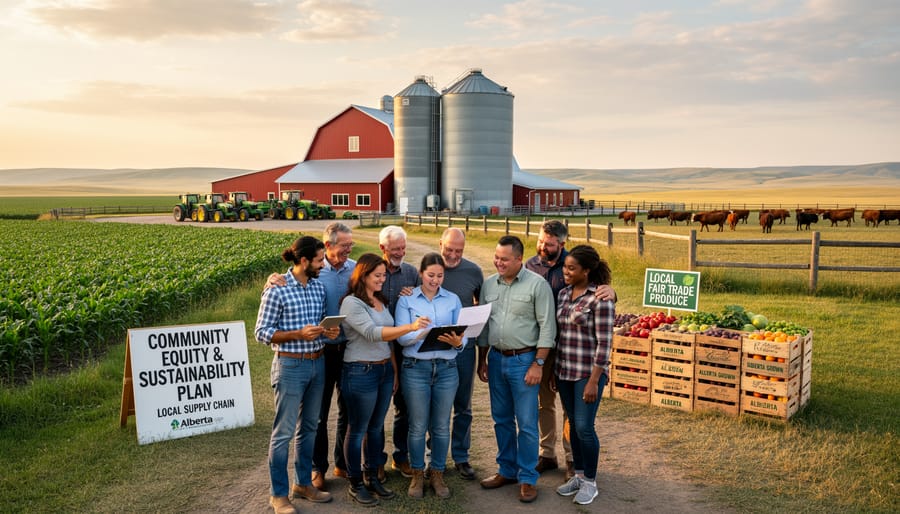
Overcoming Common Challenges
Let’s be honest—making changes to how you operate your farm isn’t easy, especially when margins are already tight and you’re juggling a thousand other responsibilities. Many Alberta farmers face real barriers when trying to implement social equity practices in their supply chains, but understanding these challenges is the first step toward finding workable solutions.
Cost concerns top the list for most operations. Fair wages, benefits, and improved working conditions require upfront investment, which can feel overwhelming when you’re competing with larger operations or international producers who may not prioritize these same values. However, Dr. Sarah Mitchell from the University of Alberta’s agricultural economics department points out that “many farmers see retention rates improve by 40-60% when they invest in worker wellbeing, which significantly reduces recruitment and training costs over time.” Consider starting small—perhaps adding one benefit like transportation assistance or skills training—rather than overhauling everything at once. Many farmers find that improved worker satisfaction leads to better productivity and fewer costly mistakes during critical periods like harvest.
Scale presents another real challenge. If you’re running a family operation with seasonal workers, implementing formal equity programs might seem designed for corporate farms, not your reality. The good news is that social equity doesn’t require elaborate systems. Simple practices like ensuring consistent break times, providing adequate shelter from weather, and communicating clearly in workers’ preferred languages make meaningful differences without requiring significant infrastructure investments.
Seasonal labor issues create unique complications in Alberta’s short growing season. Building relationships and providing stable employment becomes difficult when work spans only a few months. Some producers have tackled this by collaborating with neighboring farms to extend employment periods across different crop cycles. Others maintain year-round communication with returning workers, offering advance contracts and guaranteed minimum hours.
The Barons Food Co-operative demonstrates how pooling resources among smaller operations can make equity initiatives more feasible. By sharing costs for safety training, transportation, and even housing improvements, member farms accessed programs individually beyond their reach.
Remember, you don’t need perfect implementation from day one. Choose one challenge to address this season, learn what works for your operation, and build from there. Your efforts contribute to a more resilient agricultural community across Alberta.
Building a sustainable supply chain isn’t about checking boxes or adding social equity as an afterthought. It’s about recognizing that fair labour practices, community well-being, and environmental stewardship are inseparable pillars that strengthen your entire operation. When you invest in your workers’ safety and fair wages, support local communities, and build transparent relationships with suppliers, you’re not just doing the right thing—you’re creating resilience that protects your farm during challenges and positions you for long-term success.
The journey toward sustainability doesn’t require an overnight transformation. Start with one concrete step today. Perhaps it’s reviewing your current labour practices, reaching out to a local Indigenous community about partnership opportunities, or simply having conversations with your supply chain partners about their social practices. Every small action builds momentum.
You’re not alone in this process. Alberta’s agricultural community is full of farmers who’ve walked this path and are eager to share their experiences. Through farmer networks, cooperative groups, and industry associations, you’ll find the support and practical guidance you need. The investment you make in social equity today creates stronger operations, healthier communities, and a more sustainable future for Canadian agriculture. Take that first step—your farm, your community, and the next generation will benefit from your leadership.