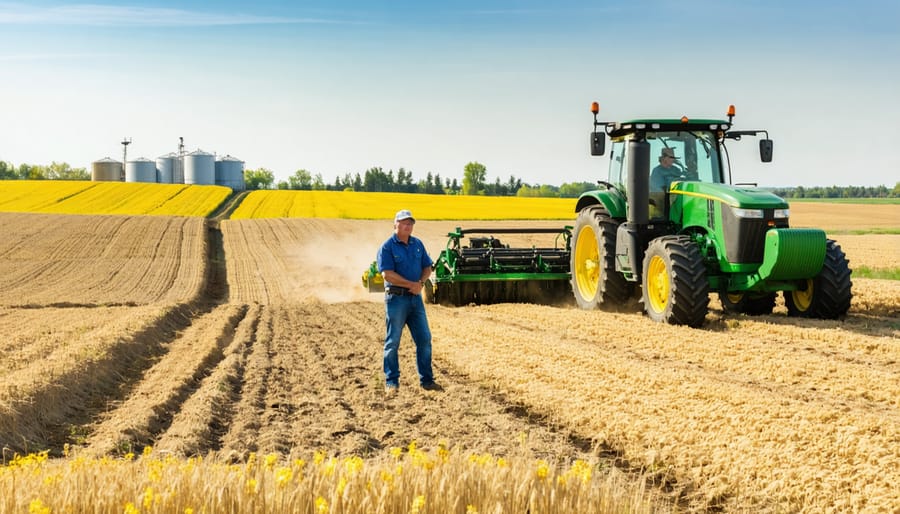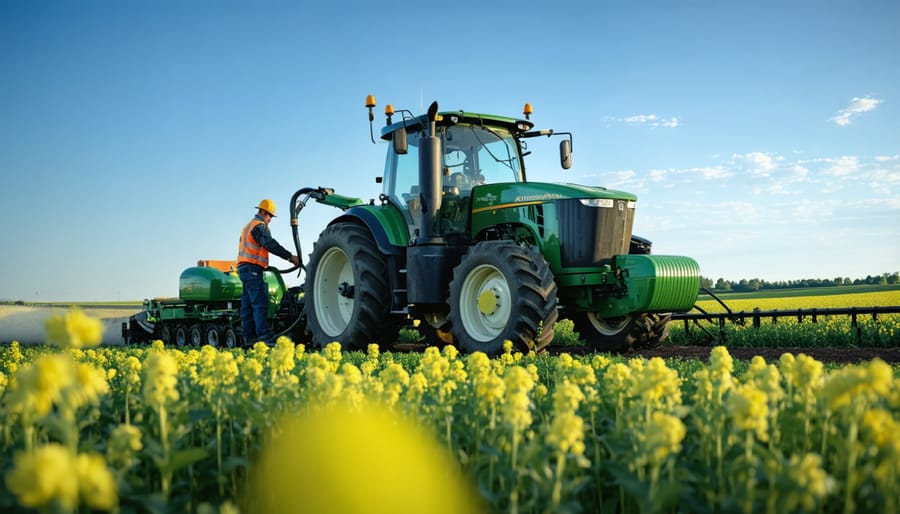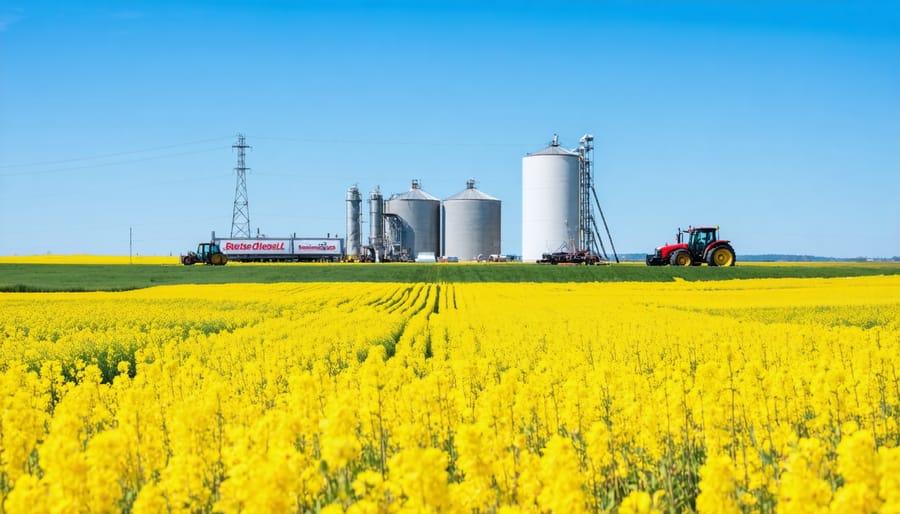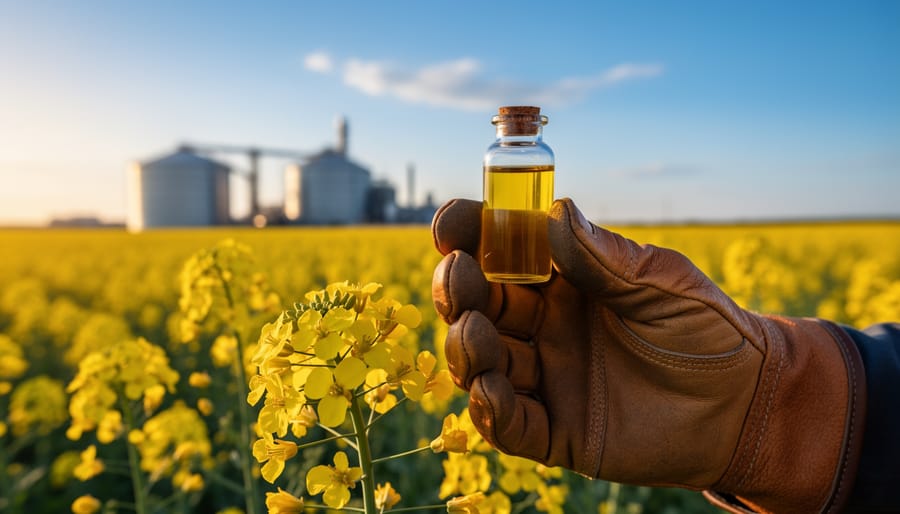
The U.S. Environmental Protection Agency sets the regulatory framework that shapes biodiesel markets across North America, directly impacting production standards, renewable fuel credits, and cross-border trading opportunities for Canadian farmers. Understanding EPA biodiesel specifications means grasping the ASTM D6751 quality standards that govern everything from cold-weather performance to engine compatibility—critical factors when you’re producing fuel from canola or other oilseed crops in Alberta’s climate.
EPA’s Renewable Fuel Standard program creates the economic foundation for biodiesel production through Renewable Identification Numbers, tradeable credits that can add significant revenue streams to your farming operation. While Canada operates under different regulatory authorities, EPA standards influence export markets, equipment specifications, and quality benchmarks that Canadian producers must meet to remain competitive. Manitoba and Saskatchewan farmers have already capitalized on these market dynamics, processing locally-grown canola into biodiesel that meets both EPA and Canadian General Standards Board specifications.
The regulatory landscape extends beyond simple fuel quality metrics. EPA emission reduction requirements drive demand for biodiesel blends, particularly B20 (20 percent biodiesel, 80 percent petroleum diesel), creating stable markets for agricultural producers who can deliver consistent, specification-grade fuel. Understanding how EPA regulations intersect with Canadian standards positions you to evaluate whether on-farm biodiesel production, cooperative ventures, or oilseed sales to commercial processors offer the best return for your operation while contributing to regional energy independence and carbon reduction goals.
What EPA Biodiesel Regulations Actually Mean
The Cross-Border Connection Alberta Farmers Need to Know
If you’re growing canola, soybeans, or other oilseed crops in Alberta, U.S. EPA biodiesel standards directly impact your market opportunities—even though you’re north of the border. Here’s what you need to understand.
The U.S. remains the world’s largest biodiesel market, consuming over 11 billion litres annually. When American producers use Canadian feedstocks to create EPA-compliant biodiesel, it opens significant export channels for Alberta farmers. Your canola oil must meet the same quality specifications that align with EPA standards, including specific free fatty acid levels and moisture content.
Trade agreements between Canada and the U.S. mean that biodiesel produced to EPA specifications can move relatively freely across borders. For Alberta producers, this represents a substantial opportunity. According to Canola Council of Canada data, approximately 40 percent of Canadian canola oil exports head to U.S. biodiesel facilities.
Greg Morrison, a canola grower near Lethbridge, discovered this connection firsthand. “I started tracking where my crop went after sale,” he explains. “Knowing that half my production eventually supports EPA-certified biodiesel plants gave me confidence to invest in quality improvements at harvest. Better moisture management and cleaner grain commanded premiums that reflected U.S. market demands.”
Understanding EPA standards helps you communicate value to buyers. When American biodiesel producers source Canadian feedstocks, they need assurance that inputs will help them maintain EPA compliance. Your crop quality directly affects their ability to generate Renewable Identification Numbers (RINs)—the regulatory credits that make U.S. biodiesel economically viable.
EPA Biodiesel Quality Standards and Agricultural Feedstocks
Which Crops Meet EPA Requirements
The EPA recognizes several agricultural feedstocks for biodiesel production, creating practical opportunities for Canadian farmers to diversify their operations while meeting environmental standards.
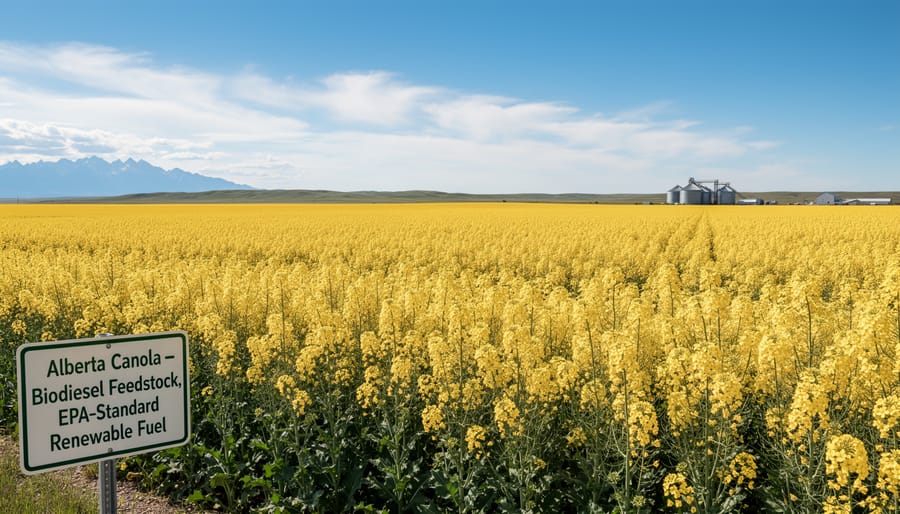
Approved vegetable oil crops include canola, soybeans, sunflowers, and safflower. For Alberta farmers, canola represents the most significant opportunity. Alberta produces approximately 40 percent of Canada’s canola crop, making it an ideal biodiesel feedstock that’s already established in your crop rotation. The oil extracted from canola seeds can be converted to biodiesel that meets EPA specifications while the remaining meal serves as high-protein livestock feed, maximizing value from each harvest.
Animal fats also qualify under EPA requirements, including tallow from cattle operations and poultry fat. These co-products from livestock farming can generate additional revenue streams for mixed farming operations common across the Prairies.
The EPA particularly recognizes waste oils and used cooking oils as preferred feedstocks due to their superior environmental profile. This category includes used fryer oil from farm kitchens, restaurants, and food processing facilities. Many Alberta farmers are already converting waste oil into biodiesel through community cooperatives, turning a disposal challenge into a valuable energy resource.
According to agricultural economist Dr. Maria Chen from the University of Alberta, “Farmers who integrate waste oil collection with canola production create two revenue opportunities while reducing fuel costs by up to 30 percent annually.”
The key requirement across all feedstocks is documentation. EPA standards demand clear tracking from field to fuel, demonstrating your biodiesel comes from approved sources. This traceability actually benefits farmers by creating premium market opportunities and potentially qualifying your operation for renewable fuel credits.
Quality Control on the Farm
Growing quality feedstock for EPA-compliant biodiesel starts in your fields, long before processing begins. Whether you’re cultivating canola in Alberta or soybeans in southern Ontario, maintaining feedstock integrity directly impacts the final biodiesel’s ability to meet regulatory standards.
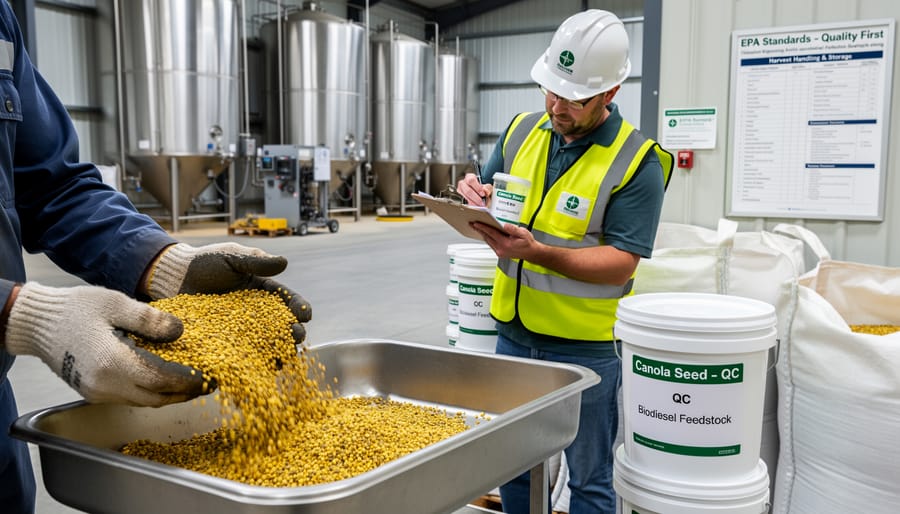
Moisture content stands as your primary concern during harvest and storage. For canola, aim to harvest at 10% moisture or less, while soybeans should be stored below 13%. High moisture levels promote mold growth and increase free fatty acid content, which complicates the conversion process and can result in off-spec biodiesel that fails EPA quality benchmarks.
Storage facilities require regular inspection and proper ventilation. Bins should be cleaned thoroughly between seasons to prevent contamination from previous crops or foreign materials. “Even small amounts of dirt, chaff, or insect damage can introduce contaminants that affect biodiesel quality,” explains Jim Patterson, an agronomist working with Alberta canola producers. “Prevention at the storage stage saves significant costs downstream.”
Temperature monitoring proves essential throughout storage. Check grain temperatures weekly during the first month, then monthly thereafter. Hot spots indicate moisture accumulation or insect activity, both requiring immediate attention.
Consider implementing a quality tracking system for your feedstock batches. Document harvest dates, moisture readings, and storage conditions. This information becomes valuable when selling to biodiesel producers who require traceability to maintain their EPA compliance records. Alberta producers participating in biodiesel supply chains report premium prices when they can demonstrate consistent quality management practices from field to delivery.
On-Farm Biodiesel Production Under EPA Guidelines
Canadian Case Study: Alberta Farm Turns Waste to Fuel
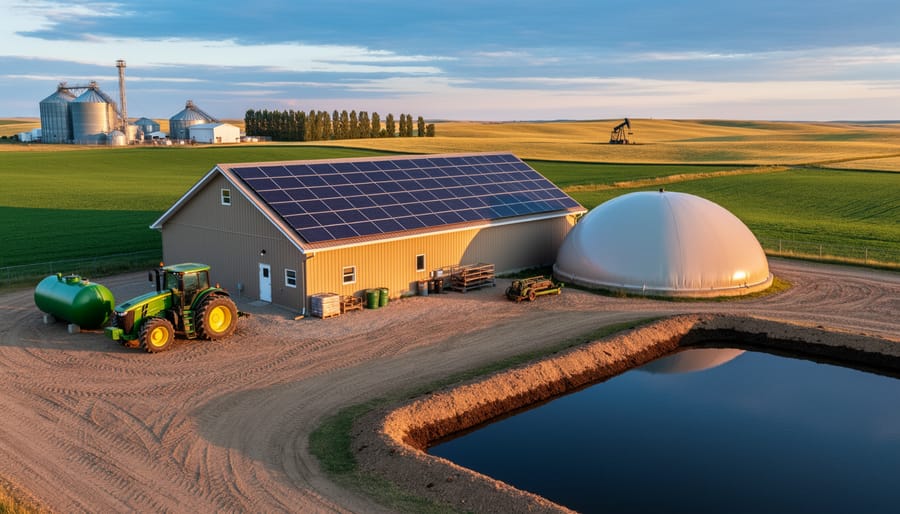
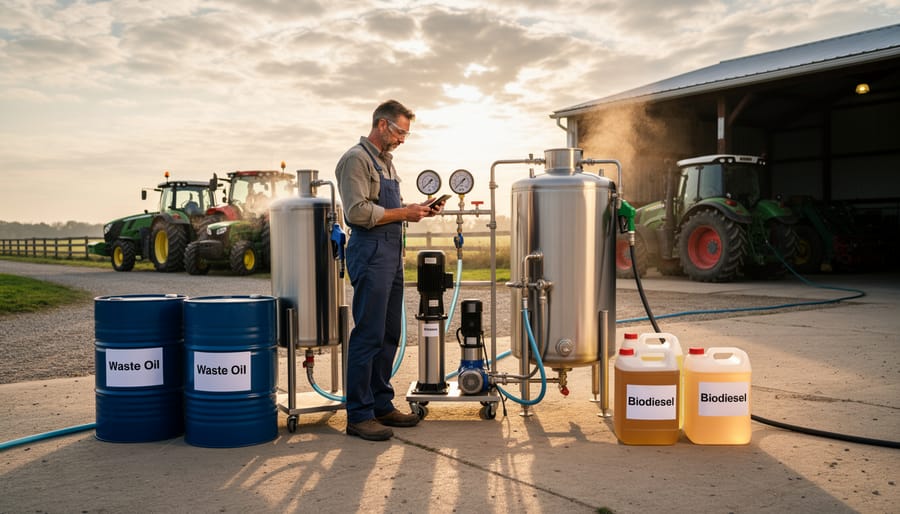
When Jim Patterson started exploring biodiesel production at his 1,200-hectare mixed farm near Lethbridge in 2019, he wasn’t sure if the venture would pencil out. Four years later, his operation produces approximately 15,000 litres of EPA-standard biodiesel annually from canola oil and recycled equipment grease, cutting his fuel costs by 35 percent.
“We were already growing canola, and I was hauling used hydraulic fluid and grease to recycling depots,” Patterson explains. “It made sense to close that loop right here on the farm.” After attending workshops on diesel engines and biodiesel compatibility, he invested $28,000 in a small-scale processing unit that meets EPA specifications for fuel quality.
The learning curve proved steeper than anticipated. Patterson’s initial batches failed EPA standards for sulfur content and cold flow properties—critical factors for Alberta’s winter conditions. “I had to dial in the methanol ratios and invest in better filtration,” he notes. Working with an agricultural engineer from Olds College, he refined his process to consistently produce B100 biodiesel meeting ASTM D6751 specifications, which align with EPA standards.
The economic benefits extend beyond fuel savings. Patterson now processes waste vegetable oil from three local restaurants, charging a small collection fee while gaining additional feedstock. His glycerin byproduct goes to a soap maker in Calgary, generating an extra $1,200 annually.
His advice for farmers considering similar projects? “Start small, test your fuel religiously, and understand your equipment warranties. Some manufacturers limit biodiesel blends.” Patterson runs B20 blends in most equipment during summer months and keeps petroleum diesel for winter backup. He also emphasizes the importance of proper storage—biodiesel can degrade if exposed to moisture or stored beyond six months.
The operation now provides fuel security during supply disruptions and positions his farm as a sustainability leader in his community, opening doors to premium markets for his grain products.
Environmental Benefits and Carbon Reduction
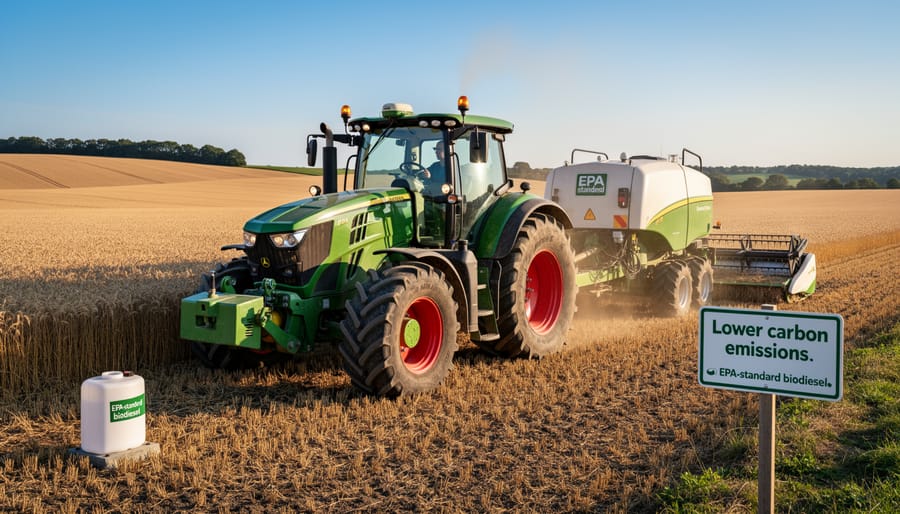
Measuring Your Farm’s Carbon Savings
Understanding your farm’s actual carbon savings helps justify your biodiesel investment and opens doors to potential carbon credit programs. The good news is that tracking these reductions is more straightforward than you might think.
Environment and Climate Change Canada provides baseline calculations showing that B20 biodiesel (20% biodiesel blend) typically reduces greenhouse gas emissions by 15-18% compared to conventional diesel. For Alberta farmers, this translates to real numbers. A typical grain operation running 10,000 hours annually on B20 can reduce emissions by approximately 35-40 tonnes of CO2 equivalent per year—that’s like taking 8-10 passenger vehicles off the road.
Several practical tools can help you measure your impact. The Federal Government’s SmartWay Transport Calculator offers farm-specific modules, while BioFuelNet Canada provides free emission calculators tailored to agricultural equipment. Simply input your fuel consumption, blend percentage, and equipment hours to get your carbon reduction estimate.
Tom Bergen, who farms near Lethbridge, tracks his biodiesel usage through his fuel supplier’s digital platform. “I get quarterly reports showing exactly how much carbon we’ve offset,” he explains. “It’s become part of our sustainability story when we market our crops, and some buyers are starting to value that transparency.”
Keep detailed fuel records including biodiesel blend percentages, total litres consumed, and equipment types used. This documentation becomes valuable if carbon credit markets expand or if future programs offer financial incentives for measurable emission reductions. Many Alberta farmers are already positioning themselves for these opportunities by establishing their baseline carbon footprint now.
Economic Opportunities for Canadian Farmers
Expert Interview: What Alberta Farmers Should Know Right Now
We spoke with Dr. Sarah Chen, an agricultural economist specializing in renewable fuels at the University of Alberta, to understand what biodiesel opportunities mean for Alberta farmers today.
“The biodiesel market in Western Canada is at an interesting turning point,” Dr. Chen explains. “With federal clean fuel regulations driving demand and EPA-quality standards becoming the baseline expectation, farmers have three distinct pathways to consider.”
The first option involves growing dedicated oilseed crops like canola specifically for biodiesel feedstock contracts. “We’re seeing contract prices 8-12% above conventional canola in some regions,” she notes. “However, farmers need to verify that buyers require EPA-standard biodiesel production, as this often translates to premium pricing.”
The second pathway focuses on capturing value from existing waste streams. “If you’re already producing canola or have livestock operations generating tallow, connecting with regional biodiesel producers can turn waste into revenue. Some Alberta operations are paying $0.40-0.65 per litre for used cooking oils and animal fats.”
For farmers considering larger investments in on-farm biodiesel production, Dr. Chen urges caution. “Start small. A 2,000-litre annual production system for personal farm use requires roughly $15,000-25,000 in initial investment. Scale up only after you understand the production process and regulatory requirements.”
Her practical advice for those getting started: “Connect with the Canadian Renewable Fuels Association and attend their Western Canada conference. Talk to at least three existing biodiesel producers about their experience with feedstock sourcing and quality control. Most importantly, understand that meeting EPA-equivalent standards isn’t optional anymore—it’s what separates viable operations from those struggling to find buyers.”
Dr. Chen recommends farmers budget 6-12 months for thorough market research before making significant commitments to biodiesel-related ventures.
Getting Started: Your Next Steps
Ready to explore biodiesel opportunities for your Alberta farm? Here’s your practical roadmap to get started.
Begin by assessing your current operation’s potential. Contact Alberta Agriculture and Irrigation’s Bio-Industrial Program at 310-FARM (3276) to discuss feedstock options suitable for your land. Canola and camelina are particularly well-suited to Alberta’s growing conditions, and their coordinator can connect you with agronomists familiar with oilseed production for energy markets.
Next, investigate local processing partnerships. The Alberta Biodiesel Producers Cooperative in Lethbridge welcomes inquiries from farmers interested in feedstock supply agreements. They’ll outline quality specifications, delivery logistics, and pricing structures. Similarly, reach out to established processors like Milligan Biofuels to understand their procurement needs and contract terms.
For those considering on-farm production, start small. Alberta Agriculture offers feasibility assessment tools through their regional offices in Edmonton, Calgary, and Lethbridge. Request their biodiesel production guide, which covers equipment requirements, processing costs, and regulatory compliance specific to Alberta operations.
Financial planning is essential. Explore Growing Forward Plus funding through Agriculture Financial Services Corporation, which supports renewable energy projects. Additionally, the Farm Energy and Agri-Processing Program provides grants up to 25 percent for eligible energy initiatives, including biodiesel infrastructure.
Connect with the Canadian Renewable Energy Association and Alberta Canola Producers Commission for market insights and networking opportunities. Their quarterly workshops feature farmer testimonials and technical sessions valuable for both beginners and experienced producers.
Remember, transitioning to biodiesel production or incorporating sustainable farm solutions doesn’t require immediate large-scale commitment. Many successful producers started by dedicating small acreage to energy crops while maintaining traditional operations, gradually scaling as market knowledge and confidence grew.
Document your journey and stay informed through Alberta Farmer Express and the Biodiesel Magazine for ongoing industry updates relevant to Canadian agriculture.
Understanding EPA biodiesel standards opens practical pathways for Canadian farmers to diversify income streams while contributing to environmental sustainability. Whether you’re considering on-farm biodiesel production from canola or soybeans, or evaluating equipment compatibility for existing operations, knowledge of these quality benchmarks ensures you’re making informed decisions that protect your investment and maximize returns.
The Alberta farming community has demonstrated that biodiesel integration isn’t just environmentally responsible—it’s economically viable. From reduced fuel costs to new market opportunities for oilseed crops, the benefits extend across your entire operation. As we’ve seen through local case studies, farmers who take time to understand fuel quality specifications and compliance requirements position themselves for long-term success.
We encourage you to connect with your local agricultural extension office or farming cooperatives to discuss how biodiesel fits into your sustainability goals. Share your experiences with fellow producers, ask questions, and explore collaborative opportunities. The transition to cleaner fuels strengthens our agricultural community while building resilience for future generations.
Start small, stay informed, and remember that every step toward sustainable practices contributes to a healthier farming ecosystem for all Albertans.