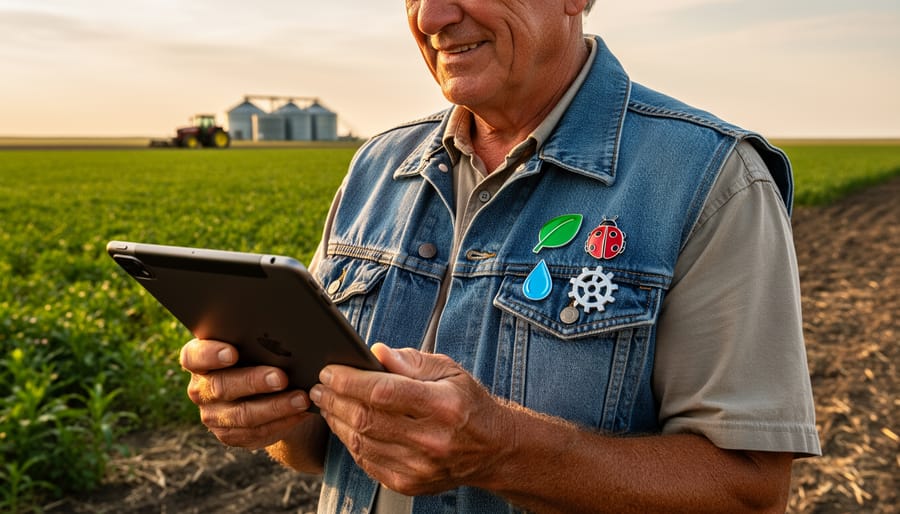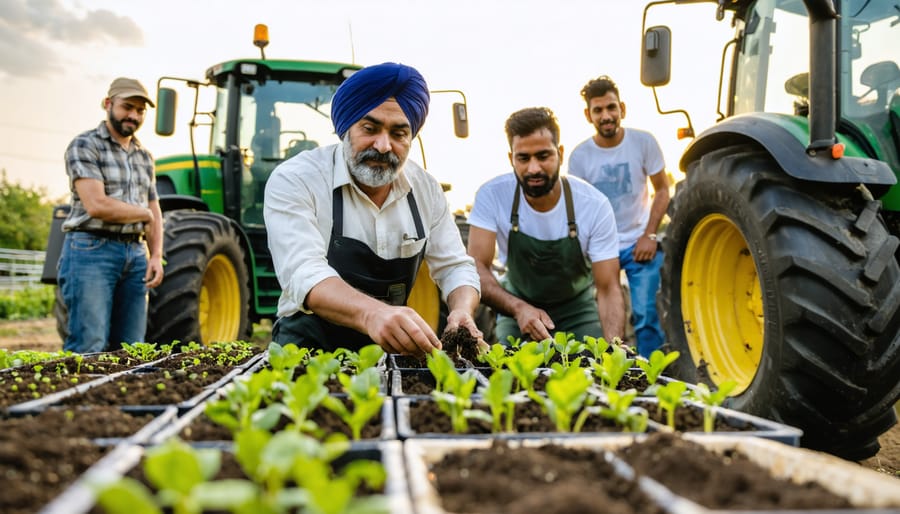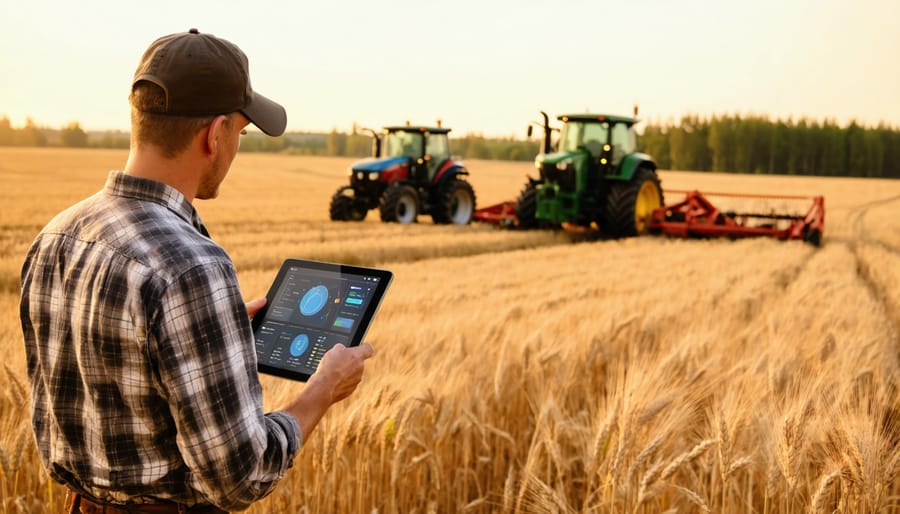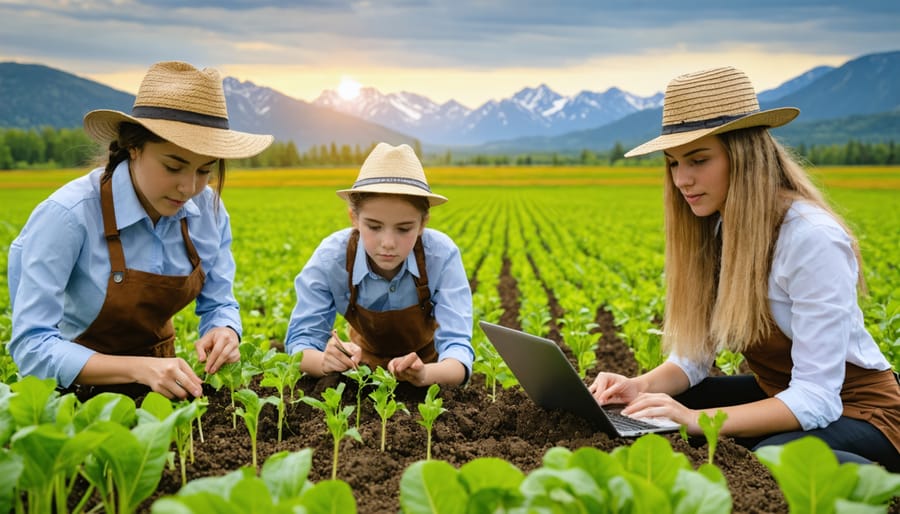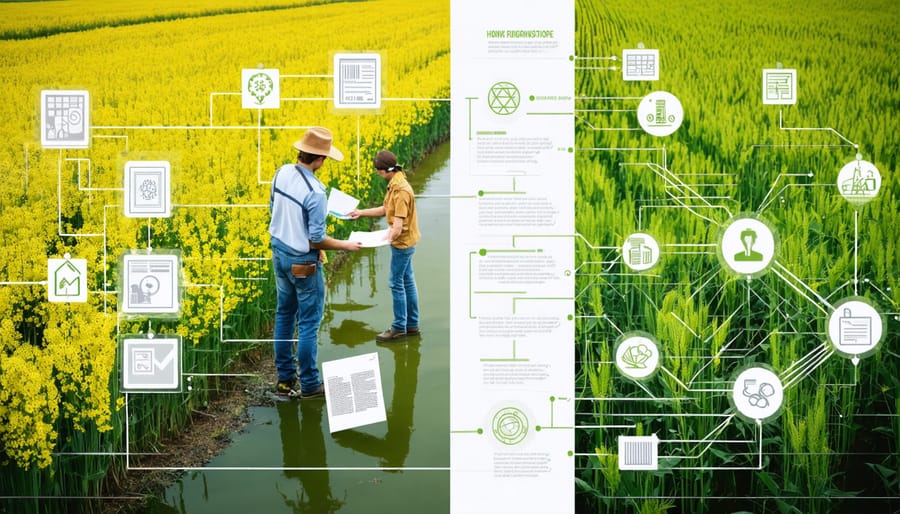
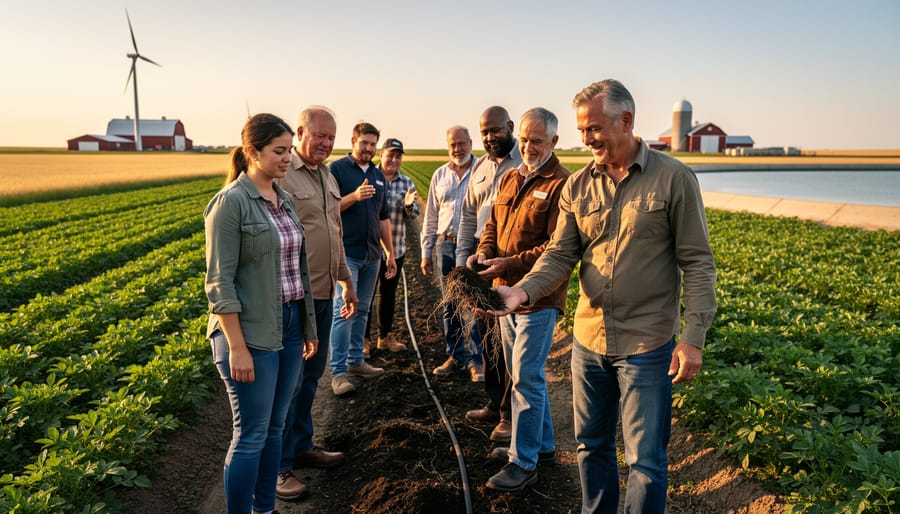
Learning from farmers across borders transforms how you approach everything from soil health to water conservation on your own land. When Alberta producers connect with agricultural peers in countries like Japan, New Zealand, or Denmark, they return home with proven techniques that address shared climate challenges while respecting local conditions.
Cross-cultural agricultural exchange programs place you directly on working farms overseas for periods ranging from two weeks to several months. You participate in daily operations, observe different crop rotations, study alternative pest management systems, and engage in agricultural knowledge sharing that goes beyond what any textbook or webinar can provide. These immersive experiences reveal how farmers in water-scarce regions maximize every drop of irrigation, how organic producers in Europe maintain soil fertility without synthetic inputs, or how regenerative ranchers in Australia build drought resilience through adaptive grazing.
The practical benefits extend far beyond technical skills. You develop a global network of farming contacts who become long-term resources for troubleshooting problems and testing new ideas. Many Canadian participants report increased confidence in experimenting with sustainable practices after witnessing their success in different contexts. You gain perspective on your own operation’s strengths and identify specific areas for improvement based on real-world observations rather than theoretical recommendations.
Several organizations facilitate these exchanges specifically for Canadian agricultural professionals, with funding options available to offset travel costs. The application process typically requires demonstrating your farming background, outlining learning objectives, and showing commitment to sharing acquired knowledge with your home community upon return.
What Cross-Cultural Agricultural Exchange Programs Really Look Like
The Three Main Types of Agricultural Exchanges
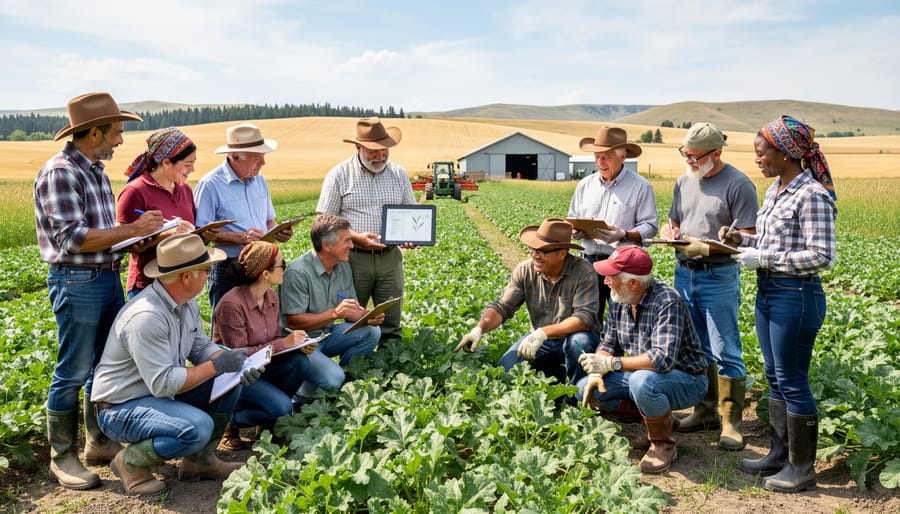
Agricultural exchange programs typically fall into three main categories, each offering different levels of commitment and learning opportunities for Canadian farmers.
Short-term field visits are the most accessible entry point, usually lasting from a few days to several weeks. These focused trips allow you to observe specific farming practices in action without making a long-term commitment. For example, Alberta grain farmers have participated in week-long exchanges with Australian producers to study their drought-resistant cropping systems. These visits often include farm tours, workshops, and networking events that provide concentrated exposure to new techniques. They’re ideal if you want to explore innovative practices before implementing them on your own operation.
Long-term working exchanges involve spending several months to a year working directly on a host farm. This hands-on approach gives you deep practical knowledge of different agricultural systems. The Canadian Agricultural Experience program has successfully connected young farmers from Alberta with operations in New Zealand and Europe, where participants work alongside host families while earning a modest stipend. One Alberta dairy farmer who spent six months in the Netherlands returned home with advanced knowledge of robotic milking systems, which she later implemented on her family’s operation. These immersive experiences build lasting professional relationships and provide comprehensive understanding of alternative farming methods.
Knowledge-sharing partnerships represent ongoing collaborative relationships between farms in different regions or countries. These arrangements involve regular communication, shared research projects, and reciprocal visits. Saskatchewan’s Direct Seeding Association has established partnerships with conservation agriculture groups in Argentina and Brazil, facilitating continuous exchange of soil health data and management strategies. These partnerships allow you to maintain international connections while remaining on your own operation, making them particularly practical for established farmers with family responsibilities.
Who Participates and Why
Cross-cultural agricultural exchange programs attract a diverse mix of participants, each bringing unique perspectives and goals to the experience. Young farmers, typically in their first decade of farming, represent a significant portion of participants. They’re eager to explore innovative techniques before establishing fixed practices on their own operations, viewing exchanges as invaluable learning opportunities that traditional education can’t replicate.
Experienced producers also participate frequently, often reaching a point where they’re questioning conventional methods or seeking solutions to persistent challenges. A fourth-generation grain farmer from Lethbridge shared that after 20 years using the same rotation, an exchange to Denmark introduced him to cover cropping strategies that revitalized his soil health approach. These seasoned farmers bring valuable experience to host communities while remaining open to fresh ideas.
Agricultural educators and extension agents join exchanges to stay current with global best practices, bringing knowledge back to their students and local farming communities. Similarly, researchers participate to observe real-world applications of techniques they study, bridging the gap between academic theory and practical farm implementation.
The motivations driving participation are remarkably consistent: hunger for knowledge, desire to build international networks, and commitment to sustainable agriculture. Many participants report feeling isolated in their sustainability goals at home and find renewed energy connecting with like-minded farmers worldwide. Others seek specific solutions—water conservation techniques, alternative pest management, or regenerative grazing methods—that aren’t widely practiced in their regions. The exchange format provides hands-on learning that books and videos simply cannot match.
Real Benefits Alberta Farmers Gain from International Exchanges
Innovative Techniques That Travel Well
Alberta farmers have become adept at identifying international techniques that align with our unique climate and soil conditions. Through strategic partnerships and exchange programs, several innovative practices have successfully made the journey to Canadian fields.
Nordic countries have provided valuable insights into cold-climate agriculture. Finnish and Norwegian farmers have perfected sustainable soil management techniques that protect soil structure during freeze-thaw cycles. Central Alberta producer James Hendrickson implemented Swedish winter cover crop strategies on his 800-hectare operation near Lacombe, resulting in a 15% improvement in spring soil workability and reduced erosion. “The Scandinavian approach to managing soil biology in cold conditions has been transformative,” Hendrickson explains. “They’ve been doing this for generations, and their methods translate remarkably well to our climate.”
European organic certification frameworks have also influenced Alberta practices. German and Swiss farmers introduced simplified documentation systems that reduce paperwork while maintaining rigorous standards. The Organic Alberta Co-operative adopted these streamlined approaches, making organic certification more accessible for mid-sized operations.
Australian regenerative agriculture specialist Dr. Christine Walsh, who consulted with several Alberta farms in 2023, brought drought-resilient grazing techniques that have proven surprisingly adaptable. “Australian farmers manage extreme conditions with innovative water conservation and adaptive grazing rotations,” she notes. “These principles work beautifully in Alberta’s semi-arid zones.”
From New Zealand, intensive rotational grazing methods have enhanced pasture productivity on Alberta dairy and beef operations by up to 30%. Meanwhile, Dutch precision agriculture technologies for greenhouse operations have enabled year-round production in southern Alberta, extending growing seasons and diversifying farm income streams. These cross-border innovations demonstrate that solutions developed elsewhere often address challenges we face at home.
Building Your Global Network
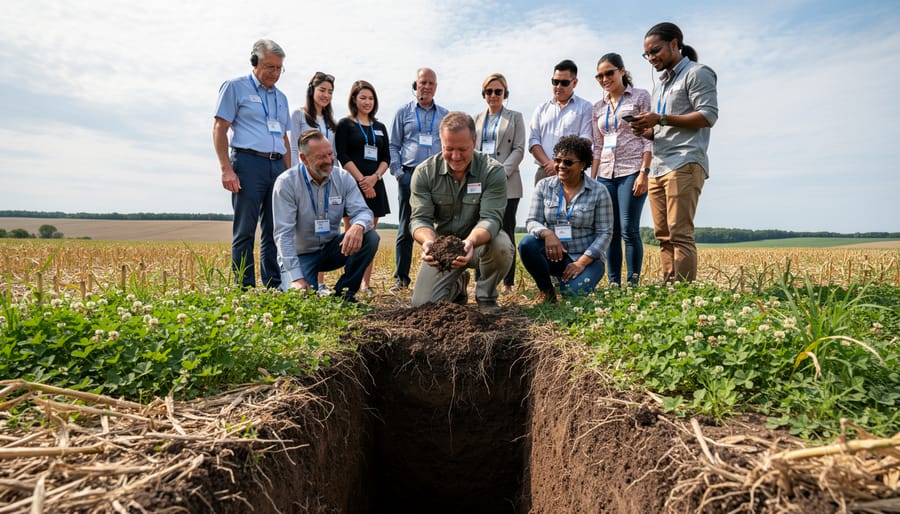
The connections you forge during cross-cultural exchanges extend far beyond your time abroad, creating a valuable network that continues supporting your farm operation for years to come. These international relationships become trusted sources for market intelligence, innovative problem-solving, and collaborative learning.
Jennifer Kowalski, a grain farmer from Lethbridge, maintains regular video calls with colleagues she met during an exchange in Poland. “When I’m dealing with a specific pest or considering a new crop variety, I can reach out to farmers who’ve already encountered similar challenges,” she explains. “It’s like having consultants across multiple continents, all willing to share their real-world experiences.”
These networks provide early insights into emerging global trends affecting commodity prices, consumer preferences, and agricultural technologies. A contact in New Zealand might alert you to market shifts months before they reach Canada, giving you time to adjust planting decisions or marketing strategies accordingly.
Digital platforms make maintaining these connections remarkably simple. WhatsApp groups, farming forums, and social media allow for quick questions and ongoing dialogue. Many exchange participants organize virtual field days, sharing webcam tours of their operations during critical seasons like seeding or harvest.
Consider documenting your contacts in a simple spreadsheet with their specialties, locations, and preferred communication methods. This organized approach ensures you can quickly reach the right person when specific questions arise. The agricultural community remains remarkably generous with knowledge sharing, and these international friendships often develop into lasting partnerships, joint research projects, or even collaborative marketing ventures that open new revenue streams for your operation.
Canadian Case Study: Alberta Farmer’s Experience in New Zealand
When Mark Thiessen decided to leave his 160-hectare organic grain farm near Lacombe for a three-month exchange in New Zealand’s Canterbury region, he wasn’t sure what to expect. What he discovered transformed not just his farming practices, but his entire approach to sustainable agriculture.
Through Agriculture Canada’s International Farm Experience Program, Mark spent time working alongside Kiwi farmers who specialized in regenerative agriculture and rotational grazing systems. “The biggest eye-opener was seeing how they integrated livestock with crop production,” Mark explains. “Back home, I was strictly a grain farmer. Down there, sheep and cattle moved through fields between crop rotations, and the soil health was incredible.”
The practices Mark documented included mob grazing techniques where livestock are concentrated in small paddocks for short periods, then moved to allow extended recovery time for pastures. He also learned about cover crop cocktails that combined up to eight different species, something far more complex than the simple winter wheat covers he’d been using in Alberta.
Dr. Sarah Chen, an agronomist with the University of Alberta who studies cross-cultural agricultural learning, notes that farmers like Mark often face a “reality gap” when returning home. “What works in New Zealand’s temperate climate doesn’t always translate directly to Alberta’s shorter growing season and colder winters,” she explains. “The key is adapting the principles rather than copying methods exactly.”
Mark experienced this firsthand. While he couldn’t replicate the year-round grazing he’d witnessed, he successfully adapted the principles. He purchased a small flock of 50 sheep to graze his fields post-harvest and during early spring, timing their movement to avoid soil compaction during wet periods. He also expanded his cover crop diversity from two species to five, selecting cold-hardy varieties suited to Alberta conditions.
The measurable outcomes have been promising. After two years of implementing these adapted practices, Mark’s soil organic matter increased from 3.2 percent to 4.1 percent, and his input costs for synthetic fertilizers dropped by 35 percent. His wheat yields remained stable while production costs decreased significantly.
“The exchange taught me to think beyond just growing crops,” Mark reflects. “It’s about building a whole-farm ecosystem. I never would have gotten there without seeing it work somewhere else first.”
The experience also connected Mark with a network of progressive farmers across both countries, creating ongoing knowledge-sharing opportunities that continue to benefit his operation today.
What International Farmers Learn from Canadian Agricultural Practices
Canada’s Cold-Climate Expertise
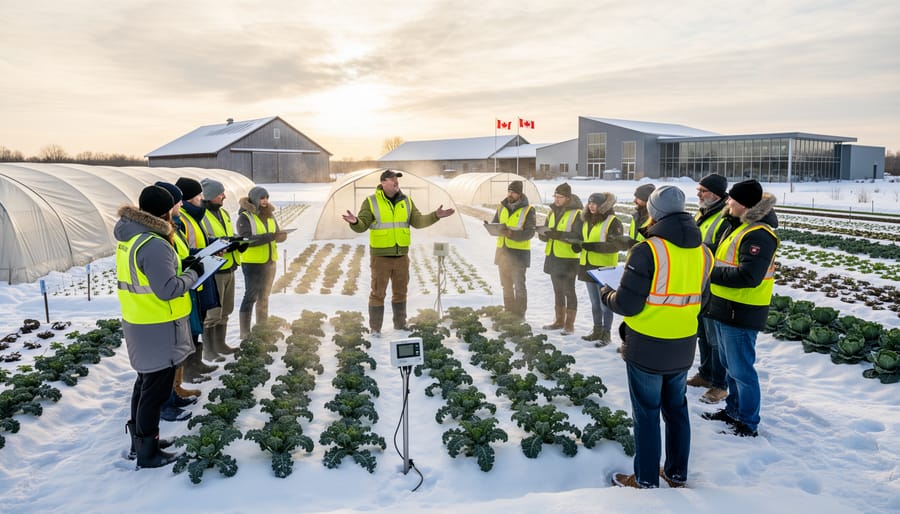
Canadian farmers have developed remarkable innovations that help crops thrive despite harsh winter conditions, and these techniques are now attracting attention from international agricultural communities facing similar climate challenges.
One standout achievement is the advancement of season extension technologies. Canadian researchers and farmers have perfected low-tunnel systems and cold frames that can extend the growing season by 4-6 weeks on either end. These structures, combined with carefully selected cold-hardy crop varieties, allow production to continue even when temperatures drop to -10°C. Farmers from northern European countries and high-altitude regions in Asia have been particularly interested in learning these methods during exchange programs.
Soil management practices developed for Canadian winters have also become valuable knowledge exports. The use of cover cropping systems specifically designed for short growing seasons helps prevent erosion during freeze-thaw cycles while building organic matter. Manitoba farmer James Chen, who has hosted visitors from Russia and Kazakhstan, explains: “They’re amazed at how we use fall rye and winter wheat as living mulch. It protects the soil through those brutal temperature swings we get in February and March.”
Canadian innovations in no-till farming for cold climates have proven especially transferable. These practices reduce soil disturbance, preserve moisture, and help fields warm up faster in spring. The integration of precision agriculture tools with traditional cold-climate wisdom creates a unique knowledge package that international farmers find immediately applicable to their own operations, making Canadian expertise highly sought after in global agricultural exchange programs.
How to Find and Apply for Agricultural Exchange Programs
Top Programs Available to Canadian Farmers
Several reputable exchange programs welcome Canadian farmers looking to expand their knowledge through international collaboration. Here’s what you need to know about accessing these opportunities.
The Canadian Agricultural Exchange (CAEX) has been connecting young farmers aged 18-30 with host farms worldwide since 1979. This program typically covers 4-12 month placements, with participants receiving room, board, and a monthly stipend from host families. While farmers pay their own airfare, many report the investment pays dividends through skills gained in sustainable practices and innovative farming techniques.
Agriculture and Agri-Food Canada’s AgriDiversity program facilitates shorter exchanges, usually 2-8 weeks, focusing on specific agricultural sectors. Eligibility extends to farmers of all ages actively involved in production. The program covers accommodation and provides per diem allowances, making it accessible for farmers concerned about upfront costs.
For Alberta farmers specifically, the Alberta Agriculture and Forestry international exchange initiatives offer targeted opportunities in areas like livestock management and crop diversification. These programs often include partial funding support and connect participants with mentors who understand Prairie agriculture.
The International Farm Youth Exchange (IFYE) provides cultural immersion experiences lasting 4-6 months for farmers under 30. Participants live with host families and work alongside them, gaining practical experience while building lasting international networks.
Most programs require basic agricultural experience, valid work permits for international placements, and demonstrated commitment to sharing learned practices upon return. Many also expect participants to document their experiences and present findings to their home communities, strengthening Canada’s agricultural knowledge base.
Application deadlines typically fall 6-12 months before departure dates, so planning ahead ensures you don’t miss valuable opportunities for growth.
Preparing for Your Exchange Experience
Successfully participating in a cross-cultural exchange requires thoughtful preparation on several fronts. Start by securing your farm operations during your absence. Create a detailed plan that outlines daily tasks, emergency contacts, and decision-making protocols for family members or hired help. Consider scheduling the exchange during your farm’s quieter season to minimize operational disruptions.
Before departing, establish clear learning objectives. What specific practices do you want to observe? Whether it’s regenerative soil management, rotational grazing systems, or diversified crop production, defining your goals helps you stay focused and maximize your learning opportunities. Many Canadian farmers returning from exchanges recommend keeping a journal to document observations and ideas that can be implemented back home.
Language preparation shouldn’t be overlooked, even for exchanges in English-speaking countries. Familiarize yourself with agricultural terminology used in your host region, as terms for equipment, measurements, and practices often vary. Basic phrases in the local language demonstrate respect and facilitate connections with your host community.
Cultural readiness goes beyond language. Research your host country’s agricultural traditions, meal customs, and social norms. Understanding concepts like work-life balance, communication styles, and hierarchy in farm settings prevents misunderstandings. Similar to attending agricultural workshops, approaching the experience with openness and humility creates the foundation for meaningful learning. Connect with past exchange participants through farming networks to gain insider perspectives and practical advice that guidebooks won’t provide.
Overcoming Common Barriers to Participation
Many Canadian farmers hesitate to participate in cross-cultural exchange programs due to legitimate concerns about their operations and families. Understanding these barriers and the available solutions can help you make an informed decision.
Time away from the farm ranks as the primary concern. Most programs offer flexible timing, allowing you to participate during your off-season or slower periods. Many Alberta farmers schedule exchanges after harvest in late fall or during winter months. Short-term options ranging from one to three weeks provide valuable learning experiences without extended absence. Consider bringing a family member or hired help who can also benefit from the experience, effectively doubling your farm’s knowledge gain.
Financial barriers often deter participation, but numerous funding sources exist specifically for agricultural exchanges. Agriculture and Agri-Food Canada offers grants through various programs, while provincial organizations like Alberta Agriculture and Forestry provide financial support for professional development. Many exchange programs include subsidized costs for accommodation and meals. The Canadian Agricultural Human Resource Council also administers funding for skills development. Research shows that knowledge gained often leads to operational improvements that offset initial costs within the first growing season.
Family obligations require creative solutions. Some programs accommodate spouses and children, transforming the experience into an educational family opportunity. Farm relief services across Alberta can provide temporary labour to maintain operations. Neighbouring farmers often form support networks, covering essential tasks during short absences.
Language barriers concern farmers considering exchanges in non-English speaking countries. However, many programs pair participants with translators or host farmers who speak English. Agricultural terminology often transcends language through visual demonstration and hands-on learning. Pre-departure language basics and translation apps provide additional support. Remember that farming practices communicate effectively through observation and practical application, regardless of verbal language proficiency.
Local agricultural extension offices can connect you with farmers who have participated in exchanges, offering firsthand insights into managing these concerns successfully.
Bringing International Knowledge Back to Your Alberta Farm
Testing New Methods on Canadian Soil
Bringing international techniques to your operation doesn’t mean overhauling everything overnight. Start with small-scale trials on a manageable portion of your land—maybe a quarter-acre or even a few rows. This approach lets you test methods like Korean natural farming techniques or Brazilian cover cropping systems without risking your entire harvest.
Adaptation is key for Alberta’s unique climate. That regenerative grazing method from Australia? It needs adjustment for our shorter growing season and winter conditions. Work with your local agricultural extension office or agronomists familiar with Prairie conditions. They can help modify techniques to account for our soil types, frost dates, and temperature extremes that international sources might not address.
Document everything using Canadian metrics—yields in tonnes per hectare, temperatures in Celsius, and precipitation in millimeters. This standardized approach makes it easier to compare results with other Canadian farmers and share findings with your community.
“The most successful adaptations happen when farmers treat international methods as starting points, not fixed blueprints,” explains Dr. Sarah Chen, an agricultural researcher at the University of Alberta. “We’ve seen producers take concepts from New Zealand and completely reimagine them for Alberta conditions, creating something even better suited to our environment.”
Track specific indicators like soil organic matter percentage, water retention rates, and input costs over at least one full growing season. Consider joining a local farmer network where you can share results and learn from others experimenting with cross-cultural practices. Success isn’t just about yield increases—it’s about building resilience and sustainability into your operation.
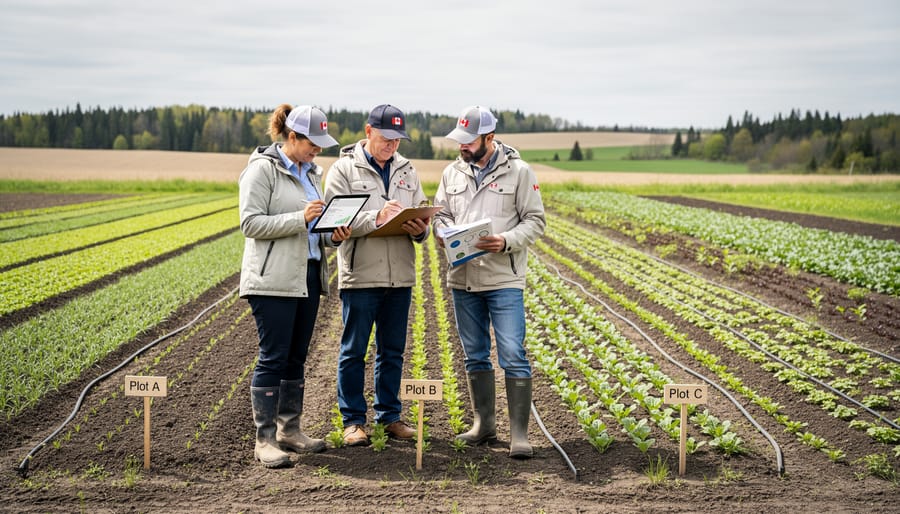
Cross-cultural agricultural exchange programs offer Canadian farmers a powerful pathway to strengthen both their operations and their communities while addressing the pressing challenges of climate change. These programs aren’t just about learning new techniques—they’re about building resilience, fostering innovation, and creating lasting connections that benefit our entire agricultural sector.
For Alberta farmers specifically, the opportunities are significant. Whether you’re looking to adopt water-conservation methods from dryland regions, explore regenerative grazing practices, or implement innovative crop rotation systems, exchange programs provide hands-on learning that textbooks simply can’t match. The knowledge you gain directly translates to improved soil health, reduced input costs, and more sustainable yields.
Taking that first step might feel daunting, but remember that many fellow Canadian farmers have already walked this path and returned with transformative insights. Start by reaching out to your local agricultural extension office or farm organizations to explore available programs. Connect with farmers in your community who have participated in exchanges—their experiences can guide your journey.
The environmental stakes are high, but so is our collective potential for positive change. By embracing cross-cultural exchange, you’re not just investing in your own farm’s future; you’re contributing to a broader movement toward sustainable agriculture that will benefit generations to come. Our climate challenges demand collaboration across borders and cultures. Together, through shared knowledge and mutual support, Canadian farmers can lead the way in building a more resilient and sustainable agricultural future.