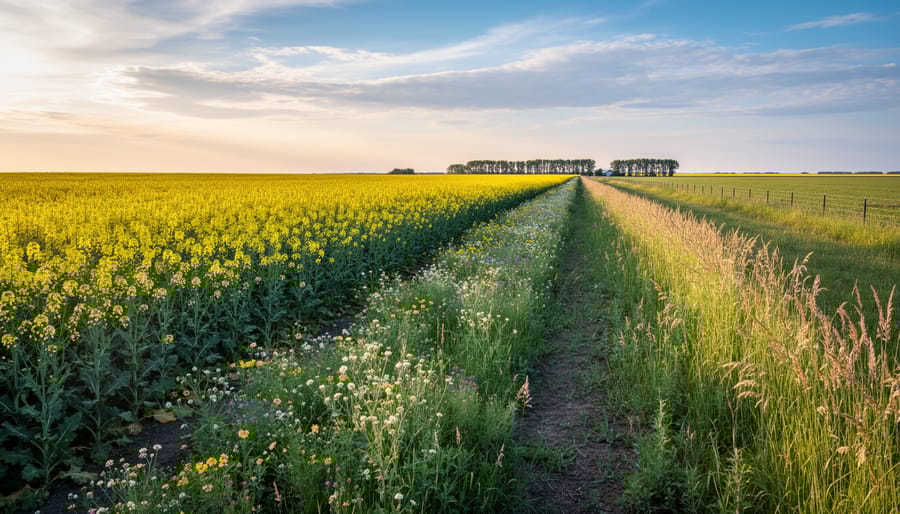
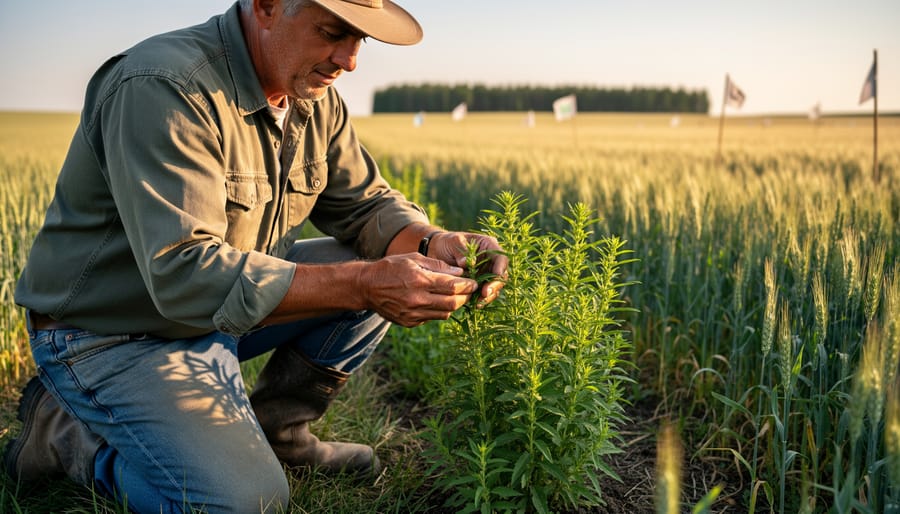
Scientific journals documenting invasive species offer farmers a critical advantage: peer-reviewed evidence on what actually works before you invest time and money into control methods. Research published in journals like Invasive Plant Science and Management or the Canadian Journal of Plant Science reveals which herbicide combinations achieve 90%+ control rates, when soil temperatures trigger seed germination for species like leafy spurge, and how crop rotation sequences can suppress invasive populations by up to 40% without additional inputs.
Access these resources through your local agricultural extension office, university libraries offering community memberships, or open-access databases like the Canadian Science Publishing portal. Many studies now include plain-language summaries specifically written for practitioners, eliminating the need to decode complex statistical methods.
The gap between academic research and your field reality narrows when you focus on studies conducted in similar climates and soil types. Alberta farmers dealing with scentless chamomile, for instance, benefit most from research conducted in Prairie conditions rather than coastal regions. Journal articles provide baseline data you can adapt—application timing windows, degree-day calculations, and economic thresholds that help determine when intervention becomes cost-effective versus when monitoring suffices.
This evidence-based approach transforms invasive species management from reactive crisis control into strategic prevention. The following sections break down how to find relevant research, interpret findings for your operation, and apply journal-backed strategies that Canadian farmers have successfully implemented across diverse agricultural systems.
The Journal Knowledge Gap: What Research Misses About Your Farm
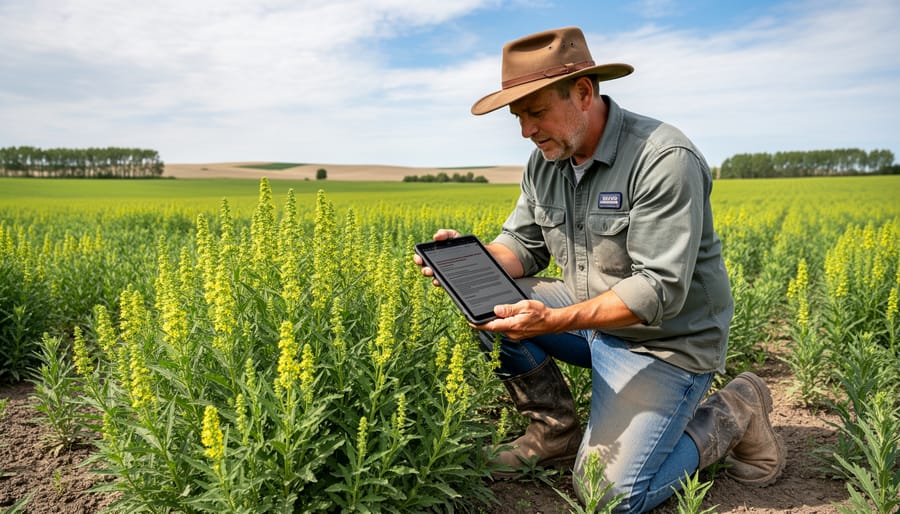
Why Your Invasive Species Problem Isn’t in the Literature Yet
When you search for information about a new invasive species appearing in your fields, you might find surprisingly little in academic journals. There’s a significant reason for this gap: the typical research-to-publication timeline spans 2-3 years. A researcher must first identify the problem, secure funding, conduct field trials, analyze data, write the manuscript, and navigate the peer-review process. By the time that valuable research appears in print, the invasive species has already spread across multiple regions.
Emerging invasive species move much faster than academic documentation can track them. In Alberta, we’ve seen this pattern repeatedly with species like downy brome and leafy spurge, which established themselves across thousands of hectares before comprehensive management studies became available. The problem intensifies when dealing with region-specific challenges.
Alberta and Prairie-specific invasive species often receive limited journal coverage compared to issues affecting larger agricultural markets like California or the American Midwest. Research funding typically flows toward problems with broader economic impact, leaving Canadian farmers searching for guidance that doesn’t exist yet in peer-reviewed literature.
This publication lag doesn’t mean you should ignore emerging threats in your fields. Local agricultural extension services, provincial weed surveys, and conversations with neighbouring farmers often provide faster, more relevant information than waiting for journal articles. Understanding this limitation helps you make informed decisions about when to rely on academic research and when to trust practical, ground-level observations from your agricultural community.
The Economic Impact That Journals Overlook
Academic journals frequently prioritize ecological studies examining biodiversity loss from invasive species, but they often underreport the direct financial toll on farming operations. While understanding ecosystem impacts matters, Canadian producers need concrete data on yield reduction and revenue losses.
Research from Alberta demonstrates this gap clearly. A 2022 study documented leafy spurge infestations reducing cattle carrying capacity by 50-75% on affected rangelands, translating to significant income losses for livestock producers. Similarly, wild oats competing with wheat crops can decrease yields by 15-40%, depending on infestation density. These numbers represent real money from your operation’s bottom line.
The economic impact of invasive species extends beyond immediate crop losses. Alberta farmers spend approximately $500 million annually on control measures, labour, and specialized equipment. One central Alberta grain producer reported spending $18,000 extra per quarter section managing Canada thistle infestations over three years.
Understanding these financial realities helps you make informed decisions about prevention strategies and early intervention, which consistently prove more cost-effective than managing established populations.
Priority Invasive Species Threatening Alberta Agricultural Ecosystems
Plant Invaders: From Journals to Your Fields
Scientific journals have documented hundreds of invasive plant species across Canadian farmland, but three consistently top the charts for economic damage and spread rates in Alberta: leafy spurge, Canada thistle, and downy brome. Understanding what research reveals about these species can help you tackle them more effectively.
Leafy spurge, a deep-rooted perennial, has captured significant attention in agricultural journals for good reason. Studies published in the Canadian Journal of Plant Science show its root system can extend 4.5 to 9 metres deep, making mechanical control nearly impossible. The plant produces allelopathic compounds that suppress crop growth, and a single plant can generate up to 140,000 seeds annually. What journals don’t always capture is what Alberta farmers know firsthand: leafy spurge creates impenetrable stands that cattle won’t graze, effectively removing productive pastureland from use. Research indicates it costs Canadian producers approximately $120 million annually in lost forage and control expenses.
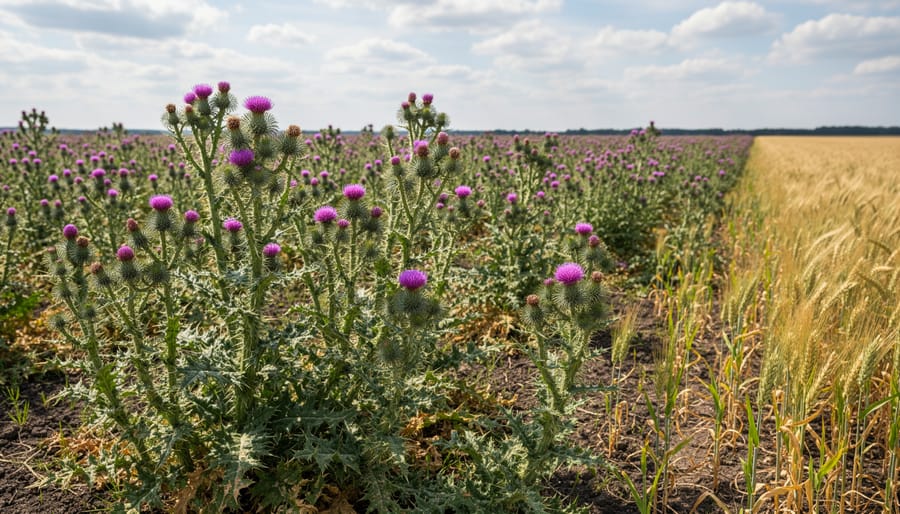
Canada thistle, despite its name, arrived from Europe and thrives in disturbed soils common to farming operations. Peer-reviewed studies document its rapid spread through both seed dispersal (up to 40,000 seeds per plant) and an aggressive root system that regenerates from fragments as small as 6 millimetres. Agricultural journals highlight its competitive advantage: germination at soil temperatures as low as 5 degrees Celsius, giving it a head start on most crops.
Downy brome presents a particularly troubling case documented extensively in range management journals. This winter annual outcompetes native grasses and increases wildfire risk by creating dense, dry fuel loads. Research shows it can reduce wheat yields by 25 to 50 percent when present at moderate densities. However, farmer observations often reveal invasion patterns faster than published studies, making your field notes valuable contributions to understanding local spread dynamics.
Insect and Pathogen Threats Under the Microscope
Agricultural journals have documented several concerning invasive insect and pathogen threats that Canadian farmers should monitor closely. Understanding these threats through published research helps you make informed decisions about crop protection and management strategies.
The swede midge, first detected in Ontario in 2000, has since expanded westward, causing significant damage to canola and other brassica crops. Research published in the Canadian Journal of Plant Science demonstrates that early detection is critical, as larvae feed within growing points, causing characteristic “brown heart” symptoms. Monitoring should begin when canola reaches the four-leaf stage, with particular attention to field edges where infestations typically start.
Wheat midge variants present another challenge for Prairie grain producers. Studies from Agriculture and Agri-Food Canada have identified genetic variations in wheat midge populations across the Prairies, with implications for resistance management. The orange wheat blossom midge causes millions of dollars in losses annually, yet resistant wheat varieties developed through collaborative research have shown promising results in Alberta field trials.
Emerging fungal threats documented in plant pathology journals include new strains of fusarium head blight and tar spot, previously confined to warmer regions but now appearing in Canadian fields. Climate change research suggests these pathogens may continue expanding northward, making vigilant scouting essential.
Expert agronomists recommend combining journal insights with local extension resources to develop integrated pest management strategies. Regular field monitoring, combined with knowledge from peer-reviewed research, provides your best defense against these evolving threats while supporting sustainable production practices.
The Ones to Watch: Emerging Threats in Current Research
Recent journal publications are tracking several species that could become significant challenges for Alberta agriculture in the coming years. Understanding these emerging invasive threats now gives you time to prepare effective management strategies.
Palmer amaranth, extensively documented in Weed Science and similar journals, is moving northward from the United States. This aggressive weed has already developed resistance to multiple herbicide groups and can produce up to 600,000 seeds per plant. Research from Montana and North Dakota suggests it could establish in southern Alberta within five years under current climate trends.
Japanese stiltgrass, studied in journals like Invasive Plant Science and Management, thrives in shaded areas and tolerates various soil conditions. While currently limited to eastern Canada, warming temperatures may extend its range westward.
The brown marmorated stink bug, featured in recent Journal of Economic Entomology articles, has expanded its Canadian range significantly. This pest affects over 100 crop species and overwinters in buildings, making it particularly concerning for greenhouse operations and fruit producers.
Staying informed about these species through journal research helps you recognize early signs and implement preventive measures before populations establish on your land.
Translating Journal Research Into Farm Action
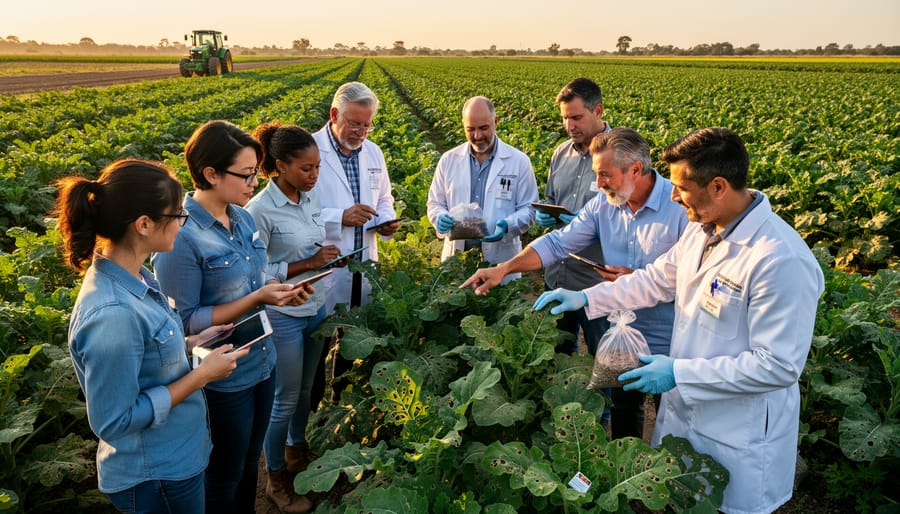
Integrated Pest Management: From Theory to Tractor
Translating research into real-world farm management starts with understanding the three pillars of Integrated Pest Management: monitoring, thresholds, and coordinated control methods. Let’s break down how journal-recommended strategies work on your operation.
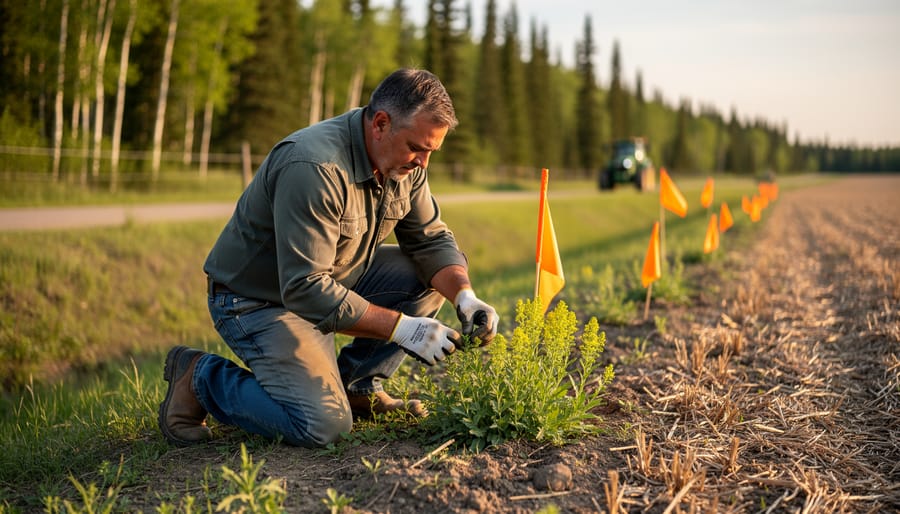
Monitoring forms the foundation. Peer-reviewed studies consistently emphasize regular field scouting over reactive responses. Set up a systematic schedule—weekly walks during growing season work for most Alberta operations. Document what you find: species present, growth stages, and distribution patterns. Many farmers find simple smartphone apps helpful for tracking observations over time. Journal research shows that farms with documented monitoring protocols reduce unnecessary interventions by up to 40 percent while maintaining better control outcomes.
Threshold determination comes next. Rather than spraying at first sight, journals recommend action thresholds based on economic impact. For example, research from the Canadian Journal of Plant Science indicates that leafy spurge doesn’t warrant intervention until density reaches 4-5 stems per square metre in pasture settings. Your threshold depends on crop type, market value, and control costs. Work with your local agricultural fieldman to establish realistic thresholds for your specific situation.
The control strategy itself combines multiple tactics. Start with mechanical methods—mowing before seed set, competitive seeding with dense crop stands, or targeted cultivation. Research published in Weed Science shows mechanical control reduces seed banks by 60-80 percent over three years when timed correctly. Biological controls, like introducing species-specific insects, provide long-term suppression without repeated inputs. Chemical controls remain valuable tools but work best when integrated strategically. A Manitoba case study demonstrated that combining early-season mowing with spot herbicide application reduced herbicide use by 55 percent while improving control rates compared to broadcast spraying alone.
The key is coordination—each tactic supporting the others based on what research shows actually works in Canadian conditions.
Biological Control Success Stories Worth Copying
Real-world success stories from agricultural research journals show how biological control programs deliver measurable results for Canadian farmers.
The Canadian Entomologist documented a remarkable case where Ontario greenhouse growers reduced aphid populations by 85% using banker plants with parasitoid wasps. This approach eliminated the need for chemical sprays while maintaining cucumber yields. Alberta farmers can access similar solutions through local IPM consultants or university extension services.
In British Columbia, research published in Biocontrol Science and Technology showed how releasing Trichogramma wasps reduced European corn borer damage by 70% in sweet corn operations. The program cost $45 per hectare, significantly less than repeated insecticide applications. Farmers reported healthier beneficial insect populations within two growing seasons.
A prairie-focused study in the Journal of Applied Ecology examined leafy spurge control using Aphthona flea beetles across Manitoba and Saskatchewan. Five years after release, infestations decreased by 60% on participating ranches, freeing up grazing land and reducing herbicide costs by thousands of dollars annually.
Accessing these solutions is easier than many farmers realize. Agriculture and Agri-Food Canada operates a biological control agent release program, while provincial agriculture departments maintain lists of certified suppliers. University extension offices offer free consultations to help match biological controls with specific pest challenges. Many successful programs started with small trial plots before farm-wide implementation, allowing growers to verify results before significant investment.
When Journal Methods Don’t Fit Your Operation
Research journal protocols often require extensive monitoring, specialized equipment, or resource levels beyond what most small and mid-size operations can manage. A three-year invasive species study with weekly data collection may produce excellent science, but it doesn’t help when you’re facing leafy spurge spreading across your pasture this season.
That’s where farmer-led innovation fills the gap. Many Alberta producers have adapted research principles to fit their reality—conducting visual surveys during regular equipment checks, documenting what works through farm notebooks, and sharing observations through local agricultural groups. These practical modifications maintain the spirit of evidence-based management without the research infrastructure.
Agricultural extension specialists can help bridge this divide. They understand both the science and the farm-level constraints, translating journal findings into methods that work with your existing schedule and budget. Consider connecting with your regional agronomist to discuss simplified monitoring approaches or joining producer networks where members share real-world results managing specific invasive species in conditions similar to yours.
Building Your Own Invasive Species Knowledge Base
Accessing Agricultural Research Without a University Login
You don’t need a university subscription to access quality research on invasive species management. Several excellent resources provide free, evidence-based information directly applicable to your farming operation.
Start with open-access journals like PLOS ONE and Invasive Plant Science and Management, which publish peer-reviewed studies without paywalls. The Directory of Open Access Journals (DOAJ) lets you search specifically for invasive species research across multiple publications.
Government databases offer tremendous value for Canadian farmers. Agriculture and Agri-Food Canada maintains comprehensive research repositories covering regional invasive species threats. The Canadian Food Inspection Agency publishes regular updates on regulated invasive plants and insects affecting Alberta agriculture. Provincial resources through Alberta Agriculture and Irrigation provide localized management guides based on current research.
University extension services often make their publications freely available. The University of Alberta’s Agricultural, Life and Environmental Sciences department regularly releases practical guides translating research into farm-ready solutions. Similarly, provincial extension offices distribute fact sheets and research summaries specifically designed for agricultural producers.
Don’t overlook Google Scholar as a search tool. Many researchers share pre-print versions of their work or summaries that capture key findings without requiring journal access. When you find relevant research behind a paywall, consider contacting authors directly through their university email addresses. Most researchers gladly share their published work when approached respectfully, understanding the practical applications for Canadian agriculture.
Citizen Science: How Your Observations Matter
Your eyes in the field are invaluable for tracking and managing invasive species across Alberta. When you document what you see on your land, you’re contributing to a larger network of knowledge that helps researchers, agricultural professionals, and fellow farmers make better decisions.
The EDDMapS Alberta platform allows you to report invasive species sightings directly from your smartphone, creating real-time distribution maps that benefit the entire agricultural community. Simply photograph the plant, note your location, and submit your observation. Your reports help track emerging threats and guide provincial response efforts.
Agriculture and Agri-Food Canada’s Pest Monitoring Network actively seeks farmer participation in monitoring programs. By joining, you can access identification resources, connect with extension specialists, and contribute data that shapes provincial management strategies.
Many Alberta counties also run local reporting programs. For example, the County of Grande Prairie operates a volunteer monitoring initiative where landowners receive training to identify priority species and submit regular field reports. These partnerships have successfully caught new infestations early, preventing costly widespread establishment.
Your observations matter because you know your land better than anyone. When combined with scientific research, this grassroots knowledge creates a powerful tool for protecting Alberta agriculture. Consider connecting with your local agricultural fieldman to learn how you can participate in community science efforts in your region.
Creating a Farm-Specific Monitoring Protocol
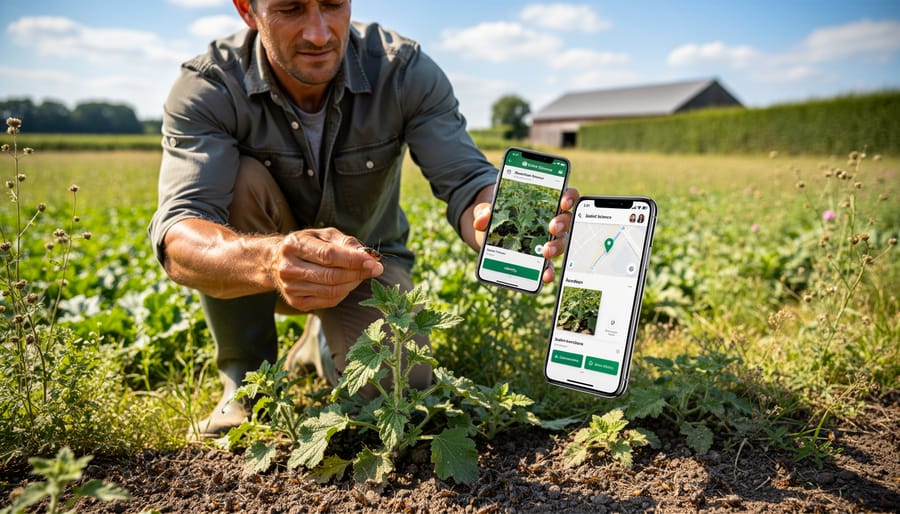
Developing a farm-specific monitoring protocol transforms journal research into actionable surveillance on your land. Start by creating identification keys tailored to your operation using images and descriptions from scientific publications, organizing them into a simple field guide you can carry during regular farm walks. Focus on high-risk species documented in agricultural journals as problematic for your region and crop types.
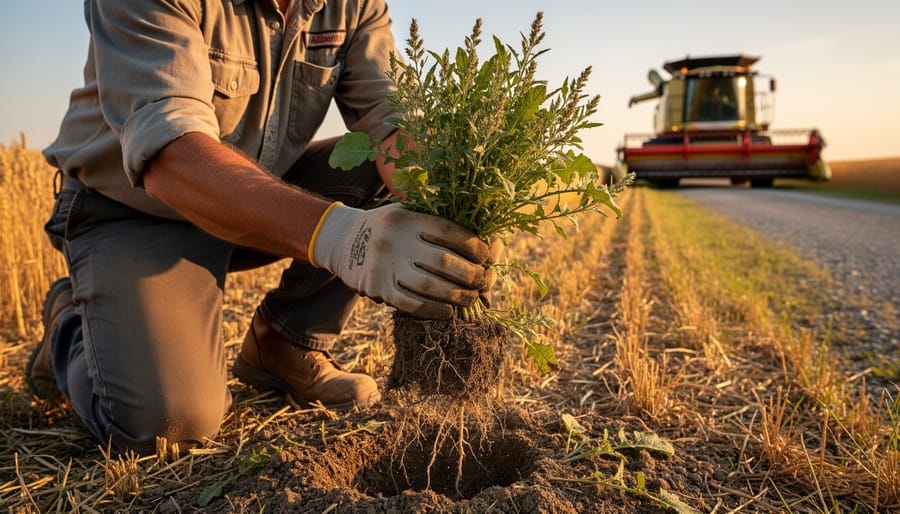
Time your monitoring around seasonal patterns identified in research. Many invasive plants germinate in specific windows, while insects follow predictable life cycles. A grain farmer near Lethbridge shared how scheduling weekly checks during May and early June, when many problem weeds emerge, allowed early intervention before species established deeper root systems.
Keep detailed records including GPS coordinates, population estimates, photographs, and growth stage observations. Use a simple notebook or smartphone app that captures date, location, weather conditions, and any management actions taken. This documentation serves dual purposes: it informs your immediate control decisions and creates valuable data that university researchers or provincial agriculture departments may find useful for regional invasive species mapping projects. Your observations contribute to the broader scientific understanding while protecting your yields and soil health. Consider sharing anonymized data with agricultural extension services to support community-wide monitoring efforts.
Expert Insights: What Researchers Want Farmers to Know
Dr. Sarah Chen, an invasive species researcher at the University of Alberta, emphasizes that farmers are the real frontline defenders against invasive species. “What we want producers to know is that our research isn’t meant to stay locked in journals,” she explains. “Every study we publish is designed with practical application in mind, but we need to do better at making that connection clear.”
According to Dr. Chen, one of the biggest gaps between research and farm practice involves timing. “Our field trials show that early detection makes all the difference. If farmers can identify invasive plants within the first two years of establishment, control costs drop by 75 percent and success rates increase dramatically.” She encourages producers to photograph unfamiliar plants and contact their local agricultural extension office immediately rather than waiting for confirmation.
Robert Morrison, an agricultural extension specialist working across central Alberta, bridges this divide daily. “Farmers tell me they don’t have time to read 20-page journal articles, and I completely understand,” he says. “My role is to translate that research into three actionable steps they can implement this season.” Morrison emphasizes that researchers genuinely value farmer feedback. “When producers share what works and what doesn’t in real field conditions, that information feeds directly back into research priorities.”
Both experts stress that collaboration produces the best outcomes. Morrison suggests farmers attend winter agricultural conferences where researchers present findings in accessible formats. “These sessions include question periods where you can ask about your specific situation,” he notes. Dr. Chen adds that many researchers welcome farm visits. “We learn just as much from farmers as they learn from us. Your observations about species behaviour, spread patterns, and control effectiveness are invaluable data that strengthen future research.”
Agricultural journals provide the scientific foundation we need to understand invasive species, but successful management on your farm requires something more dynamic. The research gives us the roadmap, yet local observation, community knowledge-sharing, and adaptive strategies help us navigate the unique challenges of Alberta’s growing conditions.
Think of yourself as both a consumer and contributor to this growing body of knowledge. Every observation you make about how an invasive species responds to your management efforts adds to our collective understanding. Share your experiences with neighbours, participate in local agricultural networks, and don’t hesitate to document what works and what doesn’t on your operation.
Your next steps are straightforward. Start by identifying one or two invasive species that currently impact your farm. Access relevant journal articles through your provincial agricultural department or local extension office. Many universities also offer free consultations or factsheets that translate research into practical recommendations. Implement one evidence-based strategy this season, monitor the results carefully, and adjust your approach based on what you observe.
Remember, managing invasive species is an ongoing process, not a one-time fix. By combining scientific research with practical experience and community wisdom, you’re contributing to more sustainable and resilient agricultural systems across Alberta. Your efforts matter, both for your operation and for the broader farming community.