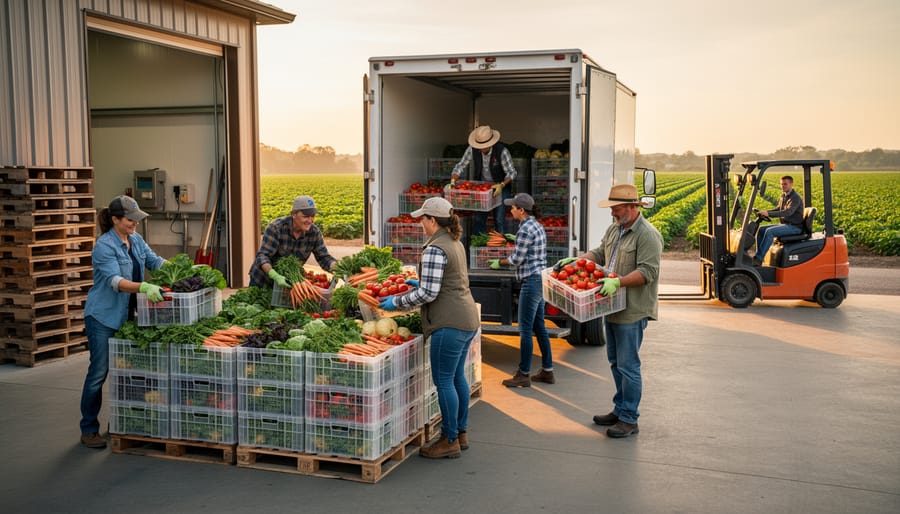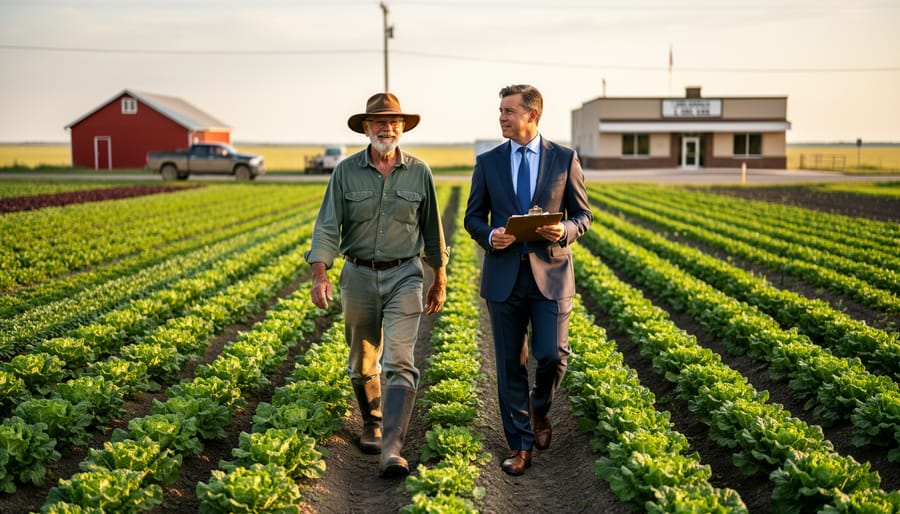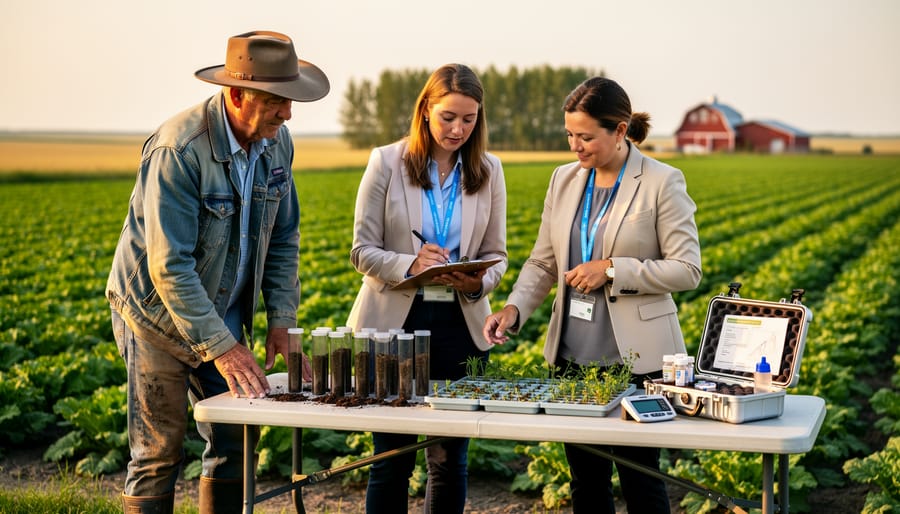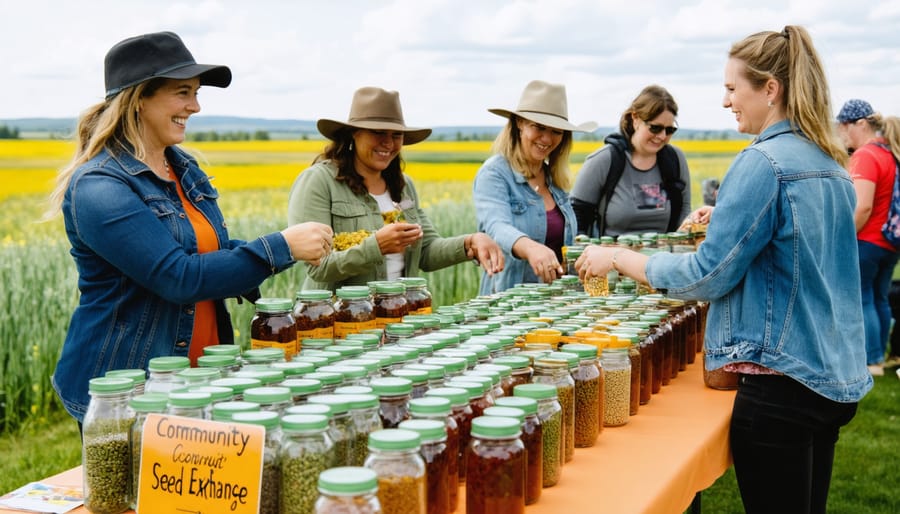
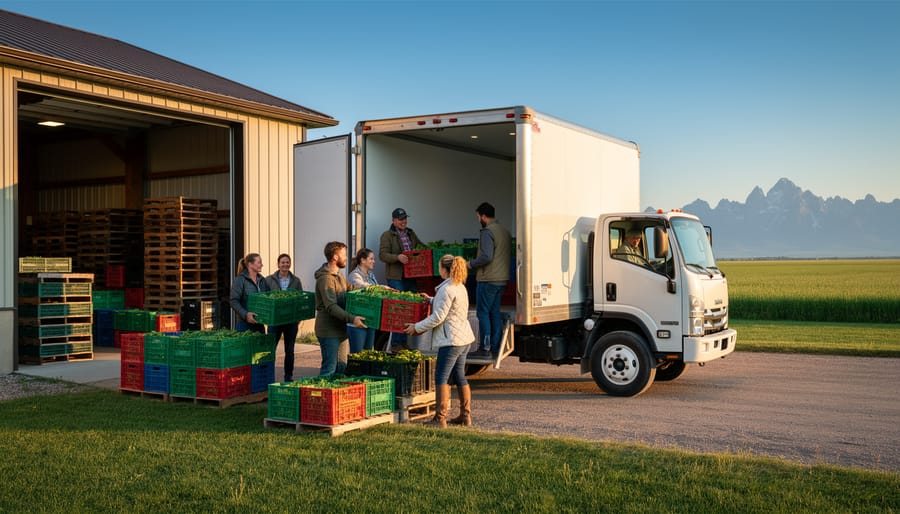
Food collaboratives are reshaping how Canadian farmers connect products to consumers, creating shared infrastructure that reduces individual costs while strengthening market access. Rather than competing alone in an increasingly consolidated food system, producers join forces to operate collective storage facilities, coordinate distribution routes, and negotiate better terms with buyers. A food collaborative in Southern Ontario, for example, allows 45 vegetable growers to share refrigerated warehousing and a delivery truck fleet, cutting each farm’s logistics expenses by 60 percent while reaching markets three hours away.
Join forces with 3-8 neighboring farms to establish a basic hub: pool resources for a shared refrigerated space, create a single weekly delivery schedule to urban markets, and rotate coordination duties monthly among members. This immediately expands your customer base beyond farm gate sales without requiring major capital investment.
Negotiate collectively with institutional buyers like hospitals, schools, and restaurants who prefer dealing with one coordinated supplier rather than multiple small farms. Alberta collaboratives report securing contracts 40 percent larger than individual operations could access, with payment terms that ensure cash flow stability during growing seasons.
Implement transparent pricing formulas where each member receives their product value minus shared operational costs, typically 12-18 percent for warehousing, transportation, and administration. Clear financial structures prevent disputes and build long-term trust.
Food collaboratives transform isolation into opportunity, turning your farm’s limitations into collective strength through practical cooperation that delivers measurable economic returns.
What Makes a Food Collaborative Different from Traditional Distribution
The Core Principles Behind Food Collaboratives
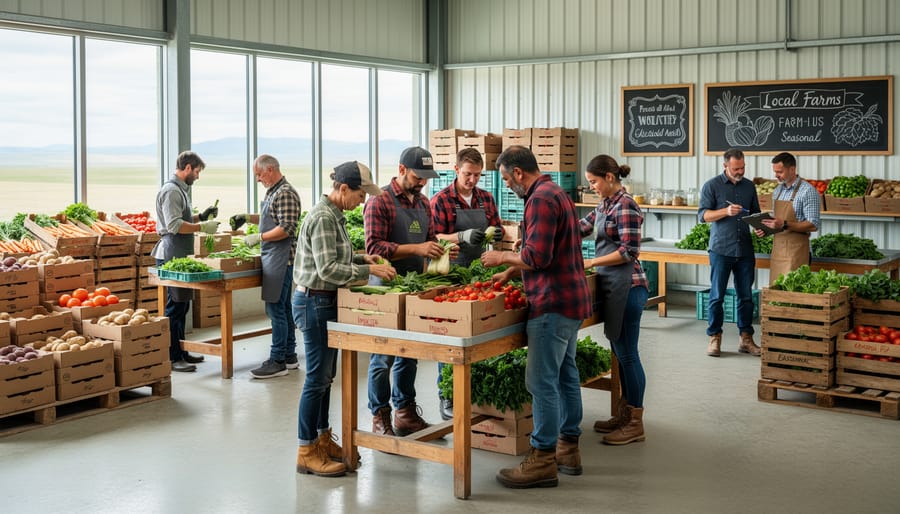
Food collaboratives rest on four foundational principles that transform how producers connect with markets and communities.
Shared costs form the economic backbone. Instead of individual farmers bearing the full expense of transportation, warehousing, marketing, and distribution infrastructure, members pool resources. A Manitoba cooperative, for example, reported members reducing individual delivery costs by 60% when ten farms combined weekly trips to Winnipeg markets. This principle extends beyond finances to include shared labour, equipment, and knowledge.
Democratic governance ensures every member has voice and vote in operational decisions, regardless of farm size. This typically translates into one-member-one-vote structures where participants collectively determine pricing strategies, membership criteria, delivery schedules, and quality standards. Regular meetings, transparent financial reporting, and rotating leadership positions keep governance practical and accountable.
Mutual benefit replaces competitive dynamics with cooperation. When farmers coordinate harvest timing or diversify crops to complement rather than compete with each other, everyone’s market position strengthens. This approach mirrors collaborative success in organic agriculture, where shared learning accelerates adoption of sustainable practices.
Community resilience emerges as the long-term outcome. Food collaboratives create local food security, keep dollars circulating within regions, and build relationships between producers and consumers. During supply chain disruptions, these networks prove invaluable—Alberta collaboratives maintained food access throughout recent challenges when conventional channels faltered.
These principles work together, creating systems where individual success depends on collective wellbeing, transforming isolated farming operations into connected, resilient food networks.
Community Food Hubs: The Physical Heart of Collaborative Distribution
What Alberta Farmers Need to Know About Hub Infrastructure
Building or accessing appropriate infrastructure represents one of the most significant steps in establishing a food collaborative. For Alberta farmers, understanding what facilities you’ll need and how to share them effectively can mean the difference between a thriving hub and an overwhelming investment.
Cold storage forms the backbone of most food collaboratives. In Alberta’s climate, you’ll need facilities that can handle temperature swings from -30°C winters to +30°C summers. Many successful hubs start with insulated shipping containers or repurposed commercial coolers, which cost significantly less than building from scratch. Consider your collective volume needs: a 40-foot refrigerated container holds approximately 20 pallets and can serve 15-20 small-to-medium farms initially.
Processing facilities depend entirely on what your members grow. Vegetable washing stations need high-pressure hoses, stainless steel tables, and proper drainage systems that won’t freeze in winter months. If you’re processing meat or dairy, regulations become more complex, but shared provincial inspections can reduce individual costs by 60-70% compared to on-farm certification.
Packaging areas should accommodate both bulk handling and consumer-ready portions. Most collaboratives dedicate 50-100 square metres for this function, including scales, labeling stations, and temporary storage. Look for spaces with loading dock access to minimize handling time during Alberta’s harsh winters.
Transportation logistics require weatherproof vehicles and realistic route planning. Successful Alberta hubs typically operate refrigerated trucks on fixed schedules, with members taking turns on delivery duties or pooling funds to hire drivers. Budget approximately 500-800 kilometres weekly for regional distribution.
The key to managing these shared resources lies in clear usage agreements, maintenance schedules, and transparent cost-sharing formulas. Many collaboratives charge per-kilogram fees or percentage-based rates that scale with individual farm usage, ensuring fairness while keeping the system accessible for smaller operations.

Real Results: An Alberta Food Collaborative Case Study
The Central Alberta Food Hub launched in 2021 with eight founding members and has grown to include 23 farm operations across three counties. This collaborative represents one of the most successful examples of farmers working together to overcome distribution challenges and access new markets.
Sarah Mitchell, a third-generation vegetable grower near Lacombe, joined the collaborative in its first year. “Before the hub, I was spending two full days each week making deliveries to restaurants and grocery stores in Edmonton and Red Deer,” she explains. “That’s time I should have been in the field, especially during peak season.” Through the collaborative’s shared logistics system, Sarah now contributes her produce to consolidated weekly deliveries, reducing her transportation costs by 64 percent and reclaiming valuable farming time.
The numbers tell a compelling story. Member farms collectively saved $127,000 in transportation costs during the 2023 season alone. By sharing refrigerated storage facilities, they reduced individual overhead by an average of $8,400 annually. The collaborative’s joint marketing efforts opened doors to institutional buyers that individual farms couldn’t access independently, including contracts with two hospital networks and a university food service system worth $340,000 combined.
James Kowalski raises grass-fed beef near Ponoka and initially hesitated to join. “I worried about losing control of my brand and pricing,” he admits. “But the collaborative model respects individual farm identity while providing collective strength.” James now benefits from the hub’s shared processing facility access, which reduced his per-unit processing costs by 32 percent. His beef products reach 14 retail locations through the collaborative’s distribution network, compared to the three farm gate sales points he previously managed alone.
The collaborative hasn’t been without challenges. Members spent considerable time in the first year establishing fair pricing structures and delivery schedules that worked for farms of different sizes and production types. They hired a part-time coordinator to manage logistics and buyer relationships, with members sharing the $42,000 annual salary cost proportionally based on sales volume.
The hub’s success mirrors broader trends in transforming Alberta farms through cooperative approaches. Member retention stands at 96 percent, and the collaborative maintains a waiting list of farms interested in joining. Most significantly, participating farms report 28 percent average revenue increases since joining, demonstrating that collaboration creates measurable economic benefits while building stronger rural communities.

Building Your Own Cooperative Distribution Network: A Practical Roadmap
Navigating Canadian Cooperative Regulations and Funding Programs
Starting a food collaborative in Alberta requires understanding both federal and provincial regulatory frameworks. In Alberta, cooperatives must incorporate under the Cooperatives Act, which outlines member rights, governance structures, and financial reporting requirements. The process involves registering with Service Alberta, drafting bylaws that reflect cooperative principles, and obtaining appropriate business licenses.
Several financial support programs exist specifically for agricultural cooperatives. The federal Agricultural Cooperative Development Initiative provides funding for feasibility studies, business planning, and governance training. Agriculture and Agri-Food Canada’s AgriDiversity program offers cost-share funding for market development and infrastructure projects, with cooperatives often receiving priority consideration.
At the provincial level, Alberta Agriculture and Irrigation administers programs supporting value-added processing and distribution infrastructure. The Canadian Agricultural Partnership offers grants covering up to 50 percent of eligible project costs, including cold storage facilities, transportation equipment, and processing equipment essential for collaborative operations.
Farm Credit Canada provides specialized financing options for cooperatives, including loans with flexible repayment terms aligned with agricultural cycles. The Community Futures program, delivered through regional offices across Alberta, offers both financing and business advisory services tailored to rural enterprises.
When applying for funding, collaboratives benefit from demonstrating strong member commitment, clear business plans, and community economic impact. Many successful Alberta cooperatives recommend engaging a cooperative development consultant early in the planning process to navigate regulatory requirements and maximize funding opportunities.
How Food Collaboratives Support Sustainable Agriculture Goals
Food collaboratives naturally advance sustainable agriculture goals through their fundamental structure and operations. By pooling resources and coordinating distribution, these networks create meaningful environmental benefits that extend well beyond individual farm operations.
One of the most immediate impacts comes from reduced food miles. When farmers coordinate their deliveries through a collaborative hub, they eliminate redundant trips to market. Instead of five farmers each driving 100 kilometres to reach urban customers, they can consolidate shipments, significantly cutting fuel consumption and emissions. Alberta’s vast geography makes this particularly valuable—coordinating transportation from rural areas to Calgary or Edmonton can reduce overall vehicle travel by 60 to 70 percent.
Optimized transportation efficiency also means better vehicle utilization. Collaboratives can invest in appropriately sized refrigerated trucks or share delivery routes, ensuring vehicles run at full capacity rather than half-empty. This reduces the carbon footprint per kilogram of food delivered while lowering operational costs for participating farmers.
Packaging waste decreases when collaboratives implement reusable container systems. Rather than each farmer using disposable packaging for individual customer orders, hubs can establish returnable crate programs. Some Alberta collaboratives have successfully transitioned to this model, eliminating thousands of single-use boxes annually.
Food collaboratives also provide crucial market stability for farmers practicing environmental stewardship through organic and regenerative methods. These production systems often require transition periods and premium pricing to remain viable. Collaboratives connect these farmers with customers who value sustainable practices, creating reliable markets that support long-term soil health investments.
Enhanced soil health follows naturally when farmers have secure market access. With predictable income from collaborative networks, producers can afford to implement crop rotations, cover cropping, and reduced tillage practices. These techniques build organic matter and improve water retention—essential for resilience in Alberta’s variable climate.
The collective structure also facilitates knowledge sharing about sustainable practices, creating a supportive environment where farmers learn from each other’s successes in building healthier agricultural systems.
Overcoming Common Challenges in Cooperative Distribution
Starting a food collaborative brings genuine challenges that deserve honest discussion. Coordination among multiple farms requires dedicated effort and clear systems. The Evansburg Farmers’ Collective in Alberta learned this firsthand when early distribution delays frustrated both farmers and buyers. Their solution? Implementing a shared digital calendar and appointing a rotating coordinator role, which reduced miscommunication by 60% within three months.
Quality standardization presents another hurdle. When different farms produce the same crop, variations in size, appearance, and handling can complicate sales. The Red Deer Regional Food Hub addressed this by developing simple grading guidelines collaboratively, ensuring everyone understood expectations while respecting each farm’s unique growing methods. Weekly quality check-ins during peak season helped maintain standards without creating unnecessary bureaucracy.
Pricing negotiations often trigger tension, especially when market prices fluctuate. Dr. Sarah Chen, agricultural economist at the University of Alberta, recommends establishing transparent pricing formulas before conflicts arise. “Agree on your baseline costs, desired margins, and adjustment triggers during calm times,” she explains. “Document everything and revisit quarterly.” Successful collaboratives typically use cost-plus pricing models with agreed-upon percentage adjustments based on market conditions.
Seasonal fluctuations challenge year-round operations. While summer abundance fills distribution channels, winter months can leave collaboratives struggling for inventory. Smart planning involves diversifying member farms to include greenhouse operators, storage crop specialists, and value-added producers. The Lacombe Food Collective extended their season by partnering with three root vegetable farms offering cold storage capabilities, maintaining 75% capacity through winter months.
Member communication breakdowns undermine even well-structured collaboratives. Regular meetings matter, but so does accessibility. Consider both in-person gatherings and digital updates to accommodate different schedules and communication preferences. Establish a simple conflict resolution protocol early: direct conversation first, mediation by neutral member second, and formal review by the entire collaborative if needed.
Remember, challenges don’t signal failure—they’re growth opportunities. Most successful Alberta food collaboratives report that their second year runs significantly smoother than their first, as members learn each other’s rhythms and refine processes together. Patience, documented procedures, and genuine commitment to collective success transform obstacles into stepping stones.
Food collaboratives represent more than just an alternative distribution model—they embody a fundamental shift toward community-centered agriculture that strengthens both farm economics and environmental health. For Alberta farmers, these partnerships offer tangible pathways to improved market access, reduced operational costs, and enhanced resilience against the challenges of conventional supply chains. By pooling resources, sharing knowledge, and building direct connections with consumers, collaborative models create space for farmers to prioritize sustainable practices while maintaining economic viability.
The success stories emerging across Canada demonstrate that collaboration isn’t just idealistic—it’s practical and profitable. From reducing food waste to supporting regenerative farming techniques, these initiatives align financial sustainability with ecological responsibility.
Now is the time to explore what collaborative opportunities exist in your region. Connect with local non-profit farming organizations, attend agricultural networking events, and engage with fellow producers who share your commitment to building a more sustainable food system. The transformative potential of food collaboratives starts with your willingness to participate, share, and grow alongside your community. Your farm’s future may well depend on the connections you forge today.