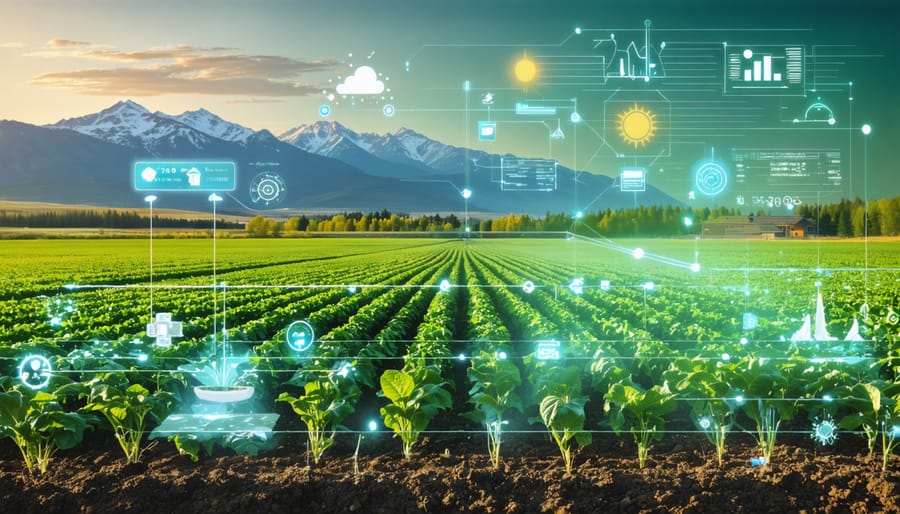
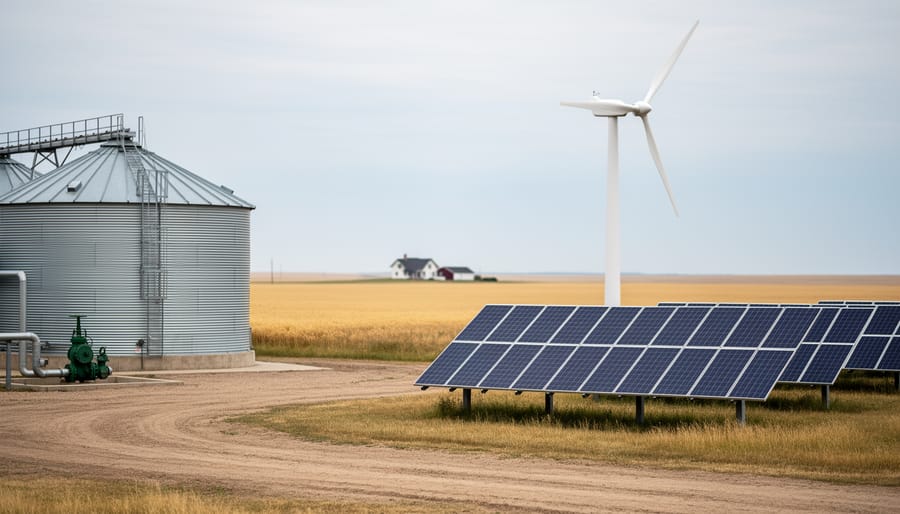
Renewable energy in farming refers to the use of naturally replenishing power sources, such as solar, wind, biomass, and geothermal, to meet the operational energy needs of agricultural operations. These systems convert environmental resources into electricity, heat, or mechanical power, reducing reliance on fossil fuels and lowering operating costs over time.
For Canadian producers, particularly across the Prairie provinces, renewable energy represents both a practical response to rising energy costs and an opportunity to strengthen farm resilience. Alberta operations, with their access to strong wind corridors and long summer daylight hours, are increasingly evaluating how solar panels, wind turbines, and biomass systems can power everything from irrigation pumps to grain dryers and livestock facilities.
The shift toward renewable power isn’t just about environmental stewardship. Farms are energy-intensive businesses, and the ability to generate power on-site translates directly to improved margins and greater control over one of agriculture’s most volatile input costs. A 2025 study from the University of Alberta found that farms integrating solar or wind generation reduced their annual energy expenses by an average of 30 to 45 percent within the first five years of operation.
This article breaks down exactly what renewable energy means in the farming context, how these systems work in daily operations, which types are best suited to different agricultural settings, and where Canadian producers are already putting them to use. Whether you’re running a grain operation near Red Deer or managing a dairy facility in central Saskatchewan, understanding these technologies helps you make informed decisions about your farm’s energy future.
What Renewable Energy in Farming Means
Renewable energy in farming means replacing conventional fossil-fuel power with electricity and heat generated on-site from naturally replenishing sources. Instead of relying entirely on grid electricity or diesel generators, farms produce their own energy using sunlight, wind, decomposing organic matter, stable ground temperature, or flowing water. This shift turns farms into small-scale power stations while they continue growing crops and raising livestock.
- Renewable Energy
- Power derived from sources that naturally replenish on human timescales, including solar radiation, wind, biomass, geothermal heat, and moving water.
- Farm Energy Integration
- The process of incorporating renewable generation systems into existing agricultural operations to meet power, heating, and cooling demands.
- On-Farm Generation
- Producing electricity or thermal energy directly at the farm site using installed renewable systems rather than purchasing all power from external suppliers.
- Energy Independence
- Reducing or eliminating dependence on grid electricity and fossil fuels by meeting energy needs through self-generated renewable power.
- Carbon Footprint Reduction
- Lowering greenhouse gas emissions by displacing fossil fuel consumption with clean energy sources that release little to no carbon during operation.
Canadian farmers are making this transition for three primary reasons. First, renewable systems cut operating costs once installed, sunlight and wind don’t carry monthly bills. Second, on-farm generation provides energy security during grid outages and protects against volatile fuel prices. Third, renewable adoption reduces emissions, helping farms align with climate goals while appealing to sustainability-focused buyers.
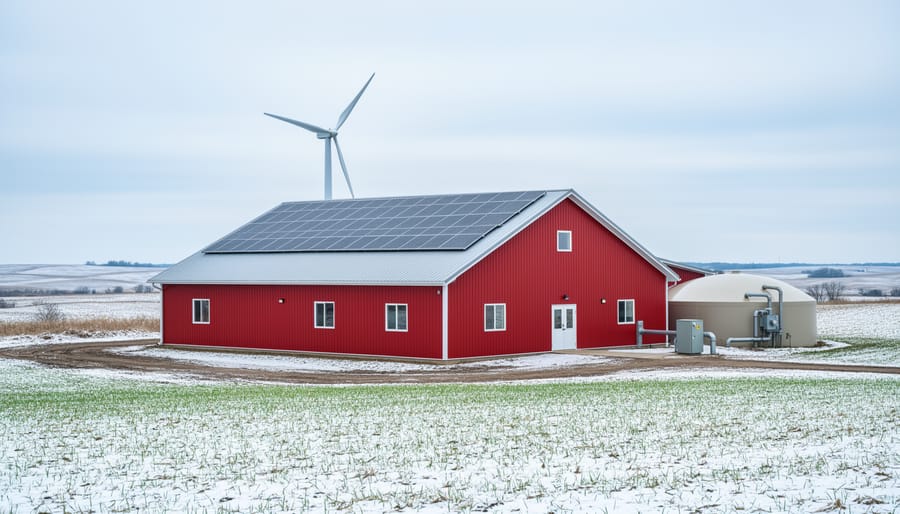
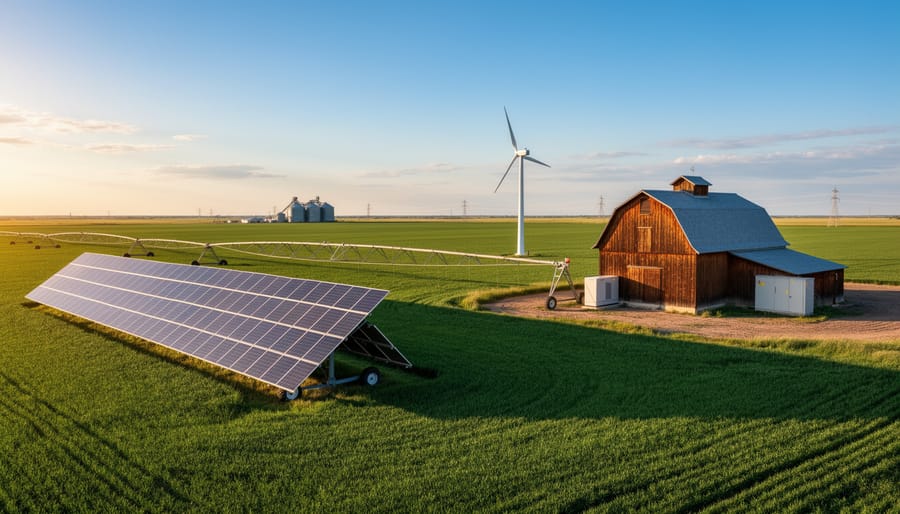
In practice, renewable energy on Canadian farms looks like solar panels mounted on barn roofs powering irrigation pumps, wind turbines charging battery banks for remote pasture operations, and biogas digesters converting manure into electricity and heat. Many Alberta green energy projects combine multiple sources to match seasonal demand patterns, using solar during long summer days and biomass heating through cold winters. The systems run alongside traditional equipment, gradually displacing diesel tractors, propane heaters, and grid-supplied electricity as farmers scale up their renewable capacity.
How Renewable Energy Works on Farms
Energy Capture and Conversion
Renewable energy capture on farms begins with collecting raw energy from natural sources and converting it into forms that power actual farm operations. The conversion method varies by source, but each follows a similar principle: take free energy from the environment and transform it into electricity, heat, or mechanical work.
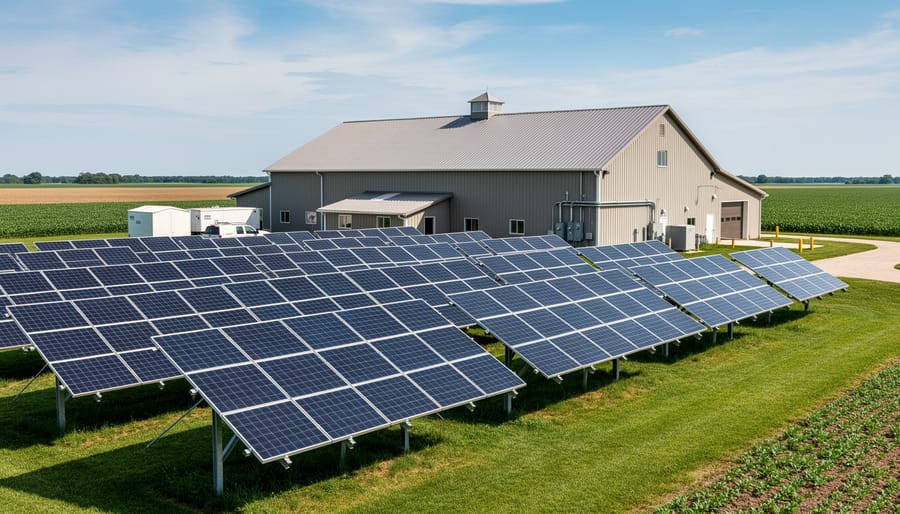
Solar photovoltaic panels capture sunlight through semiconductor cells that generate direct current electricity when photons strike their surface. An inverter then converts this DC power into alternating current that matches standard farm electrical systems. On sunny Alberta days, a properly sized solar array can generate 4-6 kilowatt-hours per installed kilowatt of capacity.
Wind turbines use rotating blades to spin a generator shaft, converting kinetic energy from moving air into three-phase AC electricity. The turbine’s internal systems regulate voltage and frequency to match grid standards or charge battery banks directly.
Biomass systems burn crop residue, wood chips, or dried manure in controlled combustion chambers, using the released heat to boil water into steam. That steam either drives a turbine for electricity generation or flows directly through heating systems for barns and grain dryers.
Anaerobic digesters take a different approach with organic waste, using bacteria to break down manure in oxygen-free tanks. This biological process produces methane-rich biogas that burns in modified engines or boilers, generating both electricity and usable heat.
Geothermal heat pumps circulate fluid through underground pipes, absorbing stable earth temperatures (typically 8-10°C in Alberta) and using compression cycles to concentrate that heat for barn warming or reverse the process for greenhouse cooling.
Storage and Distribution
Storing renewable energy lets farms use power when they need it, not just when the sun shines or the wind blows. Battery banks capture surplus electricity from solar panels and wind turbines during peak generation hours, then discharge overnight or during calm periods to run irrigation pumps, barn ventilation, and equipment charging stations. Lithium-ion and lead-acid batteries are the most common choices on Canadian farms, with lithium offering longer cycle life and better performance in cold weather, important when Alberta temperatures drop below freezing for months.
Thermal storage takes a different approach: storing heat instead of electricity. Geothermal systems use the ground itself as a heat sink, while biomass boilers heat large insulated water tanks that release warmth into greenhouses or barns throughout the night. This strategy shifts energy demand away from expensive peak hours and smooths out seasonal swings in heating requirements.
Effective battery management for farm microgrids balances charging cycles with daily operations, extending system lifespan while ensuring critical loads always have backup power. Controllers monitor state of charge, switch between renewable sources and grid electricity automatically, and prevent deep discharge that degrades batteries. This orchestration turns intermittent generation into reliable, round-the-clock farm power.
Main Types of Renewable Energy Used in Farming
Solar Photovoltaic Systems
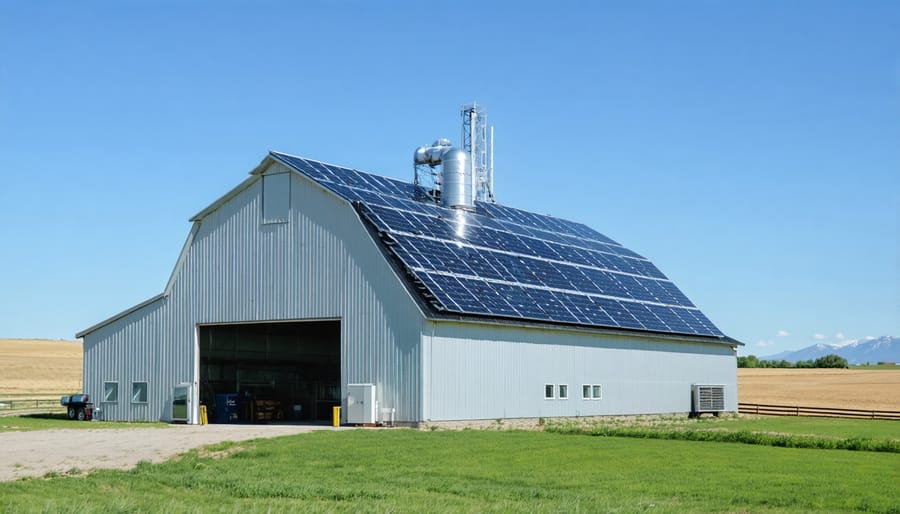
Solar panels mounted on barn roofs, ground arrays in fields, or pole-mounted systems generate electricity that Alberta farms use for irrigation pumps, LED barn lighting, ventilation fans, and charging equipment batteries. The panels convert sunlight directly into DC power, which an inverter changes to AC current for standard farm appliances and machinery. A typical 10-kilowatt system can offset a significant portion of a dairy barn’s electrical load, reducing monthly utility bills by hundreds of dollars.
Alberta receives strong solar irradiance year-round, especially in southern regions where clear skies dominate even in winter. Cold temperatures actually boost panel efficiency, solar PV works in cold climates better than in extreme heat because the cells operate more efficiently at lower temperatures. Snow cover can temporarily reduce output, but panels shed snow quickly, and the low winter sun angle combined with reflective snow increases total light capture.
Farmers often start with a smaller installation to power specific loads like a remote water pump or shop lighting, then expand the array as they see savings. Grid-tied systems feed excess power back to the utility during sunny days and draw from the grid at night, making solar a practical fit for operations without battery storage.
Wind Turbines
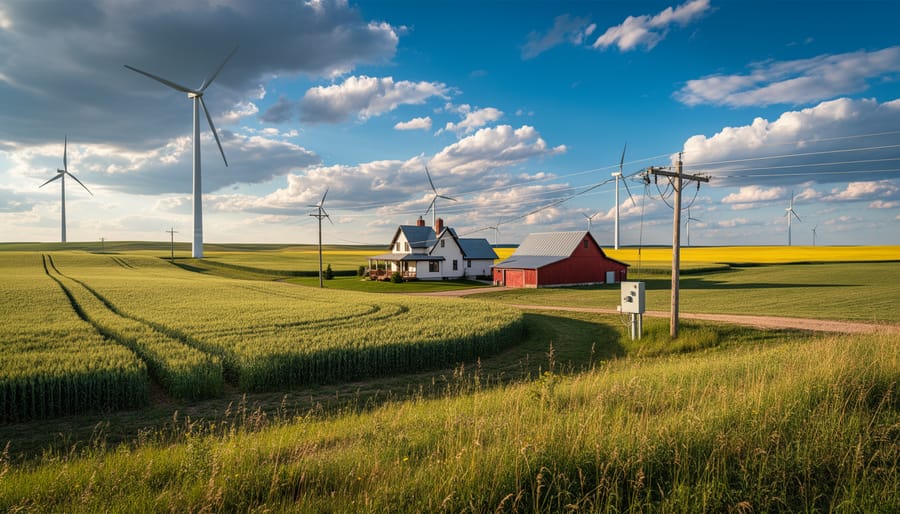
Wind turbines harness Alberta’s consistent prairie winds to generate electricity for farm operations. Small-scale turbines (5-50 kilowatts) and mid-scale systems (50-250 kilowatts) are most practical for individual farms, mounted on towers 20-40 meters high to access stronger, steadier winds above ground level.
These systems work particularly well across southern Alberta and the Peace Region, where average wind speeds exceed 15 kilometers per hour. Farmers use wind-generated power for multiple applications: pumping water for livestock and irrigation, running grain handling equipment, and powering shop tools and lighting. Many Alberta farms connect turbines to the grid through net metering agreements, selling excess electricity back during high-production periods and drawing power when needed.
Installation requires careful site assessment to measure actual wind resources over 12 months, as conditions vary significantly between locations. Turbines need unobstructed airflow, making them ideal for open farmland away from tree lines and buildings. Modern systems include automatic braking and pitch control to handle Alberta’s extreme weather, from high winds to minus 40-degree winters.
Maintenance involves annual inspections of blades, bearings, and electrical connections, typically manageable with standard farm mechanical skills.
Biomass and Biogas Energy
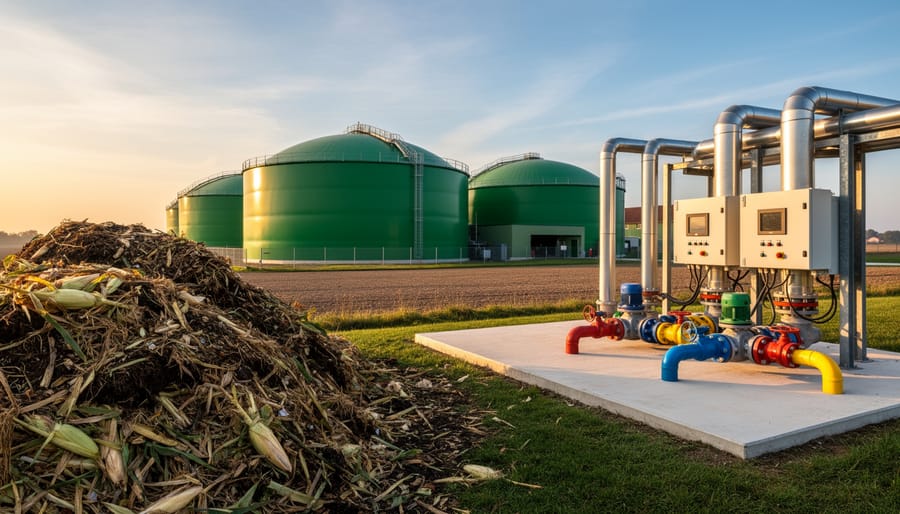
Biomass and biogas systems turn organic farm waste into usable energy, making them especially practical for livestock operations that generate manure daily. Anaerobic digestion breaks down animal waste in enclosed tanks without oxygen, producing biogas, a methane-rich fuel that powers generators for electricity or boilers for heat. The process also creates nutrient-rich digestate that returns to fields as fertilizer, closing the loop on waste management.
Direct combustion of crop residues like straw, wood chips, or grain screenings provides heat for barn spaces, grain dryers, and greenhouse operations. Many Alberta farms with cattle or hog operations run digesters year-round, capturing methane that would otherwise escape into the atmosphere while offsetting propane and natural gas costs.
The technology suits farms producing steady volumes of organic material. A 200-cow dairy operation typically generates enough manure to power farm buildings and export surplus electricity to the grid. Start-up costs run higher than solar or wind, but operational savings accumulate through reduced fuel purchases, avoided waste disposal fees, and potential revenue from selling excess power or carbon offset credits.
Geothermal Heat Pumps
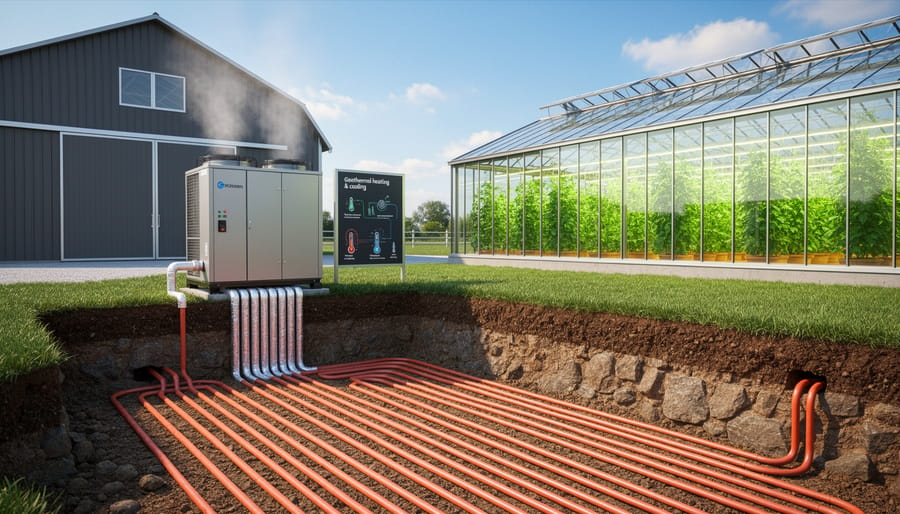
Ground-source heat pumps tap into the earth’s stable temperature several metres below the surface, which hovers between 5°C and 10°C year-round across Alberta. A network of buried pipes filled with fluid circulates heat between the ground and farm buildings, warming structures in winter and cooling them in summer. The system moves existing heat rather than generating it through combustion, making it three to four times more energy-efficient than conventional propane or natural gas heating.
Greenhouses benefit most dramatically, geothermal systems maintain consistent growing temperatures without the fuel costs and emissions of traditional heaters. Livestock barns stay warmer in January and cooler during summer heat waves, improving animal comfort and productivity. Processing facilities and cold storage operations use ground-source systems to stabilize temperatures critical for food safety and product quality.
Installation requires drilling vertical boreholes or trenching horizontal loops depending on available land and soil conditions. Upfront costs run higher than conventional HVAC systems, but operating savings typically recover the investment within seven to twelve years. The equipment lasts 25 years or more with minimal maintenance beyond occasional fluid checks and pump servicing.
Small-Scale Hydroelectric
Small-scale hydroelectric systems, often called micro-hydro, generate electricity from flowing water on properties with streams, creeks, or rivers. A turbine installed in the water flow spins to produce power, which can run farm equipment, charge batteries, or feed into the grid. Unlike large hydroelectric dams, these systems have minimal environmental impact and work continuously as long as water flows, making them reliable year-round energy sources.
In Alberta, micro-hydro potential is limited compared to wind or solar, but farms in foothill regions near the Rockies with consistent streams can install small systems rated between 5 and 100 kilowatts. These setups are particularly effective where elevation drop creates strong water flow. A farmer near Pincher Creek, for example, might use a creek running through the property to power barn operations and irrigation pumps without tapping the grid.
The main requirement is reliable flow throughout the year, including winter months when surface water can freeze. Systems need proper intake screening to prevent debris blockage and fish protection measures to meet provincial regulations. Installation costs run higher than solar or wind per kilowatt, but the continuous generation often delivers faster payback for suitable sites.
How Renewable Energy Is Applied in Farm Operations
Renewable energy systems power a wide range of daily farm activities across Alberta, from sunrise tasks to late-night equipment runs. These applications demonstrate how solar, wind, and biomass energy integrate into practical agricultural work rather than remaining theoretical concepts.
Irrigation represents one of the most energy-intensive farm operations, particularly during Alberta’s dry summer months. Solar-powered pumps now drive centre pivot systems and drought-ready irrigation infrastructure on grain and vegetable operations throughout the province. Photovoltaic arrays sized to match peak water demand run pumps during daylight hours when crops need moisture most, eliminating diesel fuel costs and reducing the carbon footprint of water delivery. Some farmers pair solar pumping with battery storage to extend irrigation windows into evening hours.
Dairy operations have found renewable energy particularly valuable for running milk cooling systems, vacuum pumps, and automated feeding equipment. A 200-cow dairy near Red Deer installed a combined solar-and-biomass system in 2024 that powers its milking parlour while using manure digestion to generate supplemental electricity and process heat. The biogas component provides consistent baseload power while solar panels handle daytime demand spikes during milking sessions.
- Irrigation pumping for field crops and market gardens
- Dairy equipment including milking systems, cooling tanks, and automated feeders
- Barn heating and ventilation for livestock comfort year-round
- Greenhouse climate control using geothermal or solar thermal systems
- Grain drying and storage ventilation after harvest
- Cold storage for produce, meat, and dairy products
- Electric vehicle and equipment charging infrastructure
Heating barns and greenhouses accounts for substantial energy use during Alberta’s long winters. Geothermal heat pumps installed at several greenhouse operations near Calgary maintain consistent growing temperatures by tapping stable underground heat, while biomass boilers burning straw and wood waste provide reliable heat for livestock barns. One mixed farm near Lethbridge uses solar thermal collectors to preheat water for hog barn floor heating, cutting propane consumption by 60 percent.
Grain drying after harvest traditionally relies on propane or natural gas, but biomass-fired driers using crop residue and wood pellets now handle this energy-intensive task on several Alberta grain farms. Wind turbines also contribute by running fans for bin aeration and maintaining proper storage conditions throughout the year.
The shift to electric farm vehicles and equipment creates new opportunities for renewable energy application. Solar carports at equipment yards now charge electric UTVs, while larger operations are installing charging stations powered by wind or solar arrays to support electric tractors and transport vehicles as they become commercially available.
Benefits for Canadian Farms
Renewable energy integration delivers tangible financial and operational advantages for Canadian farms, particularly in regions like Alberta where energy costs and weather extremes affect year-round production.
The most immediate benefit is reduced operating costs. Farms that generate their own electricity through solar panels or wind turbines typically see fuel and utility bills drop by 40 to 70 percent once systems are operational. A grain operation near Lethbridge running solar-powered irrigation saved $18,000 annually on electricity costs alone, while a dairy farm using biogas from manure digestion cut heating expenses by half. These savings compound over time, improving cash flow and freeing capital for other farm investments.
Energy price protection becomes crucial as conventional power costs fluctuate. By producing electricity and heat on-site, farms insulate themselves from rate increases and fuel price spikes that can disrupt budgets. Fixed generation costs from owned renewable systems create predictable expenses that simplify financial planning across growing seasons.
Environmental benefits align with Canada’s 2050 net-zero targets while improving farm marketability. Reducing carbon emissions through renewable energy strengthens a farm’s position when selling to buyers who prioritize sustainability, and it supports certification for organic or eco-label programs. Alberta farms adopting solar or wind can document measurable greenhouse gas reductions, which matters for both consumer perception and future regulatory requirements.
New revenue opportunities emerge through net metering programs that credit excess electricity fed back to the grid, and through federal and provincial carbon offset programs that pay farms for verified emission reductions. Some Alberta producers earn thousands annually from these mechanisms alone.
Farm resilience improves dramatically with on-site generation. When grid power fails during storms or equipment failures, farms with battery storage and renewable systems maintain critical operations, keeping livestock comfortable, preserving cold storage, and running milking equipment. Pairing renewable energy with smart barn solutions creates fully integrated systems that monitor and optimize energy use automatically, maximizing both efficiency and reliability during challenging conditions.
Getting Started with Renewable Energy Integration
Starting a renewable energy project begins with understanding your farm’s current power use. An energy audit maps where electricity, diesel, and propane go across your operation, irrigation pumps, grain dryers, livestock housing heating, cold storage, and shop equipment. Many Alberta farms discover that 60-70% of their energy consumption concentrates in just two or three activities, making those the logical starting points for renewable integration.
Next, assess what renewable resources your site actually has. Walk your property with solar exposure in mind: south-facing roof space, open fields away from tree shadows, and year-round sun access matter more than summer peak hours. Check average wind speeds at hub height if you’re on open prairie. Inventory organic waste streams, manure volume from livestock operations, crop residues, and processing byproducts that could feed a biogas digester.
Federal programs like the Canadian Agricultural Partnership and the Agricultural Clean Technology Program offered grants covering 25-40% of installation costs in early 2026, while Alberta’s On-Farm Solar Photovoltaics Program provided additional provincial support. These incentives change annually, so contact your regional Agricultural Service Board for current program details and application deadlines before finalizing equipment choices.
Match technology scale to your actual needs, not theoretical capacity. A 25-kilowatt solar array might cover your entire barn load, while a 100-kilowatt system could power multiple buildings and generate sellable surplus. Oversizing costs more upfront but improves long-term economics if your operation will expand.
Work with installers experienced in agricultural applications, residential solar contractors often underestimate farm-specific demands like three-phase power, dust exposure, and equipment vibration. Agricultural energy advisors through provincial extension services can review proposals and connect you with farmers who’ve completed similar projects.
Common Questions About Renewable Energy in Farming
What are the typical upfront costs and payback periods for farm renewable energy systems?
Initial investment varies widely by technology and scale: a 25kW solar array might cost $40,000-60,000, while a small wind turbine runs $15,000-50,000, and biogas digesters for livestock operations start around $200,000. Most Alberta farms see payback periods of 8-15 years for solar, 10-20 years for wind, and 7-12 years for biogas systems when factoring in energy savings and available incentives.
What government support is available in 2026 for farm renewable energy?
Federal programs include the Canadian Agricultural Partnership (CAP) cost-share funding and accelerated capital cost allowance for renewable energy equipment. Alberta offers additional support through the On-Farm Solar Photovoltaics Program and emissions reduction grants, which can cover 25-40% of eligible project costs depending on system type and farm size.
How reliable are renewable systems during Alberta winters?
Modern systems are engineered for cold climates: solar panels actually perform more efficiently in cold temperatures (though shorter days reduce total output), wind turbines operate effectively down to -30°C with cold-weather packages, and biogas digesters maintain production with proper insulation and heating. Most farms maintain grid connection or backup generators to ensure continuous power during extreme weather or equipment maintenance.
Can I start small and expand my renewable energy system over time?
Yes, most technologies are modular, you can install a starter solar array or single wind turbine, then add capacity as cash flow allows and energy needs grow. Planning for future expansion during initial installation (oversized inverters, extra conduit, strategic equipment placement) makes scaling more cost-effective.
Understanding the practical and financial realities helps farmers make informed decisions about renewable energy adoption. Beyond the questions above, maintenance requirements are straightforward for most systems. Solar panels need occasional cleaning and annual electrical inspections. Wind turbines require annual gearbox checks and blade inspections every 2-3 years. Biogas systems demand the most attention, daily monitoring of digester conditions and weekly maintenance of pumps and mixing equipment, but many livestock operations integrate these tasks into existing manure management routines.
Grid connection options give Alberta farmers flexibility in how they integrate renewable power. Net metering programs let you sell excess electricity back to the grid, offsetting consumption during low-production periods. Some farms operate hybrid systems, using renewable sources as primary power while maintaining grid connection for backup. Off-grid setups work for remote operations, though they require robust battery storage and careful load management. Your local utility can explain interconnection requirements, metering options, and any transmission upgrades needed for your specific location and system size.
Renewable energy in farming isn’t a distant concept, it’s the tangible integration of solar panels, wind turbines, biomass systems, geothermal heat pumps, and hydro installations into the daily work you’re already doing. These technologies power irrigation, heat barns, run equipment, and keep operations moving while cutting fuel costs and reducing reliance on external energy suppliers.
For Canadian farmers, particularly in Alberta, this shift offers measurable benefits: lower operating expenses, protection from volatile energy prices, and alignment with national climate objectives that increasingly affect agricultural policy and market access. Beyond economics, on-farm renewable generation builds resilience, keeping critical systems running during grid disruptions and positioning your operation for long-term sustainability.
The path forward starts with understanding your farm’s specific energy needs and available resources. Conduct an energy audit, assess your site’s solar exposure or wind potential, and explore provincial and federal support programs designed for agricultural operations. Connect with agricultural energy advisors who understand farming realities, and don’t hesitate to learn from neighbouring producers who’ve already made the transition. The renewable energy options that work best will depend on your operation’s unique conditions, but the opportunity to reduce costs while securing your energy future is available now.