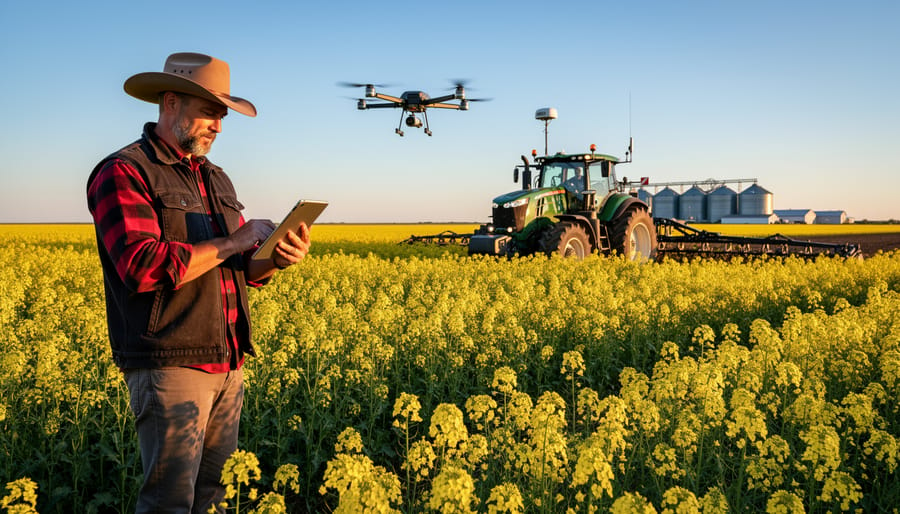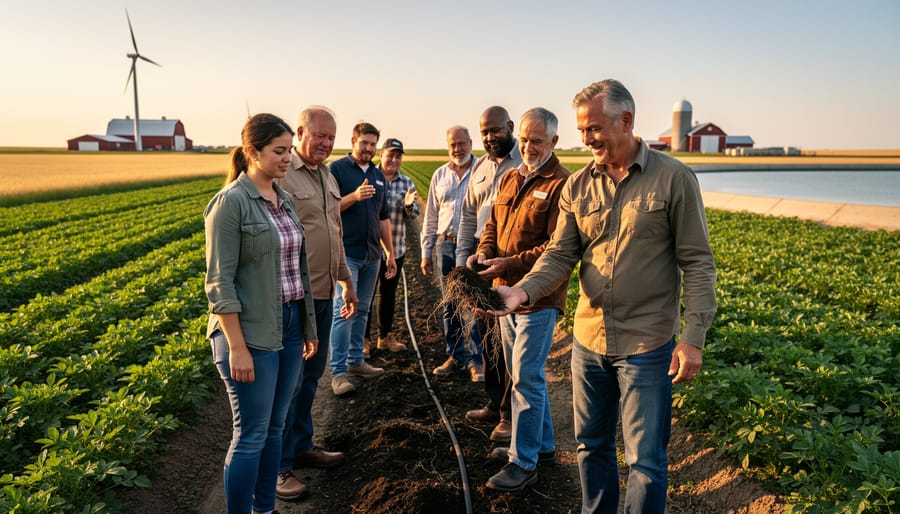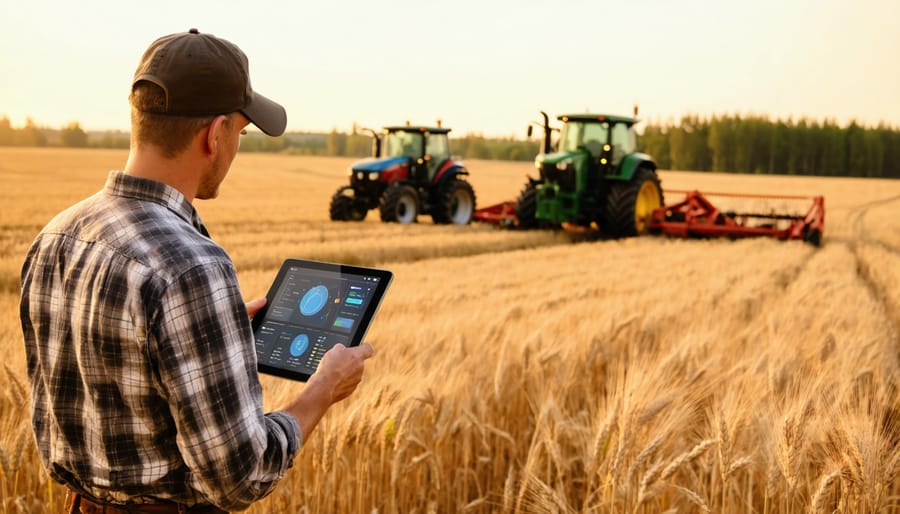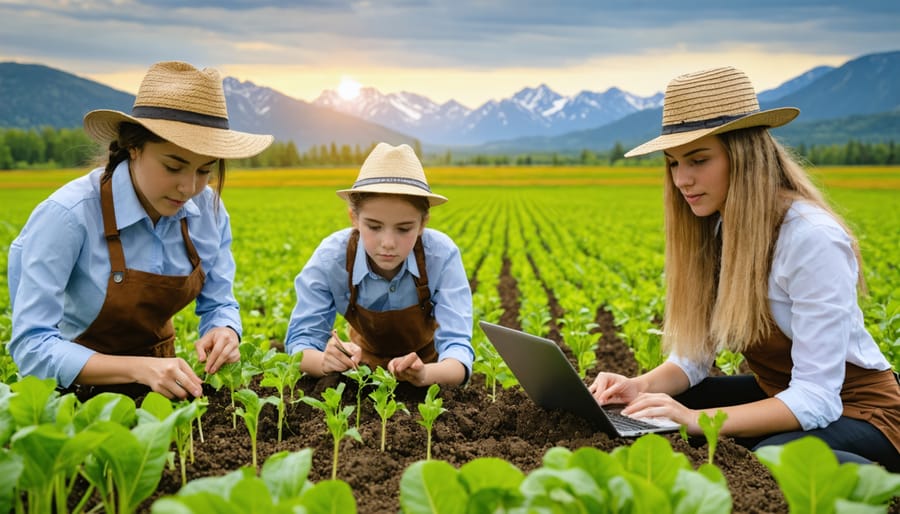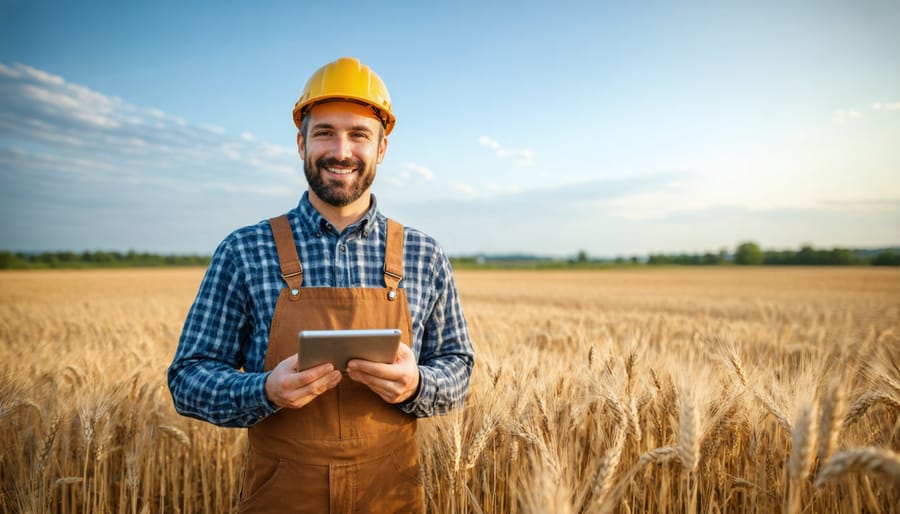
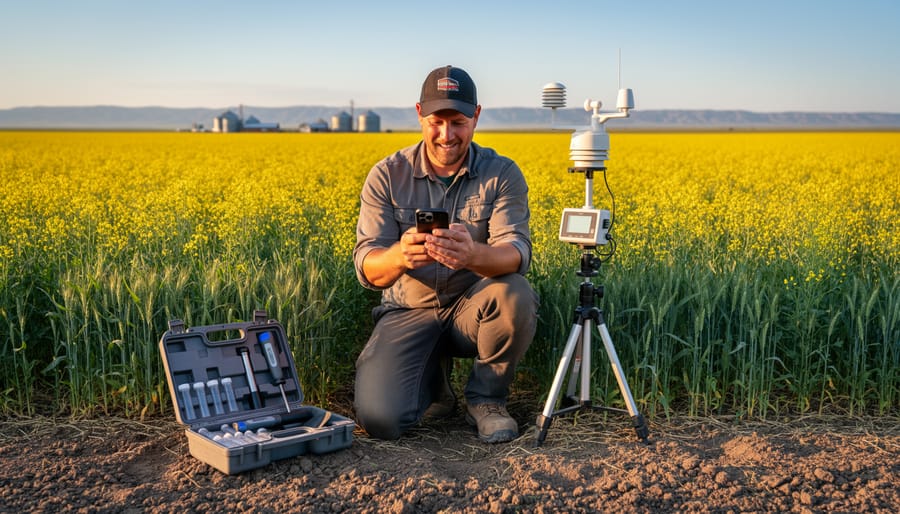
Join a local agricultural monitoring network to collect soil health data, weather patterns, or pest observations that scientists analyze to improve regional farming recommendations. Your daily farm observations become valuable research data when submitted through standardized apps or online platforms designed for non-scientists.
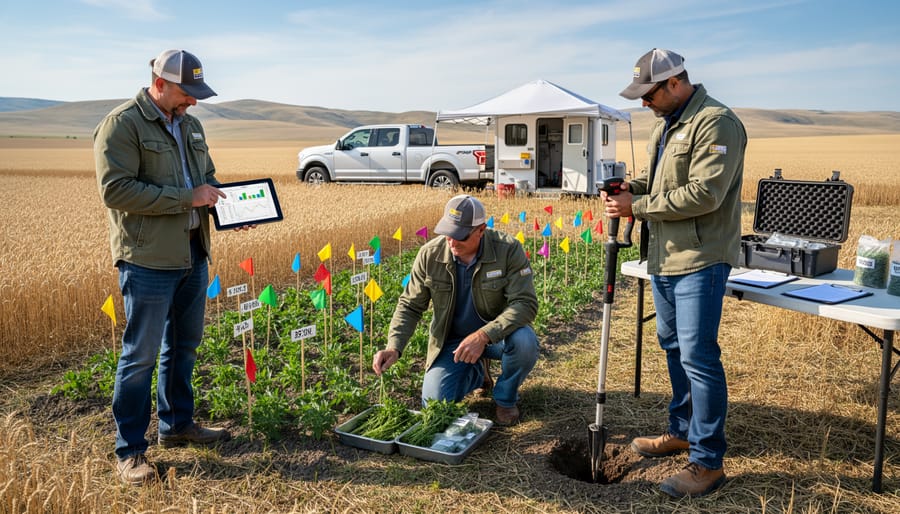
Partner with university research programs seeking on-farm trials of crop varieties, cover cropping systems, or water management techniques. These partnerships provide you with free expertise, potential input cost savings, and early access to innovations while contributing to evidence-based agricultural knowledge that benefits your entire community.
Document your regenerative agriculture practices through photo journals, yield measurements, and soil tests that contribute to national datasets tracking carbon sequestration and biodiversity on working farms. Canadian researchers actively need this ground-level information to validate collaborative climate solutions and secure funding for programs supporting sustainable transitions.
Citizen science transforms your farm into a living laboratory where everyday agricultural decisions contribute to broader scientific understanding. Unlike traditional research that happens in controlled university settings, these projects recognize that farmers possess irreplaceable knowledge about local conditions, seasonal variations, and practical implementation challenges. Your participation helps bridge the gap between academic research and real-world application, ensuring that scientific findings actually work in Alberta’s diverse growing regions, from the Peace Country to the irrigated lands of southern Alberta.
The beauty of agricultural citizen science lies in its mutual benefit. While researchers gain access to diverse field conditions and long-term data impossible to replicate in experimental plots, you receive expert analysis of your specific farm conditions, connection to a supportive network of fellow farmer-scientists, and influence over research priorities that directly impact your operation’s future viability and profitability.
What Citizen Science Means for Working Farms
Citizen science turns your farm into a living laboratory where everyday observations contribute to meaningful agricultural research. Unlike traditional research that happens in university greenhouses or distant experiment stations, citizen science projects bring the scientific process directly to your fields, involving you as an active partner rather than a passive subject.
The concept is straightforward: farmers collect data about their crops, soil, weather patterns, or pest populations using simple, standardized methods. This information feeds into larger research databases that scientists analyze to uncover trends, test solutions, and develop recommendations. What makes this approach particularly valuable is the two-way exchange. You’re not just providing data; you’re gaining immediate, practical insights about your own operation while helping researchers understand how farming practices perform across diverse real-world conditions.
Traditional agricultural research often takes years to move from controlled trials to applicable recommendations. Citizen science accelerates this process because it happens on working farms facing actual production challenges. When you monitor soil moisture levels, track pollinator activity, or document crop performance, you’re gathering information that directly informs your management decisions for the next season.
Consider the Prairie Climate Centre’s Citizen Weather Observer Program, where Alberta farmers have installed weather stations across their properties. Participants receive hyperlocal weather data that helps them make precise decisions about planting dates, irrigation timing, and harvest windows. Simultaneously, their observations fill critical gaps in Canada’s weather monitoring network, improving forecast accuracy for entire agricultural regions. Farmer Doug Mitchell from central Alberta credits his weather station with helping him reduce irrigation costs by 18 percent while his data contributed to provincial drought preparedness planning.
This collaborative model recognizes what farmers have always known: your land holds valuable knowledge. Citizen science simply provides the framework to capture, share, and amplify that knowledge for everyone’s benefit.
Five Citizen Science Projects You Can Start This Growing Season
Soil Health Monitoring Networks
Farmers across Alberta can strengthen their land management by joining collaborative soil testing networks that track key indicators of soil health. These citizen science initiatives allow you to contribute valuable data while gaining insights into your own fields.
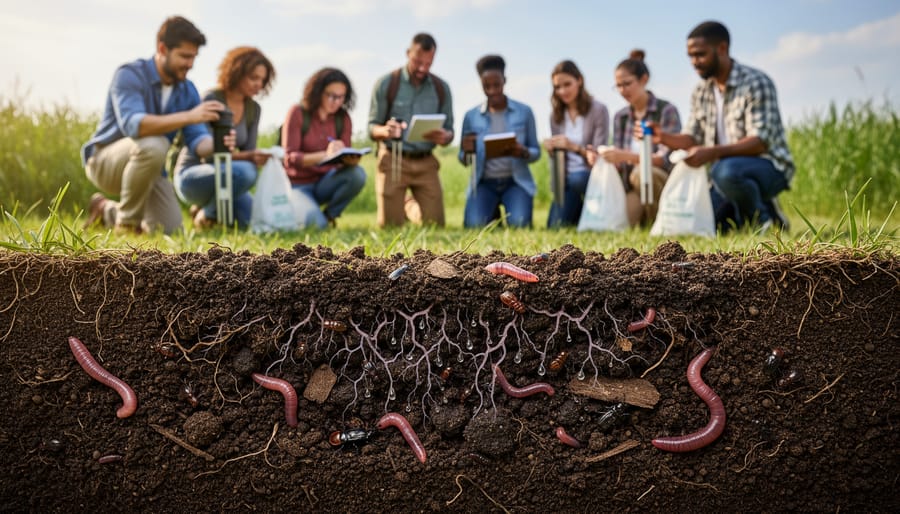
Participating is straightforward. Most networks provide soil testing kits and clear protocols for collecting samples at 15 cm depth from multiple field locations. You’ll typically measure organic matter percentage, pH levels, aggregate stability, and microbial activity. Programs often request samples twice yearly—spring before planting and fall post-harvest—to capture seasonal variations. Some initiatives also track bulk density (measured in g/cm³) and water infiltration rates (cm/hour).
The collective data helps researchers map regional patterns in carbon sequestration potential and soil structure improvements. For instance, Alberta networks have documented organic matter increases of 0.5-1% over three-year periods in fields adopting regenerative practices, translating to approximately 10-20 tonnes of carbon stored per hectare.
Your measurements contribute to provincial databases that identify which practices work best under local conditions. Many programs offer free soil analysis and access to shared results, showing how your fields compare to regional benchmarks. Several networks also connect participants through online portals and winter workshops, creating opportunities to learn from neighbouring operations.
To get started, check with your local agricultural extension office or explore soil health resources that list current monitoring programs accepting new participants.
Pest and Beneficial Insect Tracking
Tracking pest and beneficial insect populations offers farmers valuable insights while contributing to broader agricultural research. You don’t need specialized training to get started—simple observation protocols can make a real difference in regional pest management strategies.
Begin by selecting representative areas of your fields for weekly monitoring. Spend 15-20 minutes walking predetermined routes, recording what you see. Many programs provide identification guides featuring common Alberta pests like wheat midge, bertha armyworm, and beneficial insects such as lady beetles and parasitic wasps. Photography with your smartphone helps with species confirmation when you’re unsure.
The Alberta Insect Monitoring Network welcomes farmer observations through their mobile app, where you can log pest counts, growth stages, and locations using GPS coordinates. This data helps agricultural researchers track pest emergence patterns across the province, improving forecasting models that benefit your entire community.
Focus on five key observations: pest species present, approximate numbers per square metre, crop growth stage, beneficial insect activity, and weather conditions. This consistent approach builds valuable datasets over time.
Saskatchewan farmer James Chen discovered through his monitoring that increasing field margins with native plants boosted beneficial insect populations by 40%, reducing his need for pesticide applications. “The tracking made me see patterns I’d missed before,” he notes. Your observations not only protect your crops but help neighbouring farmers make more informed pest management decisions based on real regional data.
Cover Crop Performance Trials
Testing cover crop varieties tailored to Alberta’s unique climate helps everyone in the agricultural community make better-informed decisions about soil health and carbon sequestration. By joining collaborative performance trials, you contribute valuable data while discovering which species and blends work best on your land.
Several Alberta-based organizations coordinate regional cover crop trials where farmers grow standardized test plots alongside their regular operations. Participants receive seed for selected varieties at reduced or no cost, then follow simple protocols for planting, monitoring, and documenting results. You’ll track metrics like germination rates, biomass production, winter survival, and ease of termination using standardized data sheets provided by project coordinators.
The Alberta Soil Health Coalition runs annual trials focusing on species adapted to shorter growing seasons and variable moisture conditions. Mark Thompson, a grain farmer near Lethbridge, participated for two years and found that his trial plot of hairy vetch outperformed his usual oat cover crop for nitrogen fixation. “Sharing my results helped neighbouring farms make confident choices,” he notes.
Most trials require minimal time commitment—typically four to six observations throughout the growing season, each taking under 30 minutes. You’ll submit data online or through mobile apps, with coordinators compiling regional findings into accessible reports. This collective knowledge helps identify climate-resilient varieties that enhance soil structure, reduce erosion, and sequester atmospheric carbon effectively across diverse Alberta landscapes.
Weather and Microclimate Documentation
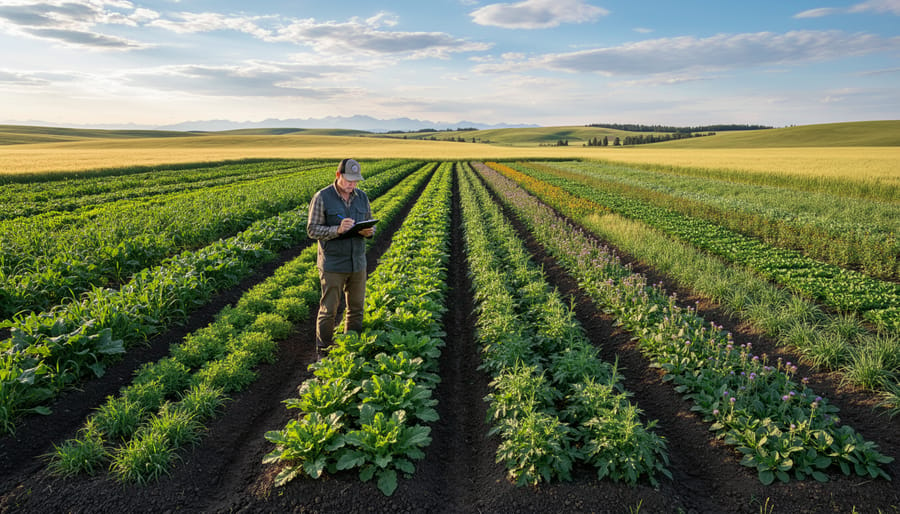
Contributing to weather and microclimate documentation is one of the most accessible citizen science projects for Canadian farmers. By setting up simple weather stations on your property or using smartphone apps, you can help build comprehensive agricultural weather databases that benefit your entire farming community.
Basic weather stations, which cost between $150-$500, can track temperature, precipitation, humidity, and wind patterns specific to your location. This hyperlocal data is invaluable since weather conditions can vary significantly even within a few kilometres. Environment and Climate Change Canada actively welcomes this community-contributed data to improve regional forecasting accuracy.
Several free smartphone apps make participation even easier. These digital agronomy tools allow you to submit observations about frost dates, precipitation amounts, and extreme weather events directly from your fields. The data you collect helps researchers develop better predictive models for Alberta’s diverse growing regions.
Alberta farmer James Chen from Red Deer County shares his experience: “Tracking our microclimate for two seasons revealed we consistently get frost a week earlier than the regional forecast suggests. This knowledge changed our planting schedule and reduced crop losses.”
Your contributions help create more accurate frost maps, growing degree day calculations, and seasonal forecasting tools that directly support farm planning decisions across your region.
Water Quality and Usage Studies
Monitoring water quality and usage in your local watershed connects you directly to one of agriculture’s most critical resources. These citizen science initiatives are particularly valuable for Alberta farmers working within irrigation districts, where understanding water efficiency helps both your operation and the broader community.
The Alberta Irrigation Projects Association regularly partners with producers to track water flow rates, measure total dissolved solids, and monitor nutrient levels in irrigation canals and return flows. You’ll learn to use simple testing kits that measure pH, nitrogen, and phosphorus levels—data that helps watershed managers optimize water allocation while giving you insights into your soil and crop health.
Many projects provide free training sessions where you’ll meet agricultural water specialists who explain proper sampling techniques. For example, the Oldman Watershed Council trains volunteers to collect monthly water samples at designated sites, typically requiring just 30 minutes per visit. The data you gather contributes to regional water quality reports that influence irrigation policy and infrastructure investments.
Sarah Chen, a grain farmer near Lethbridge, found that participating in watershed monitoring helped her identify seasonal patterns in water quality that she now uses to adjust her irrigation scheduling. “I’ve reduced my water use by 15 percent while maintaining yields,” she notes. This kind of practical knowledge, combined with contributing to environmental stewardship, makes water quality projects exceptionally rewarding for producers managing irrigation systems.
Getting Started: Your First 30 Days in Citizen Science
Starting your citizen science journey doesn’t require advanced degrees or expensive equipment. Most farmers find they can integrate data collection into their existing farm routines with minimal disruption. Here’s how to make it happen in your first month.
Week 1: Finding Your Project Match
Begin by identifying projects that align with your current operations and interests. The SciStarter platform and Canada’s PlantWatch program offer searchable databases specifically for agricultural observers. Look for projects requiring 15-30 minutes weekly, which represents a realistic starting commitment for busy farming schedules.
Consider your existing farm activities. If you’re already monitoring soil moisture, projects like the Global Soil Biodiversity Initiative might be a natural fit. Prairie grain farmers have successfully contributed to pollinator monitoring programs during regular field checks, turning routine walks into valuable data collection opportunities.
Week 2: Setting Up Simple Systems
Once you’ve selected a project, establish a straightforward data recording method. Most citizen science coordinators recommend starting with smartphone apps rather than paper logs. Applications like iNaturalist or project-specific tools allow you to photograph observations, automatically timestamp entries, and GPS-tag locations without extra effort.
Create a designated spot in your truck or equipment shed for your data collection tools. A simple kit might include a smartphone with relevant apps downloaded, a pocket notebook as backup, and any project-specific items like a soil thermometer or measurement tape.
Week 3: Making Your First Contributions
Submit your initial observations without worrying about perfection. Research coordinators expect a learning curve and typically provide feedback on early submissions. Alberta farmer James Chen, participating in a grassland bird monitoring project, notes that his first three submissions contained identification errors, but the coordinator’s friendly corrections helped him become more accurate.
Start with quantity over complexity. Recording daily temperature observations or photographing pest species builds confidence and establishes your routine before tackling more detailed protocols.
Week 4: Building Connections
Reach out to your project coordinator via email introducing yourself and your operation. Most researchers genuinely appreciate farmer perspectives and may offer customized guidance. Join online forums or social media groups where fellow citizen scientists share tips and troubleshooting advice.
By month’s end, data collection should feel like a natural extension of your farm management practices rather than an additional burden.
The Real Benefits You’ll See On Your Farm
Participating in citizen science projects delivers tangible benefits that extend far beyond contributing data points to research institutions. For Canadian farmers, these initiatives create genuine value through improved farm management, cost efficiencies, and stronger community connections.
One of the most immediate advantages is access to your own farm data analyzed by experts. When you contribute observations about soil health, pest populations, or weather patterns, you’re simultaneously building a detailed record of your own operation. Dr. Sarah Chen, agricultural researcher at the University of Alberta, explains: “Farmers participating in our pollinator monitoring project gain insights into beneficial insect populations on their land. This information helps them make more informed decisions about spray timing and refuge areas, often reducing input costs while maintaining yields.”
The networking opportunities rival traditional hands-on learning opportunities. You’ll connect with innovative farmers across your region who share similar challenges and are testing new approaches. These relationships often lead to knowledge exchanges worth far more than formal consultations.
Cost savings emerge in unexpected ways. Manitoba farmer Tom Richardson reports: “Through a soil health citizen science project, I learned my land needed less phosphorus than I’d been applying. The soil testing was free through the program, and I’ve cut my fertilizer bill by 18 percent over two years without any yield loss.”
Environmental outcomes create both immediate and long-term value. Better understanding of your land’s ecological functions can improve water retention, reduce erosion, and increase biodiversity—all factors that strengthen farm resilience against drought and extreme weather events becoming more common across the Prairies.
Access to expert consultation represents another concrete benefit. Most citizen science coordinators provide feedback on your specific observations, essentially offering free agronomic advice. Some projects even include farm visits, giving you direct access to specialists who might otherwise be unavailable or unaffordable for individual operations.
Common Concerns and How to Address Them
You might be wondering whether citizen science fits into your already busy schedule. The good news is that most agricultural citizen science projects are designed with flexibility in mind. Many programs allow you to contribute observations during your regular farm activities—whether that’s checking crops, monitoring weather, or walking pastures. Some projects require only 10-15 minutes weekly, while others let you participate as intensively as your time allows.
Data privacy is a valid concern, and reputable citizen science programs take it seriously. Most projects allow you to control what information you share. You can typically choose whether to make your farm location publicly visible or keep it generalized to a regional level. Personal farm data usually remains confidential, with only aggregated, anonymized information shared in research publications. Always review a project’s data policy before joining, and don’t hesitate to ask coordinators about privacy protections.
Worried about technology requirements? While some projects use smartphone apps, others work perfectly well with simple paper forms or basic email submissions. Many programs offer technical support and training to help you get started. If you have a smartphone and internet access, even if it’s spotty, you’re likely equipped for most citizen science opportunities.
Small farms absolutely can participate. In fact, many projects specifically value diverse farm sizes and types because they provide broader datasets. Your quarter-section operation contributes just as meaningfully as larger farms. Research benefits from variety, not just volume.
The data you collect typically contributes to peer-reviewed research, helps improve farming practices across regions, and informs agricultural policy. Most programs share findings back with participants through newsletters, webinars, or annual reports, ensuring you see the real-world impact of your contributions.
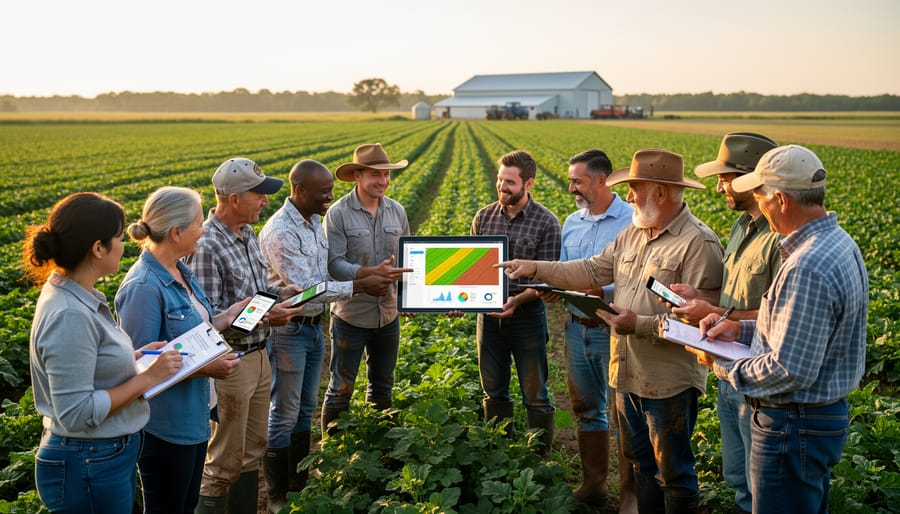
Citizen science projects offer more than data collection—they build resilient farming communities equipped to tackle climate challenges together. By participating, you join fellow Alberta farmers in community climate action while gaining practical knowledge to improve your operation. Whether you monitor soil health, track pollinator populations, or test conservation practices, every observation contributes to our collective understanding and strengthens agricultural resilience. Start small: choose one project that aligns with your current practices, reach out to local coordinators, or connect with participating farmers in your area. Your farm’s data matters, and your involvement helps shape climate-adapted agriculture for future generations.