Rural electric cooperatives represent a proven path for agricultural communities to take control of their energy future while reducing costs by 15-30% compared to investor-owned utilities. These member-owned organizations pool resources among farms and rural properties to generate, purchase, and distribute electricity democratically—with each member holding equal voting rights regardless of farm size or energy consumption.
For Alberta farmers facing rising operational costs and grid reliability concerns, the cooperative model offers tangible benefits. Members typically pay at-cost rates without profit margins built in, and any surplus revenue returns to member-owners as capital credits. Beyond economics, cooperatives prioritize rural needs that often fall to the bottom of investor-owned utility priority lists: maintaining remote infrastructure, investing in renewable energy projects that align with agricultural operations, and responding quickly to outages that can devastate livestock operations or crop storage facilities.
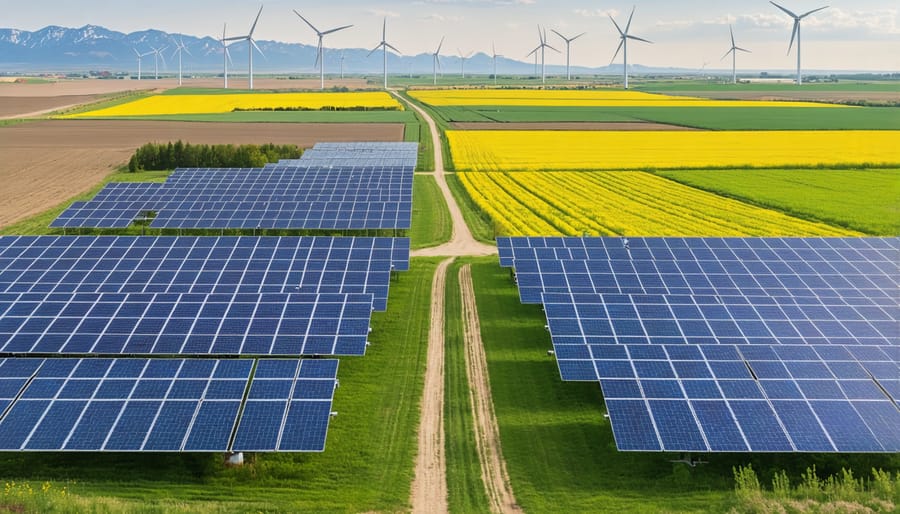
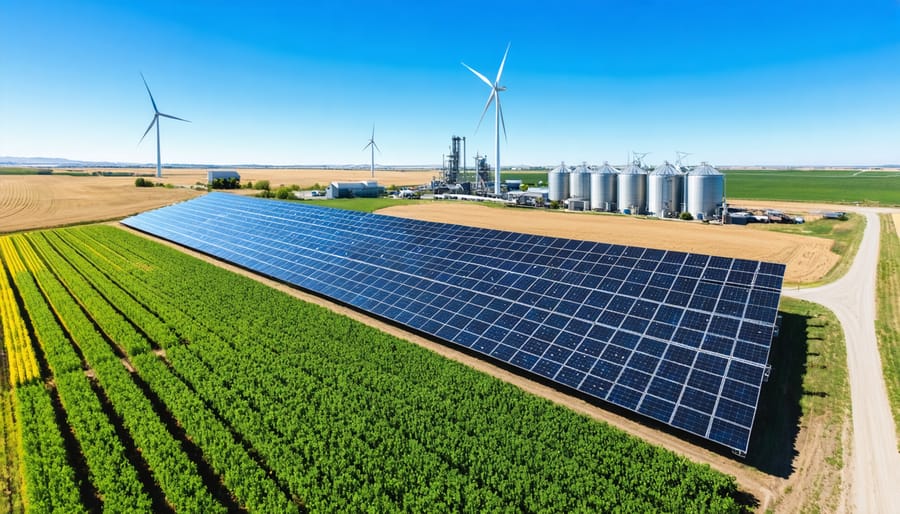
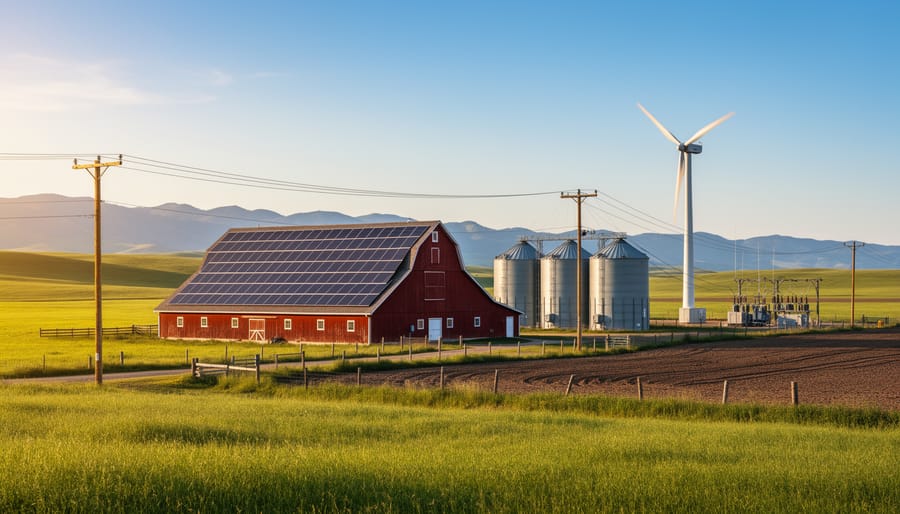
The cooperative structure also creates opportunities for integrating on-farm renewable generation—solar arrays on unused land, biogas from livestock operations, or wind turbines—into a larger grid system. This distributed generation model strengthens energy security while opening new revenue streams for participating farms.
Canadian examples demonstrate real-world success: cooperative members gain direct influence over rate structures, infrastructure investments, and service priorities through board participation and annual meetings. Rather than being passive utility customers, farmers become active stakeholders in their energy infrastructure, making decisions that reflect agricultural realities and seasonal demands.
This practical alternative to conventional utility service deserves serious consideration from any farming operation evaluating long-term sustainability and economic resilience strategies.
What Makes Electric Co-ops Different From Traditional Utilities
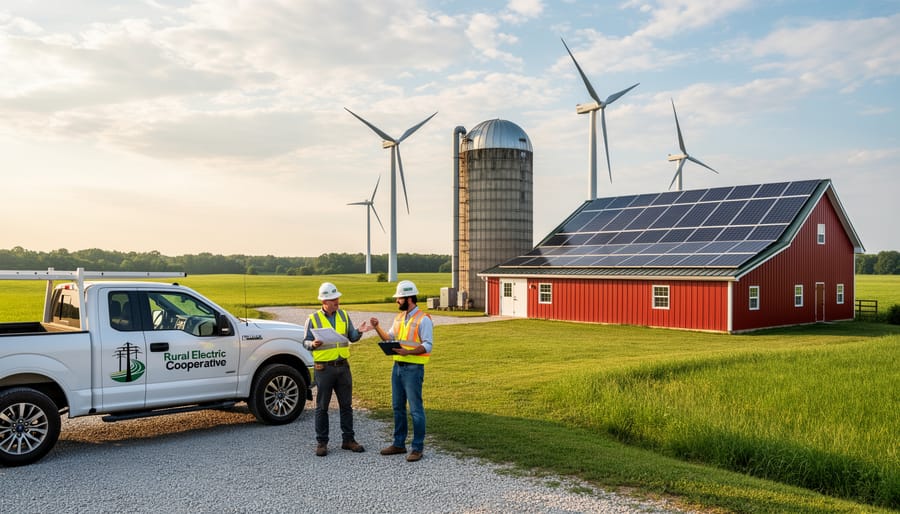
The Seven Cooperative Principles in Action
The cooperative movement has long served Canadian farmers through agricultural co-ops, credit unions, and purchasing collectives. Rural electric cooperatives operate on these same foundational principles, creating a natural alignment with farming values and community-focused approaches.
The seven cooperative principles—voluntary and open membership, democratic member control, member economic participation, autonomy and independence, education and training, cooperation among cooperatives, and concern for community—guide both agricultural and electric co-ops. When farmers form or join electric cooperatives, they’re not entering unfamiliar territory. They’re extending proven cooperative values into their energy infrastructure.
Democratic member control means each member-owner gets one vote, regardless of farm size or energy consumption. This ensures smaller operations have equal voice alongside larger agricultural enterprises. Member economic participation allows farmers to invest in their energy infrastructure while receiving patronage dividends based on their usage, creating a direct financial return that supports farm profitability.
The principle of education and training resonates particularly well with farming communities already accustomed to learning new techniques and technologies. Electric co-ops provide members with resources about energy efficiency, renewable integration, and cost management—knowledge that directly benefits agricultural operations.
Cooperation among cooperatives creates powerful synergies. Agricultural co-ops can partner with electric co-ops on initiatives like grain drying efficiency programs or irrigation scheduling that optimizes off-peak electricity rates. These community-powered solutions demonstrate how cooperative principles multiply benefits when applied across different sectors, strengthening rural communities while advancing sustainable agricultural practices.
Energy Challenges Facing Alberta’s Rural Producers
Why Distance Drives Up Your Power Costs
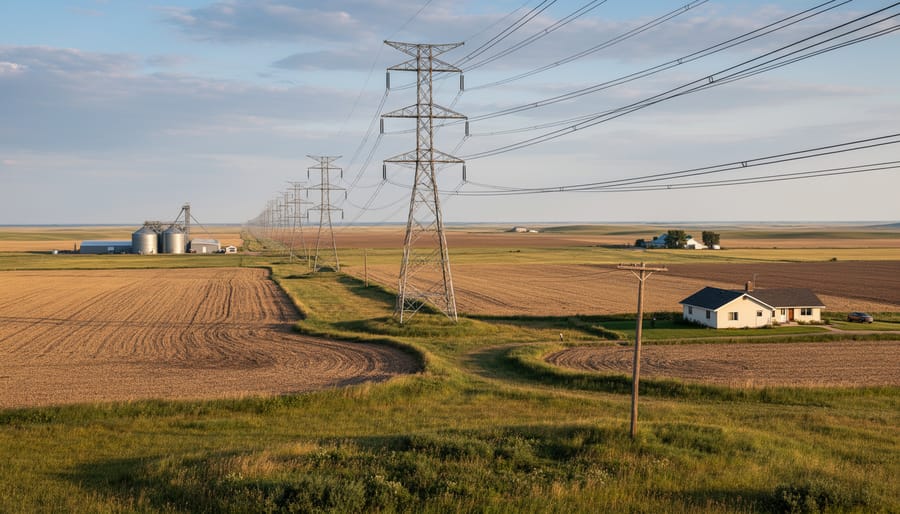
Rural farmers face a reality that urban residents rarely consider: distance dramatically increases electricity costs. When your farm sits dozens of kilometres from the nearest substation, every metre of transmission line, every pole, and every transformer adds to your power bill. This infrastructure challenge is particularly acute across Alberta’s vast agricultural landscape, where farms can be separated by significant distances.
Traditional utility companies spread these infrastructure costs across all customers, but in sparsely populated rural areas, fewer users shoulder the burden of maintaining extensive power networks. The result? Higher rates per kilowatt-hour and often less reliable service during severe weather events.
Consider the case of the Battle River region in central Alberta, where a group of 47 grain and cattle farmers analyzed their collective electricity expenses in 2019. They discovered that transmission and distribution charges accounted for nearly 60 percent of their total power bills, significantly higher than the provincial average of 35 percent. This disparity exists purely because of geography.
Rural electric cooperatives address this challenge through collective investment and shared ownership. When farmers pool resources to own their distribution infrastructure, they gain control over maintenance priorities, upgrade timing, and cost management. According to Sarah Chen, an energy systems consultant who has worked with twelve Alberta agricultural communities, “Co-ops allow members to invest strategically in infrastructure that serves their specific needs, rather than waiting for utility companies to prioritize rural upgrades. This approach typically reduces long-term costs while improving service reliability.”
Canadian Case Study: How Olds, Alberta Built Canada’s Fastest Internet Through Their Electric Co-op
In 2013, the town of Olds, Alberta, made history by launching O-Net, now known as Olds Fiber, through their municipally-owned electric utility. This groundbreaking initiative transformed the community of roughly 9,000 residents into home of Canada’s fastest internet service, demonstrating what’s possible when cooperative principles meet modern infrastructure needs.
The success story began when Olds identified a critical gap: despite being located just 90 kilometres north of Calgary, residents and businesses lacked access to reliable high-speed internet. Rather than waiting for private telecommunications companies to invest in their community, the town leveraged its existing electrical infrastructure and cooperative ownership model to build a fibre-optic network.
O-Net’s approach was remarkably practical. The electric utility already had rights-of-way, utility poles, and existing conduit systems throughout the community. By running fibre-optic cables alongside electrical lines, they significantly reduced installation costs while delivering symmetrical gigabit speeds at competitive prices. This infrastructure development became a model for bridging the digital gap in rural Canadian communities.
For agricultural operations in the surrounding area, the impact has been transformative. Local farmers gained access to precision agriculture technologies that were previously impractical without reliable connectivity. Real-time weather monitoring, GPS-guided equipment, automated irrigation systems, and livestock monitoring all became viable options. Producers could upload field data, access cloud-based farm management software, and participate in online agricultural markets without the frustration of slow or unreliable connections.
The economic benefits extended beyond individual farms. Agricultural businesses could attract and retain younger, tech-savvy workers who expected modern connectivity. Producers working from home offices could video conference with agronomists, participate in virtual training sessions, and manage their operations remotely during off-seasons.
What makes O-Net particularly relevant to the cooperative model is its community ownership structure. Revenues generated stay within the community, funding network improvements and expansion rather than flowing to distant shareholders. The utility remains accountable to local residents and businesses, ensuring service priorities align with community needs.
The success of Olds Fiber has inspired similar initiatives across rural Alberta and Canada, proving that cooperative ownership combined with strategic infrastructure investment can overcome connectivity challenges that private markets alone won’t address. For farming communities considering their options, Olds demonstrates that taking control of essential infrastructure through cooperative models delivers tangible benefits for agricultural innovation and rural prosperity.
The Renewable Energy Opportunity for Farm Co-ops
On-Farm Generation and Net Metering
Rural electric cooperatives offer unique advantages when it comes to on-farm renewable energy generation because they’re designed to serve member interests rather than maximize investor profits. This structure creates more favorable conditions for farmers looking to install solar panels, participate in community solar projects, or convert agricultural waste into electricity.
Net metering programs through cooperatives typically allow you to feed excess electricity back into the grid and receive credits against future consumption. Unlike investor-owned utilities that may impose strict limits or unfavorable buyback rates, cooperatives can establish compensation models that fairly reflect the value your generation provides to the local grid. Some Alberta cooperatives credit members at retail rates rather than wholesale rates, significantly improving project economics.
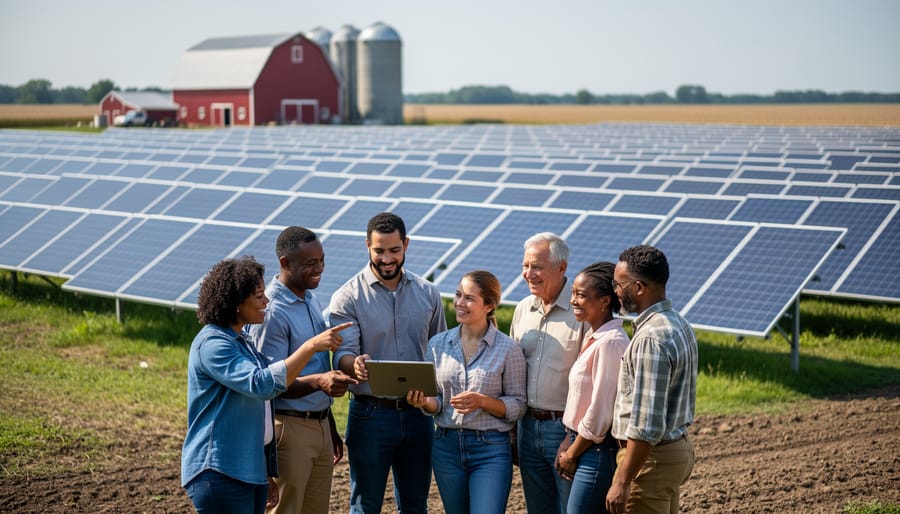
Community solar gardens represent another cooperative-friendly approach. If your farm lacks suitable roof space or orientation for panels, you can invest in a shared solar installation and receive credits proportional to your ownership stake. This model works particularly well for smaller operations or those with shaded properties.
Agricultural waste-to-energy projects gain traction through cooperative structures as well. Anaerobic digesters that convert manure and crop residues into biogas require substantial investment, but cooperatives can facilitate shared ownership models among multiple farms. One central Alberta livestock cooperative successfully implemented a shared digester system serving four member farms, with electricity generation offsetting 60 percent of combined energy costs.
The cooperative governance model means you have direct input into interconnection standards, buyback rates, and program development. Member-elected boards understand farming operations firsthand and can design policies that accommodate seasonal generation patterns and agricultural equipment loads. This farmer-first approach removes many barriers that traditional utilities create for distributed generation projects.
Battery Storage and Grid Resilience
Battery storage systems represent a game-changing investment for rural electric cooperatives looking to maximize renewable energy benefits while ensuring reliable power for critical farm operations. These large-scale batteries work alongside solar and wind installations to store excess energy generated during peak production times, then release it when demand is high or generation drops.
For Alberta farmers, this technology addresses a crucial challenge: ensuring consistent power supply during essential activities like grain drying, livestock ventilation, and irrigation. When renewable sources can’t meet immediate demand, battery systems bridge the gap without resorting to diesel generators or grid strain. During severe weather events that might compromise conventional power lines, stored energy provides vital backup power to maintain temperature-controlled livestock barns or preserve refrigerated products.
The economics make sense for cooperatives operating at scale. Battery costs have dropped nearly 90 percent over the past decade, making installations increasingly viable for community-owned utilities. Several Ontario agricultural cooperatives have successfully integrated 500-kilowatt-hour battery systems that handle daily demand fluctuations while providing approximately 12 hours of emergency backup power.
By smoothing out the intermittent nature of renewable generation, battery storage allows cooperatives to rely more heavily on clean energy sources without sacrificing reliability. Members gain predictable power costs, reduced dependence on fossil fuel backup systems, and peace of mind knowing critical operations won’t be compromised during outages. For cooperatives just beginning their renewable journey, planning for battery storage from the outset creates a more resilient and efficient energy system that truly serves agricultural needs.
Expert Perspective: Interview with a Rural Electrification Specialist
We sat down with Dr. Margaret Chen, a rural electrification specialist with over 15 years of experience helping agricultural communities across Western Canada transition to cooperative energy models. Dr. Chen has advised on several successful cooperative projects in Alberta and brings practical insights to farmers considering this path.
Q: What makes the cooperative model particularly suitable for Alberta farmers?
The cooperative structure aligns perfectly with the challenges rural Alberta faces. Many farming operations are located far from urban infrastructure, making grid connections expensive and sometimes unreliable. When farmers pool resources through a cooperative, they gain collective bargaining power and can negotiate better rates for infrastructure development. More importantly, cooperatives keep decision-making local. Your board members understand agricultural energy demands because they’re farmers themselves.
Q: What are the typical startup costs farmers should anticipate?
Initial investment varies considerably based on project scope. For a small renewable energy cooperative serving 20-30 farms, you’re looking at approximately $500,000 to $2 million. This covers feasibility studies, legal incorporation, infrastructure assessment, and initial equipment. However, most successful cooperatives access combination funding through federal programs like the Agricultural Clean Technology Program, provincial grants, and member equity contributions. Members typically invest between $5,000 and $15,000 initially, with returns beginning within three to five years.
Q: What regulatory hurdles exist in Alberta specifically?
Alberta’s deregulated electricity market actually offers advantages for cooperatives compared to other provinces. The Alberta Utilities Commission has established pathways for microgeneration and community-scale projects. The key requirement is registering as a distribution system operator if you’re moving power between properties. You’ll need proper electrical certifications and compliance with safety standards, but the regulatory framework supports innovation. I always recommend hiring a regulatory consultant for the initial setup to ensure everything meets provincial standards.
Q: What’s your advice for farmers taking their first steps?
Start with conversations. Gather interested neighbours and conduct an honest assessment of collective energy needs. Commission a professional feasibility study before making financial commitments. Most importantly, visit existing cooperatives. Several Alberta communities have working models you can learn from directly. Their experience saves you from common pitfalls and provides realistic expectations about timelines and returns.
Building an Electric Co-op: Practical Steps for Rural Communities
Feasibility Assessment and Member Recruitment
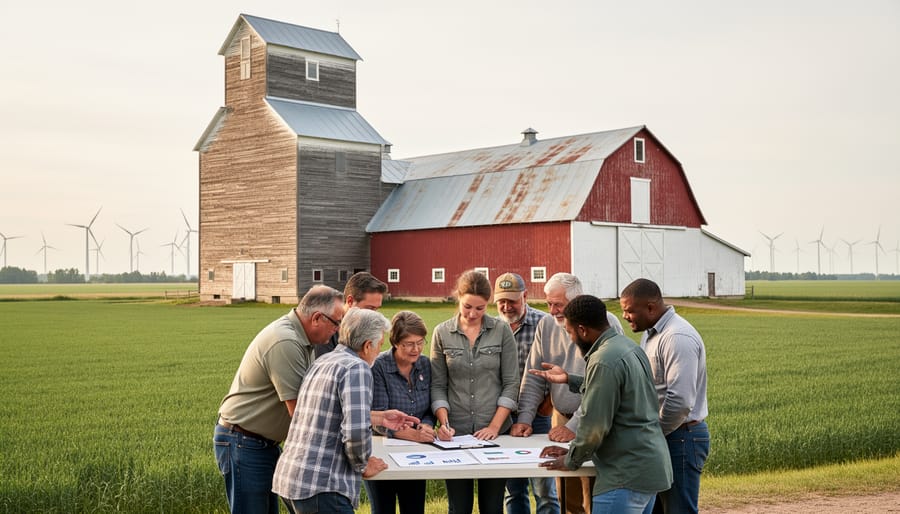
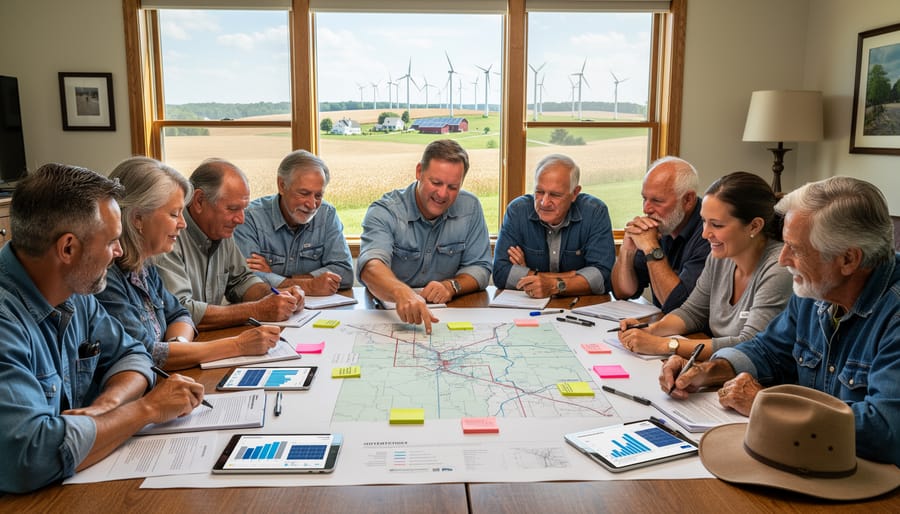
Starting a rural electric cooperative begins with understanding your community’s genuine interest and energy requirements. Begin by organizing informal meetings at local community halls or agricultural events where farmers can discuss their current energy challenges—whether it’s rising costs, unreliable service, or interest in renewable options. These conversations help you identify shared concerns and potential members who are committed to exploring cooperative solutions.
Conduct a practical energy needs assessment by gathering data on current electricity consumption patterns, peak usage times, and future expansion plans from interested farms. Consider seasonal variations unique to agricultural operations, like irrigation demands during growing seasons or heating needs for livestock facilities in winter months. This information becomes crucial when negotiating with utility providers or planning infrastructure.
Building your initial membership base requires transparency and patience. Share findings from your assessment openly, present realistic cost projections measured in kilowatt-hours and dollars per month, and be clear about the cooperative model’s benefits and responsibilities. The Battle River Electric Cooperative in central Alberta grew their founding membership by hosting quarterly information sessions that allowed farmers to ask questions and voice concerns before committing.
Set achievable membership targets—typically 50 to 100 members provides enough momentum to move forward while remaining manageable. Document member commitments in writing and establish a steering committee of diverse agricultural representatives to maintain momentum and credibility throughout the formation process.
Navigating Alberta’s Regulatory Environment
Starting a rural electric cooperative in Alberta requires working within a well-defined regulatory framework designed to ensure safety, reliability, and fair practices. Understanding these requirements early in your planning process will help you move forward confidently and avoid costly delays.
The Alberta Utilities Commission (AUC) serves as the primary regulatory body overseeing electricity generation and distribution in the province. Any cooperative intending to generate or distribute electricity must obtain approval from the AUC, which evaluates applications based on public interest, technical capability, and financial viability. The commission’s review process typically takes several months, so building this timeline into your planning is essential.
Before breaking ground, you’ll need to secure the necessary permits from your municipal district. These include development permits for energy infrastructure and environmental assessments if your project involves significant land disturbance or impacts water resources. Alberta Environment and Protected Areas may also require permits depending on your generation method and location.
Cooperatives must comply with the Alberta Electric System Operator (AESO) connection requirements if you plan to interconnect with the provincial grid. This involves technical studies, connection agreements, and adherence to grid reliability standards. Working with experienced energy consultants can streamline this process significantly.
Ron Thompson, manager of Battle River Electric Cooperative, shares this advice: “Don’t let the regulatory requirements intimidate you. The AUC staff are genuinely helpful when you approach them early with questions. We found the process manageable when we engaged professional support and maintained open communication with regulators throughout our application.”
Remember that compliance isn’t just about initial approvals. Ongoing reporting requirements, safety inspections, and operational standards will be part of your cooperative’s regular responsibilities, ensuring your venture serves members safely and effectively for years to come.
The Triple Bottom Line: Economic, Environmental, and Social Benefits
Rural electric cooperatives deliver compelling advantages across three critical dimensions that matter to farm operations and rural communities. By examining the economic, environmental, and social returns, it becomes clear why this model aligns perfectly with modern agricultural sustainability priorities.
Economically, cooperatives operate on a not-for-profit basis, meaning any surplus revenue returns to members through capital credits rather than enriching distant shareholders. Alberta farmers participating in electric cooperatives typically see 10-15% savings on energy costs compared to investor-owned utilities. These savings compound over time, particularly for energy-intensive operations like dairy farms, grain drying facilities, and greenhouse operations. Consider a mid-sized grain operation using 50,000 kWh annually—cooperative membership could translate to $1,500-2,000 in annual savings, capital that can be reinvested in equipment upgrades or land improvements.
Environmental benefits stem from cooperatives’ ability to invest in renewable energy infrastructure at scale. Many rural co-ops are installing solar arrays and wind turbines sized appropriately for agricultural communities, reducing reliance on fossil fuel generation. Member-owned utilities demonstrate greater willingness to support on-farm renewable installations through favorable net metering policies and technical assistance. One Alberta cooperative helped members collectively reduce carbon emissions by 12,000 tonnes annually through renewable energy adoption—equivalent to removing 2,600 vehicles from the road.
The social dimension proves equally transformative. Cooperative governance ensures farmers have direct input into energy policies affecting their operations, from rate structures to service priorities. This democratic control strengthens collaborative sustainability efforts already underway in farming communities. Local decision-making means infrastructure investments reflect actual agricultural needs—like three-phase power to remote fields—rather than maximizing shareholder returns. This community empowerment creates resilient rural economies where energy dollars circulate locally, supporting jobs and services that keep farming regions vibrant.
Rural electric cooperatives represent more than just an alternative energy model—they embody a collaborative approach that aligns naturally with farming sustainability goals. By bringing control of energy infrastructure into the hands of local communities, these cooperatives create opportunities for Canadian farmers to reduce operational costs, improve service reliability, and advance environmental stewardship through renewable energy integration.
The connection between cooperative energy models and sustainable agriculture runs deep. When farmers collectively own their energy supply, they gain the flexibility to invest in solar, wind, and biomass projects that reduce greenhouse gas emissions while keeping energy dollars circulating within rural economies. This community-centered approach mirrors the cooperative spirit already present in many agricultural operations across Alberta and beyond.
If you’re considering a cooperative solution for your operation or community, start by connecting with existing cooperatives to learn from their experiences. Organizations like the Canadian Cooperative Association and provincial rural electrification associations offer valuable resources and networking opportunities. Reach out to your neighbors—sustainable change often begins with local conversations about shared challenges and collective solutions.
Take time to assess your community’s energy needs, explore available funding through federal and provincial agricultural programs, and consider attending cooperative development workshops. Remember that building a cooperative takes patience and collaboration, but the long-term benefits for your farm’s sustainability and your community’s resilience make the effort worthwhile.
The path forward is clearer when we walk it together. Your participation in cooperative energy solutions contributes to a more sustainable agricultural future for all Canadian farmers.