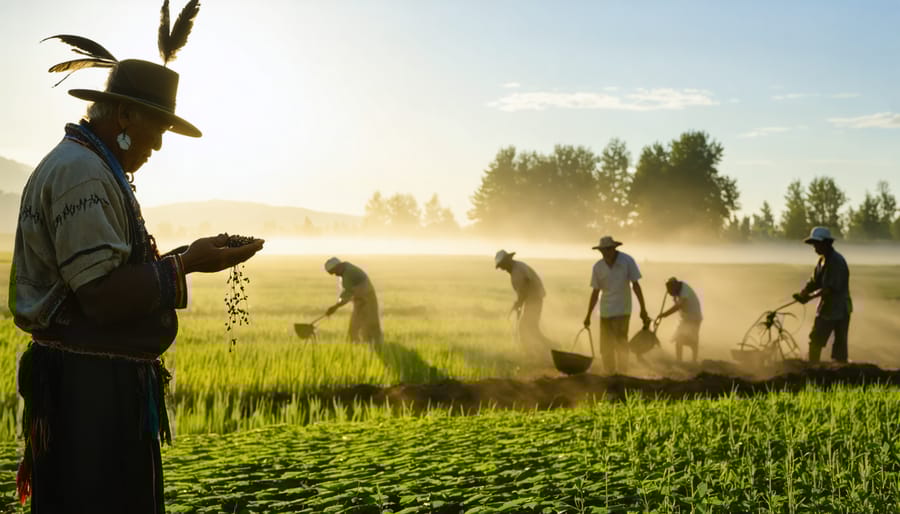
Recognize that Indigenous communities across Canada have cultivated sophisticated agricultural knowledge systems over thousands of years, developing practices that modern sustainable farming is only beginning to rediscover. The Three Sisters planting method—corn, beans, and squash grown together—creates a self-sustaining ecosystem where each crop supports the others, reducing fertilizer needs by up to 40% while maximizing yield per square meter. In Alberta specifically, Indigenous farmers have mastered cold-climate cultivation techniques including strategic windbreak placement using native species and microclimate manipulation that extends growing seasons by 2-3 weeks without additional inputs.
Learning from these time-tested approaches offers practical solutions to today’s agricultural challenges. Indigenous permaculture principles emphasize working with natural systems rather than against them, resulting in farms that require fewer external inputs while building soil health year after year. These aren’t theoretical concepts—they’re proven methods that Indigenous communities continue to practice successfully across Alberta’s diverse growing regions.
Understanding Indigenous agroecological networks means gaining access to knowledge that addresses water conservation, biodiversity enhancement, and climate resilience. These communities maintain living libraries of regionally adapted crop varieties and land management practices specifically suited to Canadian prairie conditions. For farmers seeking to reduce costs, improve sustainability, and build more resilient operations, Indigenous agricultural wisdom provides both inspiration and actionable techniques that integrate seamlessly with modern farming operations.
Understanding Indigenous Agroecological Community Networks
The Three Sisters and Beyond: Core Indigenous Farming Principles
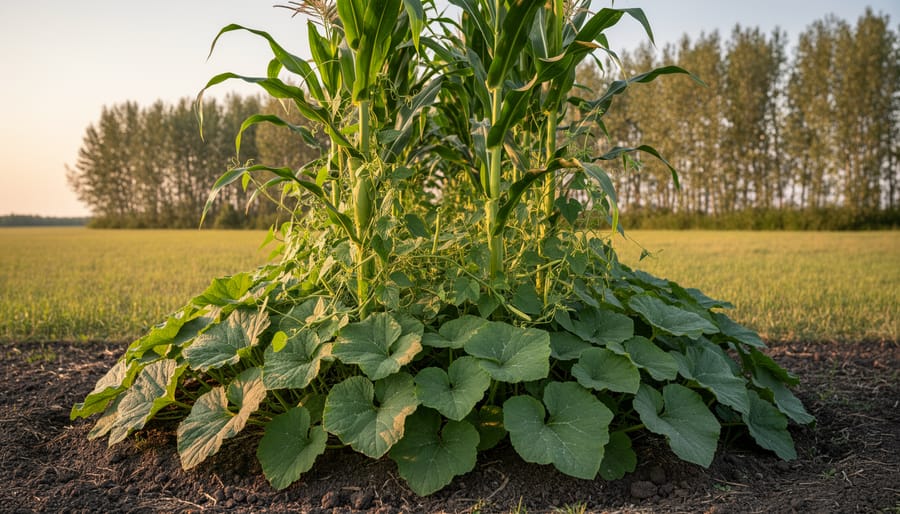
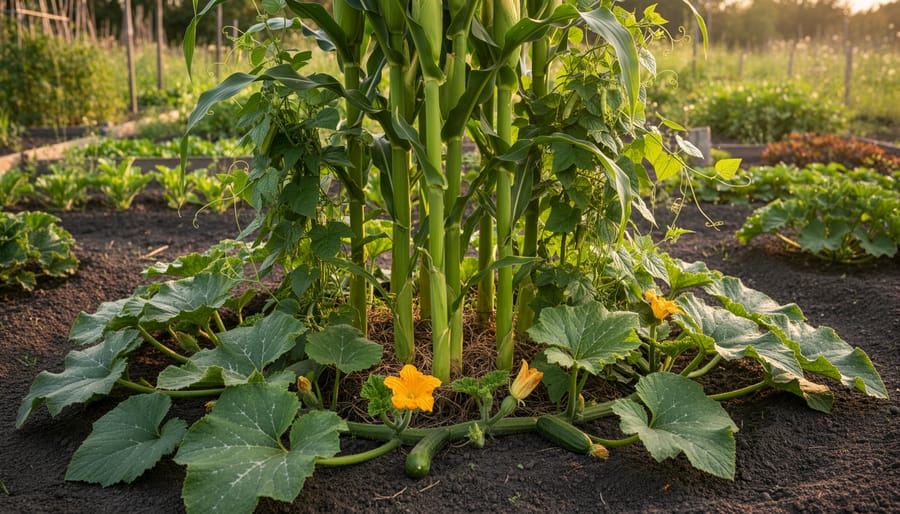
The Three Sisters—corn, beans, and squash—represent one of North America’s most sophisticated agricultural systems, demonstrating principles that remain relevant for modern Canadian farms. This companion planting method works through natural synergy: corn provides structure for beans to climb, beans fix nitrogen in the soil, and squash leaves create ground cover that retains moisture and suppresses weeds. Indigenous communities across what is now Canada have refined these techniques over thousands of years, adapting them to regional climates and soil conditions.
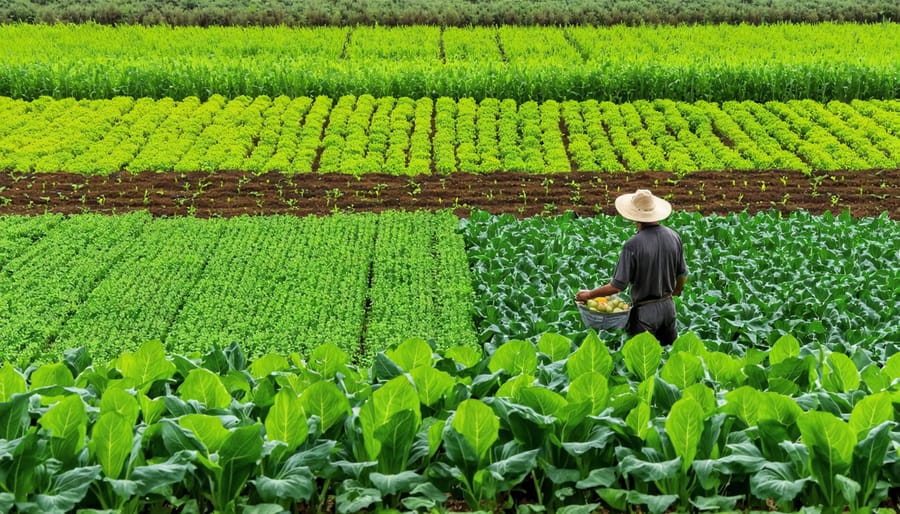
Beyond companion planting, Indigenous agricultural wisdom encompasses broader principles of biodiversity and soil health. Rather than depleting land through monoculture, traditional practices maintain soil fertility through diverse plantings and Indigenous crop rotation methods that work with natural cycles. These approaches prevent pest buildup, reduce disease pressure, and enhance soil structure without synthetic inputs.
Indigenous farming also emphasizes observation and adaptation. Farmers learn to read environmental indicators—from plant vigor to insect activity—making informed decisions based on what the land communicates. This knowledge-based approach reduces reliance on external inputs while building farm resilience.
For Alberta farmers, these principles offer practical benefits: reduced input costs, improved soil health, and enhanced crop resilience during drought or extreme weather. Many Indigenous techniques align seamlessly with organic and regenerative agriculture goals, providing time-tested solutions to contemporary farming challenges while honoring the stewardship traditions of Canada’s First Peoples.
How Community Knowledge Sharing Works
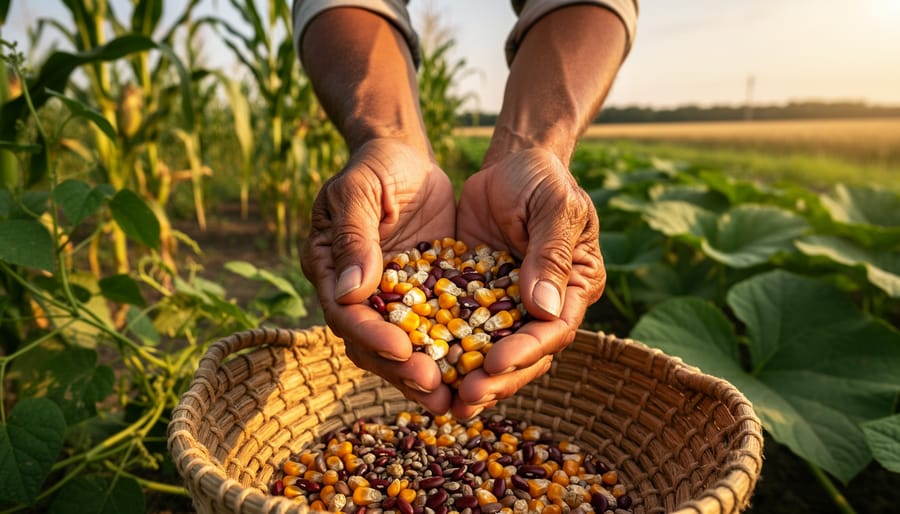
Indigenous knowledge sharing operates through deeply interconnected networks built on relationships and reciprocity. At the heart of these systems are Indigenous seed keeping practices, where community members actively exchange seeds during seasonal gatherings, pow wows, and harvest celebrations. These exchanges aren’t simply transactions—they come with stories about growing conditions, preparation methods, and cultural significance that have been refined over generations.
Intergenerational mentorship forms the backbone of knowledge transmission. Elders work directly with youth in gardens and fields, demonstrating techniques through hands-on experience rather than written instruction. This practical learning approach ensures that subtle details—like recognizing optimal planting conditions or identifying companion plants—are preserved and adapted to local environments.
Many Indigenous communities in Alberta maintain knowledge circles and seasonal workshops where farmers gather to discuss crop performance, share observations about changing weather patterns, and collectively problem-solve challenges. These gatherings strengthen community bonds while ensuring agricultural wisdom remains dynamic and responsive. For non-Indigenous farmers interested in sustainable practices, building respectful relationships with local Indigenous knowledge keepers offers invaluable insights into regionally-adapted growing methods that have sustained communities for millennia.
Proven Soil Health Practices from Indigenous Communities
Minimal Tillage and Soil Disturbance Methods
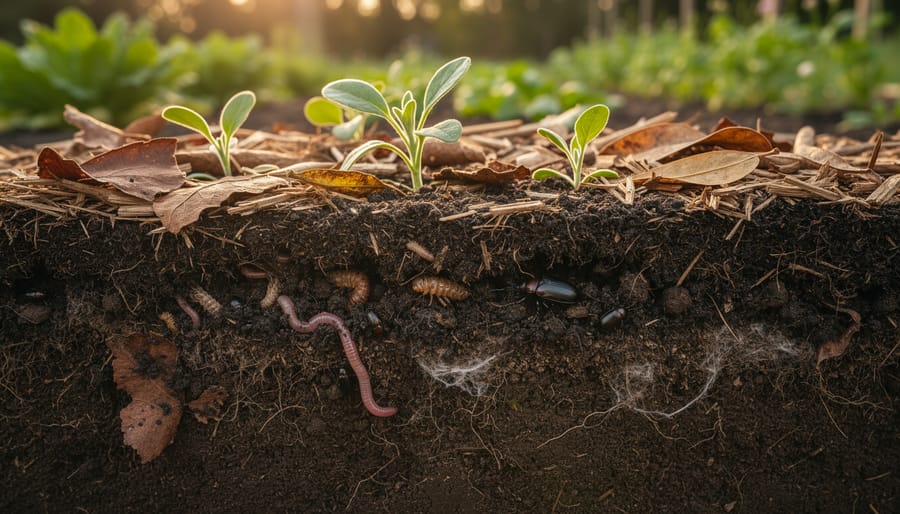
Indigenous peoples across the prairies developed farming methods that worked with the land rather than against it. These ancient Indigenous soil practices prioritized minimal soil disruption, recognizing that excessive tillage damages soil structure and depletes organic matter.
Traditional methods included using digging sticks for planting rather than turning over entire fields. This technique created small pockets for seeds while leaving surrounding soil intact, preserving beneficial microorganisms and preventing erosion. Indigenous farmers also practiced intercropping, where complementary plants grew together without requiring rows that demanded deep plowing.
For contemporary Alberta operations, these principles translate into reduced tillage systems. Consider strip-till or no-till approaches that disturb only 25 to 30 percent of soil surface. When planting, focus disruption along narrow seedbeds rather than working entire fields. This maintains soil aggregates, reduces fuel costs, and improves water retention during Alberta’s variable growing seasons.
Many Alberta producers report improved soil health within two to three years of adopting minimal tillage. Start small by testing reduced tillage on a portion of your operation, monitoring soil structure changes and crop performance before expanding the practice across your land.
Natural Composting and Nutrient Cycling
Indigenous peoples across North America developed sophisticated methods for returning nutrients to the soil, creating sustainable cycles that maintained fertility for generations. These time-tested approaches offer practical insights for modern Canadian farmers looking to reduce synthetic inputs.
The practice of fish fertilization, documented across coastal and Great Lakes Indigenous communities, involved burying whole fish or fish parts near crop roots. This method delivered concentrated nitrogen, phosphorus, and trace minerals directly where plants needed them. While fresh fish may not be practical for most Alberta operations, fish emulsion or fish meal products can provide similar benefits when incorporated into planting beds.
Ash amendment represents another effective technique. Indigenous farmers strategically applied wood ash from controlled burns to adjust soil pH and add potassium, calcium, and micronutrients. For Alberta growers, incorporating wood ash at rates of approximately 5-10 kilograms per 100 square metres can benefit acidic soils, though soil testing should guide application rates.
Strategic crop residue management meant leaving stalks and roots in fields rather than removing them. This practice protected soil from erosion, added organic matter, and created habitat for beneficial insects. Prairie Indigenous communities particularly understood how plant materials decomposed differently based on timing and placement, optimizing nutrient availability for subsequent crops while maintaining soil structure through harsh winters.
Water Conservation Through Traditional Land Management
Indigenous peoples have managed water on the land for millennia using methods that modern agriculture is rediscovering. These time-tested approaches work with natural systems rather than against them, offering practical solutions for Alberta farmers facing increasing water challenges.
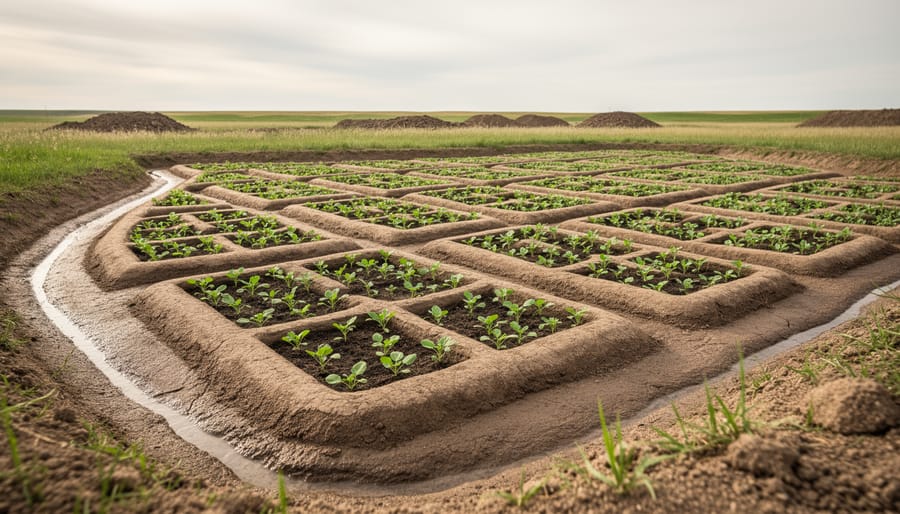
Contour planting follows the natural elevation lines of your land, slowing water runoff and allowing moisture to penetrate deeper into the soil. Many Indigenous communities planted crops along these contours, reducing erosion while maximizing water absorption. You can map your field’s contours and align crop rows accordingly, often reducing irrigation needs by 20-30%.
Swale systems, shallow channels dug along contour lines, capture and distribute water across landscapes. These earthworks filled with organic matter act like sponges, storing moisture during wet periods and releasing it gradually during dry spells. Saskatchewan farmer Tom Broadbent integrated swales into his 160-hectare operation, cutting supplemental irrigation by nearly half.
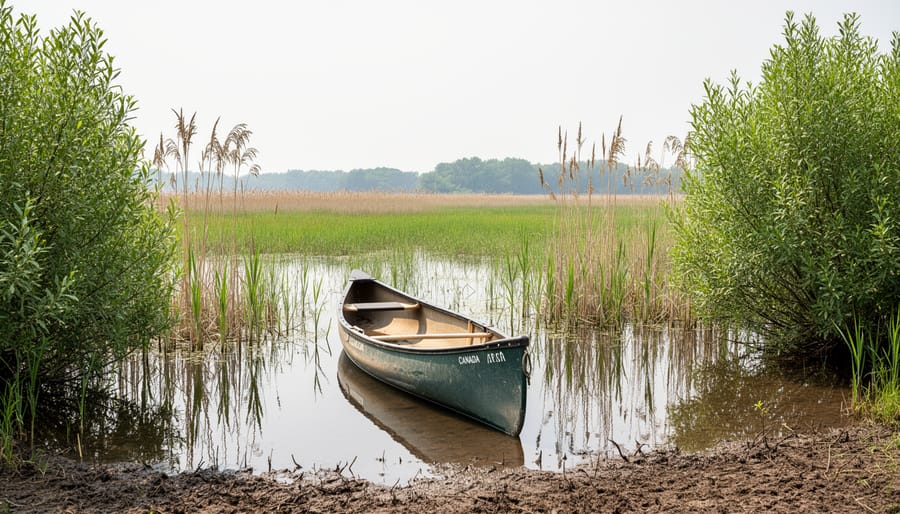
Natural wetland preservation remains central to many Indigenous water management techniques. Rather than draining these areas, maintaining wetlands provides natural water storage, recharges groundwater, and creates microclimates that benefit surrounding crops. Even small wetland buffers can significantly impact your farm’s overall water resilience while supporting biodiversity.
Alberta Case Study: Partnering with Indigenous Agricultural Initiatives
In 2019, Highwood Cattle Company, a 2,400-hectare ranch near High River, Alberta, began a groundbreaking partnership with the Tsuut’ina Nation to integrate Indigenous land management practices into their grazing operations. The collaboration emerged from conversations about regenerative agriculture and a shared commitment to improving soil health while respecting traditional ecological knowledge.
The partnership centered on implementing rotational grazing patterns informed by Indigenous seasonal movement practices. Rather than the conventional approach of leaving cattle in large pastures for extended periods, the ranch adopted shorter grazing intervals with longer rest periods, mirroring traditional bison movement patterns that Indigenous peoples observed and managed for generations.
Within three years, the results proved remarkable. Soil organic matter increased from an average of 3.2 percent to 4.8 percent across monitored sections, representing significant carbon sequestration. Independent testing showed the ranch sequestered approximately 2.1 tonnes of carbon dioxide equivalent per hectare annually. Soil water retention improved by 35 percent, a critical factor during Alberta’s increasingly unpredictable precipitation patterns.
Ranch manager David McKinnon explains the transformation: “We thought we understood grazing management, but learning from Tsuut’ina knowledge holders opened our eyes to patterns we’d never considered. They helped us read the land differently, understanding when plants signal they need rest and how animal impact can heal degraded areas rather than harm them.”
The partnership extended beyond grazing management. Tsuut’ina advisors identified native plant species that could enhance biodiversity in riparian zones and provided guidance on controlled burns to manage invasive species, a practice used by Indigenous communities for millennia.
Beef production remained stable despite initial concerns about reduced grazing time per paddock. Forage quality actually improved, allowing cattle to maintain weight gain targets of 0.8 kilograms per day while spending less time on each section. Veterinary costs dropped 22 percent, which McKinnon attributes to improved animal health from higher-quality forage and reduced stress from the quieter handling practices adopted from Indigenous livestock traditions.
The collaboration created employment opportunities for three Tsuut’ina community members who serve as land management advisors, fostering ongoing knowledge exchange. McKinnon emphasizes that this arrangement is fundamentally different from consultation: “This is true partnership. We make decisions together, and we’re learning constantly. The Indigenous perspective isn’t just added on—it’s woven into how we operate now.”
This case demonstrates how combining contemporary ranching operations with traditional ecological knowledge creates measurable environmental and economic benefits while building meaningful relationships between agricultural operations and Indigenous communities.
Expert Perspective: Bridging Traditional and Modern Farming
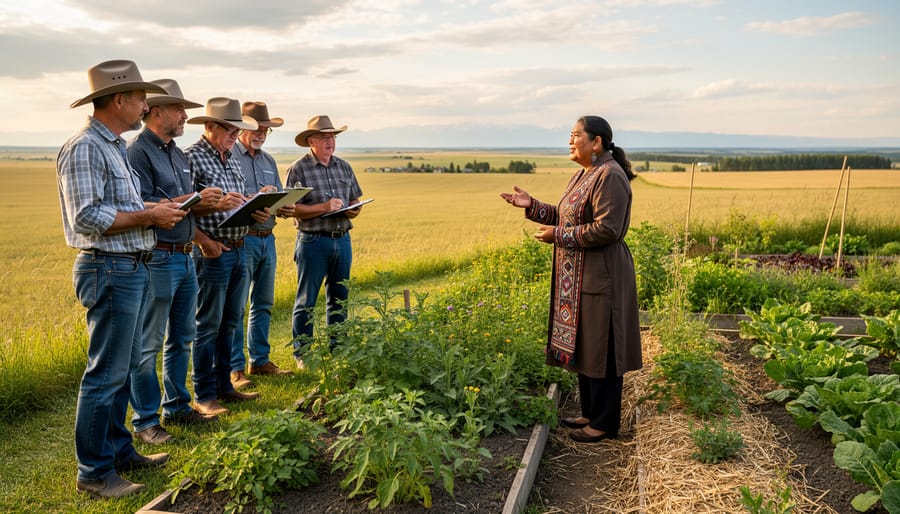
We sat down with Dr. Marie Whitecalf, an agronomist of Cree descent who works with Indigenous communities across the Prairies, to discuss how traditional knowledge can enhance modern farming practices in Alberta’s unique environment.
“What many farmers don’t realize is that Indigenous peoples have been managing these lands successfully for thousands of years,” Dr. Whitecalf explains. “That knowledge didn’t disappear—it’s still here, and it’s incredibly relevant to the challenges we’re facing today.”
Dr. Whitecalf points to companion planting as a prime example. The Three Sisters method—growing corn, beans, and squash together—isn’t just culturally significant. “It’s brilliant agricultural science,” she says. “The corn provides structure for beans to climb, beans fix nitrogen in the soil, and squash leaves create ground cover that retains moisture and suppresses weeds. In Alberta’s variable climate with our short growing season and periodic drought, these principles of mutual support and soil protection are exactly what we need.”
When asked about soil health, Dr. Whitecalf emphasizes the traditional practice of minimal soil disturbance. “Indigenous farming methods typically involved hand cultivation and careful management rather than deep tilling. Modern research on soil biology has proven this approach preserves beneficial microorganisms and soil structure. For Alberta’s clay-heavy and sandy soils, reducing tillage prevents compaction and erosion—problems many conventional farmers are only now addressing.”
She also highlights traditional fire management techniques. “Controlled burning was used to clear land, control pests, and return nutrients to soil. Today’s prescribed burns and crop residue management echo these practices, but Indigenous knowledge offers specific timing and ecological indicators that scientists are still documenting.”
Dr. Whitecalf encourages farmers to view traditional ecological knowledge not as historical curiosity but as tested solutions. “These practices evolved through careful observation over generations in this exact landscape. When we combine that deep place-based knowledge with modern soil testing, weather monitoring, and crop genetics, we create something more resilient than either system alone.”
Her advice for farmers interested in learning more? “Start conversations with local Indigenous agricultural programs, attend knowledge-sharing sessions, and approach with respect and genuine curiosity. The knowledge is there—we just need to listen and adapt it thoughtfully to our operations.”
Practical Steps for Alberta Farmers to Connect and Learn
Finding Indigenous Agricultural Networks in Your Region
Connecting with Indigenous agricultural networks in Alberta and the prairie provinces starts with reaching out to established organizations. The Indigenous Food Circle partners with farmers across Western Canada to share traditional knowledge and sustainable practices. Contact your regional Métis Nation office or Treaty Nations directly—many have agricultural programs and advisors available. The Alberta Indigenous Opportunities Corporation maintains a directory of Indigenous enterprises, including farming operations open to collaboration.
Attend events like the Indigenous Agriculture and Food Conference, held annually in various prairie locations, where you’ll meet producers and knowledge keepers firsthand. Local friendship centres often coordinate workshops on traditional land management techniques. The University of Alberta’s Faculty of Native Studies can connect you with research initiatives and community partnerships. Start by simply introducing yourself to Indigenous farmers at regional agricultural fairs and farmers’ markets. Building these relationships takes time and genuine interest, but the learning opportunities are invaluable for developing more resilient, sustainable farming systems that honour the land’s history.
Building Respectful Partnerships
Building partnerships with Indigenous communities begins with genuine respect and a commitment to listening. Before approaching any community, take time to research their specific protocols and cultural practices—these vary significantly between nations. Always connect through proper channels, typically band offices or designated agricultural liaisons, rather than approaching individuals directly.
When initiating contact, clearly communicate your intentions and be prepared to invest time in relationship-building without expecting immediate outcomes. Successful partnerships operate on principles of reciprocity, where knowledge and benefits flow both ways. Consider what you can offer—whether that’s sharing your land for traditional harvesting, supporting Indigenous-led agricultural initiatives, or providing resources.
Attend community events, cultural gatherings, or agricultural workshops when invited, and always ask permission before taking photos or sharing information publicly. Respect intellectual property rights regarding traditional knowledge; some practices are sacred and not meant for widespread distribution.
Alberta farmers like those working with local Métis settlements have found that patience and cultural humility open doors to valuable knowledge exchanges. These relationships often begin small—perhaps a conversation about seed varieties or soil management—and grow organically over time. Remember, you’re not extracting information but building a collaborative relationship that honors Indigenous stewardship traditions while strengthening your own sustainable farming practices.
Starting Small: First Techniques to Try
Ready to bring Indigenous wisdom to your fields this season? Start with companion planting, also called the Three Sisters method. Plant corn, beans, and squash together—corn provides structure for beans to climb, beans fix nitrogen in the soil, and squash leaves shade out weeds while retaining moisture. This technique reduces fertilizer needs and maximizes your growing space.
Next, consider integrating buffer zones of native prairie plants along field edges. These strips attract beneficial insects, prevent soil erosion, and support pollinators. Species like wild bergamot and purple coneflower thrive in Alberta’s climate and require minimal maintenance once established.
Finally, practice soil observation before chemical testing. Indigenous farmers have long assessed soil health through texture, smell, and the presence of earthworms and organic matter. Spend time understanding your land’s natural indicators—this knowledge complements modern testing and helps you make more informed decisions about amendments and crop rotation. These simple practices build the foundation for deeper integration of Indigenous agricultural knowledge.
Indigenous agroecological networks represent more than traditional farming methods—they’re proven sustainability frameworks that Alberta farmers can implement today. These practices have supported thriving communities for thousands of years, demonstrating remarkable resilience in variable climates. By integrating techniques like companion planting, natural pest management, and soil restoration, you’re not just adopting historical knowledge; you’re accessing solutions specifically evolved for Canadian prairie conditions.
The economic benefits are substantial. Reduced input costs through natural fertilization methods, improved water retention that lowers irrigation expenses, and enhanced soil health that increases long-term productivity all contribute to stronger farm profitability. Meanwhile, environmental advantages—including carbon sequestration, biodiversity enhancement, and watershed protection—position your operation as a climate solution leader.
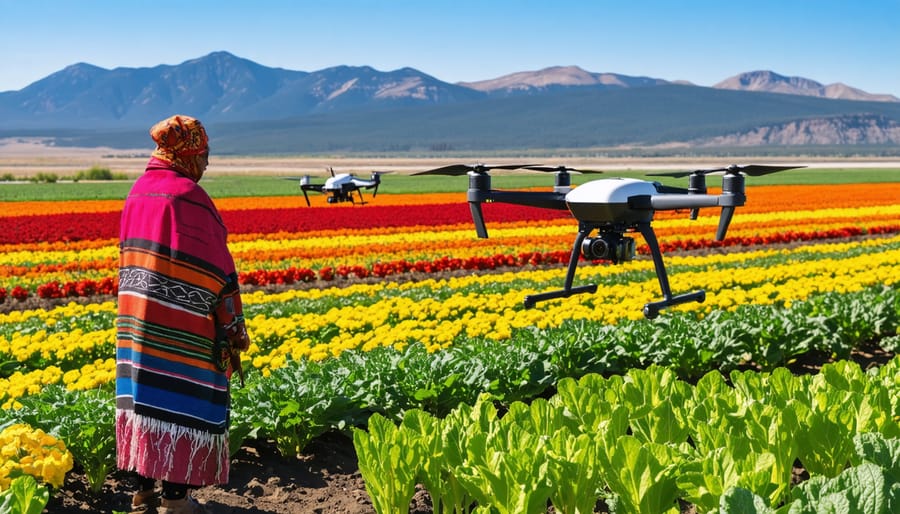
Viewing Indigenous knowledge as a practical resource rather than simply cultural heritage opens doors to collaborative learning and community connection. These networks offer mentorship opportunities, shared wisdom from experienced practitioners, and collective problem-solving for climate adaptation. As Alberta faces increasing weather unpredictability, the time-tested strategies within Indigenous agroecology provide both immediate applications and long-term resilience for your farming operation.