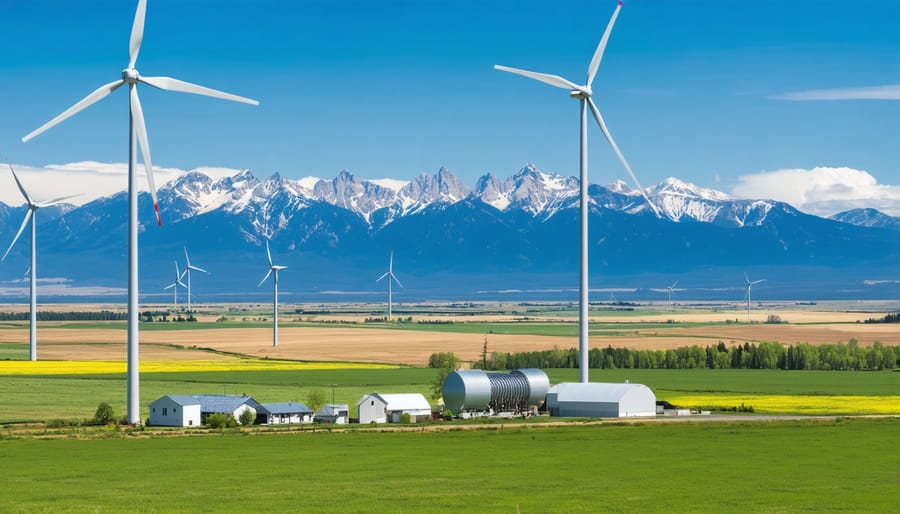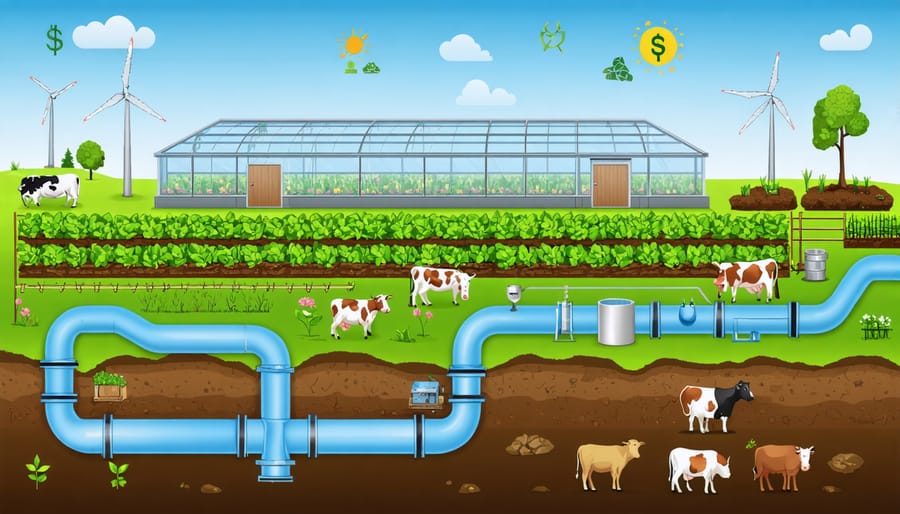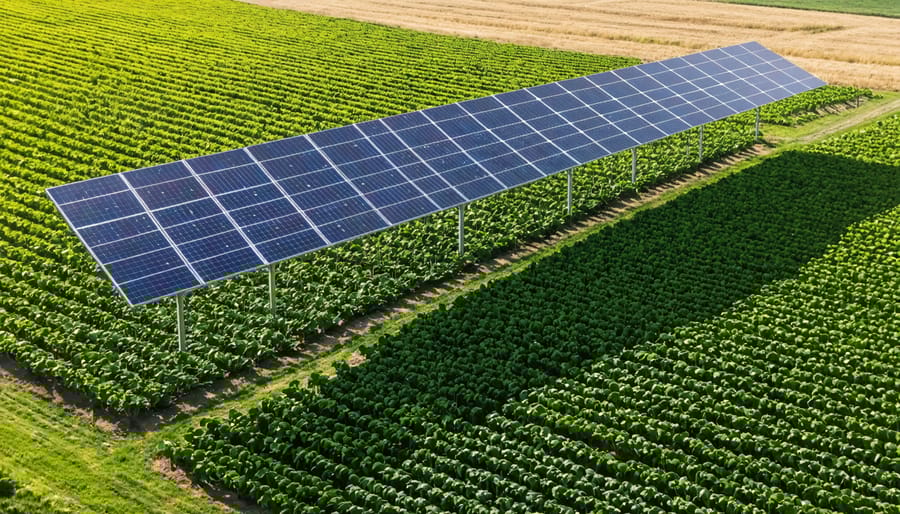
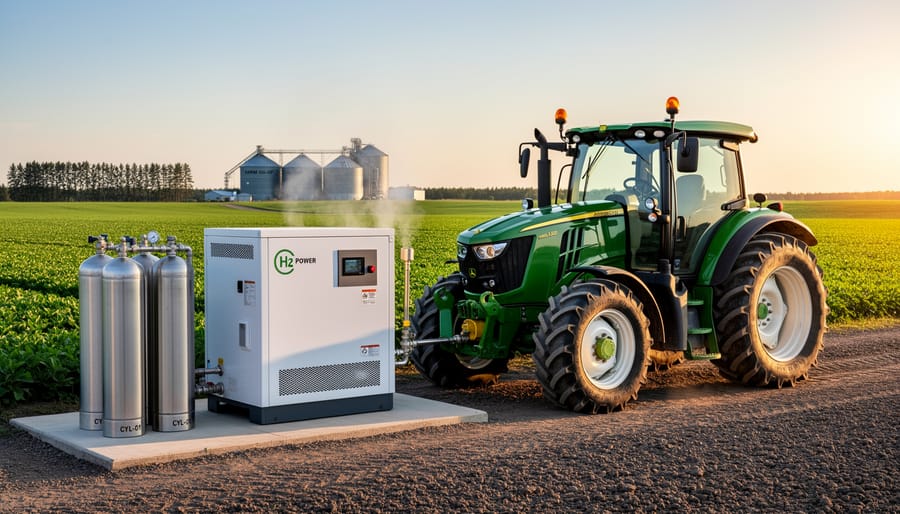
Hydrogen fuel cells are quietly revolutionizing how Canadian farms operate, offering a zero-emission alternative that matches the power demands of modern agriculture without the carbon footprint. While solar panels and wind turbines have dominated the renewable energy conversation, hydrogen technology now delivers practical solutions for equipment that runs dawn to dusk, irrigation systems miles from the grid, and backup power that keeps operations running through Alberta’s harshest winters.
The technology works by converting hydrogen gas into electricity through an electrochemical process, producing only water vapor and heat as byproducts. For farm operations, this means powering tractors, combines, and utility vehicles with the same reliability as diesel but with emissions that benefit rather than harm the soil and air. Several Ontario grain farms already operate hydrogen-powered forklifts in their storage facilities, while British Columbia greenhouse operations use fuel cells for combined heat and power generation.
The economic case strengthens as hydrogen infrastructure expands across Canada. Production costs are dropping, government incentives support early adoption, and the fuel itself can be generated on-site using excess renewable energy during off-peak hours. For farmers managing tight margins while facing increasing pressure to reduce emissions, hydrogen fuel cells represent a pragmatic path forward that aligns environmental responsibility with operational efficiency.
This technology isn’t theoretical. It’s working on Canadian soil right now, and understanding where it fits into your operation starts with examining specific applications that deliver measurable returns.
What Hydrogen Fuel Cells Actually Are (And Why Farmers Should Care)
The Simple Science Behind the Technology
Think of a hydrogen fuel cell as a reverse water electrolysis system. Instead of using electricity to split water into hydrogen and oxygen, fuel cells combine these elements to generate electricity. Here’s how it works on your farm: hydrogen gas enters one side of the fuel cell while oxygen from the air enters the other. Inside, a special membrane separates these gases while allowing charged particles to move through. When hydrogen molecules meet a catalyst (typically platinum), they split into protons and electrons. The protons pass through the membrane, while electrons must travel around it, creating an electrical current that powers your equipment. On the other side, protons, electrons, and oxygen combine to form the only byproduct: pure water vapour.
This process happens continuously as long as you supply hydrogen, making fuel cells different from batteries that need recharging. There’s no combustion, no moving parts wearing down, and no harmful emissions. For Canadian farmers, this means reliable power generation in cold conditions where traditional batteries struggle. The water produced is clean enough that some operations collect it for non-potable farm uses, adding another practical benefit to this technology.
Why This Matters for Canadian Agriculture Right Now
The economics of farming in Alberta are shifting rapidly, making hydrogen fuel cells worth a closer look right now. Diesel prices have climbed significantly over the past two years, with many operations seeing fuel costs increase by 30-40% compared to 2021. This hits particularly hard during spring seeding and fall harvest when equipment runs around the clock.
Carbon pricing adds another layer of cost consideration. Alberta’s current carbon pricing system applies to farm fuel use, and while exemptions exist for certain activities, many operations still face increased expenses. Hydrogen fuel cells produce zero emissions at the point of use, potentially helping farms reduce their carbon footprint and associated costs.
The timing is also right because of government support. Both federal and provincial programs now offer incentives for clean energy adoption in agriculture. The Canadian government’s Clean Technology Investment Tax Credit includes hydrogen equipment, covering up to 30% of eligible costs. Alberta’s Technology Innovation and Emissions Reduction program provides additional funding opportunities for emissions-reducing technology.
These financial factors, combined with improving hydrogen infrastructure across the prairies, create a practical window for early adopters to explore this technology while maximizing available support.
Powering Farm Equipment: Tractors, Harvesters, and Heavy Machinery
Hydrogen-Powered Tractors Making Their Debut
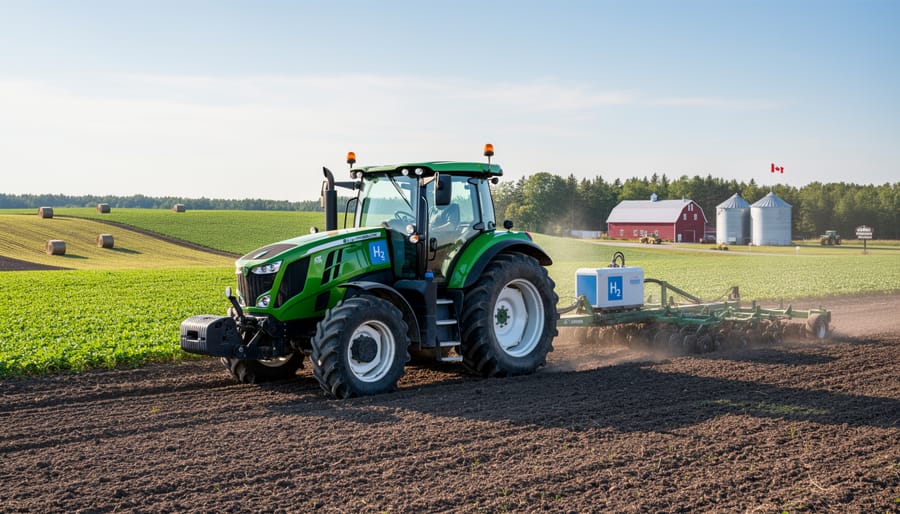
Hydrogen-powered tractors are transitioning from concept to reality on farms across Canada and internationally. New Holland’s NH2 hydrogen tractor prototype has been operating in field trials since 2009, demonstrating the technology’s viability in real-world agricultural conditions. More recently, John Deere and other major manufacturers have announced commercial hydrogen tractor development programs, with units expected to reach the market by 2026.
In Canada, several pilot projects are underway to test hydrogen tractors in diverse growing conditions. A 2023 initiative in southern Alberta partnered local grain farmers with technology providers to evaluate hydrogen equipment performance during seeding and harvesting operations. Early results show these tractors match diesel counterparts in pulling power and operational hours, with refueling times comparable to conventional diesel—approximately 10 to 15 minutes for a full tank.
Performance-wise, hydrogen tractors deliver similar horsepower ratings to diesel models, typically ranging from 75 to 400 horsepower depending on the model. They operate more quietly, produce zero tailpipe emissions, and require less maintenance since fuel cells have fewer moving parts than internal combustion engines. However, current challenges include higher upfront costs—estimated at 40 to 60 percent more than diesel equivalents—and limited hydrogen refueling infrastructure in rural areas.
Australian and European farms have logged thousands of operational hours with hydrogen tractors, providing valuable data that’s helping Canadian farmers understand long-term reliability and total cost of ownership for this emerging technology.
What Alberta Farmers Need to Know About Performance
When considering hydrogen fuel cells for your operation, understanding real-world performance is essential for making informed decisions. Modern agricultural fuel cell systems typically deliver power outputs ranging from 5 kW for small equipment to over 100 kW for tractors and larger machinery, comparable to traditional diesel engines.
One significant advantage is refueling speed. Unlike battery-electric systems requiring hours to recharge, hydrogen refueling takes approximately 10-15 minutes, similar to conventional diesel fill-ups. This means minimal downtime during critical seasons like harvest or seeding.
Operational range varies by application, but hydrogen-powered tractors currently achieve 4-6 hours of continuous work per tank, adequate for many daily farming tasks. As storage technology improves, these ranges continue to expand.
For Alberta farmers, cold weather performance is particularly important. Hydrogen fuel cells actually perform well in freezing conditions, maintaining efficiency down to -30°C and below. Unlike diesel engines that struggle starting in extreme cold or batteries that lose significant capacity, fuel cells generate heat during operation, which helps maintain consistent performance throughout our harsh winters. Some early adopters report more reliable winter starting compared to their conventional equipment, though keeping hydrogen storage tanks protected from extreme temperature fluctuations remains a practical consideration.
Early Adopter Case Study: A Prairie Farm’s Experience
Meadowbrook Grain Farm near Lethbridge, Alberta took the leap in 2023, partnering with a Calgary-based hydrogen technology company to pilot a hydrogen-powered utility tractor for seasonal fieldwork. Owner Sarah Chen reports the 75-horsepower unit performed comparably to diesel equivalents during spring seeding operations, covering approximately 120 hectares over a three-week testing period.
The initial investment proved substantial at $180,000 for the equipment plus $85,000 for on-site hydrogen storage infrastructure. However, Chen secured provincial clean energy grants covering 40% of costs. Refueling took roughly 15 minutes compared to 5 minutes for diesel, and hydrogen cost approximately $12 per kilogram versus $1.85 per litre for diesel at the time.
Chen’s biggest takeaway? Infrastructure matters more than equipment. “The tractor worked beautifully, but coordinating hydrogen delivery to our rural location required advance planning,” she explains. Despite challenges, Meadowbrook continues testing, viewing hydrogen as a long-term emissions reduction strategy worth refining through real-world experience.
On-Site Power Generation for Farm Buildings and Operations
Replacing Diesel Generators with Clean Power
For many Canadian farms, especially in remote areas of Alberta, reliable power isn’t just convenient—it’s essential. Diesel generators have long been the go-to solution for backup power and off-grid operations, but they come with significant fuel costs, maintenance requirements, and emissions.
Hydrogen fuel cells offer a compelling alternative for both backup and primary power needs. Unlike diesel generators that require regular refueling and produce noise and exhaust, fuel cells operate quietly and emit only water vapor. They’re particularly valuable for operations like grain drying, irrigation pumps, and refrigeration systems that need consistent, reliable power.
Several Alberta farmers are already testing this technology. Near Red Deer, a mixed farming operation recently replaced their 50-kilowatt diesel backup system with a fuel cell unit. The farm manager reports lower maintenance costs and appreciates the immediate startup capability—crucial during power outages that could threaten livestock ventilation systems.
Cost remains a consideration. While fuel cells have higher upfront costs than diesel generators, they typically require less maintenance and can last 40,000 to 60,000 operating hours. The economics improve significantly if you can produce hydrogen on-site using renewable electricity during off-peak hours, essentially creating your own fuel supply and reducing dependence on diesel price fluctuations.
Heating Greenhouses and Livestock Facilities
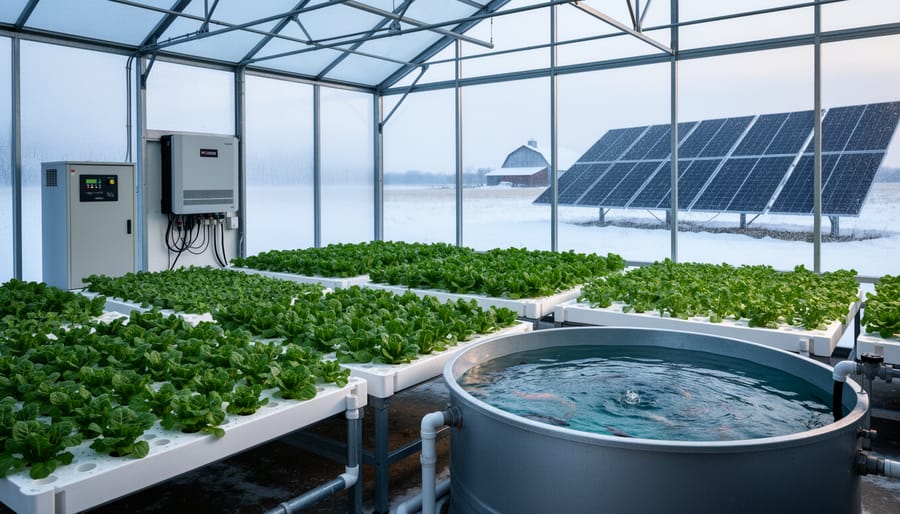
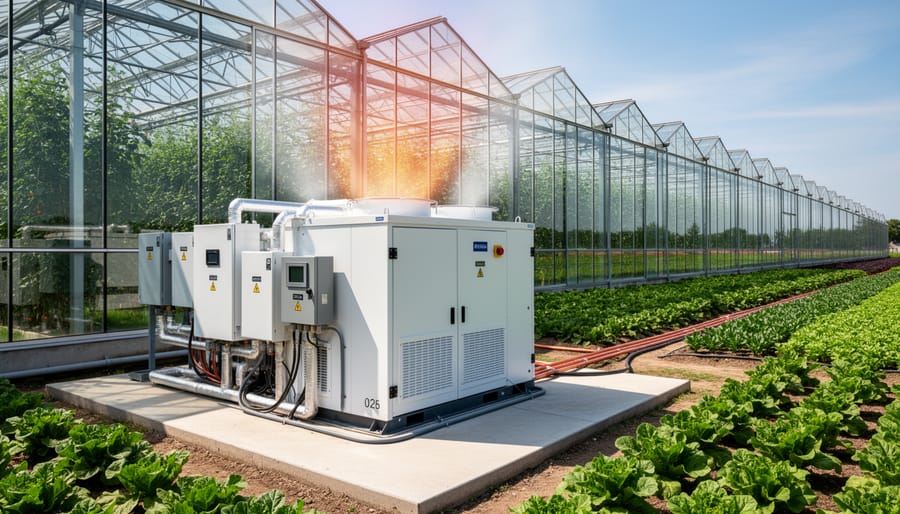
Hydrogen fuel cells offer Canadian farmers an efficient solution for maintaining optimal temperatures in greenhouses and livestock barns through combined heat and power systems. Unlike traditional heating methods that simply burn fuel, fuel cells generate both electricity and usable heat simultaneously, achieving efficiency rates up to 90 percent. This makes them particularly valuable for operations requiring consistent warmth during Alberta’s harsh winters.
The technology works by converting hydrogen into electricity while producing heat as a byproduct. This thermal energy can warm greenhouse growing spaces, livestock housing, or water systems without additional fuel consumption. For dairy operations maintaining milk parlors or pig farmers keeping farrowing barns at precise temperatures, this dual output significantly reduces energy costs compared to separate heating and electrical systems.
Early adopters in Ontario have reported reduced propane dependency while maintaining stable growing environments year-round. When integrated with alternative clean energy sources like solar panels producing hydrogen through electrolysis, these systems create closed-loop sustainability. The continuous heat generation proves especially beneficial for extending growing seasons and protecting vulnerable livestock during extreme cold snaps, addressing real challenges prairie farmers face annually.
Expert Perspective: Making the Energy Transition Work
We spoke with Marc Dufresne, an agricultural energy consultant with 15 years of experience helping Canadian farms transition to renewable technologies. “Start small and scale strategically,” Marc advises. “I recommend Alberta farmers begin with pilot projects—perhaps a single hydrogen-powered tractor or backup generator—to understand the technology’s practical demands before full-scale implementation.” He emphasizes the importance of proper infrastructure planning: “Your farm needs adequate storage facilities and safety protocols in place. Work with certified installers who understand agricultural operations.” Marc notes that successful transitions typically involve partnerships with local co-ops to share refueling infrastructure costs. “The economics improve significantly when three to five neighbouring farms collaborate on hydrogen storage and distribution systems, reducing individual investment by 40 to 60 percent.”
Irrigation Systems and Water Management Applications
Powering Remote Irrigation Without Grid Connection
Alberta’s vast agricultural lands often extend far beyond grid infrastructure, making traditional electric irrigation systems impractical or prohibitively expensive to install. Hydrogen fuel cells offer a clean, reliable solution for powering remote irrigation pumps without the need for diesel generators or costly power line extensions.
For farms operating irrigation systems in distant fields, hydrogen fuel cells provide consistent power output regardless of weather conditions, unlike solar panels that lose efficiency during cloudy periods or shorter winter days. A single fuel cell system can power irrigation pumps ranging from 5 to 50 kilowatts, suitable for most farm-scale operations. The technology produces only water vapor as a byproduct, eliminating concerns about soil or water contamination from diesel spills.
Jim Thompson, an irrigation specialist working with southern Alberta producers, notes that “hydrogen systems excel in locations where grid connection costs exceed $50,000 per kilometre. The fuel cells run quietly, require minimal maintenance compared to diesel engines, and can operate continuously for thousands of hours between service intervals.”
Storage is straightforward too. Hydrogen can be transported to remote sites in compressed tanks and refilled as needed, typically every few weeks depending on usage patterns. This flexibility makes fuel cells particularly valuable during peak irrigation season when consistent water delivery is critical for crop health and yields.
Wastewater Treatment and Environmental Compliance
Hydrogen fuel cells offer a clean energy solution for powering on-farm wastewater treatment systems, helping you meet increasingly stringent environmental regulations while reducing your carbon footprint. These systems can operate independently of the electrical grid, making them particularly valuable for remote operations or areas with unreliable power access. Fuel cells provide consistent, reliable electricity to run pumps, aerators, and monitoring equipment essential for treating livestock wastewater and agricultural runoff.
For Alberta farmers managing large-scale livestock operations, integrating fuel cell technology into wastewater management demonstrates environmental stewardship to regulators and community members alike. The technology produces only water and heat as byproducts, eliminating emissions at the treatment site. While initial investment costs remain a consideration, provincial environmental programs may offer support for farmers adopting innovative pollution control technologies. By pairing fuel cells with biogas systems that convert manure into hydrogen, some operations are creating circular solutions that transform waste management challenges into sustainable energy opportunities.
Creating Hydrogen on Your Farm: Production and Storage Options
Using Excess Solar or Wind Power for Hydrogen Production
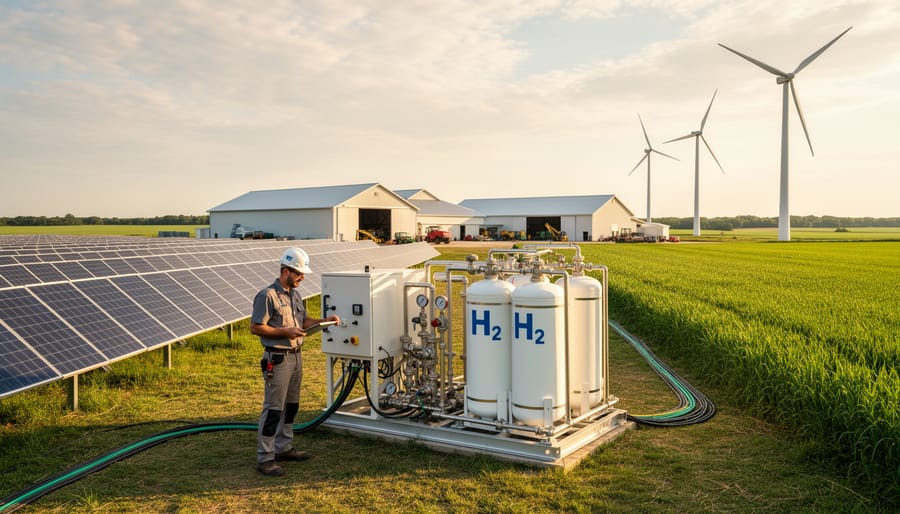
If your farm already has wind turbines or solar panels installed, you’ve likely experienced times when you’re generating more electricity than you can immediately use. Rather than feeding all that excess power back to the grid at minimal compensation rates, there’s a compelling alternative: converting it into hydrogen fuel that you can store and use when needed.
The process works through electrolysis, where surplus electricity splits water molecules into hydrogen and oxygen. This hydrogen can then be stored in tanks for later use in fuel cells, creating a closed-loop energy system right on your property. For farms with solar microgrids or wind installations, this means your spring and summer energy abundance can power fall harvesting equipment or winter heating systems.
Alberta farmers are particularly well-positioned for this approach. The province receives approximately 2,300 hours of sunshine annually, and many regions experience consistent wind patterns. These conditions make renewable energy installations highly productive, often generating significant excess capacity during peak production periods.
A Southern Alberta grain operation currently using solar-powered agriculture reported they could potentially convert 30-40% of their summer surplus into stored hydrogen, creating energy independence during critical harvest periods. While the technology requires upfront investment in electrolysis equipment and storage tanks, it transforms intermittent renewable power into reliable, on-demand fuel that supports year-round operations.
Safety Considerations and Storage Solutions
Storing hydrogen safely on your farm requires proper planning, but it’s more straightforward than many producers initially think. Like propane systems already common in Canadian agriculture, hydrogen storage follows clear safety protocols that become routine with proper training.
Transport Canada and provincial regulators have established guidelines specifically for agricultural hydrogen systems. Tanks must be located at least 15 metres from buildings and ignition sources, with proper ventilation in enclosed spaces. Modern storage vessels include multiple safety features: pressure relief valves, leak detection sensors, and automatic shut-off systems. These technologies make hydrogen storage comparable to other energy storage solutions already used on Canadian farms.
Dr. James Chen from the University of Alberta emphasizes that hydrogen disperses rapidly when released, unlike propane or gasoline vapours that pool near the ground. “Proper ventilation is key, but hydrogen’s natural tendency to rise actually reduces some risks,” he explains.
For farms starting with hydrogen fuel cells, compressed gas cylinders offer the simplest entry point, similar to welding gas storage. As operations scale up, stationary tank systems provide more capacity. Working with certified installers ensures compliance with CSA B51 standards and provincial requirements. Regular inspections, typically annual, maintain system integrity and insurance coverage.
The Economics: Costs, Savings, and Available Support
What It Costs Today (And Where Prices Are Heading)
Let’s talk numbers. Right now, a hydrogen fuel cell system for farm equipment represents a significant upfront investment. A fuel cell unit capable of powering a tractor can range from $100,000 to $250,000 CAD, depending on capacity. That’s admittedly steep compared to diesel alternatives.
Hydrogen fuel itself currently costs between $8 and $16 per kilogram in Canada, with one kilogram providing roughly the energy equivalent of 3.8 litres of diesel. At a small-scale farm operation in Lethbridge, early adopters reported paying around $12 per kilogram through regional suppliers.
Maintenance costs tell a more encouraging story. Fuel cells have fewer moving parts than combustion engines, translating to lower long-term service expenses. Expect maintenance to run about 30% less than comparable diesel equipment once the system is operational.
Here’s the good news: prices are dropping fast. Industry experts predict fuel cell costs will decrease by 50% within the next five years as manufacturing scales up. Hydrogen production costs are also declining, particularly with Alberta’s growing renewable energy infrastructure. Several Canadian manufacturers are already offering leasing programs specifically designed for agricultural operations, making the technology more accessible while you evaluate its fit for your farm.
Canadian Grants, Incentives, and Financing Programs
Transitioning to hydrogen fuel cell technology represents a significant investment, but several government programs can help make it more financially accessible for your operation. At the federal level, the Canadian Agricultural Partnership offers cost-share funding for innovation and environmental sustainability projects, which may include hydrogen technology adoption. Agriculture and Agri-Food Canada’s AgriInnovate Program provides repayable contributions for projects that accelerate commercialization of innovative agricultural products and processes.
In Alberta specifically, the Emissions Reduction Alberta (ERA) programs fund projects that reduce greenhouse gas emissions and support clean technology deployment. ERA has historically supported hydrogen-related initiatives, making it a valuable resource for farm operations exploring fuel cell applications. The Alberta government’s Agricultural Service Board Grant Program may also provide support for sustainable farming equipment and infrastructure improvements.
When applying for these programs, document your current energy costs, projected emissions reductions, and long-term sustainability goals. Many farmers find success by partnering with technology providers who have experience navigating grant applications. Connect with your local agricultural field office to identify program eligibility and application deadlines specific to your region and operation size.
Calculating Your Farm’s Potential ROI
Start by evaluating your farm’s current energy costs and consumption patterns. Calculate monthly diesel and propane expenses, then estimate how much hydrogen-powered equipment could offset these costs. A 200-hectare grain operation typically uses 15,000-20,000 litres of diesel annually. Compare this against hydrogen fuel cell equipment costs, including infrastructure investments like refueling stations. Factor in available government incentives for clean energy adoption in Alberta. Consider pairing hydrogen systems with smart energy management strategies to maximize savings. Most experts suggest hydrogen becomes economically viable for operations spending over $50,000 annually on fuel, though costs continue declining as technology advances.
Getting Started: Practical Steps for Alberta Farmers
Assessing Your Farm’s Hydrogen Readiness
Before investing in hydrogen fuel cell technology, take time to evaluate whether it aligns with your operation’s needs. Start by examining your current energy consumption patterns. How many litres of diesel do you use annually? What percentage of your operating costs goes toward fuel? Understanding these numbers helps determine potential savings.
Consider your existing infrastructure. Do you have adequate space for hydrogen storage systems? Is your electrical system capable of supporting fuel cell integration? These practical questions matter for successful implementation.
Think about your operational priorities. Are you focused on reducing emissions, lowering long-term fuel costs, or both? Alberta farmers like those featured in recent agricultural case studies found success by identifying clear goals before transitioning to hydrogen power.
Assess your access to hydrogen supply. While infrastructure is developing across Canada, proximity to refueling stations or on-site generation capability affects feasibility. Connect with local agricultural networks to learn about regional hydrogen initiatives and what other farmers are discovering about this emerging technology.
Connecting with Resources and Support Networks
Exploring hydrogen fuel cells doesn’t mean going it alone. Several Canadian organizations are actively supporting farmers interested in this technology. Agriculture and Agri-Food Canada runs demonstration projects showcasing hydrogen applications in real farm settings, providing valuable insights into practical implementation. The Canadian Hydrogen and Fuel Cell Association offers educational resources specifically tailored to agricultural operations, including feasibility assessments and connection to qualified installers.
In Alberta, organizations like the Climate Change and Emissions Management Corporation have funded hydrogen pilot projects on farms, creating opportunities to learn from early adopters. Regional agricultural societies often host information sessions where farmers share their experiences with alternative energy systems.
Connect with your local agricultural extension office to learn about upcoming workshops and site visits to operating hydrogen systems. Many equipment manufacturers offer consultation services to assess whether hydrogen fuel cells align with your farm’s energy needs and budget. Online farming communities and sustainability networks provide platforms to ask questions and exchange practical knowledge with farmers already using this technology across Western Canada.
Hydrogen fuel cells represent a genuine opportunity for forward-thinking Canadian farmers who are ready to explore the next generation of clean energy solutions. While this technology is still developing and may not be ready for widespread adoption across all farm operations today, the progress happening in our agricultural sector is encouraging. The case studies and pilot projects we’ve discussed demonstrate that hydrogen applications are moving from concept to reality, particularly for larger operations with significant power demands.
For Alberta farmers specifically, staying informed about hydrogen developments makes practical sense. Our province’s existing energy infrastructure and agricultural innovation culture position us well to benefit as this technology matures and becomes more cost-effective. You don’t need to make major investments immediately, but keeping hydrogen on your radar allows you to make informed decisions when the economics align with your operation’s needs.
Consider starting small. Attend workshops, connect with agricultural associations exploring hydrogen projects, or simply monitor the pilot programs underway in Canadian agriculture. These steps keep you prepared without requiring significant financial commitment.
Canadian farmers have always been at the forefront of adopting practical innovations that improve both productivity and environmental stewardship. Whether it’s precision agriculture, renewable energy, or emerging technologies like hydrogen fuel cells, our agricultural community has consistently demonstrated the ability to lead sustainable change. By staying informed and open to new possibilities, you’re positioning your operation to thrive in an increasingly sustainability-focused agricultural landscape while contributing to a cleaner future for the next generation of farmers.