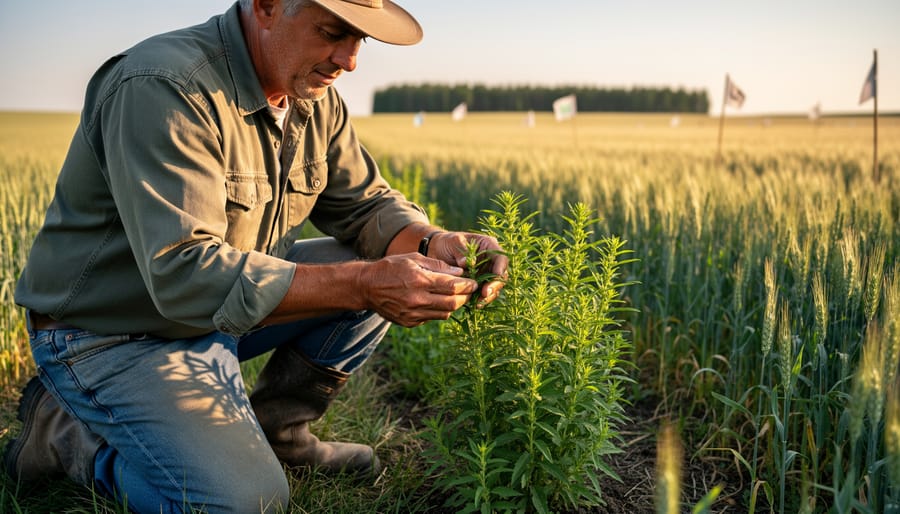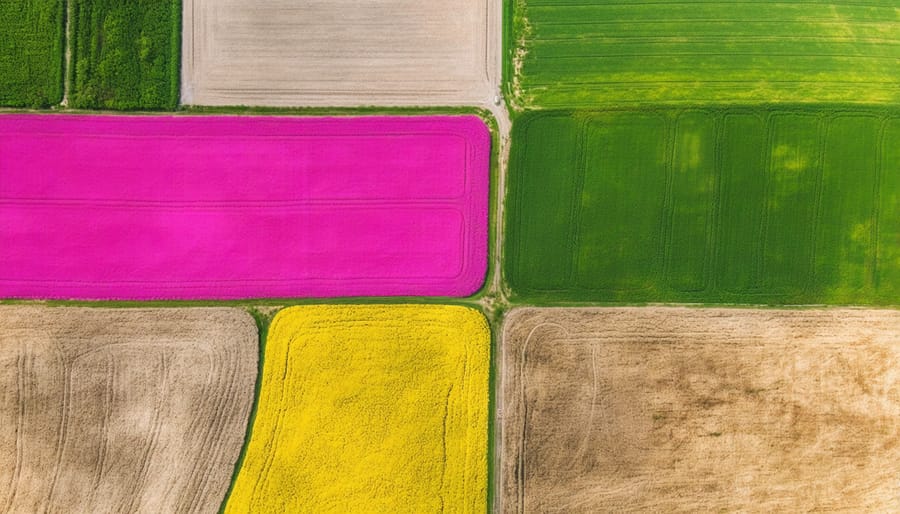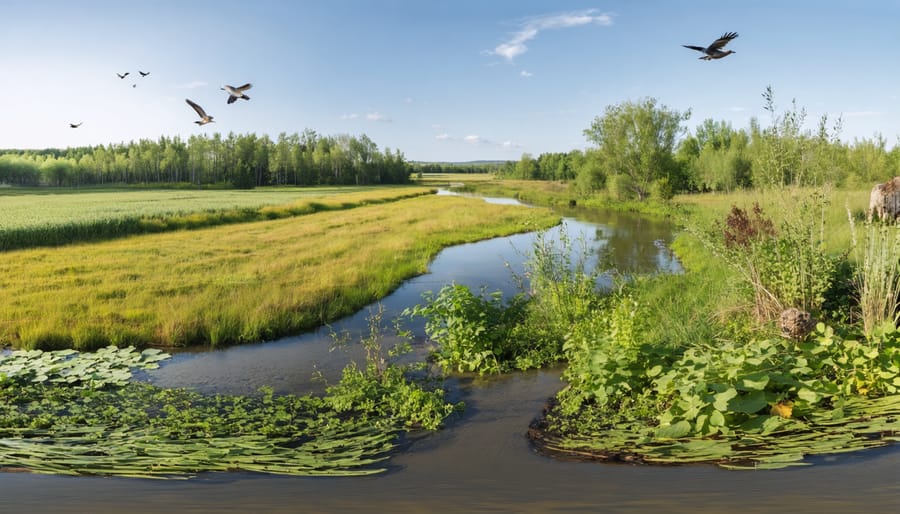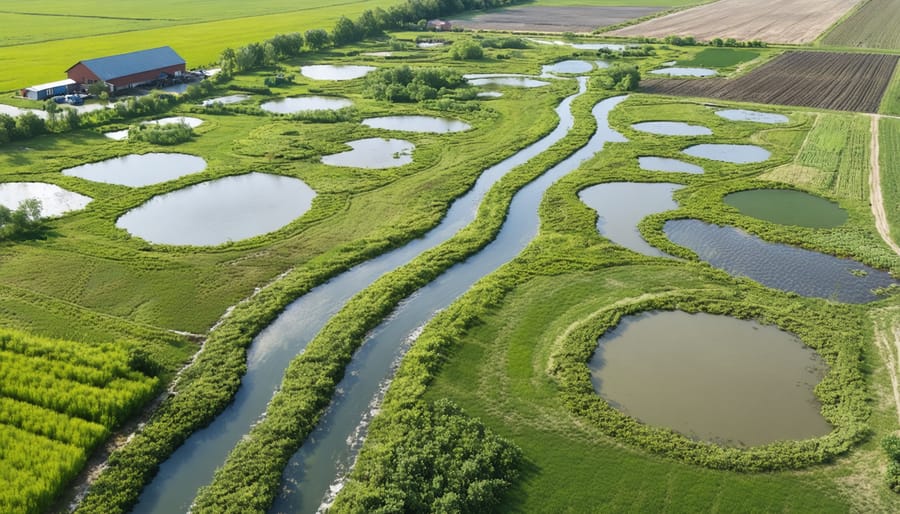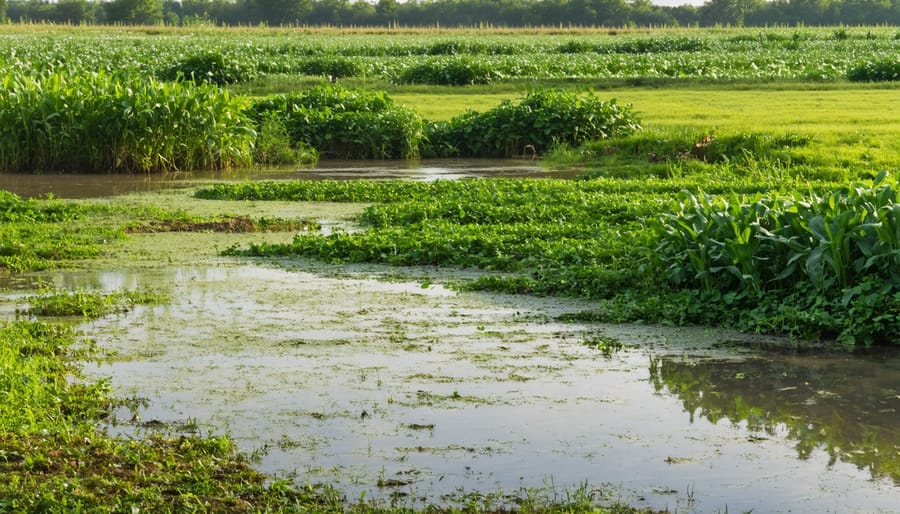
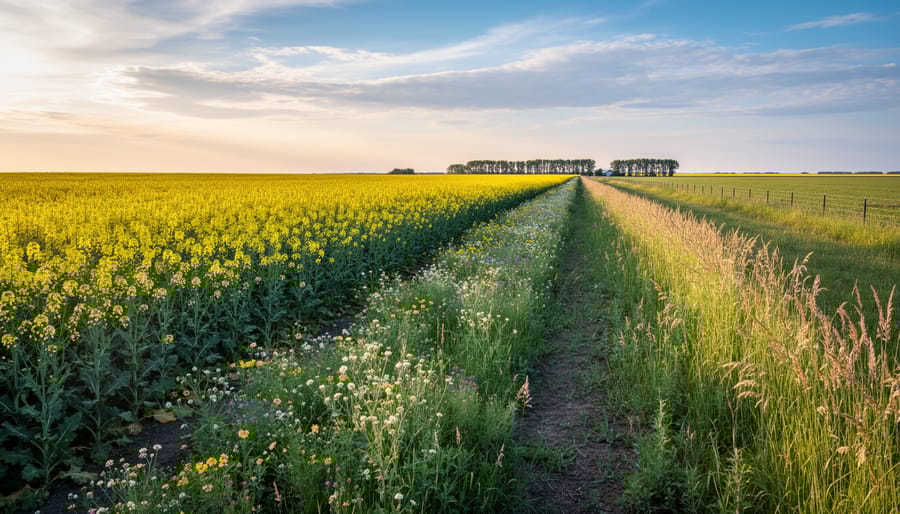
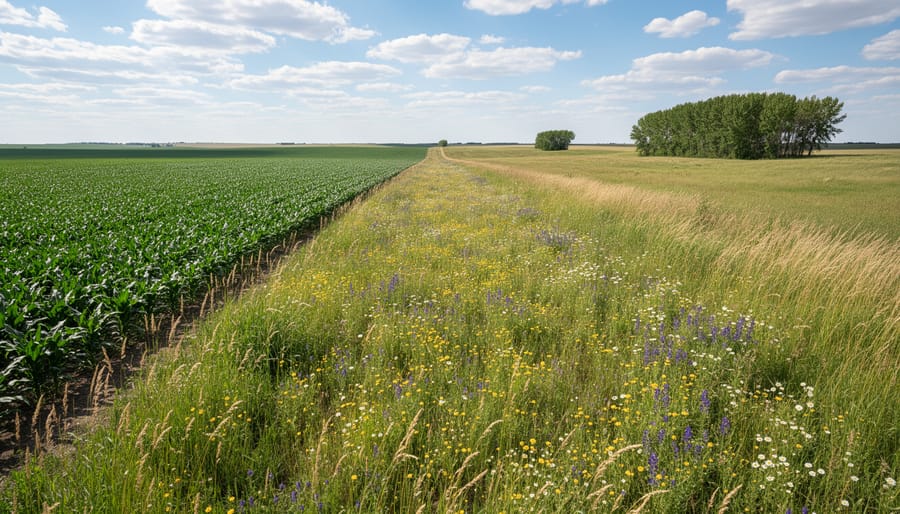
Field margins—those strips of permanent vegetation along the edges of your cultivated land—represent one of the most cost-effective investments you can make in your farm’s long-term productivity. These managed zones, typically 3 to 10 metres wide, serve as living infrastructure that works around the clock to control soil erosion, filter runoff, provide habitat for beneficial insects, and reduce input costs through natural pest management.
The numbers tell a compelling story. Alberta farmers who’ve established field margins report up to 30% increases in pollinator populations, which directly translates to improved crop yields in canola, pulse crops, and specialty crops. Meanwhile, these same strips act as windbreaks that reduce soil loss during our notorious spring winds and early winter storms. For wheat and barley operations, field margins create refuge zones for predatory insects that naturally control aphids and grasshoppers, cutting pesticide applications and associated costs.
What makes field margins particularly attractive for Canadian producers is their flexibility. Unlike some conservation practices that demand significant land retirement, margins utilize areas already challenged by equipment turns, uneven moisture, or edge effects. You’re converting problem zones into productive assets. Whether you choose native grass mixes, wildflower blends, or strategic shrub plantings, you’re building resilience into your operation while accessing potential funding through programs like the Canadian Agricultural Partnership.
The practice isn’t theoretical. It’s working on farms across the Prairies right now, generating measurable returns while strengthening rural ecosystems for the next generation.
What Are Field Margins and Why Alberta Farmers Are Taking Notice
The Canadian Context: Adapting Field Margins to Prairie Conditions
Alberta’s prairie landscape presents unique opportunities and challenges for establishing field margins. While European models provide valuable frameworks, successful implementation here requires adaptation to our distinct climate and agricultural context.
The good news? Field margins work exceptionally well in prairie conditions. Our native grasses and wildflowers are naturally resilient, drought-tolerant, and winter-hardy. Species like purple prairie clover, blanket flower, and little bluestem thrive without irrigation once established, making them ideal candidates for low-maintenance margins. These plantings can withstand our temperature extremes, from summer heat to winter cold, better than many cultivated crops.
A common concern among Alberta farmers involves sacrificing productive land. However, margins typically occupy only 2-4% of field area, often utilizing spaces already challenging for equipment navigation like headlands, odd corners, and areas adjacent to waterways. Many farmers report that the benefits to adjacent crop health through improved pollination and pest management offset the small reduction in planted acres.
Winter conditions actually benefit field margins. Standing vegetation provides critical overwintering habitat for beneficial insects and birds, while root systems prevent soil erosion during spring melt. Snow accumulation in margins can also reduce wind speed across fields, minimizing topsoil loss during winter months.
The key to success lies in selecting appropriate native species and understanding that margins are long-term investments. While establishment takes patience, properly designed margins require minimal maintenance after the second year and continue delivering ecological and economic benefits for decades. Working with local expertise helps ensure your margins will boost biodiversity while fitting seamlessly into your operation.
The Bottom Line: Economic Benefits You Can Measure
Real Numbers from Real Alberta Farms
When Sarah and Tom Henderson decided to establish field margins on their 800-hectare grain operation near Lethbridge three years ago, they were skeptical about losing productive acres. Today, they’re sharing their success story with neighboring farms.
The Hendersons planted 12 metres of native grass and wildflower margins around 15 fields, removing approximately 14 hectares from production. “We thought we’d see a drop in revenue from those acres,” Tom explains. “Instead, our overall yields in the adjacent fields increased by 8 percent within two seasons.”
The numbers tell a compelling story. The Hendersons invested $4,200 in native seed mix and $2,800 in initial establishment costs. They received a $3,500 grant through the Alternative Land Use Services program, bringing their out-of-pocket investment to $3,500. By year three, they calculated savings of $8,400 annually through reduced pesticide applications, thanks to beneficial insect populations that established in the margins. Their canola yields in fields bordering the margins jumped from 42 to 45.5 bushels per acre.
“The margins act like natural pest control stations,” Sarah notes. “We’ve cut our insecticide use by 60 percent in those fields, and we’re seeing fewer crop diseases too.”
Beyond the financial benefits, the Hendersons report improved soil stability during heavy rain events and increased pollinator activity throughout their farm. Local beekeepers now place hives near their property, creating an additional small income stream.
The return on investment exceeded expectations by year two, and the Hendersons are now planning to expand their field margin network by another 8 hectares next spring, proving that conservation and profitability can work hand in hand on Alberta farms.
How Field Margins Protect and Enhance Your Land

Building Resilience Against Extreme Weather
Alberta’s increasingly unpredictable weather patterns make field margins a practical investment in farm stability. These vegetated buffers act as nature’s shock absorbers, protecting your operation from the extremes we’re seeing more frequently across the province.
During drought conditions, field margins improve water retention in surrounding cropland. The deep-rooted perennial plants and grasses in margins help break up compacted soil layers, allowing moisture to penetrate deeper when rain does arrive. Brad Thompson, a grain farmer near Lethbridge, noticed his fields adjacent to newly established margins maintained better moisture levels during the 2021 drought compared to exposed areas. “The difference was visible from the road,” he notes. “Those buffer zones kept the soil structure intact.”
When heavy rainfall hits, margins become crucial for building farm resilience. The vegetation slows water runoff, reducing soil erosion and preventing nutrient loss from your fields. Research from the University of Alberta shows that 5-metre margins can reduce sediment runoff by up to 70 percent during intense precipitation events.
Wind erosion, particularly challenging on Alberta’s open landscapes, is significantly reduced by strategic margin placement. The vegetation creates windbreaks that protect topsoil, especially critical during dry springs. Even narrow 3-metre margins along prevailing wind directions provide measurable protection.
By establishing field margins now, you’re investing in infrastructure that helps your farm weather whatever conditions come next, protecting both your soil and your bottom line.
Getting Started: Designing Field Margins That Work for Your Farm
Plant Selection for Alberta’s Growing Season
Selecting the right plants for your field margins is essential to establishing thriving habitat that endures Alberta’s variable climate. Drawing from traditional conservation practices and modern research, native species offer the best outcomes for supporting beneficial insects, pollinators, and wildlife.
For grasses, consider blue grama, northern wheatgrass, and little bluestem. These species establish deep roots that prevent erosion and tolerate Alberta’s dry spells. They typically reach maturity within two to three growing seasons. Western wheatgrass works particularly well in heavier clay soils common across many Alberta regions.
Native wildflowers add visual appeal while providing critical food sources for pollinators throughout the season. Purple prairie clover, wild bergamot, and goldenrod bloom at different times, ensuring continuous nectar availability from June through September. Black-eyed Susan and blanketflower are hardy choices that establish quickly, often flowering in their second year.
Shrub layers create shelter and nesting sites for beneficial birds that help control pest populations. Saskatoon berry, chokecherry, and silver buffaloberry thrive in Alberta conditions and produce fruit that supports wildlife. These woody plants require three to five years to establish but provide long-term habitat value.
Plan for a three-year establishment period before your field margin reaches full functionality. First-year growth appears modest, but root development happening below ground sets the foundation for success. Year two brings increased density, and by year three, you’ll see substantial biodiversity benefits emerging across your operation.
Working Around Your Equipment and Operations
Integrating field margins into your operation doesn’t mean sacrificing efficiency. Most farmers find that designating 3 to 6 metres along field edges works well, keeping margins wide enough for biodiversity benefits while maintaining practical access for equipment. When planning your margins, consider your largest machinery’s turning radius and ensure adequate headland space remains for safe operations.
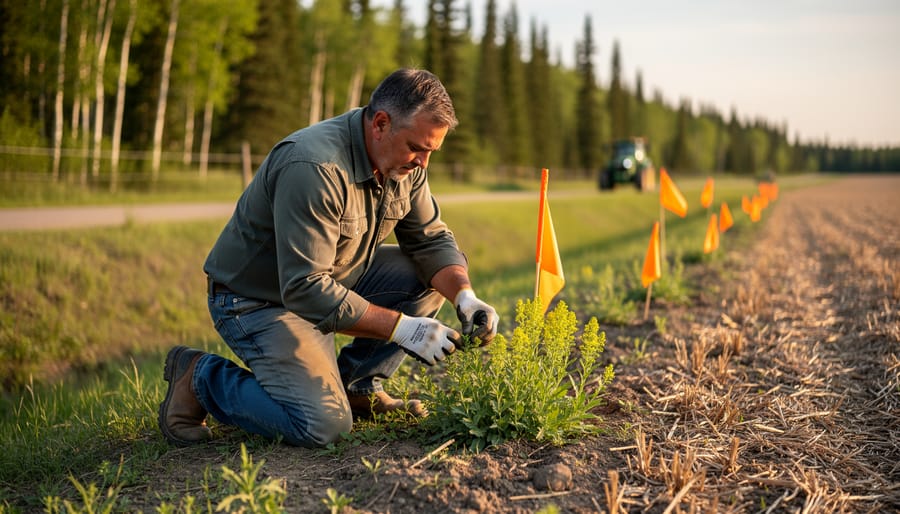
Mark your field margins clearly with GPS waypoints or simple stake markers to prevent accidental cultivation or spray drift. This is especially helpful during busy seasons or when multiple operators use the same equipment. Many Alberta farmers report that after the first season, margins become a natural part of their mental field map.
Timing matters too. Establish margins during less intensive periods, like after harvest or before spring seeding rush. Manitoba farmer James Kowalski shared that setting up margins in fall allowed him to hit the ground running in spring without disrupting planting schedules.
For fields with irrigation systems, plan margins to work with your existing infrastructure. Slightly adjusting margin placement around pivot points or water lines prevents complications while still achieving conservation goals. Remember, field margins should support your operation, not complicate it. Start with one or two fields to develop a system that works for your specific equipment and workflow before expanding across your entire acreage.
Managing Your Field Margins Through the Seasons
Managing field margins doesn’t require intensive labour when you align tasks with natural farming rhythms. Here’s a seasonal approach that works with Alberta’s climate while maximizing biodiversity benefits.
Spring is your planning season. Between late April and May, assess winter damage and identify areas needing attention. This is when you’ll notice gaps from snow mold or rodent activity. Hold off on mowing until after June 15 to protect ground-nesting birds and allow early wildflowers to bloom. “We’ve found that delaying our first cut by just three weeks dramatically increases bird populations,” shares Mark Henderson, a mixed-grain farmer near Lacombe who’s managed field margins for seven years.
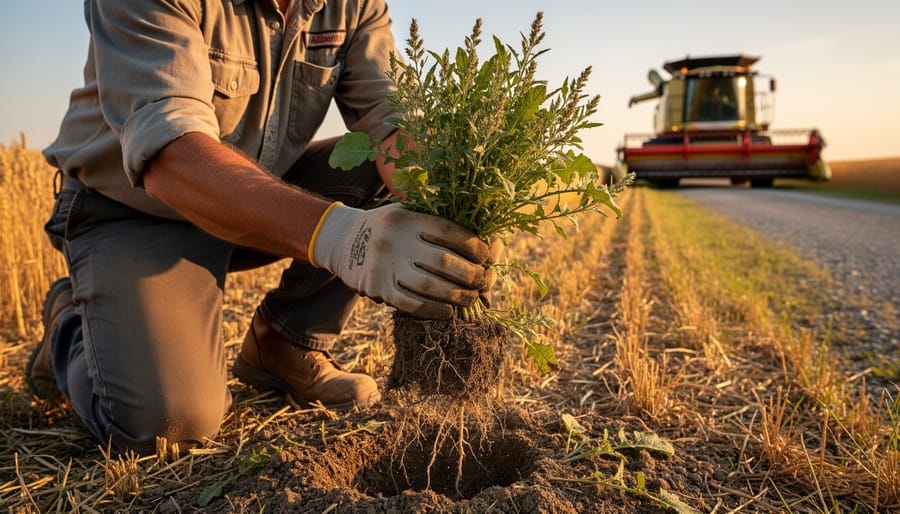
Summer management focuses on selective intervention. If you’re dealing with noxious weeds like Canada thistle or scentless chamomile, spot-treat problem areas rather than broadcasting herbicides across entire margins. A single mid-summer mow in late July, cutting no lower than 15 centimetres, controls aggressive species while leaving habitat structure intact. Many farmers combine this with hay season equipment use, reducing dedicated trips.
Fall offers minimal maintenance requirements. After harvest, leave margins standing through winter. That dried vegetation provides critical wildlife shelter and prevents soil erosion during spring melt. “We used to clean everything up in October, but now we let nature do the work,” explains Jennifer Wu, an agricultural extension specialist with Alberta Agriculture. “Decomposing plant material returns nutrients to the soil, and overwintering beneficial insects emerge earlier.”
Winter is observation time. Walk your margins to identify which plant communities are establishing successfully and where adjustments might help. This low-input approach typically requires just 2-3 hours per 10 hectares annually, making it remarkably cost-effective compared to conventional field edge management.
What the Experts Are Saying
We reached out to several experts working directly with Alberta farmers to address your most pressing questions about field margins.
Dr. Sarah Chen, an agronomist with Alberta Agriculture and Irrigation, tackles a common concern: “Many producers worry that field margins take productive land out of rotation. What we’re seeing in our research trials is that the benefits often outweigh this initial cost. Field margins support beneficial insects that provide natural pest control worth approximately $50-75 per hectare in reduced input costs. They also reduce soil erosion along field edges where equipment often compacts the soil anyway.”
Conservation specialist Mark Thompson from Ducks Unlimited Canada emphasizes the biodiversity payoff: “Even a three-metre margin can make a significant difference. We’ve documented over 40 species of beneficial insects, including native pollinators and pest predators, using these corridors within the first growing season. For farmers growing canola or other insect-pollinated crops, this translates directly to improved yields.”
A frequent myth involves maintenance requirements. Extension agent Patricia Kowalski clarifies: “Producers often think field margins need constant attention. The reality is that once established with native perennial species suited to our climate, they’re remarkably low-maintenance. We recommend an assessment every few years and occasional mowing to prevent woody species encroachment, but that’s typically it.”
The experts agree: start small, choose regionally appropriate plants, and give your field margins two to three growing seasons to establish. The investment pays dividends in soil health, wildlife habitat, and farm resilience.
Common Challenges and How to Overcome Them
Let’s address the real concerns you might have about establishing field margins on your Alberta operation. These are legitimate considerations, and fortunately, there are proven strategies to manage them effectively.
Weed management is often the first worry. Research from Agriculture and Agri-Food Canada shows that well-planned native plant margins actually suppress weeds better than bare edges over time. The key is proper establishment. During the first two years, plan for one or two mowing sessions in June and August to keep annual weeds from setting seed while your perennial natives establish deep roots. Manitoba farmer James Thornton found that after year three, his field margins required minimal intervention as dense native vegetation outcompeted problem weeds naturally.
Concerns about pest harboring deserve honest discussion. Studies from the University of Alberta indicate that diverse field margins actually support beneficial insect populations that help control crop pests. The ratio matters—beneficial insects like ground beetles and parasitic wasps typically outnumber potential pests by significant margins when you establish native plant communities. To maximize this benefit, include a mix of flowering species that bloom throughout the growing season.
The productive acreage question is valid. A 3 to 6-metre margin might seem like lost revenue, but consider this: Dr. Sarah Chen from Olds College notes that field margins often occupy areas already challenged by compaction, poor drainage, or irregular topography. You’re converting low-yield ground into ecological infrastructure that can improve yields in adjacent productive areas through better pollination and pest management.
Neighbor relations matter in farming communities. Open communication helps tremendously. Share your plan beforehand, explain your weed management strategy, and consider establishing your margins incrementally. Several Alberta farmers report that skeptical neighbors became interested once they saw the results firsthand—healthier soil, increased wildlife, and yes, manageable weeds. Some even started their own margins, creating connected habitat corridors that benefit everyone.
Implementing field margins on your operation delivers real results—both for your bottom line and the environment. The evidence from farms across Alberta shows that better pollination, natural pest control, and improved soil health translate directly into economic benefits that often exceed the small amount of land set aside. Meanwhile, you’re creating habitat for wildlife, improving water quality, and building resilience against extreme weather events.
The beauty of field margins is that you don’t need to transform your entire operation overnight. Start small with one field or a problematic section that’s challenging to farm anyway. Those headlands prone to erosion, the awkward corners where equipment struggles, or the edges adjacent to waterways are perfect candidates. Test different approaches, observe what works on your land, and expand from there as you gain confidence.
Alberta farmers have excellent resources available to support your field margin projects. The Growing Forward 2 program and Environmental Farm Plan both offer financial assistance for conservation practices. Local organizations like the Alberta Conservation Association and regional agricultural service boards provide technical expertise tailored to your area’s conditions. Many county offices can connect you with agrologists who understand the specific challenges and opportunities in your region.
Every field margin you establish makes a difference. You’re not just improving your own operation—you’re contributing to healthier ecosystems and more resilient agricultural landscapes for future generations. The farmers already seeing success started exactly where you are today. Take that first step, be part of the solution, and discover how conservation can strengthen your farm’s profitability.