
Unfair trading practices occur when buyers exploit power imbalances to impose terms that harm producers economically, socially, or environmentally—even within relationships that appear legitimate or claim fair trade credentials. For Canadian farmers, particularly those supplying larger distributors or export markets, these practices manifest as last-minute contract changes, delayed payments that strain cash flow during critical planting or harvest periods, or requirements to accept prices below production costs. In Alberta’s agricultural sector, producers have reported buyers retroactively imposing quality standards not specified in original agreements, effectively rejecting contracted goods without compensation.
The challenge lies in recognizing these practices before they threaten your operation’s viability. Unlike obvious fraud, unfair trading often hides behind complex contract language, verbal agreements that shift over time, or gradual erosion of negotiated terms. Understanding the specific mechanisms—from coercive contract modifications to information asymmetry about market prices—empowers you to evaluate your current trading relationships critically.
This reality contradicts the promise of transparent, equitable supply chains that sustainable agriculture advocates. Whether you’re a grain producer navigating export agreements, a livestock farmer working with processors, or a specialty crop grower supplying retail chains, recognizing unfair trading practices protects both your financial sustainability and the integrity of Canadian agriculture’s reputation for ethical production. The following examination provides clear definitions, documented examples from our agricultural community, and practical steps to safeguard your farm business against exploitation.
What Unfair Trading Practices Actually Mean for Canadian Farmers
The Legal Framework in Canada
In Canada, farmers and agricultural producers are protected by a comprehensive framework of legislation designed to prevent unfair trading practices. At the federal level, the Competition Act serves as the primary tool for addressing deceptive marketing, price-fixing, and anti-competitive behaviour that could harm producers. This legislation prohibits misleading advertising and false representations about products, which is particularly relevant for farmers entering fair trade supply chains and certified organic markets.
The Consumer Protection Act, while primarily focused on consumer rights, also establishes standards that impact how agricultural products are marketed and sold. For Alberta farmers specifically, provincial legislation including the Fair Trading Act provides additional safeguards against misleading business practices and ensures transparency in commercial transactions.
The Safe Food for Canadians Act and Regulations govern food labelling, advertising, and import-export activities, ensuring that claims about agricultural products are truthful and verifiable. This is crucial for farmers who rely on premium pricing for certified organic or sustainably produced goods.
Agricultural producers should also be aware of contract law protections available through provincial courts. When agreements contain unconscionable terms or when one party has significantly more bargaining power, legal remedies may be available. The Canadian Grain Commission offers additional oversight for grain transactions, providing dispute resolution services and ensuring fair treatment in the marketplace. Understanding these protections empowers Alberta farmers to recognize when their rights are being violated and take appropriate action.
Common Red Flags in Your Supply Agreements
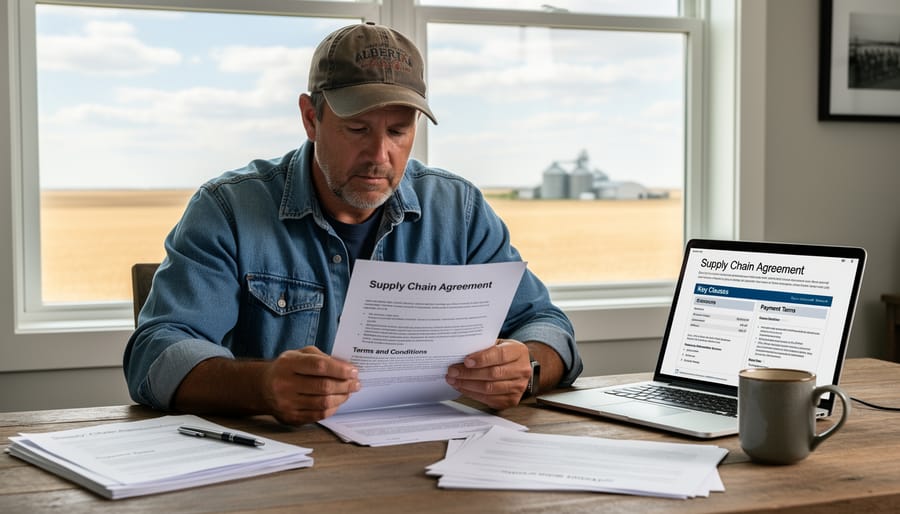
Knowing what to watch for in your supply agreements can protect your farm business from unfair trading practices. Here are practical warning signs that deserve your attention.
Payment terms extending beyond 60 days should raise concerns. While some seasonal variations are normal in agriculture, contracts that consistently push payment schedules to 90 or 120 days may indicate an imbalance of power. One southern Alberta grain producer discovered their buyer was using extended payment terms to essentially finance their operations on the farmer’s dime.
Unilateral contract changes represent another significant red flag. If your buyer reserves the right to modify pricing, quality standards, or delivery requirements without your consent, you’re facing a fundamentally unfair arrangement. Fair partnerships involve negotiation, not dictation.
Watch for vague quality specifications that leave too much room for interpretation. Contracts stating produce must meet “industry standards” or “buyer satisfaction” without concrete metrics create opportunities for arbitrary rejections. Reputable buyers provide specific grading criteria, moisture content requirements, or size specifications in measurable terms.
Exclusive supply clauses that prevent you from diversifying your market access deserve scrutiny. While commitment works both ways in healthy relationships, agreements that lock you into single buyers without guaranteed minimum purchase volumes shift risk entirely onto your operation.
Be cautious of verbal promises that contradict written terms. If a buyer verbally assures you of bonuses, premium pricing, or purchase commitments not reflected in your contract, insist on written amendments. These conversations should strengthen your agreement, not replace it.
Finally, resistance to transparency about pricing mechanisms or supply chain costs often signals unfair practices. Partners committed to fair trade typically welcome conversations about how prices are determined and how value is distributed throughout the supply chain.
The Most Common Unfair Practices Hiding in Sustainable Supply Chains
Price Manipulation and Below-Cost Purchasing
Price manipulation remains one of the most persistent unfair trading practices affecting Canadian farmers, even those participating in certified sustainable and fair trade programs. This occurs when buyers leverage their market power to pressure producers into accepting prices that fail to cover basic production costs, transportation, or fair wages for farm workers.
In practice, this looks like buyers delaying purchase agreements until harvest time when farmers have limited storage options and face mounting pressure to sell. Some purchasers present “take-it-or-leave-it” prices that reference artificially low market benchmarks, knowing farmers have few alternative buyers within reasonable distance. Alberta grain producers, for example, have reported situations where fuel costs alone consumed anticipated profit margins, yet buyers refused to adjust contracted prices despite documented cost increases.
The problem becomes more troubling within certified sustainable programs. While these certifications promise fair compensation, some buyers exploit the premium pricing structure. They may purchase certified products at slightly above commodity rates but still below actual production costs when certification fees, auditing expenses, and additional labor requirements are factored in. A Saskatchewan canola farmer shared in a recent interview how their organic certification costs approximately $2,400 annually, yet their buyer’s premium barely covered half that expense, leaving them financially worse off than conventional neighbors.
This practice forces difficult decisions: accept unsustainable prices and absorb losses, abandon certification programs despite years of investment, or exit farming altogether. Understanding these manipulation tactics helps you recognize when partnership terms cross from tough negotiation into unfair practice territory, protecting both your operation and family’s livelihood.
Unfair Contract Terms and Last-Minute Changes
Unfair contract terms represent one of the most common ways producers face exploitation in agricultural supply chains. These clauses often appear buried in lengthy agreements, shifting financial risks and operational burdens away from buyers onto farmers who have limited negotiating power.
Payment delays are particularly problematic for Canadian farmers operating on thin margins. Some contracts stipulate payment terms of 90 to 120 days after delivery, forcing producers to finance operations while buyers hold their money. This practice can be devastating during planting season when cash flow is critical. Even more concerning are contracts that tie payment to the buyer’s own receipt of payment from downstream customers, leaving farmers waiting indefinitely.
Unilateral modification clauses allow buyers to change prices, quality standards, or delivery requirements after contracts are signed. A Saskatchewan grain producer might deliver wheat meeting agreed specifications, only to face rejection based on newly imposed moisture content standards. These last-minute changes leave farmers with products they must sell at distressed prices elsewhere.
Other problematic terms include automatic contract renewal clauses that trap farmers in unfavorable relationships, penalty fees that far exceed actual damages, and requirements that producers absorb all transportation or quality testing costs. Some agreements even prohibit farmers from selling to other buyers without providing guaranteed purchase volumes in return.
Building relationships based on transparent supply chain practices helps protect against these exploitative terms. Before signing any agreement, carefully review payment schedules, modification provisions, and termination rights. Consider having a lawyer review contracts involving significant investment or multi-year commitments.
Certification Cost-Shifting
Sustainability certifications promise better market access, but many farmers face a troubling reality: they shoulder all certification costs while buyers pocket the benefits. In Alberta’s grain sector, producers report spending $2,000 to $5,000 annually on organic or sustainability certifications, yet 67% receive no price premium whatsoever. This practice represents a clear unfair trading advantage where buyers demand certified products without compensating farmers for their investment.
The cost-shifting extends beyond initial certification fees. Farmers must pay for annual audits, documentation systems, and staff training while buyers simply add “sustainably sourced” to their marketing materials. Manitoba canola grower James Thornton shared that his operation invested $8,000 in Roundtable on Sustainable Palm Oil certification at a buyer’s request, only to have that same buyer switch suppliers the following year to save three cents per kilogram. When certification becomes a requirement rather than a value-added choice, and costs remain entirely with producers, it functions as an exploitative barrier rather than a pathway to fair compensation.
Real Stories from Alberta: When Fair Trade Wasn’t Fair
Maria operated a 240-hectare organic grain farm near Lacombe, and when a Vancouver-based company approached her about supplying heritage wheat for their premium fair trade flour line, it seemed like the opportunity she’d been working toward. The initial contract promised $1.20 per kilogram above conventional prices, with the company covering certification costs.
Reality unfolded differently. After investing $8,500 in additional certifications the company required beyond standard organic credentials, Maria learned these costs weren’t actually covered as promised. The fine print specified reimbursement only after delivering 50,000 kilograms, an amount that would take her two full growing seasons to reach. Meanwhile, the company exercised its contract clause to delay payment for 120 days after delivery, putting significant strain on her cash flow during crucial input purchasing periods.
When market prices rose in year two, the company insisted on the locked-in price while their retail products increased by 15 percent. Maria’s attempts to renegotiate were met with threats of contract termination and demands she repay their “investment” in her certification.
A Saskatchewan pulse farmer named James faced similar challenges with a fair trade cooperative arrangement. His lentil crop met every specification, but the buyer implemented a previously undisclosed grading system that downgraded 40 percent of his delivery, reducing payment by nearly $12,000. The contract gave the buyer sole authority over quality assessment with no independent arbitration option.
These experiences share common threads: imbalanced contracts, moving goalposts, and power dynamics that favoured buyers despite fair trade branding. Both farmers eventually found more equitable partnerships, but only after significant financial stress.
The lessons proved valuable for their communities. Maria now shares her contract review checklist with other farmers, emphasizing the importance of clear certification cost agreements and reasonable payment terms. James helped establish a regional growers’ cooperative that collectively negotiates contracts, ensuring better terms through shared bargaining power.
Neither farmer regrets pursuing sustainable markets, but both emphasize that fair trade labels don’t automatically guarantee fair treatment. Their advice to fellow producers: verify partnership claims through references, involve a lawyer in contract reviews before signing, and connect with other farmers already working with potential buyers. Building relationships within farming networks proved their strongest protection against exploitation.
These stories remind us that sustainable agriculture partnerships should benefit all parties involved. When they don’t, speaking up and seeking support from agricultural organizations helps create accountability and improves conditions for the farmers who follow.
How True Fair Trade Practices Should Work
The Core Principles of Equitable Trading
Understanding what separates fair from unfair trading practices helps you protect your farm business and build stronger partnerships. At the heart of equitable trading lie four fundamental principles that create balanced, sustainable relationships between producers and buyers.
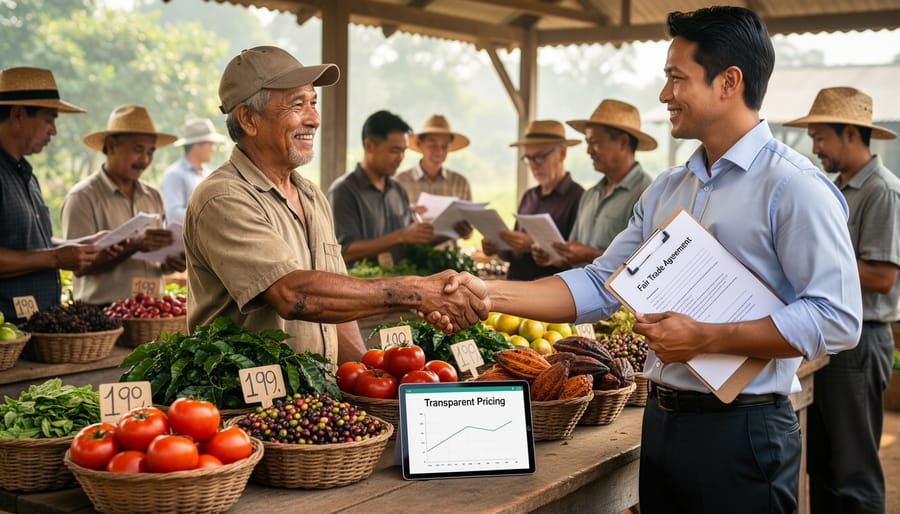
Transparent pricing stands as the foundation of fair trade. You deserve to know exactly how your product’s price is calculated, including quality premiums, market adjustments, and any deductions. When buyers clearly explain their pricing structure and provide written agreements, you can make informed decisions about your crops and plan for future seasons with confidence.
Reasonable payment terms protect your cash flow and operational stability. Fair trading means receiving payment within agreed timeframes, typically 30 to 60 days, without unexpected delays or conditions. Some Alberta grain farmers have successfully negotiated partial advance payments to help cover harvest costs, demonstrating how respectful negotiations can address both parties’ needs.
Shared risk ensures that market fluctuations or quality issues don’t fall entirely on your shoulders. In equitable relationships, contracts include provisions for weather-related challenges, reasonable quality tolerances, and fair dispute resolution processes. This balanced approach recognizes that farming involves inherent uncertainties that shouldn’t be your sole burden.
Respectful negotiation means your voice matters in the trading relationship. You should feel comfortable discussing terms, asking questions, and proposing alternatives without fear of losing the contract. When building fair supply chains, both parties work collaboratively rather than one dictating terms to the other. These principles create partnerships where everyone benefits from mutual success.
Expert Perspective: Building Balanced Partnerships
We spoke with Dr. Sarah Mitchell, agricultural economist specializing in cooperative supply models, about building truly equitable trading relationships. “The foundation of balanced partnerships is transparency,” Dr. Mitchell explains. “Both parties need clear visibility into costs, pricing structures, and market realities. When information flows freely, power imbalances diminish.”
Dr. Mitchell emphasizes that genuine sustainability requires fair compensation. “Producers need pricing that covers production costs plus a living wage margin. Buyers benefit too—stable supplier relationships reduce disruptions and maintain quality standards.” She points to Alberta’s grain cooperatives as successful examples where collective bargaining creates leverage without sacrificing relationship quality.
Contract terms matter significantly. “Look for agreements offering price stability mechanisms, reasonable payment timelines—ideally within 30 days—and clauses preventing sudden specification changes,” she advises. These elements protect both parties from market volatility while fostering trust.
Dr. Mitchell notes that social equity in supply chains strengthens entire networks. “When producers thrive, they invest in quality improvements and innovation. Everyone wins.” She encourages farmers to seek buyers who demonstrate long-term commitment through multi-year contracts and collaborative problem-solving approaches, creating partnerships built on mutual respect rather than extractive practices.
Protecting Your Operation: Practical Steps for Alberta Farmers
Before You Sign: Contract Review Essentials
Before signing any agreement with buyers or distributors, take time to thoroughly review the terms. This careful examination protects your farm operation and ensures you’re entering a genuinely fair arrangement.
Start by verifying the pricing structure. Ask potential buyers to explain clearly how they calculate the prices you’ll receive. Watch for vague language about “market-based adjustments” without specific formulas. Request written confirmation of minimum prices or price floors, especially for longer-term contracts. If prices seem to fluctuate based on unclear factors, this could signal unfair practices.
Examine payment terms closely. Standard payment windows for agricultural products typically range from 30 to 60 days. Anything beyond 90 days should raise concerns. Check for hidden deductions—processing fees, transportation costs, or quality penalties that weren’t discussed upfront. One Alberta grain farmer discovered a buyer deducting 8% for “administrative costs” buried in page seven of their contract.
Review exclusivity clauses carefully. Some buyers require you to sell exclusively to them, which can leave you vulnerable if they change terms later. Ask yourself: Does this restriction limit my ability to find better opportunities? Can I exit the agreement if circumstances change?
Question quality standards and inspection processes. Who determines if your product meets specifications? Can you dispute rejections? Ensure these processes are transparent and fair.
Finally, verify the buyer’s track record. Connect with other farmers who’ve worked with them. Ask about their payment reliability, communication practices, and how they handle disputes. Your local agricultural association can often provide valuable insights about a buyer’s reputation within the farming community.

Resources and Support Networks
If you’re facing unfair trading situations, you’re not alone, and help is available right here in Canada. The Canadian Federation of Agriculture offers advocacy support and can connect you with resources specific to your situation. In Alberta, the Alberta Federation of Agriculture provides province-specific guidance and represents farmer interests in trading disputes.
Legal support is accessible through the Canadian Agricultural Law Community, which specializes in farm-related legal matters, including contract disputes and unfair trade practices. Many provincial law societies also offer free initial consultations to help you understand your rights.
Farmer cooperatives like Alberta Barley and Alberta Wheat Commission not only provide marketing support but can also offer collective bargaining power when dealing with buyers. These organizations understand the local agricultural landscape and have experience navigating trading challenges.
For immediate concerns, Agriculture and Agri-Food Canada maintains a network of regional offices with advisors who can review your contracts and trading relationships. Don’t hesitate to reach out early when something feels unfair in your business dealings. Building connections with fellow farmers through local agricultural associations creates informal support networks where you can share experiences and learn from others who’ve successfully addressed similar challenges.
When and How to Walk Away
Recognizing when to exit a supply chain relationship isn’t failure—it’s protecting your farm’s future. If you’ve documented unfair practices, communicated concerns clearly, and seen no meaningful change, it may be time to consider alternatives. Warning signs include repeated late payments beyond 60 days, contract terms that change without your consent, or buyers who consistently reject quality product without valid explanation.
Before walking away, consult with agricultural legal services or the Canadian Agricultural Partnership programs available in Alberta. Document everything: contracts, correspondence, delivery records, and payment histories. These records protect you legally and help secure new partnerships.
Transition gradually when possible. Build relationships with new buyers before severing existing ties—attend farmers’ markets, connect with local food cooperatives, or explore direct-to-consumer channels. Alberta’s agricultural community is supportive; reach out to fellow farmers who’ve navigated similar transitions. Their experience can guide your next steps and remind you that sustainable, respectful partnerships exist and are worth pursuing.
Building a More Equitable Future for Sustainable Agriculture
Creating a more equitable agricultural future requires collective effort from all participants in Canada’s farming community. By working together, farmers, agricultural organizations, and policymakers can build stronger protections against unfair trading practices while strengthening local food supply chains.
Start by connecting with producer cooperatives and farmer networks in your region. These groups provide collective bargaining power and shared resources for contract review and legal support. Alberta farmers have successfully used cooperative models to negotiate better terms with buyers and share market intelligence about problematic trading partners.
Policy advocacy plays a crucial role in protecting agricultural producers. Support initiatives that promote transparent pricing mechanisms, mandatory written contracts, and stricter enforcement of existing fair trade regulations. Contact your provincial agricultural representative to voice concerns about unfair practices and push for stronger protections at both provincial and federal levels.
Community-based approaches offer practical solutions. Participate in local food hubs and direct-to-consumer programs that reduce dependency on traditional supply chains where power imbalances often occur. These models give farmers greater control over pricing and payment terms while building direct relationships with customers who value ethical production.
Document and share your experiences with unfair trading practices through industry associations and agricultural advocacy groups. Your stories help build the case for regulatory reform and warn other farmers about problematic buyers.
Remember that change happens incrementally through consistent effort. By staying informed, supporting collective action, and advocating for stronger protections, Canadian farmers can help create a more equitable agricultural system that rewards sustainable practices and respects producer rights. Your participation matters in building this future.
Understanding unfair trading practices isn’t just about protecting yourself—it’s about building a stronger agricultural community across Canada. When you recognize these exploitative patterns, whether it’s delayed payments, misleading contract terms, or pressure to accept below-cost prices, you’re taking the first step toward demanding the fair treatment you deserve.
You’re not alone in this journey. Across Alberta and throughout Canadian farming regions, producers are coming together to share experiences, support one another, and hold buyers accountable. This collective knowledge becomes your greatest asset. When one farmer speaks up about unfair treatment, it creates pathways for others to do the same.
Remember that sustainable markets depend on sustainable relationships. Fair trade principles exist because producers like you advocated for better standards. By staying informed about your rights, documenting your transactions, and seeking support when needed, you contribute to a marketplace that values integrity over exploitation.
The resources available to you—from agricultural associations to legal aid services—exist because your concerns matter. Don’t hesitate to reach out when something feels wrong. Your instincts about unfair treatment are usually correct, and questioning problematic practices isn’t confrontational; it’s professional.
Moving forward, let your understanding of these practices guide your business decisions. Choose partners who respect transparent pricing, honor contracts, and communicate honestly. Your farm deserves relationships built on mutual respect, and the agricultural community grows stronger when we all stand firm on these principles together.