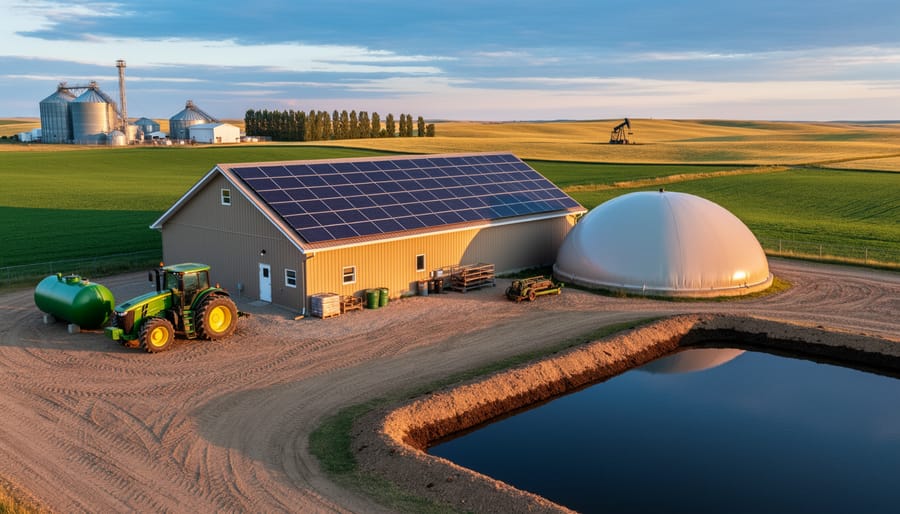
Carbon exists in both renewable and nonrenewable forms, and understanding this distinction will directly impact your farm’s energy choices and carbon footprint management. When you burn fossil fuels like diesel or natural gas, you’re releasing carbon that took millions of years to form—that’s nonrenewable carbon. When you grow crops, manage livestock, or use biomass energy, you’re working with carbon that cycles through the atmosphere in months or years—that’s renewable carbon.
The confusion arises because carbon itself is just an element, neither renewable nor nonrenewable. What matters is the source. Fossil carbon locked underground for millennia adds new carbon dioxide to the atmosphere when released. Biogenic carbon from plants and animals simply returns to the air what was recently absorbed, creating a closed loop. This difference determines whether your farm operations contribute to or help solve climate challenges.
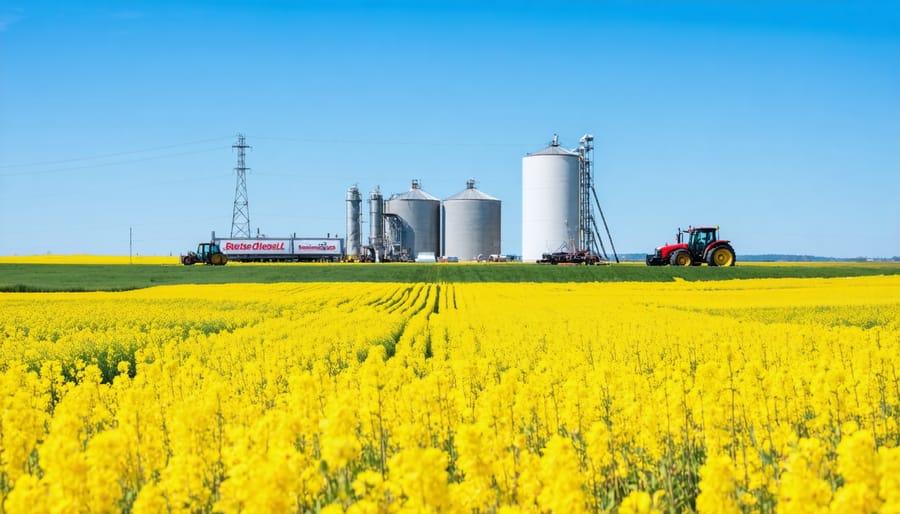
For Alberta farmers considering renewable energy investments, this distinction translates into real decisions: should you install solar panels, explore biogas digesters for manure management, or transition equipment to biodiesel? Each choice involves different types of carbon cycling. A grain operation in Lethbridge recently reduced its fossil fuel consumption by 40 percent after switching to renewable energy sources, demonstrating that understanding carbon’s dual nature leads to measurable environmental and economic benefits.
The path forward requires clarity about which carbon sources you’re currently using and which renewable alternatives fit your operation’s specific needs, soil conditions, and climate goals.
The Two Faces of Carbon: Understanding Renewable vs Nonrenewable
The Fast Carbon Cycle: Nature’s Renewable System
Carbon moves through natural systems remarkably quickly when we look at the fast carbon cycle. Unlike fossil fuels that took millions of years to form, this cycle operates on timeframes we can observe and influence on our farms—from seasons to decades.
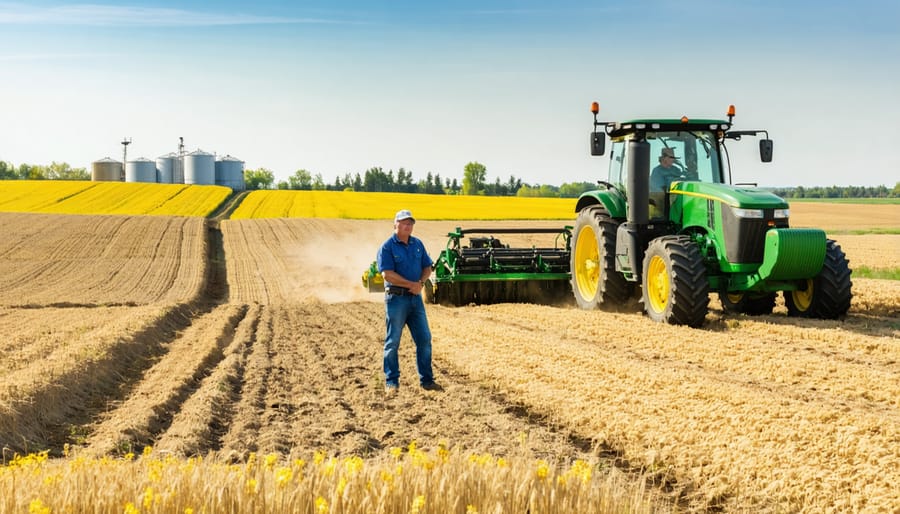
Here’s how it works in practice: Your crops absorb carbon dioxide from the atmosphere during photosynthesis, converting it into plant tissue. When you harvest canola or wheat, some carbon ends up in grain while stubble and roots remain in the soil. As residue breaks down, microorganisms release some carbon back to the atmosphere, while soil organisms help store a portion deeper underground where it can remain for years.
This natural exchange continues through your livestock operations too. Cattle consume forage containing carbon, which cycles through their systems and returns to pastures through manure. When managed strategically, this becomes a renewable resource rather than waste.
Alberta farmers are already working with this cycle through proven practices. Crop rotation helps maintain soil carbon stocks by varying root structures and residue types. When you plant legumes one season and cereals the next, you’re supporting different microbial communities that process carbon in complementary ways.
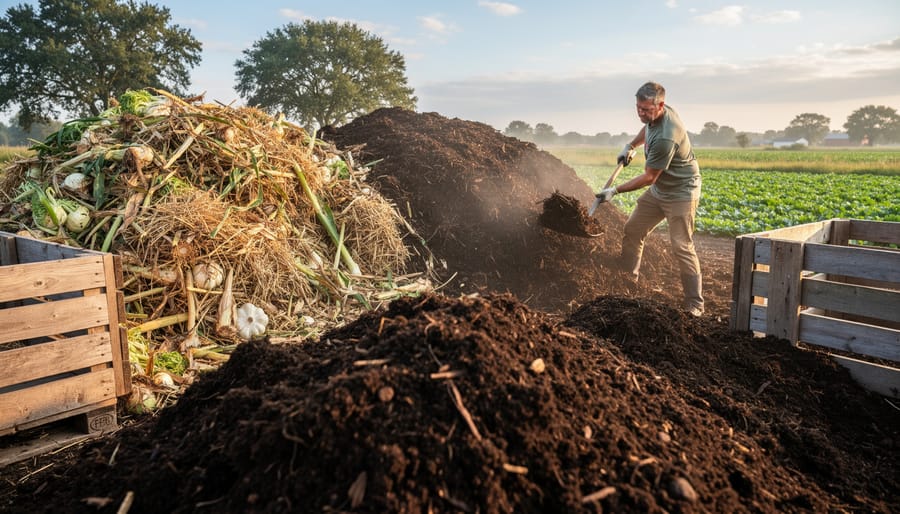
Composting accelerates the fast carbon cycle on your operation. By intentionally managing organic waste decomposition, you’re capturing carbon that would otherwise be released rapidly and transforming it into stable soil amendments. This isn’t just environmentally sound—it’s economically practical, reducing fertilizer costs while building soil health.
Understanding this renewable aspect of carbon helps frame sustainability decisions as working with natural systems rather than against them.
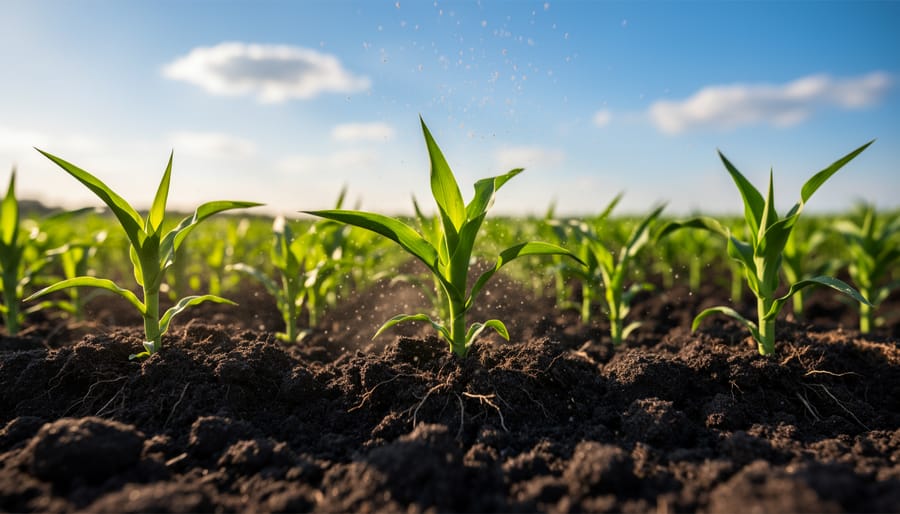
The Slow Carbon Cycle: Why Fossil Fuels Aren’t Renewable
Here’s where the renewable versus nonrenewable distinction becomes crucial for understanding your farm’s carbon footprint. While carbon itself cycles through the atmosphere naturally, fossil fuels represent a different story altogether.
Think of it this way: the coal, oil, and natural gas we burn today took between 50 to 350 million years to form. Ancient plants and organisms captured atmospheric carbon through photosynthesis, then died and were buried under layers of sediment. Heat and pressure transformed them into the fossil fuels we extract today.
On a human timescale—or even a farming operation’s multi-generational timeline—this carbon is functionally nonrenewable. We’re releasing millions of years’ worth of stored carbon in mere decades, disrupting the natural balance that kept atmospheric carbon relatively stable.
For Alberta farmers, this distinction matters when evaluating energy choices. Using diesel fuel or natural gas for equipment and heating releases this ancient carbon back into the atmosphere, adding to the total carbon load rather than cycling existing atmospheric carbon. This is fundamentally different from biomass energy sources like crop residues or purpose-grown energy crops, which release carbon that was recently captured from today’s atmosphere—keeping you within the active, renewable carbon cycle.
How Carbon Neutrality Works on Canadian Farms
Measuring Your Farm’s Carbon Footprint
Understanding your farm’s carbon footprint starts with identifying where emissions come from. For most Alberta operations, four main sources account for the majority of greenhouse gas releases.
Fuel consumption typically represents the largest category. Tractors, combines, trucks, and other diesel-powered equipment generate significant emissions during planting, harvesting, and daily operations. Track your fuel purchases over a year to establish a baseline—most farms use between 15 to 40 litres per hectare annually, depending on crop type and practices.
Electricity usage for grain drying, irrigation pumps, and facility operations contributes another measurable portion. Review your utility bills to identify seasonal patterns and high-consumption activities.
Livestock operations face additional considerations. Cattle produce methane through digestion, while manure management systems release both methane and nitrous oxide. A single beef cow typically generates 1.5 to 2.5 tonnes of carbon dioxide equivalent annually, though this varies with diet and management practices.
Fertilizer application, particularly nitrogen-based products, represents the fourth major source. Manufacturing synthetic fertilizers requires substantial energy, and field application releases nitrous oxide—a greenhouse gas nearly 300 times more potent than carbon dioxide.
Start your assessment by gathering 12 months of records: fuel receipts, electricity bills, fertilizer purchases, and livestock numbers. Many farm management software programs now include carbon tracking features, or you can work with agricultural extension services who offer free assessment tools. The goal isn’t perfection—it’s establishing your starting point so you can measure progress as you implement renewable energy solutions and sustainable practices.
Natural Carbon Sinks on Your Property
Your farm already contains powerful natural carbon storage systems working quietly in the background. Understanding where and how your property sequesters carbon helps you recognize the renewable potential already at your fingertips.
Soil represents your most significant carbon sink. Healthy agricultural soils can store approximately 1.5 to 3 tonnes of carbon per hectare annually when managed properly. Every time you add organic matter through crop residues, compost, or cover crops, you’re building this renewable storage capacity. The key lies in maintaining soil health through minimal disturbance, keeping living roots in the ground year-round, and diversifying what you grow.
Trees and shelterbelts around your property act as long-term carbon storage vaults. A mature tree can sequester around 22 kilograms of carbon dioxide per year, while also providing windbreaks and wildlife habitat. Even small woodlots on marginal land contribute meaningfully to your farm’s carbon balance.
Perennial crops offer another renewable storage opportunity. Unlike annual crops that require yearly soil disturbance, perennials like alfalfa, native grasses, and forage crops maintain root systems that continuously build soil carbon. Many Alberta producers have found that integrating perennials into their rotation through regenerative farming practices not only sequesters carbon but also improves overall soil resilience and reduces input costs.
The beauty of these natural sinks is their renewable nature. With proper management, they continue capturing and storing carbon year after year, turning your farm into an active participant in the renewable carbon cycle.
Renewable Energy Technologies That Reduce Nonrenewable Carbon
Solar Power for Farm Operations
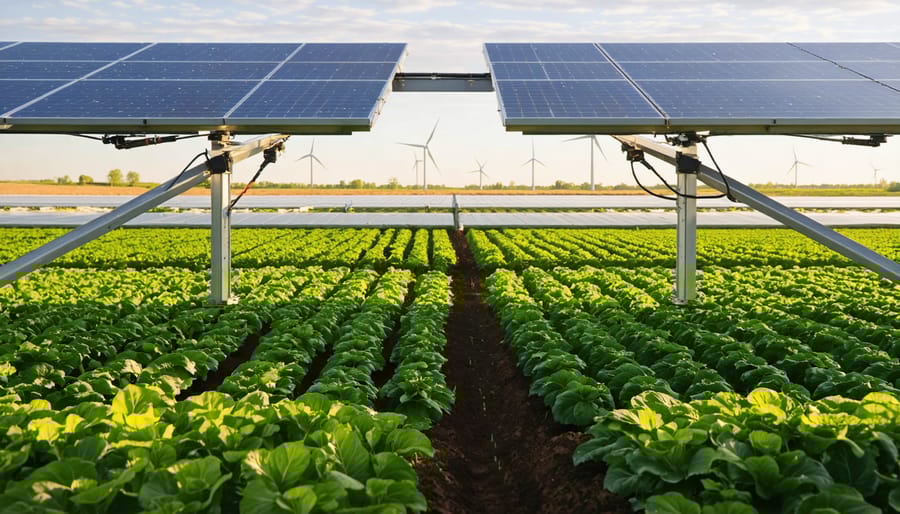
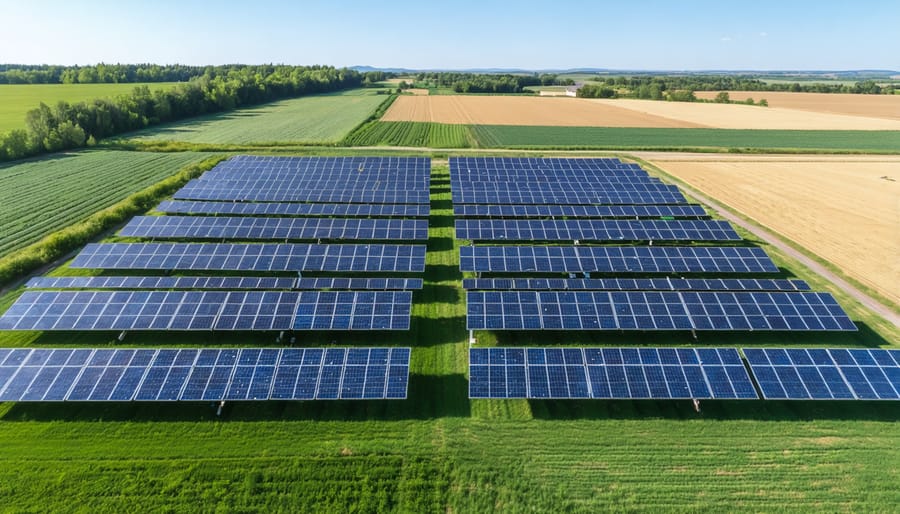
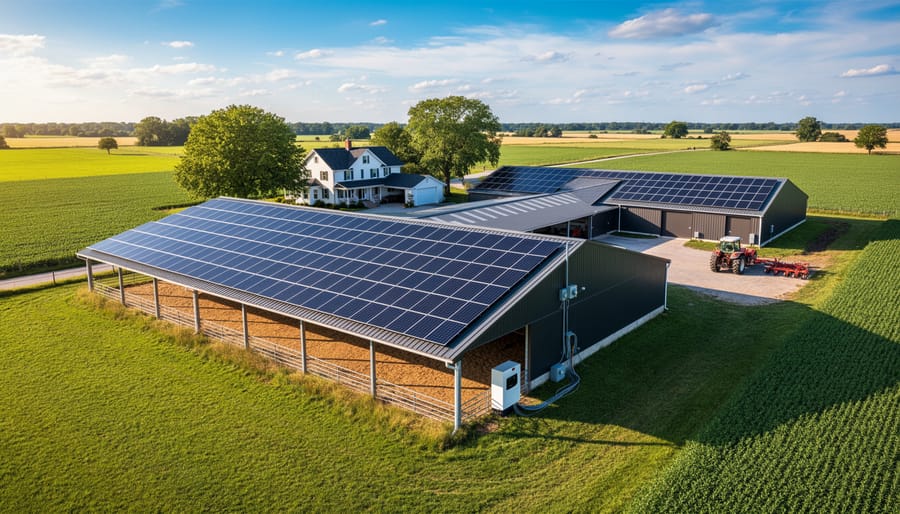
Alberta farmers are increasingly exploring solar power for farm operations as a renewable energy solution that reduces reliance on fossil fuel-based electricity. Solar panels can effectively power equipment charging stations, irrigation pumps, and provide supplemental heating for barns and workshops.
However, realistic expectations are crucial given Alberta’s seasonal variations. Winter months present challenges with shorter daylight hours and snow coverage on panels, reducing output by 40-60% compared to summer peaks. Most successful installations incorporate battery storage systems to manage this variability, ensuring consistent power availability.
Practical applications that work well include charging electric utility vehicles, powering water pumps during growing season, and running ventilation systems in livestock facilities. A 10-kilowatt system, common for medium-sized operations, typically generates 12,000-14,000 kilowatt-hours annually in southern Alberta.
Initial investment costs range from $20,000-$30,000 for basic farm-scale installations, with federal and provincial incentive programs helping offset expenses. Many farmers report 8-12 year payback periods, after which the energy becomes essentially free aside from minimal maintenance costs. The key is matching system size to your actual energy needs rather than overbuilding, ensuring the investment aligns with your operation’s renewable energy goals.
Wind Energy in Prairie Regions
Alberta’s consistent prairie winds create excellent opportunities for farms to generate renewable energy through small-scale wind turbines. While large commercial installations dominate the wind energy in Alberta landscape, smaller systems sized between 5 and 100 kilowatts can effectively power farm operations or supplement grid electricity.
Before investing, farmers should assess their property’s average wind speeds, which ideally exceed 4 metres per second at turbine height. Municipal height restrictions typically limit farm turbines to 15-30 metres, so checking local bylaws is essential. Transport Canada regulations may also apply if you’re near airports or airstrips.
Maintenance requirements are manageable but necessary. Annual inspections, blade cleaning, and occasional bearing replacements keep systems running efficiently for 20-25 years. Many Alberta farmers partner with regional installers who provide maintenance packages, reducing the technical burden.
Financial considerations include upfront costs of approximately $30,000-$80,000 for suitable farm-scale systems, with federal and provincial incentive programs potentially offsetting 25-40 percent. Most installations achieve payback within 10-15 years while reducing your farm’s carbon footprint and energy costs simultaneously.
Biogas from Agricultural Waste
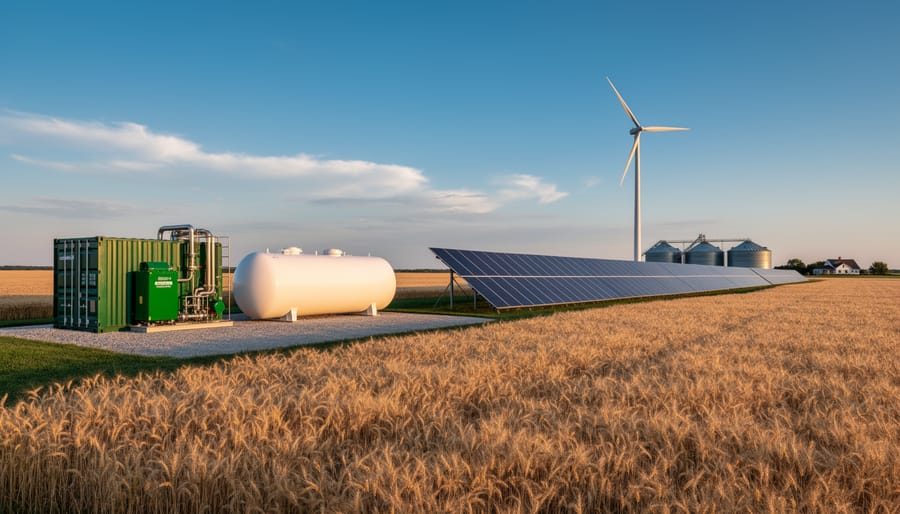
Your farm generates valuable renewable energy resources every day through livestock manure and crop residues. These organic materials contain carbon that cycles naturally through the environment, making them ideal candidates for renewable energy production. When you convert this waste into bioenergy from agricultural waste, you’re tapping into renewable carbon sources while solving waste management challenges.
Anaerobic digesters break down manure and plant materials in oxygen-free environments, producing biogas primarily composed of methane. This process captures carbon that would otherwise release into the atmosphere during natural decomposition. Alberta farmers like those at Viewfield Colony have successfully implemented digesters that process cattle manure, generating enough electricity to power their operations and surrounding communities.
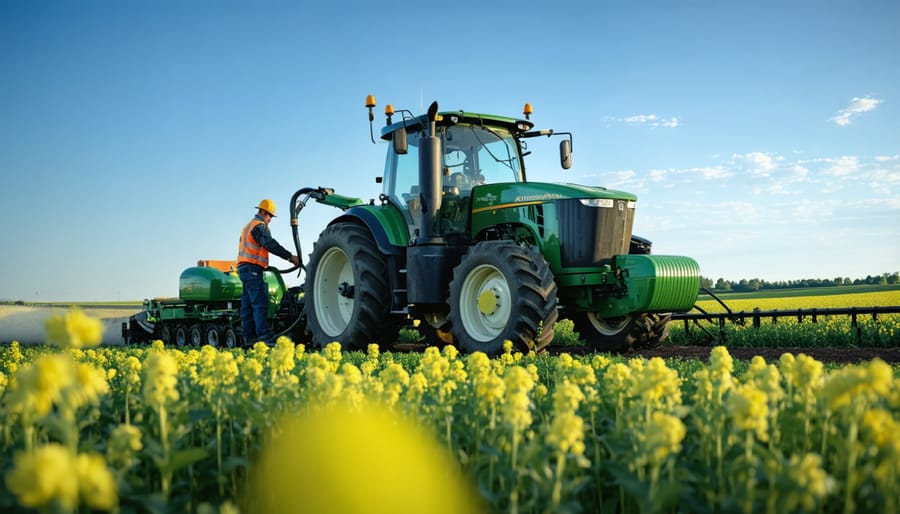
The beauty of this system lies in its circular nature. Your crops absorb carbon dioxide from the air as they grow, livestock consume those crops, and the resulting manure becomes fuel. After digestion, the remaining material makes excellent fertilizer, returning nutrients to your soil. This closed-loop system demonstrates how renewable carbon can provide energy, manage waste, and support soil health simultaneously. For Alberta operations producing significant amounts of manure or crop residues, biogas systems offer practical pathways toward energy independence and reduced operating costs.
Real Alberta Farmers Making the Transition
Case Study: Solar Integration on a Mixed Grain Operation
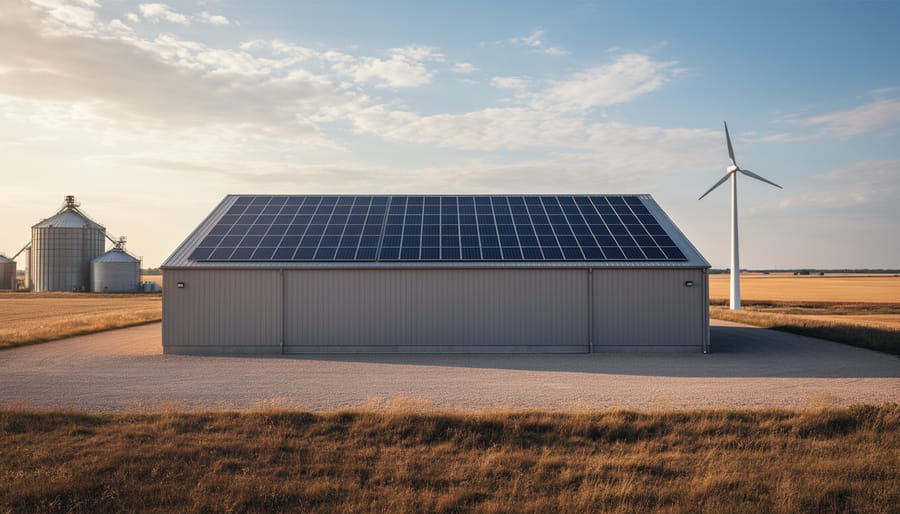
The Johnson family farm near Lethbridge, Alberta, operates 800 hectares of wheat, canola, and barley. In 2021, they faced rising electricity costs that were cutting into their profit margins, especially during grain drying season. After attending a regional workshop on renewable energy, they decided to install a 50-kilowatt solar array on their main equipment shed.
The initial investment totaled $62,000, with federal and provincial rebates reducing their out-of-pocket costs to approximately $41,000. Sarah Johnson, who manages the farm’s finances, explains their decision: “We wanted to reduce our carbon footprint, but the financial case had to make sense too. The payback period of seven to eight years was acceptable for us.”
Over the past three years, the system has generated an average of 65,000 kilowatt-hours annually. This covers roughly 70 percent of their grain storage and drying operations during peak season. Their electricity bills have dropped by $8,200 per year, and they’ve reduced their carbon dioxide emissions by approximately 42 tonnes annually—equivalent to taking nine passenger vehicles off the road.
The Johnsons tracked their energy production through a mobile app, which helped them optimize usage during sunny periods. They now run grain augers and ventilation systems primarily during daylight hours when solar generation peaks. Sarah notes one unexpected benefit: “The panels provide shade for our equipment storage area, which keeps our shop cooler in summer and reduces cooling costs.”
Their success has inspired three neighbouring farms to explore similar installations.
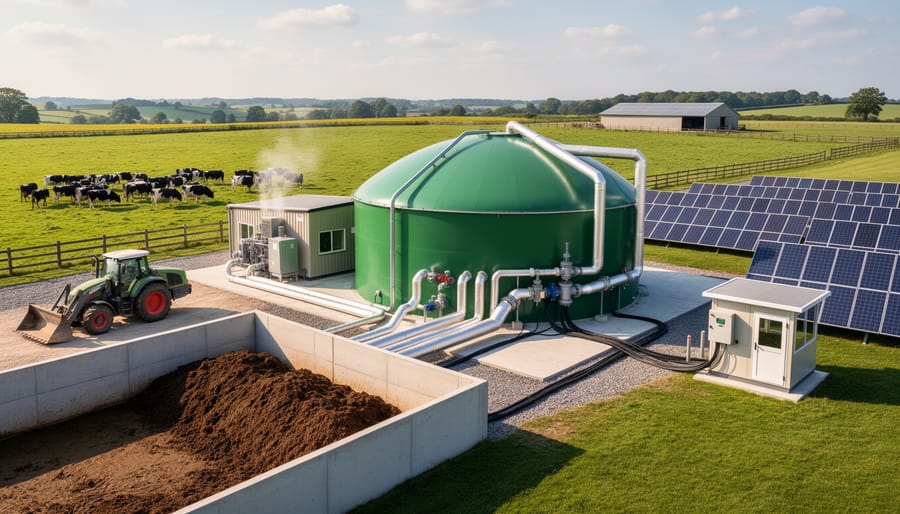
Case Study: Biogas Success on a Dairy Farm
The Eberts family dairy operation near Ponoka, Alberta, offers a practical example of how manure management can contribute to carbon neutrality. In 2019, they installed a 265 kilowatt anaerobic digester system that processes manure from their 850-cow herd.
The setup includes a heated digester tank where bacteria break down manure in an oxygen-free environment, producing biogas that’s primarily methane. This biogas powers an engine-generator that produces electricity for the farm’s operations, with excess sold back to the grid. The process handles approximately 40 cubic metres of manure daily.
According to farm manager Dale Eberts, the first year presented a learning curve. “We had to adjust our feeding consistency and monitor the digester temperature closely, especially during winter months when temperatures dropped to -30°C,” he explains. The family worked with technicians to optimize the bacteria balance and maintain steady biogas production.
The environmental benefits extend beyond renewable energy generation. The digester captures methane that would otherwise escape into the atmosphere from manure storage—a significant win since methane has 28 times the warming potential of carbon dioxide over a 100-year period. The remaining solid material becomes nutrient-rich fertilizer that improves soil health across their 400 hectares of cropland.
The operation now offsets roughly 60 percent of their purchased electricity needs and has reduced their overall carbon footprint by an estimated 1,200 tonnes of CO2 equivalent annually. While the initial investment of $1.8 million required federal and provincial support programs, the Eberts family reports increasing returns through energy savings and improved nutrient management.
Taking Your First Steps Toward Carbon Neutrality
Start with an Energy Audit
Before exploring sustainable farm solutions, you need a clear picture of where your operation currently stands. An energy audit helps identify your biggest nonrenewable carbon sources—typically diesel fuel, natural gas for heating, and electricity from fossil fuel grids.
Start by tracking your energy bills over the past year. Note seasonal patterns and which operations consume the most energy. Walk your property with a notepad, documenting equipment that runs on fossil fuels: tractors, combines, grain dryers, irrigation pumps, and barn heaters. Don’t forget transportation vehicles used for deliveries and farm errands.
Alberta farmers can access free or subsidized energy assessments through several programs. The Canadian Agricultural Partnership offers funding for energy audits and efficiency upgrades. Agriculture and Agri-Food Canada’s Agricultural Clean Technology Program provides cost-share opportunities for renewable energy assessments. Additionally, municipal agricultural fieldmen often connect farmers with energy advisors familiar with local conditions.
Many farmers discover that grain drying and heating facilities represent their largest nonrenewable carbon footprint—information that becomes your roadmap for prioritizing renewable energy investments and efficiency improvements.
Funding and Incentive Programs in Canada
Transitioning to renewable energy systems on your farm becomes more financially achievable through various government funding programs. Understanding these opportunities can significantly reduce your upfront investment costs while supporting Canada’s carbon reduction goals.
At the federal level, the Canadian Agricultural Partnership offers cost-share funding for environmental farm projects, including renewable energy installations. Applications typically open in spring, with funding covering up to 50% of eligible project costs. Contact Agriculture and Agri-Food Canada at 1-877-246-4682 or visit their regional offices for specific program details and eligibility requirements.
The Agricultural Clean Technology Program provides substantial support for farmers implementing solar, wind, or biomass energy systems. This program focuses specifically on technologies that reduce greenhouse gas emissions. Applications are reviewed quarterly, and successful applicants can receive funding for feasibility studies and equipment purchases. Reach out to your local agricultural representative for application guidance.
Alberta farmers have additional provincial support through the On-Farm Solar Photovoltaics Program, which helps offset installation costs for solar energy systems. The program runs annually from January through March, making early preparation essential. Visit Alberta Agriculture and Irrigation offices in your region or call 310-FARM (3276) for detailed information about current intake periods.
The Emissions Reduction Alberta organization also funds innovative agricultural projects that demonstrate carbon reduction potential. Their grant programs typically open twice yearly, with application deadlines in spring and fall. Consider partnering with agricultural technology providers who can help strengthen your application.
Start exploring these programs early, as application preparation often requires energy audits, quotes from certified installers, and detailed project plans. Your local agricultural fieldman can provide valuable assistance throughout the application process.
The key takeaway is straightforward: carbon itself isn’t your enemy. The challenge lies in releasing ancient, nonrenewable carbon that’s been locked underground for millions of years. When you work with renewable carbon cycles through sustainable practices like cover cropping, rotational grazing, and implementing renewable energy systems, you’re participating in nature’s carbon cycle rather than disrupting it.
The good news for Canadian farmers is that carbon neutrality isn’t just an environmental goal—it’s an achievable economic opportunity. Prairie producers are already demonstrating this through successful transitions to solar arrays, biomass heating systems, and regenerative agriculture practices. These operations maintain productivity while reducing their carbon footprint and often improving their bottom line through energy cost savings and new revenue streams.
Your farm is uniquely positioned to be part of the solution. The agricultural community across Alberta and beyond is building momentum, sharing knowledge, and supporting each other through this transition. Government incentive programs, agricultural co-operatives, and industry partnerships are making renewable energy investments more accessible than ever. Whether you start small with energy efficiency improvements or commit to larger renewable infrastructure projects, every step toward working with renewable carbon cycles strengthens both your operation and our agricultural future. The path forward combines traditional farming wisdom with modern sustainable technology—and you’re already equipped to lead it.