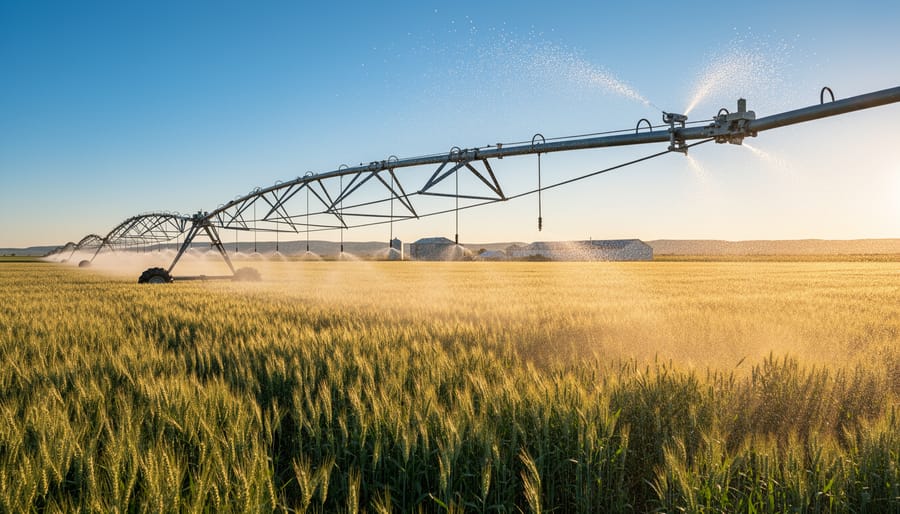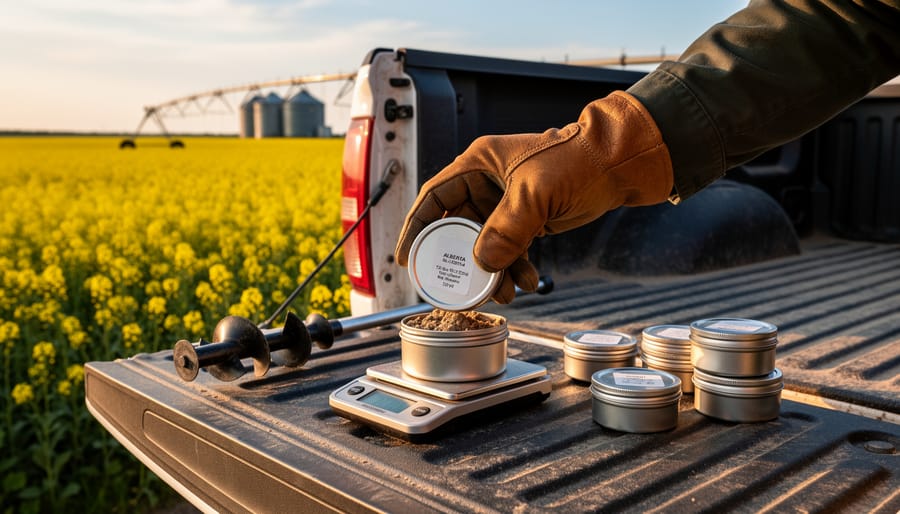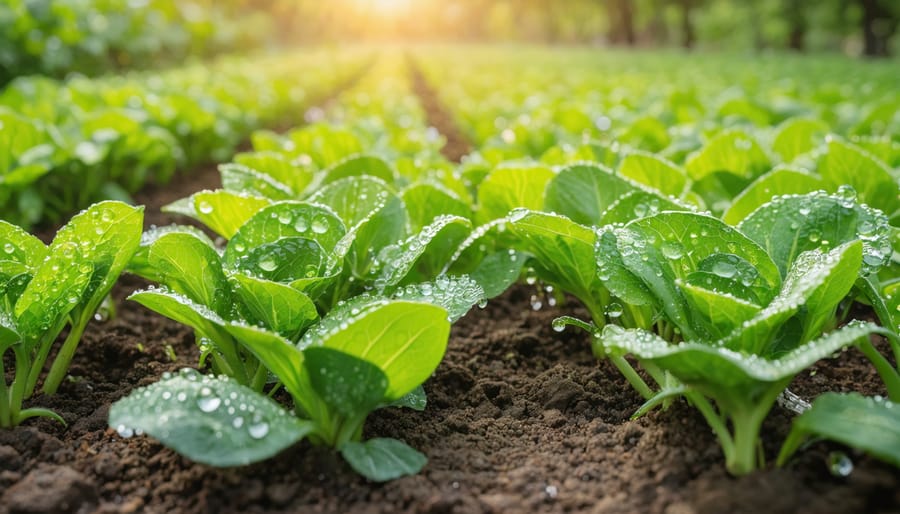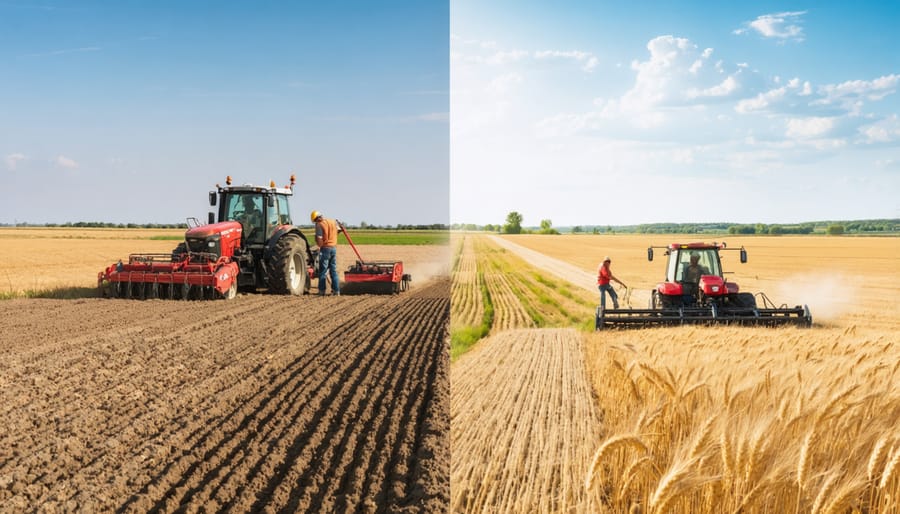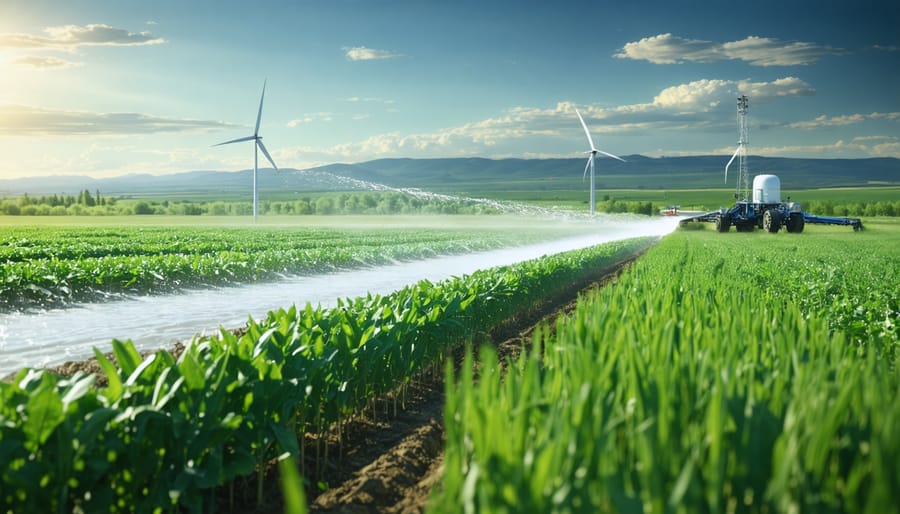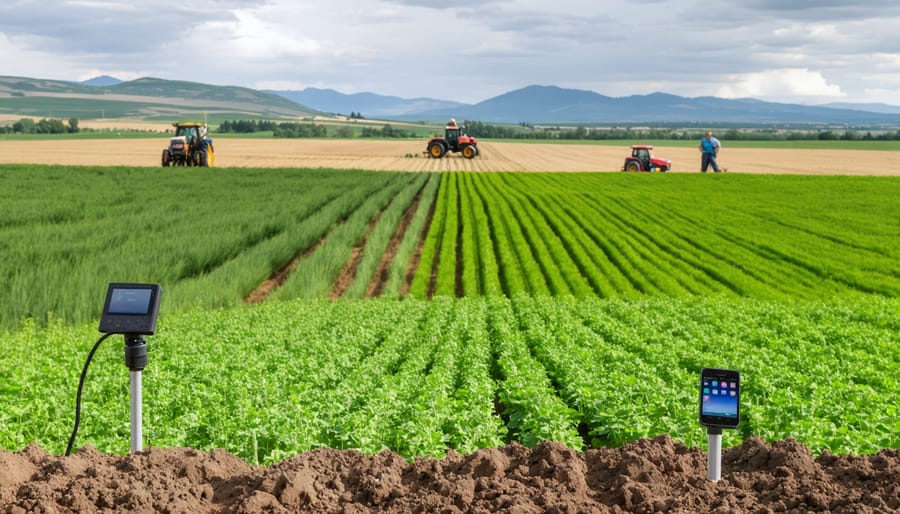
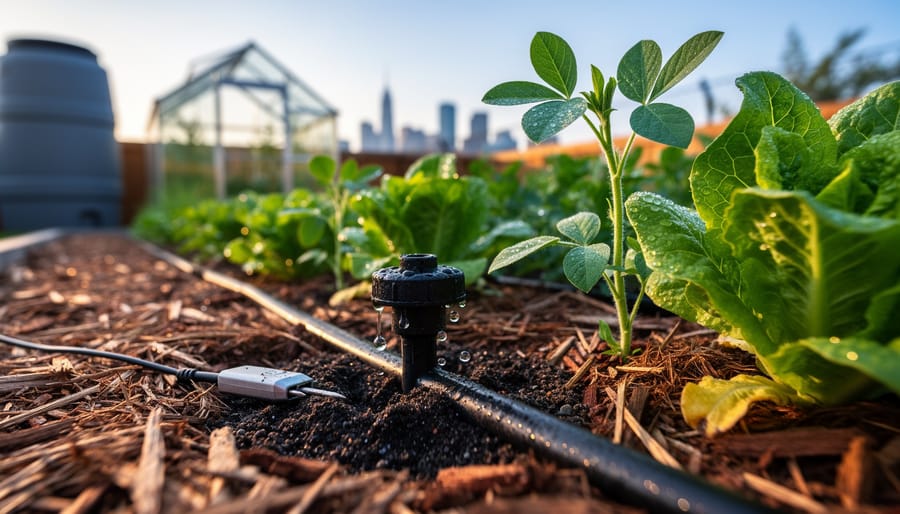
Urban agriculture in Alberta uses 40-60% less water than conventional farming when conservation practices are properly implemented. Install drip irrigation systems that deliver water directly to plant roots, reducing evaporation losses by up to 50% compared to overhead sprinklers. Monitor soil moisture levels weekly using affordable tensiometers or digital probes available at most Alberta farm supply stores, irrigating only when readings indicate actual plant need rather than following fixed schedules.
Mulch garden beds with 5-8 centimeters of organic material like straw or wood chips to retain moisture and cut watering frequency by 30-40% during Alberta’s dry summer months. Collect rainwater in food-grade barrels or tanks positioned beneath downspouts, capturing free irrigation water that reduces municipal demand and lowers operating costs. Time irrigation sessions for early morning hours between 5-8 AM when temperatures are coolest and wind speeds lowest, maximizing water absorption while minimizing waste.
Choose drought-tolerant crop varieties specifically adapted to Alberta’s climate, including heritage tomatoes, beans, and leafy greens that thrive with 25% less water than conventional cultivars. Group plants with similar water requirements together in dedicated zones, allowing precise irrigation management that prevents overwatering some crops while underwatering others. These evidence-based strategies, validated by Alberta agricultural extension services and successfully implemented across urban farms from Calgary to Edmonton, reduce water consumption while maintaining productive yields and supporting environmental stewardship goals central to sustainable farming practices.
Understanding Agricultural Water Use in Alberta’s Urban Settings
The Real Numbers Behind Urban Farm Water Consumption
Understanding actual water consumption in urban farming helps you make informed decisions about your operation’s efficiency and sustainability. Let’s look at the real numbers from Alberta’s urban farming community.
Research from Edmonton’s urban agriculture projects shows that intensive rooftop gardens typically use between 15-25 litres per square metre daily during peak growing season. In comparison, traditional field agriculture in Alberta averages 8-12 litres per square metre when accounting for irrigation systems. This higher urban consumption reflects container growing and exposed conditions, but the picture changes when considering total system efficiency.
Calgary’s Fresh Routes initiative documented their community gardens over three growing seasons, revealing water usage of 18 litres per square metre per day. However, their yield per square metre exceeded conventional farming by 2.5 times, making the water-to-production ratio more favourable than initial numbers suggest.
A notable case study comes from Highwood Urban Farms in Lethbridge, where implementing drip irrigation and moisture sensors reduced consumption from 22 to 12 litres per square metre daily. This 45 percent reduction brought their usage below traditional agriculture levels while maintaining yields.
Small-scale backyard operations in Red Deer showed similar patterns, with hand-watered gardens using approximately 20-28 litres per square metre compared to automated systems at 10-15 litres. These numbers demonstrate that technology adoption and proper measurement create significant conservation opportunities.
Understanding your baseline consumption provides the foundation for implementing targeted conservation strategies that benefit both your operation and Alberta’s water resources.
Alberta’s Climate Reality: Why Water Conservation Matters Now
Alberta’s climate presents unique opportunities and considerations for urban agriculture. The province receives an average of 400-500 mm of precipitation annually in many agricultural regions, with significant variation between northern and southern zones. Southern Alberta, home to many urban farming initiatives, typically sees less rainfall, making efficient water management essential for year-round production.
Recent provincial data shows that Alberta experiences periodic drought conditions, with dry periods becoming more frequent over the past two decades. These patterns have influenced municipal water policies across the province, with cities like Calgary, Edmonton, and Lethbridge implementing tiered water pricing systems and outdoor watering schedules during summer months. Understanding these regulations helps urban farmers plan their operations effectively and avoid unnecessary costs.
For urban farmers, these climate realities create an opportunity to lead by example. Many municipalities now offer rebates for water-efficient irrigation systems and rainwater harvesting installations, recognizing the agricultural community’s role in responsible resource management. The key is matching your growing methods to Alberta’s natural precipitation cycles while implementing water conservation strategies that work with local conditions.
Urban agriculture in Alberta thrives when growers understand their local watershed, work within municipal guidelines, and adopt practices suited to the region’s semi-arid climate. This foundation supports both productive growing operations and positive community relationships with water regulators.
Proven Water Conservation Practices That Work in Alberta
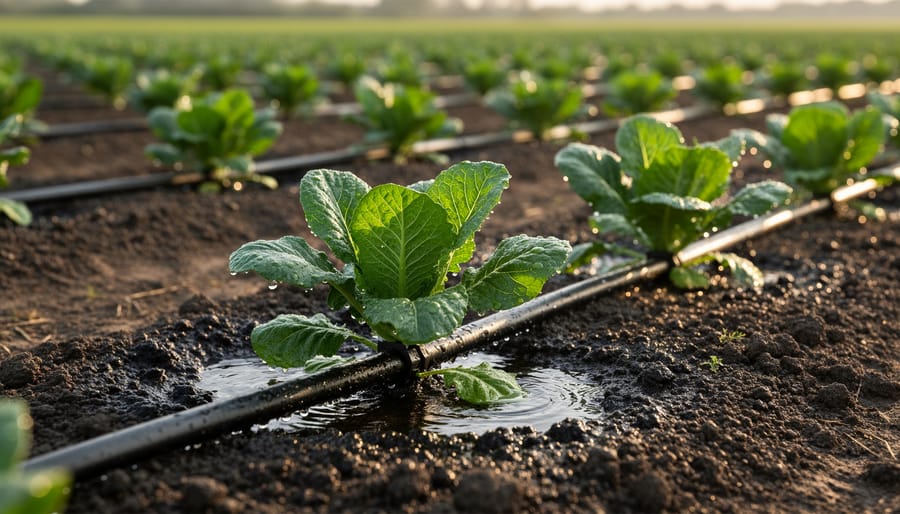
Drip Irrigation Systems: Your First Line of Defense
Drip irrigation stands as one of the most effective smart irrigation solutions available to Alberta’s urban farmers, delivering water directly to plant roots while minimizing waste. This targeted approach can reduce water consumption by 30-50% compared to traditional overhead sprinklers, translating to savings of approximately 15,000-25,000 litres per 100 square metres throughout Alberta’s growing season.
Setting up a basic drip system involves laying polyethylene tubing along your crop rows with emitters spaced 15-30 centimetres apart, depending on your soil type and crops. For a typical urban farm plot of 200 square metres, expect initial costs between $300-$600 for quality components. Clay soils common in central Alberta require wider emitter spacing, while sandy soils need closer placement to ensure adequate coverage.
The system connects to your existing water source through a pressure regulator and filter, crucial components for Alberta’s mineral-rich water. Emitters typically deliver 2-4 litres per hour, allowing precise control over moisture levels. This consistency proves particularly valuable during our short but intense growing season from May through September, when efficient water delivery directly impacts yield.
Maintenance remains straightforward: flush lines monthly to prevent sediment buildup, inspect emitters weekly for clogs, and winterize systems by draining completely before freeze-up. Most urban farmers report spending just 2-3 hours monthly on upkeep.
Local suppliers like UFA Co-operative and Peavey Industries stock reliable drip components across Alberta, with staff trained to help design systems matching your specific needs. Many offer starter kits perfect for urban agriculture applications, making this water-saving technology accessible to farms of any size.
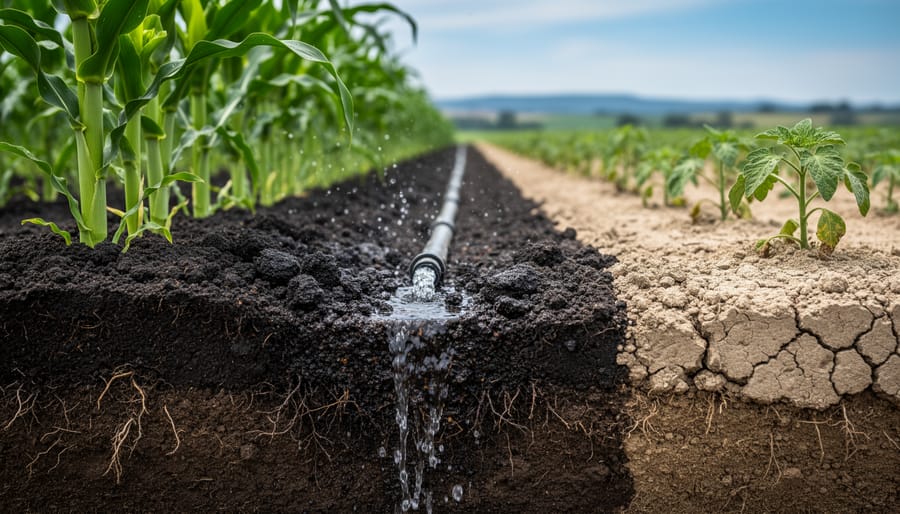
Soil Health Strategies That Cut Water Needs by Half
Your soil is the foundation of water conservation on your farm. By improving its structure and organic matter content, you can dramatically reduce irrigation needs while building resilience against Alberta’s increasingly variable weather patterns.
Composting remains one of the most effective and economical approaches. Adding 2.5 to 5 centimetres of finished compost to your beds before planting increases soil moisture retention by up to 50%. Edmonton-area producer Sarah Chen of Greenway Gardens reports using municipal compost from the City of Edmonton’s program, supplemented with farm-generated materials, cutting her water use by 45% over three growing seasons.
Mulching provides immediate water conservation benefits. Apply 7 to 10 centimetres of organic mulch like straw, wood chips, or leaves around plants to reduce evaporation and moderate soil temperature. Calgary grower Mark Thompson sources wheat straw from nearby conventional farms at reasonable rates, creating partnerships that benefit both operations. Avoid using fresh grass clippings in thick layers, as they can create water-repellent mats.
Cover cropping builds long-term soil health while protecting against erosion and moisture loss during Alberta’s harsh winters. Plant fall rye, winter wheat, or hairy vetch in September after harvest. These crops add organic matter, break up compacted layers, and create channels that help spring moisture penetrate deeper. Many Alberta farmers can access cover crop seeds through their local Farmers’ Markets or agricultural co-ops.
Consider products like mycorrhizal fungi inoculants, available through distributors like Reimer Seeds in Elrose, Saskatchewan, which enhance root systems and improve water uptake efficiency by 20 to 30%. Combined with these soil-building practices, you’re creating a water-wise foundation that pays dividends season after season.
Rainwater Harvesting in Urban Spaces
Capturing rainfall for agricultural use is increasingly practical for Alberta’s urban farmers, even with our variable precipitation patterns. Here’s how to get started while staying compliant with local regulations.
First, assess your collection potential. Calculate your roof’s catchment area in square metres and multiply by annual rainfall (Edmonton averages 476 mm, Calgary 419 mm). A 100-square-metre roof in Edmonton can collect approximately 47,600 litres annually. Remember that Alberta regulations don’t require permits for rainwater harvesting systems used exclusively for non-potable agricultural purposes on your property.
Choose appropriate storage based on your irrigation needs and space constraints. Food-grade IBC totes (1,000 litres) work well for smaller operations, while larger cisterns (5,000-10,000 litres) suit commercial urban farms. Position storage in shaded areas to prevent algae growth and insulate tanks if year-round use is planned.
Installation requires proper filtration to remove debris before storage. Install first-flush diverters to eliminate initial roof contaminants, followed by mesh screens (1-2 mm). Use overflow mechanisms directing excess water away from building foundations.
Integration with existing drip irrigation is straightforward. Gravity-fed systems work when tanks sit elevated, or add low-pressure pumps for ground-level storage. Install a simple valve system allowing you to switch between rainwater and municipal supplies during dry periods.
Edmonton urban farmer Sarah Chen reports reducing municipal water use by 60 percent after installing a 3,000-litre system, demonstrating significant conservation potential even in our semi-arid climate.
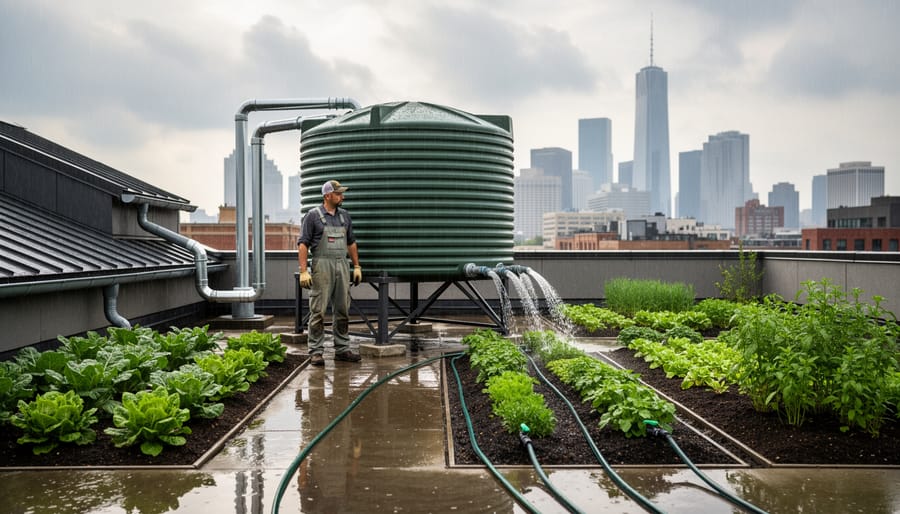
Smart Crop Selection for Water-Wise Production
Choosing the right crops for your urban farm can dramatically reduce water demands while maintaining productive yields. Alberta growers are finding success with drought-tolerant crops that thrive in our climate without constant irrigation.
Among vegetables, kale stands out as a champion water-saver, requiring only 2.5 cm of water weekly once established and producing 2-3 kg per square metre throughout the season. Swiss chard performs similarly, tolerating dry spells while delivering consistent harvests. Root vegetables like carrots and beets develop deep taproots that access moisture lower in the soil profile, needing 30 percent less surface irrigation than shallow-rooted crops.
For herbs, thyme, oregano, and sage are Mediterranean natives adapted to dry conditions. These perennials require minimal watering after their first season and provide years of productive growth. A small 1-metre-square herb bed can yield enough for both personal use and market sales with just occasional deep watering.
Fruit-wise, saskatoons are Alberta natives requiring virtually no supplemental irrigation once established, producing 3-5 kg per mature bush. Sour cherries and hardy apples selected for prairie conditions need significantly less water than traditional orchard crops, with Alberta trials showing 40 percent water savings compared to conventional fruit production.
Expect establishment periods of 4-6 weeks where consistent watering builds strong root systems, after which these selections become remarkably self-sufficient, freeing up water resources for other farm needs.
Real Alberta Farms Making It Work: Case Studies
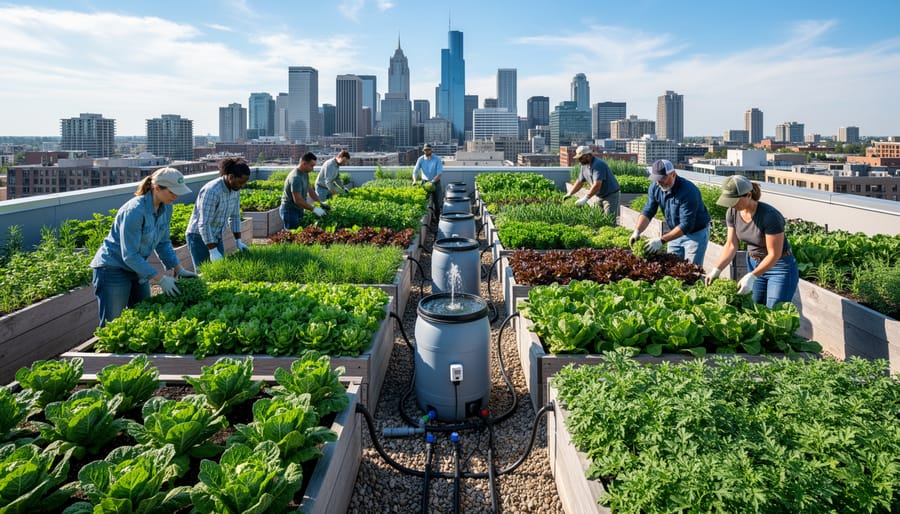
Edmonton Rooftop Operation Cuts Municipal Water Use by 70%
When Maria Chen launched her rooftop farm operation in downtown Edmonton three years ago, she faced an immediate challenge that threatened her business model: water costs were eating up 40% of her operating budget. Her initial setup relied entirely on municipal water, and during Alberta’s dry summer months, her 200 square metre growing space consumed roughly 15,000 litres weekly.
“I knew something had to change,” Maria recalls. “The bills were unsustainable, and I felt uncomfortable using that much treated drinking water for irrigation when we all know how precious water resources are in our province.”
Maria’s transformation began with a comprehensive water audit. She discovered that her overhead sprinkler system was losing significant water to evaporation, especially during midday watering sessions. Her first major change was switching to drip irrigation with mulched beds, which immediately reduced her consumption by 35%.
The breakthrough came when she installed a 5,000-litre rainwater harvesting system on an adjacent building section. Combined with a greywater recovery setup that captures runoff from her washing station, Maria now sources 80% of her irrigation needs from reclaimed sources during the growing season.
She also introduced moisture sensors throughout her beds, allowing precise watering only when soil conditions require it. This eliminated the guesswork and prevented overwatering, which had been more common than she realized.
The results speak clearly: Maria’s operation now uses just 4,500 litres of municipal water weekly during peak season, a 70% reduction from her original usage. Her water costs dropped to just 12% of operating expenses, and the payback period on her equipment investments was under two years.
“The environmental impact matters deeply to me,” Maria explains, “but I also need to run a profitable business. These changes delivered on both fronts, and now I help other urban growers implement similar systems.”
Calgary Community Garden’s Greywater Success Story
When the Bridgeland Urban Agriculture Collective in northeast Calgary set out to reduce their municipal water bill in 2021, they didn’t anticipate achieving complete water independence during July and August. By implementing a carefully designed greywater recycling system, this 40-plot community garden now serves as a model for urban agricultural water conservation across Alberta.
The garden’s coordinator, Maria Chen, recalls the initial challenges. “We knew we wanted to reuse water, but navigating Alberta’s regulations felt overwhelming at first.” The team worked closely with Alberta Environment and Parks to ensure their system met provincial standards for non-potable water use. They focused exclusively on greywater from washing vegetables and cleaning tools, avoiding any kitchen or bathroom sources that could introduce pathogens.
Their system filters water through a three-stage process: settling tanks remove large particles, sand filtration catches smaller debris, and a final biofilter with constructed wetland plants naturally treats remaining contaminants. The treated water irrigates fruit trees and perennial beds only, never touching leafy greens or vegetables consumed raw.
The installation cost approximately 3,500 dollars, with materials sourced from local suppliers. Within eighteen months, the garden recovered costs through eliminated water bills during peak season. They now recycle roughly 12,000 litres weekly from June through September.
Chen emphasizes that success required patience and education. “We held three community workshops explaining safe practices before implementation. Everyone needed to understand what could and couldn’t go into our greywater system.” The garden maintains strict protocols, posting clear signage and conducting monthly water quality tests.
For urban farmers considering similar projects, Chen recommends starting small. “Test your concept with one garden bed before scaling up. Document everything to help others learn from your experience.”
Expert Insights: What the Professionals Say
Agricultural professionals across Alberta consistently emphasize that successful water conservation starts with understanding your specific microclimate and soil conditions. Water conservation specialists working with urban farms throughout the province report that operations implementing comprehensive water management strategies typically reduce consumption by 30-50% within the first growing season while maintaining or even improving yields.
One key insight from agronomists is the critical importance of soil health as the foundation of water efficiency. Building organic matter through compost additions and cover cropping can increase your soil’s water-holding capacity by up to 20,000 litres per hectare for every 1% increase in organic matter. This approach proves particularly valuable in Alberta’s variable climate, where rainfall patterns can shift dramatically from year to year.
Irrigation specialists recommend moving beyond the traditional “water on a schedule” approach. Instead, they advocate for monitoring actual soil moisture levels at root depth, which prevents both under-watering stress and wasteful over-irrigation. Many successful urban farmers report that simple soil moisture meters, costing as little as $30, have transformed their watering practices and reduced their water bills significantly.
When it comes to system selection, water management consultants note that drip irrigation consistently outperforms overhead systems in urban agriculture settings. The initial investment typically pays for itself within two growing seasons through water savings alone. For operations with budget constraints, even low-tech solutions like ollas or drip tape systems can deliver substantial improvements over hand watering or sprinklers.
Perhaps the most impactful advice comes from established urban farmers who’ve successfully navigated Alberta’s unique challenges. They stress starting small with conservation practices rather than attempting a complete system overhaul. Pick one technique, master it, measure the results, then expand. This incremental approach builds confidence and allows you to adapt strategies to your specific site conditions. They also emphasize the value of connecting with local urban agriculture networks, where sharing knowledge about what works in Alberta’s climate accelerates everyone’s success.
Getting Started: Your Water Conservation Action Plan
Month-by-Month Implementation Timeline
Starting conservation practices in alignment with Alberta’s growing season makes implementation smoother and more effective. Here’s how to introduce water-saving techniques throughout the year.
March to April marks your preparation phase. As snow melts and temperatures rise above freezing, assess your water infrastructure for leaks or damage from winter. Install rain barrels and collection systems before spring rains begin. This is ideal timing for soil testing to determine water retention capacity and amendment needs. Calgary urban farmer James Chen recommends adding compost during early spring preparation, noting it improved his soil’s moisture retention by 35 percent before planting season.
May through June focuses on establishment. As you transplant seedlings and direct seed, apply mulch immediately around plants while soil moisture is still adequate from spring precipitation. Install drip irrigation systems before plants develop extensive root systems. Set up soil moisture sensors to establish baseline readings. These early weeks determine your water use patterns for the entire season.
July and August require monitoring and adjustment. Alberta’s hottest months demand careful attention to your conservation systems. Check mulch depth weekly, adding more as needed to maintain 7 to 10 centimetres coverage. Adjust irrigation schedules based on sensor data rather than fixed timers. Early morning watering between 5 and 7 AM minimizes evaporation during peak heat.
September through October brings harvest and planning. Document what worked well and what needs improvement. Drain and store irrigation equipment before the first hard freeze. Collect and save seeds from drought-tolerant varieties that performed best. Use this quieter period to plan next season’s improvements.
Budgeting for Water Conservation Investments
Investing in water conservation doesn’t have to break the bank, and many technologies pay for themselves faster than you might expect. Drip irrigation systems typically cost between $1,500 to $3,000 per quarter-hectare, with ROI timelines of 2-4 years through reduced water bills and improved yields. Soil moisture sensors range from $200 to $800 per unit, paying back within one growing season by preventing over-watering.
Alberta farmers have access to several financial supports. The Canadian Agricultural Partnership offers cost-sharing programs covering up to 50% of eligible conservation projects. The Alberta Irrigation Districts Association provides technical assistance and sometimes direct funding for water-efficient upgrades. Municipal grants through programs like Edmonton’s Green Infrastructure Grant can offset rainwater harvesting system costs by $2,000 to $5,000.
Simple practices like mulching cost under $100 per quarter-hectare but reduce watering needs by 25-40%. Rainwater collection barrels start at just $80, delivering immediate savings on municipal water costs. Many Alberta credit unions now offer preferential loan rates for sustainable agriculture investments, recognizing their long-term value. Planning your conservation budget strategically means starting with high-impact, low-cost practices while pursuing grants for larger infrastructure investments.
Water conservation in Alberta urban agriculture isn’t just environmentally responsible—it’s economically smart and increasingly necessary for the long-term success of your farming operation. The techniques we’ve explored throughout this article demonstrate that reducing water consumption by 30 to 50 percent is entirely achievable with the right combination of methods and commitment.
The beauty of water conservation practices is that you don’t need to implement everything at once. Start with one or two straightforward changes this growing season. Installing a simple rain barrel system or switching to drip irrigation can immediately reduce your water bills while improving plant health. These initial steps build momentum and provide measurable results that motivate further improvements.
Alberta’s urban farming community has proven these methods work in our unique climate conditions. The Calgary greenhouse growers reducing consumption by 40 percent and the Edmonton community garden achieving 35 percent savings aren’t exceptional cases—they’re examples of what becomes possible when farmers apply proven techniques consistently.
Remember that you’re not alone in this transition. The Alberta urban agriculture community offers tremendous support through workshops, shared resources, and experienced mentors willing to guide newcomers. Connect with local farming groups, attend seasonal meetups, and don’t hesitate to ask questions about adapting these practices to your specific situation.
Your farm’s water conservation journey starts with a single decision to measure your current usage. Grab a notebook, track your water consumption for two weeks, and identify one area where you can make an immediate improvement. That first step transforms water conservation from an abstract concept into a concrete reality that benefits your operation, your community, and Alberta’s agricultural future.