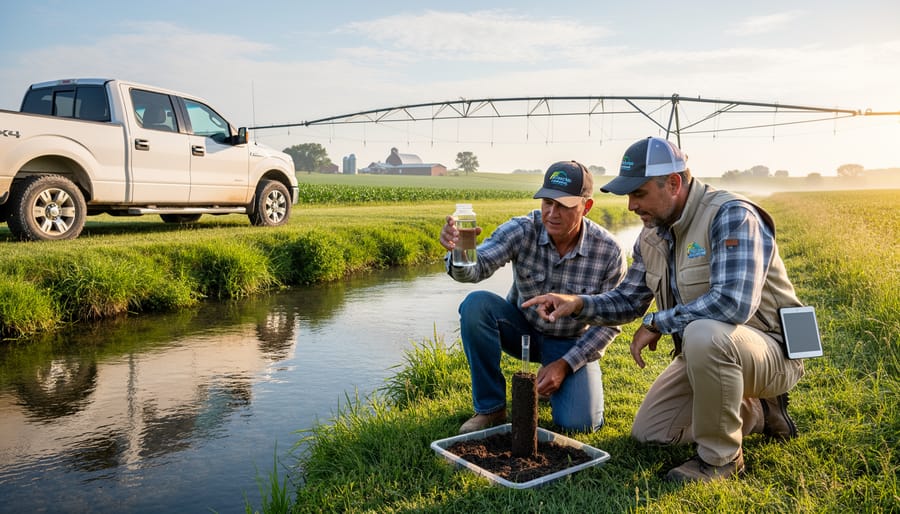
Water management challenges on your farm don’t require reinventing the wheel—they require learning from proven collaborative models. The Freshwater Collaborative of Wisconsin has spent years perfecting a watershed-based approach where farmers, municipalities, and conservation groups share resources, data, and solutions to protect water quality while maintaining agricultural productivity. Their success offers a blueprint Canadian farmers can adapt immediately.
This collaborative model addresses what many Alberta producers face: nutrient runoff concerns, irrigation efficiency pressures, and increasing scrutiny over water use. Rather than navigating these challenges alone, Wisconsin farmers discovered that pooling knowledge and coordinating conservation practices across watersheds produces measurably better outcomes than isolated efforts. Their approach combines voluntary participation with technical support, making water stewardship economically viable rather than burdensome.
For Canadian farmers, understanding Wisconsin’s framework provides practical insights into building similar regional partnerships. This article examines how the Freshwater Collaborative operates, translates their strategies into actionable steps for Alberta’s unique agricultural landscape, and highlights Canadian producers already implementing collaborative water management. You’ll discover specific coordination methods that reduce input costs, improve soil health, and demonstrate environmental accountability to consumers and regulators.
Whether you’re managing a grain operation in southern Alberta or a mixed farm facing new water regulations, collaborative approaches offer proven pathways to sustainable water use that protect both your operation’s future and the watersheds supporting your community.
What Is the Freshwater Collaborative of Wisconsin?
The Freshwater Collaborative of Wisconsin represents an innovative partnership model that brings multiple stakeholders together to tackle complex water quality challenges. Founded on the principle that water issues cross property lines and political boundaries, this collaborative initiative unites farmers, agricultural researchers, conservation organizations, policymakers, and community members around a shared commitment to protecting and restoring freshwater resources.
At its core, the Collaborative operates on a multi-stakeholder approach that recognizes farmers as essential partners rather than simply regulators’ targets. This inclusive framework acknowledges that those working the land daily possess invaluable knowledge about local watersheds and practical solutions. By creating neutral spaces for dialogue, the Collaborative enables different perspectives to inform science-based strategies that work in real-world farming operations.
The organization’s mission centers on developing collaborative solutions that balance agricultural productivity with water quality protection. Rather than imposing top-down mandates, the Collaborative facilitates voluntary participation in conservation practices through technical assistance, cost-share programs, and peer-to-peer learning opportunities. This approach has proven particularly effective in addressing nonpoint source pollution, nutrient management, and soil health improvements across Wisconsin’s diverse agricultural landscape.
Similar collaborative models exist in Canada, including the Source Water Collaborative, which demonstrates how partnership-based water stewardship can succeed in different regional contexts. These initiatives share common elements: trust-building among diverse stakeholders, science-driven decision-making, and recognition that sustainable water management requires long-term commitment from entire communities.
For Canadian farmers facing similar water challenges, understanding Wisconsin’s collaborative framework offers valuable insights into building local partnerships that support both farm profitability and environmental stewardship. The model demonstrates that when agricultural producers, researchers, and conservation groups work together with mutual respect, meaningful progress becomes possible on even the most complex water quality issues.
Why Collaborative Water Management Matters for Organic Farms
Water Quality Requirements for Organic Certification
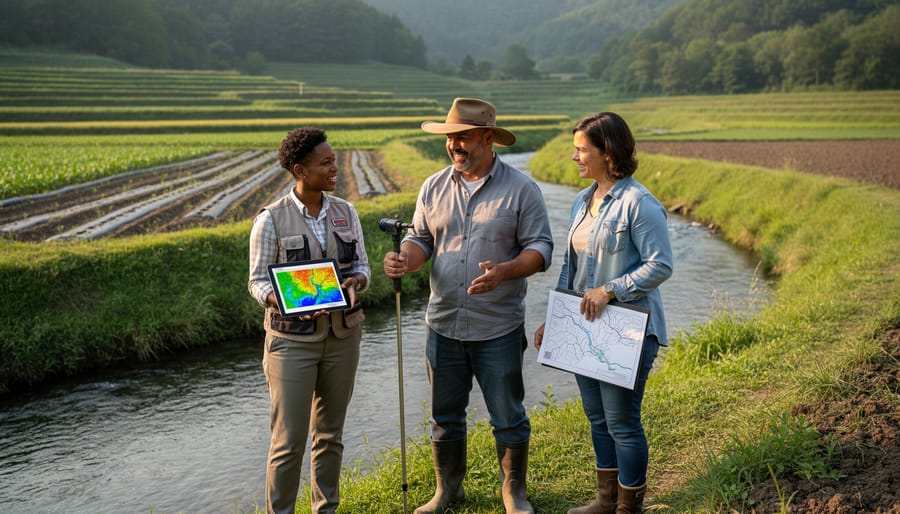
For organic producers, maintaining water quality for organic certification isn’t just about what happens on your own land. When agricultural runoff from neighbouring conventional operations contaminates shared water sources, even compliant organic farms risk losing their certification status. This challenge has driven innovative solutions like Wisconsin’s Freshwater Collaborative, where farmers work together to protect watershed quality.
The collaborative approach recognizes that water doesn’t respect property boundaries. When farmers throughout a watershed monitor and manage water quality collectively, everyone benefits from reduced contamination risk. This model proves particularly valuable in mixed farming areas where organic and conventional operations coexist.
Alberta organic farmer Sarah Chen explains: “We learned from Wisconsin’s example that regular, transparent water testing protects our organic status while building trust with neighbours. When conventional farmers understand how their practices affect downstream organic operations, most are willing to adjust.”
Collaborative monitoring creates early warning systems, allowing farmers to address potential contamination before it threatens certification. This proactive approach has helped Wisconsin producers maintain organic premiums while fostering stronger community relationships across diverse farming systems.
The Economic Case for Shared Water Resources
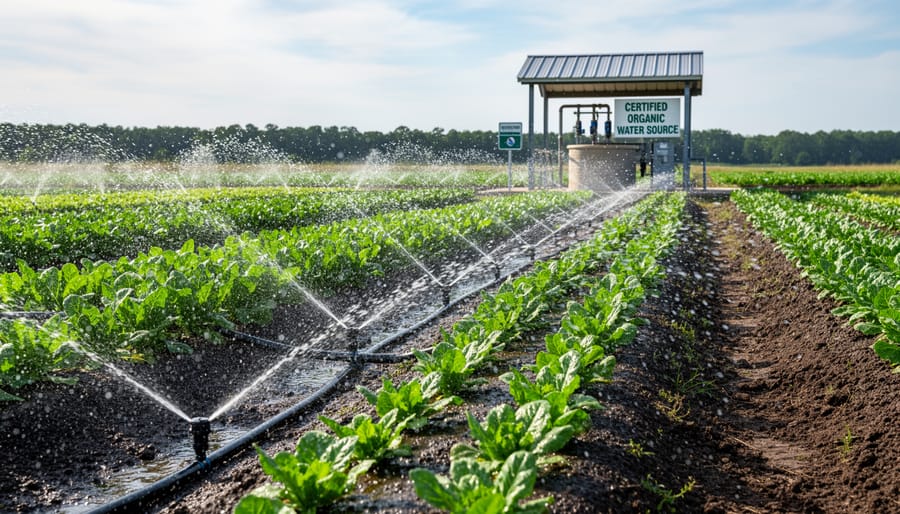
When multiple farms collaborate on water management, the financial benefits become immediately clear. Wisconsin’s Freshwater Collaborative model demonstrates how pooling resources transforms water testing from an expensive individual burden into an affordable shared investment. Member farms report reducing water quality testing costs by 40-60% through collective purchasing agreements with laboratories.
Infrastructure costs drop significantly under collaborative models. Rather than each farm investing $15,000-$30,000 in individual monitoring equipment, groups share weather stations, soil moisture sensors, and water quality testing kits. One Alberta agricultural professional we spoke with noted that similar sharing arrangements among irrigation districts have saved participating farms approximately $8,000 annually in equipment and maintenance costs.
The efficiency gains extend beyond direct expenses. Collaborative water management reduces redundant testing—when neighbouring farms share watershed data, they eliminate duplicate efforts while gaining more comprehensive information. This approach proved valuable during Alberta’s 2021 drought when farms sharing precipitation data made more informed irrigation decisions, conserving both water and energy costs.
Conservation practices become more economically viable through collaboration. Group purchases of cover crop seeds, water-efficient irrigation components, and soil amendments typically yield 20-30% discounts compared to individual orders. Shared equipment like no-till drills or precision irrigation systems, which might cost $40,000-$100,000 new, become accessible when five to ten farms split acquisition and operating costs.
The collaborative model also opens doors to grants and funding programs that prioritize group applications, further stretching every dollar invested in water stewardship.
Key Strategies from Wisconsin’s Collaborative Model
Watershed-Scale Planning and Monitoring
The Freshwater Collaborative’s approach to watershed-scale planning offers valuable insights for Canadian producers looking to understand water dynamics across larger landscapes. Their model involves systematic mapping of water flows throughout entire watersheds, which helps identify how water moves from headwaters through various properties before reaching downstream areas.
The collaborative conducts coordinated water quality testing across multiple farms within the same watershed. Rather than individual farmers testing in isolation, this collective approach reveals patterns and pollution sources that single-property monitoring might miss. Teams collect samples at strategic points along streams and tributaries, measuring parameters like nitrogen levels, phosphorus concentrations, and bacteria counts. Testing typically occurs monthly during the growing season, with increased frequency following major rainfall events when runoff is highest.
This comprehensive data collection allows the group to pinpoint priority areas where conservation efforts will deliver the greatest impact. For example, if testing reveals elevated nutrient levels entering from a specific sub-watershed, resources can be directed there first. The collaborative uses Geographic Information System (GIS) mapping to visualize results, creating heat maps that show problem areas and track improvements over time.
Similar watershed management strategies are gaining traction in Alberta, where producers recognize that water quality improvements require cooperation beyond individual farm boundaries. By pooling resources for testing and analysis, farming communities can make more informed decisions about where conservation practices like buffer strips, cover crops, or wetland restoration will be most effective in protecting shared water resources.
Shared Infrastructure and Equipment
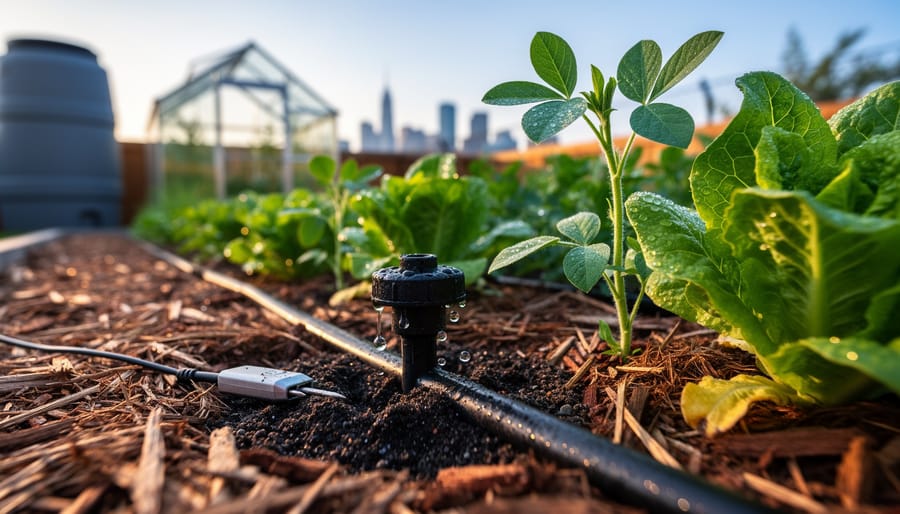
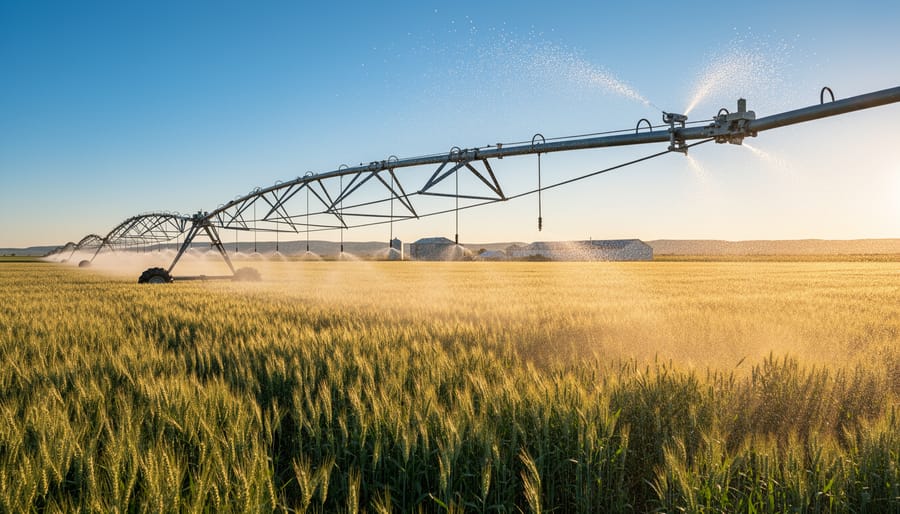
Wisconsin’s Freshwater Collaborative demonstrates how pooling resources for water infrastructure creates significant cost savings and operational efficiencies. Their member farms share access to advanced irrigation systems, including center pivot and drip irrigation networks that would be financially out of reach for individual operations. By splitting capital costs among multiple users, farmers access technology that reduces water consumption by up to 40 percent while improving crop yields.
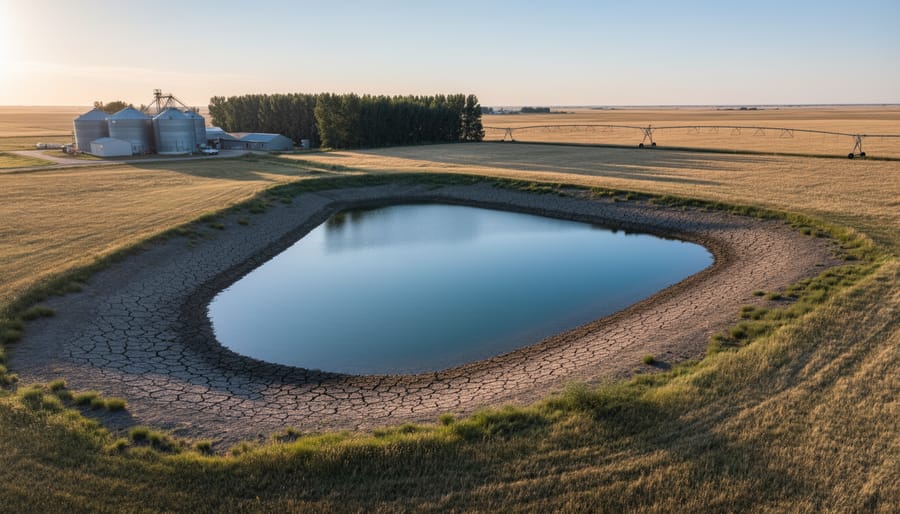
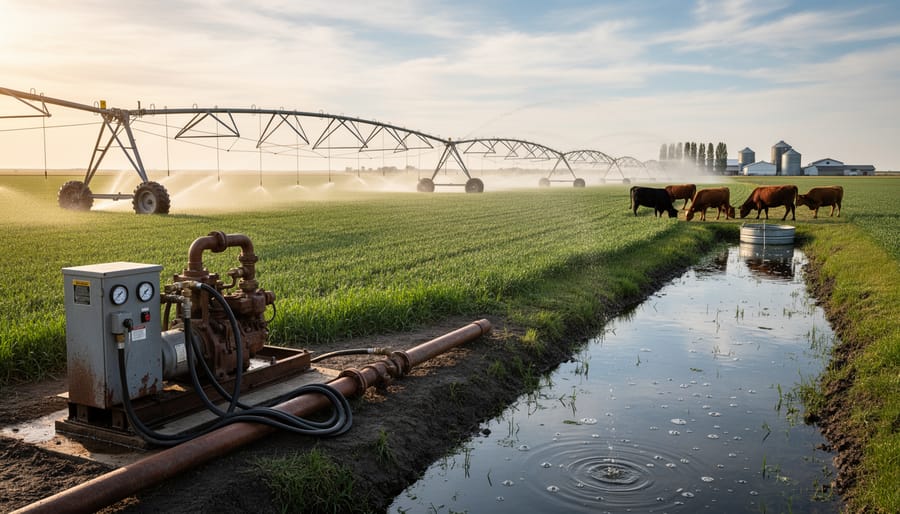
The collaborative model extends to water storage solutions, where members jointly invest in reservoirs and holding ponds. These shared facilities provide reliable water access during dry periods, with scheduling systems ensuring fair distribution among participating farms. Treatment facilities represent another area where cooperation reduces expenses—shared filtration and testing equipment means farmers can monitor water quality without purchasing individual systems costing thousands of dollars.
Similar approaches to shared water infrastructure are emerging across Canadian agricultural communities. Alberta’s irrigation districts offer valuable precedents, where farmers collectively manage canal systems and pumping stations. One southern Alberta group reduced individual water costs by 35 percent through a cooperative pumping arrangement serving eight organic operations.
The key to success involves clear usage agreements, maintenance schedules, and cost-sharing formulas that account for different farm sizes and water needs. While upfront legal and planning costs exist, the long-term savings in equipment purchases, maintenance, and water efficiency make collaborative infrastructure an increasingly attractive option for Canadian farmers managing rising operational expenses.
Knowledge Exchange and Farmer-to-Farmer Learning
One of the Freshwater Collaborative of Wisconsin’s most powerful tools is its farmer-to-farmer learning network, where practical knowledge spreads organically through trusted relationships. Rather than relying solely on top-down extension services, the collaborative connects farmers directly with peers who’ve successfully implemented water management practices on working farms.
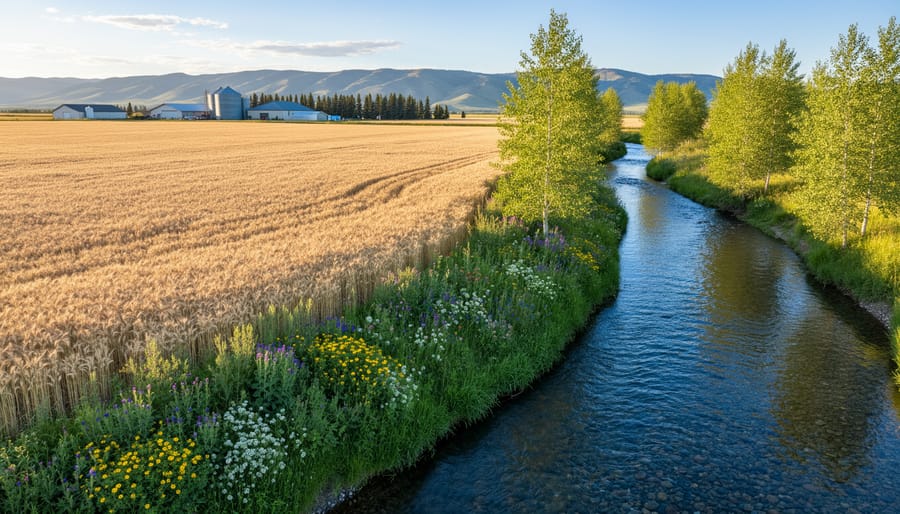
Demonstration sites play a central role in this knowledge exchange. When farmers can walk fields with neighbors who’ve installed riparian buffers, tested cover crop systems, or modified tillage practices, they gain confidence that these approaches work in real-world conditions. Seeing 20-metre buffer strips thriving alongside productive cropland makes the concept tangible rather than theoretical.
The collaborative facilitates structured peer learning through field days, winter workshops, and informal farm visits. These gatherings create safe spaces for collaborative problem-solving where farmers troubleshoot challenges together. A producer struggling with saturated soils might learn from three neighbors who’ve tackled similar issues through different drainage solutions.
For Alberta farmers, this model offers valuable insights. Consider forming local learning circles within your watershed or commodity group. Alberta Agriculture and Irrigation already supports producer networks, but farmers themselves can initiate these conversations. Start small—perhaps invite five neighboring operations to tour each other’s farms, focusing specifically on water management practices.
Expert interviews with Canadian watershed coordinators confirm that farmer-led knowledge exchange accelerates adoption rates significantly. When recommendations come from trusted peers rather than external authorities, implementation increases by 40 to 60 percent. The collaborative approach respects farmers’ expertise while building collective capacity to address shared water challenges effectively.
Lessons for Alberta Organic Farmers
Adapting to Prairie Water Challenges
Alberta’s water landscape differs significantly from Wisconsin’s, presenting unique considerations for collaborative approaches. Alberta’s semi-arid climate challenges mean water availability fluctuates dramatically between seasons and years, making predictable planning difficult for many producers.
The province’s established irrigation districts in southern Alberta demonstrate how organized water sharing can work effectively. These districts manage water allocations for approximately 570,000 hectares of farmland, coordinating delivery through canal systems that maximize efficiency. This existing infrastructure provides a strong foundation for expanding collaborative water management beyond traditional irrigation areas.
Alberta’s prior allocation water rights system operates on a first-in-time, first-in-right principle, which can complicate new collaborative initiatives. However, recent amendments to the Water Act have introduced more flexibility, allowing temporary water transfers between license holders. This creates opportunities for farmers to work together during shortage periods, sharing resources when some need water more urgently than others.
The key opportunity lies in adapting Wisconsin’s watershed-based collaboration model to work within Alberta’s existing regulatory framework. Rather than replacing current systems, collaborative approaches can enhance them by building trust networks, sharing monitoring data, and coordinating voluntary conservation efforts during critical periods. Alberta farmers already understand the value of cooperation through their experience with irrigation districts, farm cooperatives, and rural municipalities. Expanding this collaborative spirit to broader watershed management represents a natural evolution that respects local water rights while strengthening community resilience.
Building Collaborative Structures in Rural Alberta
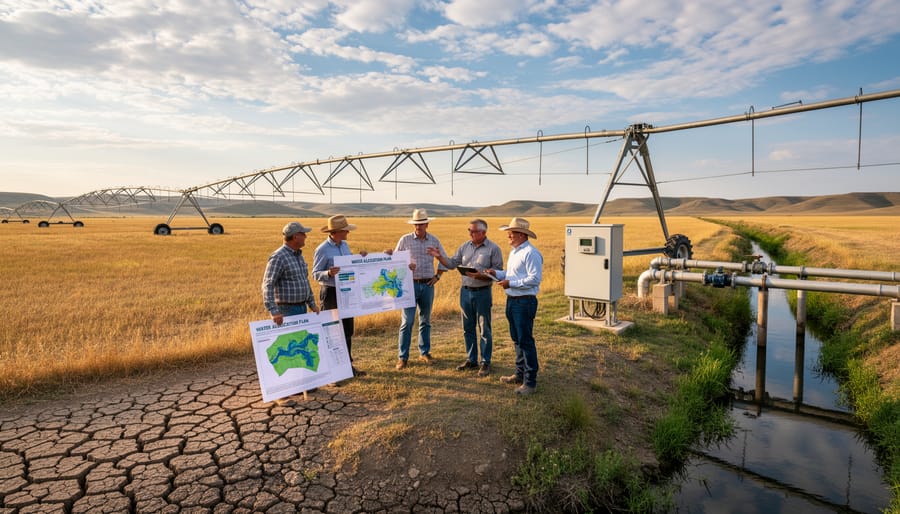
Starting a water collaborative in rural Alberta begins with identifying your watershed community and reaching out to like-minded producers. Begin by connecting with existing organizations that already facilitate agricultural cooperation. The Alberta Conservation Association and local watershed stewardship groups provide excellent foundations for building collaborative structures. Many county agricultural service boards also coordinate water management initiatives and can help connect you with neighboring farms facing similar challenges.
Contact your regional Alberta Agriculture and Irrigation office to explore their Water for Life program, which supports collaborative water management projects. The Growing Forward 3 program and Environmental Stewardship and Climate Change program offer funding specifically for water conservation initiatives on farms. These provincial programs can cover up to 50 percent of eligible costs for collaborative water monitoring and infrastructure improvements.
Consider partnering with Cows and Fish, Alberta’s riparian management program, which has decades of experience helping agricultural producers work together on watershed health. They provide free technical support and can facilitate initial meetings between producers interested in forming local collaboratives.
Start small by organizing an informal gathering of three to five neighboring farms to discuss shared water concerns. Use this foundation to develop a simple memorandum of understanding outlining your collaborative goals. Document your baseline water conditions through simple monitoring, which builds credibility for future funding applications.
The Alberta Real Farmers program and local Watershed Planning and Advisory Councils can provide both technical expertise and connections to successful collaborative models. Don’t overlook the Alberta Land Institute, which researches collaborative agricultural approaches and can offer evidence-based guidance. Remember, successful collaboratives typically start with personal relationships and shared values before expanding into formal structures. Building trust through regular communication and small joint projects creates momentum for larger water management initiatives.
Real-World Success: Canadian Farmers Already Using Collaborative Approaches
While the Freshwater Collaborative operates in Wisconsin, Canadian farmers are already putting similar principles into practice right here at home. Take the approach used by producers in southern Alberta’s Bow River Basin, where water scarcity has pushed agricultural communities toward innovative collaboration.
John Tewinkel, a third-generation grain farmer near Taber, Alberta, joined forces with eleven neighboring operations in 2019 to form what they call a “water stewardship circle.” The group manages approximately 4,800 hectares collectively, sharing both irrigation infrastructure and water allocation data.
“We were all dealing with the same problem independently,” Tewinkel explains. “Our irrigation district announced potential water restrictions, and we realized we either adapted together or struggled alone.”
The collaboration wasn’t without growing pains. Initial meetings revealed conflicting priorities between livestock producers needing consistent water access and crop farmers facing peak irrigation demands. Trust took time to build, particularly around sharing detailed water usage data that many considered proprietary information.
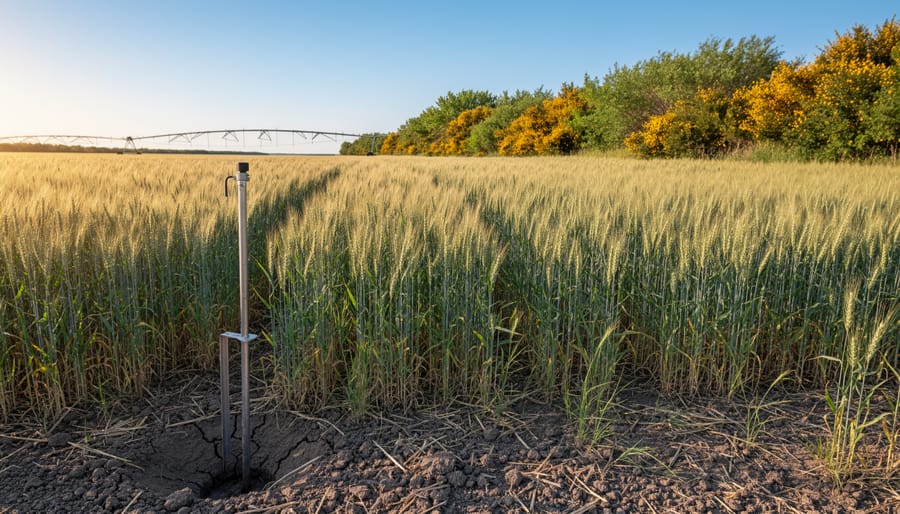
The breakthrough came when the group hired a neutral water management consultant who helped establish clear protocols and facilitated difficult conversations. They implemented shared soil moisture monitoring across member farms, which revealed surprising variations in actual water needs versus traditional irrigation schedules.
The measurable results speak for themselves. After three growing seasons, the collaborative reduced total water consumption by 18 percent across member farms while maintaining crop yields. Individual members reported water efficiency improvements ranging from 12 to 27 percent. The group saved approximately 64,000 dollars collectively in their second year through shared equipment purchases and coordinated infrastructure improvements.
Perhaps more importantly, the farmers developed drought contingency plans that prioritize critical needs during shortage periods. When 2021 brought severe drought conditions, the group’s coordinated response prevented crop losses that independent neighbors experienced.
Similar collaborative approaches have emerged in the Lethbridge Northern Irrigation District, where potato and sugar beet growers coordinate water timing to reduce system strain. Near Brooks, cattle ranchers partnered with grain farmers to optimize dugout construction and groundwater monitoring.
These Alberta examples demonstrate that collaborative water management isn’t theoretical—it’s happening now, delivering real results to Canadian farmers facing similar challenges. The common thread among successful collaborations? Starting small, building trust gradually, and focusing on shared benefits rather than individual advantage. The transition requires patience and occasional compromise, but participating farmers consistently report that collaborative approaches provide resilience that individual operations simply cannot achieve alone.
Getting Started: Your First Steps Toward Water Collaboration
Starting a water collaboration on your farm or in your community doesn’t require a massive investment or complex infrastructure. The most important first step is conversation. Begin by reaching out to neighbouring producers who share your watershed. A simple coffee meetup to discuss common water challenges can reveal surprising alignment in goals and concerns.
Before formal partnerships develop, conduct a basic water assessment on your operation. Walk your property and identify water sources, drainage patterns, and areas where erosion or flooding creates challenges. Document seasonal variations and note how your water use and management might affect downstream neighbours. This baseline understanding becomes invaluable when discussing collaborative solutions.
When initiating community discussions, use open-ended questions as conversation starters. Try asking fellow farmers: “What water challenges keep you up at night?” or “Have you noticed changes in water availability over the past decade?” These questions foster dialogue without putting anyone on the defensive. Share your own observations honestly, creating space for others to do the same.
Consider organizing an informal watershed tour where farmers visit each other’s operations. This builds understanding of how water moves through your shared landscape and where collaborative interventions might prove most effective. One Alberta producer noted that simply seeing his neighbour’s retention pond sparked ideas for coordinated water storage across three adjacent farms.
Access existing resources to support your journey. Agriculture and Agri-Food Canada offers watershed planning tools specifically designed for Canadian conditions. Provincial agricultural extension offices provide free or low-cost technical support for water management projects. Many regional conservation authorities facilitate farmer-led groups and can connect you with experienced collaborators.
Start small with manageable projects. Perhaps coordinate cover crop timing with neighbours to reduce shared erosion issues, or establish a simple water quality monitoring schedule across adjacent properties. These initial successes build trust and demonstrate the practical value of working together. Remember, every successful watershed collaboration began with one farmer willing to start the conversation.
Collaborative water management isn’t just an environmental initiative—it’s a practical investment in the long-term viability of your organic farm and the resilience of your rural community. The lessons from Wisconsin’s Freshwater Collaborative demonstrate that when farmers work together on water quality issues, everyone benefits through reduced input costs, improved soil health, and access to shared knowledge and resources.
For Canadian producers, particularly those managing operations in Alberta’s diverse agricultural landscapes, taking that first step toward collaboration can feel daunting. Start small. Reach out to a neighboring farmer over coffee to discuss shared water challenges. Whether you’re dealing with irrigation efficiency, managing runoff from spring melt, or protecting riparian areas, chances are your neighbors face similar concerns.
The barriers to collaboration—time constraints, different farming philosophies, or uncertainty about where to begin—are real but surmountable. Remember that successful watershed partnerships in Ontario and Quebec started with just a handful of committed producers who recognized their interconnected relationship with water resources.
Your provincial agricultural extension services, local conservation districts, and organizations like the Alberta Water Council can provide technical support and potential funding opportunities to jumpstart collaborative efforts. Environmental stewardship and farm profitability aren’t competing goals—when approached collaboratively, they reinforce each other.
Take action today. Contact your regional agricultural office to explore existing water management programs, or simply start the conversation with producers in your watershed. Your farm’s future, and your community’s resilience, may depend on it.