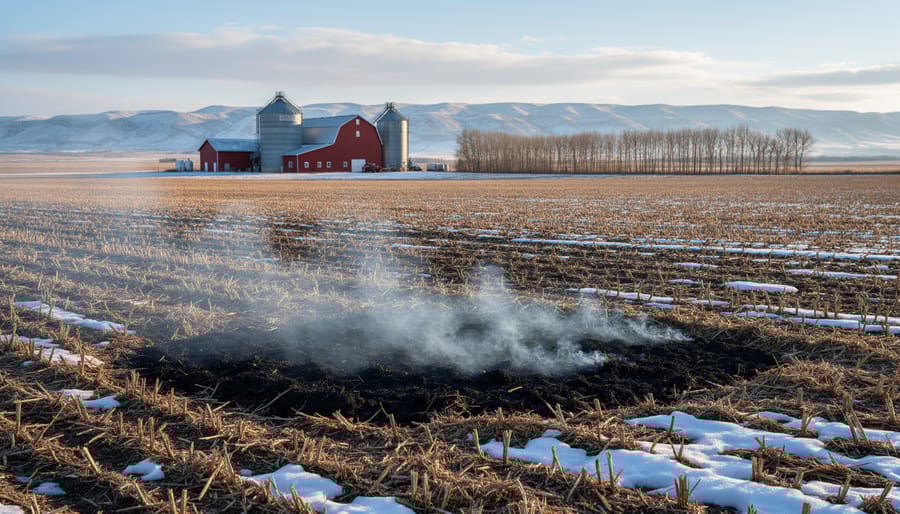
Beneath Alberta’s snowpack, last season’s wildfires are still burning. These “zombie fires” smolder through winter in organic soils and peat layers, reigniting each spring to blanket agricultural regions with smoke weeks before traditional wildfire season begins. For farmers across the province, this phenomenon has transformed what was once a predictable May-to-September smoke threat into a year-round challenge that starts as early as March, disrupting critical planting windows and extending air quality concerns well into fall harvest.
Zombie fire models use satellite thermal imaging, soil moisture data, and snow depth measurements to predict where these underground fires survive winter and when they’ll resurface. Understanding these predictions gives you a 4-to-6-week advantage to adjust seeding schedules, protect vulnerable livestock, and prepare air filtration systems before smoke impacts your operation. Dr. Sarah Chen, wildfire ecologist at the University of Alberta, notes that “farmers who track zombie fire forecasts alongside traditional weather data are seeing measurably better crop establishment rates in heavy smoke years.”
The economic stakes are substantial. A single prolonged smoke event during pollination can reduce canola yields by 15-20 percent, while respiratory stress in cattle decreases weight gain and increases veterinary costs. With climate projections showing zombie fire frequency doubling by 2030 across Alberta’s agricultural belt, building resilience now isn’t optional. This guide translates complex fire modeling into practical strategies you can implement this season to protect your land, livestock, and livelihood.
What Are Zombie Fires and Why Should Alberta Farmers Care?
The Science Behind Fires That Won’t Die
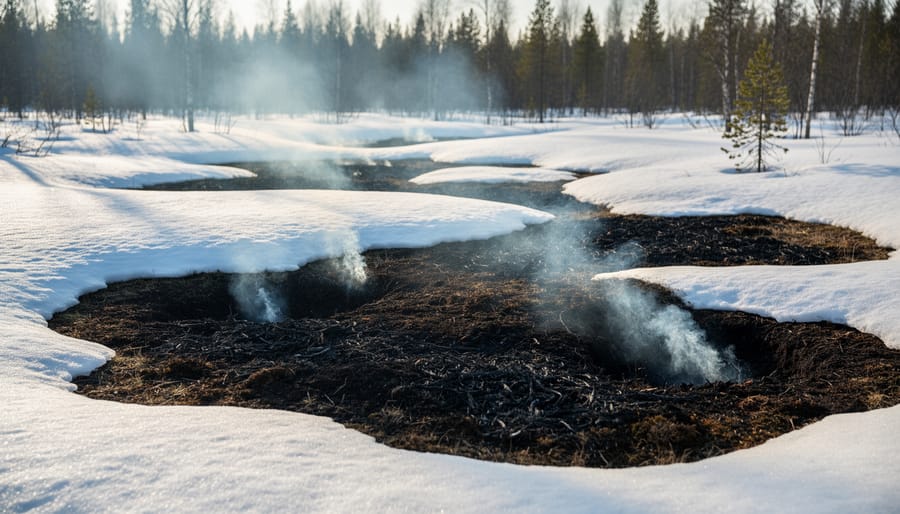
Zombie fires are a fascinating yet concerning natural phenomenon that directly impacts Alberta’s agricultural landscape. Unlike typical wildfires that burn visibly above ground, these fires survive winter by smoldering deep within peat and organic soil layers. Think of it like a campfire ember buried in ash—it can stay hot for months with minimal oxygen.
Here’s how it works: peat soils, common in Alberta’s boreal regions and some agricultural areas, contain partially decomposed plant material that acts like a carbon-rich fuel source. When wildfires burn through these areas in summer and fall, the fire doesn’t always extinguish completely. Instead, flames burrow underground where they continue burning slowly, protected from winter snow and freezing temperatures by the insulating properties of the soil itself.
Dr. Sarah Chen, a wildfire ecologist at the University of Alberta, explains it simply: “These fires can smolder at depths of 30 to 50 centimetres below the surface, consuming organic matter at a rate of just a few centimetres per day. They’re essentially hibernating.”
When spring arrives and temperatures rise, increased oxygen flow and drying conditions allow these hidden fires to reignite and spread back to the surface, creating new wildfires that seemingly appear from nowhere.
Alberta’s Unique Vulnerability
Alberta’s boreal forest region faces distinct zombie fire challenges that directly impact agricultural operations. The province’s unique combination of deep peat soils, extended cold seasons, and proximity of farmland to forested areas creates ideal conditions for these overwintering fires to establish themselves and later threaten farming communities.
The boreal region covering northern Alberta contains some of Canada’s deepest peat deposits, which can smolder underground for months without detection. When spring arrives, these hidden fires can resurface near agricultural zones where forest interfaces with cropland and pasture. In May 2023, several zombie fires from the previous season reignited in the Peace River region, forcing evacuations and blanketing agricultural areas with dense smoke during critical seeding operations.
Dr. Sarah Chen, a wildfire researcher at the University of Alberta, explains that “the warming climate is extending our fire season while also creating drier peat conditions that allow fires to burrow deeper underground. For farmers near forested areas, this means the traditional fire season now effectively runs year-round.”
Recent data shows that approximately 40 percent of Alberta’s significant spring wildfires between 2020 and 2023 had zombie fire origins. These fires disproportionately affect agricultural communities because they emerge unpredictably during spring field preparation when farmers are most active outdoors and equipment is being deployed. The 2021 season saw zombie fires impact over 15,000 hectares of agricultural land in the Lesser Slave Lake region alone, demonstrating how these persistent threats require new monitoring approaches and preparedness strategies tailored specifically for farming operations near boreal forests.
The Zombie Fire Model: Predicting Smoke Events Before They Hit Your Farm
How Researchers Track Underground Fires
Scientists and land managers use several interconnected technologies to detect and predict zombie fires, creating a comprehensive monitoring system that helps protect agricultural regions like Alberta.
Satellite monitoring forms the backbone of detection efforts. NASA’s MODIS and VIIRS satellites scan for heat signatures and smoke patterns across Canadian landscapes, identifying both active fires and suspicious thermal anomalies that might indicate underground burning. These satellites pass over Alberta multiple times daily, providing near real-time data that researchers can analyze for early warning signs.
Soil moisture tracking plays a crucial role in prediction models. Ground-based sensors and satellite measurements monitor how dry peat and organic soil layers become throughout the season. Dr. Jennifer Beverly from the University of Alberta explains that “when soil moisture drops below critical thresholds in spring, especially in areas with deep organic layers, the risk of zombie fire emergence increases dramatically.” This data helps forecasters identify high-risk zones before fires resurface.
Carbon monitoring systems measure atmospheric changes that indicate underground combustion. Specialized sensors detect elevated carbon dioxide and carbon monoxide levels seeping from smoldering peat, often weeks before visible smoke appears. In Alberta’s boreal regions, this technology has proven valuable for identifying hidden fire activity beneath snow cover.
These monitoring technologies work together, feeding information into sophisticated prediction models. Weather stations contribute temperature, precipitation, and wind data, while historical fire records help algorithms identify patterns. For Alberta farmers, this integrated approach means earlier warnings and better preparation time when zombie fires threaten to emerge near agricultural lands, allowing you to protect livestock, equipment, and crops more effectively.
Reading the Warning Signs on Your Land
Your land often signals trouble before zombie fires become obvious. Learning to read these warning signs can give you crucial time to respond.
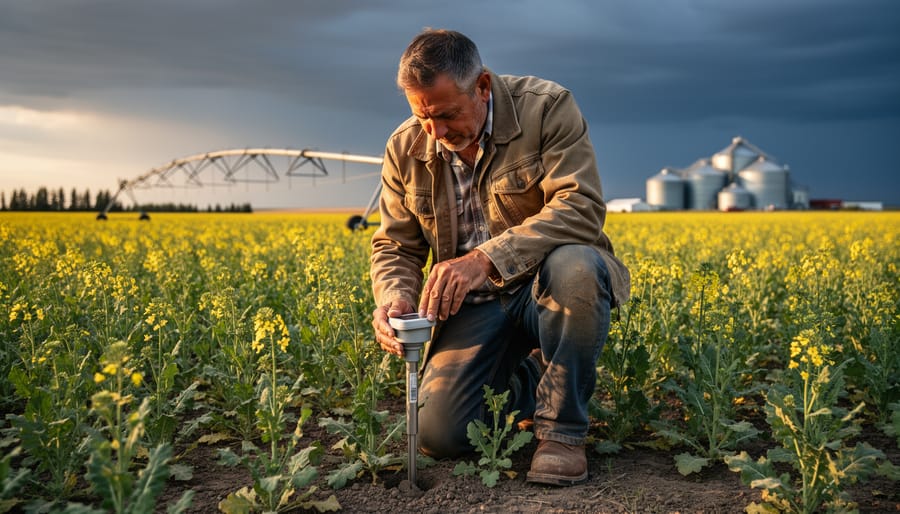
Start with ground temperature checks during spring, especially in areas with heavy organic matter or peat-rich soils. Walk your fields early in the morning when air temperatures are coolest. If you notice patches of ground that feel unusually warm to the touch or show frost-free zones when surrounding areas are frozen, this warrants closer inspection.
Watch for subtle smoke seeps rising from the ground, particularly near tree roots, drainage areas, or anywhere organic material has accumulated. These wisps often appear in calm morning or evening conditions and may smell like smoldering wood rather than fresh fire.
Snow melt patterns tell an important story. Irregular melting where snow disappears in circular patches or along specific lines can indicate underground heat. Make note of these areas and monitor them throughout the season.
Vegetation stress provides another clue. Plants growing above smoldering zones often show yellowing, wilting, or stunted growth despite adequate moisture. Trees may drop needles prematurely or develop brown patches in their canopy.
Document what you observe with photos and GPS coordinates. This information becomes valuable for tracking patterns and sharing with your local fire management team when concerns arise.
Accessing Real-Time Data for Your Region
Staying informed about zombie fire risks helps you make timely decisions to protect your operation. Natural Resources Canada offers the Canadian Wildland Fire Information System (CWFIS), which provides daily fire weather forecasts and smoke predictions across all provinces. Access their interactive maps at cwfis.cfs.nrcan.gc.ca to view current hotspots and forecast conditions.
Alberta farmers can download the Alberta Wildfire app for real-time alerts specific to your location. This free tool sends notifications about new fire starts, evacuation orders, and air quality warnings directly to your smartphone. For air quality monitoring, Environment Canada’s FireWork system predicts smoke movement 48 hours in advance—essential for planning outdoor work and protecting livestock.
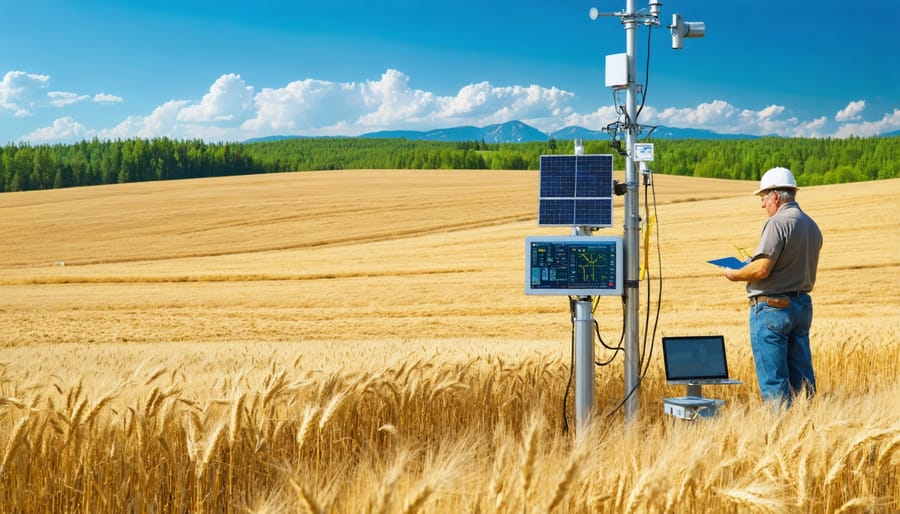
The Alberta Agriculture and Forestry AgriService website provides weekly advisories during fire season, integrating zombie fire predictions with agricultural impacts. Many producers also use weather-based monitoring technologies that now incorporate smoke forecasts alongside rainfall and temperature data. Setting up text or email alerts through these platforms ensures you receive warnings even when working in the field, giving you crucial lead time to implement your resilience plan.
Direct Impacts on Alberta Agricultural Operations
Crop Stress and Yield Impacts
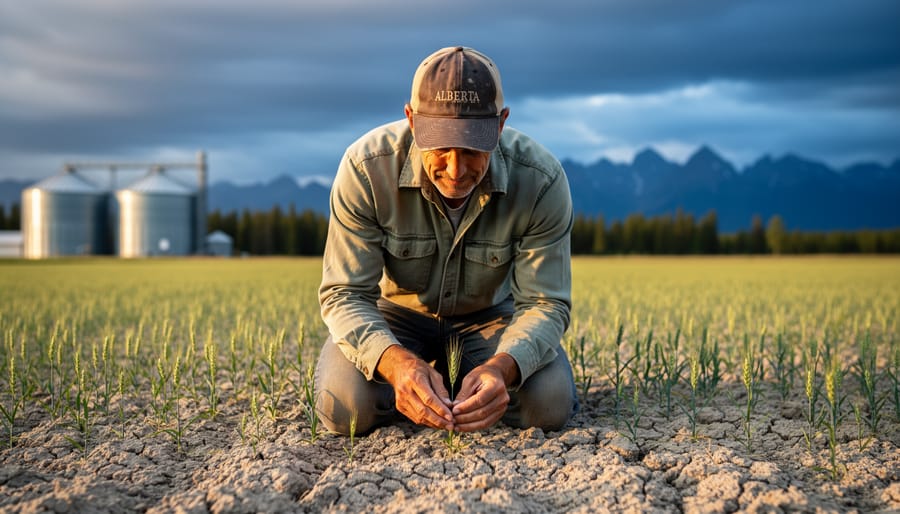
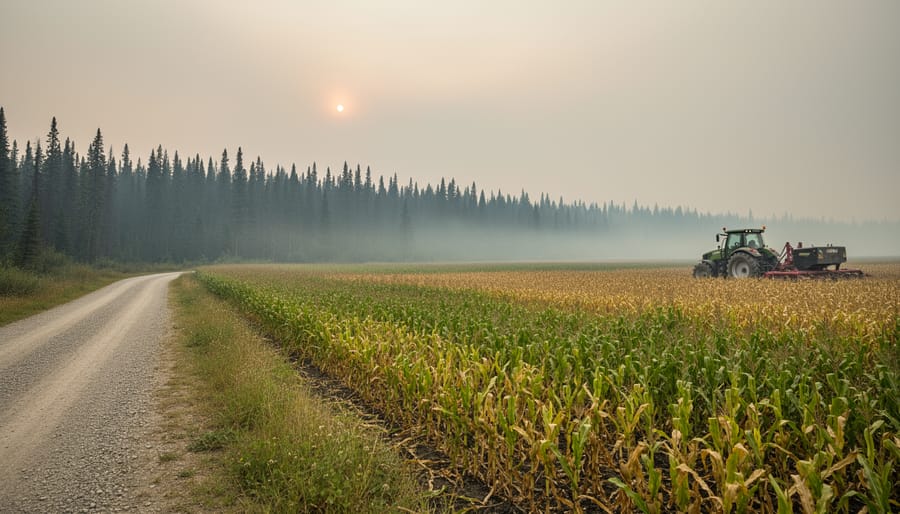
Prolonged smoke exposure from zombie fires creates significant challenges for Alberta’s primary crops. Smoke reduces the sunlight reaching your fields, directly impacting photosynthesis rates. Research from the University of Alberta shows that even moderate smoke coverage can decrease photosynthetic efficiency by 15-30%, slowing growth and reducing overall biomass development.
For canola, smoke interference during the critical flowering period can limit pollination success and reduce oil content in seeds. Wheat and barley face similar pressures, with reduced kernel fill and lower protein levels when smoke persists during grain development stages. Particulate matter settling on leaves can also block stomata, further restricting gas exchange and water regulation.
Quality impacts extend beyond yield numbers. Dr. Sarah Chen, an agronomist at Olds College, explains: “We’ve observed canola with up to 2% lower oil content and wheat showing reduced test weights in seasons with extended smoke exposure. These quality reductions directly affect your market grades and profitability.”
The timing matters significantly. Early-season smoke may delay maturity, pushing harvest into riskier fall weather. Late-season exposure affects final grain fill, reducing both quantity and quality. Understanding these patterns through zombie fire modeling helps you anticipate risks and adjust management practices, from variety selection to harvest timing adjustments.
Livestock Health and Productivity Concerns
Wildfire smoke from zombie fires poses significant challenges for livestock operations across Alberta. Cattle exposed to prolonged smoke events commonly develop respiratory distress, showing symptoms like increased coughing, nasal discharge, and labored breathing. These conditions weaken immune systems, making animals more susceptible to pneumonia and other infections that can spread quickly through herds.
Smoke particles settling on pastures reduce forage quality and palatability. Livestock may refuse to graze contaminated areas, leading to nutritional deficiencies and weight loss during critical growth periods. The stress from poor air quality and reduced feed intake directly impacts milk production in dairy operations, with some Alberta producers reporting drops of 10-15% during severe smoke episodes.
Dr. Sarah Chen, a veterinarian specializing in agricultural animals, notes that implementing proactive livestock health strategies can minimize these impacts. Essential steps include establishing sheltered areas with better air circulation, maintaining emergency feed supplies for when pasture quality declines, and monitoring herd health closely during smoke events. Keep clean water sources readily available, as smoke exposure increases hydration needs. Consider adjusting feeding schedules to early morning or late evening when air quality typically improves. These practical measures help protect your investment and maintain productivity throughout challenging smoke seasons.
Soil and Long-Term Land Health
Zombie fires create lasting impacts beneath the surface that many farmers overlook. When these fires smolder underground through peat and organic matter, they fundamentally alter soil composition. The ash deposited after a zombie fire event differs from surface wildfire ash—it’s often more acidic and can temporarily spike pH levels, affecting nutrient availability for crops.
Dr. Maria Chen, a soil scientist at the University of Alberta, explains that prolonged smoke coverage reduces photosynthetically active radiation reaching your fields, which seems obvious for plants but also affects soil microorganisms. “We’ve documented a 30-40% reduction in beneficial mycorrhizal fungi activity in areas experiencing extended smoke events,” she notes from her 2022 research near Peace River.
The moisture patterns matter too. Zombie fire smoke can persist for weeks, altering local precipitation through particle nucleation. This means your soil may receive different moisture than neighbouring unaffected areas, disrupting your usual irrigation planning.
Testing your soil pH and organic matter content after smoke exposure helps you understand what amendments might be needed. Many Alberta farmers report needing additional lime applications the season following heavy zombie fire smoke to restore optimal growing conditions for canola and wheat.
Building Smoke Resilience: Practical Strategies for Your Farm
Before Smoke Arrives: Preparation Checklist
Taking proactive steps before wildfire smoke impacts your operation can significantly reduce damage and stress during active smoke events. Start by identifying critical infrastructure vulnerabilities. Install HEPA filtration systems in barns and livestock housing, ensuring adequate ventilation controls that can switch to recirculation mode when air quality deteriorates. Create a documented emergency response plan that includes smoke threshold triggers for livestock relocation, grazing modifications, and harvest delays.
Secure alternative water sources now, as smoke contamination can compromise surface water. Test and map groundwater options, and consider installing rainwater collection systems with covered storage. Stock essential protective equipment including N95 or P100 respirators for workers, portable air quality monitors, and backup generators to maintain ventilation systems during power outages.
Implement climate-smart practices that build long-term resilience, such as diversifying crop varieties and enhancing soil organic matter to improve recovery capacity. Establish relationships with neighbouring farms for mutual aid agreements, and compile contact lists for veterinarians, equipment suppliers, and agricultural extension services. Document baseline conditions of crops, livestock health, and soil quality to support insurance claims if needed. Preparation transforms uncertainty into manageable action.
During Smoke Events: Operational Adjustments
When smoke from zombie fires impacts your operation, adjusting your daily activities can protect both your bottom line and your team’s health. Here’s how Alberta farmers are adapting their practices during active smoke events.
Rescheduling field work makes a significant difference. Plan intensive outdoor tasks like spraying, machinery maintenance, or fence repairs for early morning hours when smoke concentrations are typically lower. Monitor air quality indices through Alberta’s Air Quality Health Index website, and postpone non-essential activities when readings exceed 7. Dave Richardson, who farms near Slave Lake, shifted his harvest schedule in 2023, working dawn to mid-morning and resuming in evening hours when smoke cleared, maintaining productivity while protecting his crew.
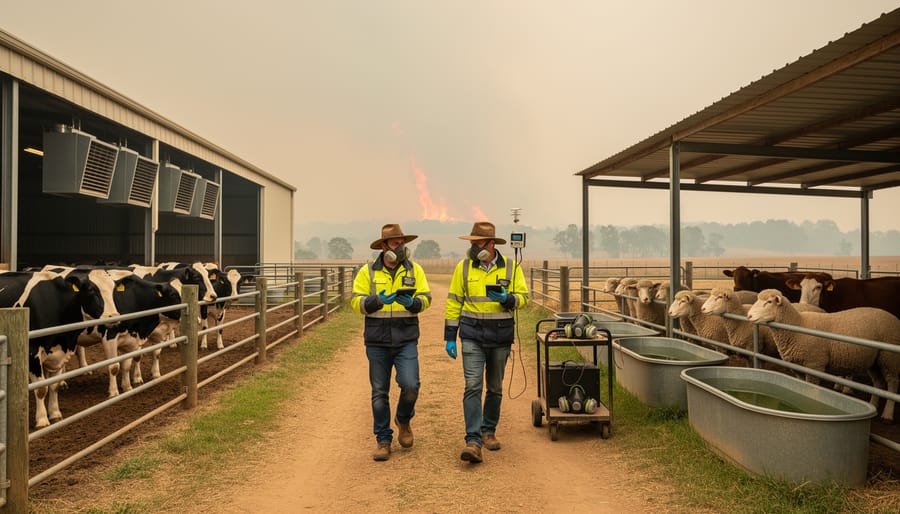
Livestock require special attention during smoky conditions. Move animals to barns or sheltered areas with filtered ventilation when possible. Ensure water sources remain clean and accessible, as animals drink more when breathing irritated air. Reduce intensive handling or transport during peak smoke hours to minimize respiratory stress. Pregnant animals and young stock are particularly vulnerable and should receive priority shelter.
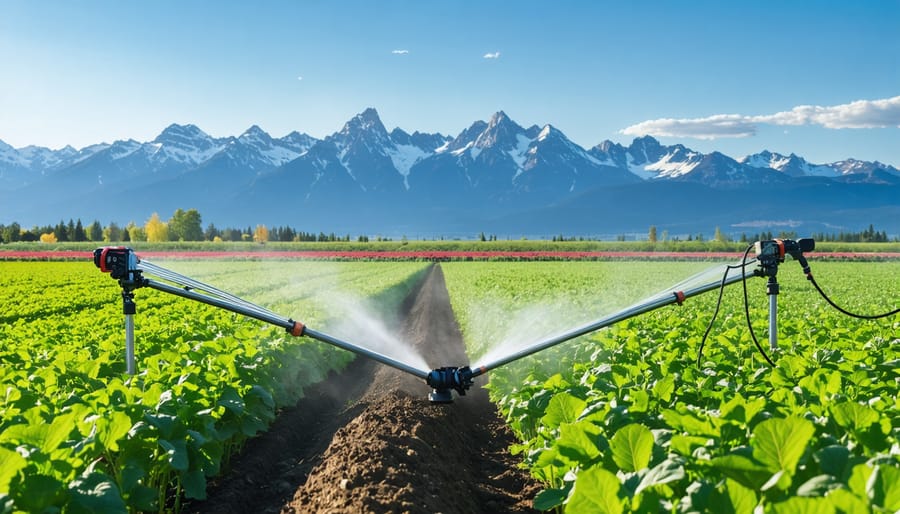
Irrigation management becomes crucial as smoke can reduce evapotranspiration rates. Monitor soil moisture levels closely rather than relying on visual cues, as smoke coverage affects your ability to assess plant stress accurately. Consider running irrigation during cooler, smokier periods to maximize water uptake efficiency.
Worker safety protocols are non-negotiable. Provide N95 respirators for outdoor tasks, create clean air spaces in equipment cabs using HEPA filters, and establish clear communication about when conditions warrant stopping work entirely.
Recovery and Soil Regeneration After Smoke Exposure
After zombie fire smoke exposure, your soil needs attention and care to bounce back. Start with a thorough post-event assessment within two weeks of smoke clearing. Conduct soil testing to measure pH levels, organic matter content, and nutrient availability—many Alberta agricultural extension offices offer affordable testing services that can identify specific deficiencies caused by smoke particulate deposits.
Your recovery strategy should focus on rebuilding soil health through proven regenerative practices. Cover cropping stands out as one of the most effective approaches for soil regeneration after smoke events. Consider planting winter rye, hairy vetch, or oats in affected areas to prevent erosion, improve soil structure, and capture atmospheric nitrogen. These crops also help break up compacted layers that may have formed from ash deposits.
Incorporate organic matter through compost applications at rates of 5-10 tonnes per hectare, depending on your soil test results. Manure applications can also restore microbial activity and carbon content. Many Alberta farmers have successfully used composted cattle manure mixed with biochar to enhance recovery speed.
Avoid excessive tillage during recovery, as disturbing the soil can release stored carbon and disrupt the rebuilding microbial community. Instead, embrace minimal disturbance techniques that allow beneficial organisms to re-establish naturally. Monitor progress through follow-up soil tests every six months during the first year, adjusting your restoration plan based on measurable improvements in organic matter and biological activity.
Expert Insights: Alberta Farmers Adapting to the New Reality
When Dave Henderson noticed smoke lingering over his 800-hectare mixed grain and cattle operation near Peace River in spring 2023, he initially dismissed it as a passing concern. Within 48 hours, persistent zombie fire smoke had blanketed his fields, forcing him to make quick decisions that would shape his approach to fire resilience for years to come.
“We’d prepared for summer wildfire season, but this caught us completely off guard,” Henderson explains. “The smoke appeared in late April, weeks before our traditional fire watch period. That’s when I realized zombie fires were changing the game entirely.”
Henderson’s experience became a turning point. Working with regional agricultural extension services, he implemented a comprehensive zombie fire resilience strategy that has since protected both his crops and livestock through multiple smoke events.
His first action was installing air quality monitoring equipment at three locations across his property, allowing real-time tracking of particulate matter levels. This investment of approximately $1,200 provided data that proved invaluable for operational decisions. “Instead of guessing, I know exactly when to move cattle to sheltered pastures or delay field work,” he notes.
For his 200-head cattle operation, Henderson constructed cost-effective windbreaks using strategically placed hay bales and existing infrastructure. He also modified his barn ventilation system with basic filtration, reducing indoor particulate levels by 60 percent during peak smoke periods. The modifications cost roughly $3,500 but resulted in measurable health improvements, with veterinary visits dropping by 40 percent during the 2023 season.
On the cropping side, Henderson adjusted his soil management practices, increasing organic matter content from 3.2 percent to 4.1 percent over two growing seasons. This improvement enhanced his soil’s resilience to smoke-related stress and reduced moisture loss during prolonged haze periods. He credits this change with maintaining yields within 8 percent of smoke-free benchmarks, compared to neighboring operations that saw 15-20 percent reductions.
Perhaps most valuable was Henderson’s development of flexible operational protocols. “I created decision trees based on air quality readings,” he shares. “At certain thresholds, we postpone spraying, adjust irrigation timing, or move livestock. It’s systematic, not reactionary.”
His advice to fellow farmers is straightforward: start small, monitor consistently, and adapt based on what the data tells you about your specific operation.
Resources and Support for Alberta Agricultural Community
Alberta farmers facing zombie fire threats don’t have to navigate this challenge alone. Several government programs and agricultural organizations offer specialized support for wildfire preparation and recovery planning.
Agriculture Financial Services Corporation (AFSC) provides AgriInsurance programs covering wildfire-related losses to crops and livestock. Their wildfire risk assessment services help farmers evaluate their vulnerability and develop customized mitigation plans. Contact your local AFSC office to discuss coverage options specific to smoke damage and fire impacts.
The Alberta Agriculture and Irrigation department offers cost-share funding through the Canadian Agricultural Partnership for projects that enhance farm resilience, including firebreaks, water storage systems, and infrastructure improvements. Their regional offices connect farmers with wildfire specialists who understand the unique challenges of agricultural operations.
For technical expertise, the Alberta Beef Producers and Alberta Wheat Commission maintain networks of agronomists and veterinarians experienced in smoke-related crop and livestock issues. These organizations regularly host workshops on emergency preparedness and recovery strategies.
The Prairie Climate Centre provides free access to climate modeling data and forecasting tools that help predict fire season severity. Their resources translate complex weather patterns into actionable farming intelligence.
Local emergency management agencies coordinate with Municipal Districts to deliver FireSmart programs tailored for rural properties. These hands-on training sessions cover defensible space creation, evacuation planning, and equipment staging.
The Farm Stress Line (1-800-667-4442) offers confidential mental health support for producers dealing with disaster-related stress. Recovery from zombie fire impacts can be emotionally taxing, and accessing professional counseling demonstrates strength, not weakness.
Agricultural extension specialists at the University of Alberta conduct ongoing research into smoke resilience practices and share findings through free webinars and field days. Connecting with these knowledge networks ensures you’re implementing the most current, science-backed strategies for protecting your operation.
Zombie fires present a real challenge for Alberta’s agricultural community, but they’re far from insurmountable. With the right preparation, knowledge, and support networks in place, you can protect your operation and build resilience against this emerging threat. The predictive models we’ve explored give you a valuable head start, allowing time to implement protective measures before smoke impacts arrive.
Remember, you’re not facing this alone. Alberta’s farming community has consistently demonstrated remarkable adaptability when confronting environmental challenges. By staying informed about zombie fire activity, maintaining flexible management plans, and protecting operations from climate shocks through proactive strategies, you’re building long-term resilience that extends beyond any single fire season.
Start today by connecting with your local agricultural extension office to access region-specific resources and early warning systems. Review your current wildfire preparedness plan and identify gaps. Join community networks where farmers share real-time observations and solutions. These small steps create meaningful protection for your crops, livestock, and livelihood.
The tools and strategies exist to manage zombie fire impacts effectively. Your experience, combined with modern forecasting technology and community collaboration, forms a powerful foundation for weathering whatever challenges lie ahead.