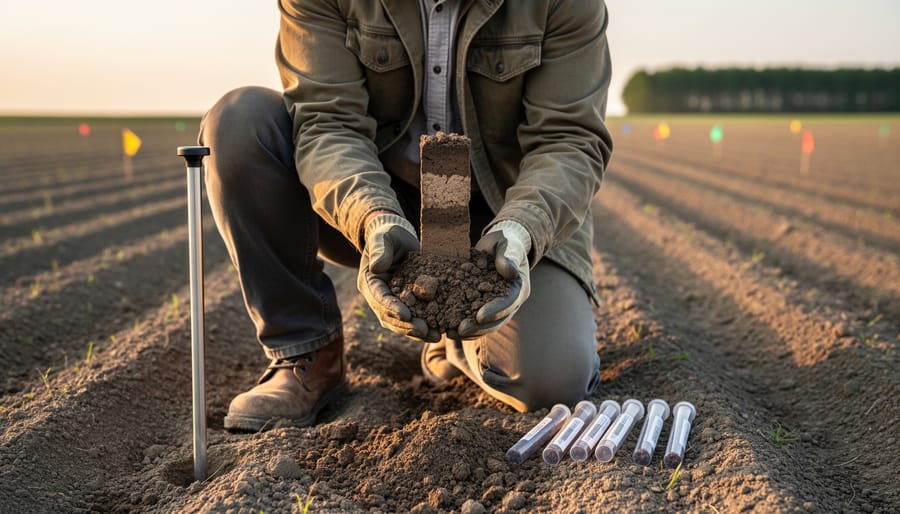
Understand that MRV—Measurement, Reporting, and Verification—forms the backbone of any credible soil carbon certification program, and your success in carbon markets depends on meeting these three requirements with precision and consistency.
Start by establishing your baseline soil carbon levels through accredited laboratory testing at depths of 0-15 cm and 15-30 cm across representative areas of your fields. Alberta farmers typically collect 15-20 soil cores per management zone, compositing samples to ensure accuracy. Document your current land management practices in detail, including tillage methods, crop rotations, fertilizer applications, and any cover cropping—this historical record proves your additionality when you implement carbon-building practices.
Implement digital record-keeping systems immediately to track every field operation, input application, and management decision. Your MRV plan requires continuous documentation, not just annual snapshots. Use farm management software, smartphone apps, or detailed spreadsheets that timestamp activities and link them to specific field locations. Canadian carbon program aggregators review these records during verification, and gaps in documentation can disqualify credits.
Schedule verification intervals according to your chosen protocol—most Canadian programs require soil resampling every three to five years, with annual practice reporting in between. Budget approximately $2,000-$4,000 per verification cycle for soil testing, third-party audits, and administrative costs. The verification process typically takes 30-60 days, during which an independent auditor reviews your records, visits your operation, and confirms your reported practices match field conditions.
What an MRV Plan Actually Means for Your Farm
Breaking Down the Three Pillars
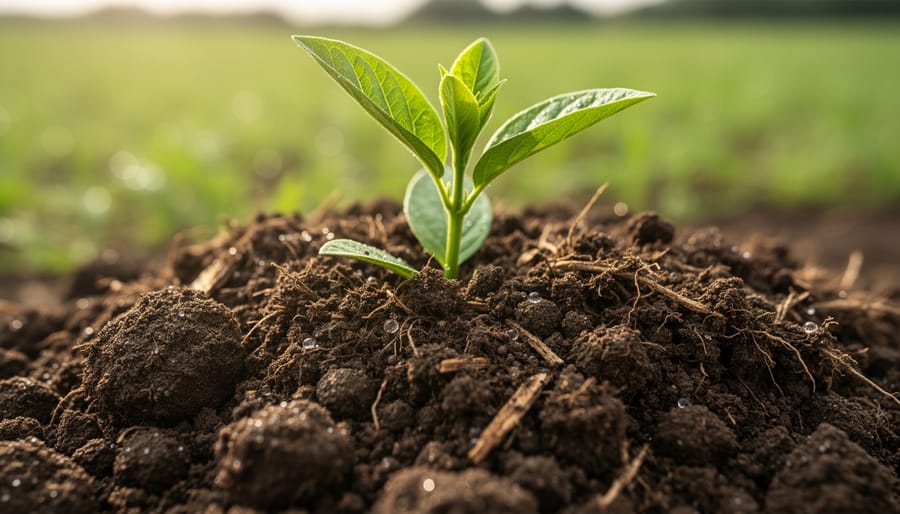
Think of MRV as the backbone of any credible carbon program. It’s what transforms your soil health efforts into verifiable carbon credits that buyers can trust. Let’s break down what each component actually means for your operation.
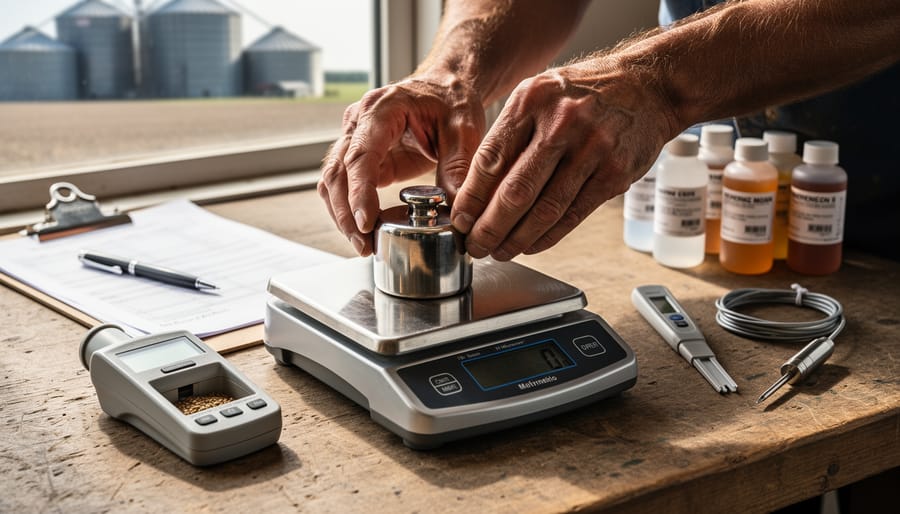
Measurement is where everything starts. This means collecting real data about the carbon stored in your soil. For example, an Alberta grain farmer participating in a carbon program would arrange for soil samples to be taken at specific depths across their fields, typically at 0-15 cm and 15-30 cm. These samples head to certified labs that measure organic carbon content using standardized methods. You’ll also document your farming practices: what crops you planted, fertilizer applications, tillage methods, and cover crop usage. Think of it as creating a detailed record of how you’re managing your land.
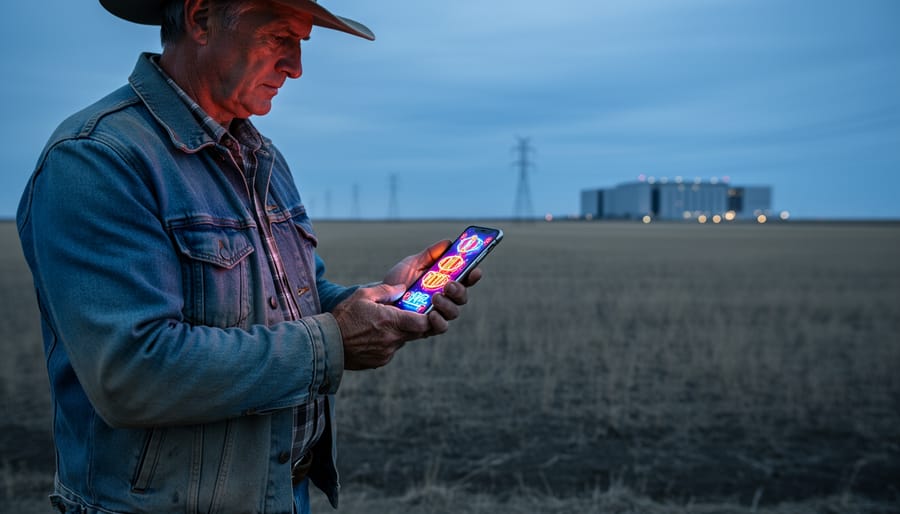
Reporting involves organizing all that information and submitting it according to program requirements. This typically happens annually. You’re essentially telling the story of your carbon sequestration through data. A cattle rancher in central Alberta, for instance, would report on grazing rotations, pasture management changes, and corresponding soil measurements. Most programs now use digital platforms where you upload documentation, field maps, and practice records. The key is accuracy and consistency.
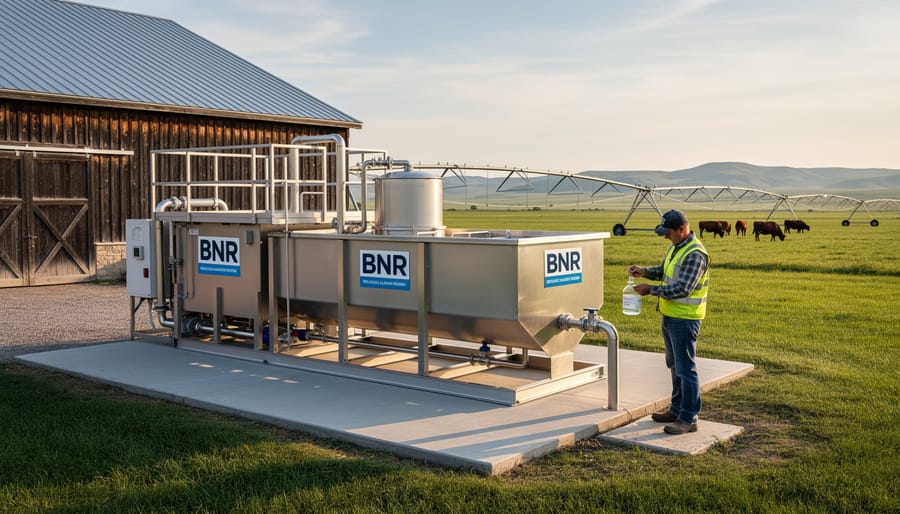
Verification is the independent check that confirms everything you’ve reported is legitimate. A third-party verifier reviews your records, may visit your farm, and validates that measurements were taken properly and practices were implemented as described. This step protects both you and carbon credit buyers by ensuring the carbon sequestration is real and quantifiable. It’s similar to a financial audit, but focused on environmental outcomes rather than dollars.
Why Carbon Markets Demand This Level of Accountability
Carbon credit buyers—whether corporations, governments, or sustainability funds—aren’t purchasing abstract promises. They’re investing in verified emission reductions that must withstand scrutiny from regulators, shareholders, and the public. Without rigorous traceability and verification systems, the entire carbon market risks collapse through fraud or overstatement of benefits.
This accountability directly protects your interests as a farmer. When buyers trust the verification process, credit prices remain stable and premium payments continue. Markets plagued by questionable data see prices crash, leaving farmers who’ve invested in genuine soil health practices without compensation.
Consider the experience of Alberta farmer James Kowalski, who initially resented the detailed record-keeping required by his carbon program. “Two years in, I appreciate why buyers need this evidence,” he explains. “When my neighbour sold unverified credits through a sketchy program that later got delisted, he lost everything. My verified credits kept their value.”
Strong MRV standards also prevent bad actors from flooding markets with low-quality credits that undercut legitimate farmers. Programs requiring third-party verification, satellite monitoring, and soil sampling create barriers to fraud while building buyer confidence.
The carbon market isn’t a short-term opportunity—it’s an emerging asset class that could provide revenue for decades. Maintaining high verification standards now ensures this market matures into a reliable income stream rather than collapsing under credibility issues, protecting both your immediate returns and long-term financial planning.
The Measurement Component: Tracking Your Soil’s Carbon Story
Baseline Sampling: Getting Your Starting Point Right
Getting your baseline measurements right is the foundation of your entire MRV plan. This initial snapshot determines how much carbon you’ve sequestered over time, so accuracy here directly impacts your future carbon credit potential.
For Alberta conditions, baseline sampling typically requires collecting soil cores to a depth of 30 centimetres, though some programs extend to 60 centimetres for more complete analysis. The deeper sampling captures carbon changes in subsoil layers, which is particularly relevant for Alberta’s diverse soil types ranging from Black Chernozems to Dark Brown soils.
Timing matters significantly. Conduct baseline sampling during consistent seasonal windows, ideally in spring or fall when soil moisture is relatively stable. Wayne Mitchell, a carbon agronomist working with southern Alberta farms, emphasizes avoiding sampling immediately after tillage or during extremely wet conditions, as this can skew results.
Grid pattern density depends on your field’s variability. For relatively uniform fields, a sampling grid of 2 to 4 hectares per sample point works well. Fields with greater topographic variation or multiple soil zones need tighter spacing, perhaps one sample per hectare, to capture accurate baseline conditions.
Most certification programs require bulk density measurements alongside carbon testing. This additional step adds precision to your carbon stock calculations and demonstrates the quality of your data to verifiers. Plan for 15 to 20 composite samples per quarter section for comprehensive coverage, with each composite combining multiple cores from the same management zone.
Ongoing Monitoring: How Often and How Deep
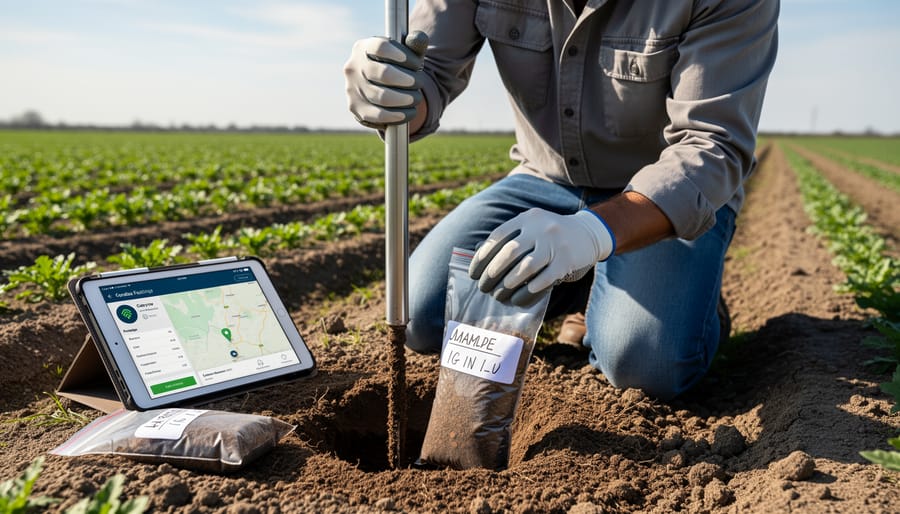
Monitoring frequency varies significantly depending on your chosen carbon protocol and farm operation scale. Most soil carbon programs require baseline sampling followed by verification every three to five years, though some protocols ask for annual reporting of management practices even when soil testing isn’t scheduled.
For smaller operations under 200 hectares, many Alberta farmers find success with the minimum required monitoring schedule, typically soil sampling once every five years combined with annual record-keeping of farming activities. This approach balances certification requirements with cost management, usually running between $2,000 to $4,000 per sampling event depending on field variability and number of sample points required.
Larger operations exceeding 500 hectares often benefit from more frequent monitoring, even beyond protocol minimums. Saskatchewan farmer James Mitchell, who manages 800 hectares enrolled in a carbon program, conducts partial field sampling every three years. “It helps us track our progress and adjust practices before verification audits,” he explains. “We’re not just meeting requirements; we’re learning what works.”
Annual monitoring of management practices is universal across protocols. This includes documenting tillage practices, crop rotations, cover crop plantings, and input applications. Digital farm management platforms have simplified this process considerably, allowing real-time record-keeping that integrates seamlessly with verification requirements.
Cost considerations matter. Budget approximately $8 to $15 per hectare annually for comprehensive monitoring when you factor in soil sampling, laboratory analysis, and documentation time. However, these costs are typically offset by carbon credit revenues and the agronomic insights gained from regular soil health assessments.
Technology Tools That Make Measurement Easier
Good news: you don’t need to become a data scientist to track your soil carbon metrics effectively. Several Canadian-friendly technology solutions are making MRV measurement much more manageable for farmers.
Digital platforms like Agoro Carbon and Nori integrate directly with equipment many Alberta farmers already use. These systems automatically pull data from your existing farm management software, GPS-enabled equipment, and yield monitors, reducing manual data entry significantly.
Soil sampling has become more efficient too. Handheld GPS units help you maintain consistent sampling locations year after year, which is essential for accurate monitoring. Some farmers are now using soil probe sensors that connect to smartphone apps, allowing you to log samples immediately in the field.
For those managing larger acreages, drone technology and satellite imagery services provide cost-effective ways to monitor field conditions and biomass changes throughout the growing season. Companies like CarbonLink offer remote sensing tools specifically designed for Canadian prairie conditions.
The key is starting simple. Most verification bodies accept standard farm records combined with one or two digital tools. Brandon Heikel, a central Alberta farmer participating in carbon programs, notes, “I started with just my regular field records and a GPS app on my phone. You can always add more sophisticated tools as you get comfortable with the process.”
The Reporting Component: Documenting Your Carbon Gains
What Records You’ll Need to Keep
Participating in a soil carbon certification program requires maintaining thorough records that verify your carbon sequestration claims. Strong documentation and record-keeping forms the foundation of a credible MRV plan.
You’ll need to document all practice changes implemented on your farm. This includes dates when you adopted new management techniques like reduced tillage, cover cropping, or rotational grazing. Keep detailed records showing what practices you used before enrollment and what changed afterward. Field histories are essential, documenting crop rotations, tillage operations, and fertilizer applications for at least three years prior to enrollment.
Input records must track all amendments applied to your soil. Document the type, quantity, and application dates for fertilizers, manure, compost, and lime. Include purchase receipts and application maps showing where products were used. Alberta farmer James Morrison from Lacombe County keeps a digital filing system organizing all his input records by field and crop year, making verification audits straightforward.
Soil sampling records need careful attention. Store laboratory reports with GPS coordinates, sampling depth, and collection dates. Many programs require baseline samples plus annual or biennial monitoring throughout your contract period.
Most certification programs require maintaining these records for the duration of your contract plus an additional three to seven years afterward. Digital record-keeping systems can simplify this process, allowing you to organize documents by field, date, and practice type while ensuring nothing gets lost over time.

Digital Platforms vs. Paper Trails
Choosing between digital platforms and traditional paper records for your MRV plan depends on your operation’s size, tech comfort, and program requirements. Both methods can work, but understanding the trade-offs helps you make the right choice for your farm.
Digital platforms offer real-time data tracking, automated calculations, and streamlined reporting that can save hours during verification season. Several Canadian platforms now integrate directly with carbon program MRV protocols. For example, Field to Market and Agoro Carbon Alliance provide farmer-friendly interfaces that sync with existing farm management software. Alberta-based farmers working with programs like the Canadian Agricultural Partnership often find these platforms simplify the documentation process significantly.
Paper trails remain viable, especially for smaller operations or farmers who prefer hands-on record-keeping. The key is consistency. Keep a dedicated binder with soil test results, input receipts, field maps, and practice change dates. Many verification bodies accept well-organized paper records, though digitization before submission may be required.
For those new to technology, start small. Mark Henderson, a mixed grain farmer near Lethbridge, began with simple spreadsheets before transitioning to a digital platform. “I tracked one field digitally while keeping my usual paper records. Once I saw how much easier reporting became, I converted everything,” he shares.
Practical tips: If going digital, choose platforms offering free trials and customer support in your timezone. Request demo sessions to ensure compatibility with your workflow. For paper records, photograph documents monthly as backup and organize chronologically by field. Remember, the best system is the one you’ll actually maintain consistently throughout the growing season.
The Verification Component: Third-Party Validation Explained
Who Verifies and What They’re Looking For
In Canada, soil carbon third-party verification is conducted by accredited organizations that have received approval from carbon offset protocols like the Alberta Emission Offset System or other provincial programs. These verifiers typically hold ISO 14065 accreditation, which demonstrates their competence in greenhouse gas validation and verification activities.
Qualified verifiers often employ agrologists, soil scientists, or environmental auditors with specialized training in carbon offset protocols. In Alberta, for instance, verifiers must understand both the Alberta-based Offset Credit System requirements and the specific nuances of prairie agricultural systems.
During farm visits, verifiers assess several key areas. They examine your field records to confirm practice changes were implemented as claimed, checking planting dates, tillage records, and crop rotation documentation. Soil sampling procedures receive close scrutiny to ensure samples were collected at proper depths, following protocol-specified grid patterns, and sent to approved laboratories. Verifiers also review additionality, confirming that your carbon-sequestering practices represent genuine changes from your baseline operations rather than business-as-usual activities.
“Verifiers aren’t there to catch you out,” explains Saskatchewan agrologist Maria Chen, who’s worked with numerous carbon projects. “They’re ensuring data integrity so buyers can trust the credits generated.”
Expect verifiers to cross-reference satellite imagery with your reported field boundaries and practice changes. They’ll also confirm your measurements align with approved methodologies, whether you’re using soil sampling, modelling approaches, or a combination of both. Proper documentation makes verification straightforward, while gaps or inconsistencies trigger additional questions and potential site visits.
Preparing for a Verification Audit
A well-organized preparation process makes verification audits run smoothly and demonstrates your commitment to meeting certification requirements. Start by gathering all documentation from your monitoring period, including soil test results, management records, and any third-party lab reports. Ensure your field maps are current and clearly identify practice change areas with GPS coordinates.
Create a dedicated folder system organizing records by field and date. Include planting records, tillage logs, crop rotation schedules, fertilizer applications with rates in kilograms per hectare, and harvest data. Photographs documenting changes like cover crop establishment or reduced tillage implementation provide valuable supporting evidence.
Before the audit, walk through your fields to ensure boundary markers are visible and access routes are clear. Prepare a list of any challenges encountered during implementation and how you addressed them. This transparency builds trust with verifiers.
Have your contact information for agronomists, soil testing labs, and equipment operators readily available. Alberta farmer John Patterson notes that keeping digital backups of all records saved him time during his second verification, reducing the audit from two days to four hours.
Building Your Farm’s MRV Plan: A Step-by-Step Approach
Choosing the Right Protocol for Your Operation
Selecting the right carbon protocol for your farm is a critical decision that affects your MRV requirements, potential revenue, and long-term commitment. In Canada, several major protocols operate with different strengths and requirements.
Alberta’s Carbon Offset System remains the most established option for prairie farmers, with specific protocols for conservation cropping and nitrogen management. This provincial program offers predictable pricing and streamlined certification processes familiar to many Alberta producers. The MRV requirements include detailed field records, soil sampling every three years, and annual reporting through approved aggregators.
The Canadian Agricultural Partnership’s Agricultural Climate Solutions program supports practices like cover cropping and rotational grazing through various approved protocols. These typically require baseline soil sampling, annual activity records, and verification every five years.
Private market protocols like Verra’s VM0042 and the Climate Action Reserve offer access to voluntary carbon markets with potentially higher credit prices but demand more rigorous monitoring. Expect comprehensive soil sampling, detailed practice documentation, and third-party verification annually or biennially.
When evaluating protocols, consider your farm’s current record-keeping capacity. Grain farmers with existing precision agriculture systems often find Alberta’s protocols manageable, while livestock operations might align better with grazing-focused programs.
Review the commitment period carefully. Most protocols require 15 to 25 years of practice maintenance, though some allow early exit with credit repayment.
Saskatchewan farmer Tom Richardson chose Alberta’s protocol despite slightly lower credit prices because it matched his existing crop rotation records. “The learning curve was gentler, and I could start generating credits in year one,” he explains.
Connect with aggregators serving your region to understand support services included. Many provide software tools, training, and verification coordination that significantly reduce your administrative burden.
Budgeting for MRV: Costs and Return on Investment
Understanding the financial investment required for MRV helps you make informed decisions about carbon certification. Let’s break down the typical costs Alberta farms can expect and the potential revenue from carbon credits.
Initial setup costs often include baseline soil sampling, which ranges from $1,500 to $4,000 depending on farm size and sampling density. Most protocols require samples from representative management zones across your operation. Laboratory analysis typically adds $30 to $50 per sample. For a mid-sized grain farm, budget approximately $2,500 to $6,000 for comprehensive baseline testing.
Annual monitoring costs are generally lower, averaging $1,000 to $3,000 for follow-up sampling and testing. Digital MRV platforms charge between $500 and $2,000 annually for data management and reporting tools, though some carbon programs include these services in their enrollment fees.
Third-party verification represents another significant expense, typically ranging from $2,000 to $5,000 per verification cycle, depending on farm complexity and the verifier’s requirements.
Against these costs, consider potential carbon credit revenue. Alberta farms generating soil carbon credits can earn $15 to $40 per tonne of CO2 equivalent, depending on market conditions and program premiums. A 500-acre farm implementing improved practices might sequester 0.5 to 1.5 tonnes of carbon per acre annually, potentially generating $3,750 to $30,000 in annual credit revenue.
Many farmers report breaking even within two to three years, with subsequent years providing positive returns alongside improved soil health benefits.
Real Alberta Farmers Making MRV Work
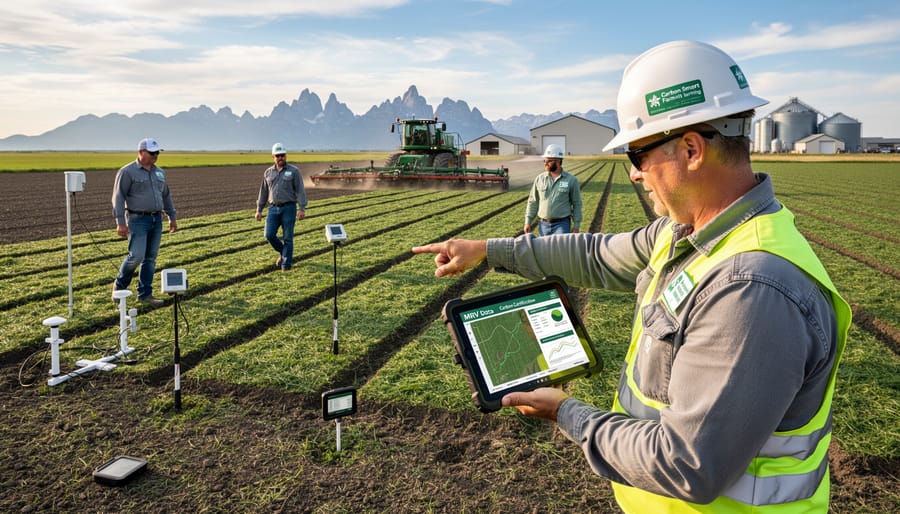
Seeing how MRV plans work in real-world settings can make all the difference when you’re considering carbon certification. Several Alberta farmers have already navigated this process and come out the other side with valuable lessons to share.
Take the case of Mark Petersen, a grain farmer near Lethbridge who manages 1,200 hectares. Mark started his MRV journey in 2021 after attending a local workshop on carbon markets. “The monitoring part seemed overwhelming at first,” he admits. “But once I realized I was already tracking most of the data through my regular farm management software, it became much more manageable.” Mark focused on detailed field records, using GPS-tagged photos to document his cover crop establishment and no-till practices. His advice? Start with one field or management zone rather than trying to tackle your entire operation at once.
Jennifer Wong operates a mixed cattle and grain operation in the Peace Country. Her experience highlights the importance of baseline data. “I wish I’d known earlier that having historical records would speed up the verification process,” she says. Jennifer now maintains a simple spreadsheet that tracks tillage operations, seeding dates, inputs, and residue management across all 800 hectares. She also invested in a soil sampling protocol that divides her land into consistent management zones, making year-over-year comparisons straightforward for verifiers.
The reporting component proved easier than expected for both farmers. Mark uses monthly check-ins with his agronomist to ensure his records stay current. “Trying to recreate six months of field activities from memory doesn’t work,” he notes. “Spending 30 minutes each month saves hours during verification season.”
Both farmers emphasize the value of connecting with others going through the process. Jennifer helped form a local MRV peer group where five area farmers share their experiences, compare record-keeping systems, and prepare for verifications together. “We’ve learned more from each other’s mistakes and successes than from any manual,” she says.
Their biggest piece of advice for farmers just starting out? Don’t let perfect be the enemy of good. Your MRV system will evolve as you learn what works best for your operation. Begin with solid baseline measurements, maintain consistent records, and build from there.
Common MRV Pitfalls and How to Avoid Them
Even with the best intentions, farmers can encounter obstacles that compromise their MRV efforts and potentially jeopardize their carbon credit eligibility. Understanding these common pitfalls helps you avoid costly mistakes from the start.
One of the most frequent issues is inadequate baseline data. Some farmers begin soil sampling without establishing proper grid patterns or fail to document their initial practices thoroughly. Without accurate baseline measurements, you can’t demonstrate the carbon gains required for certification. Solution: Work with an agrologist to design a comprehensive sampling strategy before any practice changes, and photograph your fields to document conditions.
Inconsistent reporting creates another major challenge. Sarah Chen, a carbon program verifier in Alberta, notes that “gaps in your activity records raise red flags during verification. We’ve seen farmers lose credits because they couldn’t prove continuous implementation of their practices.” Keep detailed, timestamped records using farm management software or simple spreadsheets. Set calendar reminders for monthly data entry to maintain consistency.
Underestimating the time commitment often leads to rushed or incomplete documentation. MRV isn’t a one-time task but an ongoing responsibility. Allocate at least two hours monthly for record-keeping and plan ahead for soil sampling windows. Many successful participants treat MRV documentation like financial bookkeeping—a regular, non-negotiable farm task.
Another pitfall involves choosing measurement methods that don’t align with your carbon program’s requirements. Always verify your program’s specific MRV protocols before investing in equipment or services. Some programs accept remote sensing data while others require physical soil samples at specific depths.
Finally, trying to manage everything alone can overwhelm even experienced farmers. Build relationships with other participants, join producer groups, and don’t hesitate to ask program administrators questions. Your success depends on accurate, consistent MRV implementation, and support networks make that achievable.
A well-designed MRV plan isn’t just a box to check for carbon market participation—it’s a valuable farm management tool that helps you track soil health improvements and make data-informed decisions. Whether you’re aiming for carbon credits or simply want to better understand your land’s potential, implementing measurement, reporting, and verification practices positions your operation for long-term sustainability and potential new revenue streams.
The good news? You don’t need to overhaul your entire operation overnight. Many successful Alberta farmers start with baseline soil sampling on a portion of their land, perhaps 160 acres, to understand the process and costs before scaling up. This approach lets you learn the verification requirements, build relationships with qualified professionals, and assess whether carbon certification aligns with your management goals.
If you’re ready to explore soil carbon certification, begin by connecting with established carbon program providers operating in Alberta. Request their specific MRV protocols, compare costs and credit payment structures, and talk with neighbours who’ve already gone through verification. Your local agronomist or agricultural extension office can provide guidance on approved sampling methods and connect you with qualified verifiers. The investment of time and resources you make now in understanding MRV requirements will pay dividends as carbon markets continue to evolve and reward producers who are prepared.