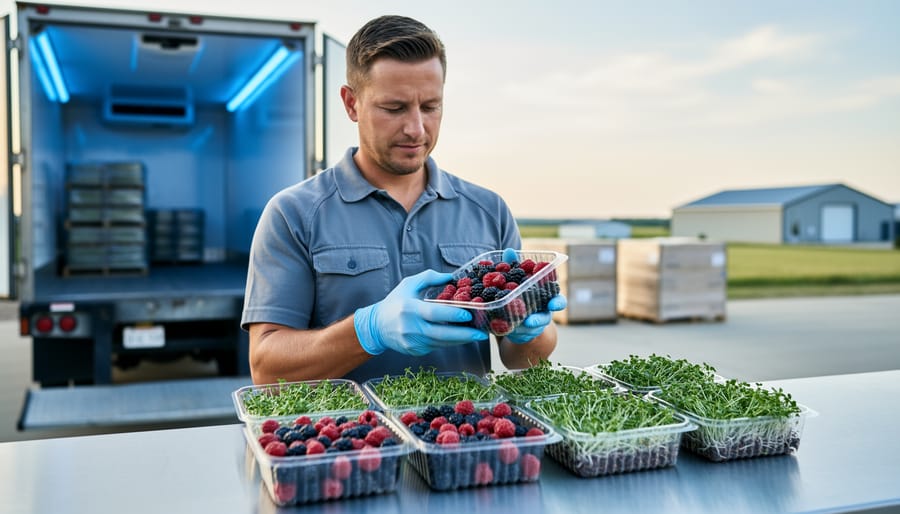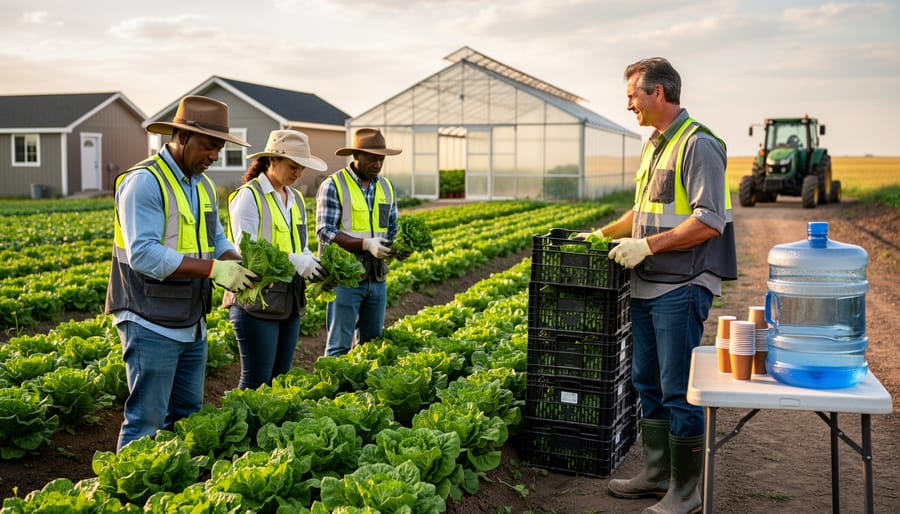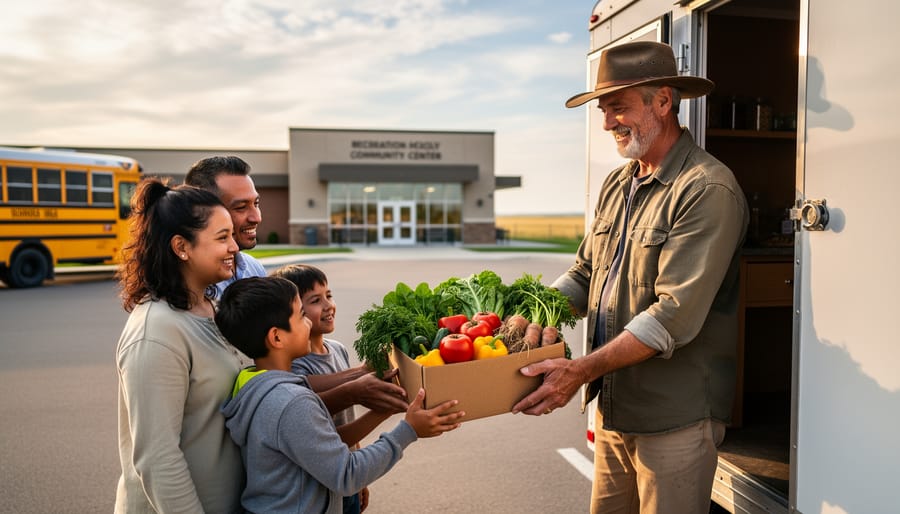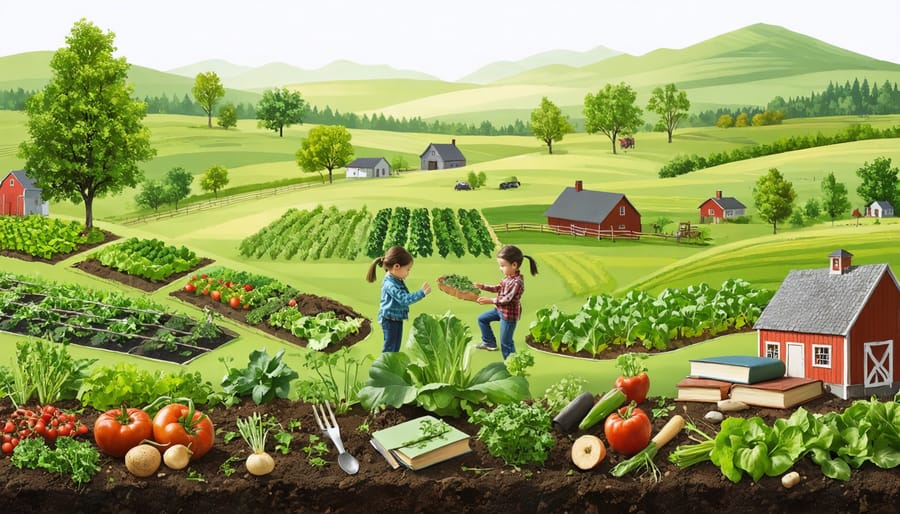
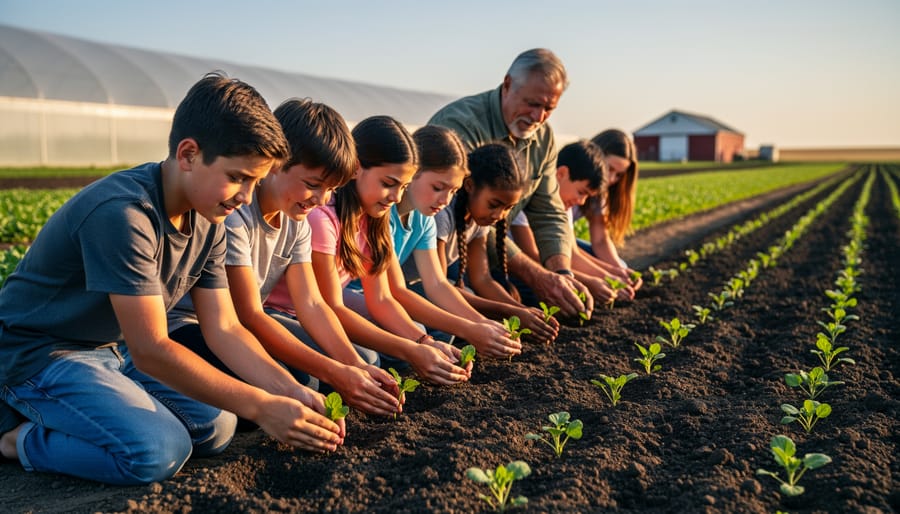
Connect youth with agricultural realities by hosting seasonal field days where students participate in planting, harvesting, and food preparation activities directly on your operation. The Brant Hutterite Colony near Hanna, Alberta successfully runs monthly visits for local schools, teaching 150+ students annually about crop rotation and soil health through 2-hour immersive sessions that include hands-on seeding and greenhouse tours.
Design curriculum-aligned lesson plans that satisfy provincial education standards while showcasing your farm’s unique practices. Partner with teachers to develop modules covering science (plant biology, weather patterns), mathematics (measuring garden plots, calculating yields), and social studies (food systems, agricultural economics). Many Alberta farms collaborate with Agriculture in the Classroom to access ready-made resources that reduce planning time to under 3 hours per program.
Establish revenue-generating education models through school group bookings, summer farm camps, or CSA-education hybrids that strengthen local food networks while creating additional income streams. FarmGate Market Collective members report earning $2,000-$5,000 annually through educational programming that requires minimal infrastructure beyond existing farm facilities and basic liability insurance.
Build community partnerships with 4-H clubs, Future Farmers organizations, and municipal recreation departments to share resources, access funding opportunities, and expand your program reach without shouldering all operational responsibilities. These collaborative approaches reduce individual farmer workload while maximizing educational impact across rural and urban youth populations seeking authentic agricultural experiences.
What Makes Farm Education Programs Different from Traditional Agriculture Learning
The Farm-to-Table Connection That Changes Everything
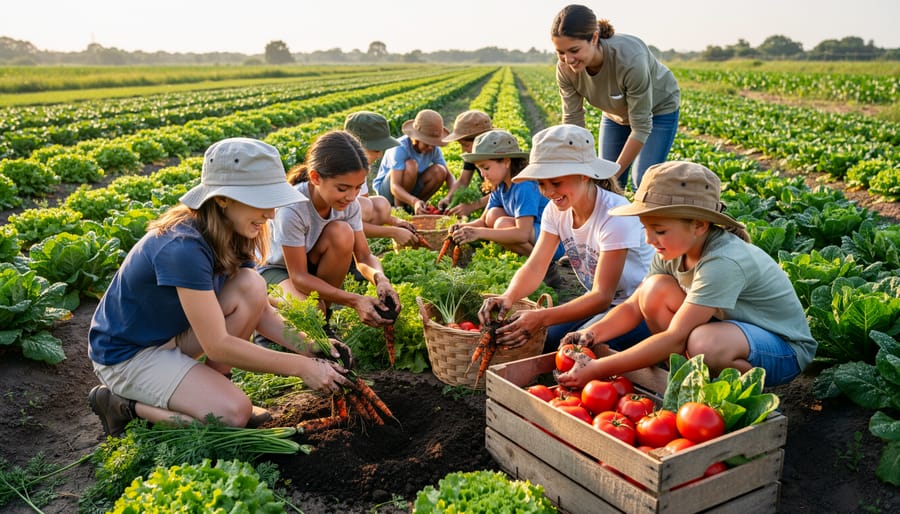
When young participants track their lettuce from seed packet to salad bowl, something remarkable happens. The abstract concept of food production transforms into tangible understanding—they’ve touched the soil, monitored growth, and tasted the results of their efforts. This complete journey creates connections that stick with youth long after they leave the farm.
At Highwood Community Gardens near High River, Alberta, coordinator Maria Chen observes this transformation regularly. “We had a Grade 5 student who refused to eat vegetables at the start of our six-week program,” she shares. “By harvest time, she was bringing cherry tomatoes home to her family because she’d grown them herself. That ownership changes perspective.”
The farm-to-table sequence builds understanding layer by layer. Youth learn why timing matters when they see bolted lettuce. They grasp water conservation when monitoring irrigation needs during Alberta’s dry spells. Food safety practices make sense when they’re washing produce they’ll actually consume. These aren’t abstract lessons—they’re practical skills with immediate application.
This comprehensive approach also strengthens local food systems. Programs often partner with community-supported agriculture operations, farmers’ markets, or school meal programs, creating distribution channels for student-grown produce. At Poplar Bluff School near Swan Hills, the greenhouse program supplies fresh greens to their cafeteria weekly during the growing season, demonstrating real-world agricultural economics.
Following food from beginning to end develops critical thinking too. Youth start asking meaningful questions about growing methods, seasonal availability, and food miles—conversations that influence household purchasing decisions and community food awareness.
Hands-On Learning That Sticks
There’s something powerful about learning with your hands in the soil rather than just reading about agriculture in a textbook. Farm education programs tap into experiential learning, where young people don’t just memorize facts about where food comes from—they actively participate in growing, harvesting, and understanding the entire process.
Research consistently shows that hands-on learning creates deeper comprehension and longer retention. When students plant seeds, monitor growth cycles, and witness the impact of weather on crops, they’re building neural connections that abstract concepts simply can’t match. A student who’s pulled carrots from the ground understands root vegetables in a fundamentally different way than one who’s only seen pictures.
For Alberta farmers offering these programs, the benefits extend beyond the participants. Young learners ask questions that sometimes challenge established practices, bringing fresh perspectives to your operation. They also become agriculture’s best ambassadors, sharing their experiences with families and communities who may be disconnected from farming realities.
The practical skills gained—from understanding seasonal cycles to recognizing the physical demands of agricultural work—prepare youth for informed decisions whether they pursue farming careers or simply become more conscious consumers. This education builds respect for the profession and creates meaningful connections between rural producers and urban communities.
How Alberta Farms Are Successfully Running Youth Education Programs
Case Study: Growing Futures on an Organic Vegetable Farm Near Calgary
Located just 30 minutes east of Calgary, Growing Futures Farm has successfully integrated youth education into their 8-hectare certified organic vegetable operation since 2019. Owner Sarah Chen developed the program after recognizing a disconnect between urban youth and food production, creating a model that benefits both students and her farm’s bottom line.
The program runs in two streams throughout the growing season. Their school partnership program hosts Grade 4-6 classes for half-day visits between May and October, accommodating up to 30 students per session. Students participate in age-appropriate tasks like transplanting seedlings, harvesting vegetables, and learning about soil health through hands-on compost demonstrations. The farm welcomes approximately 800 students annually through this stream, generating $12,000 in revenue that offsets seasonal labour costs.
Their summer youth employment initiative takes a deeper approach, hiring six high school students for eight-week placements. Participants work 20 hours weekly, rotating through different farm departments while earning minimum wage. The curriculum balances practical skills like irrigation management and pest identification with business fundamentals including crop planning and farmers market sales.
Measurable outcomes demonstrate the program’s success on multiple levels. Student surveys show 92 percent report increased vegetable consumption six months post-visit, while 78 percent express interest in agriculture-related careers. For Growing Futures, the program created an unexpected marketing advantage. Parents who visited during pick-up became CSA subscribers, adding 45 new member families and $31,500 in annual sales. The summer students provide reliable labour during peak harvest periods, reducing Chen’s need for additional seasonal workers by 30 percent.
Chen emphasizes the importance of proper liability insurance and clear safety protocols, noting these foundational elements allowed the program to scale sustainably while maintaining focus on quality education and farm productivity.
What Alberta’s Livestock Farms Are Teaching About Sustainable Protein
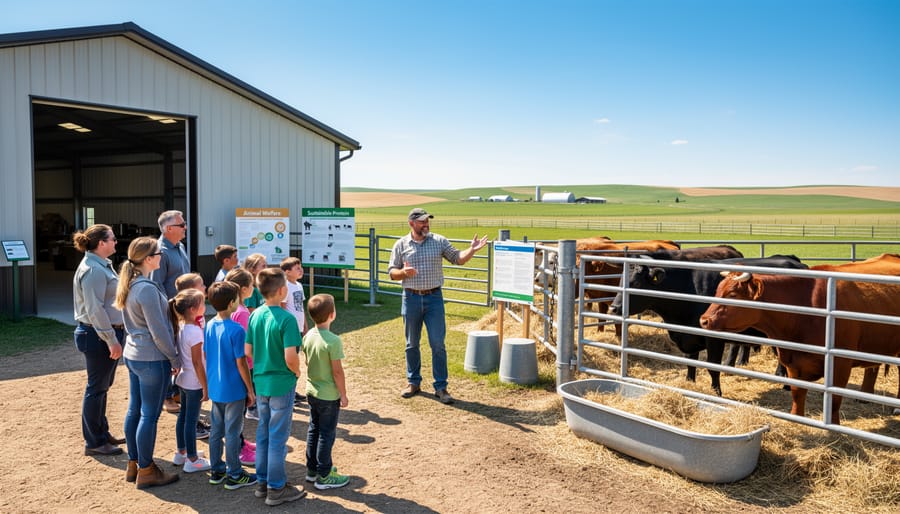
Alberta’s livestock operations are leading the way in teaching visitors about responsible protein production while showcasing the realities of modern ranching. Several farms across the province have opened their gates to school groups, aspiring farmers, and consumers curious about where their meat comes from.
At Circle S Ranch near Nanton, the Morrison family guides visitors through their rotational grazing system, demonstrating how moving cattle through paddocks mimics natural bison patterns while regenerating soil health. Their program includes hands-on sessions where participants learn to assess pasture quality and understand why rest periods between grazing cycles improve forage growth by up to 40 percent. Students see firsthand how cattle actually enrich grasslands rather than degrade them when managed properly.
Meanwhile, Sunnybrook Farms in the Peace Country has developed a comprehensive animal welfare curriculum. Their tours walk participants through handling facilities designed to minimize stress, explain vaccination protocols, and discuss nutrition planning. Owner Janet Kowalski emphasizes transparency: “We show everything, including difficult conversations about livestock mortality and processing decisions. Young people appreciate the honesty.”
These programs also tackle ethical considerations around meat consumption. Rather than avoiding challenging questions, producers engage in respectful dialogue about environmental impacts, carbon sequestration through grasslands, and the role of livestock in converting marginal land into nutritious food. Participants leave with nuanced understanding rather than oversimplified narratives, equipped to make informed choices about their food sources.
The Mixed Farm Approach: Teaching the Full Food System
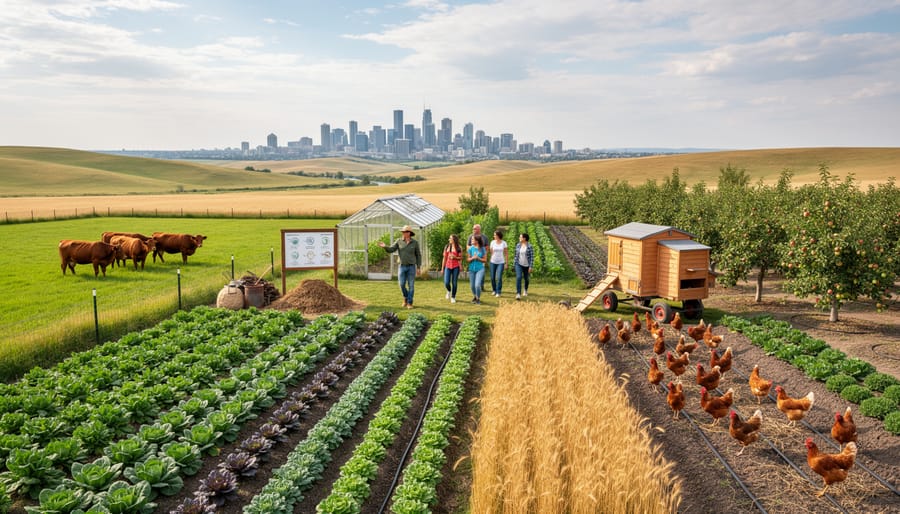
Diversified farms provide young learners with a complete picture of how food systems actually work. Unlike single-crop operations, mixed farms demonstrate the interconnected nature of sustainable agriculture through practical examples students can observe and participate in.
At these operations, participants learn crop rotation principles firsthand, understanding why canola follows wheat and how pulse crops restore nitrogen to prairie soils. They see how livestock integrate into cropping systems, with cattle grazing cover crops and returning nutrients through manure. This approach resonates particularly well with Alberta’s agricultural landscape, where many producers already balance grain production with livestock.
Soil health becomes tangible when students compare fields at different stages of rotation or examine the impact of minimal tillage practices. They learn to read soil structure, identify beneficial organisms, and understand moisture retention—concepts that stick because they’re experienced directly rather than memorized from textbooks.
Many Alberta producers running education programs report that showcasing their diversified systems helps young people appreciate farming’s complexity and environmental stewardship. These real-world lessons prepare students to understand modern agriculture’s challenges while demonstrating proven solutions already working on Canadian farms.
Building Your Own Farm Education Program: A Practical Starting Point
Assessing Your Farm’s Educational Potential
Before launching a farm education program, take an honest look at what your operation can realistically handle. Start by identifying your farm’s unique strengths. A grain operation might excel at teaching crop rotation and equipment operation, while a livestock farm offers hands-on animal care experiences. Consider what makes your farm special and what stories you’re passionate about sharing.
Evaluate your seasonal capacity carefully. Most Alberta farms have intense planting and harvest periods when hosting groups simply isn’t feasible. Spring and fall shoulder seasons, or slower winter months, might be ideal for classroom-style workshops or indoor activities like food preservation or agricultural history sessions.
Resources matter significantly. Do you have a safe gathering space, accessible washroom facilities, and adequate parking? Can you dedicate 3-5 hours weekly during program months? One central Alberta mixed farm successfully started small, hosting quarterly school visits during low-activity periods before expanding to weekly summer camps.
Safety infrastructure is non-negotiable. Assess potential hazards like machinery, water bodies, or aggressive animals. Many farms find that designating a specific “education zone” away from active operations works best.
Finally, be realistic about your teaching comfort level. You don’t need formal education training, but you should enjoy working with your target age group and communicating clearly. Starting with one-time farm tours before committing to regular programming helps gauge your interest and capacity.
Safety, Liability, and Insurance Considerations in Canada
Creating a safe and legally compliant farm education program protects both your operation and the young participants you’re welcoming onto your property. In Canada, liability considerations vary by province, so connecting with your insurance provider before launching any youth program is essential.
Most farm insurance policies don’t automatically cover educational activities or public visitors. You’ll likely need additional agritourism or commercial liability coverage, which typically costs between $500 and $2,000 annually depending on program scope and frequency. Ask your insurer specifically about coverage for minors, as this requires specialized attention.
Safety protocols should include clear emergency procedures, first aid supplies readily accessible, and documented hazard assessments for all farm areas students will access. Consider establishing separate “learning zones” away from active equipment operation or livestock handling areas. Age-appropriate activities matter—what’s suitable for high school students differs significantly from elementary-aged children.
Waiver and consent forms are standard practice, though in Canada, waivers don’t eliminate all liability, especially involving minors. Work with a lawyer familiar with agricultural law to develop appropriate documentation that includes medical information, emergency contacts, and clearly outlined activities.
Many successful programs partner with schools or 4-H organizations that carry their own insurance, creating a shared responsibility framework. The Alberta Farm Safety Centre offers resources specific to agritourism safety, while organizations like Agriculture in the Classroom provide templates and guidance that meet provincial requirements. Building relationships with other farmers running education programs creates invaluable peer support for navigating these practical considerations while maintaining the welcoming, educational atmosphere that makes these programs transformative for youth.
Partnering with Schools and Community Organizations
Building lasting partnerships starts with identifying organizations that share your educational vision. Reach out to local schools, 4-H clubs, homeschool networks, and community centers to explore collaboration opportunities. Many Alberta schools actively seek connections with working farms to enhance their school food education programs, making this an ideal entry point for farmers.
When approaching potential partners, prepare a clear proposal outlining what you can offer: farm tours, hands-on workshops, seasonal programming, or curriculum-aligned activities. Be specific about group sizes you can accommodate, safety protocols, and accessibility considerations. Many successful partnerships begin with a single pilot program that builds trust and demonstrates value.
Consider formalizing agreements that outline expectations, scheduling, liability coverage, and cost structures. Some farms operate on a fee-for-service model, while others incorporate educational programming as part of their community outreach or diversification strategy.
Attend agricultural education conferences and connect with organizations like Agriculture in the Classroom Alberta, which can help link you with educators seeking farm experiences. These networks often provide resources, curriculum guides, and promotional support that reduce your administrative burden while expanding your reach throughout the community.
Making It Work Financially: Funding and Revenue Models
Securing sustainable funding remains essential for farm education programs to thrive long-term. Canadian farmers have several avenues to explore when developing financial models for their initiatives.
Government grants provide significant support. Agriculture and Agri-Food Canada offers funding through programs like the Canadian Agricultural Partnership, which supports projects enhancing public trust in agriculture. Provincial programs, including Alberta’s Growing Forward initiatives, allocate resources specifically for agricultural education and community engagement projects. These grants typically require detailed proposals outlining educational outcomes and community benefits.
Fee structures offer another revenue stream. Many successful programs charge participation fees ranging from $15 to $50 per student for half-day visits, while multi-day camps command $200 to $500 per week. Schools often have dedicated budgets for experiential learning that can cover these costs. Some farms integrate education with direct farm sales models, where program participants become future customers through farm stands or CSA memberships.
Corporate sponsorships and partnerships with agricultural organizations like Alberta Agriculture and the Canadian Federation of Agriculture can supplement income. Local food retailers and farm supply companies often support educational initiatives aligned with their community values. Community foundations and regional economic development offices also provide smaller grants for rural programming, typically between $1,000 and $10,000 annually.
What Youth Actually Learn Through Farm-to-Table Programs
Soil Health and Carbon Sequestration Made Real
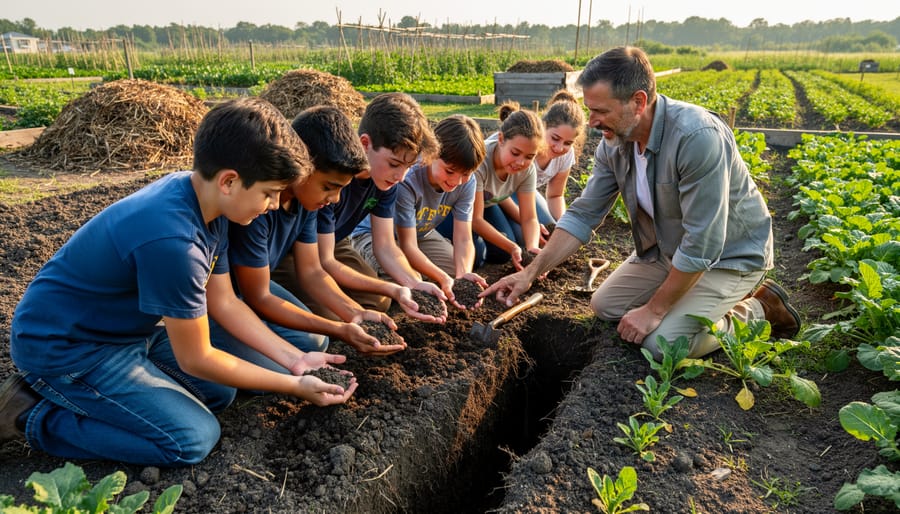
Farm education programs transform abstract climate concepts into tangible learning experiences through practical soil-focused activities. When young people get their hands dirty with composting demonstrations, they witness organic matter decomposition firsthand and understand how this process captures atmospheric carbon. Many Alberta farms now incorporate soil testing stations where students measure organic matter percentages, pH levels, and microbial activity—connecting data points to real-world regenerative outcomes.
Cover cropping demonstrations prove particularly effective. Students observe how diverse plant species protect bare soil during off-seasons, preventing erosion while building underground carbon stores through extensive root systems. One central Alberta producer reported that youth participants showed genuine excitement tracking soil temperature differences between tilled and no-till fields, making the benefits of minimal disturbance practices immediately visible.
Vermiculture projects, where students maintain worm composting bins and monitor castings quality, illustrate nutrient cycling in manageable timeframes. These hands-on experiences help participants grasp how healthy soils function as living ecosystems rather than inert growing mediums. By measuring carbon content improvements over growing seasons, young learners connect their actions to measurable climate solutions, building both agricultural knowledge and environmental stewardship that extends well beyond the farm gate.
From Farm Economics to Food Security
Farm education programs teach youth far more than planting schedules—they develop crucial life skills that extend well beyond the field. When young people learn about farm economics, they gain practical knowledge about pricing, profit margins, and the real costs of food production. Understanding that a kilogram of tomatoes involves expenses for seeds, water, labour, and transportation helps them appreciate agricultural business complexities.
These programs naturally foster critical thinking as students navigate challenges like weather impacts on crop yields or market fluctuations affecting farm income. Alberta youth participating in farm-to-table initiatives often discover how local food systems work, from production costs to retail pricing, building financial literacy that serves them in any career path.
Farm economics education also connects directly to food security awareness. When young people understand the economic pressures farmers face and how these affect food availability and affordability, they become more informed citizens and consumers. They learn to evaluate supply chains, recognize the value of local food systems, and understand why supporting regional agriculture matters for community resilience. This knowledge empowers them to make thoughtful decisions about food choices while appreciating the dedication required to feed communities sustainably.
Building Environmental Stewards, Not Just Consumers
Farm education programs cultivate something deeper than market knowledge—they foster genuine environmental stewardship. When young people participate in planting, tending, and harvesting, they develop a personal connection to the land that transforms their relationship with food and agriculture. Research from Alberta farm programs shows participants reduce food waste by up to 40% and make more environmentally conscious choices long after their farm visits end.
This hands-on learning creates what educators call “place-based understanding.” Children who’ve pulled carrots from prairie soil or collected eggs from heritage breed chickens develop empathy for agricultural ecosystems. They understand that farming isn’t just production—it’s careful resource management, soil health maintenance, and biodiversity protection. Many Alberta producers report that young visitors return as adults, seeking careers in sustainable agriculture or becoming vocal advocates for local food systems and conservation practices within their communities.
Expert Insights: What Educators and Farmers Say About These Programs
We spoke with educators, farmers, and agricultural professionals across Alberta who’ve witnessed firsthand how farm education programs transform both participants and operations.
Sarah Mitchell, a Grade 5 teacher from Red Deer who brings her class to a local farm quarterly, shares that the biggest surprise was the impact on urban students. “Kids who’d never considered where their food comes from are now asking their parents to shop at farmers’ markets. One student convinced her family to start a balcony garden. That ripple effect extends far beyond our classroom walls.”
Tom Brennan, who runs a 160-hectare mixed operation near Lacombe, initially worried about liability and disruption. “I thought hosting school groups would slow us down during peak season,” he admits. “Instead, we scheduled visits during shoulder periods and discovered an unexpected revenue stream. The $500 to $800 we earn per group visit covers costs while building customer loyalty. Parents who visit with their kids often become regular buyers at our farm gate.”
Agricultural extension specialist Dr. Patricia Chen has studied these programs for five years. Her research shows participating farms report 35 percent increases in direct-to-consumer sales within two years. “The educational component builds trust and transparency. When families understand your growing practices, they become invested in your success,” she explains.
Jamie Kwan operates an organic vegetable farm that partners with three Edmonton schools. He notes an unforeseen benefit: “Students ask questions that make me think differently about our practices. Their curiosity pushed us to improve our composting system and better explain our pest management approach.” These improvements later helped him secure farm-to-restaurant partnerships with chefs who valued his transparent methods.
The consensus among implementers? Start small and focus on safety protocols. Michelle Dubois, who coordinates programs for Agriculture Education Alberta, recommends beginning with one or two classes. “Build your confidence and systems before scaling up. Document everything—from arrival procedures to emergency contacts. The preparation makes all the difference.”
These practitioners emphasize that successful programs require genuine enthusiasm for teaching, not just farming expertise. As Tom puts it, “If you enjoy sharing your knowledge and can answer endless ‘why’ questions with patience, you’ll find this work incredibly rewarding.”
Farm education programs represent a genuine win-win-win scenario for Alberta agriculture. When you open your gates to young learners, you’re not just sharing knowledge—you’re investing in the future of your operation, your community, and the entire agricultural sector.
The benefits extend far beyond a single field trip. Farms that embrace educational initiatives build stronger community relationships, create new revenue streams, and develop a loyal customer base that understands the real value of local food. Youth gain hands-on experiences that no classroom can replicate, developing practical skills and food literacy that will serve them throughout their lives. Communities benefit from citizens who appreciate agriculture’s complexity and support policies that strengthen rural economies.
You don’t need elaborate infrastructure or formal qualifications to make an impact. Start small—invite a local school class for a harvest tour, partner with 4-H clubs, or host a Saturday workshop on topics you know well. Many successful programs began with just one farmer sharing their passion for a couple of hours each season.
Alberta Agriculture and Rural Development offers resources for farmers interested in educational programming, including liability guidance and curriculum connections. The Alberta Farm Fresh Producers Association can also connect you with experienced farm educators who’ve navigated these waters before.
Consider what you could offer, even in a modest way. That young person learning to identify wheat varieties or understanding crop rotation might become your future employee, customer, or the innovative farmer who strengthens Alberta’s agricultural landscape for generations to come.