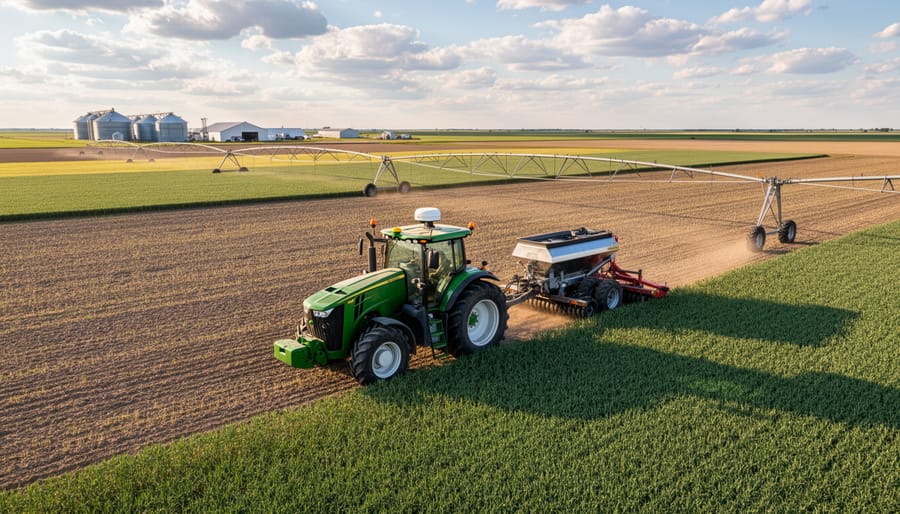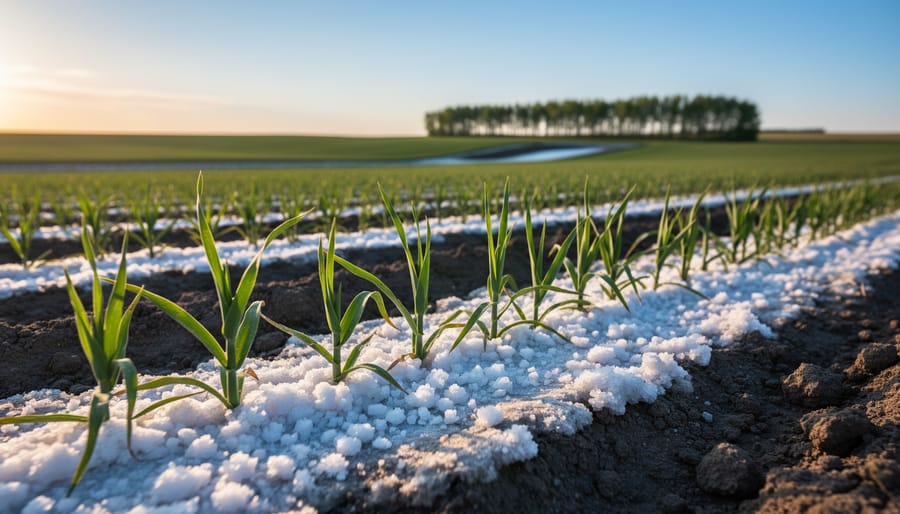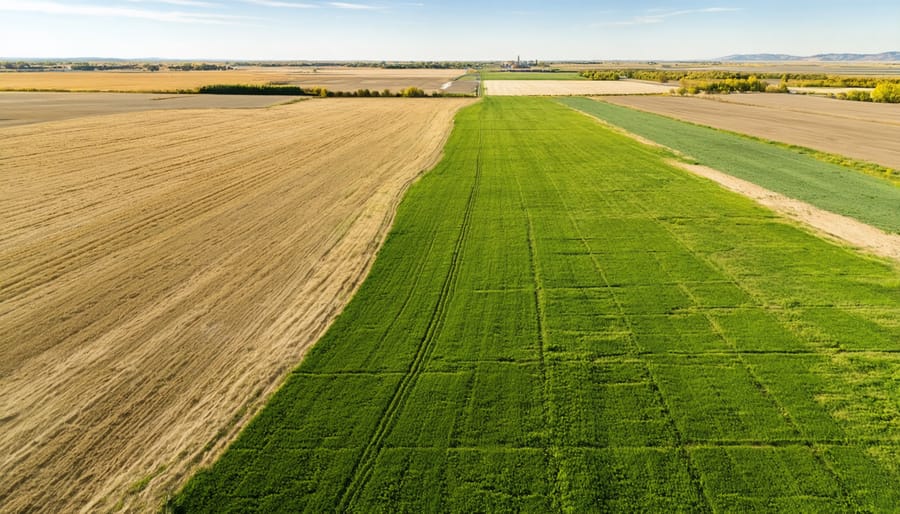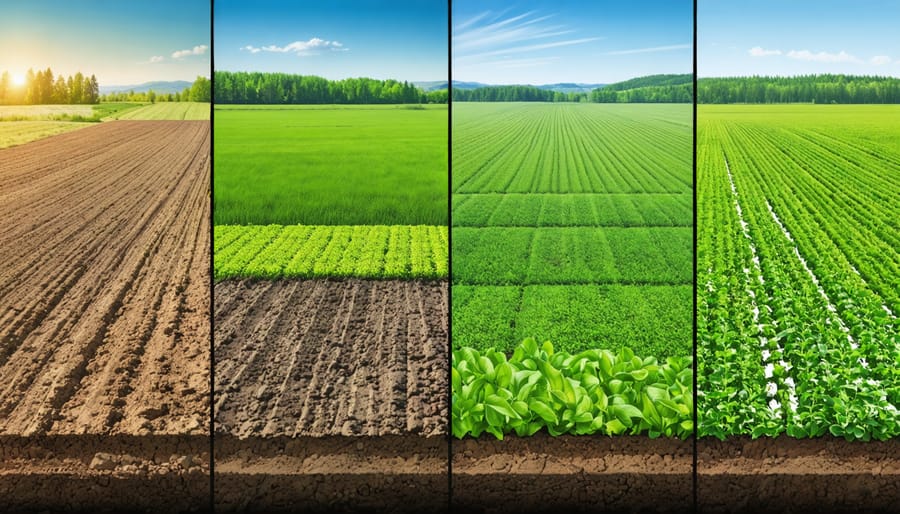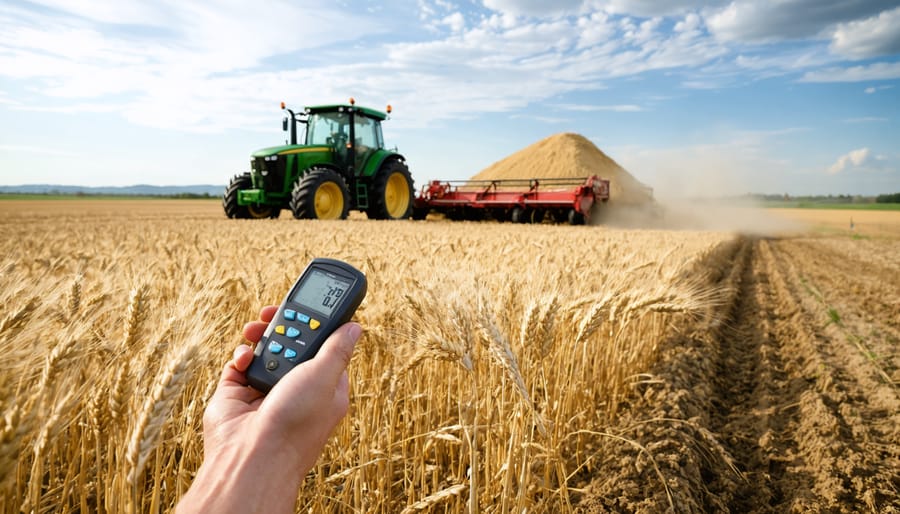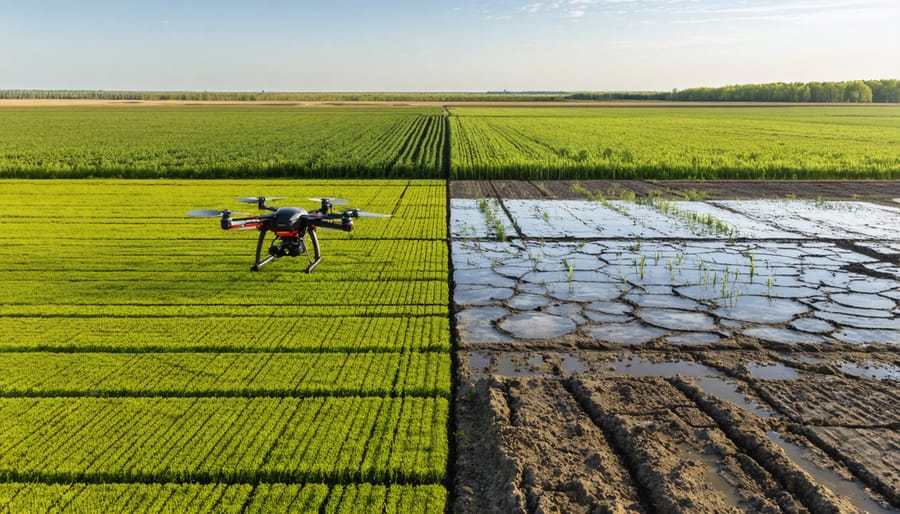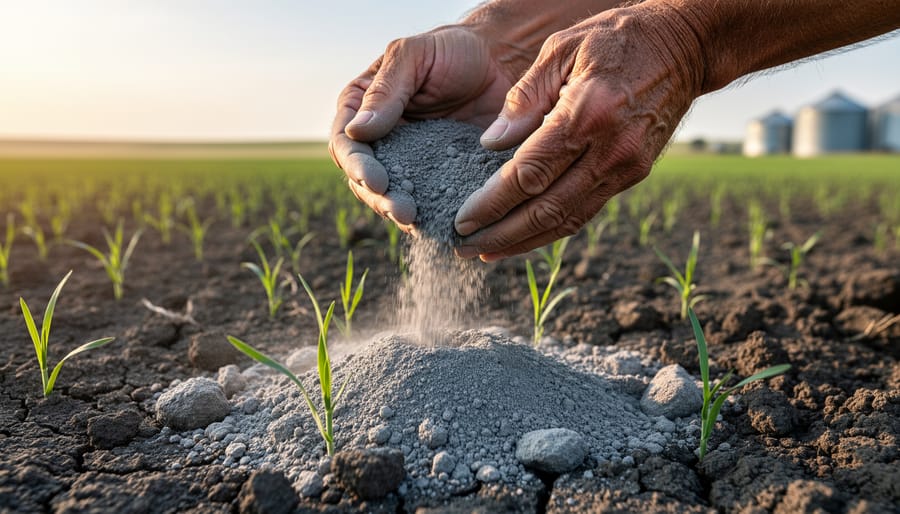
Look beyond the traditional compost bin—volcanic ash offers prairie farmers a mineral-rich alternative for building organic matter that’s been quietly transforming soil structure across Alberta. This ancient geological material, once dismissed as an exotic amendment unsuited to Canadian conditions, is proving its worth in fields from Lethbridge to Peace River, particularly where heavy clay soils resist conventional improvement methods.
Volcanic ash works differently than manure or compost. Rather than adding ready-made organic matter, it provides a highly porous mineral framework that holds nutrients and water while creating habitat for soil microbes. The silica-rich particles improve aggregation in clay soils, enhance drainage, and buffer pH fluctuations—all critical factors in Alberta’s challenging growing environment. Some producers report measurable increases in water-holding capacity within a single season.
The practical questions matter most: Can you source it affordably? Will it perform in minus-thirty winters? Does the science support the marketing claims? This article examines real Alberta operations using volcanic ash, breaks down the application rates that actually work, and provides honest cost-benefit analysis based on current market prices. You’ll learn whether volcanic ash deserves a place in your soil improvement strategy or if your resources are better spent elsewhere.
What Is Volcanic Ash and Why Does It Matter for Alberta Soils?
The Mineral Makeup That Makes It Work
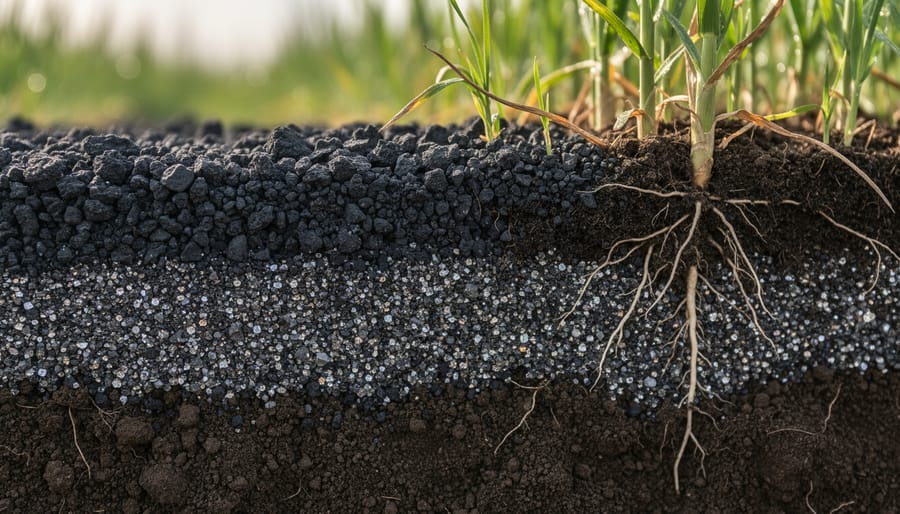
Volcanic ash brings a remarkable mineral package to the table, and understanding what’s inside helps explain why it works so effectively in prairie soils. Unlike synthetic fertilizers that deliver isolated nutrients, volcanic ash offers a complex blend of minerals that support both immediate plant needs and long-term soil health.
The primary component is silica, typically making up 50-70% of volcanic ash composition. Silica strengthens plant cell walls, improving resistance to disease and lodging in cereal crops—particularly important for Alberta’s wheat and barley growers dealing with wind exposure. It also enhances soil structure by promoting better particle aggregation.
Iron and magnesium are present in readily available forms, addressing common deficiencies in alkaline prairie soils. Magnesium plays a central role in chlorophyll production and enzyme activation, directly impacting photosynthesis efficiency. Iron supports nitrogen fixation in legumes and helps prevent chlorosis in sensitive crops.
Calcium content varies by ash source but generally improves soil pH balance and enhances nutrient uptake. Dr. Jennifer Morrison from Olds College notes that “the calcium in volcanic ash is more slowly released than lime, providing sustained benefits without the pH spikes that can lock up micronutrients.”
Potassium, essential for water regulation and disease resistance, appears in amounts sufficient to supplement fertility programs. The beauty lies in the slow-release nature—these minerals become available gradually as the ash particles weather, providing sustained nutrition rather than a quick flush that can leach away with spring melt.
This mineral diversity creates synergistic effects, with each element supporting the uptake and utilization of others.
How Volcanic Ash Interacts with Prairie Soils
Alberta’s prairie soils have unique characteristics that make them particularly responsive to volcanic ash amendments. The province’s dominant soil types—Black Chernozems in parkland regions and Dark Brown soils in drier areas—both face challenges that volcanic ash can help address.
Black Chernozems, while naturally rich in organic matter, can experience nutrient tie-up and pH fluctuations. Volcanic ash brings immediate benefits through its high cation exchange capacity, typically ranging from 20-50 meq/100g depending on the source. This improvement allows soil particles to better hold and exchange essential nutrients like calcium, magnesium, and potassium, making them more available to crops when needed.
Dr. Sarah Chen, a soil scientist with Agriculture and Agri-Food Canada’s Lethbridge Research Centre, explains it practically: “Think of volcanic ash as adding more parking spaces for nutrients in your soil. Instead of washing away with spring runoff, nutrients stick around where roots can access them.”
For Dark Brown soils in southern Alberta, volcanic ash addresses different concerns. These soils often have higher pH levels and lower organic matter content. The silica-rich minerals in volcanic ash help moderate alkalinity over time while improving water retention—critical in regions where every millimetre of moisture counts.
The key interaction happens at the microscopic level. Volcanic ash particles, porous and irregular in shape, create additional surface area for beneficial microbes to colonize. This increased microbial activity enhances nutrient cycling and improves overall soil structure, particularly important after years of intensive cultivation. Field trials near Lethbridge have shown cation exchange capacity improvements of 15-30 percent within two growing seasons.
Proven Benefits for Organic Matter and Soil Health
Boosting Water Retention in Drought-Prone Areas
Alberta’s unpredictable precipitation patterns and extended dry periods make water retention a constant challenge for farmers across the province. Volcanic ash offers a practical solution through its unique porous structure, which functions like a natural sponge in your soil.
The microscopic pores within volcanic ash particles can hold significant amounts of water while still allowing proper water infiltration and drainage. This dual benefit prevents both waterlogging during heavy rainfall and excessive drying during drought periods. Research from University of Alberta soil scientists indicates that volcanic ash amendments can increase soil water-holding capacity by 15-30 percent, depending on application rates and existing soil conditions.
For Alberta growers dealing with sandy or degraded soils, this improved water retention translates directly to reduced irrigation needs and more consistent crop performance during dry spells. The ash particles essentially create thousands of tiny reservoirs throughout your soil profile, slowly releasing moisture to plant roots as needed.
Mark Peterson, a crop consultant working with southern Alberta producers, explains it simply: “Think of volcanic ash as a water savings account for your soil. During wet periods, it stores that moisture. When conditions turn dry, your crops can draw on those reserves.”
This water-holding benefit becomes particularly valuable during Alberta’s critical growing months of July and August, when rainfall often becomes scarce. Farmers report seeing improved plant resilience and reduced crop stress, even during extended hot, dry periods that would typically challenge conventional soil management approaches.
Supporting Beneficial Soil Microbes
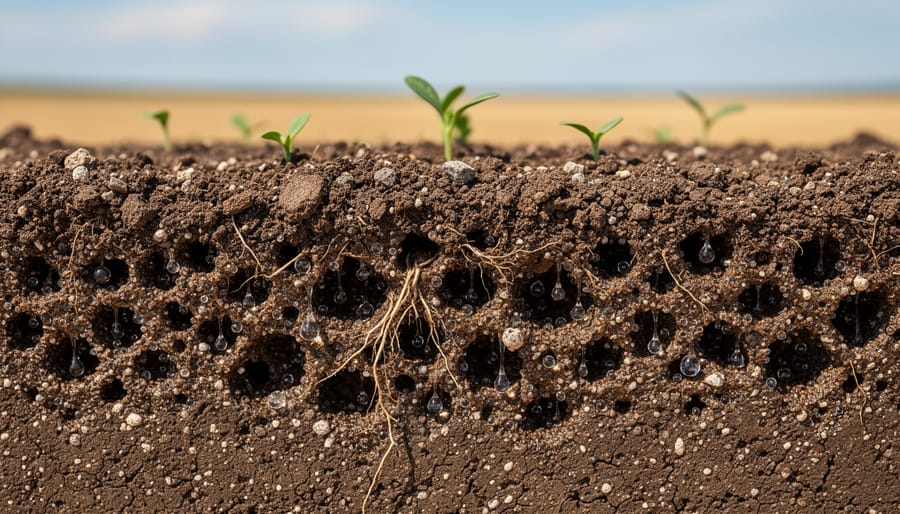
Volcanic ash creates an ideal environment for beneficial soil microbes due to its unique physical structure and mineral composition. The porous nature of volcanic particles provides countless small spaces where bacteria and fungi can establish protected colonies, sheltered from environmental stresses while remaining accessible to water and nutrients.
“Think of volcanic ash as creating tiny apartment buildings for microbes,” explains Dr. Sarah Chen, a soil microbiologist with Agriculture and Agri-Food Canada. “The irregular surface area and internal pore spaces offer substantially more habitat compared to conventional soil particles of similar size.”
This enhanced microbial activity directly accelerates the decomposition of organic matter. Fungal networks, particularly mycorrhizal fungi, colonize the mineral-rich ash particles and extend throughout the soil profile, forming bridges that connect organic residues to mineral nutrients. These fungi break down complex organic compounds that would otherwise decompose slowly in Alberta’s cooler soils.
The silicon, calcium, and trace minerals in volcanic ash also support specific bacterial populations responsible for nutrient cycling. Nitrogen-fixing bacteria and phosphorus-solubilizing microbes thrive in the mineral-enriched environment, converting locked-up nutrients into plant-available forms. Alberta farmers using volcanic ash amendments have reported improved crop residue breakdown, with corn stalks and wheat stubble decomposing 20-30 percent faster than in unamended fields. This faster cycling means nutrients return to the soil system more quickly, reducing the need for supplemental inputs and building long-term soil fertility through natural biological processes.
Improving Soil Structure and Aggregation
One of volcanic ash’s most valuable contributions to Alberta soils is its ability to improve soil structure—something particularly beneficial for our heavy clay soils that tend to compact easily. The unique physical properties of volcanic ash particles create a framework that helps bind soil aggregates together while maintaining pore space for air and water movement.
Volcanic ash particles act as tiny structural supports within your soil. Their irregular, porous surface provides multiple contact points where soil particles can attach, forming stable aggregates that resist breakdown during heavy rainfall or equipment passes. This aggregation is crucial for Alberta farmers dealing with spring soil conditions, where compaction from equipment can create hardpan layers that restrict root growth.
Tom Hendrickson, a grain farmer near Drumheller, noticed the difference after two years of volcanic ash applications. “We used to see water pooling in low spots for days after a rain,” he explains. “Now the water infiltrates much faster, and our soil doesn’t form that crusty layer on top anymore. The seedlings emerge more evenly too.”
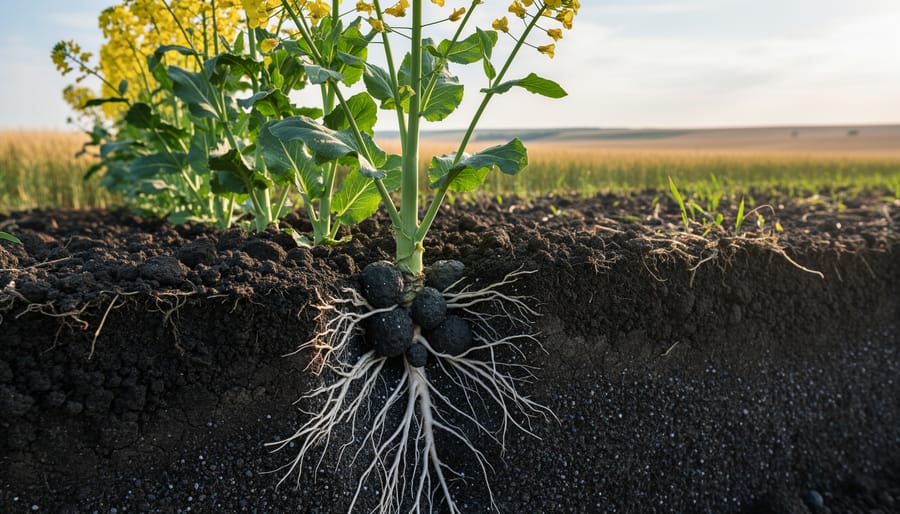
The improved structure directly benefits root development. Better aggregation means more macropores—the larger spaces between soil particles where roots can penetrate and oxygen can circulate. In trials conducted near Lethbridge, canola roots in ash-amended plots extended 15 centimetres deeper than control plots, accessing moisture reserves during critical flowering stages.
For farmers working with compacted soils or planning to transition fields to organic production, volcanic ash offers a physical improvement that complements biological amendments, creating conditions where beneficial soil organisms can thrive.
Real Results from Alberta Farms
When Mike Henderson first spread volcanic ash across his 160-hectare canola operation near Lethbridge in spring 2021, he wasn’t sure what to expect. “I’d read about it working in B.C. vineyards, but our conditions are completely different,” he admits. Two growing seasons later, his results speak volumes. Soil tests showed his clay-heavy fields increased water retention by 18 percent, and his canola yield jumped from an average of 38 bushels per acre to 44 bushels per acre. “The real difference was drought resilience,” Henderson notes. “During those dry weeks in July 2022, my treated fields stayed green longer than my neighbour’s.”
Central Alberta grain farmer Patricia Kovacs took a more measured approach, testing volcanic ash on just 20 hectares of her wheat crop in 2020. Her initial soil organic matter sat at 2.8 percent—typical for the region but lower than ideal. After applying 2.5 tonnes per hectare of volcanic ash and incorporating it during spring tillage, follow-up testing six months later showed organic matter had climbed to 3.4 percent. “That might not sound dramatic, but it’s significant movement in a short timeframe,” explains Kovacs. Her wheat protein content also improved from 12.1 percent to 13.3 percent, earning her a premium price at market. She’s now expanded treatment to 80 hectares and plans to cover her entire 300-hectare operation within three years.
The Braun family operation near Red Deer focuses on mixed farming, combining cattle with barley production. They applied volcanic ash to degraded pastureland that had suffered from overgrazing. “We were skeptical about spending money on what looked like grey dust,” says James Braun. After one season, forage production increased by approximately 22 percent, measured by dry matter weight per hectare. Soil compaction decreased noticeably—their penetrometer readings improved from 3.2 megapascals to 2.1 megapascals in the top 15 centimetres. “The cattle can actually tell the difference. They prefer grazing the treated sections,” Braun observes.
Not every experience has been perfect. Emma Richardson from Camrose applied volcanic ash but didn’t see immediate results in her first season. “I got impatient and almost wrote it off,” she says. However, by year two, her soil structure had transformed. Her heavy clay soil that previously formed hard crusts now crumbled easily, and earthworm populations tripled based on field counts. Her barley yield increased by 11 percent in the second year following application.
These farmers emphasize that volcanic ash isn’t a magic solution—it works best as part of comprehensive soil management including crop rotation, reduced tillage, and appropriate fertilization. Results vary based on soil type, climate conditions, and application methods, but the consistent thread is measurable improvement over time.
How to Source and Apply Volcanic Ash on Your Farm
Where Alberta Farmers Can Find Volcanic Ash
Finding volcanic ash in Alberta requires some legwork, but several options exist for farmers interested in testing this amendment.
Currently, no major Canadian suppliers specialize exclusively in volcanic ash for agriculture, though some landscape and industrial mineral suppliers occasionally stock volcanic products. Western Mineral Products in British Columbia has supplied crushed volcanic rock to agricultural customers, and it’s worth contacting them about availability and bulk pricing. Some Alberta garden centres carry small quantities of volcanic materials marketed for hobby gardening, but these aren’t economical for field-scale applications.
Import considerations become important since most agricultural-grade volcanic ash comes from the United States, particularly Oregon, Washington, and Idaho. Suppliers like Cascade Minerals and Soil Secrets offer products specifically formulated for farming. Import costs, border regulations, and currency exchange add to the overall expense. Expect to pay $150 to $400 per tonne, with transportation potentially doubling that cost depending on your location. For a typical application rate of 2-5 tonnes per hectare, you’re looking at $600 to $4,000 per hectare in material and delivery.
For organic certification, verify that any volcanic ash product meets Canadian Organic Standards. Most pure volcanic materials qualify, but some processed blends may contain prohibited additives.
Local alternatives worth considering include Alberta-sourced zeolite deposits (a volcanic mineral), which offer similar cation exchange benefits at lower transportation costs. Some farmers are also experimenting with biochar, which shares certain characteristics with volcanic ash and can be produced locally. These alternatives may provide more economical entry points while you evaluate whether importing volcanic ash makes financial sense for your operation.
Application Rates and Timing
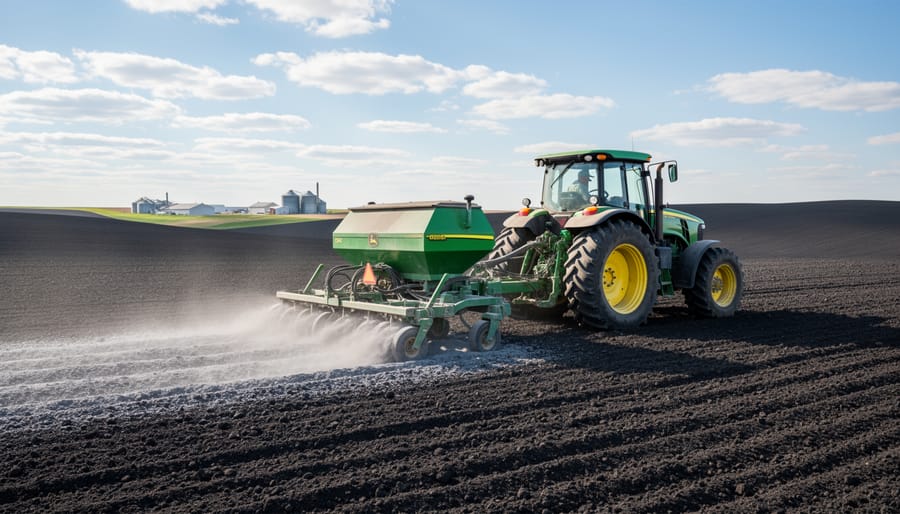
Determining the right application rate for volcanic ash depends on your soil type, current nutrient status, and crop rotation. For most Alberta soils, recommendations typically range from 2,000 to 5,000 kg per hectare for initial applications, with lighter rates of 1,000 to 2,000 kg per hectare for maintenance in subsequent years.
“Start conservatively, especially if you’re working with sandy or light-textured soils,” advises Sarah Chen, an agronomist who has worked with several central Alberta farms testing volcanic ash amendments. “We’ve seen excellent results with 2,500 kg per hectare as a baseline, particularly when combined with regular soil testing to track changes over time.”
Timing matters significantly in our short growing season. The ideal window for application is during fall after harvest or in early spring before seeding. Fall application allows the ash to begin weathering and integrating with soil particles over winter, making nutrients more available by spring. If applying in spring, aim for at least three to four weeks before seeding to allow for adequate incorporation and settling.
For incorporation, broadcasting followed by shallow tillage to a depth of 10 to 15 centimeters works well for most field operations. This ensures even distribution while avoiding burying the amendment too deeply where it becomes less effective. Some producers have successfully used banding for row crops, applying 500 to 750 kg per hectare directly in seed rows, though this requires careful calibration to avoid seedling contact issues.
Consider your existing equipment and workflows. Many farmers report that standard fertilizer spreaders work adequately for broadcasting, though the fine particle size may require some adjustment to spreader settings. Whatever method you choose, maintain detailed records of application rates and locations to properly evaluate performance across different field zones.
Combining Volcanic Ash with Other Organic Amendments
Volcanic ash delivers the best results when combined with other organic amendments, creating a synergistic effect that enhances soil health beyond what any single amendment could achieve alone. The porous structure of volcanic ash provides an ideal foundation for holding and protecting organic matter while improving soil aeration.
When mixing volcanic ash with compost, aim for a ratio of 1 part volcanic ash to 3-4 parts finished compost. This combination allows the ash to absorb and slowly release nutrients from the compost while improving drainage in heavy clay soils common across Alberta. Apply this mixture at a rate of 2.5-5 cm depth and incorporate into the top 15 cm of soil during spring preparation.
Pairing volcanic ash with aged manure creates another powerful combination. The ash helps reduce nitrogen volatilization from manure while adding essential trace minerals. Mix 1 part volcanic ash with 5 parts composted manure and apply in fall to allow winter moisture to integrate the materials.
Incorporating biochar alongside volcanic ash amplifies carbon sequestration benefits. Both materials provide stable mineral frameworks that protect organic matter from rapid decomposition. A blend of equal parts volcanic ash and biochar, applied at 2-5 tonnes per hectare, works well as a base amendment.
Cover crops planted after applying volcanic ash help integrate the material naturally through root action while adding fresh organic matter. Legume cover crops particularly benefit from the trace minerals in volcanic ash, establishing stronger nitrogen-fixing capabilities that benefit subsequent cash crops.
What the Experts Say
Dr. Sarah Chen, a soil scientist with Agriculture and Agri-Food Canada’s Lethbridge Research Centre, has been studying volcanic ash amendments in prairie soils for the past five years. “What we’re seeing is interesting but nuanced,” she explains. “Volcanic ash can improve soil structure in our heavy clay soils, particularly in central Alberta. The silica content helps create more stable aggregates, which improves water infiltration. However, it’s not a silver bullet for nutrient deficiencies.”
Her research team conducted field trials on three farms near Red Deer, applying volcanic ash at rates of 5, 10, and 15 tonnes per hectare. Results showed measurable improvements in soil porosity within the first growing season, with the most significant benefits appearing in fields with compaction issues. “We documented a 12 to 18 percent increase in water-holding capacity at the 10-tonne application rate,” Dr. Chen notes.
Craig Thompson, an agronomist with 25 years of experience working with Alberta grain farmers, offers a practical perspective. “I recommend volcanic ash primarily for structural improvement rather than as a fertility amendment. Think of it as a long-term investment in your soil’s physical properties. Farmers dealing with hardpan layers or poor drainage often see the best returns. That said, you still need to maintain your regular fertility program because the nutrient contribution is minimal in our conditions.”
Research from the University of Alberta’s agricultural extension program suggests that volcanic ash performs best when combined with organic matter additions. Extension specialist Maria Rodriguez emphasizes timing: “Apply it during fall tillage operations when you can incorporate it properly. Surface applications don’t give you the same structural benefits. We also recommend soil testing before and after to track actual changes rather than relying on observation alone.”
The consensus among experts is clear: volcanic ash has legitimate applications in Alberta agriculture, particularly for addressing specific soil structure challenges, but farmers should approach it with realistic expectations and proper planning.
Potential Challenges and How to Address Them
Cost Considerations and Return on Investment
Volcanic ash amendments typically cost between $30 to $80 per tonne, depending on source, processing, and transportation distances to Alberta. For a standard application rate of 2-5 tonnes per hectare, expect initial investments of $60 to $400 per hectare—higher than conventional compost but comparable to premium soil conditioners.
The economic case improves when viewing this as a long-term investment rather than an annual expense. Unlike synthetic fertilizers requiring yearly reapplication, volcanic ash minerals remain active in soil for 3-5 years. Red Deer County farmer James Chen reports reducing his fertilizer costs by approximately 20% in the second and third years after application while maintaining yields.
Research from agricultural trials in the Peace River region shows yield increases of 8-15% in cereals and 12-18% in canola over three growing seasons, with improved drought resilience reducing crop insurance claims. When factoring in reduced fertilizer dependency, improved water retention during dry spells, and potential yield boosts, many Alberta producers see positive returns within 2-4 years.
Consider starting with test plots on 10-20 hectares to evaluate performance in your specific soil conditions before committing to full-field applications. Transportation represents the largest variable cost, so partnering with neighbouring farms for bulk orders can significantly improve economics.
Environmental and Regulatory Considerations
For Alberta farmers considering volcanic ash amendments, understanding regulatory requirements ensures compliance and market access. Currently, volcanic ash is not specifically regulated under federal or provincial agricultural guidelines, falling under general soil amendment categories. However, if you’re pursuing organic certification through organizations like the Canada Organic Regime or Pro-Cert, verification of the ash source and processing methods is essential.
Most certified organic operations can use volcanic ash as a mineral amendment, provided it comes from natural deposits without synthetic additives or chemical processing. Before incorporating volcanic ash into certified organic systems, contact your certification body with product documentation showing the ash’s geological origin and any processing history. This proactive approach prevents certification complications during annual inspections.
Environmental considerations focus primarily on sourcing and transportation impacts. Volcanic ash harvested from British Columbia or imported from international sources carries carbon costs associated with long-distance hauling. Calculate whether the soil benefits justify the transportation footprint for your operation, particularly when local alternatives like compost or manure exist.
Water quality impacts appear minimal based on current research, as volcanic ash doesn’t contain the soluble nutrients that contribute to runoff concerns. However, apply recommended rates to avoid unnecessary environmental and financial waste. Always maintain application records documenting product sources, application dates, and rates—documentation that supports both regulatory compliance and your farm’s sustainability narrative in an increasingly transparency-focused marketplace.
Volcanic ash shows genuine promise as one component of a comprehensive soil health strategy for Alberta farms, though it’s not a standalone solution. The research is clear: when combined with organic matter sources like compost or manure, volcanic ash can enhance nutrient availability, improve soil structure, and support long-term fertility goals.
The key to success lies in starting small and measuring results. Consider designating a test area of 2 to 4 hectares where you can apply volcanic ash at recommended rates, maintain detailed records, and compare outcomes against control plots. Baseline soil testing before application and follow-up testing after one or two growing seasons will give you reliable data specific to your operation.
As Dean Petryshen from central Alberta demonstrated, patience and persistence pay off. Building soil health is a multi-year journey, not a quick fix. Volcanic ash works best when you view it as part of a broader strategy that includes crop rotation, cover cropping, and organic matter additions.
The investment you make today in soil resilience creates lasting benefits for future generations. Whether volcanic ash becomes a regular part of your amendment program or simply introduces you to alternative soil-building approaches, the knowledge you gain strengthens your farm’s foundation. Connect with your local agronomist, start with a manageable trial, and let your soil tell the story.