
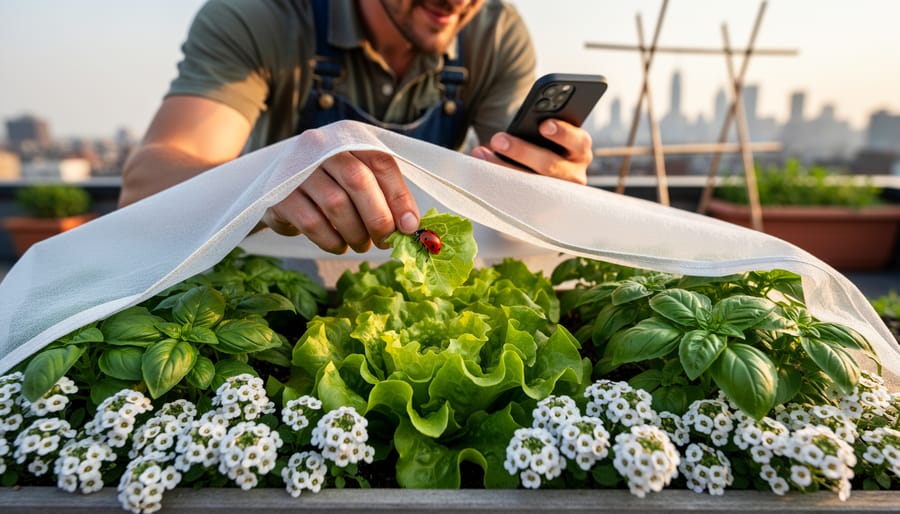
Monitor your crops weekly at the same time of day, recording pest numbers, locations, and damage patterns in a simple notebook or smartphone app. This baseline data reveals when pest populations cross economic thresholds that justify intervention, preventing unnecessary treatments that waste money and harm beneficial insects already working in your favour.
Establish action thresholds specific to your urban growing space by consulting regional extension services or experienced local growers. A threshold might be ten aphids per plant for lettuce or five cucumber beetles per vine, numbers that trigger response before serious crop damage occurs. Urban plots often tolerate slightly higher pest populations than commercial operations because you’re optimizing for fresh produce quality rather than cosmetic perfection for retail markets.
Layer physical barriers as your first defense, using row covers during early season when flea beetles and root maggots are most active, then removing them once plants establish vigour. Companion planting works particularly well in confined urban spaces where aromatic herbs like basil and cilantro planted between vegetable rows confuse pest insects seeking host plants by scent. These non-chemical tactics comply with municipal pesticide bylaws that restrict synthetic products in many Canadian cities, including Calgary and Edmonton.
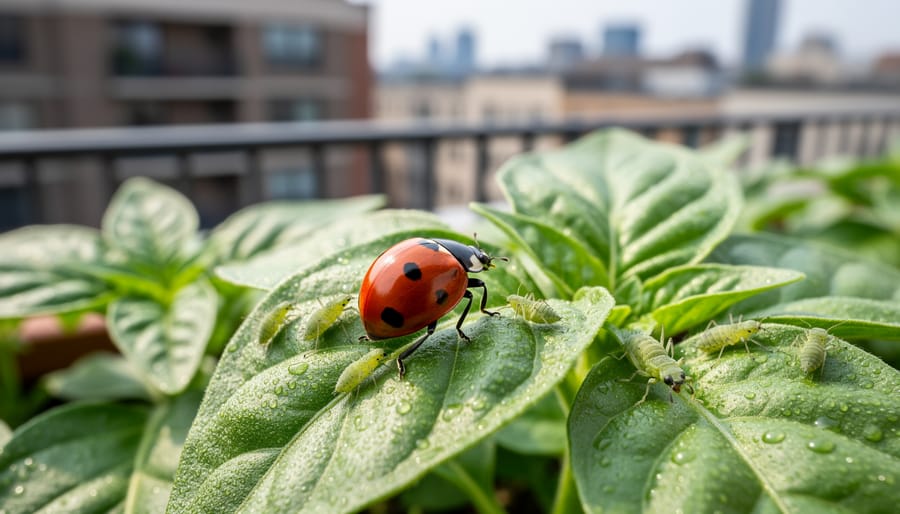
Identify beneficial insects before reaching for any pesticide, organic or synthetic. Ladybugs, lacewings, and parasitic wasps provide free pest control when you recognize them in larval stages, which look dramatically different from adults. A single lacewing larva consumes 200 aphids during development, offering pest suppression that costs nothing and requires no labour beyond initial habitat creation through diverse plantings.
Build habitat for these natural predators by maintaining permanent plantings of yarrow, alyssum, and native wildflowers along plot edges, creating year-round shelter and alternative food sources that keep beneficial populations stable even when pest numbers drop.
What Makes Urban Agriculture Pest Management Different
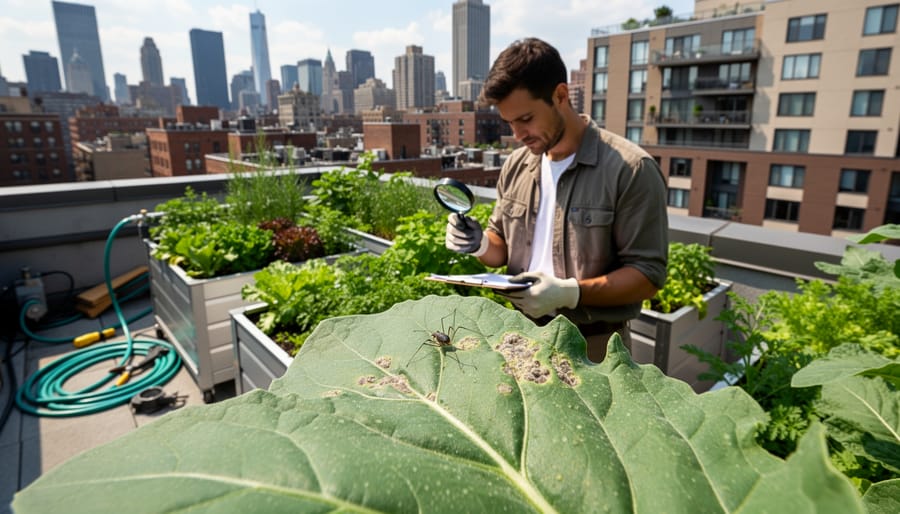
The Urban Advantage: Working With Your Environment
Urban farming comes with its own set of advantages that traditional rural operations don’t always enjoy. While you might think being in the city puts you at a disadvantage for pest management, the opposite is often true.
One of the biggest perks? You’re not dealing with pest pressure from neighboring agricultural fields. In rural Alberta, pests like flea beetles or aphids can migrate across hundreds of hectares from farm to farm. In urban settings, buildings and infrastructure create natural barriers that limit pest movement, giving you more control over what enters your growing space.
The controlled environment of urban farms also works in your favor. Whether you’re growing in a rooftop greenhouse, vertical farm, or community garden plot, smaller spaces mean easier monitoring. You can spot early warning signs of pest issues during your daily rounds, catching problems before they escalate. This hands-on proximity makes preventative strategies more effective and responsive.
Sarah Chen, an integrated pest specialist working with urban growers in Calgary, notes that city farmers often become creative problem-solvers. “When you’re working with limited square meters, you learn to maximize every technique. I’ve seen growers use companion planting, physical barriers, and beneficial insect releases together in ways that wouldn’t be practical on larger operations.”
Urban settings also offer access to unique resources: nearby universities for pest identification support, local composting programs for soil health improvement, and communities of growers eager to share what’s working. These advantages, combined with thoughtful IPM strategies, position urban farmers for sustainable success.
Building Your IPM Foundation: The Four Pillars That Actually Work
Prevention: Your First Line of Defense
The most effective pest control strategy is stopping problems before they start. In Alberta’s urban agriculture settings, prevention requires a thoughtful approach that works with our unique climate and space constraints.
Start with soil health as your foundation. Healthy soil produces vigorous plants that naturally resist pests and diseases. Test your soil annually through a local agricultural lab, and amend with compost to maintain organic matter levels between 5-7%. Edmonton’s community gardener Maria Tran shares her experience: “After two seasons of focused composting, my tomato plants showed significantly less aphid damage. Strong roots meant strong resistance.”
Crop rotation remains crucial, even in small spaces. Plan a three-year rotation cycle, avoiding planting related crops in the same spot. For example, follow brassicas with legumes, then fruiting vegetables. This disrupts pest life cycles and prevents soil-borne disease buildup. In a 3-metre by 3-metre plot, divide the space into three sections and rotate annually.
Companion planting offers dual benefits: maximizing limited space while deterring pests naturally. Interplant marigolds with tomatoes to repel aphids, or grow nasturtiums as trap crops for cabbage moths. Aromatic herbs like basil and dill confuse pests searching for host plants.
Choose varieties bred for Alberta’s short growing season and resistant to common local pests. Look for disease-resistant tags like “VFN” on tomato seedlings, indicating resistance to verticillium wilt, fusarium wilt, and nematodes.
Maintain strict sanitation protocols. Remove plant debris weekly, clean tools between uses with a 10% bleach solution, and inspect new plants thoroughly before introducing them to your garden. These simple practices eliminate overwintering pest habitats and reduce disease transmission by up to 60% according to Agriculture and Agri-Food Canada research.
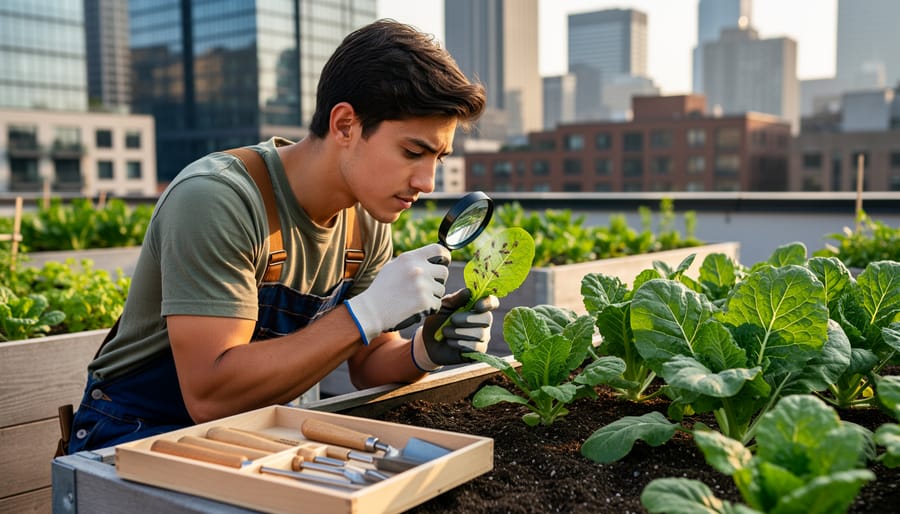
Monitoring: Know Your Enemy Before It Knows You
Early detection makes all the difference in pest management. By spotting problems before they escalate, you’ll save time, money, and crops while reducing the need for interventions.
Start with a consistent scouting schedule. For most urban operations, weekly inspections during the growing season work well, though high-value crops or pest-prone areas may need twice-weekly checks. Walk through your garden systematically, examining plants at different heights and locations. Check leaf undersides, stems, and soil surfaces where pests often hide.
Establish threshold levels that trigger action. Not every pest sighting requires intervention. For example, finding five aphids on a tomato plant differs from discovering a colony of hundreds. Local extension offices can provide threshold guidelines specific to Alberta conditions and crops.
Keep simple records in a notebook or spreadsheet. Note the date, location, pest type, population size, and plant growth stage. This documentation reveals patterns over time and helps you predict future issues. Toronto’s FoodShare community gardens have successfully used this approach to reduce pesticide use by 60 percent.
Identification is crucial. Use resources like the Alberta Ministry of Agriculture’s online pest guides or download identification apps. Taking clear photos helps when consulting with experts or comparing against reference materials. The technology and apps available today make monitoring more accessible than ever.
Consider partnering with neighbouring growers to share observations. Edmonton’s urban agriculture network demonstrates how collective monitoring strengthens everyone’s pest management capabilities while building community resilience.
Mechanical and Physical Controls: Low-Tech Solutions That Save Money
Sometimes the most effective pest management strategies don’t come from a bottle. Mechanical and physical controls offer urban farmers practical, affordable alternatives that protect both your crops and your budget.
Hand-picking remains surprisingly efficient for small-scale operations. Calgary community gardener Maria Chen removes Colorado potato beetles manually each morning, spending just 15 minutes to protect her 20-square-metre plot. “It costs me nothing but time, and I avoid the $30-per-season chemical expense,” she notes. This approach works especially well for larger pests like caterpillars, slugs, and beetles.
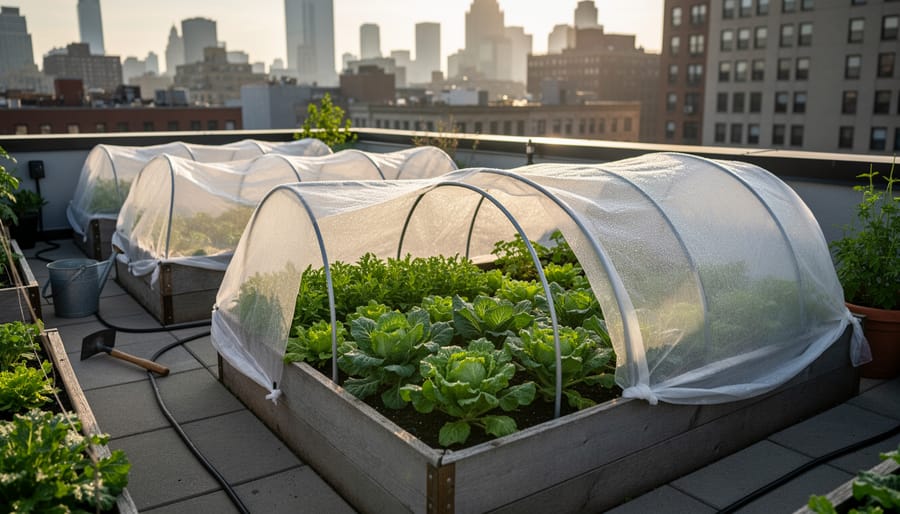
Physical barriers provide season-long protection without recurring costs. Row covers, which range from $2-4 per metre, prevent insect access while allowing light and water penetration. Edmonton’s Strathcona Community Garden reported 85% reduction in cabbage moth damage after investing $150 in reusable row covers for their entire site—a one-time expense compared to repeated spray applications.
Mulching serves double duty by suppressing weeds and deterring soil-dwelling pests. A 7-10 centimetre layer of straw or wood chips costs approximately $25 per cubic metre but lasts an entire growing season. Strategic pruning improves air circulation, reducing disease pressure that attracts secondary pests.
Water sprays effectively dislodge aphids and spider mites using nothing but your garden hose. Combined with sticky traps ($8-12 for reusable boards), these natural pest control solutions typically cost 60-70% less than conventional pesticides annually while maintaining healthy urban growing spaces.
Biological Controls: Recruiting Nature’s Pest Controllers
Recruiting beneficial organisms transforms your urban farm into a self-regulating ecosystem. Natural predators like ladybugs, lacewings, and parasitic wasps can significantly reduce pest populations without chemical inputs, making them ideal for confined urban spaces.
In Canada, several reputable suppliers ship beneficial insects nationwide. Applied Bio-nomics in British Columbia and Koppert Canada offer a range of biological controls suited to various pest challenges. When ordering, time releases to coincide with pest emergence, typically late spring for aphids and early summer for spider mites. Start with smaller quantities to assess effectiveness before scaling up.
Establishing populations requires strategic planning. Release beneficials during cooler morning or evening hours when they’re less likely to disperse immediately. Provide water sources and pollen-rich flowers nearby. For lacewings and ladybugs, multiple smaller releases over several weeks work better than single large introductions.
Creating habitat for native beneficials is equally important and more cost-effective long-term. Plant diverse flowering species that bloom sequentially from spring through fall. Native plants like yarrow, goldenrod, and wild bergamot attract local predatory insects while supporting pollinators. Leave some plant debris and create small brush piles to provide overwintering sites.
Managing pollinator-friendly IPM programs means timing interventions carefully. Even organic sprays like neem oil can harm beneficial insects if applied during flowering or peak activity periods. Schedule applications for late evening when pollinators have returned to their nests. Monitor beneficial populations alongside pests to ensure your interventions aren’t disrupting the balance you’re working to establish.
When Problems Escalate: Smart Intervention Strategies
Even with solid prevention and monitoring, pest populations sometimes reach levels requiring direct intervention. The key is knowing when to act and choosing methods that align with IPM principles while minimizing harm to beneficial organisms and the environment.
Start by establishing action thresholds specific to your crops and growing conditions. For Alberta vegetable growers, aphid populations of 10-15 per leaf might trigger intervention on lettuce, while the same number on tomatoes may not cause economic damage. Dr. Sarah Chen, an entomologist at the University of Alberta, recommends keeping detailed records: “Track pest levels alongside plant health indicators. This data helps you recognize patterns and make confident decisions about when intervention truly becomes necessary.”
When action thresholds are exceeded, escalate strategically through your IPM toolkit. Begin with mechanical controls like targeted hand-picking or water sprays to knock pests off plants. Next, consider introducing or augmenting biological controls such as ladybugs for aphids or parasitic wasps for caterpillar problems.
If these measures prove insufficient, organic-approved pesticides become your last resort. Products like insecticidal soaps, neem oil, or Bacillus thuringiensis target specific pests with minimal environmental impact. Timing matters critically: apply during cooler morning or evening hours when beneficial insects are less active, and always spot-treat affected areas rather than blanket-spraying entire plots.
Protect your beneficial insect populations by creating refuge zones with untreated flowering plants nearby. Calgary community garden manager Tom Morrison shares his approach: “We treat individual beds while leaving border plantings untouched. Our parasitic wasp populations recover quickly because they have safe harbour just metres away.”
Remember that escalation doesn’t mean abandoning IPM principles. Each intervention should be measured, targeted, and documented so you can refine your approach for future seasons while maintaining the ecological balance that makes sustainable pest management possible.
Real Alberta Urban Farms Making IPM Work
At Green Sprout Urban Farms in Edmonton, owner-operator Maya Chen has transformed a 0.4-hectare lot into a thriving demonstration of how integrated pest management works in Alberta’s urban agriculture landscape. After three seasons of battling aphids, flea beetles, and cabbage worms using reactive pesticide applications, Chen switched to IPM in 2021 and hasn’t looked back.
“The shift wasn’t just about reducing chemical use,” Chen explains. “It was about understanding my farm as an ecosystem. Urban spaces have unique challenges, but they also offer surprising advantages when you work with nature instead of against it.”
Chen’s operation focuses on high-value salad greens, herbs, and specialty vegetables for local restaurants and farmers’ markets. Her IPM program centers on three core strategies that address the specific constraints of urban farming.
First, she implemented strict monitoring protocols. Weekly scouting walks with sticky traps placed throughout the growing area help identify pest populations before they become problematic. “In 350 square metres, you can actually know what’s happening in every corner,” she notes. This intensive observation proved impossible to maintain cost-effectively on larger rural operations she’d previously managed.
Second, Chen redesigned her planting layout to maximize beneficial insect habitat. Native flowering strips border each growing bed, providing nectar sources for parasitic wasps and predatory beetles. She also installed purpose-built insect hotels using reclaimed wood pallets. Within one season, beneficial insect populations increased by an estimated 60 percent based on her monitoring counts.
Third, physical barriers became her primary defense. Row covers protect vulnerable brassicas during peak flea beetle season, while copper tape around raised beds deters slugs without toxic baits, an essential consideration given her proximity to residential areas and urban wildlife.
The financial results speak clearly. Chen’s IPM program costs approximately 480 dollars annually, compared to 850 dollars she previously spent on conventional pest control products. More importantly, her rejection rate from restaurant clients dropped from 12 percent to under 3 percent as crop quality improved.
“IPM actually increased our yields by about 15 percent,” Chen reports. “Healthier soil biology, more pollinators, fewer pest damage incidents. The plants are simply more vigorous.”
Her advice for other urban growers? Start small and observe carefully. “You don’t need to implement everything at once. Pick one pest problem, try one IPM solution, and build from there. Urban farming gives us the perfect scale to really understand these systems.”
Your Season-by-Season IPM Action Plan
Success with IPM requires consistent attention throughout the year, not just when pests appear. Here’s your practical roadmap for implementing IPM across Alberta’s distinct growing seasons.
Spring starts with preparation in March and April. Begin by inspecting your urban farm infrastructure, repairing row covers and checking irrigation systems for leaks that create pest-friendly moisture. Set up monitoring stations before pests emerge. As soil temperatures reach 10°C, install yellow sticky traps to catch early aphids and begin weekly scouting walks. Document what you see in a simple notebook or smartphone app. This baseline data proves invaluable later.
May through August demands intensified monitoring as pest populations explode. Scout at least twice weekly during this critical window, checking leaf undersides and new growth where problems start. Calgary urban farmer James Chen schedules his monitoring for Tuesday and Friday mornings, making it routine rather than reactive. Deploy biological controls like ladybugs or parasitic wasps when monitoring reveals early pest activity, not after infestations establish. Adjust watering schedules during July’s heat to avoid stressing plants, which attracts pests.
September and October focus on prevention through thorough cleanup. Remove all plant debris where pests overwinter, but leave beneficial insect habitat like native grass patches intact. Plant cover crops to suppress weeds and improve soil health for next season. Record which varieties showed pest resistance for future planning.
Winter becomes your planning season. Review your monitoring logs to identify patterns. Edmonton’s community gardens association hosts January IPM workshops where growers share what worked and troubleshoot challenges together. Use these quieter months to research new biological controls, order supplies, and refine your approach based on last season’s lessons. This continuous learning cycle makes each growing season more successful than the last.
Common Pitfalls and How to Avoid Them
Even experienced urban farmers can stumble when implementing IPM programs. Understanding these common mistakes helps you build a more effective pest management system from the start.
One of the most frequent pitfalls is acting too late. Many growers wait until pest populations explode before taking action. By then, you’re in crisis mode rather than prevention mode. The solution is simple: commit to weekly monitoring walks through your growing space. Set a recurring calendar reminder and stick to it, even when everything looks healthy.
Inconsistent monitoring creates another major challenge. Checking plants sporadically means you’ll miss early warning signs. Edmonton’s YEG Urban Farm discovered this when aphid populations overwhelmed their tomatoes between irregular check-ins. They solved it by creating a monitoring checklist and rotating responsibilities among team members, ensuring someone inspects plants every few days during peak growing season.
Over-reliance on a single control method, even organic ones, reduces effectiveness over time. Pests adapt, and beneficial populations suffer. Mix your strategies throughout the season, combining physical barriers, biological controls, and cultural practices. Think of IPM as a toolkit where you select different tools for different situations.
Ignoring beneficial insects might be the costliest mistake. Spraying even organic pesticides indiscriminately kills helpful predators alongside pests. Before applying any treatment, identify what you’re seeing. That ladybug larva might look concerning, but it’s actually consuming dozens of aphids daily.
Finally, poor record-keeping leaves you guessing next season. Document what you see, what you try, and what works. A simple notebook or smartphone photos with dates provide invaluable data. Calgary’s urban farmer Sarah Chen credits her detailed logs with reducing pest issues by 60% over three seasons, noting patterns she’d otherwise miss.
Successful integrated pest management isn’t about achieving perfect control overnight—it’s about observation, patience, and working alongside natural systems rather than fighting against them. For Alberta’s urban agriculture community, this approach delivers real economic benefits through reduced input costs and healthier, more resilient crops that command premium prices at farmers’ markets and through local food networks.
Starting your IPM journey doesn’t require mastering every technique immediately. Begin with simple practices like regular scouting walks through your growing space, keeping a pest journal to track patterns, and introducing one or two beneficial insects this season. As Sarah Chen, an Edmonton market gardener, shares: “I started by just learning to identify five common pests and their natural predators. Three years later, my pesticide costs dropped 80 percent while my yields increased.”
The environmental advantages extend beyond your own operation. When urban growers adopt IPM practices collectively, entire neighborhoods benefit from improved pollinator habitat, cleaner waterways, and stronger local food systems. Your efforts contribute to building agricultural resilience across our communities.
Ready to deepen your IPM knowledge? Access community resources through local agricultural extension offices, attend hands-on workshops offered by organic farming associations, or connect with IPM consultants who understand urban growing conditions. Remember, every expert started exactly where you are today—take that first step toward sustainable pest management that works with nature, not against it.