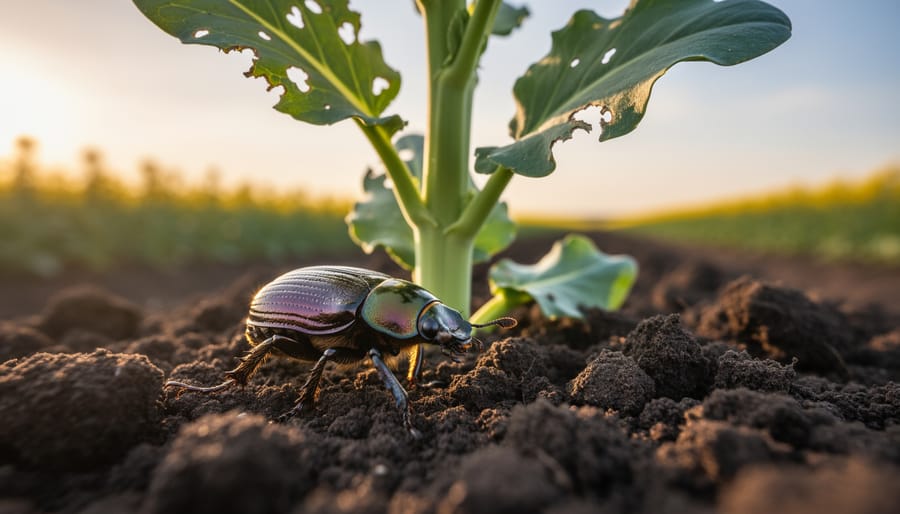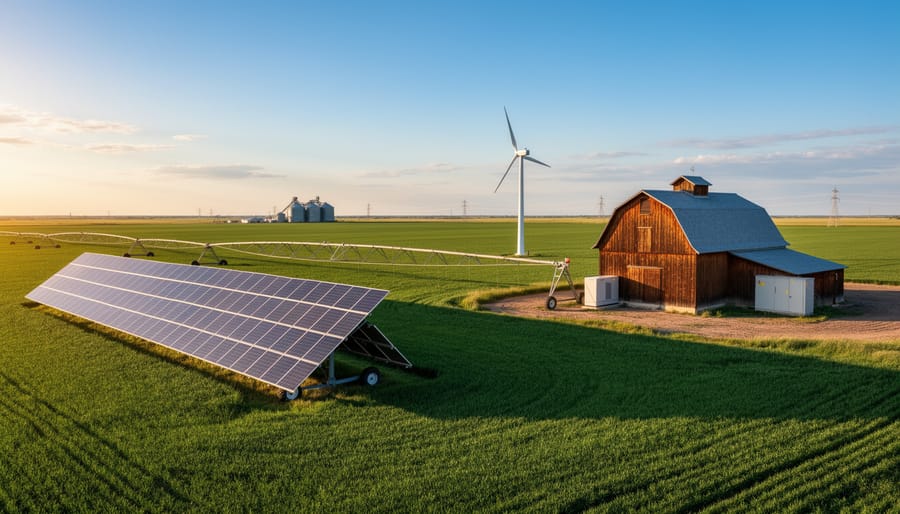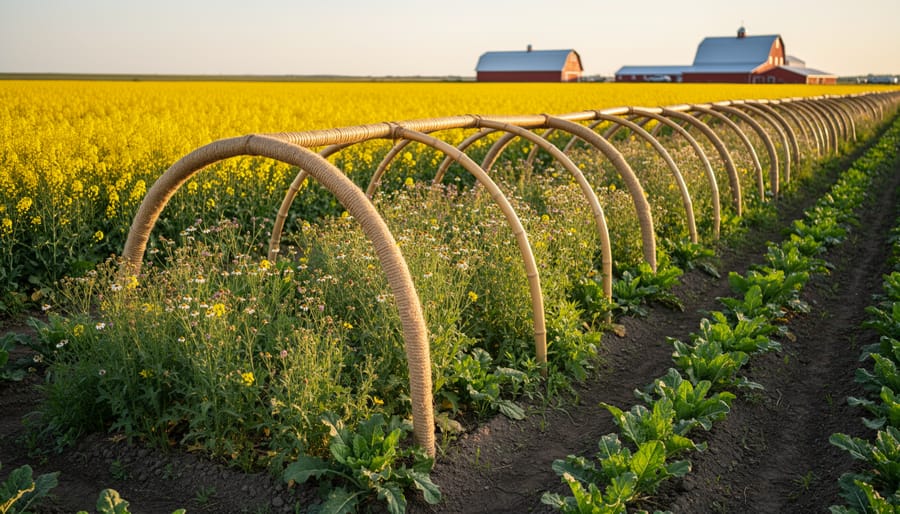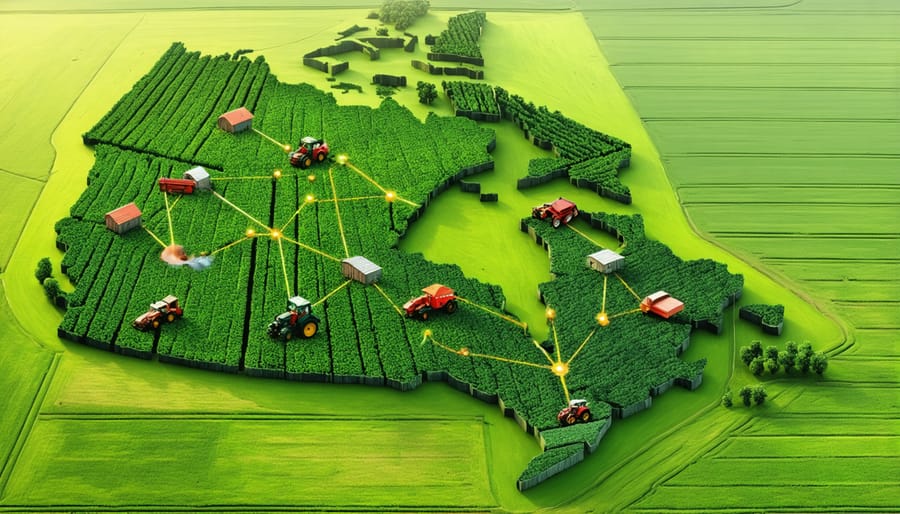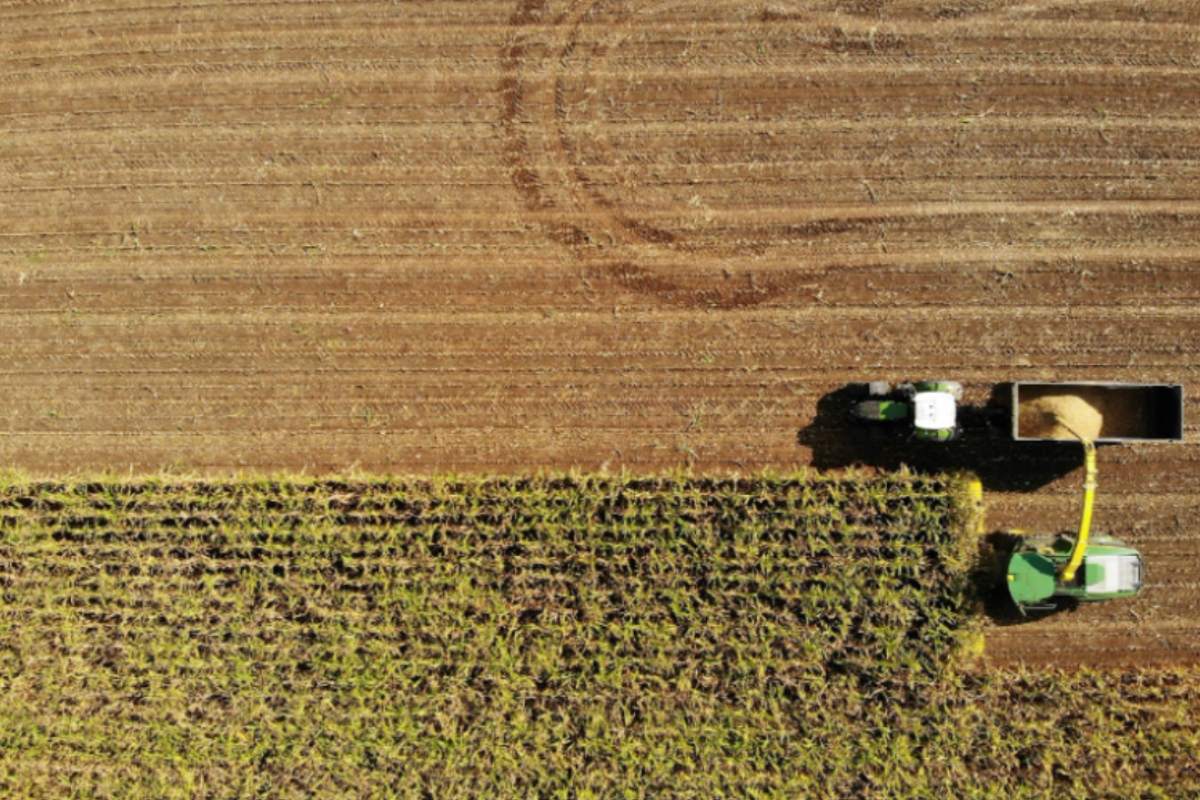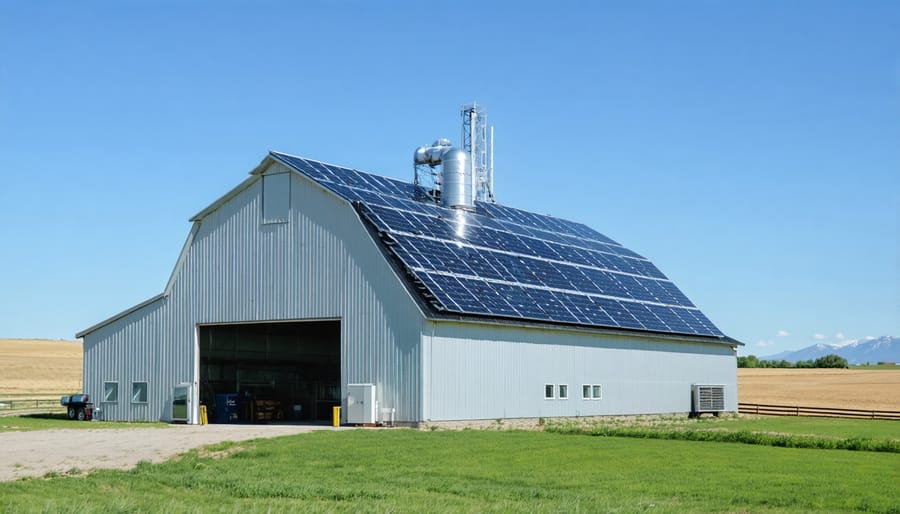
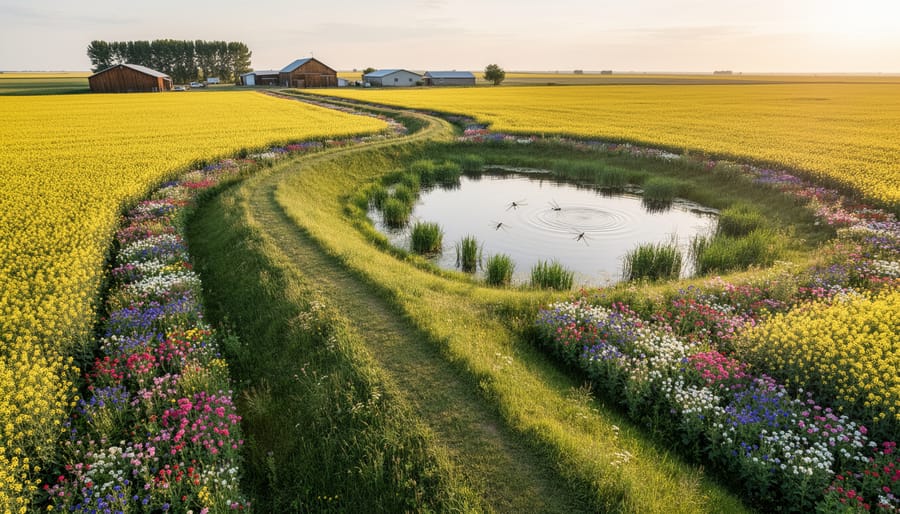
Integrate perennial flowering strips along field edges to establish year-round habitat for beneficial insects like parasitic wasps and ground beetles that naturally suppress pest populations by 40-60%. Plant species such as yarrow, alfalfa, and sweet clover in 3-5 meter bands between crop sections, maintaining these zones for at least three years to build robust predator communities that reduce reliance on chemical interventions.
Install on-farm beetle banks—permanent raised earthen mounds planted with native grasses—to create overwintering sites for pest predators. Position these 1.5-meter-high structures every 100-200 meters across larger fields, providing essential refuge during Alberta’s harsh winters while improving soil structure and water infiltration patterns.
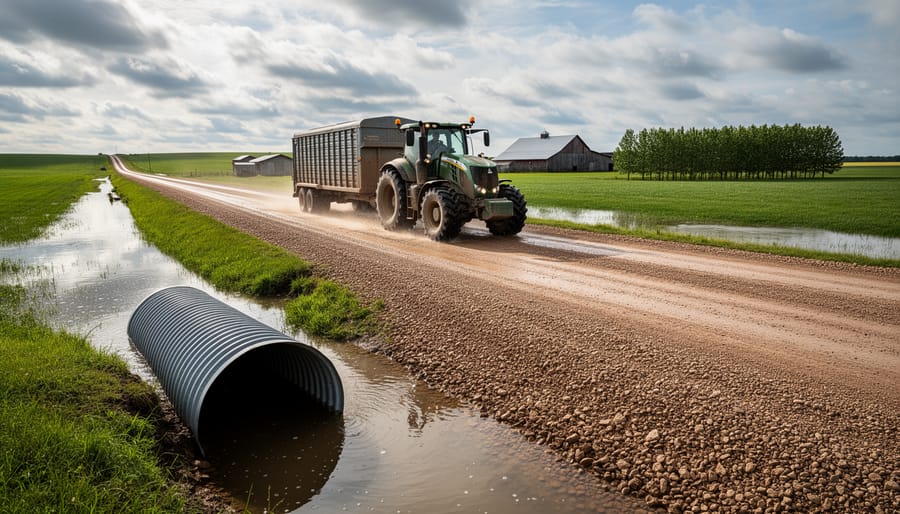
Design water management systems that support natural pest control by creating small seasonal wetlands or maintaining riparian buffer zones. These moisture zones attract dragonflies, frogs, and beneficial birds that consume pest insects during critical crop development stages, while simultaneously filtering agricultural runoff and building soil organic matter.
Establish diverse crop rotations with at least four species over three years, incorporating deep-rooted legumes and cover crops between cash crops. This infrastructure approach disrupts pest life cycles naturally, reduces disease pressure by 50-70%, and builds the biological soil foundation necessary for long-term farm resilience. Alberta producers implementing these systems report sustained pest suppression with 30-50% fewer chemical applications within two growing seasons, proving that infrastructure investments deliver measurable returns beyond immediate pest control.
What Sustainable Pest and Disease Management Infrastructure Actually Means
The Difference Between Reactive and Infrastructure-Based Pest Management
Traditional pest management often follows a reactive pattern: you spot aphids on your canola, so you call in a spray application. It’s a cycle many Alberta farmers know well—waiting for problems to appear, then responding with chemicals. While this approach can knock down immediate pest populations, it’s like bailing water from a leaky boat without fixing the hull.
Infrastructure-based pest management takes a fundamentally different approach by building long-term solutions directly into your farm’s design and operations. Think of Randy Kowalchuk’s operation near Lacombe, who shifted from calendar-based spraying to installing beetle banks and perennial hedgerows around his field edges. These physical structures now house beneficial insects year-round, creating a standing army ready to tackle pests before populations explode.
The mindset shift is substantial. Instead of asking “What pest do I need to spray today?”, infrastructure-based thinking asks “What systems can I build now to prevent pest problems next season and beyond?” This might mean preserving native grassland strips that harbor parasitic wasps, creating water features that attract dragonflies to control mosquitoes in livestock areas, or maintaining diverse crop rotations that disrupt pest life cycles naturally.
The investment is upfront—establishing these systems takes time and planning—but the payoff compounds annually. Sarah Chen, an agricultural consultant based in Red Deer, notes that farms with established pest management infrastructure typically reduce chemical inputs by 40-60% within three years while maintaining or improving yields. You’re building resilience into the land itself, creating ecosystems that work with you rather than constantly fighting against pest pressure.
Physical Infrastructure That Keeps Pests at Bay
Barrier Systems and Protective Structures
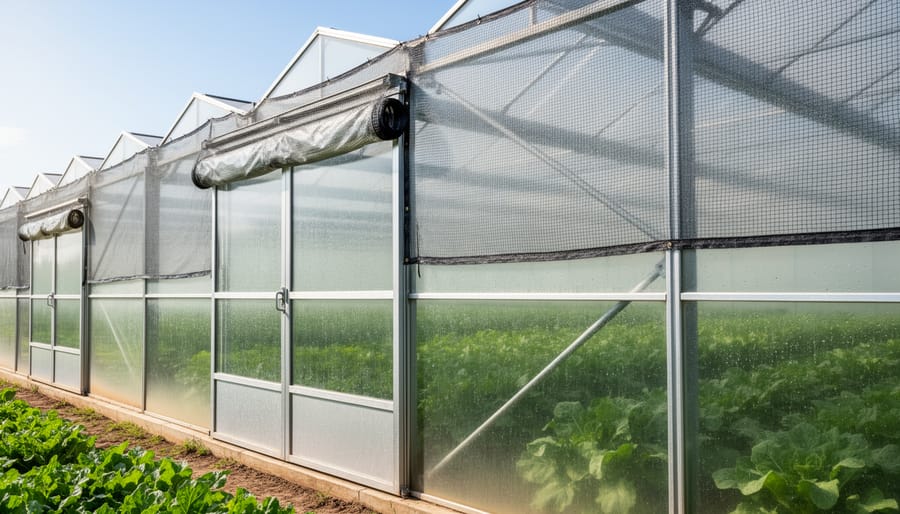
Physical barriers represent one of the most effective and chemical-free approaches to pest management in Alberta’s agricultural systems. These protective structures create controlled environments that exclude pests while maintaining optimal growing conditions for your crops.
Row covers offer versatile protection against flying insects, frost, and harsh weather conditions. Lightweight floating row covers, weighing between 15-20 grams per square metre, allow approximately 85 percent light transmission while protecting young plants from flea beetles, aphids, and cabbage moths. For Alberta’s unpredictable spring weather, these covers also provide 2-4 degrees Celsius of frost protection, extending your growing season by up to three weeks. Installation is straightforward: simply drape the fabric over crops and secure edges with sandbags, soil, or landscape staples, ensuring enough slack for plant growth.
Insect netting, with mesh sizes ranging from 0.6 to 1.3 millimetres, prevents pest entry while maintaining excellent airflow. This proves particularly valuable for protecting brassicas from root maggots and carrots from carrot rust flies. One southern Alberta vegetable producer reported an 80 percent reduction in crop losses after installing permanent insect netting frames over high-value crops.
Greenhouse modifications for pest management include screened ventilation openings, double-door entry systems, and positive pressure environments. Adding screen mesh to all openings prevents aphids and whiteflies from entering while maintaining necessary air circulation.
Windbreaks serve dual purposes in pest management. Strategic placement of hedgerows or shelter belts creates microclimates that disrupt pest movement patterns while providing habitat for beneficial insects. Plant windbreaks perpendicular to prevailing winds, positioning them at distances of 10-15 times their mature height from protected crops.
Regular maintenance ensures barrier effectiveness. Inspect row covers weekly for tears, replace damaged netting promptly, and remove barriers during flowering if pollination is required. Proper winter storage extends material lifespan to 3-5 seasons.
Water Management Infrastructure for Disease Prevention
Water management stands as a cornerstone of disease prevention in sustainable pest management systems. Thoughtfully designed infrastructure can dramatically reduce pathogen pressure while supporting soil health and contributing to your farm’s carbon reduction goals.
Proper drainage systems form your first line of defence against water-borne diseases. Standing water creates ideal conditions for fungal pathogens and pest breeding grounds. Installing subsurface tile drainage in low-lying areas prevents waterlogging, reducing root diseases and improving soil structure. Many Alberta farmers have found that smart water systems with strategic surface grading direct excess water away from high-value crops, particularly important during spring snowmelt and intense summer storms common to our region.
Irrigation design plays an equally crucial role. Drip irrigation or precision sprinkler systems that deliver water directly to root zones minimize leaf wetness duration, a critical factor in disease development. Overhead watering early in the day allows foliage to dry quickly, reducing conditions favourable to pathogens like late blight and powdery mildew. When retrofit costs seem prohibitive, even simple adjustments like repositioning sprinklers or adjusting timing can yield significant benefits.
Water filtration systems prevent pathogen spread through irrigation water. Installing sand filters or UV sterilization units protects against introducing diseases from contaminated water sources. This becomes especially important when using recycled water or drawing from surface sources.
These water management improvements also enhance soil health by preventing compaction and erosion while maintaining optimal moisture levels for beneficial microorganisms. Healthy soil with robust microbial communities naturally suppresses soil-borne pathogens. Additionally, improved drainage and irrigation efficiency reduce energy consumption for pumping and field operations, directly supporting your carbon footprint reduction targets while creating a more resilient farming operation.
Habitat Infrastructure for Beneficial Species
Building the right habitat infrastructure creates a living support system for beneficial pest species that naturally keep harmful insects in check. Think of these features as permanent homes and highways for the good bugs working alongside you.
Hedgerows serve as year-round shelter for predatory insects and birds. Plant native shrubs like chokecherry, saskatoon berry, or wild rose along field edges, creating 2-3 metre wide corridors that provide food and overwintering sites. These multi-layered plantings become biodiversity hotspots right where you need them most.
Beetle banks are raised earthen strips, typically 0.5 metres high and 1.5 metres wide, planted with perennial grasses like wheat grass or fescue. Ground beetles, which consume aphids and pest larvae, thrive in these undisturbed areas positioned strategically through your fields.
Pollinator strips featuring native wildflowers attract beneficial insects while supporting crop pollination. Include plants like goldenrod, asters, and yarrow that bloom at different times, ensuring continuous food sources throughout the growing season.
A successful example comes from a 400-hectare grain operation near Red Deer, Alberta. After installing 2 kilometres of hedgerows and four beetle banks in 2019, the farm documented a 35% reduction in aphid populations within two years. The farmer reports lower insecticide costs and healthier yields, attributing success to providing habitat before pest pressure arrived. The infrastructure required minimal maintenance once established, proving that investing in nature’s workforce delivers lasting returns.
Monitoring and Detection Systems That Save You Time and Money
Weather Stations and Disease Prediction Models
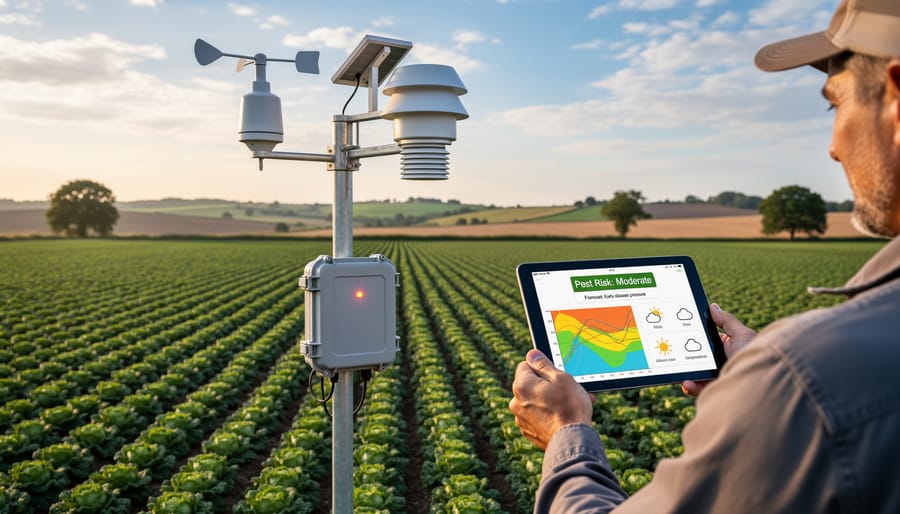
On-farm weather stations serve as the foundation for accurate disease prediction in your fields. These monitoring systems track temperature, humidity, leaf wetness duration, and rainfall patterns that directly influence pathogen development. When connected to disease forecasting models, this real-time data helps you anticipate infection periods before symptoms appear.
In Alberta’s variable climate, this technology proves particularly valuable. Take fusarium head blight in wheat as an example. When your weather station records warm, humid conditions during flowering, disease models can alert you to high-risk periods. This gives you a narrow window to apply fungicides only when truly necessary, reducing costs and environmental impact while protecting your crop.
Similarly, blackleg in canola depends on specific temperature and moisture combinations during early growth stages. Weather-based forecasting models developed by Agriculture and Agri-Food Canada factor in Alberta’s unique growing conditions, including our late spring frosts and summer moisture patterns. Prairie farmers using these systems report better timing of scouting activities and more strategic fungicide applications.
Many modern weather stations integrate with smartphone apps and computer platforms, delivering disease risk alerts directly to you. This connectivity transforms raw weather data into actionable management decisions. By investing in this infrastructure, you’re not just collecting information; you’re building a predictive system that protects your crops while minimizing unnecessary chemical inputs. Some Alberta producers have reduced fungicide applications by 30 percent through weather-based disease forecasting, maintaining yields while cutting costs and supporting sustainable practices.
Trap Networks and Scouting Infrastructure
Building an effective monitoring network starts with understanding what pests are present before they reach damaging levels. For Alberta growers, a well-designed trap network combined with regular scouting creates the foundation for informed pest management decisions that reduce unnecessary treatments and save money.
Pheromone traps are particularly valuable for monitoring key pests like bertha armyworm, diamondback moth, and wheat midge. Position these traps at field edges or near shelterbelts, spacing them according to your field size—typically one trap per 15-20 hectares provides reliable data. Check traps weekly during peak activity periods, recording catches in a simple logbook or mobile app. This data reveals population trends and helps you time interventions precisely when they’ll be most effective.
Sticky cards complement pheromone traps by capturing a broader range of insects, including beneficial predators. Yellow cards attract aphids and whiteflies, while blue cards work well for thrips. Place cards at crop height throughout the field, moving them up as plants grow. Count and record insects every 3-4 days during critical growth stages.
Systematic scouting routes ensure consistent monitoring across your entire operation. Establish walking patterns that cover diverse field zones—edges, interior sections, low-lying areas, and hilltops. Spend 10-15 minutes per 40 hectares, examining plants for pest damage, beneficial insects, and disease symptoms. Use a standard form to record observations, making patterns easier to spot over time.
Consider partnering with neighboring farms to share monitoring equipment and data. Several Alberta producers have formed scouting cooperatives, reducing individual costs while improving regional pest intelligence. This collaborative approach strengthens community resilience and supports more sustainable pest management across larger landscapes.
Digital Tools and Record-Keeping Systems
Building farm-specific knowledge about pest populations starts with consistent record-keeping, and today’s digital tools make this easier than ever. Several accessible apps designed for Canadian growers allow you to track pest observations, weather conditions, and treatment outcomes all in one place. Popular options like AgriEdge and Field Manager Pro let you log pest counts, note trap locations using GPS coordinates, and upload photos directly from your smartphone while walking your fields.
For those preferring paper-based systems, simple spreadsheets work effectively when combined with smart monitoring technology like automated trap counters or weather stations that sync data digitally. The key is consistency—recording observations weekly throughout the growing season helps identify patterns that might take years to become apparent otherwise.
Consider tracking pest emergence dates, peak populations, and which field locations see recurring issues. This historical data becomes invaluable for timing preventive measures and selecting appropriate infrastructure investments. Many Alberta producers have found that three seasons of detailed records reveal clear patterns, allowing them to shift from reactive spraying to proactive, infrastructure-based management. Cloud-based storage ensures your data remains accessible and protected, building an institutional memory that supports long-term sustainability goals.
Building Soil Health Infrastructure to Prevent Disease
Composting Systems and Organic Matter Management
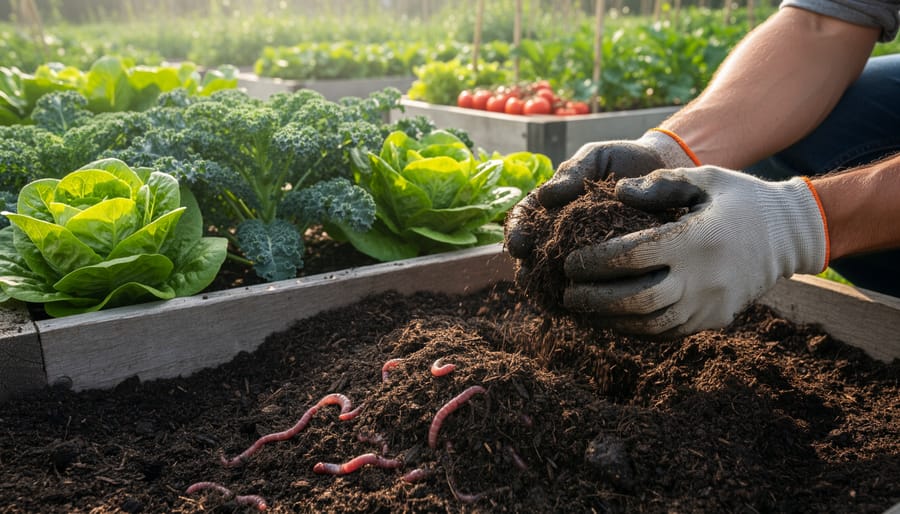
Building healthy soil through composting infrastructure creates a powerful foundation for disease suppression and pest resistance. When properly managed, compost systems cultivate beneficial microorganisms that outcompete harmful pathogens, reducing your reliance on chemical interventions.
For operations under 50 hectares, a simple three-bin turning system works well, requiring approximately 9 square metres of space. Mid-sized farms (50-200 hectares) benefit from windrow systems that can process 500-1000 cubic metres annually. Larger operations should consider aerated static pile systems with temperature monitoring to ensure proper pathogen elimination while preserving beneficial biology.
Temperature management is critical. Your compost should reach 55-65°C for at least three consecutive days to eliminate weed seeds and pathogens, but avoid exceeding 70°C as this destroys beneficial fungi and bacteria. According to Dr. Sarah Chen, soil microbiologist at Olds College in Alberta, “The magic happens in the cooling phase when beneficial organisms colonize the material. Rushing the process means missing out on disease-suppressive properties.”
Alberta farmer James Kowalski transformed his 120-hectare grain operation near Lacombe by implementing a windrow system using cattle manure and crop residues. “Within two growing seasons, we noticed reduced root diseases in our wheat,” he shares. “Our soil biology tests showed a 300 percent increase in beneficial fungal populations.”
Include diverse carbon sources like straw, wood chips, and crop residues alongside nitrogen-rich materials. Aim for a 25:1 carbon-to-nitrogen ratio, maintaining 50-60 percent moisture content. Regular turning every 7-10 days ensures even decomposition and optimal biological activity.
Cover Crop and Rotation Planning Tools
Effective cover crop and rotation planning begins with proper infrastructure that supports long-term pest management goals. Start by creating detailed field maps that track crop histories, pest pressure zones, and soil conditions. These maps become invaluable references when planning rotations that break pest cycles naturally. Many Alberta farmers find success using simple spreadsheet systems or farm management software to maintain multi-year rotation schedules.
Your rotation infrastructure should include dedicated seed storage facilities that protect cover crop varieties from moisture and temperature fluctuations. Proper labeling systems ensure you can quickly identify species and planting dates. Consider establishing a small trial area on your farm to test different cover crop combinations before committing to larger acreages.
Planning tools should integrate climate-ready crop selection with pest management objectives. For example, rotating canola with cereals and incorporating legume cover crops reduces disease buildup while improving soil health. Document what works through simple record-keeping systems noting pest observations, weather patterns, and yield results. This accumulated knowledge becomes your farm’s most valuable infrastructure, guiding future decisions and helping you adapt rotations as conditions change.
Making It Work: Implementation Steps for Alberta Farmers
Conducting Your Farm Infrastructure Audit
Start your infrastructure audit during the dormant season when you can observe your operation with fresh eyes. Begin by walking your entire property with a notebook or smartphone, documenting existing infrastructure and potential problem areas.
First, map your field boundaries, hedgerows, and natural features. Note where pest pressures historically concentrate – these spots often indicate infrastructure gaps. For example, if canola flea beetles consistently damage field edges near bare ground, you’ve identified a location needing habitat improvement.
Next, assess your existing beneficial insect habitat. Measure the width of field margins (aim for at least 3-5 metres where feasible) and record native plant diversity. Alberta farmers working with the Prairie Conservation Forum have found that diverse flowering strips support natural predators more effectively than monoculture margins.
Document your water management infrastructure including dugouts, drainage patterns, and irrigation systems. Poor drainage creates conditions for certain pests and diseases, while well-designed water features can attract beneficial species.
Evaluate windbreaks and shelter belts for gaps or aging trees that need replacement. These structures influence pest movement and provide overwintering sites for beneficial insects.
Finally, photograph everything. Visual records help you track changes over time and share observations with agronomists or peer networks. Consider using free farm mapping apps that integrate GPS coordinates with your notes.
This comprehensive audit typically takes 2-4 days depending on your operation’s size, but provides the foundation for targeted infrastructure improvements that reduce pest pressure naturally while supporting long-term farm resilience.
Funding and Cost-Sharing Opportunities in Canada
Investing in sustainable farm infrastructure becomes more accessible when you understand the financial support available across Canada. Several federal and provincial programs can help offset initial costs and make long-term pest management solutions financially viable for your operation.
At the federal level, the Canadian Agricultural Partnership offers funding through various streams, including the AgriInnovate Program for larger-scale projects and AgriAssurance initiatives supporting on-farm infrastructure improvements. The Agricultural Clean Technology Program specifically targets renewable energy systems and emission-reducing infrastructure, with cost-sharing arrangements covering up to 50% of eligible expenses.
Alberta farmers can access additional provincial support through the On-Farm Energy Management Program, which provides funding for energy audits and efficiency improvements. The Environmental Stewardship and Climate Change Program assists with projects enhancing biodiversity and natural pest control systems, including windbreak establishment and wetland restoration.
Application tips for success include documenting your current pest management challenges with photos and records, clearly connecting proposed infrastructure to measurable environmental benefits, and obtaining quotes from multiple suppliers before submitting. Many programs require demonstration of how your project supports climate adaptation or reduces greenhouse gas emissions, so emphasize these connections in your application.
Consider partnering with agricultural organizations or neighbouring farms for collaborative projects, as some programs prioritize community-scale initiatives. Working with agronomists or agricultural engineers during the planning phase strengthens applications and ensures your infrastructure design meets both funding criteria and practical farming needs. Start applications early, as funding cycles often have specific deadlines and competitive review processes.
Real Results: Canadian Farm Success Story
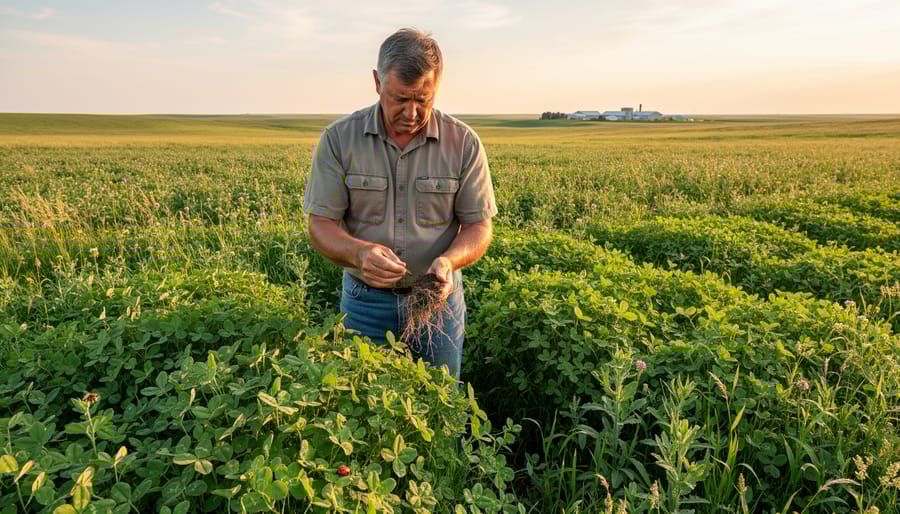
When John and Maria Kowalski took over their 800-hectare mixed grain and cattle operation near Lacombe, Alberta in 2018, they were facing a familiar challenge: rising input costs and increasing pest pressure that seemed to demand more chemical interventions each season. Five years later, their farm tells a different story, one that demonstrates how sustainable pest management infrastructure can transform both farm economics and environmental outcomes.
The Kowalskis’ journey began with a comprehensive assessment of their pest management challenges. Flea beetles were damaging their canola crops, while grasshoppers regularly threatened their wheat fields. Their initial approach relied heavily on scheduled insecticide applications, costing approximately $45 per hectare annually. “We were spraying by the calendar, not by actual need,” John admits. “It felt like we were on a treadmill that just kept getting faster.”
Working with an integrated pest management specialist from Alberta Agriculture and Irrigation, the family implemented a three-phase infrastructure transformation. First, they established biodiversity corridors around field margins, planting native flowering species that attracted beneficial insects. Second, they installed a network of 15 monitoring stations equipped with pheromone traps and weather sensors across their operation. Finally, they integrated cover cropping into their rotation, starting with 25 percent of their acreage.
The implementation wasn’t without obstacles. The initial investment totalled $28,000, though they secured a $12,000 grant through the Canadian Agricultural Partnership’s Environmental Stewardship program. “The first year was challenging,” Maria explains. “We had to learn to trust the monitoring data and resist the urge to spray preventatively.”
By year three, the results became undeniable. Chemical insecticide use dropped by 62 percent, saving roughly $22,000 annually. Canola yields improved by 8 percent due to increased pollinator activity, while soil organic matter increased from 3.2 to 4.1 percent. Independent carbon accounting verified a reduction of 47 tonnes of CO2 equivalent emissions annually.
Perhaps most significantly, the Kowalskis report improved decision-making confidence. “The monitoring infrastructure gives us real data,” John notes. “We now spray only when economic thresholds are reached, which is maybe twice per season instead of four or five times.”
Their advice to other farmers considering similar transitions? Start small, measure everything, and connect with others making the journey. The Kowalskis now host field days for neighbouring producers, sharing both their successes and the lessons learned through trial and adjustment.
Building sustainable infrastructure for pest management isn’t just about solving today’s challenges—it’s about creating resilience for decades to come. The infrastructure improvements we’ve explored, from hedgerows and beetle banks to monitoring networks and water management systems, work together to strengthen your operation against pest pressures while advancing soil health, biodiversity, and climate adaptation goals.
The beauty of this approach is that you don’t need to implement everything at once. Start with one manageable infrastructure improvement that addresses your most pressing pest challenge. Perhaps that’s establishing a small pollinator strip along a field edge, installing weather monitoring equipment, or planting a windbreak. Each step builds momentum and demonstrates value, making the next improvement easier to justify and implement.
For Alberta farmers, these investments align perfectly with our region’s growing focus on regenerative practices and environmental stewardship. The case studies we’ve examined show that producers who take this long-term view consistently report reduced input costs, improved crop resilience, and enhanced farm profitability over time.
Remember, you’re not alone in this journey. Our platform offers hands-on workshops throughout the growing season where you can learn directly from farmers who’ve successfully implemented these systems. Our expert network connects you with agronomists, entomologists, and conservation specialists who understand the unique conditions of Canadian agriculture. Together, we’re building a more resilient and sustainable future—one infrastructure improvement at a time.