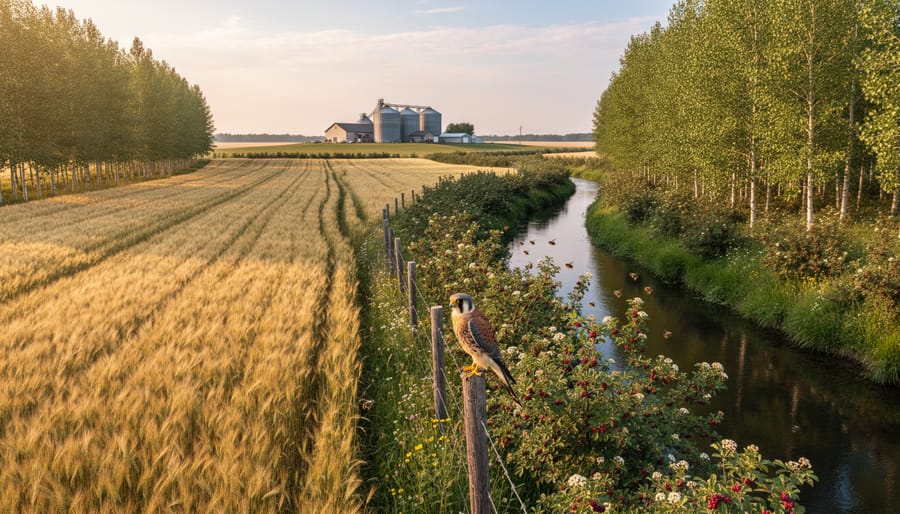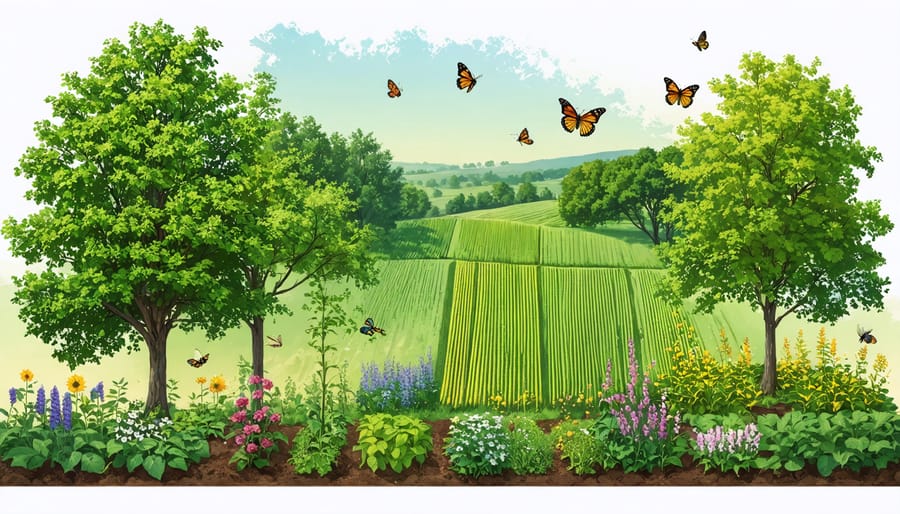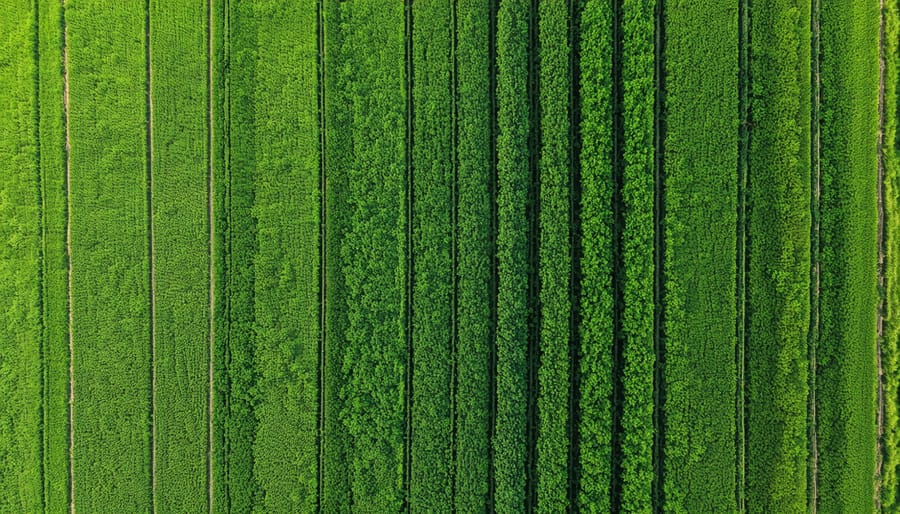
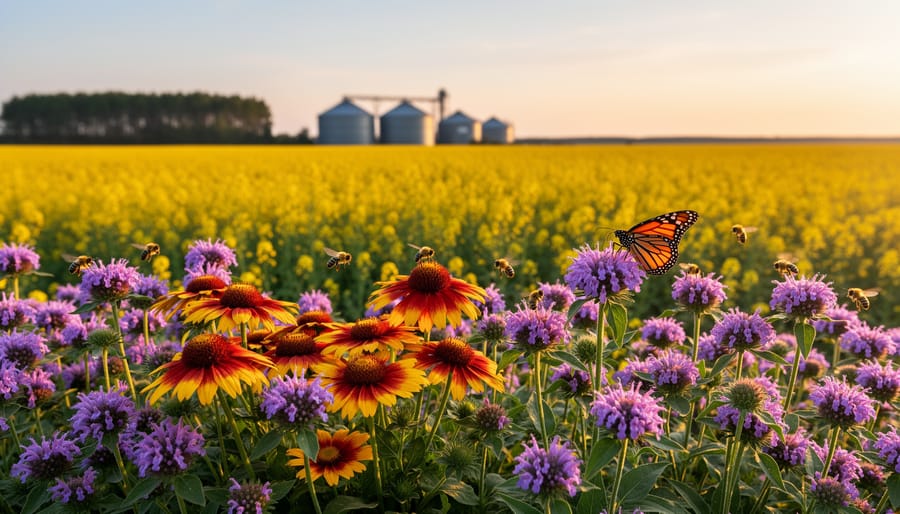
Designate 3-5% of your farmland as dedicated pollinator habitat by planting native wildflower strips along field edges, shelterbelts, or unused corners where they won’t interfere with production. Choose species like purple prairie clover, blanket flower, and wild bergamot that bloom sequentially from May through September, ensuring continuous forage for bees, butterflies, and other beneficial insects throughout Alberta’s growing season.
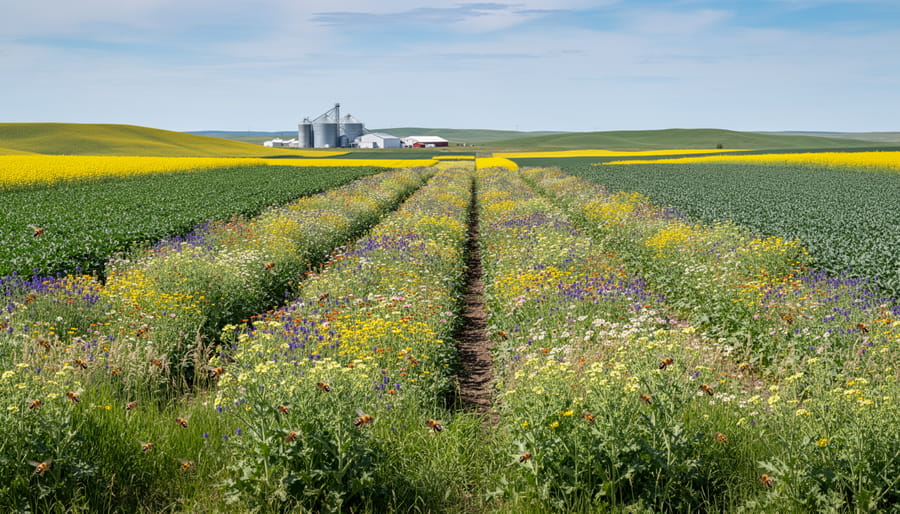
Establish these pollinator zones adjacent to crops requiring pollination—canola, legumes, and fruit trees benefit most—creating efficient corridors that increase yields by 20-35% according to Alberta Agriculture research. Position plantings within 750 meters of production fields, the effective foraging distance for most native bees.
Reduce or eliminate pesticide applications in designated pollinator areas, and when treating adjacent crop fields, spray during evening hours when pollinators are least active. This simple timing adjustment protects beneficial insects while maintaining your pest management program. Many Alberta farmers participating in pollinator programs report improved biological pest control as predatory insects establish alongside pollinators.
Access federal and provincial funding through programs like the Canadian Agricultural Partnership, which covers 50-70% of establishment costs including seed, labour, and materials. The Alberta Conservation Association also provides cost-share opportunities specifically for pollinator habitat on agricultural land.
These programs deliver measurable returns: enhanced crop pollination, improved soil health through diverse root systems, reduced erosion along field margins, and additional income opportunities through environmental stewardship incentives. Alberta producers implementing pollinator habitats typically see full cost recovery within three years through combined yield improvements and program payments, while building resilience against declining wild pollinator populations threatening agricultural productivity across the prairies.
Why Alberta Farms Need Pollinator Habitat Programs Now
The Economic Reality of Pollinator Loss
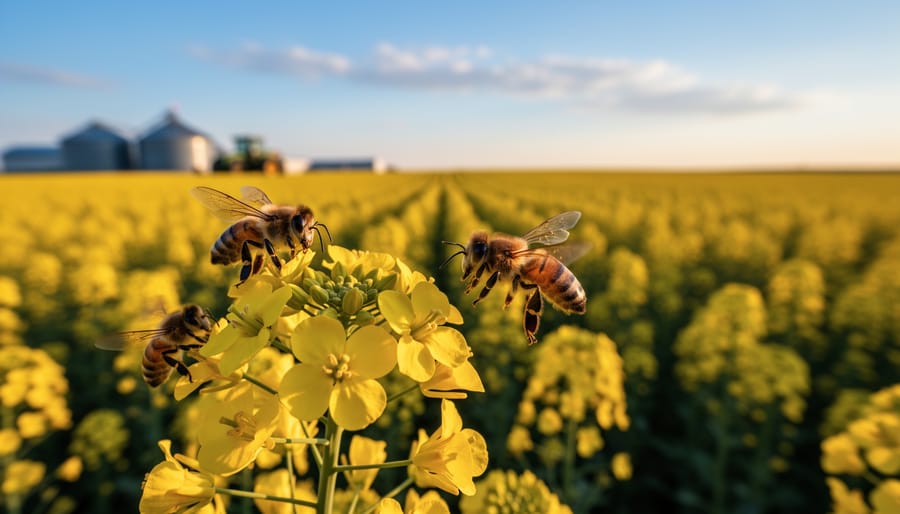
The numbers tell a compelling story about why pollinators matter to your bottom line. In Alberta, approximately 35% of crop production by volume depends directly on insect pollination. Canola, one of the province’s most valuable crops, sees yield increases of 18-46% when adequate pollinator populations are present. This translates to an additional $340-$680 per hectare in revenue for many producers.
For specialty crop growers, the stakes are even higher. Alberta’s berry producers rely on pollinators for up to 90% of fruit set, with inadequate pollination reducing yields by 30-50%. Vegetable operations growing crops like cucumbers, squash, and tomatoes face similar dependencies. The provincial agriculture sector attributes roughly $2 billion annually to pollinator-dependent crop production.
Recent studies from the University of Alberta demonstrate that farms within 1.5 kilometres of quality pollinator habitat experience measurably better yields. One canola producer near Lacombe documented a 22% yield increase after establishing pollinator strips, adding $14,000 to their annual income on just 65 hectares.
The flip side presents real risk. Global pollinator decline rates of 25-40% over the past decade suggest vulnerability in our agricultural systems. Local beekeepers report colony losses averaging 28% annually in Alberta, above the sustainable threshold of 15%. These losses don’t just affect honey production—they directly impact the wild pollinators that contribute an estimated 60-70% of canola pollination services. Investing in pollinator habitat isn’t just environmental stewardship; it’s protecting your production capacity and financial stability.
What’s Killing Our Pollinators
Alberta’s pollinators face mounting pressures, but understanding these challenges helps farmers take meaningful action. The biggest threat? Habitat loss. As agricultural land expands and intensifies, the native grasslands, hedgerows, and wildflower patches that bees, butterflies, and other pollinators depend on continue to disappear. Without diverse flowering plants and nesting sites, pollinator populations struggle to survive.
Pesticide use, particularly neonicotinoids and certain herbicides, poses another significant risk. Even when applied according to label directions, these products can affect pollinators through spray drift or residues on flowering plants. Timing and application methods matter enormously.
Monoculture farming creates “food deserts” for pollinators. While canola provides abundant forage during bloom, pollinators need continuous floral resources from spring through fall. Large single-crop fields leave them starving before and after that brief flowering window.
Climate variability compounds these challenges. Alberta’s increasingly unpredictable weather patterns—late spring frosts, summer droughts, and extreme temperature swings—disrupt the synchronized timing between plant blooms and pollinator emergence. This makes establishing climate-resilient farming practices essential.
The encouraging news? Farmers control many of these factors. By dedicating even small areas to pollinator habitat, adjusting spray practices, diversifying plantings, and incorporating perennial buffers, you can create meaningful change. The solutions are practical, often cost-effective, and deliver benefits beyond pollinator support—including improved crop yields and enhanced farm resilience.
Understanding Pollinator Habitat Programs in Agroforestry
What Makes Agroforestry Different
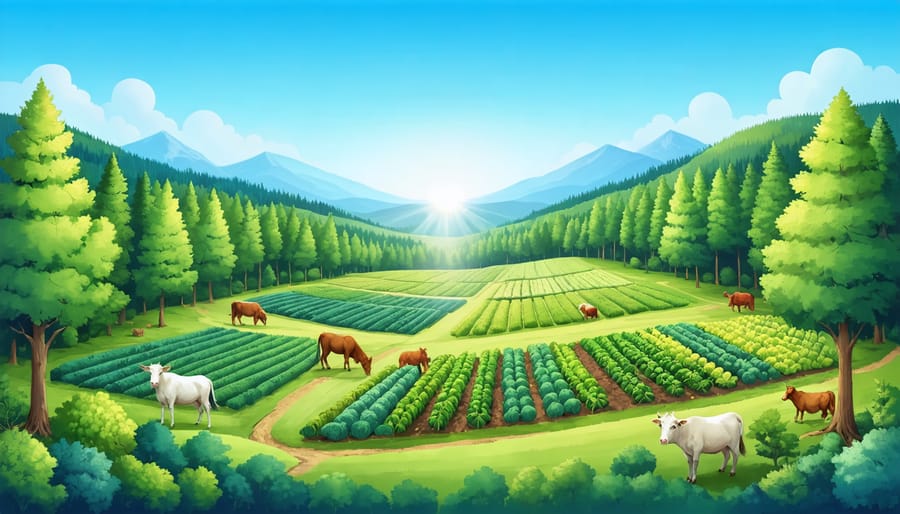
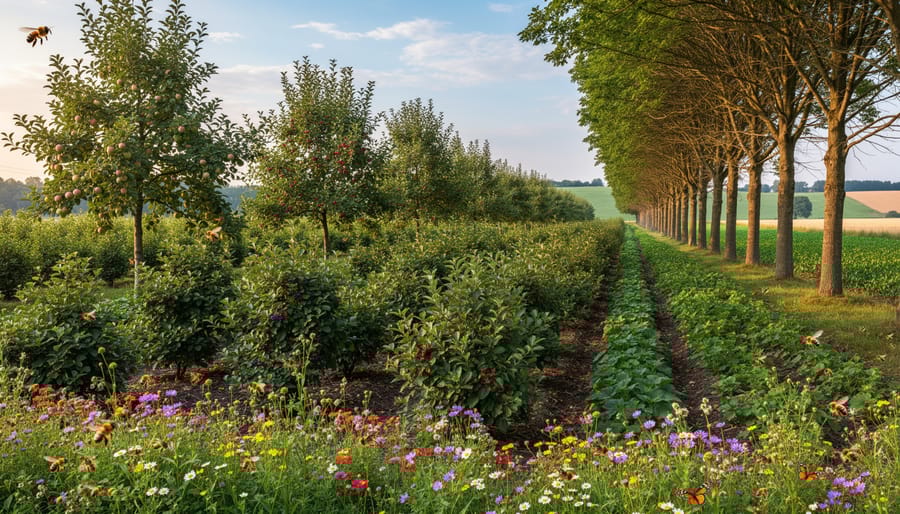
Unlike traditional pollinator programs that focus solely on flowering plants, agroforestry pollinator strategies create vertical layers of habitat that support diverse pollinator species throughout the growing season. By combining trees, shrubs, and flowering plants, you’re essentially building a three-dimensional ecosystem that offers nesting sites, food sources, and shelter at different heights and bloom times.
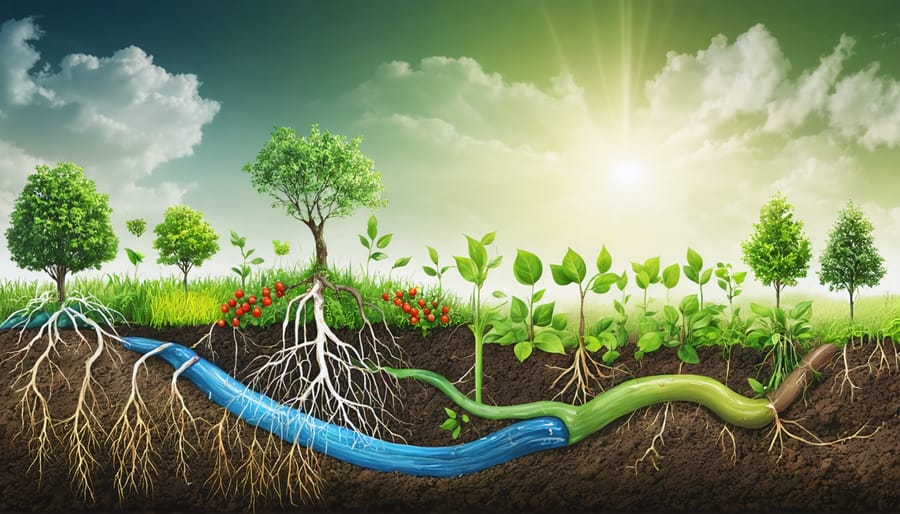
This layered approach means early-flowering willows and saskatoons provide crucial spring nutrition when pollinators emerge, while later-blooming shrubs and understory plants extend forage availability into fall. The tree canopy above creates windbreaks that protect pollinators during flight and reduce crop stress, while root systems improve soil structure and water infiltration across your entire planting area.
For Alberta farmers, this diversity translates into practical benefits beyond pollination. Trees like Manitoba maple or hybrid poplar can be harvested for biomass or firewood, providing a secondary income stream. Berry-producing shrubs such as haskap or chokecherry offer marketable products while feeding pollinators. The windbreak effect alone can increase crop yields in adjacent fields by 10 to 20 percent through reduced wind damage and improved microclimate conditions.
This integrated system also requires less maintenance than monoculture plantings once established, as the diverse plant community naturally resists pests and diseases while building soil health through varied root structures and organic matter contributions.
Key Components of Effective Pollinator Habitats
Creating successful pollinator habitats on Alberta farms requires understanding what these essential visitors need throughout their lifecycle. Enhancing farm biodiversity starts with incorporating diverse native plants that provide nectar and pollen from early spring through late fall.
In Alberta’s climate, select plants that can withstand temperature fluctuations and shorter growing seasons. Native options like wild bergamot, purple coneflower, and goldenrod thrive here while supporting local pollinator species. Aim for at least three different plant species blooming in each season, creating continuous food sources from April through September.
Nesting sites are equally critical. Ground-nesting bees, which comprise 70 percent of native bee species, need undisturbed soil patches with good drainage. Leave areas of bare ground, ideally south-facing slopes that warm quickly in spring. For cavity-nesting species, maintain dead standing trees or install wooden blocks with drilled holes of varying diameters between 2 and 10 millimetres.
Water sources should be shallow with landing spots. A simple birdbath with stones or floating cork pieces works well. Change the water regularly to prevent mosquito breeding.
According to Dr. Sarah Thompson, an entomologist with the University of Alberta, “The single most important factor is eliminating pesticide use in and around pollinator areas. Even small exposures can disorient bees and disrupt their navigation abilities.”
Create buffer zones of at least 10 metres around pollinator habitats where no chemical applications occur. This protection zone ensures pollinators can safely forage, nest, and complete their life cycles, ultimately supporting both ecosystem health and crop production on your farm.
Practical Implementation: Getting Started on Your Farm
Site Selection and Assessment
Identifying the right locations on your farm sets the foundation for a thriving pollinator habitat. Start by walking your property and mapping potential sites like field margins, buffer strips along waterways, unused corners, and existing shelterbelts that could benefit from enhanced plantings.
The most successful pollinator habitats share several key characteristics. Aim for a minimum area of 0.2 hectares (half an acre) to provide meaningful forage, though even smaller patches contribute value when connected to other habitats. Full sun exposure for at least six hours daily is essential, as most pollinator-friendly plants require ample sunlight to produce nectar and pollen.
Consider proximity to water sources, whether natural dugouts, creeks, or irrigation systems. Pollinators need accessible water, particularly during Alberta’s hot summer months. Shallow water edges or muddy spots work best, as bees can drink safely without drowning.
Evaluate existing vegetation and soil conditions. Areas with minimal weed pressure and decent drainage typically establish faster. Don’t overlook marginal farmland that may be underperforming for crops but ideal for native wildflowers and grasses. Field edges adjacent to existing natural areas often succeed quickly, as they already host some beneficial insects and provide connectivity across your landscape.
Choosing Plants That Work in Alberta
Selecting the right plant species can make or break your pollinator habitat project in Alberta’s diverse climate zones. The key is choosing native plants that thrive in Prairie conditions while providing season-long food sources for bees, butterflies, and other beneficial insects.
For trees, consider trembling aspen, chokecherry, and pin cherry, which offer early spring blooms when pollinators emerge from dormancy. Manitoba maple provides late-spring nectar, while saskatoon serviceberry delivers both spring flowers and summer fruit that attracts additional wildlife.
Native shrubs form the backbone of any pollinator planting. Snowberry, wolf willow, and shrubby cinquefoil tolerate drought and cold while producing abundant flowers. Red-osier dogwood works well in moister areas, offering early summer blooms.
Flowering perennials provide the most consistent nectar sources. Purple prairie clover, wild bergamot, and three-flowered avens bloom from June through August, covering the critical mid-summer period. Goldenrod and asters extend the season into fall, supporting pollinators preparing for winter.
Alberta farmers should aim for continuous bloom coverage from April through September. Early bloomers like prairie crocus and pasture sage support emerging queen bees. Mid-season flowers including yarrow and gaillardia maintain populations during peak activity. Late bloomers such as black-eyed Susan provide crucial fall resources.
Zone-specific considerations matter significantly. Zone 2 operations should emphasize hardy species like pasture sage and prairie rose, while Zone 4 areas can successfully establish purple coneflower and blazing star. Local conservation districts can provide detailed plant lists tailored to your specific location and soil conditions.
Establishment and Maintenance Timeline
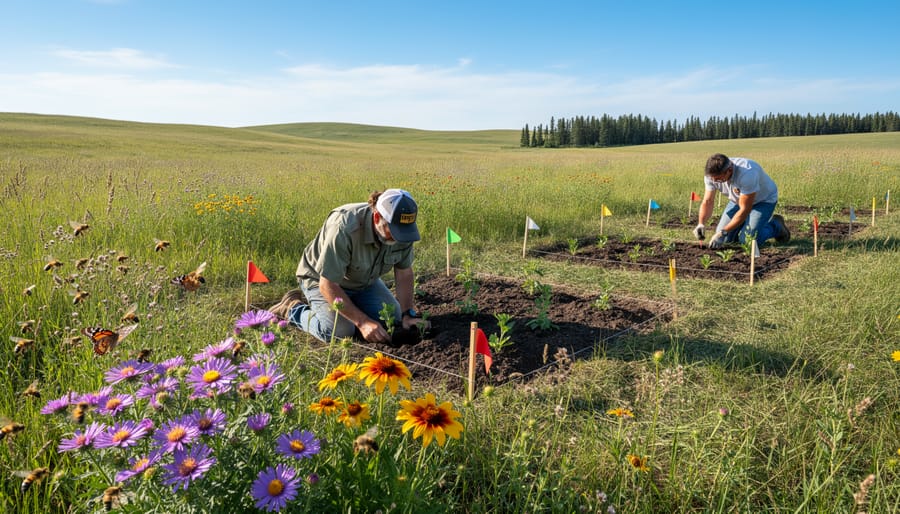
Establishing a pollinator habitat requires patience and planning, but understanding the timeline helps manage expectations. In spring (April-May), begin with soil preparation through tilling and weed control. Plant native species after the last frost, typically mid-May in Alberta. Initial costs range from $500-1500 per hectare for seeds and minimal equipment, though implementation costs and challenges vary based on site conditions.
During Year One, expect minimal blooms as plants establish root systems. Maintain through regular mowing to control competing weeds, requiring 3-5 hours monthly. Year Two brings increased flowering as perennials mature, with noticeable pollinator activity by mid-summer. Maintenance drops to 2-3 hours monthly for spot weeding and monitoring.
By Year Three, your habitat reaches full productivity with diverse blooms attracting various pollinator species throughout the growing season. At this stage, maintenance becomes minimal, primarily involving annual mowing in late fall and occasional bare spot reseeding. Most Alberta farmers report seeing measurable crop pollination benefits starting in the second growing season, with peak ecosystem services achieved by years three to five.
Integration with Existing Farm Operations
Successfully integrating pollinator habitats into your farm requires thoughtful planning around existing operations. Start by mapping field edges, fence lines, and non-productive areas that won’t interfere with equipment movement or crop access. These marginal spaces are ideal for native wildflower plantings while maintaining full operational efficiency.
Consider your crop rotation schedule when establishing permanent habitat strips. Position pollinator areas along field borders where they won’t require relocation, typically maintaining a 3-metre buffer for equipment turning radius. This approach allows combines and sprayers to operate without complications.
For pesticide applications, timing becomes crucial. Alberta farmer James Chen from Leduc County schedules spraying during early morning or evening hours when pollinators are less active, and maintains spray-free buffer zones around habitat areas. “We’ve seen no reduction in pest control effectiveness, just smarter application timing,” he notes.
Winter grazing rotations can actually benefit pollinator plantings when managed properly. Light grazing in late fall helps control aggressive weeds without damaging established perennial roots. The key is flexibility—pollinator habitats work with your existing practices, not against them.
Canadian Case Study: Pollinator Success in Southern Alberta
When James and Caroline Petersen started noticing declining canola yields on their 400-hectare farm near Lethbridge in 2018, they didn’t immediately connect it to pollinator decline. “We thought it was soil quality or weather patterns,” James admits. “But after talking with our agronomist and doing some research, we realized we had hardly any wild bees left on our property.”
The Petersens decided to implement an agroforestry-based pollinator habitat program, dedicating approximately 15 hectares across their farm to strategic pollinator zones. Their approach combined shelterbelts with native flowering plants, creating corridors that connected existing habitat patches.
Working with Alberta Agriculture and Irrigation specialists, they planted Saskatoon berry shrubs, chokecherries, and wild roses along existing windbreaks. Between crop fields, they established 3-meter-wide native wildflower strips featuring black-eyed Susans, prairie crocuses, and purple coneflowers. “The key was choosing plants that bloomed at different times,” Caroline explains. “We wanted something flowering from early May through September.”
The implementation wasn’t without challenges. Initial establishment costs ran approximately $1,200 per hectare for native plant materials and labour. Maintaining weed control during the first two years required dedication. “We nearly gave up that first summer,” Caroline recalls. “The thistle pressure was intense, and we wondered if we’d just created more work for ourselves.”
By year three, the results became undeniable. The Petersens documented a 28 percent increase in canola yields in fields adjacent to pollinator strips compared to their baseline. Their pulse crops also showed improvement, with lentil yields up 15 percent. They observed seven native bee species they hadn’t seen in years, plus increased butterfly and beneficial insect populations.
The shelterbelts provided unexpected bonuses beyond pollination. Winter snow retention improved soil moisture, and the diverse plantings attracted natural predators that helped control pest populations, reducing pesticide costs by roughly $3,000 annually.
“The return on investment took about four years to really materialize,” James notes, “but now we’re seeing consistent benefits. Our neighbours are taking notice too.” Three nearby farms have since started their own pollinator programs, creating a growing network of connected habitat across the region.
The Petersens encourage other farmers to start small. “You don’t need to commit 15 hectares right away. Even two hectares strategically placed can make a measurable difference.”
Financial Support and Resources for Canadian Farmers
Federal and Provincial Programs
Canadian farmers have access to several funding streams to support pollinator habitat initiatives. The Canadian Agricultural Partnership (CAP) offers provincial cost-share programs that can cover up to 50-75% of eligible expenses for habitat restoration projects. In Alberta, the Environmental Stewardship and Climate Change program provides grants specifically for beneficial management practices, including pollinator-friendly plantings and habitat enhancements.
To strengthen your application, focus on demonstrating measurable outcomes. “Applications that clearly outline project goals, expected pollinator species supported, and long-term maintenance plans typically receive priority,” explains Jennifer Morrison, a funding specialist with Alberta Agriculture and Forestry. Include detailed maps of proposed habitat areas, species lists of native plants you’ll establish, and your farm’s proximity to existing natural areas.
Eligibility generally requires active farm business registration, proof of land ownership or long-term lease agreements, and completion of an Environmental Farm Plan. Application deadlines typically fall between January and March, so plan ahead. Many regions also offer technical support through Growing Forward programs to help design your habitat layout and plant selection. Contact your local agricultural fieldman or visit provincial agriculture websites to access current program details and application forms specific to your area.
Technical Support and Educational Resources
Alberta farmers have access to excellent resources when establishing pollinator habitats. Start with your local agricultural fieldman or municipal district office, who can connect you to provincial extension services offering site-specific advice for your region.
The Alberta Conservation Association provides technical guidance on habitat design and native plant selection suited to different soil zones across the province. Their staff conduct free on-site assessments to help identify ideal locations for pollinator strips within your operation.
Conservation organizations like the Alberta Native Plant Council maintain directories of reputable native plant nurseries throughout the province. These specialized suppliers offer seeds and seedlings adapted to Alberta’s climate zones, along with planting advice tailored to agricultural settings.
Look for hands-on workshops offered through organizations such as Ducks Unlimited Canada and the Alberta Beekeepers Commission. These sessions typically cover practical topics like establishment techniques, maintenance schedules, and monitoring pollinator activity.
Many county offices host annual field days featuring demonstrations of successful pollinator projects on working farms. These events provide valuable opportunities to ask questions directly to farmers who have implemented these systems and learn from their experiences.
The Alberta Agriculture and Irrigation website features downloadable guides, plant selection tools, and contact information for regional specialists who understand the unique challenges facing Alberta producers.
Measuring Success and Long-Term Benefits
Tracking the success of your pollinator habitat program helps justify your investment and guides future decisions. Start with simple observation methods that fit into your regular farm routines, then expand to more detailed monitoring as your program matures.
Begin by conducting weekly pollinator counts during peak flowering periods. Walk a standardized route through your habitat areas for 15 minutes, recording the types and approximate numbers of pollinators you observe. Focus on easily identifiable groups like honeybees, bumblebees, butterflies, and hover flies. Morning observations between 9 a.m. and noon typically yield the most activity. Alberta farmer James Chen from Lacombe County notes, “I spend 20 minutes each week during summer doing pollinator counts. Within two seasons, I documented a 300 percent increase in native bee activity near my canola fields.”
Measure crop yields in fields adjacent to your pollinator habitats compared to control areas farther away. Many Alberta producers report 15 to 25 percent yield increases in crops like canola, field peas, and faba beans located within 750 metres of enhanced pollinator habitats. Track these numbers annually to establish clear trends.
Document vegetation changes through annual photographs taken from consistent locations. This visual record shows habitat establishment progress and helps identify areas needing adjustment. Monitor plant diversity by counting flowering species present each season, aiming for steady increases over three to five years.
Consider the broader ecosystem services benefits like improved soil health, reduced erosion, and enhanced water infiltration in habitat areas. These long-term advantages compound over time, contributing to overall farm resilience and profitability even beyond direct pollination impacts.
Establishing pollinator habitat on your farm delivers measurable returns that extend far beyond your property lines. By creating spaces where bees, butterflies, and other beneficial insects thrive, you’re simultaneously boosting your crop yields, reducing input costs, and building ecological resilience across Alberta’s agricultural landscape. The beauty of pollinator programs lies in their dual benefit: what’s good for the environment proves equally beneficial for your bottom line.
You don’t need to transform your entire operation overnight. Start with a quarter-acre strip along an existing hedgerow or convert an underproductive corner into native wildflower habitat. These modest beginnings often yield surprising results, building your confidence and demonstrating value to skeptical neighbours. Manitoba farmer Sarah Chen began with just 0.2 hectares of native plantings three years ago and now dedicates 4 hectares after seeing her canola yields improve by 18 percent.
When multiple farms in a region participate, the collective impact multiplies exponentially. Pollinators travel between properties, creating connected habitat corridors that support larger, healthier populations. Your individual action contributes to watershed-scale environmental improvements while strengthening the broader agricultural community’s sustainability.
The path forward is clear: assess your land, identify opportunities, and take that first step. Whether you’re motivated by improved pollination services, cost-shared funding opportunities, or legacy-building stewardship, pollinator habitat programs offer practical tools for modern, profitable farming. Your farm can be both productive and environmentally responsible—these goals aren’t competing priorities but complementary pathways toward long-term agricultural success.