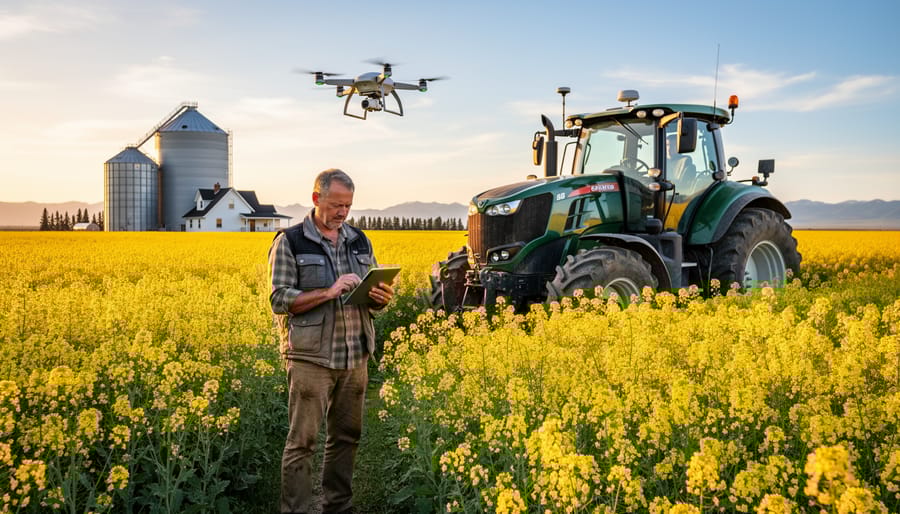
Apply for the Community Futures Digital Literacy Program available across Alberta, which provides up to $5,000 per project to help farming operations integrate precision agriculture tools, farm management software, and online marketing platforms. This grant specifically targets rural businesses looking to bridge the technology gap, with applications accepted quarterly through your local Community Futures office.
Leverage Agriculture and Agri-Food Canada’s AgriCompetitiveness Program, which allocated $27.5 million in 2023 for digital adoption projects, including training for GPS-guided equipment, drone technology for crop monitoring, and data management systems that track soil health and yield patterns. Successful applicants from Saskatchewan and Manitoba reported 15-20% improvements in input efficiency within the first growing season.
Connect with your regional Agricultural Service Board to access provincial digital training grants that cover costs for workshops, online courses, and one-on-one technical coaching. Alberta farmers who completed digital literacy training through these programs increased their online direct-to-consumer sales by an average of 43% and reduced time spent on record-keeping by 8 hours weekly.
Partner with other producers in your area to apply for collective funding through the Canadian Agricultural Partnership, which prioritizes group applications for shared technology infrastructure like high-speed internet upgrades and collaborative data platforms. Multi-farm applications receive bonus consideration and can access up to $100,000 for community-wide digital improvement projects that support sustainable practices like precision water management and real-time weather monitoring systems.
What Digital Literacy Grants Really Mean for Rural Farmers

The Connection Between Digital Skills and Sustainable Agriculture
Digital literacy is fundamentally changing how Canadian farmers approach environmental stewardship. When you develop strong digital skills, you gain access to precision agriculture technologies that reduce input waste and improve resource efficiency. GPS-guided equipment, for example, allows you to apply fertilizers and pesticides with pinpoint accuracy, minimizing environmental impact while reducing costs by up to 15 percent.
Soil health monitoring through digital platforms gives you real-time data about nutrient levels, moisture content, and organic matter. Alberta farmers using these tools report making more informed decisions about crop rotation and cover cropping, leading to measurable improvements in soil carbon sequestration. Digital carbon tracking apps now enable you to document and verify your farm’s carbon footprint, opening doors to carbon credit programs and additional revenue streams.
Weather prediction software and satellite imagery help you time planting and harvesting more effectively, reducing fuel consumption and optimizing yields. These climate-smart practices depend on your ability to interpret digital information and use technology confidently.
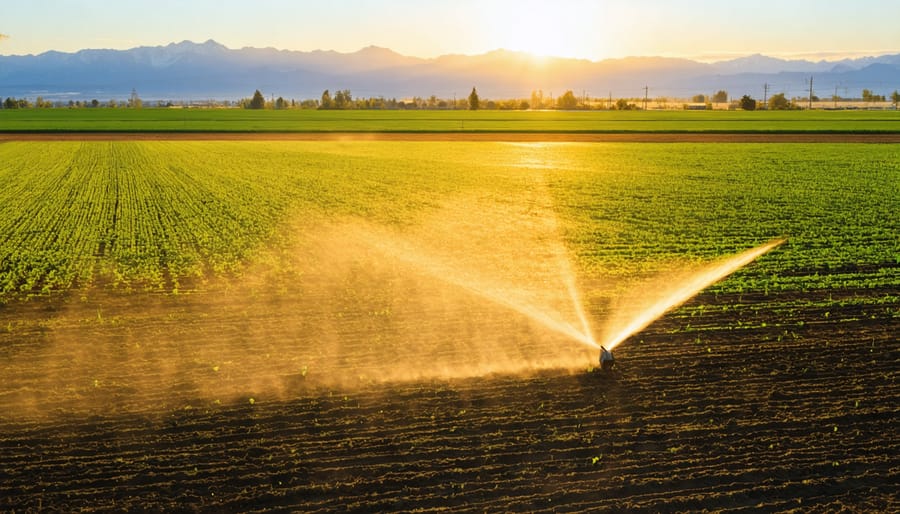
Water management systems controlled through mobile apps allow precise irrigation scheduling, conserving this critical resource while maintaining crop health. Digital record-keeping also simplifies compliance reporting for environmental programs and certifications. By building your digital literacy, you’re not just keeping pace with modern agriculture—you’re actively contributing to a more sustainable future for Canadian farming while improving your operation’s profitability and resilience.
Available Digital Literacy Grant Programs for Canadian Farmers
Federal Grant Programs
The Canadian government offers several funding streams specifically designed to help agricultural operations and rural communities bridge the digital divide. These programs recognize that technology adoption is essential for modern, sustainable farming practices.
The Canadian Agricultural Partnership (CAP) provides provincial and federal cost-share funding for agricultural innovation, including digital literacy training and technology implementation. Through CAP, farmers can access support for precision agriculture tools, farm management software training, and connectivity improvements. Alberta producers have successfully used these funds to implement GPS-guided equipment and data management systems that reduce input costs while improving environmental outcomes.
The Canada Digital Adoption Program (CDAP) stands out as a comprehensive initiative offering both grants and advisory services. Small and medium-sized agricultural businesses can receive up to $15,000 to develop digital adoption plans, plus interest-free loans up to $100,000 for technology implementation. This program covers expenses like employee training, software subscriptions, and consulting services to build digital capacity within farm operations.
Innovation Canada’s Accelerated Growth Service connects rural agricultural businesses with rural digital funding opportunities beyond traditional agricultural programs. They offer personalized guidance matching your operation’s specific needs with available federal support.
Agriculture and Agri-Food Canada also administers regional programs supporting digital infrastructure in underserved areas. These initiatives often partner with provincial governments to maximize funding impact, making previously unaffordable technology accessible to farm families committed to sustainable practices.
To explore eligibility, visit the federal business benefits finder tool or contact your local agricultural field office for application assistance.
Provincial and Regional Opportunities in Alberta
Alberta farmers have access to several province-specific funding streams designed to boost digital literacy and technology adoption on farms. The Alberta government’s Digital Innovation Program supports agricultural operations looking to integrate digital tools, offering up to $50,000 for training and technology implementation projects that improve farm efficiency and sustainability.
Regional Agricultural Service Boards across Alberta provide localized support, often partnering with organizations like Olds College to deliver hands-on digital training workshops. These programs help farmers master everything from precision agriculture software to online marketing platforms for direct-to-consumer sales.
The Alberta Rural Development Network administers community-level grants that rural municipalities can access for digital infrastructure and training initiatives. Many counties have used these funds to establish rural innovation hubs where farmers can access computers, high-speed internet, and expert guidance on digital tools.
For those exploring multiple funding options, understanding the broader landscape of Canadian grants can help identify complementary provincial and federal opportunities. Contact your local Agricultural Service Board or Economic Development office to learn about current application deadlines and eligibility requirements specific to your region.
Non-Profit and Industry-Supported Programs
Beyond government programs, several non-profit organizations and private sector partners offer valuable digital literacy funding for agricultural communities. Farm Management Canada regularly provides technology training grants specifically designed for producers looking to enhance their digital capabilities. The Canadian Agricultural Partnership connects farmers with regional tech training initiatives through local agricultural societies.
Technology companies like Microsoft and Google offer digital skills programs with free training resources and occasional grant opportunities for rural communities. In Alberta, community foundations such as the Calgary Foundation and Edmonton Community Foundation maintain funding streams for rural digital inclusion projects that benefit farming operations.
Agricultural cooperatives and commodity groups also support members’ digital literacy development. For example, the Alberta Wheat Commission has partnered with tech providers to deliver precision agriculture training. These partnerships often include equipment demonstrations and hands-on workshops that make new technology more accessible. Local agricultural extension offices can connect you with current opportunities from industry partners, ensuring you stay informed about emerging funding sources that align with your farm’s sustainability goals and technological needs.
Real Stories: Alberta Farmers Who Leveraged Digital Literacy Grants
Case Study: Precision Soil Management in Central Alberta
When Marcus Chen took over his family’s 800-hectare grain operation near Red Deer in 2021, he knew traditional farming methods weren’t maximizing his land’s potential. Soil health varied significantly across his fields, yet he was applying fertilizers uniformly—wasting money and harming the environment.
Through Alberta’s Digital Agriculture Grant program, Marcus secured $15,000 to invest in soil monitoring technology and digital training. He purchased variable-rate soil sensors, GPS mapping equipment, and enrolled in a three-month online course on data interpretation and precision soil management.
The results exceeded his expectations. Within the first growing season, Marcus mapped nutrient levels across his entire operation, identifying areas requiring specific amendments. His soil organic matter increased by 12 percent in previously depleted zones, while his fertilizer costs dropped by 28 percent.
“Learning to read the data was challenging initially,” Marcus explains. “But the training component of the grant was essential. I wasn’t just buying equipment—I was building skills that transformed how I farm.”
By year two, Marcus had reduced his input costs by $42,000 annually while improving yields by 15 percent. He now mentors neighbouring farmers interested in similar technology adoption, demonstrating how digital literacy grants create lasting community benefits beyond individual operations.
Case Study: Carbon Tracking and Market Access
When Craig Henderson’s mixed grain operation near Lethbridge needed to adapt to changing market demands, he knew carbon credits could provide additional revenue—but the paperwork and digital reporting requirements seemed overwhelming. With support from a digital literacy grant through the Canadian Agricultural Partnership, Craig and two of his farm employees completed a three-month training program focused on agricultural technology and data management.
The training covered essential skills including spreadsheet management for tracking field operations, using carbon calculation software, and navigating online marketplace platforms. Within six months of completing the program, Craig’s operation successfully enrolled in a carbon offset program, documenting their reduced tillage practices and cover crop implementation. The digital skills they gained allowed them to accurately measure and report 450 tonnes of carbon sequestered annually, generating an additional $6,750 in revenue during their first year.
Beyond carbon credits, the digital competency opened doors to premium markets requiring traceability documentation. Craig now uses farm management software to track inputs and practices, providing transparency that buyers increasingly demand. His operation has secured contracts with two specialty grain buyers who pay premiums for verified sustainable production.
The investment in digital literacy training cost the operation only 20 hours of staff time, with grant funding covering the course fees. Craig notes that the confidence his team gained in using technology has streamlined daily operations and positioned the farm competitively for future environmental program opportunities.
How to Apply: A Step-by-Step Approach
Assessing Your Farm’s Digital Needs
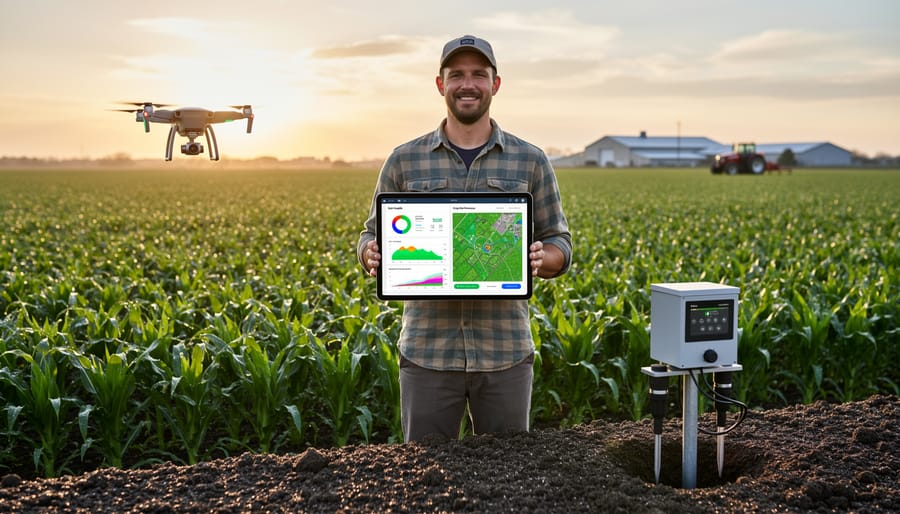
Before applying for digital literacy grants, take time to evaluate where technology could strengthen your farm operation. Start by walking through your daily activities—from soil monitoring and crop planning to marketing and record-keeping. Which tasks feel inefficient or rely on outdated methods? Where could digital tools save time or improve decision-making?
Consider the specific skills your team needs. Perhaps you want to learn precision agriculture techniques using GPS-guided equipment, master farm management software, or develop an online presence to reach direct-to-consumer markets. Many Alberta farmers have successfully identified gaps by consulting with agricultural extension services or attending regional workshops where peers share their digital transformation experiences.
Align your needs with sustainability goals that funders prioritize. For example, if you’re aiming to reduce water usage, look into soil moisture monitoring apps. If carbon sequestration matters to your operation, explore digital tools for tracking soil health metrics.
Document your current technology inventory and the specific skills you’d like to develop. This assessment becomes the foundation of your grant application, demonstrating clear objectives and measurable outcomes. Remember, funders want to see how digital literacy will create tangible improvements in both farm productivity and environmental stewardship.
Preparing Your Application
A well-prepared application significantly increases your chances of securing digital literacy funding. Start by clearly articulating how improved digital skills will enhance your farm’s sustainability practices. Be specific about outcomes—whether that’s reducing input costs through precision agriculture apps, connecting with direct-to-consumer markets online, or implementing better record-keeping systems that track environmental metrics.
Your application should include a detailed project budget, timeline, and measurable goals. Document your current technology baseline and identify specific gaps you’re addressing. For example, if you’re seeking training in farm management software, explain how this will reduce paper waste and improve data-driven decision-making for crop rotation or water management.
Strong applications demonstrate community benefit beyond your own operation. Consider how your enhanced digital skills might support neighbouring farms or contribute to regional agricultural knowledge-sharing. Many successful applicants in Alberta have highlighted their willingness to mentor other farmers after completing their training.
Include letters of support from local agricultural organizations or equipment suppliers who can validate your project’s feasibility. Be honest about challenges you’ve faced with technology adoption—this authenticity resonates with grant reviewers who understand rural connectivity and resource limitations.
Finally, emphasize long-term sustainability. Explain how these digital skills will remain relevant and continue benefiting your operation for years to come, creating lasting positive environmental and economic impacts.
Common Mistakes to Avoid
Many applications fall short because they lack specific details about how the technology will be used. Instead of stating “we need computers for training,” explain exactly how digital tools will improve your farm operations—whether that’s precision agriculture software, online market access, or soil monitoring systems. Another common pitfall is submitting generic proposals that don’t connect digital literacy to measurable agricultural outcomes. Ground your application in real numbers: how many hectares you manage, current yield metrics, and projected improvements.
Avoid waiting until the last minute. Applications rushed through often contain errors or incomplete budgets. Give yourself at least three weeks to gather supporting documents, financial statements, and letters of support from agricultural organizations or local farming cooperatives.
Don’t underestimate the importance of demonstrating community benefit. Successful applicants often show how their digital skills training will be shared with neighbouring producers or through local agricultural groups. Finally, ensure your budget is realistic and detailed. Vague cost estimates raise red flags with reviewers. Break down expenses clearly, from hardware and software to training materials and internet connectivity upgrades, keeping in mind that sustainability should extend beyond the initial grant period.
Expert Insights: What Agricultural Advisors Want You to Know
We spoke with agricultural advisors across Alberta to understand how farmers can make the most of digital literacy funding. Their insights reveal practical strategies that go beyond simply acquiring technology.
“The biggest mistake I see is farmers rushing to buy equipment without first identifying their actual needs,” explains Sarah Chen, Digital Agriculture Specialist with Alberta Agriculture and Irrigation. “Start by mapping out your daily challenges. Which tasks consume the most time? Where are you losing money due to inefficiency? Then match technology solutions to those specific problems.”
Chen emphasizes that successful digital literacy isn’t just about learning software. “It’s about understanding how data can transform your decision-making process. A 160-hectare grain operation we worked with reduced input costs by 18 percent simply by learning to interpret their soil moisture sensors properly.”
Grant administrator Michael Okonkwo from Prairies Economic Development Canada stresses the importance of planning for ongoing learning. “Your grant application should include budget for training, not just hardware. We’re more likely to approve applications that demonstrate a commitment to building skills over time. Include costs for workshops, online courses, or even hiring a student to help during the transition period.”
Extension officer Janet Kowalski adds perspective from rural communities. “Don’t go it alone. Form learning groups with neighbouring farms. We’ve seen cooperatives share the cost of precision agriculture consultants, which makes everyone’s grant dollars stretch further. Plus, you learn from each other’s experiences.”
The advisors unanimously agree on one point: start small and scale up. “Pilot one technology on a portion of your land first,” Kowalski advises. “Master that system, prove its value, then expand. This approach also makes you a stronger candidate for additional funding rounds.”
Beyond the Grant: Building Long-Term Digital Capacity
Free Digital Learning Resources for Farmers
Building your digital skills doesn’t end with grant-funded training. Several free resources can help you continue developing technological capabilities at your own pace. Agriculture and Agri-Food Canada offers online modules covering farm management software, precision agriculture tools, and digital record-keeping systems tailored specifically for Canadian producers.
The Digital Alberta program provides virtual workshops on topics ranging from social media marketing for farm products to using weather monitoring apps and satellite imagery for crop planning. These sessions often feature farmers from across the province sharing their experiences with implementing new technologies.
Local agricultural societies and Rural Municipal offices frequently host community learning circles where farmers can learn from peers who’ve successfully adopted digital tools. The Canadian Agricultural Partnership also maintains a resource library with video tutorials and step-by-step guides for common farming software.
For those interested in e-commerce, the Alberta Farm Fresh Producers Association runs free webinars on building online sales platforms and reaching urban markets through digital channels. Many public libraries in rural communities offer one-on-one technology coaching and internet access for practicing new skills. Taking advantage of these ongoing learning opportunities ensures your digital knowledge stays current and continues supporting your farm’s sustainability goals.
Building Peer Learning Networks
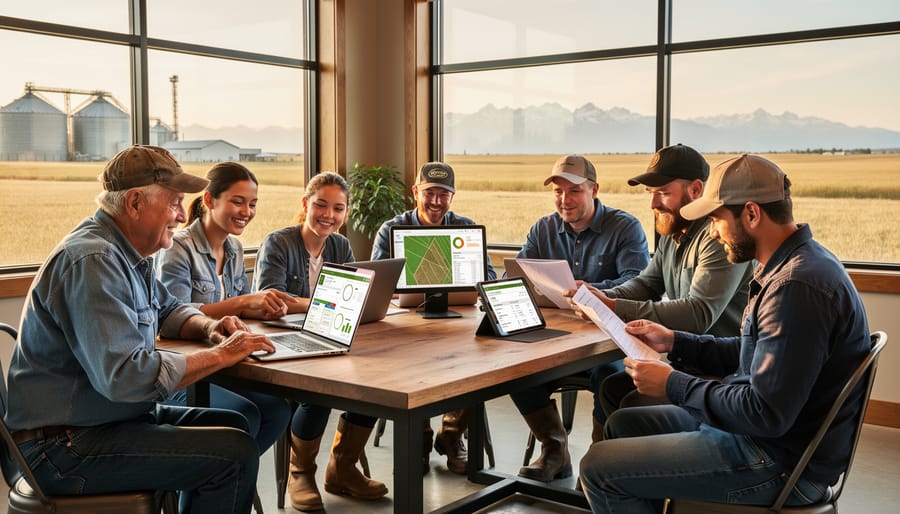
Learning alongside other farmers can dramatically accelerate your digital adoption journey while reducing the costs and frustrations of going it alone. Start by connecting with local agricultural associations and farm groups already bridging the digital gap in your community. Many Alberta producers have formed informal learning circles where they share experiences with farm management software, precision agriculture tools, and online marketing platforms.
Consider organizing monthly meet-ups at your local agricultural office or community centre where farmers can demonstrate apps and technologies they’ve successfully implemented. These sessions create safe spaces to ask questions and troubleshoot challenges together. Online options work too—private Facebook groups or WhatsApp chats allow you to share screenshots, ask quick questions, and celebrate wins between in-person gatherings.
Don’t overlook mentorship opportunities. Pair digitally confident farmers with those just starting their journey. This peer-to-peer approach often yields better results than formal training because it’s practical, relevant, and builds lasting support relationships within your farming community.
Digital literacy grants represent more than just funding opportunities—they’re powerful catalysts for transforming rural communities and advancing sustainable agriculture across Alberta and beyond. By bridging the technology gap, these grants empower you to make data-driven decisions, reduce environmental impact, and build resilience in an evolving agricultural landscape.
The investment in digital skills pays dividends far beyond individual farms. When you enhance your technological capabilities, you strengthen the entire agricultural community. You gain access to precision agriculture tools that minimize input waste, connect with markets more efficiently, and share knowledge with fellow farmers. These improvements translate directly into better stewardship of our land and water resources while maintaining the economic viability that keeps rural communities thriving.
Canadian farmers who have embraced digital literacy through grant programs consistently report improved yields, reduced costs, and greater confidence in their management decisions. The technology may seem daunting at first, but remember that every expert was once a beginner. Your experience working the land, understanding seasonal patterns, and adapting to challenges gives you the foundation to succeed with digital tools.
The time to act is now. Explore available grant opportunities through provincial agriculture departments, community futures organizations, and federal programs designed specifically for rural innovation. Start with a clear assessment of your farm’s needs, connect with local agricultural extension services for guidance, and take that first step toward application. Your community’s sustainable future begins with the actions you take today.