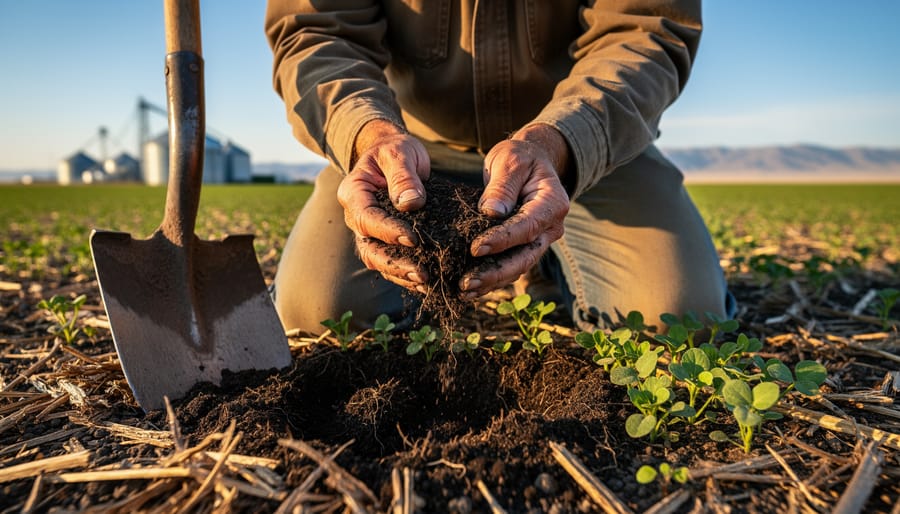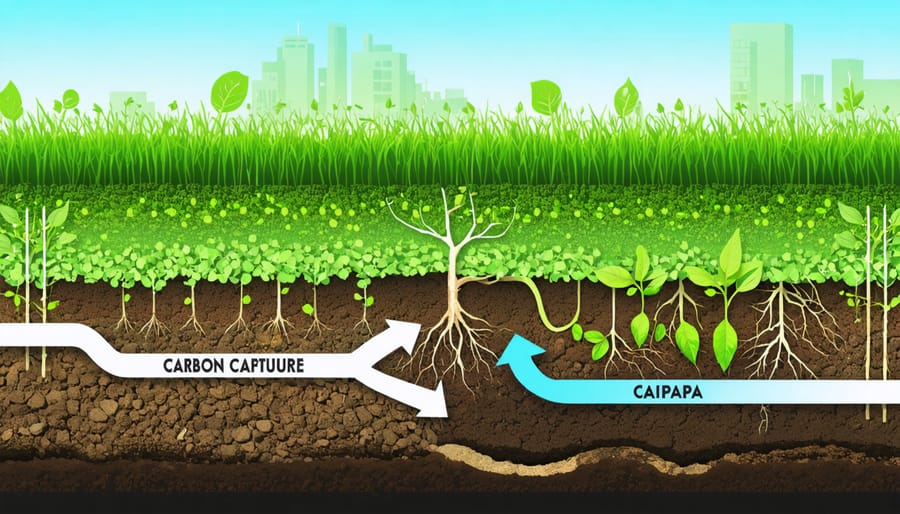
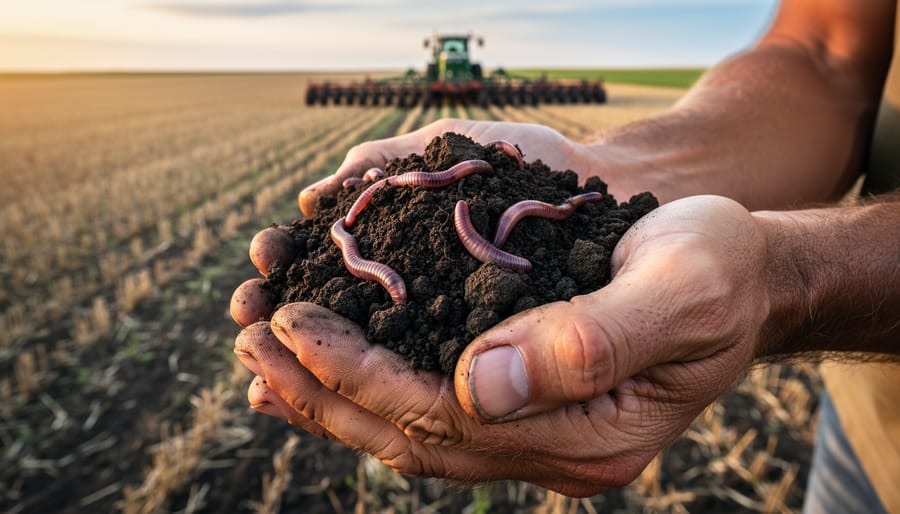
Calculate your baseline soil organic carbon levels before investing a single dollar in sequestration practices. Contact your local agricultural extension office or private soil testing lab to establish current carbon stocks—expect to pay $40-80 per composite sample for comprehensive analysis. This measurement determines your starting point and potential for carbon storage, which directly impacts your return on investment over the 5-10 year timeline needed to see meaningful financial returns.
Expect upfront costs between $50-200 per acre for implementing carbon sequestration practices like cover cropping, reduced tillage, or rotational grazing. Cover crop seed alone runs $30-60 per acre, while transitioning to no-till may require equipment modifications costing $15,000-50,000 depending on your operation size. However, Alberta farmers report reduced input costs of $20-40 per acre annually once practices are established, plus potential carbon credit revenues of $15-30 per tonne of CO2 equivalent sequestered.
Secure multiple revenue streams beyond carbon credits to justify the investment. Improved soil health typically increases water retention by 15-25%, reduces fertilizer needs by 10-20%, and boosts yields 5-15% within three years according to Ontario and Saskatchewan case studies. Factor these operational savings into your cost-benefit analysis alongside emerging carbon credit opportunities through programs like the Canadian Agricultural Partnership.
Budget for verification and documentation costs of $500-2,000 annually if selling carbon credits. Third-party verification, soil sampling, and reporting requirements add administrative burden but ensure you capture the full financial benefit of your sequestration efforts.

Understanding the Real Costs of Soil Carbon Sequestration
Initial Implementation Costs
Getting started with carbon sequestration practices requires some upfront investment, but understanding these costs helps you plan effectively. For Alberta farmers, the initial expenses typically fall into several key categories.
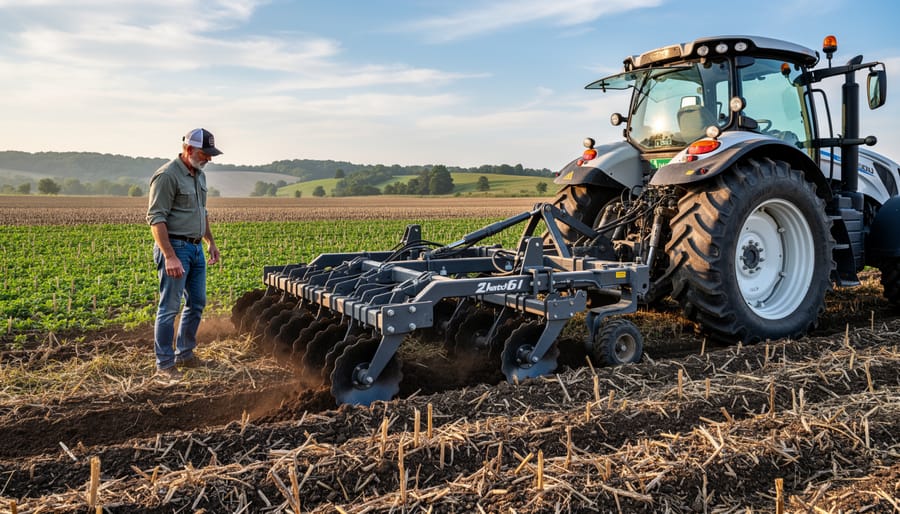
Equipment modifications or purchases represent a significant portion of startup costs. If you’re transitioning to no-till practices, you might need a specialized drill or planter, which can range from $30,000 to $80,000 depending on size and features. Many farmers find success purchasing used equipment or sharing with neighbours to reduce this expense.
Cover crop seed costs vary by species and seeding rate. For a typical Alberta operation, expect to pay between $25 and $75 per acre for cover crop seed. Winter cereals like fall rye tend to be more economical, while diverse mixes with legumes and brassicas cost more but offer greater soil benefits.
Baseline soil testing is essential for tracking your progress and verifying carbon credits. Comprehensive soil carbon testing costs approximately $40 to $60 per sample, and you’ll need multiple samples across your fields. Budget around $500 to $1,500 for initial testing depending on your farm size.
Professional consultation fees for developing a carbon management plan typically range from $1,000 to $3,000. These experts help you navigate program requirements and optimize practices for your specific operation, making this investment worthwhile for most farmers beginning their carbon sequestration journey.
Ongoing Operational Expenses
Once you’ve established carbon sequestration practices, you’ll need to budget for recurring operational expenses. For no-till practices, equipment maintenance becomes crucial—specialized no-till drills and planters require regular servicing, typically costing $2,000-$5,000 annually for mid-sized operations. You’ll also need residue management tools to handle increased surface organic matter.
Cover crop management represents another ongoing expense. Seed costs range from $50-$150 per hectare depending on species selection, with termination costs adding another $25-$75 per hectare. Many Alberta farmers report spending $75-$225 per hectare annually on cover crop programs, though these costs decrease as you develop efficient systems.
Compost and amendment applications, if incorporated into your strategy, typically cost $40-$120 per tonne including spreading. Most operations apply 5-10 tonnes per hectare every 2-3 years.
Monitoring expenses include soil testing every 1-2 years at approximately $50-$100 per sample, plus potential costs for third-party carbon verification if you’re participating in offset programs—usually $500-$2,000 annually depending on farm size. Consider these investments in documentation that support both agronomic decisions and potential carbon credit revenue.
Hidden Transition Costs
Beyond the equipment and input costs, transitioning to carbon sequestration practices involves several less visible expenses that deserve attention. During the first one to three years, you might experience temporary yield reductions of 5-15% as your soil biology adjusts and new systems establish themselves. Alberta farmer Tom Richardson noted in a recent interview that his canola yields dipped initially but rebounded within two seasons, ultimately surpassing his previous averages.
The learning curve requires real time investment—expect to dedicate 20-40 hours researching practices, attending workshops, and adjusting your management approach. This education phase is valuable but takes you away from other farm tasks. Short-term income fluctuations can create cash flow challenges, particularly if you’re transitioning significant acreage at once. Many successful adopters recommend starting with 10-20% of your land to minimize financial strain while you gain confidence.
Consider these transition costs as investments in your soil’s long-term productivity rather than losses. Planning for them upfront helps prevent discouragement during the adjustment period.
Measuring the Benefits: What Carbon Sequestration Returns to Your Operation
Direct Financial Benefits
Investing in carbon sequestration practices delivers measurable financial returns that improve your operation’s bottom line beyond environmental benefits. Understanding these direct gains helps you make informed decisions about implementation.
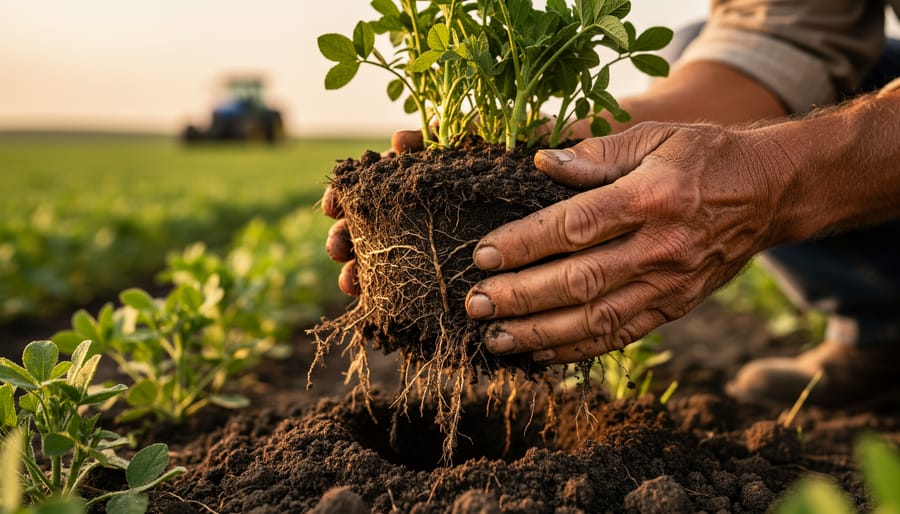
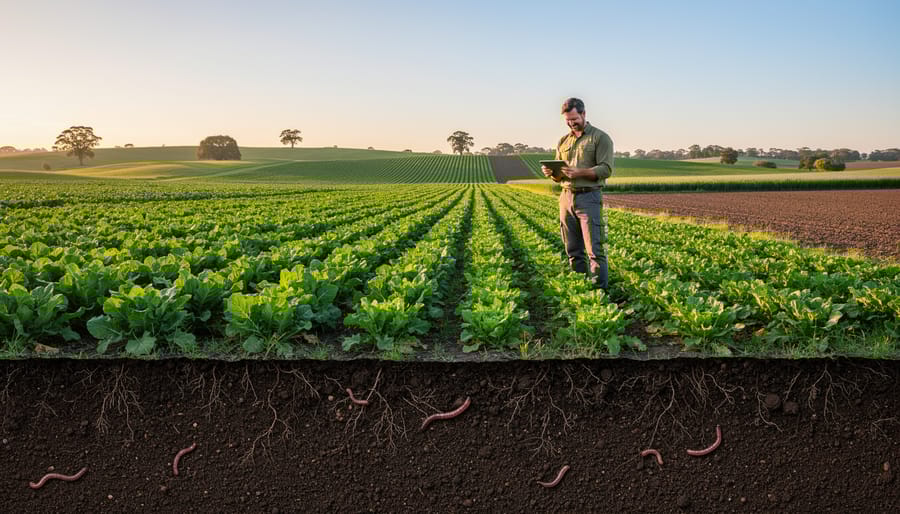
The most immediate benefit comes from reduced fertilizer requirements. As soil organic matter increases through carbon sequestration practices, your soil naturally holds and releases more nutrients. Many Alberta farmers report reducing nitrogen fertilizer applications by 15-25% within three to five years, saving $25-$40 per acre annually. That’s real money returned to your operation each growing season.
Improved water retention represents another significant cost reduction. Soils rich in organic carbon act like sponges, holding up to 20 times their weight in water. This means fewer irrigation passes during dry spells, translating to reduced fuel, equipment wear, and water costs. Prairie farmers typically see irrigation expenses drop by 10-20% as soil health improves.
Yield improvements develop gradually but consistently. While you shouldn’t expect dramatic first-year changes, producers implementing carbon-building practices report yield increases of 5-15% over five to seven years. For a 1,000-acre wheat operation, even a 5% increase at current prices adds $15,000-$20,000 annually.
The newest revenue stream comes from carbon credit revenue opportunities through programs like Alberta’s emission offset system. Farmers can earn $15-$30 per tonne of carbon sequestered, potentially generating $3,000-$8,000 annually on medium-sized operations, depending on practices and baseline conditions.
Long-Term Soil Health Improvements
Beyond carbon credits, investing in sequestration practices delivers substantial long-term value through soil health improvements that strengthen your bottom line. Enhanced soil structure from increased organic matter improves water infiltration by 15-20%, reducing irrigation costs and protecting crops during Alberta’s periodic droughts.
Farmers typically see improved nutrient cycling within 3-5 years, translating to fertilizer savings of $15-40 per hectare annually. Mark Henderson, a Red Deer County producer, reports reducing his nitrogen applications by 25% after five years of cover cropping while maintaining yields.
Greater soil organic matter also builds resilience against extreme weather—increasingly critical as Alberta experiences more frequent temperature swings and precipitation variability. Healthier soils maintain stable yields during challenging years when neighbours may see significant drops.
These improvements compound over time. While initial investments might seem substantial, the cumulative value of reduced input costs, improved drought tolerance, and consistent yields often exceeds carbon payment revenues. Many producers find that after 7-10 years, the operational savings alone justify their carbon sequestration investments, making carbon credits a bonus rather than the primary economic driver.
Risk Reduction and Operational Resilience
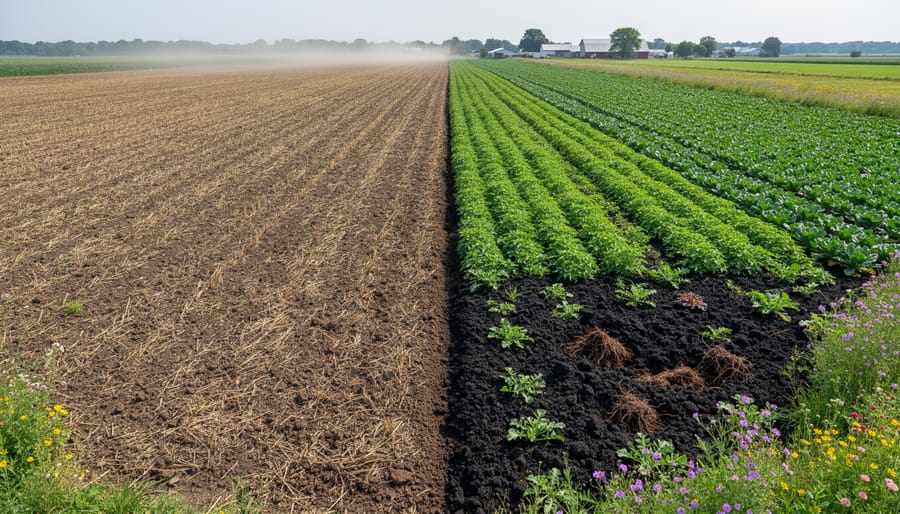
Beyond the direct financial returns, carbon sequestration practices function as risk management tools that protect your operation’s bottom line. When Alberta farmer James Kowalski implemented cover cropping and reduced tillage on his mixed grain operation near Lethbridge, he noticed immediate improvements in soil structure that paid dividends during the 2021 drought. His fields retained moisture significantly better than conventional neighbours, resulting in 15-20% higher yields when it mattered most.
Improved soil organic matter acts like a sponge, holding up to 20 times its weight in water. This moisture retention capability becomes invaluable during dry spells that are increasingly common across the Prairies. Better soil structure also means reduced erosion—one intense rainfall event can strip away topsoil worth hundreds of dollars per hectare in lost fertility and productivity.
Think of carbon sequestration practices as insurance against climate variability. While you’re building long-term soil health and potentially earning carbon credits, you’re simultaneously reducing your vulnerability to extreme weather events. The investment in cover crops or reduced tillage may seem modest, but the protection against crop failure or soil degradation during challenging years can preserve thousands of dollars in potential losses, making your operation more resilient and economically stable over time.
Breaking Down the Cost-Benefit Timeline
Year 1-3: The Investment Phase
The first three years are your foundation-building period, and it’s important to set realistic expectations. During this phase, you’ll see your costs outweigh immediate financial returns, but don’t let that discourage you. Think of it as laying groundwork for long-term profitability.
Your initial investments will include equipment purchases or modifications, potential seed costs for cover crops, and time spent learning new practices. Many Alberta farmers report spending between $50 to $150 per acre during this establishment phase, depending on the complexity of practices adopted.
However, positive indicators emerge earlier than you might expect. By year two, most producers notice improved soil structure and better water infiltration. Sarah Chen, an agronomist working with southern Alberta farms, notes that “farmers consistently report easier tillage and reduced fuel costs by the second growing season, even before carbon payments kick in.”
Soil organic matter typically increases by 0.1 to 0.3 percent during this period, measurable progress that validates your efforts. Some early adopters also access initial carbon credit payments or government incentive programs, which help offset establishment costs. While you’re investing more than you’re earning back, you’re building soil health capital that will pay dividends for decades to come.
Year 4-7: The Transition to Positive Returns
By years four through seven, most Alberta farmers implementing carbon sequestration practices start experiencing a financial turning point. The initial investment costs diminish while tangible benefits accumulate, creating positive cash flow for many operations.
Soil health improvements become measurable during this period. Organic matter typically increases by 0.5-1% in the top 15-20 centimeters, translating to improved water retention and reduced fertilizer needs. Many producers report cutting synthetic nitrogen applications by 15-25%, representing savings of $25-40 per acre annually.
Operational efficiencies emerge as equipment and practices become routine. Labour time for cover crop management often decreases by 30-40% compared to initial implementation years. Equipment operators gain proficiency, reducing fuel consumption and mechanical issues.
Carbon credit payments mature during this phase. With verified sequestration rates established, farmers can access premium pricing from buyers seeking multi-year contracts. Alberta producers participating in established programs report receiving $15-30 per tonne of CO2 equivalent, with some operations sequestering 1-2 tonnes per acre annually.
The combination of reduced input costs, carbon payments, and improved yields creates a compelling financial picture. Saskatchewan farmer interviews reveal break-even points occurring between years five and six for most diversified operations, with profitability accelerating thereafter as soil biology establishes itself.
Year 8+: Long-Term Financial Advantage
By year eight and beyond, your investment in carbon sequestration begins to truly pay dividends. Farmers across Alberta report that improved soil structure from years of enhanced organic matter leads to better water retention, meaning reduced irrigation costs and greater resilience during drought periods. Your soil biology is now well-established, working for you season after season with minimal additional input.
Many producers find their fertilizer requirements drop by 20-30% as soil health improves, translating to significant annual savings. Yields often stabilize at higher levels, and crop quality improvements can command premium prices. The reduced need for tillage saves fuel and equipment wear, while better soil structure means easier field operations.
Perhaps most valuable is the operational flexibility you’ve gained. Your land can better handle weather extremes, giving you confidence in planning and reducing risk. Some Alberta farmers participating in carbon credit programs report annual payments that essentially cover their property taxes. This is the phase where carbon sequestration shifts from an investment to a competitive advantage, positioning your operation for long-term profitability and sustainability.
Real Numbers from Alberta Farms: A Canadian Case Study
When Mike Peterson took over his family’s 800-hectare mixed grain and cattle operation near Red Deer in 2015, soil health was declining and input costs were climbing. After attending a workshop on regenerative agriculture, he decided to implement carbon sequestration practices. Here’s what the numbers looked like for his farm.
Mike started with three core practices: reduced tillage, cover cropping, and rotational grazing. In year one, he converted 200 hectares to no-till and seeded 100 hectares of cover crops after harvest. The initial investment included a no-till drill rental at $35 per hectare, cover crop seed at $75 per hectare, and about $2,500 for soil testing and consultation fees. His first-year costs totaled approximately $16,000.
By year three, Mike expanded these practices across 500 hectares. He purchased a used no-till seeder for $45,000, which he financed over five years. Cover crop seed costs dropped to $60 per hectare as he sourced locally and bought in bulk. He also integrated his cattle into a planned grazing system, which required fencing infrastructure costing $8,000 but reduced feed costs significantly.
The benefits became measurable around year four. Soil organic matter increased from 2.8 percent to 3.6 percent across treated fields. Water infiltration improved dramatically, helping during the 2021 drought when his yields outperformed neighbours by 15 percent. Fertilizer needs decreased by roughly 20 percent, saving about $12,000 annually. Fuel costs dropped 40 percent with reduced tillage, adding another $8,000 in annual savings.
Mike enrolled in a carbon credit program in year five, generating $18 per tonne of CO2 equivalent sequestered. His operation qualified for 1,200 carbon credits in the first verification period, bringing in $21,600. Combined with input savings, his annual net benefit reached approximately $40,000 by year six.
Over the ten-year period from 2015 to 2025, Mike’s total investment was roughly $95,000, including equipment, seeds, infrastructure, and program verification costs. His cumulative benefits exceeded $285,000 through input savings, improved yields during stress years, and carbon credit payments. The net benefit of $190,000 represents a strong return, but Mike emphasizes patience.
“The first three years were tight,” Mike admits. “You’re spending money and trusting the science. But once the soil biology rebounds, everything shifts. My land is more resilient, my costs are lower, and I’m building something sustainable for the next generation.”
Expert Perspective: Making Carbon Sequestration Economically Viable
We sat down with Dr. Jennifer Thornton, an agricultural economist specializing in soil health economics at the University of Alberta, to discuss how Canadian farmers can make carbon sequestration work financially for their operations.
“The biggest mistake I see is farmers viewing carbon sequestration as an all-or-nothing proposition,” Dr. Thornton explains. “Start with practices that align with your current operation and build from there. If you’re already using no-till, you’re already sequestering carbon. The question becomes: how can you optimize and monetize what you’re doing?”
Her first recommendation focuses on layering benefits. “Don’t just look at carbon credit revenue. Calculate your fuel savings from reduced tillage passes, fertilizer efficiency gains from healthier soil biology, and potential yield increases over time. When a farmer tells me they saved 15 litres of diesel per hectare by eliminating fall tillage, that’s real money today, not five years from now.”
When it comes to funding, Dr. Thornton emphasizes timing. “Programs like the Canadian Agricultural Partnership and provincial initiatives often have application windows. Mark your calendar now for the next intake period. Many farmers miss opportunities simply because they weren’t ready when applications opened.” She recommends connecting with your local agricultural fieldman or extension office to stay informed about funding availability.
For carbon credit programs, her advice is practical: “Read the contract thoroughly. Understand the monitoring requirements, the payment structure, and the commitment period. Some programs front-load payments, others spread them over years. Match that timeline to your cash flow needs.”
Dr. Thornton also suggests starting with a baseline soil test. “You can’t manage what you don’t measure. A comprehensive soil health assessment costs 75 to 150 dollars per sample but gives you the data to make informed decisions and track your progress. It’s the foundation for any carbon sequestration strategy.”
Her final insight? “Think of carbon sequestration as a long-term soil investment that happens to generate additional revenue streams. The healthier soil is the real asset.”
Accessing Support: Funding and Resources Available to Canadian Farmers
Alberta farmers exploring carbon sequestration practices have multiple funding streams available to offset implementation costs and accelerate returns on investment. Understanding these programs can significantly improve the financial viability of your transition to carbon-friendly farming.
At the federal level, Agriculture and Agri-Food Canada’s Agricultural Climate Solutions program offers substantial support through the On-Farm Climate Action Fund. This initiative provides cost-share funding up to 25-50% for projects implementing cover cropping, nitrogen management optimization, and rotational grazing systems. Applications are processed through provincial delivery agents, making access relatively straightforward for producers.
The Canadian Agricultural Partnership also provides funding through provincial agreements. In Alberta specifically, the Results Driven Agriculture Research program supports demonstration projects and research initiatives related to soil health and carbon storage. Many producers have successfully leveraged these funds to trial new practices on portions of their land before full-scale implementation.
Alberta’s provincial programs include the Growing Forward initiatives and specialized environmental stewardship grants administered through regional agricultural service boards. These local resources often provide both financial assistance and practical technical support tailored to regional soil types and climate conditions.
Beyond direct funding, numerous carbon market opportunities exist through aggregators and carbon credit protocols. Organizations like the Alberta Carbon Offset System facilitate connections between producers and buyers, often providing upfront technical assistance to ensure proper measurement and verification.
To access these resources, start by contacting your local agricultural fieldman or regional agrologist. They can guide you through application processes and connect you with demonstration farms already implementing similar practices. Many programs operate on annual intake cycles, so planning ahead ensures you don’t miss funding opportunities that could reduce your initial investment considerably.
While carbon sequestration involves upfront investment, the long-term financial picture strongly favors implementation for most Canadian agricultural operations. When you factor in increased yields, reduced input costs, government incentive programs, and emerging carbon credit revenue streams, the return on investment typically materializes within three to five years. The economic opportunity extends beyond individual farms—Alberta’s agricultural sector is positioned to play a leading role in Canada’s carbon market, potentially generating significant regional economic benefits.
If the initial costs feel overwhelming, start small. Launch a pilot project on a manageable portion of your land to test practices like cover cropping or reduced tillage. This approach lets you learn what works for your specific soil conditions without major financial commitment. Access the support available to you through provincial programs, agricultural extension services, and farming organizations that offer both technical guidance and financial assistance.
View soil carbon sequestration not as an added expense, but as a strategic investment in your operation’s resilience and profitability. Every hectare improved contributes to healthier soil, stronger yields, and a more stable climate for future generations. Together, Canadian farmers are building both economic opportunity and environmental stewardship. Your participation matters, and the time to begin is now.