
Image via Dreamstime.com
“Green cleaning” sometimes gets filed under the mental category of “nice idea, but will it actually remove whatever that mystery sticky spot is?” The truth is, you can clean effectively without turning your home into a chemical fog machine. Non-toxic products and simple DIY alternatives can absolutely work, as long as you use the right tool for the right job and don’t expect one magical spray to solve every cleaning scenario like a superhero in a reusable bottle.
This guide covers practical green cleaning: what to look for in non-toxic products, which DIY recipes are genuinely useful, where DIY should not be used, and how to build a simple routine that keeps your home clean without overbuying or overcomplicating. We’ll keep it realistic, because the most sustainable cleaning system is the one you’ll actually keep using.
And if you’re publishing this as content, there are plenty of stock photos you can use that feel authentic: refill bottles, simple cleaning caddies, people wiping counters with cloths, not staged “perfect home” scenes that make readers feel like they should apologize to their own baseboards.
What “Non-Toxic” Really Means in Cleaning (and What It Doesn’t)
First, a quick reality check: “non-toxic” is often used loosely in marketing. Many products labeled “natural” or “green” still contain ingredients that can irritate skin, eyes, lungs, or trigger sensitivities. The goal isn’t to find a product that’s harmless in every circumstance. The goal is to reduce unnecessary exposure to harsh chemicals, strong fragrances, and volatile compounds, especially for everyday cleaning.
A practical definition of green cleaning:
- Effective for the intended task
- Minimal unnecessary additives (especially strong fragrance)
- Lower risk of irritation when used as directed
- Safer storage and fewer extreme hazard warnings
- Reduced packaging waste when possible (concentrates/refills)
And one important note: “natural” does not automatically mean “safe.” Vinegar is natural and can still irritate. Essential oils are natural and can trigger asthma or be unsafe around pets in certain forms. Practical beats trendy.
The Green Cleaning Starter Kit (Simple, Effective, Not a Cabinet Full of Bottles)
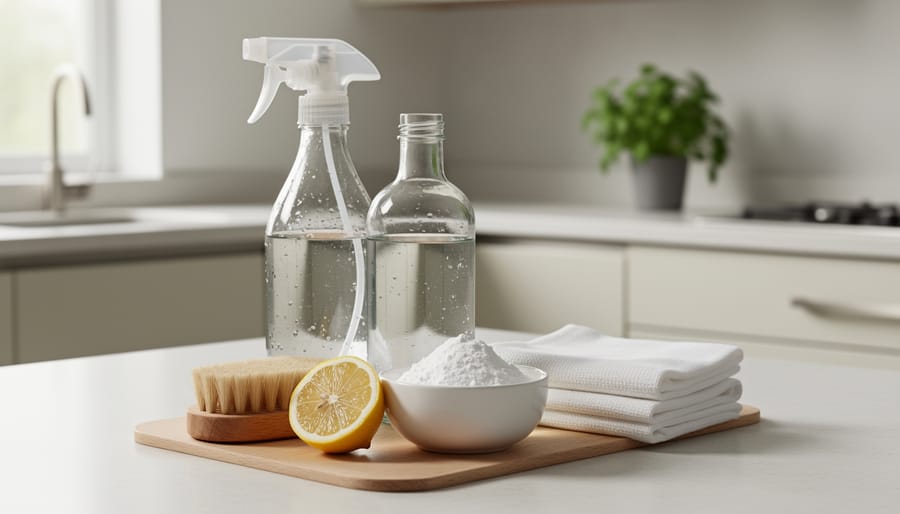
You don’t need fifteen specialty cleaners. A good green cleaning setup can be built around a small set of tools and a few versatile formulas.
Tools that matter more than fancy products:
- Microfiber cloths or cotton rags (old T-shirts work)
- A scrub brush and an old toothbrush for detail work
- A squeegee for glass and showers
- Baking soda for gentle abrasion
- A spray bottle or two
- A bucket or small basin
With these, you can handle most cleaning tasks using just a few core solutions.
Non-Toxic Product Types That Actually Perform
If you prefer store-bought products (or you just want convenience), here are categories that often work well without being harsh.
1) All-purpose cleaner (low fragrance, plant-based surfactants)
Look for products that clean with gentle surfactants and avoid strong synthetic fragrances. These are great for countertops, sealed surfaces, and everyday messes.
2) Dish soap (concentrated, fragrance-light)
A good dish soap can double as a mild degreaser in a pinch. Concentrates reduce packaging and last longer.
3) Bathroom cleaner (acid-based or oxygen-based, depending on task)
Green bathroom cleaners vary: some use citric acid for mineral deposits, others use hydrogen peroxide for grime. Choose based on your main problem (soap scum vs mildew).
4) Glass cleaner (alcohol-based or ammonia-free)
A simple streak-free cleaner that doesn’t rely on heavy perfume is usually enough.
5) Laundry detergent (fragrance-free or low fragrance)
Fragrance-free options are often easier on sensitive skin. Concentrated detergents also reduce waste.
6) Oxygen bleach (sodium percarbonate)
This is a powerhouse for whitening, stain removal, and mildew odors without chlorine bleach.
If you’re building content about these products, you can show clean, practical visuals using stock photos: refill stations, concentrated cleaners, simple cleaning caddies. The visuals can reinforce “easy and realistic,” which helps readers trust the advice.
DIY Alternatives That Work (With Realistic Expectations)
DIY cleaning can be excellent, especially when you keep it simple. Here are reliable DIY options that actually do something.
DIY All-Purpose Spray (for everyday surfaces)
Best for: sealed countertops, sealed wood, appliances, quick wipe-downs
Mix:
- 2 cups warm water
- 1–2 teaspoons mild dish soap
Optional: - A small splash of white vinegar (not for stone)
Use: spray lightly, wipe with cloth.
Why it works: dish soap surfactants lift grease and grime without harsh chemicals.
Vinegar Spray (for mineral deposits and glass, not everything)
Best for: hard water spots, faucets, shower doors, windows
Mix:
- 1 part white vinegar
- 1 part water
Use: spray, let sit briefly, wipe.
Important: Do not use vinegar on natural stone (granite, marble), because acid can etch.
Baking Soda Paste (gentle scrub)
Best for: sinks, tubs, stovetops, grime spots
Mix:
Baking soda + a little water to form paste
Use: apply, gently scrub, rinse.
Why it works: mild abrasion helps lift stuck-on grime without scratching most surfaces (test first).
Oxygen Bleach Soak (odor and stain remover)
Best for: whites, towels, mildew smells, grout cleaning
Use:
- Follow package directions for sodium percarbonate-based “oxygen bleach”
- Soak items or apply to grout with a paste
Why it works: it releases oxygen when dissolved, helping break down stains and odors.
DIY Toilet Bowl Cleaner (simple and effective)
Best for: routine cleaning and light stains
Method:
- Sprinkle baking soda in bowl
- Add vinegar (it will fizz)
- Scrub with toilet brush, let sit, flush
For heavy mineral buildup: citric acid-based cleaners often work better than vinegar alone.
The “Don’t DIY This” List (Avoid Frustration and Safety Issues)
DIY is great, but some cleaning tasks are better handled with purpose-made products and proper safety steps.
Be cautious with:
- Mold remediation beyond small surface spots (you may need professional assessment)
- Heavy grease buildup in ovens (DIY can work, but patience is required)
- Disinfecting in high-risk situations (see below)
Also: never mix cleaning chemicals casually. The classic dangerous combo is bleach with ammonia or acids, which can create toxic gases. Even green cleaning requires respect for chemistry.
Cleaning vs Disinfecting: Know the Difference
A big point of confusion: cleaning removes dirt and many germs physically. Disinfecting kills germs on surfaces. Most everyday home situations don’t require constant disinfecting, but there are times when it matters: illness in the home, raw meat contamination, high-risk individuals, or certain bathrooms.
If you need disinfection:
- Hydrogen peroxide solutions can be effective on many surfaces if used correctly with adequate contact time
- Alcohol solutions can work on certain surfaces
- Follow product instructions for contact time, because wiping immediately can reduce effectiveness
For routine cleaning, focus on removing grime. Dirt and oils make disinfection less effective anyway.
A Simple Green Cleaning Routine That Won’t Burn You Out
A sustainable cleaning routine isn’t about doing everything constantly. It’s about preventing buildup so you don’t end up rage-scrubbing at 11:30 PM before guests arrive.
Try this:
Daily (5 minutes):
- Wipe kitchen counters after cooking
- Quick sink rinse and wipe
- Spot-clean obvious spills
Weekly (30–60 minutes total):
- Bathroom wipe-down (sink, toilet, mirror)
- Vacuum/sweep main floors
- Change towels and launder cloths
Monthly:
- Clean shower more deeply (mineral deposits, grout attention)
- Wipe baseboards or high-touch surfaces
- Check fridge for spills and expired items
Seasonal:
- Deep clean neglected zones (behind appliances, windows, vents)
The goal is consistency, not punishment.
Greener Cleaning Is Also About Waste Reduction
A big part of green cleaning is reducing the endless stream of disposable products.
Easy waste-cutters:
- Switch paper towels to washable rags
- Use refillable spray bottles
- Choose concentrates or refills when restocking
- Buy larger sizes of products you reliably use
- Avoid single-use wipes (or reserve them for rare situations)
If you’re photographing or illustrating this content, stock photos of cloth baskets, refill bottles, and simple cleaning setups can make the lifestyle feel doable and not intimidating.
Common Green Cleaning Myths (Quick Reality Check)
Myth: Vinegar cleans everything
Reality: Vinegar is great for mineral deposits and glass, but it’s not a universal cleaner and can damage stone.
Myth: Essential oils make cleaning “safe”
Reality: Oils can add fragrance, but they don’t necessarily improve cleaning, and they can trigger sensitivities.
Myth: If it doesn’t smell “strong,” it’s not cleaning
Reality: Clean doesn’t need to smell like a chemical thunderstorm. Low-fragrance products can work extremely well.
Myth: DIY is always cheaper
Reality: Often yes, but not always. Some concentrates and refills are cost-effective and save time.
If You’re Creating Content: Visuals That Reinforce Trust
Green cleaning content can easily slip into either “preachy” or “too perfect.” The best visuals show normal life:
- A simple cleaning caddy with a couple bottles and cloths
- Someone wiping a counter with a rag
- A refill bottle being topped up
- Baking soda and vinegar used realistically
- A tidy, lived-in home, not a showroom
You can find stock photos that match this tone by searching for “refill cleaning bottle,” “microfiber cloth cleaning kitchen,” “eco cleaning routine home,” “non toxic cleaning supplies,” “minimal cleaning caddy.” The goal is to make readers think, “I can do that,” not “I need to renovate my entire personality.”
The Takeaway: Green Cleaning Works When It’s Practical
Non-toxic products and DIY alternatives can absolutely keep your home clean, as long as you match the method to the mess and keep your routine simple. Start with a basic toolkit, pick one all-purpose option, add baking soda and oxygen bleach for tougher jobs, and avoid the temptation to buy a dozen specialized products.
The real secret is systems: cloths instead of disposables, refills instead of new bottles, small daily habits instead of occasional cleaning marathons. When you build a routine that’s easy and effective, green cleaning stops being a project and becomes just… how you clean. Quietly better for your home, your budget, and the air you breathe while you’re doing it.