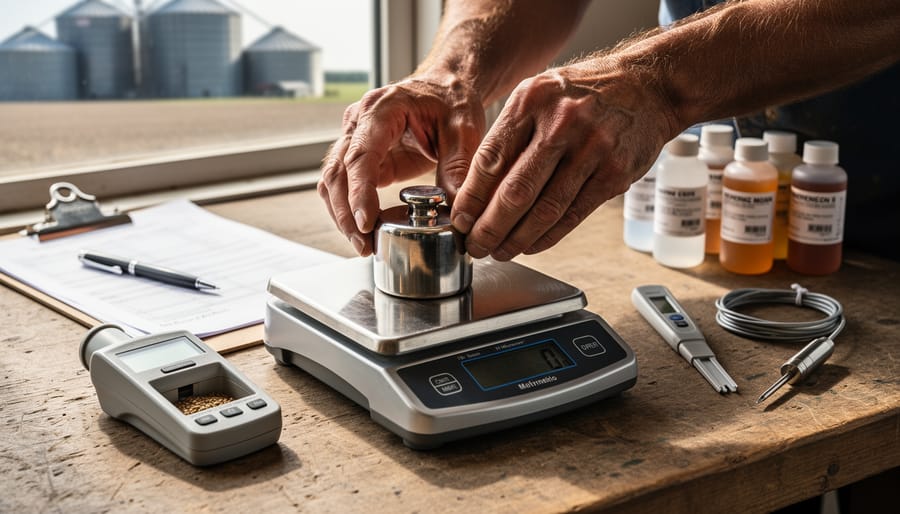
Understand that traceability metrology forms the backbone of your organic certification by establishing an unbroken chain of measurement accuracy from your farm records to national standards. When certifying bodies audit your operation, they verify that your measurements—whether for fertilizer inputs, harvest weights, or field dimensions—can be traced back to certified calibration standards maintained by the National Research Council of Canada.
Implement a calibration log system for all measurement equipment used in organic production, including scales, pH meters, and temperature sensors. Record calibration dates, reference standards used, and any deviations found. This documentation proves to certifiers that when you record 500 kilograms of organic wheat, that measurement connects directly to recognized measurement standards, not just an uncalibrated bathroom scale.
Establish measurement protocols that align with Canadian organic certification requirements by documenting your standard operating procedures for weighing, measuring field areas, and calculating input rates. Alberta organic farmers have lost certification not because they violated organic standards, but because their measurement records lacked sufficient detail to demonstrate traceability when auditors requested verification.
Verify that your equipment suppliers provide calibration certificates traceable to national or international standards, particularly for critical measurements like grain moisture content or fertilizer application rates. A moisture meter showing 14 percent grain moisture only holds value during certification audits if you can demonstrate that reading connects to a verified measurement standard through documented calibration.
Recognize that metrological traceability protects your organic premium by preventing measurement disputes with buyers, certifiers, and inspectors. When Alberta grain buyers question your certified organic tonnage, traceable measurements provide defensible documentation that supports both your certification status and your commercial transactions.
What Traceability Metrology Actually Means for Your Farm
The Measurement Standards Behind Your Certification
When you send soil samples to a lab or weigh your grain at delivery, those measurements connect to a chain of standards that ensures accuracy across Canada. This connection is what traceability metrology is all about, and it directly affects your organic certification.
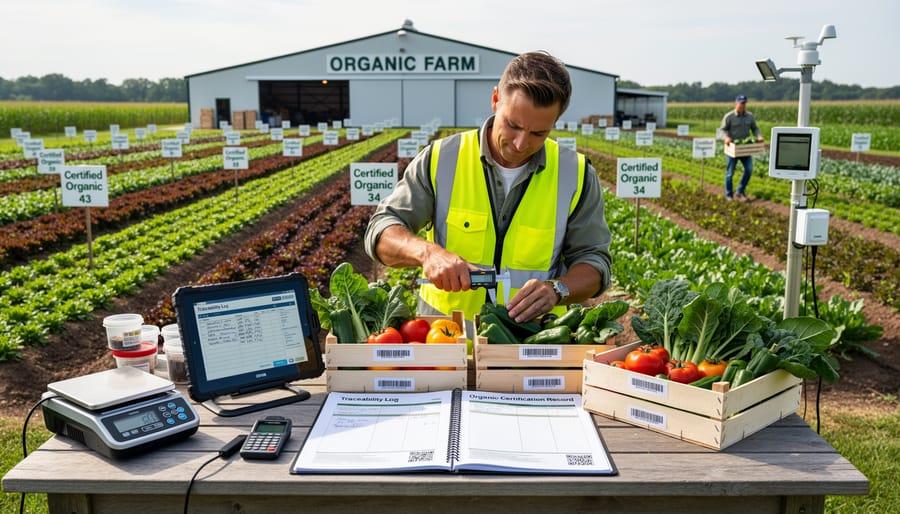
Think of it this way: your soil testing protocols must use equipment calibrated against national standards maintained by organizations like the National Research Council of Canada. When a lab reports your soil nitrogen levels at 45 parts per million, that number traces back through calibrated instruments to reference materials with known, verified values. This traceability gives certifying bodies confidence in your data.
For Alberta farmers, this matters practically. When you document fertilizer applications in kilograms per hectare or record yields in tonnes, those measurements need accuracy. A scale that drifts by even 2 percent could show you’re applying more inputs than allowed under organic standards, potentially affecting your certification status.
John Martinez, who farms near Red Deer, learned this firsthand when his certifier questioned discrepancies in his seeding rate documentation. His farm scale hadn’t been calibrated in three years. After professional calibration with traceable standards, his measurements aligned properly, and his certification continued without issue.
The principle is straightforward: certified measurements protect both your farm’s reputation and the integrity of organic standards. Most certifying bodies require calibration certificates for key measuring equipment, showing the documented chain back to recognized measurement standards.
Chain-of-Custody vs. Traceability: Understanding the Difference
While these terms often appear together in certification discussions, they serve different purposes in your farm’s documentation system. Chain-of-custody tracks the physical possession and handling of your products from field to consumer. It answers the question: who touched this product and when? For example, if you’re growing organic canola in Central Alberta, chain-of-custody documentation would record every transfer point—from harvest to storage, processing, and final sale.
Traceability metrology, however, focuses on the accuracy and verification of measurements throughout your production process. It ensures that when you record soil temperature, moisture levels, or product weights, those measurements are reliable and traceable to recognized standards.
Think of it this way: chain-of-custody is your product’s journey log, while traceability metrology validates the measurements recorded along that journey. Both work together during certification audits. Your certifier needs to see not only where your products went, but also confidence that the data supporting your organic claims—like fertilizer application rates measured in kilograms per hectare—came from properly calibrated equipment.
Saskatchewan organic grain farmer Tom Henderson explains: “Chain-of-custody showed our grain stayed segregated, but traceability metrology proved our scales were accurate when weighing inputs. Certifiers need both pieces.”
Critical Metrics Certifiers Track on Your Operation
Input Tracking: From Purchase to Application
Understanding exactly what inputs enter your operation and how they’re applied forms the foundation of organic certification compliance. Every amendment, organic fertilizer, and approved input must be accurately measured and documented from the moment it arrives on your farm until it’s applied to your fields.
Start by recording the weight or volume of each input at purchase. For bagged products, verify the stated weight matches what you receive. For bulk deliveries like compost or manure, work with suppliers who provide certified scale tickets. Keep these receipts with your records—they’re your first line of evidence during certification audits.
At the storage stage, track inventory levels using consistent units. Whether you measure in kilograms, litres, or tonnes, maintain the same measurements throughout your documentation. This consistency helps auditors verify that the amounts purchased align with the amounts you’ve recorded as applied.
When it comes to application, organic fertilizer tracking requires precise measurements of both rate and area. Calculate the total amount applied per field by multiplying your application rate by the treated area in hectares. For example, if you apply 500 kilograms per hectare across 10 hectares, document 5,000 kilograms total usage.
Many Alberta farmers find success using simple field maps that note application dates, product names, quantities, and weather conditions. Saskatchewan organic producer James Chen shares his approach: “I photograph my spreader settings and GPS tracks, then match them to my written records. This dual documentation has saved me during audits.”
Remember to retain all batch numbers and product labels, especially for purchased inputs, as these verify compliance with organic standards.
Harvest and Storage Documentation
Accurate documentation during harvest and storage forms the backbone of your traceability system. Start by recording precise yield measurements using calibrated scales—this means regular verification that your equipment measures accurately, typically to within 0.5% for commercial scales. Document the weight of each crop batch, harvest date, field location, and weather conditions at harvest time.
Batch tracking requires assigning unique identifiers to each harvest lot. Many Alberta grain farmers use a simple numbering system combining the harvest date and field number, like “2024-06-15-Field3A.” This identifier follows your product through cleaning, storage, and sale, creating a clear chain of custody that certification bodies require.
Storage documentation must include temperature and humidity readings taken with traceable instruments. For grain storage, aim for temperatures below 15°C and moisture content between 13-14% for wheat. Record these metrics at least weekly using calibrated thermometers and moisture meters. A Saskatchewan organic wheat producer we interviewed noted that consistent monitoring prevented a potential storage issue that could have compromised their entire harvest’s organic status.
Keep detailed records of storage facility cleaning, pest monitoring results, and any interventions taken. These records prove you’ve maintained organic integrity throughout the storage period, which certification auditors will review during inspection.
Environmental Monitoring Data
Maintaining your organic certification requires consistent documentation of environmental conditions on your farm. Think of this data as your farm’s health report card—certification bodies need to see that you’re meeting the standards that protect soil, water, and neighbouring properties.
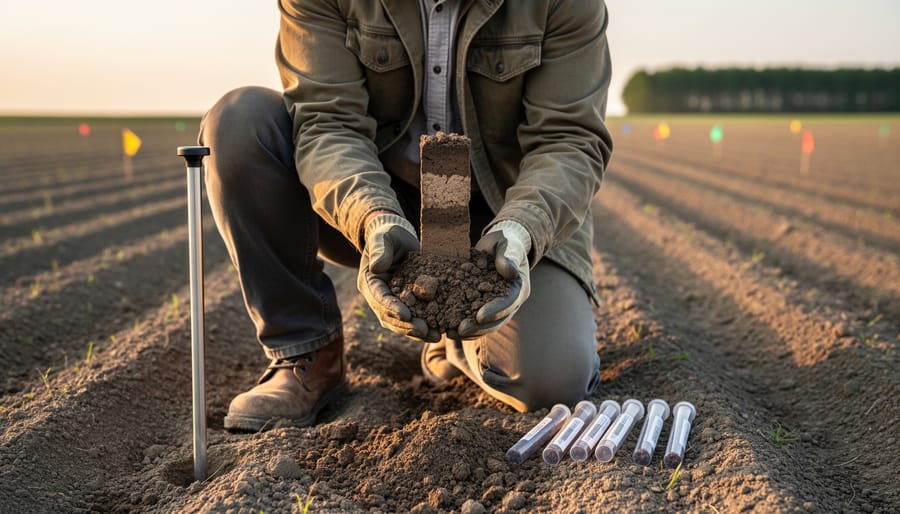
Start with soil health metrics. You’ll need to document organic matter percentages, pH levels, and nutrient content through regular testing. Most certification bodies require soil tests every three years at minimum, though many Alberta farmers test annually to stay ahead of any issues. Keep detailed records of when samples were taken, which fields were tested, and the laboratory results.
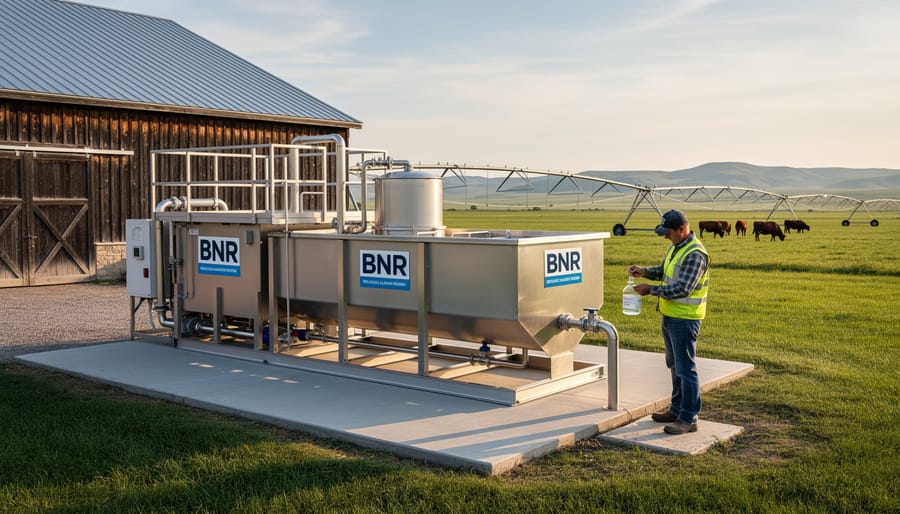
Water quality measurements are equally important, especially if you’re irrigating crops or raising livestock. Document your water source, testing frequency (typically annually), and results for contaminants, including nitrates, bacteria, and heavy metals. Sarah Chen, an organic certification specialist working with farms near Lethbridge, notes that “proactive water testing catches problems before they threaten your certification status.”
Buffer zone documentation protects you and your neighbours. Measure and map the distance between your organic fields and conventional farms, roads, or industrial areas. These buffer zones—typically 8 metres minimum—prevent contamination drift. Photograph your buffer zones seasonally and note any changes to adjacent land use. This documentation becomes invaluable during inspections and renewal processes.
How Alberta Farmers Are Building Bulletproof Traceability Systems
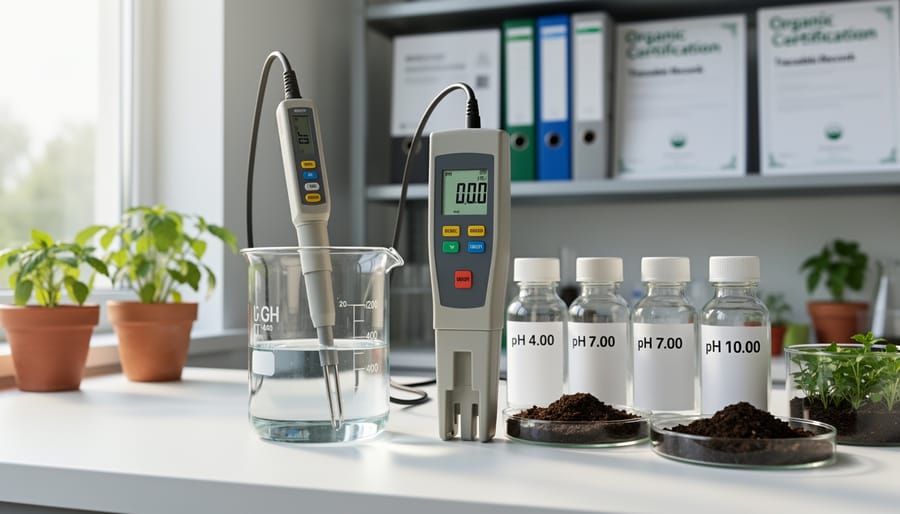
When Tyler and Jenna Morrison decided to pursue organic certification for their 160-hectare mixed vegetable operation near Lacombe, Alberta, they quickly discovered that good farming practices weren’t enough. They needed to prove those practices through rigorous measurement and documentation—what’s known in the industry as traceability metrology.
“We thought we had everything under control,” Tyler admits. “We kept records, we knew our soil was healthy, but when the certifier asked for precise measurements and verifiable data trails, we realized we had gaps everywhere.”
The Morrisons faced challenges familiar to many Alberta farmers. Their compost temperature readings were inconsistent, they had no calibration records for their spray equipment, and their seed storage documentation relied on handwritten notes that often went missing during busy seasons.
Working with an organic certification consultant, they implemented a systematic approach over 18 months. First, they invested in calibrated thermometers for compost monitoring, ensuring readings stayed within the required 55-65°C range for pathogen destruction. These thermometers came with certificates showing they met Canadian accuracy standards, and the Morrisons established a yearly calibration schedule.
Next came their spray equipment. They discovered their boom sprayer delivered 12 percent more volume than indicated, which could have jeopardized their certification if they’d applied restricted substances. After professional calibration, they now verify spray patterns and volumes every spring using water-sensitive paper and graduated cylinders.
The breakthrough came when they digitized their record-keeping system using a simple spreadsheet template provided by their certifier. Every seed lot now has a unique identifier linking back to supplier certificates. Their harvest logs include field numbers, dates, worker initials, and equipment used—creating an unbroken chain from seed to sale.
“The turning point was understanding that traceability isn’t about creating more work,” Jenna explains. “It’s about creating the right systems once, then maintaining them consistently.”
Their certification audit in 2023 passed without major non-conformances. More importantly, when a customer questioned whether their carrots were truly organic after finding a blemish, the Morrisons traced that specific batch back to Field 7, planted April 15, with certified seed lot OS-2847, harvested by their crew on September 3.
Today, the Morrisons mentor other Alberta farmers through local organic associations, sharing templates and walking neighbours through calibration basics. Their advice? Start small, focus on your highest-risk areas first, and remember that accurate measurements protect both your certification and your reputation.
Setting Up Your Measurement and Documentation System
Essential Equipment and Calibration Requirements
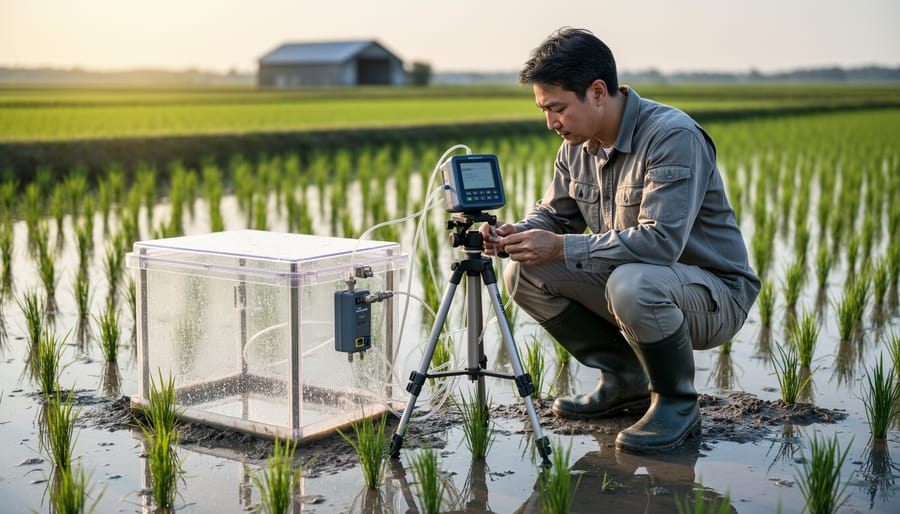
Maintaining accurate measurements starts with having the right tools and keeping them properly calibrated. For organic certification, you’ll need reliable equipment that meets traceability standards. Essential tools include certified scales for weighing harvests and inputs (accurate to at least 0.1 kg), calibrated pH meters for soil and water testing, and moisture meters for grain storage monitoring.
Regular calibration is your key to maintaining measurement accuracy. Here’s a practical schedule many Alberta farmers follow: calibrate scales every six months or after 500 uses, pH meters monthly during growing season, and moisture meters annually before harvest. Keep dated calibration certificates from accredited laboratories—certification bodies will request these during audits.
Sarah Thompson, an organic grain farmer near Lethbridge, learned this firsthand: “I thought my old scale was fine until calibration revealed it was off by 2%. That discrepancy could have cost me my certification.” She now maintains a simple calibration logbook, tracking dates and results for all equipment.
Consider purchasing equipment from suppliers who provide calibration services and documentation. This partnership simplifies compliance and ensures your measurements remain defensible. Remember, accurate equipment isn’t an expense—it’s your insurance for maintaining certification and protecting your farm’s organic integrity.
Documentation Templates That Work
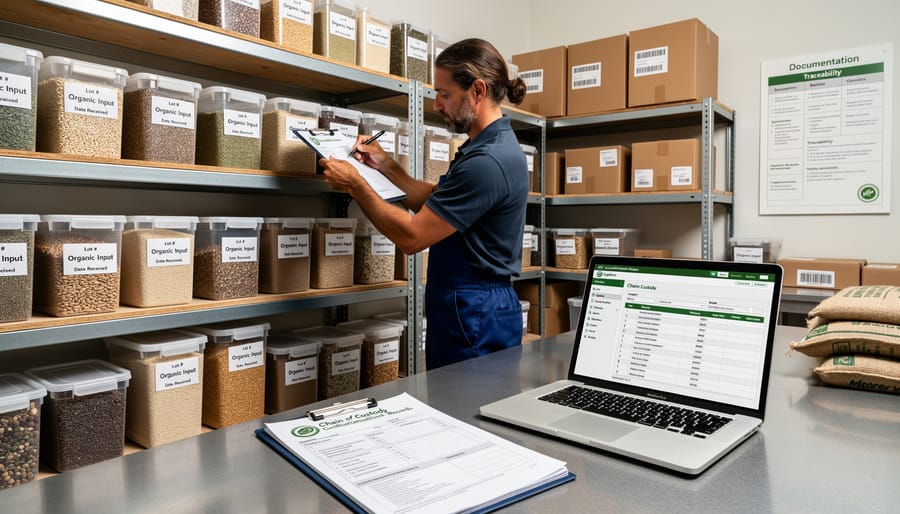
Creating a documentation system doesn’t need to overwhelm your daily farming operations. Start with a simple three-ring binder system or digital spreadsheet that tracks the essential metrics certification bodies require: calibration dates for equipment, measurement results, and any corrective actions taken.
Your templates should capture four key elements consistently. First, record who performed the measurement and when. Second, note which equipment was used and its current calibration status. Third, document the actual readings taken—whether soil pH, temperature logs, or weight measurements. Finally, include space for observations about unusual conditions that might affect accuracy.
Many Alberta organic farmers have found success using weekly checklists that take less than 15 minutes to complete. Sarah Chen, an organic vegetable grower near Red Deer, developed a one-page harvest log that simultaneously tracks weight measurements, equipment used, and storage conditions. “Having everything on one sheet means I’m not shuffling papers during harvest rush,” she explains.
Following record-keeping best practices means keeping templates consistent year-over-year, which simplifies both your workflow and certification audits. Store records for a minimum of five years, as most certification bodies require this retention period for traceability verification.
Digital Tools vs. Paper Records: What’s Right for Your Farm
Choosing between digital tools and paper records depends on your operation’s unique needs. For smaller farms under 40 hectares, paper-based systems can work well and satisfy most certification requirements. You’ll need organized binders with clear sections for input records, field observations, and harvest data—just ensure everything is dated and legible.
Digital solutions offer advantages as your operation grows. Simple spreadsheet programs like Excel provide searchable records and automatic calculations for application rates. Many Alberta farmers successfully use smartphone apps designed for organic tracking, which let you record information directly in the field and generate reports for certifiers.
Consider your certification body’s preferences when deciding. Some accept photographs of paper records, while others require specific digital formats. Mark Chen, an organic grain farmer near Lacombe, shared that his certifier appreciates cloud-based records because they’re timestamped and harder to alter retroactively.
Your comfort with technology matters too. Start with what you’ll actually use consistently—a well-maintained paper system beats abandoned software. You can always transition gradually, perhaps beginning with digital photos of paper records as a backup system while building your confidence with new tools.
Common Traceability Failures That Cost Farmers Their Certification
We sat down with Margaret Chen, an organic certification specialist who has worked with over 200 Canadian farms across Alberta and Saskatchewan, to discuss the traceability mistakes she sees most often during audits.
“The number one issue I encounter isn’t deliberate fraud—it’s incomplete measurement records,” Margaret explains. “A farmer might say they applied 15 kilograms of approved fertilizer per hectare, but they can’t show me the calibration certificate for their spreader or scales. Without documented proof that their measuring equipment is accurate, I can’t verify their claim.”
She shares a recent example from a grain operation near Red Deer. “The farmer had excellent intentions and meticulous notebooks. But when I asked to see calibration records for their grain moisture meter—a critical tool for storage decisions—they had none. That single gap delayed their certification by four months.”
The second most common failure involves batch tracking errors. “I’ve seen farmers lose certification because they couldn’t trace a single ingredient back to its certified source. One producer near Lethbridge mixed certified and non-certified canola in storage bins without proper segregation documentation. Even though the mix-up was unintentional, it compromised the entire harvest’s certified status.”
Margaret emphasizes that measurement timing matters too. “Farmers sometimes weigh inputs at the beginning of the season but don’t re-verify measurements mid-season when calibration drift occurs. Your scale might read accurately in March but be off by 3 percent in July due to wear or temperature changes.”
Her advice for prevention is straightforward: “Create a simple calendar that reminds you when each measuring tool needs calibration—typically annually for scales, quarterly for pH meters, and before each spray season for applicators. Keep calibration certificates in both physical and digital formats. And always document your measurements at the time you take them, not hours or days later.”
She adds one final tip: “Join a regional farming network or cooperative where members share calibration services. It reduces costs and builds accountability within your community.”
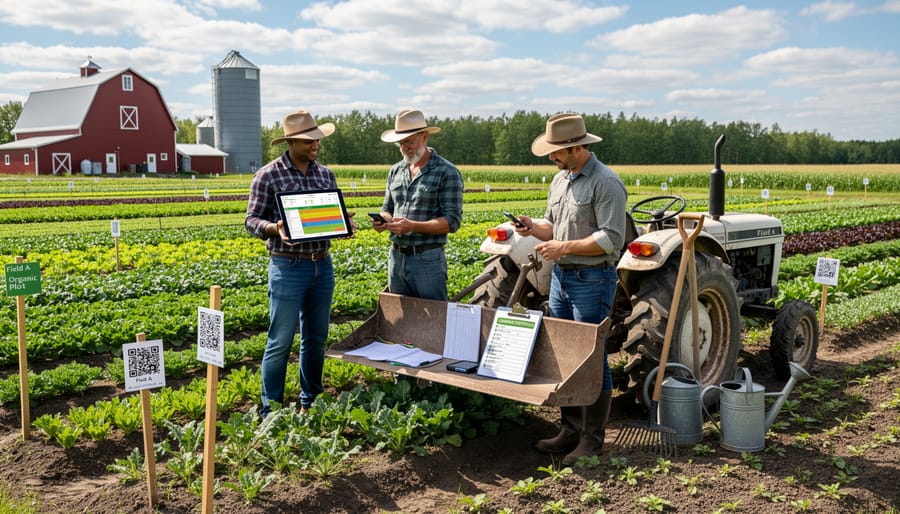
Maintaining Your Traceability System Year-Round
Building a reliable traceability metrology system isn’t a one-time achievement—it requires consistent attention throughout the year. Think of it like maintaining your farm equipment: regular care prevents breakdowns when you need everything working smoothly.
Start by scheduling quarterly reviews of your measurement systems. Every three months, check your scales, thermometers, and other instruments against known standards. Alberta producer Sarah Chen from Leduc County keeps a simple calendar reminder system. “I review my equipment at the start of each season,” she explains. “Spring planting, summer growing, fall harvest, and winter planning—each season gets its equipment check.” This approach ensures nothing slips through the cracks during busy periods.
Staff training deserves ongoing investment, not just one-time orientation. Even experienced team members benefit from annual refreshers on proper measurement techniques and documentation practices. Consider hosting short monthly training sessions covering different aspects of your traceability system. Many successful operations in the Peace Country region run fifteen-minute “measurement moments” during regular staff meetings.
Your certification audit preparation becomes significantly easier when you maintain systems year-round rather than scrambling before inspections. Create a monthly checklist that includes verifying calibration records, reviewing documentation completeness, and testing measurement procedures. This steady approach reduces stress and catches issues early.
Embrace continuous improvement by tracking where measurement errors occur. When you spot patterns—perhaps certain scales drift more than others or specific procedures cause confusion—address them promptly. Edmonton-area farmer Marcus Thompson reduced his documentation errors by forty percent simply by implementing weekly spot-checks of his recording system. Small, consistent improvements compound into significant reliability gains over time, keeping your operation certification-ready and running efficiently.
Building strong traceability metrology practices isn’t just about meeting certification requirements—it’s about protecting your investment and positioning your operation for long-term success in premium organic markets. When you can confidently demonstrate accurate measurements and comprehensive documentation, you’re not only satisfying inspectors but also building trust with buyers, retailers, and consumers who increasingly demand transparency.
The financial stakes are significant. Canadian organic farmers invest considerable time and resources into certification, and measurement inconsistencies can jeopardize that investment quickly. However, as we’ve seen from Alberta producers who’ve strengthened their systems, implementing better traceability practices often reveals efficiency gains and cost savings that offset the initial effort.
You don’t need to overhaul everything at once. Start with one improvement area that addresses your most pressing challenge. Maybe it’s calibrating your weighing equipment quarterly, implementing a simple digital record-keeping system, or creating clearer protocols for your harvest team. Small, consistent improvements build momentum and create lasting change.
Consider connecting with your certification body to discuss specific measurement requirements for your operation. Many certifying agencies offer pre-inspection consultations that can identify potential issues before they affect your certification status. Local agricultural associations and industry groups also provide valuable peer learning opportunities where you can share experiences and solutions with fellow producers.
The journey toward robust traceability metrology is ongoing, but each step strengthens your operation’s foundation. By prioritizing measurement accuracy and documentation quality today, you’re building a more resilient, market-ready farm for tomorrow.