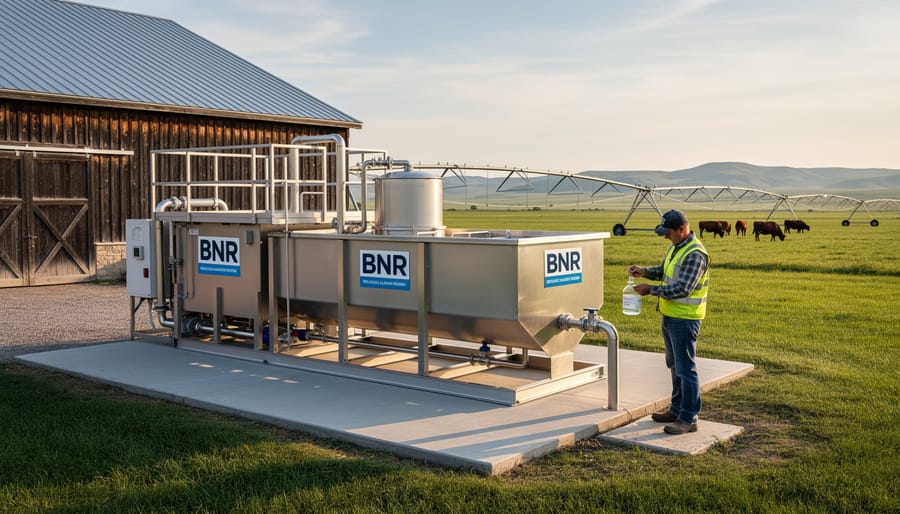
Biological Nutrient Removal (BNR) water treatment systems remove excess nitrogen and phosphorus from agricultural runoff before it reaches waterways, helping Canadian farmers meet increasingly stringent organic certification requirements and environmental standards. Install a multi-stage treatment system that combines aerobic and anoxic zones to naturally break down nutrients through beneficial bacteria, reducing nitrogen loads by 70-90% and phosphorus by 80-95%. Document your nutrient removal rates through regular water quality testing at intake and discharge points, maintaining detailed records that satisfy Monitoring, Reporting, and Verification (MRV) protocols required for carbon credit programs and environmental certifications. Partner with provincial agricultural extension services to access cost-share programs covering 25-40% of installation costs, with Alberta producers reporting payback periods of 3-5 years through reduced fertilizer losses and eligibility for premium certification programs.
The technology works particularly well for Alberta livestock operations and irrigation-intensive farms where nutrient management directly impacts both production costs and certification eligibility. Rather than viewing BNR as a regulatory burden, forward-thinking producers are leveraging these systems as competitive advantages, securing access to premium markets while protecting local water quality. Understanding how BNR integrates with your existing farm infrastructure and certification goals determines whether this investment strengthens your operation’s long-term sustainability and market position.
What BNR Water Treatment Actually Does on Your Farm
The Three-Stage Process Simplified
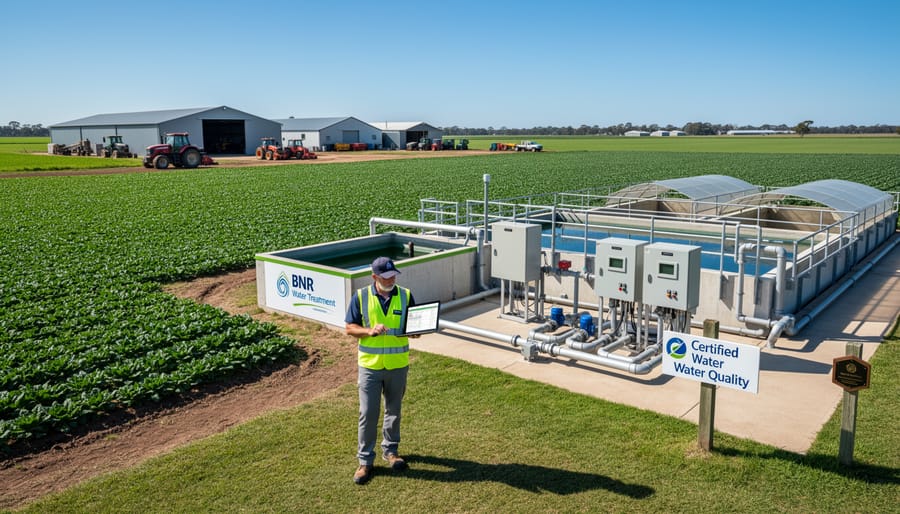
BNR water treatment works through three distinct stages that manage nutrients effectively. Understanding how each phase operates helps you see why this system delivers the results required for water quality certification.
The aerobic stage comes first, where oxygen-rich conditions allow beneficial bacteria to break down organic matter and convert ammonia into nitrates. Think of this as the “cleanup crew” that processes the initial pollutants in your wastewater. For Alberta livestock operations, this stage is particularly important for managing the high ammonia loads common in manure runoff.
Next, the anoxic stage operates without oxygen but isn’t completely oxygen-free. Here, specialized bacteria convert those nitrates from the first stage into nitrogen gas, which safely releases into the atmosphere. This is where the real magic happens for nutrient control—you’re literally removing nitrogen from the water rather than just changing its form. This process, called denitrification, is what makes BNR systems so effective for meeting certification standards.
Finally, the anaerobic stage creates completely oxygen-free conditions where phosphorus-accumulating bacteria take up excess phosphorus from the water. These bacteria store phosphorus in their cells, and when you remove the bacterial sludge, you’re physically removing phosphorus from your system.
Each stage builds on the previous one, creating a comprehensive treatment process. For your operation, this means meeting the strict nutrient reduction targets required by most agricultural certification programs without complex chemical treatments or constant monitoring.
Why It Matters for Nutrient Loss Prevention
For Canadian farmers managing livestock operations or agricultural runoff, controlling nutrient discharge isn’t just about environmental responsibility—it directly impacts your ability to maintain certifications and access premium markets. BNR water treatment systems specifically target nitrogen and phosphorus removal before water returns to local streams, rivers, and lakes.
When excess nutrients enter Alberta’s waterways, they trigger algal blooms that deplete oxygen levels and harm aquatic ecosystems. Provincial regulations increasingly require documentation of nutrient management practices, and many certification programs now mandate measurable reductions in phosphorus and nitrogen discharge.
By implementing BNR technology, you’re creating verifiable data that demonstrates compliance with environmental standards. This becomes particularly valuable during certification audits, where you’ll need to prove your operation meets specific discharge limits—often measured in milligrams per litre for total nitrogen and total phosphorus.
The technology also protects your community’s water quality. Many Alberta farming regions share watershed boundaries, meaning your nutrient management directly affects neighbouring operations and municipal water sources. BNR systems help you become a responsible watershed partner while meeting the documentation requirements that certification bodies increasingly expect from modern agricultural operations.
MRV Requirements: What You Need to Measure and Report
Key Water Quality Metrics for Certification
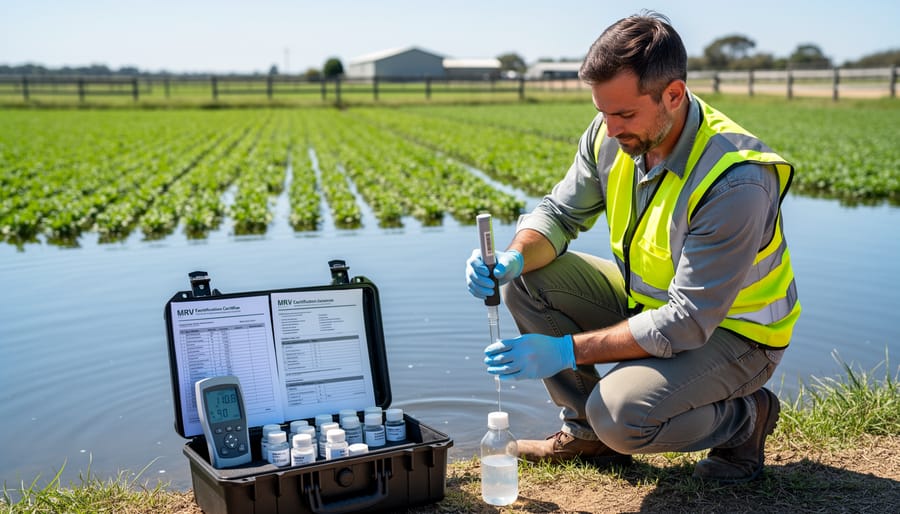
Understanding the specific water quality parameters you’ll need to monitor is essential for meeting certification requirements with your BNR system. These metrics directly demonstrate your operation’s environmental performance and form the foundation of most measurement, reporting, and verification protocols.
Nitrate levels measure the concentration of nitrogen compounds in your effluent water. Canadian regulations typically require farms to maintain nitrate-nitrogen levels below 10 mg/L in treated water, though Alberta’s agricultural operations often aim for 5-8 mg/L to ensure consistent compliance. Your BNR system specifically targets nitrate removal through denitrification processes.
Phosphorus concentration is another critical indicator, as excess phosphorus contributes to harmful algal blooms in lakes and rivers. Most provincial guidelines require total phosphorus levels below 1.0 mg/L for agricultural discharge, with some certification programs setting stricter thresholds of 0.5 mg/L to achieve premium environmental standards.
Total suspended solids (TSS) measure particulate matter in your water. Effective BNR systems should reduce TSS to below 25 mg/L, demonstrating that solid waste separation is working properly alongside nutrient removal.
Biological oxygen demand (BOD) indicates the amount of oxygen required by microorganisms to break down organic matter. Canadian standards typically require BOD levels below 25 mg/L for treated agricultural wastewater, though certification programs may ask for readings closer to 15 mg/L.
Regular testing of these parameters provides the documented evidence needed for certification while helping you optimize your system’s performance throughout the year.
Documentation That Auditors Actually Want to See
Strong documentation transforms your BNR system from a water treatment investment into certification gold. Certification auditors want to see consistent, reliable records that prove your nutrient management claims.
Start with weekly effluent sampling during peak season, reducing to biweekly in slower months. Record total nitrogen and phosphorus levels, flow rates, and any system adjustments you make. Keep these logs accessible—digital spreadsheets work well, but even a dedicated notebook satisfies most auditors.
Temperature matters too. Track your bioreactor temperature alongside ambient conditions, especially during Alberta winters when systems need extra monitoring. Document any maintenance, unusual weather events, or operational changes that might affect treatment efficiency.
Trevor McDonald, an organic certification specialist working across Alberta, recommends creating monthly summary reports. “Auditors appreciate when farmers compile their raw data into clear monthly snapshots showing compliance trends. It demonstrates you understand your system, not just that you’re collecting numbers.”
Photograph your sampling process and storage methods annually. This visual documentation helps auditors verify your protocols without farm visits, streamlining the certification renewal process considerably.
BNR Systems That Work in Canadian Climates
Cold-Weather Considerations for Alberta Operations
Alberta’s harsh winters present unique challenges for maintaining biological nitrogen removal systems, but with proper planning, your BNR treatment can operate effectively year-round. The key is protecting the biological processes that depend on consistent temperatures, typically between 10°C and 30°C for optimal bacterial activity.
Insulation becomes your first line of defence. Treatment tanks benefit from insulated covers or enclosures, while underground piping should sit below the frost line (approximately 2.4 metres in most Alberta locations). Many operators wrap exposed components with heat trace cables and foam insulation rated for prairie conditions.
Heated systems may prove necessary for above-ground installations. Options range from in-tank heating elements to greenhouse-style enclosures that capture solar warmth during daylight hours. Dan Richert, an agricultural engineer working with southern Alberta operations, notes that “maintaining even 15°C in your treatment system during January preserves enough bacterial activity to handle typical winter flows.”
Seasonal adjustments help compensate for reduced biological activity. This might include extending retention times by 25-30 percent during cold months or temporarily reducing loading rates. Regular monitoring of dissolved oxygen and ammonia levels helps you catch performance drops early, ensuring your system continues meeting certification requirements even when temperatures plummet.
Scale Options: From Small Dairies to Large Feedlots
BNR systems are surprisingly flexible and can be tailored to operations of virtually any size. For small dairies handling 50-100 head, compact modular systems starting around $15,000-$30,000 can effectively treat wastewater from milking parlours. These units typically require 10-20 square metres of space and can be integrated into existing infrastructure with minimal disruption.
Mid-sized operations with 200-500 animals might invest $50,000-$100,000 in more robust systems that handle higher volumes and provide better automated monitoring capabilities. These installations generally need 30-50 square metres and often include enhanced data collection features valuable for certification programs.
Large feedlots managing 1,000+ cattle require custom-designed systems ranging from $150,000 to several hundred thousand dollars, depending on flow rates and treatment goals. While the upfront investment is substantial, these operations benefit from economies of scale and significant nutrient recovery potential.
When selecting system size, consider peak flow periods like spring runoff and seasonal production increases. Alberta producers working with agricultural engineers have found that slightly oversizing capacity by 15-20 percent provides valuable flexibility and helps maintain consistent treatment performance during variable conditions. Provincial programs may offset initial costs through environmental stewardship grants.
Real Results: An Alberta Dairy’s Water Quality Transformation
When Rocky View Dairy near Airdrie, Alberta implemented BNR water treatment in 2021, farm manager David Chen knew the operation needed a sustainable solution for managing wastewater from their 450-cow milking operation. What he didn’t anticipate was just how transformative the results would be.
“We were facing increased pressure to meet environmental standards, and our traditional lagoon system wasn’t cutting it anymore,” Chen explains. “The investment seemed substantial at first, but the water quality improvements were almost immediate.”
Before implementing BNR treatment, the dairy’s effluent showed total nitrogen levels averaging 85 mg/L and phosphorus concentrations around 12 mg/L. These numbers made it challenging to meet provincial discharge standards and limited their reuse options. Within six months of installing their BNR system, total nitrogen dropped to 15 mg/L and phosphorus to under 2 mg/L, representing reductions of 82 percent and 83 percent respectively.
The improvement in biochemical oxygen demand was equally impressive, falling from 420 mg/L to just 35 mg/L. This meant the treated water could be safely recycled for barn washing and irrigation without environmental concerns.
“The monitoring requirements seemed daunting initially, but the automated sampling system makes data collection straightforward,” Chen notes. “We submit quarterly reports to our certification body, and the consistent results have made that process routine rather than stressful.”
These documented improvements helped Rocky View Dairy achieve both their provincial environmental certification and a voluntary sustainability certification that opened doors to premium markets. The certification now appears on their product packaging, distinguishing them from competitors.
The financial picture proved equally compelling. While the initial system cost $185,000, reduced water purchasing expenses, elimination of trucking waste offsite, and access to premium pricing channels generated annual savings and additional revenue totaling approximately $52,000. At this rate, Chen projects full payback within four years.
“Beyond the numbers, there’s real peace of mind knowing we’re managing our environmental footprint responsibly,” Chen adds. “When inspectors visit or buyers tour the facility, we’re confident showing them our treatment system and monitoring data. That confidence translates directly into stronger relationships and business opportunities.”
Making BNR Work With Your Existing Infrastructure
Working With Existing Lagoon Systems
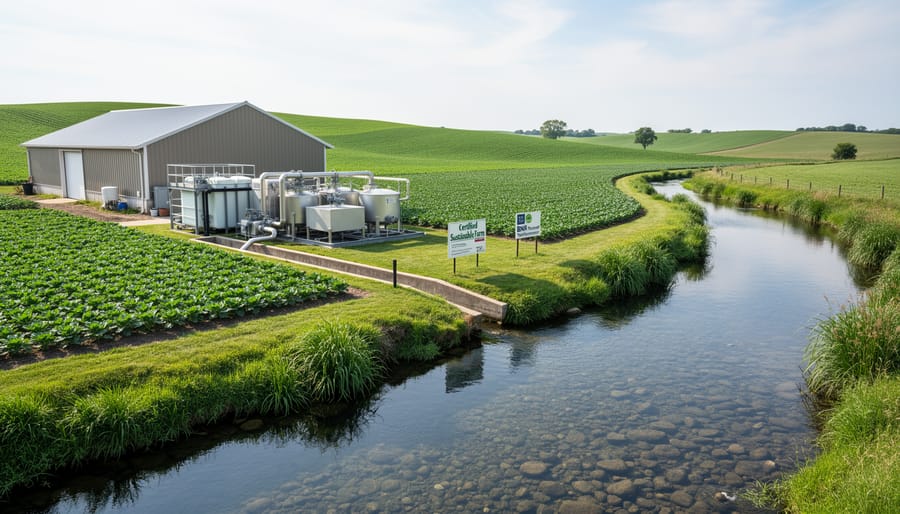
If you already operate a lagoon system, you don’t necessarily need to start from scratch to achieve BNR capabilities. Many Alberta producers have successfully integrated BNR processes into their existing infrastructure through strategic retrofits.
The most straightforward approach involves creating distinct zones within your current lagoon setup. By installing simple baffles or dividers, you can establish separate areas for aerobic and anoxic treatment stages. Adding aeration equipment to specific zones introduces the oxygen needed for nitrification, while other areas remain unaerated to support denitrification.
Some producers find success with a phased approach, starting with basic aeration upgrades during slower operational periods. This allows you to test the system’s performance and make adjustments before committing to larger modifications.
Consider consulting with agricultural engineers who understand both BNR technology and Canadian farming operations. They can assess your current system’s capacity and recommend cost-effective modifications that align with your certification goals.
For farms with limited capital budgets, supplementing your lagoon with a small constructed wetland downstream can provide additional nitrogen removal. This hybrid approach often satisfies certification requirements while keeping retrofit costs manageable. The key is matching the solution to your farm’s specific water quality targets and monitoring requirements.
Maintenance Realities: Time and Cost Commitments
Let’s be upfront: BNR systems require consistent attention to perform reliably. You’ll need to commit roughly 2-4 hours weekly for routine monitoring and maintenance tasks. This includes checking dissolved oxygen levels, monitoring temperature fluctuations (particularly critical during Alberta’s temperature swings), and ensuring proper aeration function.
Microbial monitoring is essential but manageable. Plan for monthly testing of nitrate and phosphate levels to confirm your biological processes are functioning optimally. Laboratory costs typically range from $150-$300 per test in Canada, though some certification programs offer subsidized testing.
Equipment checks should become part of your regular farm routine. Inspect air diffusers for clogging, verify pump operations, and monitor sludge accumulation. Most producers find these tasks straightforward once established.
Common troubleshooting issues include foam buildup, which often indicates excessive organic loading, and temperature-related slowdowns during winter months. Manitoba producer Sarah Chen shares: “We learned to anticipate seasonal adjustments. Winter requires closer monitoring, but it becomes second nature after your first year.”
Budget approximately $1,500-$3,000 annually for ongoing maintenance, including replacement parts, testing, and occasional professional consultations. While this represents a real commitment, producers consistently report that proper maintenance directly correlates with successful certification outcomes and reduced regulatory concerns.
Expert Perspective: Water Quality and Certification Success
We spoke with Dr. Jennifer MacLeod, a water quality specialist with over 15 years of experience auditing agricultural operations for environmental certification across Western Canada, to understand how BNR treatment systems impact certification outcomes.
“One of the most common deficiencies I see during certification audits is inadequate nitrogen and phosphorus management in water discharge,” Dr. MacLeod explains. “Producers often meet baseline requirements for nutrient application, but they struggle with demonstrating effective removal from runoff and drainage water. This is where BNR systems make a real difference.”
According to Dr. MacLeod, certification bodies are increasingly focused on verifiable outcomes rather than just management practices. “Having a BNR system in place provides auditors with concrete data points. You’re not just saying you’re managing nutrients—you’re proving it with influent and effluent testing results. That documentation is invaluable during both initial certification and renewal processes.”
She notes that proper measurement and verification protocols are essential. “I recommend producers establish a baseline testing schedule before installing BNR systems, then maintain consistent monthly monitoring afterward. This creates a clear narrative of improvement that certification auditors appreciate.”
For Alberta producers specifically, Dr. MacLeod emphasizes the importance of understanding your watershed’s sensitivity. “Operations near protected water bodies or municipal water sources face stricter scrutiny. A well-maintained BNR system can be the difference between certification approval and a requirement for additional costly interventions.”
She also addresses a common concern: “Producers worry that implementing BNR treatment opens them up to more stringent requirements. Actually, the opposite is true. Proactive treatment demonstrates environmental stewardship and often leads to smoother audits because you’re already addressing potential issues before they’re flagged.”
Her final advice is practical: “Keep detailed maintenance logs, calibration records, and testing results organized in one location. When audit time comes, this preparation saves hours and demonstrates your commitment to water quality management.”
Getting Started: Your BNR Implementation Roadmap
Finding the Right Partners in Alberta
Finding the right technical partners is essential for successful BNR water treatment implementation on your Alberta farm. Start by contacting professional engineering firms with experience in agricultural water systems and nutrient management. The Alberta Association of Architects Engineers and Technologists (APEGA) maintains a directory of qualified professionals who understand both the technology and provincial regulations.
When selecting installers, look for contractors familiar with agricultural applications rather than just municipal systems. Ask potential partners about their experience with farms similar to yours in size and livestock type. Request references from other Alberta operations they’ve worked with.
For water quality testing, choose laboratories accredited by the Canadian Association for Laboratory Accreditation (CALA) that specialize in agricultural parameters. These labs understand the specific nutrient ranges and monitoring frequencies required for certification programs.
Your local agricultural fieldman or watershed stewardship group can often recommend trusted professionals who’ve worked successfully in your region. Many Alberta farmers have found that working with partners who understand both the technical requirements and the practical realities of farm operations leads to better long-term results and smoother certification processes.
BNR water treatment represents more than just another expense on your farm balance sheet—it’s an investment in both environmental responsibility and long-term business sustainability. For Canadian farmers, particularly in Alberta where water resources face increasing pressure, implementing biological nutrient removal technology protects the rivers, lakes, and aquifers that entire communities depend on. When your operation reduces nitrogen and phosphorus loads entering shared waterways, you’re contributing to healthier ecosystems that benefit everyone downstream.
From a practical standpoint, BNR systems provide the documentation and results needed for maintaining certifications that open premium markets and strengthen your competitive position. The monitoring data these systems generate becomes valuable proof of your commitment to sustainable practices, something increasingly important to buyers and certification bodies alike.
The first step doesn’t require major investment. Start by assessing your current water quality status through baseline testing. Contact your provincial agricultural extension office or local watershed management group to understand what nutrient levels you’re working with. Many Alberta farmers have discovered that their existing practices needed only minor adjustments rather than complete overhauls.
Remember, transitioning to BNR water treatment isn’t something you need to tackle alone. Regional agricultural networks, equipment suppliers, and fellow farmers who’ve implemented these systems can provide guidance based on real experience. Your farm’s future viability and the health of shared water resources both depend on taking this crucial step toward responsible nutrient management.