The farm-to-table movement promises fresh, local food and stronger rural economies, but too often it serves only those who can afford $18 heritage tomatoes at urban farmers’ markets. Across Alberta and the Canadian Prairies, a growing number of farmers and community advocates are rewriting this narrative, proving that local food systems can be both economically viable and genuinely accessible to all income levels.
Transform your direct-sales approach by implementing tiered pricing structures that allow higher-income customers to subsidize reduced prices for lower-income families. Prairie Sky Co-operative in southern Alberta successfully uses a “pay-what-you-can” sliding scale for 30% of their CSA shares, with the remaining members covering the difference at a modest 15% premium. This model maintains farm profitability while expanding access to 47 families who previously couldn’t participate.
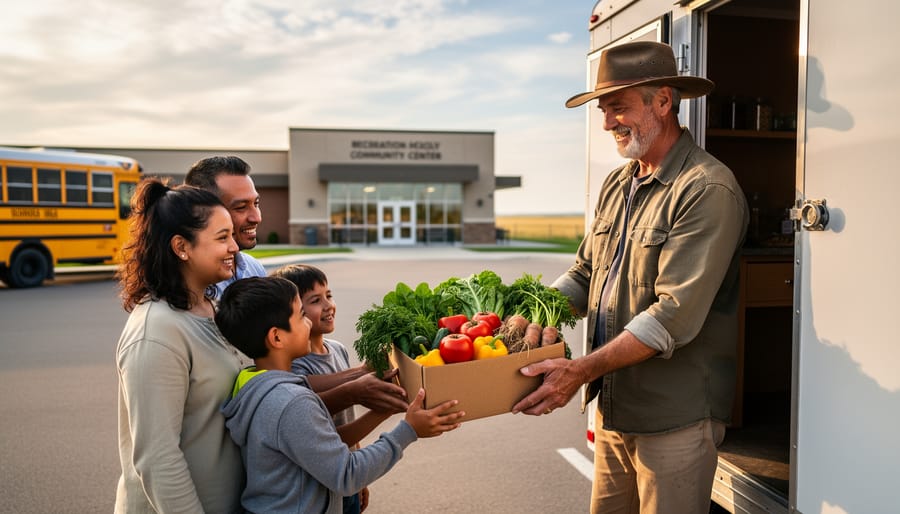
Partner with existing community infrastructure rather than creating parallel distribution systems. Edmonton’s Fresh Routes program demonstrates this by integrating farm deliveries into community centers, libraries, and recreation facilities in lower-income neighborhoods, eliminating the transportation barrier that excludes many potential customers. The program supports 23 local farms while serving over 800 households at prices competitive with conventional grocery stores.
Leverage institutional purchasing contracts to stabilize your income while increasing community access. Red Deer’s public school division now sources 40% of cafeteria produce from regional farms through aggregated purchasing, providing farmers with predictable revenue streams and students with affordable, fresh meals. The contract guarantees minimum purchase volumes, allowing participating farms to plan production and invest in infrastructure.
The path forward requires intentional design. When farmers, community organizations, and institutional buyers collaborate strategically, local food systems can deliver both fair farm income and genuine food access—creating agricultural resilience that serves entire communities, not just the privileged few.
The Farm-to-Table Affordability Gap: What’s Really Happening
Breaking Down the Cost Barriers
Let’s look at the real numbers behind farm-to-table pricing. When you compare production and distribution costs between direct-to-consumer and conventional supply chains, the picture becomes clearer—and might surprise you.
A 2023 study of Alberta vegetable producers showed that farmers selling through conventional distributors typically receive just 18-22% of the final retail price. In contrast, farmers’ market vendors and CSA operators retain 75-85% of what customers pay. While this sounds promising, the reality includes additional labour costs for packaging, marketing, and direct sales that conventional growers don’t shoulder.
Here’s a practical breakdown from Twin Valley Farm near Red Deer: Their tomatoes cost $2.80 per kilogram to produce (including labour, inputs, and overhead). Selling wholesale to distributors, they receive $3.30/kg. That same product appears in grocery stores at $8.80/kg, with distributors, warehouses, and retailers each adding their markup.
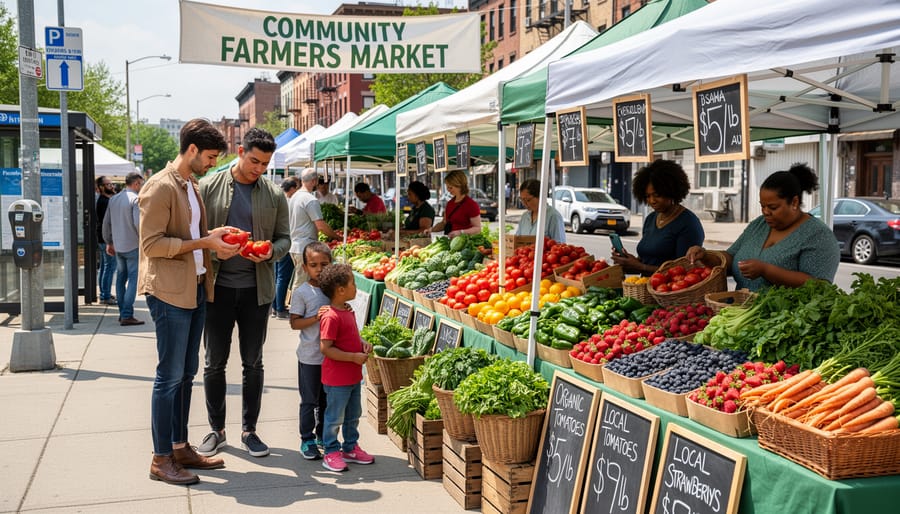
At the farmers’ market, Twin Valley sells those tomatoes for $6.60/kg—still earning more profit than wholesale while offering customers savings of $2.20/kg compared to supermarket prices. The difference? Eliminating three intermediary steps.
Transportation costs also shift. Conventional chains might move produce 800-1,200 kilometres from British Columbia or California to Alberta stores, adding fuel, refrigeration, and handling expenses. Local farms typically travel 50-150 kilometres to reach customers directly.
The takeaway for producers considering farm-to-table? Your margins can improve even while offering competitive pricing. Understanding these cost structures helps you price fairly while maintaining farm viability—creating genuine value for both sides of the transaction.
Who Gets Left Behind
Despite growing interest in farm-to-table dining, significant barriers prevent many Canadians from participating in local food networks. Understanding who faces the greatest challenges helps us build more inclusive food systems.
Rural and remote communities often lack access to farmers’ markets and farm shops, ironically living closest to production but farthest from direct-sale opportunities. In northern Alberta, some farming families travel over 100 kilometres to access fresh produce markets, highlighting this geographic disconnect. Transportation costs and limited infrastructure compound these challenges.
Indigenous communities face unique barriers rooted in historical displacement from traditional food systems. A 2022 study in Saskatchewan documented how reserve communities pay 40 to 60 percent more for fresh vegetables compared to urban centres, while traditional harvesting areas remain inaccessible due to industrial agriculture expansion.
Low-income urban residents encounter different obstacles. A Toronto case study revealed families in priority neighbourhoods spend up to 25 percent more time and transportation costs reaching farmers’ markets compared to conventional grocery stores. Working multiple jobs leaves little flexibility for market hours, which typically operate during weekday mornings or weekend afternoons.
Single parents, seniors with mobility limitations, and newcomers unfamiliar with Canadian growing seasons also struggle to access local food options. These barriers aren’t insurmountable, but addressing them requires intentional planning and community-specific solutions that acknowledge diverse needs and circumstances across Canada’s varied landscape.
Strategies That Actually Work: Making Farm-to-Table Accessible
Community-Supported Agriculture (CSA) on a Sliding Scale
Community-Supported Agriculture programs have traditionally required upfront seasonal payments that can exclude lower-income households from accessing fresh, local produce. However, innovative Alberta farms are reimagining CSA models through sliding scale pricing structures that prioritize accessibility without compromising farm viability.
Sliding scale CSAs allow members to self-select payment tiers based on their financial capacity. A typical structure might offer three tiers: a sustainer rate that covers true costs plus a small margin, a standard rate covering production costs, and a subsidized rate for those experiencing financial constraints. Members at higher tiers essentially sponsor reduced-cost shares for others.
Several Alberta operations have implemented this successfully. Calgary’s Fresh Routes employs a pay-what-you-can model with suggested pricing ranges, while Edmonton-based Reclaim Urban Farm offers monthly payment plans instead of requiring lump-sum deposits. These farms report that approximately 70 percent of members choose standard or sustainer rates, creating enough buffer to offer 20-30 percent of shares at reduced costs.
The key to sustainability lies in transparent communication about farm expenses and building community trust. When members understand how their contributions support both the farm and their neighbours, participation across all tiers strengthens, creating truly inclusive local food access.
Cooperative Distribution Networks
Pooling resources through cooperative distribution networks offers smaller farms a practical path to accessing broader markets while keeping costs manageable. When farmers share transportation, refrigerated storage, and distribution infrastructure, they gain economies of scale previously available only to large operations.
These cooperatives work by combining shipments from multiple farms into consolidated deliveries, reducing fuel costs and vehicle wear per farm. Members also share warehouse space and equipment like refrigerated trucks, cutting individual capital expenses by 40-60% compared to going it alone.
The Red Deer Regional Food Hub demonstrates this model’s potential. Launched in 2019, this cooperative now serves 28 Alberta farms, coordinating weekly deliveries to restaurants, retailers, and institutions across central Alberta. Members contribute products and share costs proportionally based on volume shipped. The cooperative handles logistics, invoicing, and quality control, freeing farmers to focus on production.
Participating farmer Maria Chen reports that joining the cooperative increased her market reach from 30 kilometres to 200 kilometres without requiring additional delivery staff. The cooperative also negotiates better rates with transportation providers through bulk contracts.
Starting or joining a cooperative requires commitment to shared decision-making and transparent communication, but the cost savings and market access make it worthwhile for many producers seeking sustainable growth.
Direct-to-Consumer Technology Solutions
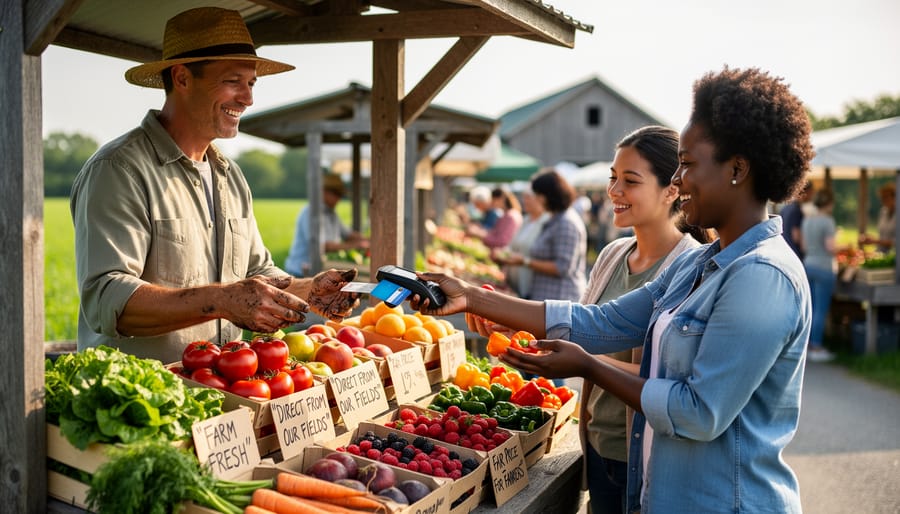
Digital technology is transforming how Alberta farmers connect with their customers, making farm-to-table relationships more accessible and affordable for everyone involved. Mobile apps and web platforms now enable producers to sell directly without expensive infrastructure or complex logistics.
Free and low-cost platforms like Local Line, FarmersWeb, and GoodFood2U allow farmers to create digital storefronts, manage inventory, and process orders for minimal monthly fees—often under $100. These tools handle the administrative burden while farmers focus on production. Many Alberta producers report saving 30-40% in distribution costs by implementing direct-to-consumer strategies through these platforms.
Social media marketing through Facebook and Instagram provides free advertising channels where farmers showcase their products and build community relationships. Red Deer-area vegetable grower Sarah Chen increased her customer base by 250% using Instagram posts and Stories, spending just two hours weekly on content creation.
Community-supported agriculture software simplifies subscription management, allowing farmers to offer flexible payment plans that make local food more affordable for lower-income households. Some platforms integrate payment processing options that accept government food assistance programs.
Mobile point-of-sale systems like Square enable farmers to accept card payments at markets for under $50 in equipment costs, removing cash-only barriers that previously excluded many consumers. These accessible technologies democratize direct sales, helping smaller operations compete effectively while keeping prices fair for both producers and buyers.
Institutional Partnerships for Volume and Stability
Building reliable revenue streams requires more than sporadic farmers’ market sales. Institutional partnerships with schools, hospitals, and community centers offer Alberta farmers consistent demand and predictable income while making local food accessible to broader populations.
Edmonton’s Good Food Box program demonstrates this approach effectively. By partnering with community leagues and schools, local growers supply affordable produce boxes monthly to over 1,200 families. Farmers receive advance orders and guaranteed payment, eliminating the uncertainty of retail sales.
Calgary’s Foothills Medical Centre sources seasonal vegetables from nearby farms through a coordinated procurement system. “We commit to purchasing specific volumes at agreed-upon prices,” explains procurement director Sarah Mitchell. “This allows farmers to plan their planting accordingly and ensures our patients receive fresh, nutrient-dense meals.”
School districts present particularly promising opportunities. Red Deer Public Schools partnered with five regional farms to supply 8,000 kilograms of potatoes, carrots, and onions annually. The three-year contract provides stability farmers need for equipment investments and labor planning.
Starting small works best. Approach one institution with a limited product offering, perhaps 50 kilograms weekly of your most reliable crop. Demonstrate consistency before expanding. Many institutions appreciate flexibility around cosmetic standards, accepting perfectly nutritious but visually imperfect produce at competitive prices, reducing your waste while meeting their budget constraints.
Building Equity Into Your Farm-to-Table Business Model
Pricing Strategies That Support Both Farmers and Communities
Finding the sweet spot between farm profitability and community accessibility doesn’t have to be complicated. Here are practical pricing strategies Alberta farmers are using right now to make local food work for everyone.
Tiered pricing systems offer different price points for the same products based on customer circumstances. You might charge full price at farmers’ markets while offering a 20-30% discount for customers using community assistance programs. Edmonton’s City Market Farm uses this approach, allowing customers to self-select their payment tier without proof requirements, building on trust rather than bureaucracy.
Work-exchange programs create win-win situations where customers contribute labor in exchange for produce. Consider offering harvest help, market setup assistance, or farm maintenance in exchange for weekly vegetable boxes. A typical arrangement might be 3-4 hours of work monthly for a half-share CSA box valued at $80-100. This approach works particularly well during peak harvest seasons when you need extra hands anyway.
Volume and commitment discounts reward customers who buy in bulk or commit to full-season CSA shares. Offer a 15% discount for customers who pay upfront for the entire season, or provide bulk pricing when families purchase together. Three Medicine Valley Colony in Southern Alberta successfully uses group buying, where customers form buying clubs to reach wholesale minimums while still receiving farm-fresh products.
Sliding scale payment options at farm stands let customers choose what they can afford within a suggested range. Post your production costs transparently so customers understand the real value, then trust them to pay fairly. Most farmers report that higher-income customers often pay above asking price, balancing those paying less.
Reducing Production Costs Through Sustainable Practices
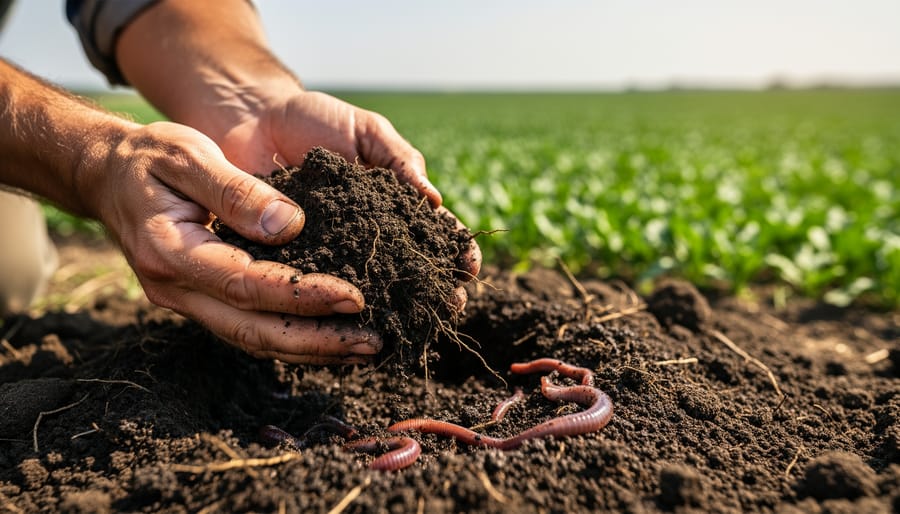
Sustainable farming practices directly impact your bottom line while supporting environmental goals. When you focus on building soil health through cover cropping and reduced tillage, you’re actually decreasing your dependence on expensive synthetic fertilizers and pesticides. Alberta farmers who’ve transitioned to regenerative methods report input cost reductions of 15-30% within three to five years.
Water management improvements offer another significant savings opportunity. Implementing efficient irrigation systems and moisture monitoring technology can reduce water use by up to 40%, lowering both utility costs and labour hours. These operational savings create room to offer competitive pricing while maintaining healthy profit margins.
The connection to carbon reduction goals is straightforward. Healthier soil requires fewer chemical inputs, which means lower production costs and reduced greenhouse gas emissions from manufacturing and transportation. For farm-to-table operations, this dual benefit makes your products more affordable for consumers while positioning your farm as an environmental leader.
Consider talking with neighbours who’ve made the transition. Many Alberta producers have found that their improved efficiency allows them to price products competitively with conventional operations while accessing premium markets willing to pay for sustainability. The initial investment in soil amendments and water infrastructure typically pays for itself within two to three growing seasons, creating long-term financial stability for your operation.
Accessing Grants and Support Programs
Navigating the funding landscape can make the difference between an idea and a thriving farm-to-table initiative. In Alberta, several programs specifically support farmers working toward more equitable food access. The Canadian Agricultural Partnership offers cost-share funding for projects that enhance food security and market development, with applications managed through Alberta’s Agriculture Financial Services Corporation. The Local Food Infrastructure Fund supports infrastructure investments like processing facilities, cold storage, and farmers’ market improvements that reduce distribution costs.
Alberta’s Growing Forward 2 program provides grants for innovative approaches to local food distribution, particularly projects serving underserved communities. The Community Food Centres Canada Growing Food Security Initiative offers both funding and technical assistance for farmers partnering with community organizations. Many municipalities also maintain regional agricultural service boards that administer local grants and provide free consultation services.
When applying, clearly demonstrate how your project improves affordability and access for consumers while maintaining farm viability. Include specific metrics like projected price reductions or increased community reach. Consider partnering with food banks, community kitchens, or Indigenous communities to strengthen applications. Remember that many programs operate on annual cycles, so mark application deadlines well in advance and build relationships with program coordinators who can guide you through the process.
Real Alberta Farmers Making It Happen
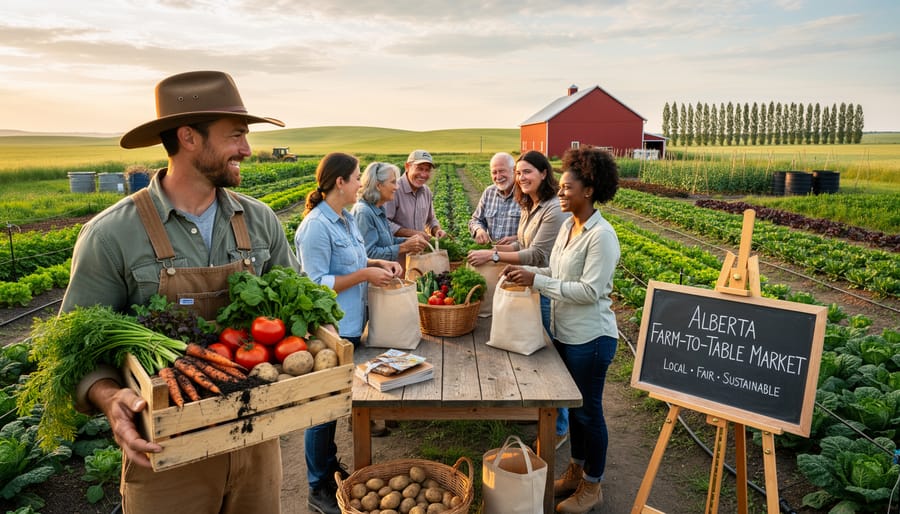
Across Alberta, innovative farmers are proving that farm-to-table doesn’t have to be exclusive. These real-world examples show how local producers are breaking down barriers and creating food systems that work for everyone in their communities.
Sunworks Organic Farm in Armstrong, British Columbia, just across from Alberta, has developed a model that many Alberta farmers are now replicating. Owners Don and Carol Krueger faced a common challenge: their certified organic vegetables were priced out of reach for many families who needed them most. Their solution was creating a tiered pricing system for their Community Supported Agriculture (CSA) program. Members who can afford to pay more subsidize reduced-cost shares for lower-income families. The farm also accepts provincial food assistance vouchers and offers work-exchange opportunities where members contribute farm labor in exchange for reduced share prices.
The measurable results speak volumes. Over five years, Sunworks increased their CSA membership from 85 to 240 families, with 18 percent now on subsidized shares. Customer retention sits at 82 percent, well above the industry average of 55 percent. Don Krueger explains their philosophy simply: “We measure success not just by profit margins but by how many families we feed. When someone tells us their kids are excited about vegetables for the first time, that’s the outcome we’re working toward.”
In central Alberta, Three Hills Hutterite Colony has pioneered a different approach. They supply fresh produce, eggs, and poultry directly to food banks and community kitchens at cost, while also maintaining retail sales through farmers markets. Colony manager Jacob Kleinsasser identified that traditional donation models weren’t sustainable long-term. Instead, they restructured their production planning to allocate 15 percent of output specifically for community food security programs, pricing these items to cover only direct production costs.
The challenge was managing cash flow during the growing season when community orders came due before retail sales peaked. Their solution involved partnering with a regional credit union that understood seasonal agricultural cycles and provided flexible payment terms. They also secured a contract with Alberta Health Services’ nutrition programs, guaranteeing steady demand. In 2023, the colony provided 14,500 kilograms of fresh food to six communities, while still maintaining profitability on their commercial operations.
Reclaim Urban Farm in Edmonton tackled urban food access by converting vacant lots into productive garden space. Founder Meaghan Hackinen discovered that transportation was a bigger barrier than price for many inner-city residents. Her team now operates mobile farm stands that bring produce directly into neighborhoods, accepting cash, debit, and digital payment options. They’ve established regular weekly stops at community centers, making fresh local food as convenient as corner stores. Since launching in 2019, they’ve grown from one site to seven locations, serving approximately 1,200 households monthly during growing season.
The farm-to-table movement isn’t just a trend—it’s a realistic pathway toward building more resilient and equitable food systems right here in Alberta. Throughout this article, we’ve explored concrete strategies that demonstrate how farmers can create accessible, affordable local food networks while maintaining profitability. The evidence from producers across our province shows that when we prioritize equity alongside sustainability, everyone benefits.
You’ve seen how tiered pricing models, community partnerships, and direct marketing channels work in real Alberta operations. These aren’t theoretical concepts; they’re proven approaches that farmers are successfully implementing today. The economic case is clear: investing in farm-to-table equity opens new markets, strengthens customer loyalty, and builds community resilience that protects your operation during uncertain times.
The environmental benefits align perfectly with these economic advantages. By reducing transportation distances and building local food networks, you’re contributing to lower emissions while creating meaningful connections with the people who value your work.
Now it’s your turn to take action. Start small—perhaps with a sliding scale at your farmers market stall or a partnership with a local community organization. Connect with fellow Alberta producers who are already doing this work. Share your experiences and learn from theirs.
The future of Alberta agriculture depends on farmers who are willing to innovate while staying rooted in community values. You have the tools, the knowledge, and the support network to make farm-to-table equity a reality on your operation. Your community is ready to support you in this journey.