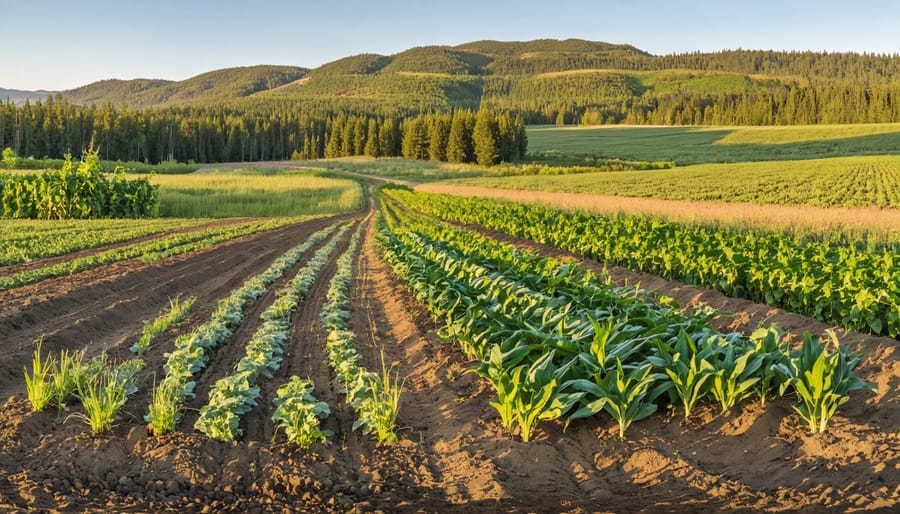
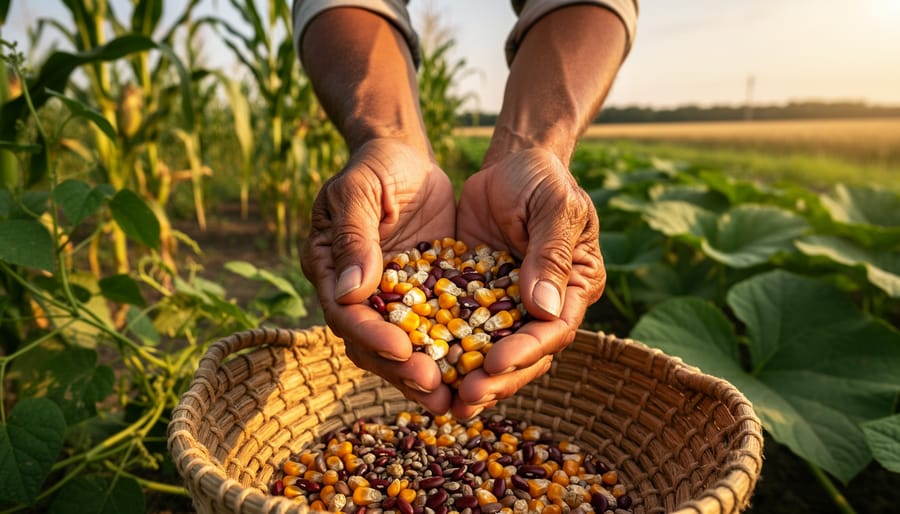
Every seed carries more than genetic material—it holds stories, ceremony, and the right of Indigenous peoples to determine their own food futures. Indigenous seed sovereignty means Indigenous communities maintain complete control over their traditional seeds, agricultural knowledge, and food systems without outside interference. This isn’t simply about preservation; it’s about self-determination, cultural survival, and reclaiming what colonial agricultural policies deliberately tried to erase.
For Canadian farmers, understanding this relationship transforms how we think about crop diversity and resilience. Indigenous seed keepers have maintained varieties adapted to local conditions for thousands of years—knowledge that becomes increasingly valuable as climate patterns shift across the Prairies. These aren’t museum pieces. The Three Sisters growing method, traditional corn varieties resistant to drought, and heritage beans that fix nitrogen more efficiently than modern cultivars offer practical solutions to contemporary agricultural challenges.
Yet Indigenous seed sovereignty faces persistent threats. Corporate patent claims on traditional plant genetics, loss of fluent language speakers who hold cultivation knowledge, and limited access to ancestral lands all jeopardize these living libraries. Climate change compounds these pressures, altering growing seasons faster than traditional adaptation methods can respond.
The path forward requires non-Indigenous farmers to move beyond appreciation into active support. This means respecting Indigenous intellectual property rights, purchasing seeds through Indigenous-led seed companies rather than extracting freely shared knowledge, and creating space for Indigenous farmers to lead conservation efforts on their own terms. When we recognize seeds as sovereign entities tied to sovereign peoples, we begin to understand that protecting Indigenous seed systems strengthens food security for all Canadians while honoring fundamental rights to cultural continuity and land-based practices.
What Indigenous Seed Sovereignty Really Means
The Connection Between Land Rights and Seed Rights
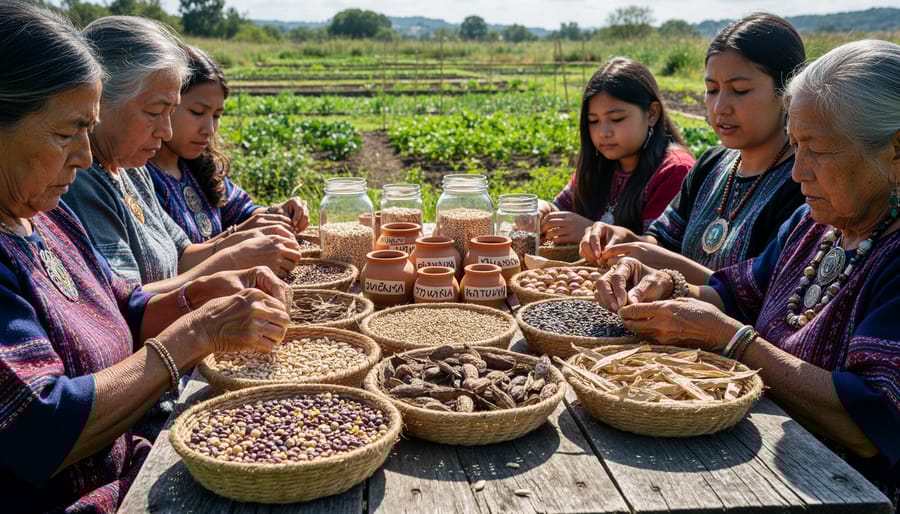
Land and seed rights form two sides of the same coin in Indigenous sovereignty. When Indigenous communities control their traditional territories, they can maintain the ecological conditions necessary for native seeds to thrive. These seeds have evolved alongside specific landscapes over thousands of years, adapting to local soil compositions, precipitation patterns, and growing seasons.
Consider this practical reality: a seed variety developed for Saskatchewan’s black soil and short growing season won’t perform the same way if forced into different conditions. Indigenous seed keepers understand this connection deeply. Their traditional agricultural practices work with the land’s natural characteristics rather than against them.
In Alberta, several First Nations communities are reclaiming both land management practices and seed cultivation simultaneously. When communities regain stewardship of their territories, they can reintroduce traditional crop varieties that commercial agriculture had displaced. This isn’t just cultural preservation; it’s sound agricultural strategy.
Dr. Mary Maytwayashing, an Anishinaabe agricultural researcher from Treaty 6 territory, explains: “Our seeds carry instructions for how to work with our lands. You can’t separate seed knowledge from land knowledge. They’re part of the same teaching.”
For farmers interested in climate-resilient crops, this connection offers valuable lessons. Indigenous seed varieties often demonstrate remarkable adaptability because they were selected within specific ecosystems over generations. Supporting Indigenous land rights means preserving these living genetic libraries and the knowledge systems that sustain them, benefiting agriculture broadly while respecting the communities who developed these resources.
Traditional Knowledge Systems and Modern Agriculture
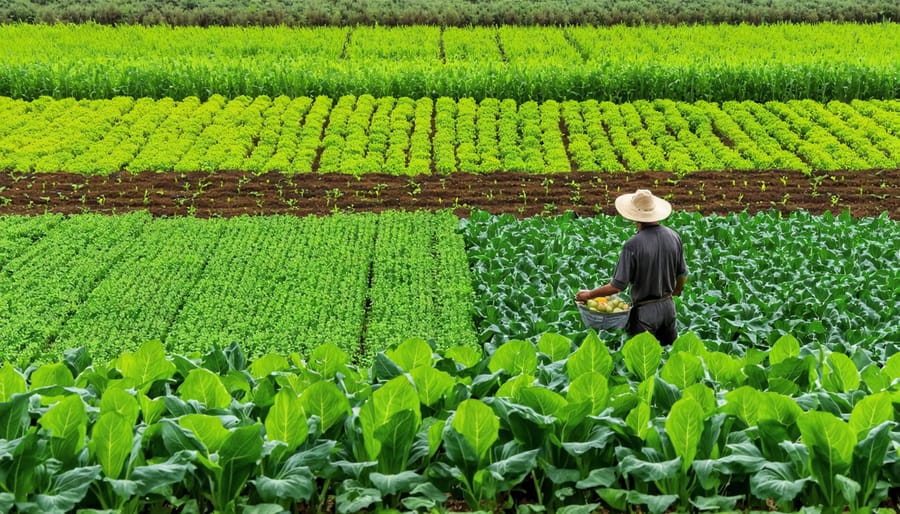
Indigenous communities across Alberta have developed sophisticated agricultural systems over thousands of years, and this Indigenous agricultural wisdom offers valuable insights for modern farming challenges. Traditional seed selection practices focused on adaptability, resilience, and nutritional density—qualities increasingly important as climate patterns shift across the prairies.
Consider the traditional practice of saving seeds from plants that thrived in challenging conditions. Indigenous growers in Treaty 6 and Treaty 7 territories selected varieties that withstood early frosts, short growing seasons, and variable precipitation—exactly the conditions Alberta farmers face today. These selection methods complement contemporary breeding programs by identifying traits that laboratory testing might overlook.
Indigenous polyculture systems, like the Three Sisters planting method, demonstrate practical solutions for soil health and pest management. Growing corn, beans, and squash together reduces fertilizer needs by approximately 30 percent while naturally deterring common pests. Several Alberta producers have adapted these companion planting principles to reduce input costs and improve yields.
The practice of maintaining diverse seed varieties within communities creates natural insurance against crop failure. When one variety struggles in particular conditions, others thrive. This approach aligns perfectly with modern risk management strategies, especially as weather becomes less predictable. Indigenous knowledge holders emphasize observing plant behavior across multiple seasons—a patient, evidence-based approach that strengthens any farm operation’s long-term sustainability and productivity.
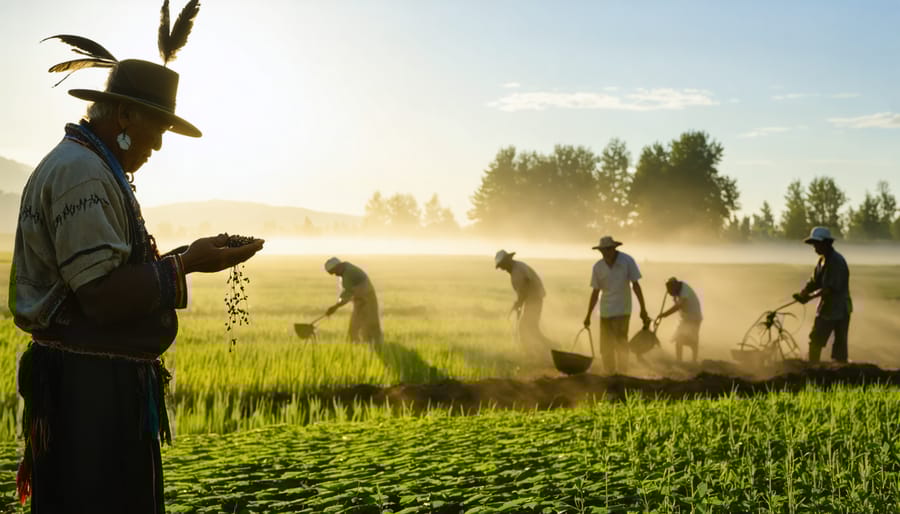
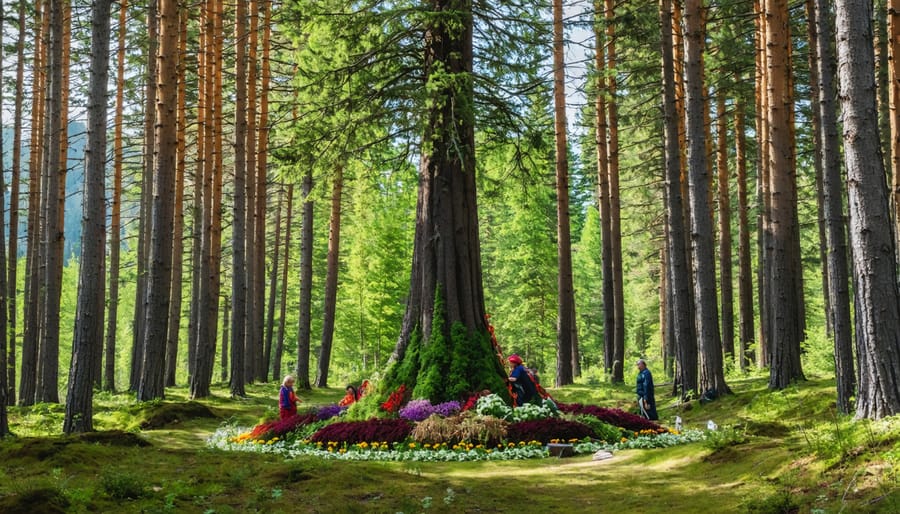
Generations of Seed Stewardship: How Indigenous Communities Preserve Biodiversity
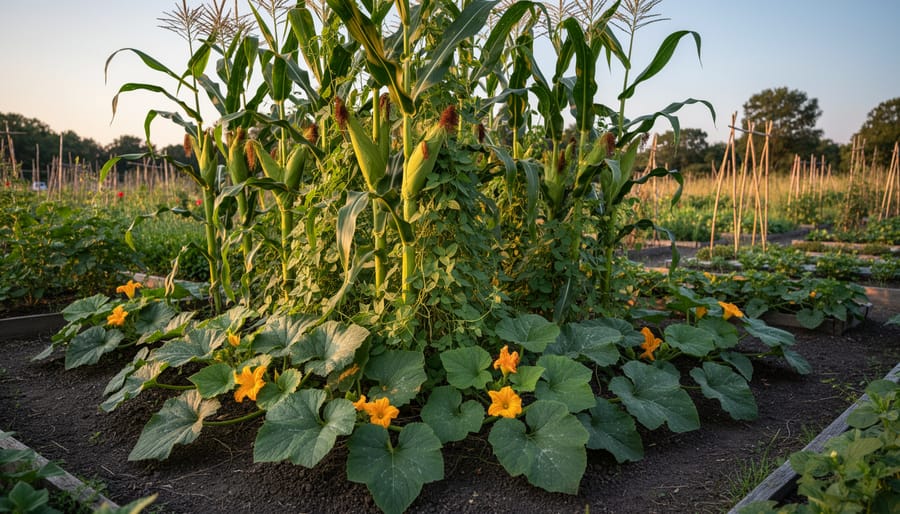
Case Study: The Three Sisters and Prairie Adaptations
The Three Sisters agricultural system—corn, beans, and squash planted together—represents one of North America’s most sophisticated examples of polyculture, developed and refined by Indigenous peoples over thousands of years. This traditional practice is gaining renewed attention among Alberta farmers seeking sustainable alternatives that build soil health while adapting to increasingly unpredictable weather patterns.
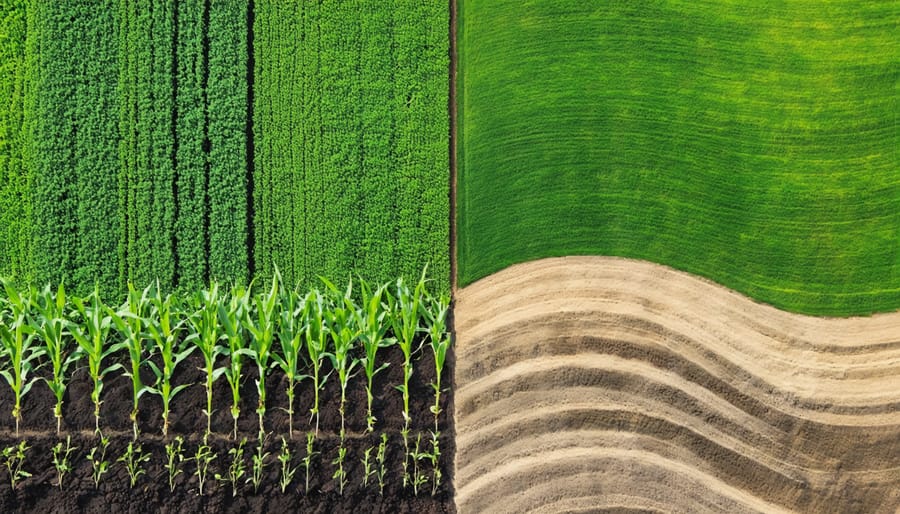
The system works through complementary plant relationships. Corn provides vertical structure for climbing beans, which fix nitrogen in the soil, replenishing nutrients the corn requires. Squash spreads along the ground, creating living mulch that retains moisture and suppresses weeds. Together, these three crops create a microclimate that reduces water stress and moderates soil temperature—critical advantages during Alberta’s hot, dry summers.
Tom Baranowski, a fourth-generation farmer near Leduc, integrated a modified Three Sisters approach into his operation five years ago. “We noticed a 30 percent reduction in irrigation needs in those plots,” he explains. “The soil structure improved dramatically, and we’re seeing earthworm populations we haven’t had in decades.” His fields now incorporate Indigenous crop rotation principles alongside the Three Sisters model.
Research from the University of Alberta confirms traditional knowledge: polyculture systems like the Three Sisters increase carbon sequestration by 15-20 percent compared to monoculture. They also demonstrate greater resilience during drought conditions, maintaining yields when single-crop systems fail.
For Alberta producers, adapting this system doesn’t require abandoning mechanization entirely. Some farmers dedicate smaller plots to traditional methods while applying the principles—companion planting, diversity, nutrient cycling—across larger operations. The key lies in understanding the relationships between plants and soil organisms that Indigenous communities have stewarded for generations.
Why Genetic Diversity Matters More Than Ever
Climate change is reshaping Canadian agriculture in real time, and the genetic diversity preserved in Indigenous seed varieties may hold critical solutions for our farming future. While commercial agriculture has focused on high-yield uniformity, Indigenous communities have maintained thousands of seed varieties adapted to specific regional conditions over centuries.
Dr. Sarah Chen, an agricultural geneticist at the University of Alberta, explains the practical value: “Indigenous-maintained varieties often carry traits we desperately need—drought tolerance, early maturation for short growing seasons, and natural pest resistance. These aren’t theoretical benefits. We’re seeing Alberta farmers successfully integrate these characteristics into their operations.”
Consider the Northern Pike bean, traditionally grown by Cree communities in northern Alberta. This variety thrives in cooler temperatures and shorter growing seasons that challenge commercial bean varieties. As unpredictable frost dates become more common across the Prairies, these adaptive traits become invaluable.
The genetic diversity in Indigenous seed collections also provides insurance against crop failure. When a single disease or pest threatens monoculture crops, having access to resistant varieties can mean the difference between losing an entire harvest and maintaining production. Indigenous seed keepers have preserved this diversity through careful selection and sharing networks that prioritize resilience over maximum yield.
For Canadian farmers facing increasingly variable weather patterns, these time-tested varieties offer proven adaptation strategies. The challenge now is ensuring respectful collaboration that honors Indigenous sovereignty while expanding access to these vital genetic resources.
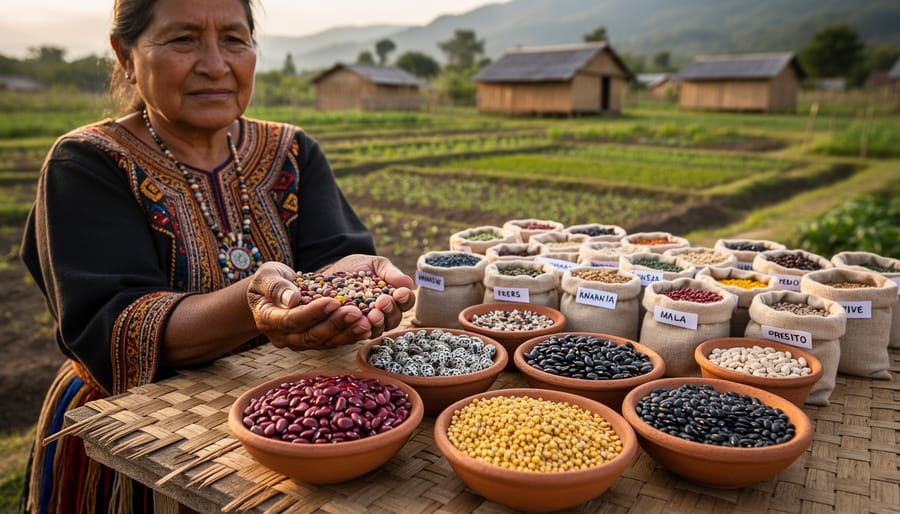
The Threats to Indigenous Seed Sovereignty
Patent Laws and Seed Ownership Conflicts
Canada’s current patent laws create significant challenges for Indigenous seed sovereignty. Under the Plant Breeders’ Rights Act and Patent Act, seeds can be privately owned through intellectual property protections—a concept that fundamentally conflicts with Indigenous perspectives where seeds are viewed as sacred gifts meant to be shared within communities.
The landmark Monsanto Canada Inc. v. Schmeiser case illustrates these tensions. When patented canola seeds appeared on Saskatchewan farmer Percy Schmeiser’s land through natural pollination, he faced legal action despite never purchasing the seeds. This case highlighted how patent laws can override traditional seed-saving practices that both Indigenous and non-Indigenous farmers have relied upon for generations.
For Indigenous communities, these conflicts run deeper. When commercial entities patent plant varieties derived from traditional crops, they can restrict Indigenous peoples’ ability to freely save, share, and cultivate seeds their ancestors stewarded for thousands of years. In Alberta, several First Nations have expressed concerns about losing control over traditional varieties of beans, squash, and tobacco as corporate patents expand.
Dr. Sarah Morales, a legal scholar at the University of Victoria, explains that “Canadian IP law doesn’t recognize collective ownership or sacred relationships with plants—it only sees economic commodities.” This gap means Indigenous seed keepers risk legal liability for continuing cultural practices.
These legal barriers affect all farmers. When seed diversity decreases due to patent consolidation, everyone loses access to resilient varieties adapted to local conditions—knowledge Indigenous communities have carefully preserved through careful selection and shared stewardship practices that benefit our entire agricultural system.
Climate Change and Traditional Seed Varieties
Climate change is reshaping growing zones across Alberta and Canada, creating both challenges and opportunities for Indigenous seed preservation. Traditional varieties that thrived for generations in specific microclimates now face unpredictable weather patterns, shorter growing seasons in some regions, and longer ones in others. These shifts directly impact crops like Three Sisters varieties (corn, beans, squash), wild rice, and heritage root vegetables that Indigenous communities have carefully stewarded.
Seed keepers are responding by adapting traditional knowledge with modern observation techniques. For example, some Alberta First Nations are now tracking temperature shifts and frost dates more closely, adjusting planting schedules while maintaining ancestral cultivation methods. This practical approach combines Indigenous climate solutions with contemporary monitoring.
Preservation efforts increasingly focus on maintaining genetic diversity within seed collections. Rather than relying on single cultivars, communities are growing multiple varieties of the same crop, ensuring some will adapt as conditions change. Seed libraries and community gardens serve as living repositories, testing which traditional varieties show climate resilience. This strategy protects cultural heritage while building food security for future generations facing continued environmental uncertainty.
What Alberta Farmers Can Learn From Indigenous Seed Practices
Seed Saving Techniques That Build Soil Health
Indigenous seed saving techniques offer practical pathways for Canadian farmers to enhance soil health while reducing their carbon footprint. These time-tested methods go beyond simple seed storage, integrating regenerative principles that build living soil ecosystems.
The Three Sisters planting system demonstrates how seed selection and companion planting work together. Indigenous farmers plant corn, beans, and squash in succession, with each crop contributing to soil vitality. Corn provides structure, beans fix nitrogen directly into the soil through their root nodules, and squash leaves shade the ground to retain moisture and suppress weeds. When saving seeds from this system, select specimens from plants that thrived together, as this strengthens the genetic adaptation to companion planting. Allow seeds to fully mature on the plant before harvesting, then dry them in a well-ventilated space away from direct sunlight.
Community seed sharing circles maintain genetic diversity while building soil resilience. Rather than saving seeds in isolation, Indigenous farmers exchange varieties across different microclimates. This practice allows crops to develop broader environmental tolerance. Alberta farmers can adopt this by connecting with local seed libraries or forming regional exchanges, particularly valuable given our diverse growing zones from Lethbridge to Peace River.
The integration of Indigenous soil practices with seed saving creates a complete system. Before planting saved seeds, prepare beds with minimal tillage to preserve soil structure and mycorrhizal networks. Indigenous farmers often incorporate small amounts of composted material directly into planting holes rather than broadcasting amendments across entire fields, concentrating nutrients where seeds need them most.
Document which plants produced the healthiest seeds and note soil conditions, weather patterns, and companion plantings. This knowledge becomes increasingly valuable as climate patterns shift across the prairies.
Expert Interview: A Saskatchewan Indigenous Farmer’s Perspective
We spoke with Clayton Tootoosis, a Cree farmer from Poundmaker First Nation in Saskatchewan, who cultivates both traditional Indigenous varieties and modern crops on 200 hectares of land. His approach bridges generations of knowledge with contemporary farming techniques.
“My grandfather taught me that seeds carry stories,” Clayton explains. “When we save our own seed corn, beans, and squash—what we call the Three Sisters—we’re not just preserving genetics. We’re maintaining relationships with plants that have fed our people for hundreds of years.”
Clayton’s operation demonstrates practical integration of traditional practices. He uses companion planting methods passed down through his family, which naturally reduce pest pressure and improve soil health. “The beans fix nitrogen for the corn, and the squash leaves shade out weeds. It’s a system that works without heavy inputs,” he notes.
When asked about collaboration with non-Indigenous farmers, Clayton emphasizes mutual learning. “I’ve had neighbouring farmers visit to see our low-input methods, and I’ve learned from them about equipment modifications for our soil types. There’s real value in sharing knowledge respectfully.”
His advice for farmers interested in Indigenous growing practices? “Start by listening. Attend local Indigenous agricultural workshops, support Indigenous seed libraries, and understand that these aren’t just techniques—they’re part of living cultures. When we work together with that respect, everyone’s farming gets stronger.”
Supporting Indigenous Seed Sovereignty: Practical Steps for Canadian Farmers
Ethical Seed Sourcing and Community Partnerships
Building ethical relationships with Indigenous seed keepers starts with respect and humility. Before approaching any Indigenous community about heritage seeds, take time to understand their protocols and governance structures. Each Nation has unique customs regarding knowledge sharing and seed stewardship.
The most respectful approach is to connect through Indigenous-led seed libraries and agricultural organizations. In Alberta, programs like the Indigenous Food Circle and regional First Nations agricultural societies offer structured pathways for collaboration. These organizations prioritize Indigenous sovereignty while facilitating appropriate knowledge exchange.
When seeking heritage seeds, never assume free access. Many Indigenous varieties carry sacred significance and cultural restrictions. Some seeds may only be shared within communities, while others can be exchanged through proper channels with clear agreements about use and distribution.
Consider supporting Indigenous seed sovereignty through reciprocal partnerships rather than transactional purchases. This might include sharing equipment, providing growing space, or purchasing produce grown from heritage varieties. Dr. Clayton Robson, an agricultural researcher working with Treaty 6 communities, emphasizes that “meaningful partnerships require long-term commitment, not one-time interactions.”
If you’re interested in incorporating traditional growing methods alongside ethical seed sourcing, learning about Indigenous permaculture principles can deepen your understanding of holistic agricultural systems.
Always obtain written agreements that acknowledge Indigenous ownership of genetic resources and traditional knowledge. These agreements should specify how seeds will be used, whether they can be shared, and how Indigenous communities will benefit from any resulting crops or research.
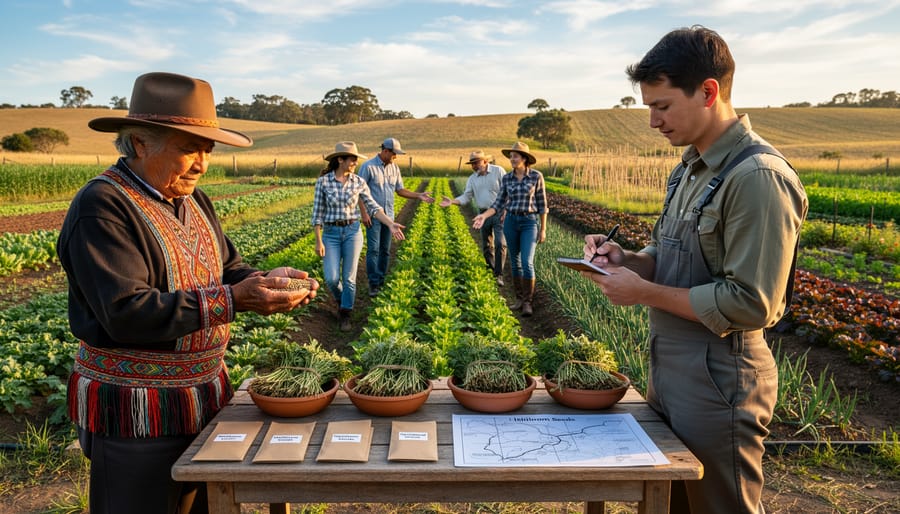
Resources and Organizations in Western Canada
Alberta farmers interested in Indigenous seed sovereignty can connect with several regional organizations actively working in this space. The Indigenous Seed Keepers Network, based in Treaty 6, 7, and 8 territories, brings together knowledge holders and farmers to share traditional varieties and growing methods. Their quarterly gatherings provide valuable opportunities to learn directly from Indigenous seed keepers.
The Native Plant Society of Saskatchewan runs educational workshops throughout the Prairie provinces, including sessions on culturally significant plant species and seed collection protocols. These programs welcome non-Indigenous participants committed to respectful learning.
SeedChange (formerly USC Canada) operates collaborative seed programs across Western Canada, connecting Indigenous communities with resources for seed saving infrastructure. Their mentorship initiatives pair experienced seed keepers with those rebuilding traditional practices.
The University of Alberta’s Faculty of Native Studies offers community workshops on traditional ecological knowledge and food sovereignty, creating bridges between Indigenous communities and agricultural professionals. Similarly, the Indigenous Food Circle in Edmonton provides hands-on learning opportunities about heritage seed varieties adapted to Alberta’s climate.
For those seeking to support these efforts, start by attending public educational events, purchasing seeds from Indigenous-led enterprises, and following the guidance of local knowledge holders regarding appropriate engagement and collaboration.
Indigenous seed sovereignty isn’t just an Indigenous issue—it’s a foundation that strengthens Canadian agriculture as a whole. When we support Indigenous-led seed preservation efforts, we’re investing in genetic diversity that benefits every farmer across the Prairies and beyond. The traditional knowledge held by Indigenous seed keepers has sustained communities through centuries of climate variability, offering insights that are increasingly valuable as we all face unpredictable growing seasons.
The relationship between Indigenous seed sovereignty and broader agricultural resilience is clear. Varieties preserved through traditional methods often possess traits—drought tolerance, pest resistance, adaptability to marginal soils—that complement modern breeding programs. By respecting and learning from these practices, Canadian farmers gain access to time-tested strategies that can reduce input costs and improve crop performance.
Here’s how you can actively support these efforts: Purchase Indigenous-grown seeds and foods when available, creating economic opportunities for Indigenous producers. Attend workshops or field days hosted by Indigenous agricultural organizations—Alberta has several groups offering valuable learning opportunities. Consider seed exchanges that respect Indigenous protocols and intellectual property rights. Support policy changes that recognize Indigenous plant genetic rights and traditional knowledge systems.
The path forward requires genuine partnership, not appropriation. As Dr. Clayton Robson from the University of Alberta notes, “When farmers approach Indigenous seed keepers with humility and willingness to learn, everyone benefits. It’s about building relationships that honour sovereignty while sharing knowledge that makes all our farms more resilient.”
The choice is ours: we can strengthen Canadian agriculture together by embracing the wisdom Indigenous communities have protected for generations.