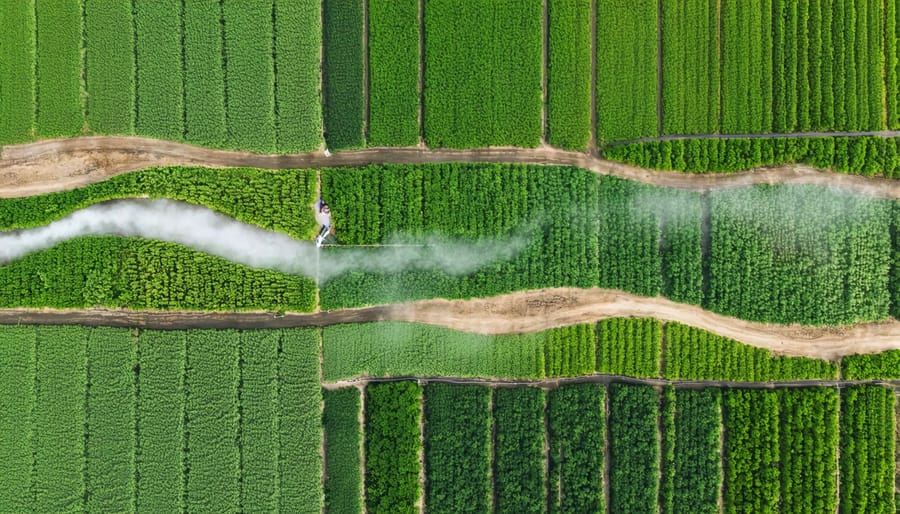
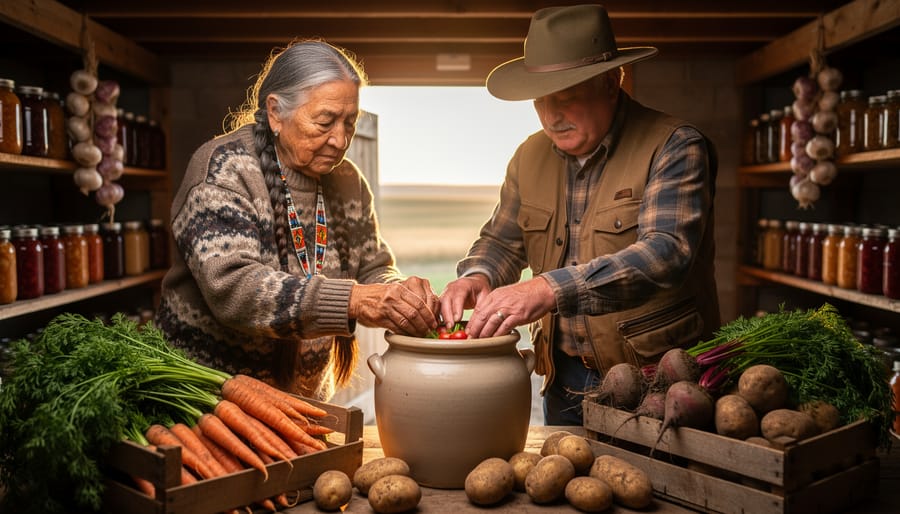
Indigenous Food Labs represent living laboratories where traditional food preservation knowledge meets contemporary agricultural challenges—spaces where Elders work alongside farmers and researchers to document, test, and adapt centuries-old techniques for modern farming operations. These collaborative hubs are emerging across Canada as critical resources for producers seeking sustainable alternatives to energy-intensive storage and processing methods.
At their core, these labs preserve and activate food systems knowledge that sustained communities through harsh winters and unpredictable growing seasons long before refrigeration existed. For Alberta farmers facing increasing climate volatility and rising operational costs, these time-tested methods offer practical solutions: from root cellaring techniques that eliminate electricity use to fermentation processes that extend harvest value without chemical preservatives.
The knowledge shared in Indigenous Food Labs goes far beyond simple storage tips. Indigenous permaculture principles embedded in these preservation methods reveal integrated approaches to food security—understanding which crops naturally complement each other in storage, how to work with seasonal temperature fluctuations rather than against them, and methods to reduce food waste while building soil health through proper composting of preserved foods.
Recent partnerships between Indigenous communities and agricultural research institutions have documented significant cost savings and carbon reductions when farms adopt these traditional preservation methods. A 2023 pilot project in central Alberta demonstrated that producers using traditional root cellaring and controlled fermentation reduced their cold storage energy costs by 60 percent while maintaining market-quality produce.
This article explores practical preservation techniques emerging from Indigenous Food Labs and shows how Alberta farmers can implement these methods to build resilience, cut costs, and strengthen local food systems.
What Is an Indigenous Food Lab?
The Bridge Between Ancestral Wisdom and Modern Agriculture
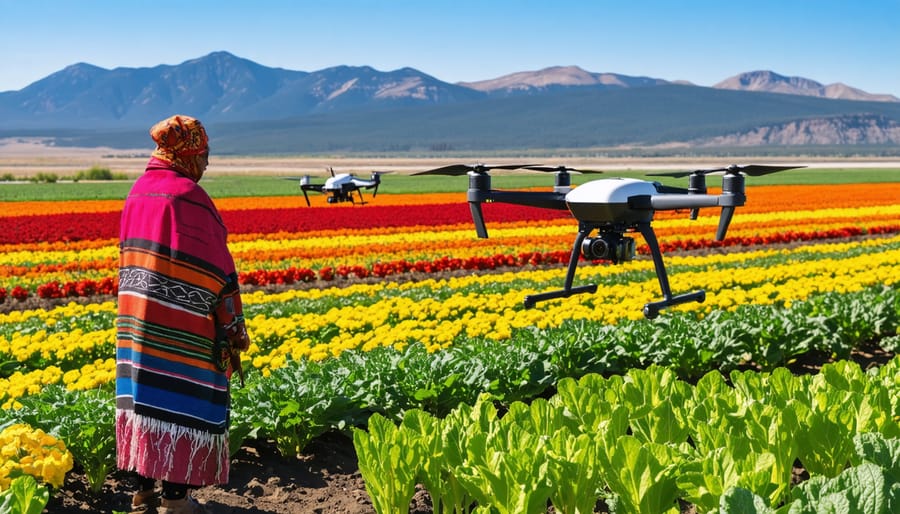
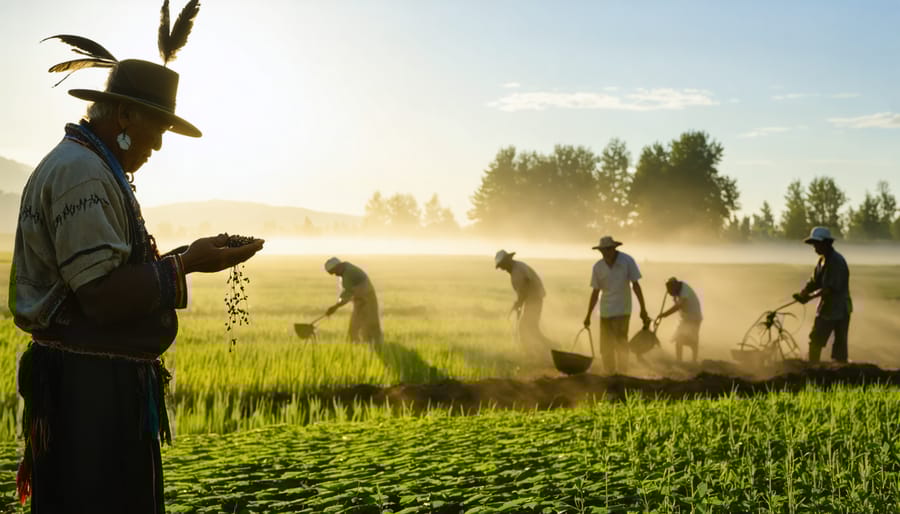
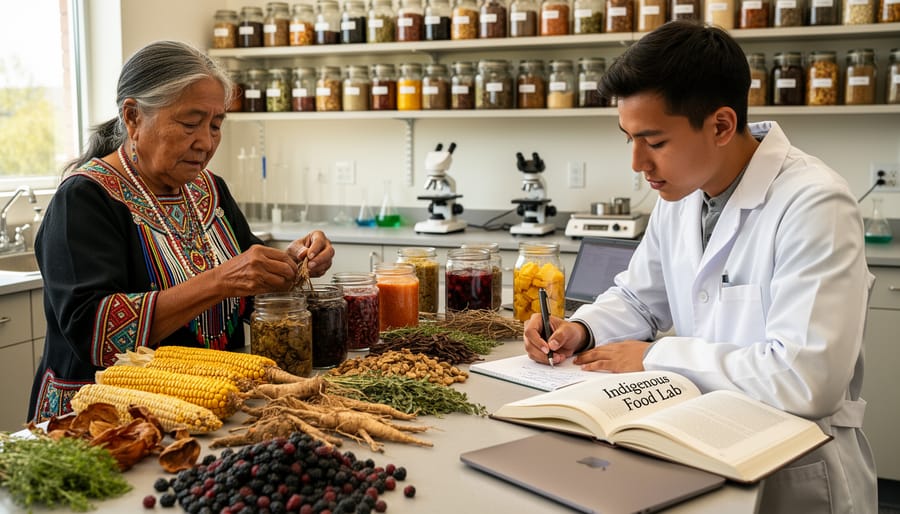
Indigenous food labs represent a remarkable convergence point where generations of traditional ecological knowledge meets contemporary agricultural science. These collaborative spaces aren’t just research facilities—they’re living classrooms where knowledge flows in multiple directions.
In these labs, Indigenous elders work alongside food scientists, agronomists, and farmers to document and validate traditional food preservation methods that have sustained communities for thousands of years. Picture a grandmother demonstrating how her ancestors fermented berries in sealed birch bark containers, while a food microbiologist analyzes the beneficial bacteria produced through this process. This partnership creates a deeper understanding of why these methods work, making them more accessible and adaptable for modern farming operations.
The collaborative nature of indigenous food labs breaks down the artificial barriers that often separate traditional knowledge from academic research. Rather than extracting information from Indigenous communities, these spaces operate on principles of reciprocity and mutual respect. Farmers visiting these labs gain practical preservation techniques they can implement immediately, while contributing their own observations about soil health, crop varieties, and seasonal patterns.
Dr. Margaret Bear, a Cree knowledge keeper working with several prairie-based food labs, explains: “We’re not just preserving recipes—we’re preserving relationships. The way our ancestors stored food tells us about their relationship with the land, with seasons, and with future generations.”
For Alberta farmers facing increasingly unpredictable growing seasons, these labs offer tested strategies for extending harvest viability and reducing food waste. The methods explored—from root cellaring techniques adapted to prairie climates to natural fermentation processes that require minimal energy—provide economically viable alternatives to conventional preservation that also support carbon reduction goals.
These spaces demonstrate that innovation doesn’t always mean looking forward—sometimes our most sustainable solutions come from looking back with respect and curiosity.
Canadian Indigenous Food Lab Initiatives
Across Canada, Indigenous communities and organizations are establishing food labs that bridge traditional knowledge with contemporary food systems, offering valuable insights for farmers working toward sustainability. These initiatives demonstrate practical applications of time-tested preservation and cultivation methods that align with modern agricultural challenges.
The Indigenous Culinary of Associated Nations (ICAN) operates throughout British Columbia and has extended influence into Alberta, working directly with First Nations communities to revitalize traditional food practices. Their programs document preservation techniques like smoking, drying, and fermentation methods that Indigenous peoples have refined over millennia. These techniques require minimal energy inputs and naturally extend food shelf life, making them highly relevant for farmers seeking to reduce their carbon footprint while adding value to their products.
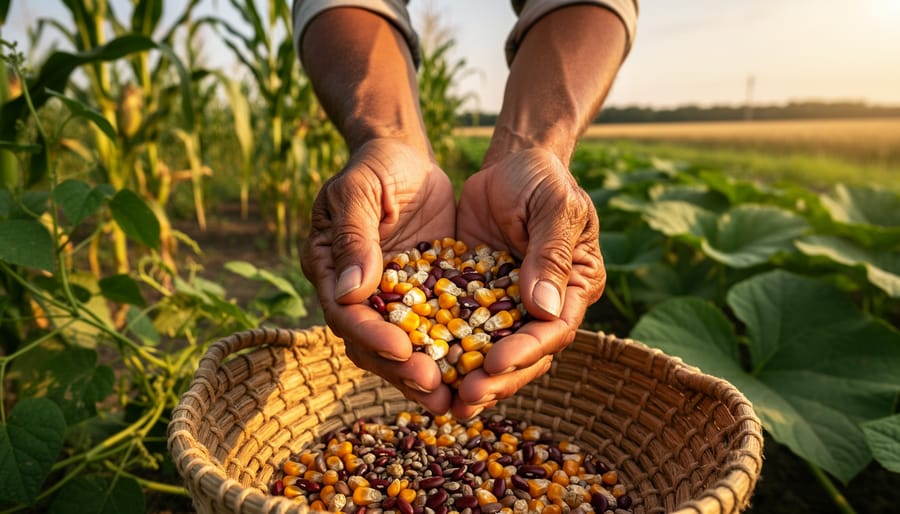
In Saskatchewan, the Indigenous Food Circle at the University of Saskatchewan connects researchers with Elders and knowledge keepers to study traditional food systems. Their work examining berry preservation methods and seed saving practices offers transferable lessons for Alberta producers, particularly those growing heritage grain varieties or managing berry operations alongside conventional crops.
Alberta’s own Indigenous communities are leading grassroots initiatives. The Tsuut’ina Nation near Calgary has developed food sovereignty programs that include teaching traditional preservation methods to community members. Their approach to root vegetable storage using earth cellars and natural cooling systems provides cost-effective alternatives to energy-intensive cold storage facilities that many smaller operations struggle to maintain.
The Saddle Lake Cree Nation in east-central Alberta has partnered with agricultural researchers to document traditional methods for preserving bison meat and wild game, techniques that meat producers can adapt for livestock operations. Their smoking and drying processes use locally sourced wood and require no refrigeration, reducing operational costs while producing premium products that command higher market prices.
These organizations welcome respectful collaboration with farmers interested in learning from Indigenous knowledge systems. Many offer workshops, demonstration projects, and consulting services that help agricultural producers integrate traditional techniques into their operations while supporting Indigenous-led economic development.
Traditional Preservation Methods That Work for Today’s Farms
Drying and Dehydration Techniques
Indigenous communities across Canada have refined drying and dehydration techniques over thousands of years, creating preservation methods that align remarkably well with modern sustainability goals. These traditional approaches offer Alberta farmers practical alternatives that reduce both waste and energy consumption.
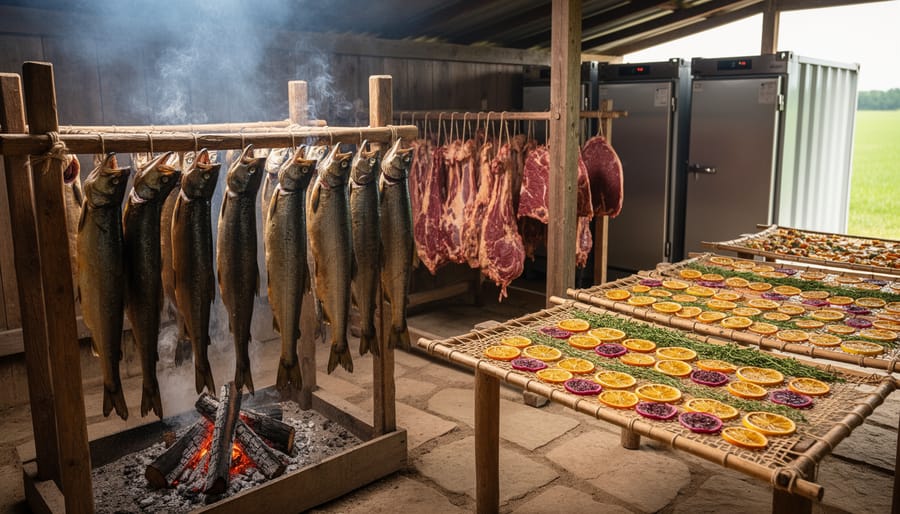
Air-drying remains one of the simplest yet most effective preservation methods. Indigenous peoples would hang herbs, vegetables, and strips of meat in well-ventilated areas, allowing natural airflow to remove moisture over several days. This technique requires zero energy input and maintains nutritional value better than many industrial processes. For Alberta farmers with cooler, drier conditions particularly in fall, air-drying works exceptionally well for root vegetables, leafy greens, and herbs.
Sun-drying harnesses solar energy to preserve foods like berries, fish, and medicinal plants. Traditional drying racks positioned in sunny, protected areas allowed communities to process large quantities during peak harvest seasons. Today’s farmers can adapt these methods using simple screen-covered frames that protect produce from insects while maximizing sun exposure. This approach eliminates electricity costs entirely while reducing your carbon footprint.
Smoking combines preservation with flavour enhancement. Indigenous food labs demonstrate how cold-smoking and hot-smoking techniques not only extend shelf life but also add value to products. Unlike industrial dehydrators that consume significant electricity, traditional smoking houses use sustainably harvested wood, creating marketable specialty products.
These methods collectively minimize waste by preserving surplus harvests that might otherwise spoil, while their low energy requirements represent substantial operational savings compared to electric dehydrators or freeze-drying equipment common in industrial food processing.
Fermentation and Lacto-Fermentation Practices
Indigenous fermentation practices offer Alberta farmers time-tested methods for preserving harvests while enhancing nutritional value and reducing waste. These techniques, developed over thousands of years, align perfectly with organic farming principles and create direct soil-to-table connections that support both land health and food security.
Lacto-fermentation stands out as a particularly accessible preservation method. This process uses naturally occurring lactic acid bacteria present in soil and on plant surfaces to convert sugars into preservative acids. Indigenous communities across Canada have traditionally fermented wild berries, roots like Jerusalem artichokes, and leafy greens using simple salt brines—typically 2-3% salt by weight. The process requires no energy input beyond cool storage, making it exceptionally sustainable.
Dr. Margaret Whitehead, an ethnobotanist working with Cree communities in northern Alberta, explains: “Traditional fermentation wasn’t just about preservation. It was about creating foods that could sustain people through harsh winters while maintaining vital nutrients. The beneficial bacteria produced during fermentation actually increase vitamin content and improve digestibility.”
For Alberta producers, these methods translate into extended market opportunities. Fermented vegetables like cabbage, carrots, and beets can be stored for months without refrigeration when properly prepared. The process also builds soil health awareness—healthy, biologically active soil produces crops with more beneficial bacteria, creating better fermentation outcomes.
Starting small with sauerkraut or pickled root vegetables allows farmers to experiment before scaling up. Community workshops and partnerships with Indigenous knowledge keepers can provide hands-on learning while fostering respectful knowledge exchange that benefits everyone involved.
Cold Storage and Root Cellar Systems
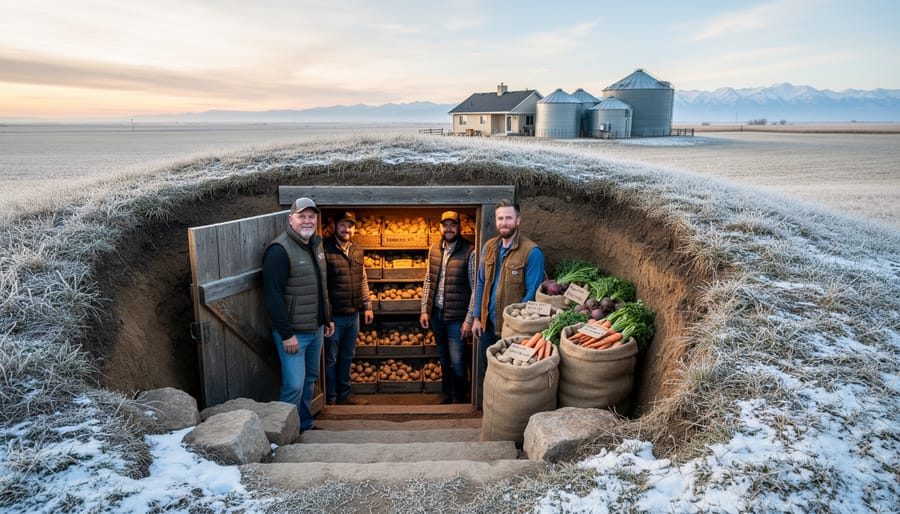
Prairie Indigenous communities have long understood that working with the earth’s natural cooling properties provides reliable food storage without electricity. Traditional root cellars and underground storage pits maintained temperatures between 0 and 4 degrees Celsius year-round, creating ideal conditions for preserving root vegetables, squash, and dried goods through harsh Alberta winters.
These underground systems relied on careful site selection and design principles that modern farms can replicate. Indigenous knowledge holders positioned storage areas on north-facing slopes where possible, ensuring consistent cool temperatures and protection from direct sunlight. The depth typically ranged from 1.5 to 2.5 metres below ground, placing storage areas below the frost line while maintaining natural humidity levels between 80 and 95 percent.
For today’s agricultural operations, adapting these methods offers significant energy savings and improved product quality. Modern implementations benefit from combining traditional earthen construction with contemporary materials like insulated doors and proper ventilation systems. Many Alberta farmers report successfully storing carrots, potatoes, beets, and winter squash for six to eight months using these adapted designs.
When planning your cold storage system, consider drainage patterns carefully and ensure adequate air circulation through simple vent pipes positioned at different heights. Start small with a test structure measuring 2 by 3 metres, monitoring temperature and humidity levels through your first season. This approach allows you to refine the design before scaling up, reducing both financial risk and environmental impact while honouring time-tested preservation wisdom.
Indigenous Knowledge Systems: More Than Just Techniques
Seasonal Cycles and Harvest Timing
Indigenous communities across Canada have developed sophisticated understanding of seasonal cycles over thousands of years, knowledge that offers valuable insights for modern agricultural practices. This traditional ecological knowledge recognizes that optimal harvest timing depends on multiple environmental indicators beyond calendar dates, including temperature patterns, plant signals, and wildlife behaviour.
In Alberta’s climate, Indigenous knowledge systems track the interplay between day length, soil temperature, and moisture levels to determine precise harvest windows. For example, traditional harvesters monitor when specific plants flower or when migratory birds arrive as indicators that certain foods have reached peak nutritional value. This observation-based approach ensures crops are gathered when nutrient density is highest, which also extends storage life naturally.
Similar to Indigenous crop rotation practices, seasonal timing knowledge creates resilience against unpredictable weather patterns. Many Indigenous communities traditionally maintained flexible harvest schedules, allowing them to respond to early frosts or extended growing seasons by reading environmental cues rather than fixed dates.
This adaptive approach becomes increasingly relevant as climate change shifts traditional growing patterns in Alberta. By incorporating multiple environmental indicators into harvest decisions, farmers can better respond to variable conditions while optimizing crop quality. Indigenous seasonal knowledge also informs preservation timing, recognizing that processing foods immediately after harvest at their nutritional peak maximizes both flavour and storage potential, reducing waste and improving food security throughout winter months.
The Three Sisters and Companion Growing
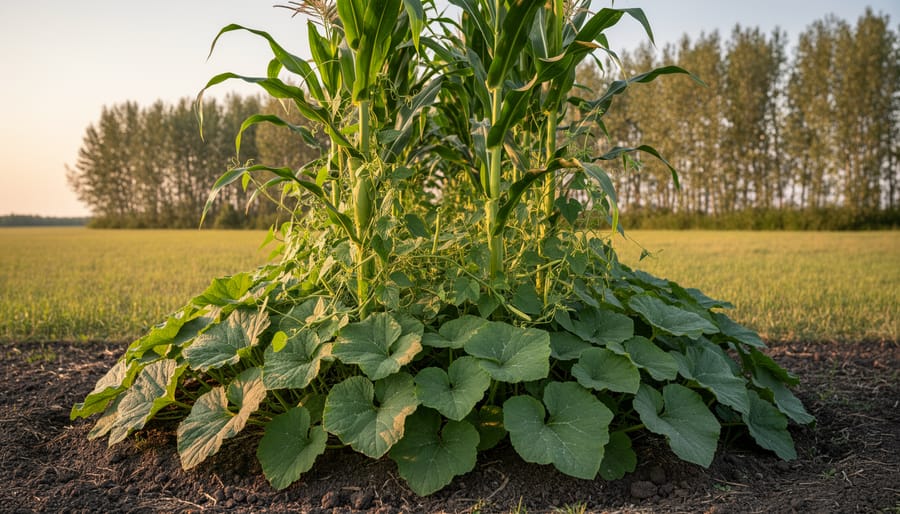
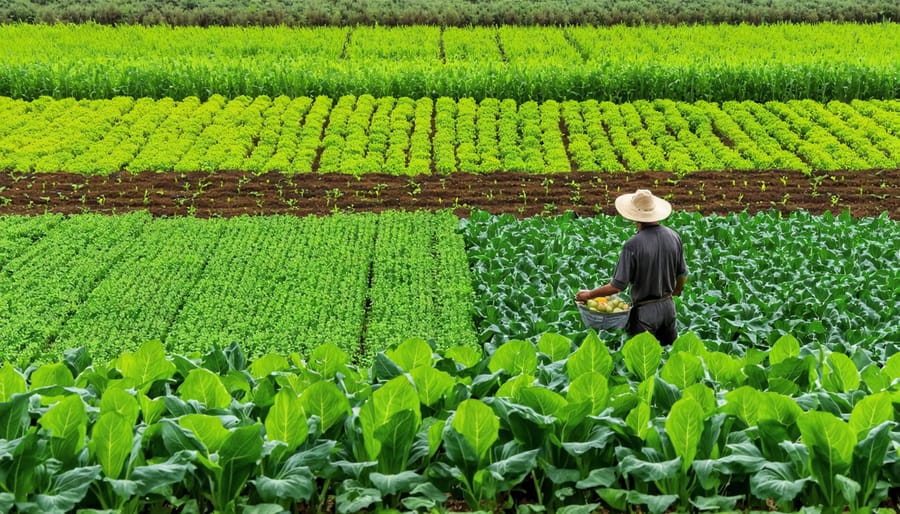
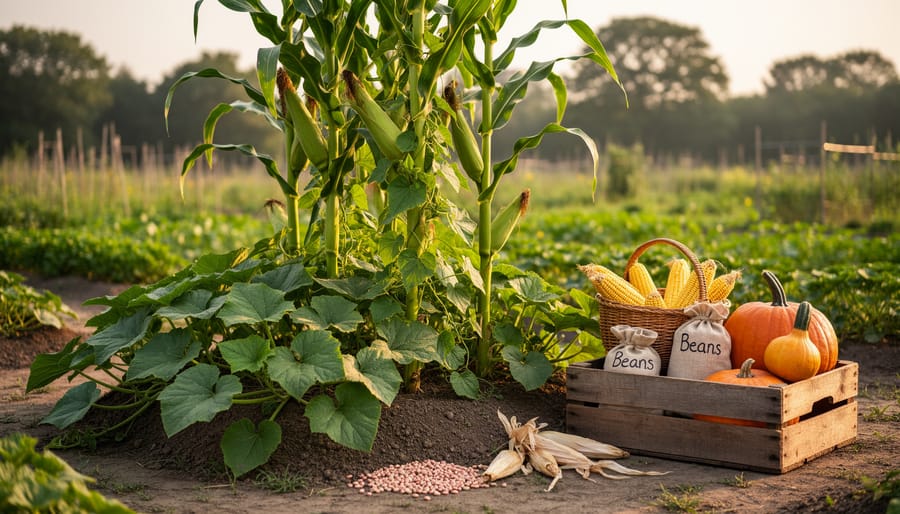
The Three Sisters—corn, beans, and squash—represent one of North America’s most sophisticated agricultural systems, demonstrating how Indigenous agricultural wisdom creates naturally integrated growing environments. This polyculture method, practiced across Turtle Island for thousands of years, offers Alberta farmers practical insights into companion planting that simultaneously addresses preservation and waste reduction.
In this system, corn stalks provide structure for climbing beans, while beans fix nitrogen in the soil to nourish all three crops. Squash leaves spread across the ground, creating a living mulch that retains moisture and suppresses weeds. This interdependence produces higher yields per square metre while naturally extending storage capabilities—dried corn and beans store for months, while winter squash varieties can keep for six to eight months in cool conditions without processing.
For Alberta producers, this approach reduces input costs and storage challenges. Dr. Maria Yellowbird, agronomist and Knowledge Keeper working with prairie communities, notes that companion planting creates crops with complementary preservation needs: “You’re harvesting at different times, using different storage methods, and nothing goes to waste because each plant supports the others throughout the season.”
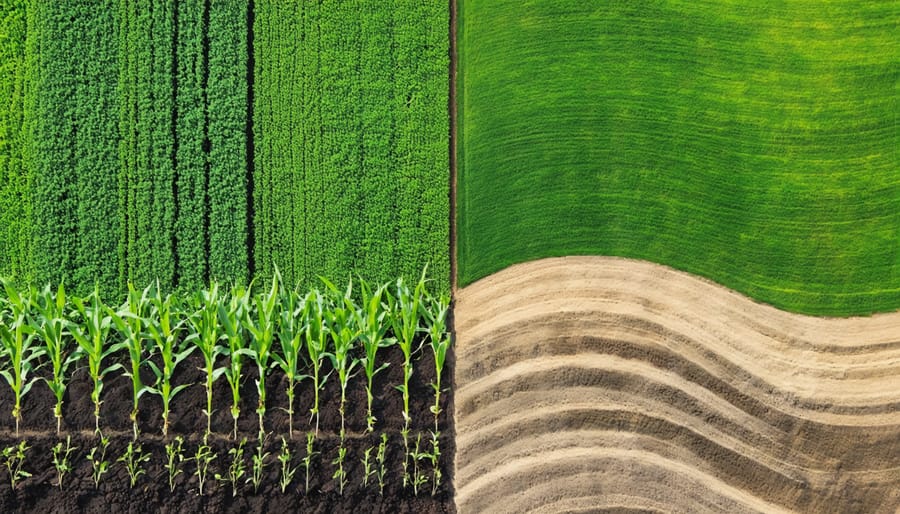
Modern adaptations include integrating these principles with season extension techniques suitable for Alberta’s climate. Small-scale trials of Three Sisters plots alongside conventional rows have shown 20-30 percent reductions in water usage and decreased reliance on synthetic fertilizers, while providing diverse crops with varying preservation requirements that spread workload and storage demands throughout harvest season.
Why Alberta Farmers Should Pay Attention
Reducing Energy Costs and Carbon Footprint
Traditional Indigenous preservation methods offer substantial savings in both energy costs and environmental impact compared to conventional cold storage and processing. Refrigeration accounts for approximately 40% of energy use in typical food storage operations, with costs ranging from $2,000 to $5,000 annually for a mid-sized farm operation in Alberta.
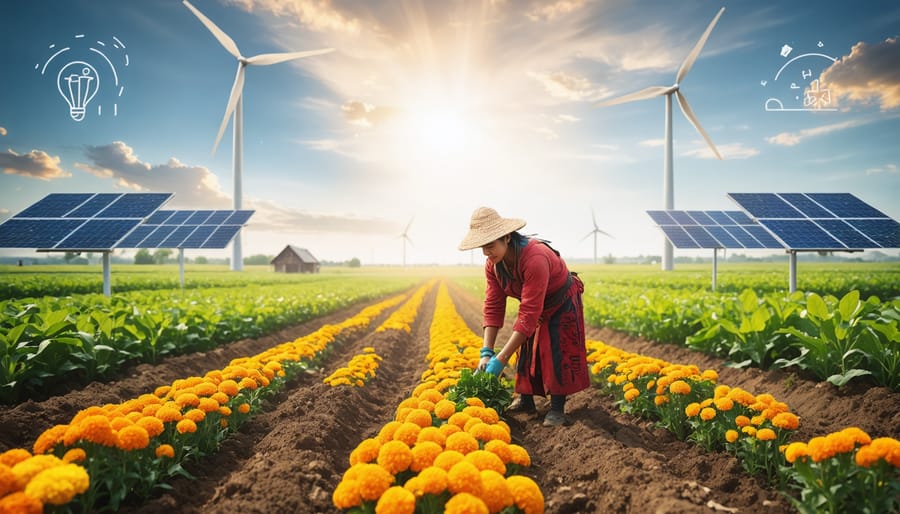
Methods like smoking, fermenting, and drying require minimal to no electricity. A solar dehydrator, for instance, can preserve 20-30 kilograms of produce weekly during peak season at virtually no operating cost after an initial investment of $300-500. Compare this to chest freezers consuming 200-400 kilowatt-hours monthly, costing $25-50 per month at Alberta’s average electricity rates.
The carbon footprint reduction is equally impressive. Traditional preservation eliminates the need for constant refrigeration, which produces approximately 180 kilograms of CO2 emissions annually per appliance. Scaling this across multiple storage units, Alberta farmers implementing Indigenous preservation techniques for even 30% of their harvest could reduce their carbon emissions by 500-700 kilograms yearly.
Sarah Blackfoot, food sovereignty coordinator with a Treaty 7 Indigenous community, notes that combining modern solar technology with traditional smoking and fermenting has helped local producers cut energy costs by 35% while extending their market season through value-added preserved products. This dual benefit of cost savings and emissions reduction aligns with growing consumer demand for sustainable, locally-preserved foods.
Building Climate Resilience
Power outages, severe storms, and supply chain disruptions have become increasingly common challenges for Alberta farmers. This is where traditional preservation methods shine as practical backup systems. When electricity fails, your solar dehydrator keeps working. When freezers go down during extended outages, your fermented vegetables and root cellar storage remain unaffected.
Consider the experience of a southern Alberta farm that lost power for five days during a winter storm. While their commercial freezers posed risks, their diversified preservation approach—combining cold storage, drying, and fermentation—meant minimal food loss. This resilience comes directly from Indigenous climate solutions that evolved over centuries without dependence on modern infrastructure.
Multiple preservation methods also protect against crop failures. A poor berry season matters less when you have dried vegetables, fermented products, and cold-stored root crops as alternatives. This distributed risk approach mirrors Indigenous practices of maintaining food security through diversity rather than monoculture.
For practical implementation, start by identifying which preservation methods require no electricity. Develop your cold storage capacity, invest in quality dehydrators with manual or solar backup options, and learn fermentation basics. Document your preservation calendar so you know exactly what resources remain available during disruptions. This layered approach transforms your operation from vulnerable to remarkably resilient.
Expert Perspective: Learning From Indigenous Food Practitioners
We sat down with Dr. Marie Littlewolf, a Cree knowledge keeper and food systems researcher based at the University of Alberta, who has spent fifteen years bridging traditional food preservation practices with contemporary agricultural challenges. Her work with Indigenous communities across Western Canada offers practical insights for farmers looking to enhance sustainability.
“The foundation of Indigenous food preservation isn’t just about keeping food longer,” Dr. Littlewolf explains. “It’s about understanding the relationship between plants, animals, soil, and seasons. When you preserve food using traditional methods, you’re also preserving knowledge about timing, about microclimates, about how ecosystems function.”
Dr. Littlewolf’s research focuses on fermentation techniques that Indigenous communities have used for centuries, particularly with root vegetables and berries. She’s documented how these methods naturally extend shelf life while maintaining nutritional value, something increasingly relevant for Alberta farmers facing unpredictable growing seasons.
One collaboration she highlights involved working with grain farmers near Ponoka to explore traditional seed-saving techniques. “Indigenous communities understood genetic diversity long before modern agriculture,” she notes. “They saved seeds based on performance across variable conditions, not just yield. This resulted in crops more resilient to drought and temperature fluctuations.”
The practical applications extend beyond preservation. Dr. Littlewolf works with several farming operations to implement traditional intercropping knowledge, showing how certain plant combinations naturally deter pests while improving soil health. These partnerships typically begin with listening sessions where knowledge keepers share seasonal observations and planting calendars refined over generations.
“For non-Indigenous farmers interested in this work, the entry point is relationship building,” Dr. Littlewolf emphasizes. “Start by reaching out to local Indigenous communities or organizations. Many have cultural programs or agricultural initiatives that welcome collaborative learning opportunities.”
She points to successful models like community-supported agriculture programs that incorporate both Indigenous and settler farming practices, creating markets for traditionally preserved foods while supporting local food sovereignty. These partnerships often begin small, perhaps sharing preservation workshops or seed exchanges, then grow into deeper collaboration.
“The knowledge isn’t locked away,” Dr. Littlewolf assures us. “But it requires respect, proper acknowledgment, and genuine reciprocity. When farmers approach with humility and willingness to learn, amazing things happen. We’re seeing improved soil carbon levels, reduced input costs, and more resilient crops. That benefits everyone.”
Her advice for farmers getting started: attend Indigenous-led workshops, support Indigenous food enterprises, and recognize that this knowledge represents thousands of years of observation and adaptation specific to these lands.
Getting Started: Practical Steps for Your Farm
Finding Indigenous Food Knowledge Resources in Alberta
Alberta offers growing opportunities to engage with Indigenous food knowledge through respectful, protocol-driven channels. The Apeetogosan (Métis) Development Inc. provides resources on traditional food systems and occasionally hosts workshops connecting Métis agricultural practices with modern farming. The Indigenous Food Circle, operating through various Alberta communities, facilitates knowledge-sharing sessions about preservation techniques and seasonal food practices.
The University of Alberta’s Faculty of Native Studies offers public lectures and community programs exploring traditional ecological knowledge, including food cultivation methods that complement Indigenous soil practices. Local Indigenous communities sometimes welcome respectful collaboration—always approach through proper channels and tribal councils.
When seeking this knowledge, follow essential protocols. Never assume access is automatic; build relationships through formal introductions and demonstrated long-term commitment. Recognize that some knowledge is proprietary or ceremonial and not meant for sharing. Offer reciprocity through labour, resources, or supporting Indigenous-led agricultural initiatives rather than expecting free consultation.
Organizations like Indigenous Food Systems Network connect farmers with educational opportunities while maintaining cultural integrity. Consider attending events like Edmonton’s Indigenous Food Sovereignty gatherings, where knowledge holders share appropriate teachings. Remember, building trust takes time—approach these relationships as partnerships, not transactions, and always acknowledge the source of traditional knowledge you incorporate into your practices.
Starting Small: One Method to Try This Season
Root cellaring offers an excellent entry point into Indigenous-informed preservation—a method that harnesses the earth’s natural cooling properties without electricity. This technique has sustained communities through harsh Canadian winters for generations and remains remarkably effective today.
To create a basic root cellar system, identify a location on your property with consistent temperatures between 0-4°C and humidity around 90-95%. Many Alberta farmers successfully convert corner sections of existing basements or utilize partially buried structures. The key is adequate ventilation: install two pipes—one near the floor for cool air intake and another near the ceiling for warm air exhaust.
Begin with hardy crops suited to Alberta’s climate: carrots, beets, potatoes, rutabagas, and cabbage store exceptionally well. Layer vegetables in wooden crates or bins filled with slightly damp sand or sawdust to maintain moisture and prevent touching. Check storage weekly, removing any spoiling produce immediately.
Doug Sawyer from Lethbridge transformed a 3-metre by 3-metre corner of his barn basement into functional storage, successfully preserving over 180 kilograms of root vegetables last season. “The investment was minimal—maybe 200 dollars in materials—but it reduced our winter grocery bills significantly,” he notes.
Start with one crop variety to build confidence, then expand your preservation repertoire as you gain experience with temperature and humidity management.
Indigenous food labs represent more than just a novel approach to agriculture—they offer a transformative pathway toward truly sustainable and resilient farming systems in Alberta. By bridging the wisdom accumulated over thousands of years with contemporary organic farming practices, we create something stronger than either approach alone. The preservation techniques explored through these collaborative spaces address our most pressing challenges: reducing carbon footprints, adapting to climate unpredictability, and building food security for future generations.
The mutual benefits are clear. Indigenous communities gain platforms to revitalize and share traditional ecological knowledge with new generations, while farmers access time-tested strategies that reduce input costs and environmental impact. When we incorporate methods like controlled fermentation, strategic drying techniques, and root cellar storage, we’re not just preserving food—we’re preserving biodiversity, reducing waste, and strengthening local food systems.
Alberta’s agricultural community stands at a crossroads. Climate patterns are shifting, and conventional methods increasingly show their limitations. Indigenous food labs provide practical solutions grounded in deep observation of natural cycles and ecosystem relationships. These aren’t abstract concepts but actionable strategies you can implement on your farm this season.
The path forward requires openness, respect, and genuine collaboration. Start by connecting with Indigenous communities in your region, attending workshops, or partnering with established food sovereignty initiatives. Many First Nations and Métis organizations welcome respectful engagement and knowledge exchange. Consider how even small changes—adopting one preservation method, adjusting planting schedules based on traditional indicators, or incorporating indigenous crop varieties—can create meaningful impact.
The future of Alberta agriculture grows stronger when we learn from those who have sustainably managed these lands since time immemorial. Your farm can be part of this resilient future.