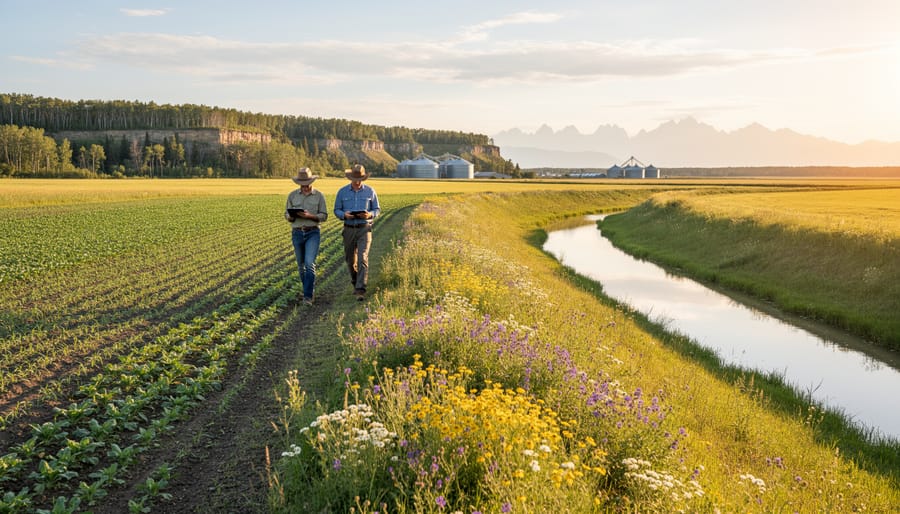
Indigenous knowledge systems have guided successful farming across the Prairies for millennia, offering proven solutions to challenges that modern agriculture now struggles to address—from water conservation during drought to soil health restoration and biodiversity loss. Yet these time-tested practices remain largely untapped in conventional agricultural planning, despite mounting evidence that integrating traditional ecological knowledge with contemporary methods produces more resilient, productive, and sustainable farming operations.
For Alberta farmers facing increasingly unpredictable weather patterns, depleted soils, and tightening margins, this integration isn’t just ethically sound—it’s practically essential. Indigenous knowledge encompasses sophisticated systems of observation, experimentation, and adaptation developed over thousands of growing seasons in this specific landscape. These practices include companion planting strategies that reduce pest pressure without chemicals, water management techniques suited to prairie hydrology, and soil building methods that increase organic matter while maintaining productivity.
The integration process requires genuine collaboration, not extraction. Successful partnerships between Indigenous knowledge holders and agricultural professionals across Alberta demonstrate that respectful engagement creates mutual benefits: farmers gain access to location-specific wisdom while Indigenous communities maintain authority over their intellectual property and participate in economic opportunities.
This article examines practical pathways for integrating Indigenous knowledge into your operation, drawing on real Alberta case studies and expert guidance. You’ll discover specific techniques adaptable to various farm scales, learn protocols for building respectful relationships with Indigenous knowledge holders, and understand implementation steps that honour both traditional wisdom and modern agricultural realities. The goal isn’t to replace existing practices wholesale, but to strengthen your operation’s resilience by adding proven strategies refined across centuries of prairie agriculture.
What Indigenous Knowledge Really Means for Modern Agriculture
The Three Pillars of Indigenous Agricultural Practices
Indigenous agricultural wisdom has supported thriving communities for thousands of years, and understanding its foundational principles can strengthen modern farming operations. By examining traditional Indigenous farming methods through three core pillars, Alberta producers can discover practical approaches that complement existing practices while building farm resilience.
The first pillar, relationship with land, recognizes that healthy farms depend on reciprocal care rather than simple extraction. This translates to practices like leaving buffer zones around water sources, rotating grazing areas to allow land recovery, and returning organic matter to soil. Alberta rancher Tom Jensen integrated this approach by implementing rest periods in his pasture rotation, resulting in improved soil organic matter from 2.1% to 3.8% over five years.
Multi-generational observation, the second pillar, values long-term pattern recognition over short-term trends. Indigenous knowledge systems track weather patterns, plant behaviour, and animal movements across decades. Producers can adopt this principle by maintaining detailed farm journals, consulting with long-time local farmers, and documenting seasonal variations. This extended perspective helps identify true climate shifts versus temporary fluctuations, supporting better planning decisions.
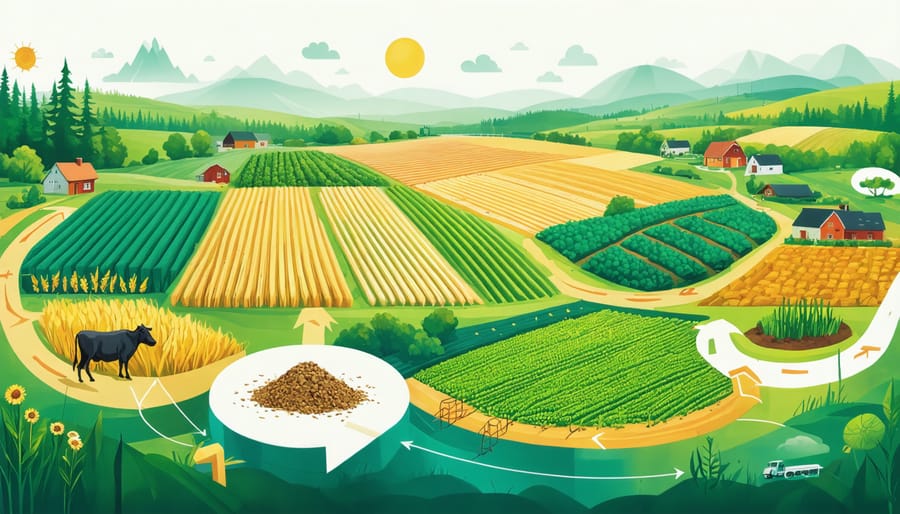
The third pillar, holistic ecosystem thinking, views farms as interconnected living systems rather than isolated production units. This means considering how each decision affects water, wildlife, soil health, and neighbouring operations. Practical applications include establishing pollinator corridors, maintaining wetlands for water filtration, and preserving native plant species. These practices often reduce input costs while creating multiple benefits, as Red Deer producer Sarah Whitecalf discovered when her wildlife corridors simultaneously improved pest management and water retention.
Together, these pillars offer Alberta farmers time-tested strategies for building sustainable, resilient agricultural operations.
Indigenous Practices Already Working on Alberta Farms
Companion Planting: The Three Sisters Method in Cold Climates
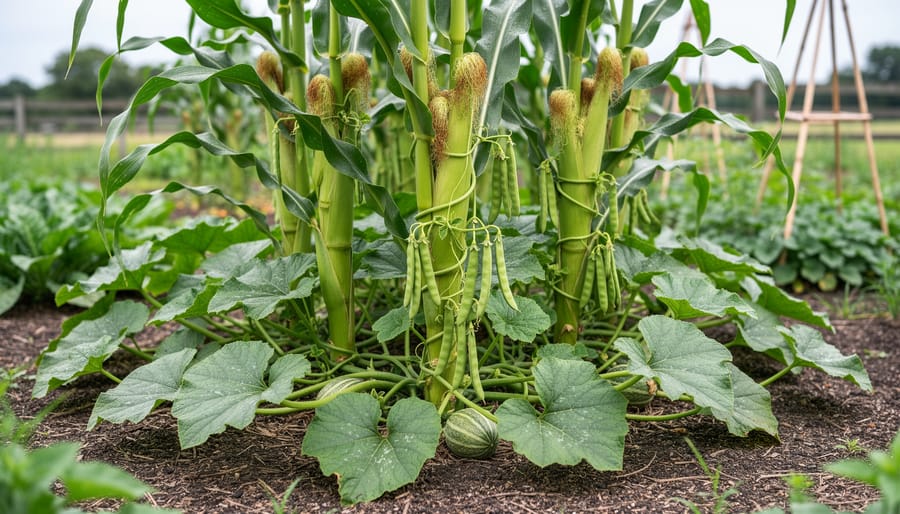
The Three Sisters method represents one of Indigenous agriculture’s most elegant solutions to companion planting, traditionally pairing corn, beans, and squash in a mutually beneficial system. While this technique originated in warmer climates, Alberta farmers have successfully adapted it to our shorter growing season with impressive results.
In the traditional system, corn provides vertical support for climbing beans, beans fix nitrogen in the soil to nourish all three crops, and squash leaves create ground cover that retains moisture and suppresses weeds. The key to cold climate success lies in variety selection and timing adjustments.
Alberta implementations typically start corn indoors 2-3 weeks before the last frost, giving it a head start before transplanting. Farmers choose short-season corn varieties like ‘Yukon Chief’ that mature in 65-75 days, paired with bush beans rather than pole beans to reduce dependency on corn height. Winter squash varieties with 85-95 day maturity windows, such as ‘Buttercup’ or ‘Sweet Mama’, complete the trio.
Local trial data from central Alberta farms shows the Three Sisters method increased soil organic matter by 1.2% over three seasons compared to monoculture plots. Nitrogen availability improved by 18%, reducing synthetic fertilizer needs. Pest pressure, particularly from cucumber beetles, decreased by 34% due to the diversity disrupting pest life cycles.
One Peace River region farmer reported yields of 4.5 tonnes per hectare of squash, 1.2 tonnes of beans, and sufficient corn for both fresh eating and livestock feed from a 0.4-hectare Three Sisters plot. Soil testing revealed improved water retention and microbial activity, benefits that extended into subsequent crop rotations.
The method requires wider row spacing (1.5-2 metres between corn mounds) than conventional planting but delivers multiple harvests from the same footprint while building long-term soil health through natural nutrient cycling and reduced tillage requirements.
Controlled Burns and Prairie Restoration for Soil Regeneration
For thousands of years, Indigenous peoples across the prairies used controlled burns as a land management tool, understanding what modern science now confirms: fire is essential for grassland health and soil regeneration. These intentional fires cleared invasive species, stimulated native plant growth, and returned nutrients to the soil, creating the rich grasslands that early settlers encountered.
Today, Alberta farmers and ranchers are rediscovering these practices with remarkable results. Prescribed burns, when conducted safely with proper planning and permits, can dramatically improve pasture productivity while reducing input costs. The process stimulates deep-rooted native grasses that sequester significantly more carbon than annual crops, with some studies showing increases of up to 1.5 tonnes of carbon per hectare annually.
Dr. Edward Bork, rangeland ecologist at the University of Alberta, explains that controlled burns mimic the natural fire cycles that shaped prairie ecosystems. “These fires reduce thatch buildup, control invasive species like smooth brome, and trigger seed germination in native plants,” he notes. The result is improved forage quality and enhanced biodiversity without herbicide applications.
Several Alberta ranchers have integrated cultural burning knowledge through partnerships with local Indigenous communities. These collaborations provide both practical guidance on fire timing and intensity, and deeper understanding of reading landscape conditions. Spring burns, typically conducted when soil moisture is adequate, prove most effective for weed control, while fall burns better support certain native species.
The practice requires careful planning, including firebreaks, weather monitoring, and coordination with local fire authorities. However, producers report significant long-term benefits: healthier pastures, reduced supplemental feed costs, and improved watershed function. This ancient practice offers modern farmers a powerful tool for sustainable land stewardship.

Water Management Techniques from Treaty 6, 7, and 8 Territories
Indigenous communities across Treaty 6, 7, and 8 territories have developed sophisticated water management systems over millennia, knowledge that offers valuable insights for today’s agricultural challenges. These practices emphasize understanding seasonal water cycles, protecting riparian areas, and maintaining watershed health through careful observation and adaptive management.
Traditional approaches include creating small-scale water retention features in landscapes, monitoring snowpack and spring runoff patterns, and timing land use activities to minimize impacts on water sources. Elders from these territories have long practiced selective harvesting and rotational use of land, allowing watersheds to recover naturally. These methods align remarkably well with modern water conservation practices being adopted across Alberta farms.
For example, the practice of maintaining buffalo corridors historically protected critical water pathways, a concept now reflected in riparian buffer zone management. Understanding which plant species indicate healthy water tables helped communities select optimal planting locations, knowledge that can inform irrigation planning today. As drought conditions intensify across the prairies, these time-tested approaches to reading landscape signals and working with natural water flows offer practical strategies for building resilience while respecting the interconnected nature of watersheds.
Building Respectful Partnerships with Indigenous Communities
Where to Start: Local Resources and Knowledge Keepers
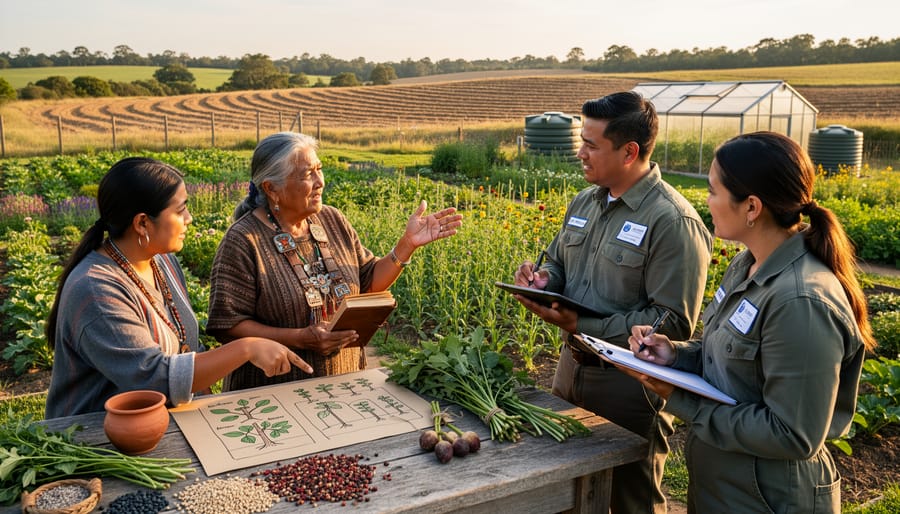
Starting your journey toward integrating Indigenous knowledge doesn’t mean navigating unfamiliar territory alone. Alberta offers several established organizations and programs dedicated to fostering respectful partnerships between Indigenous communities and agricultural professionals.
The Indigenous Knowledge Systems Program at the University of Alberta connects researchers with Elders and Knowledge Keepers to explore traditional land management practices. Contact their Faculty of Native Studies to inquire about collaborative opportunities and upcoming workshops.
Métis Nation of Alberta’s Environmental Stewardship Department provides resources on traditional ecological knowledge and sustainable land use. Their office in Edmonton welcomes inquiries from farmers interested in learning about soil health and biodiversity practices rooted in Métis traditions.
Alberta Indigenous Opportunities Corporation supports economic partnerships that benefit both Indigenous and non-Indigenous stakeholders. While focused broadly on resource development, they facilitate connections that can lead to agricultural collaborations.
Local Friendship Centres across Alberta serve as community hubs where you can learn about regional Indigenous perspectives and establish initial contacts. These centres often host cultural awareness workshops and community gatherings.
When reaching out, approach with humility and genuine interest in building long-term relationships rather than extracting information. Offer reciprocity—whether through knowledge sharing, employment opportunities, or supporting Indigenous-led initiatives. Many successful partnerships begin with simply attending community events and listening.
Consider exploring existing community-powered solutions in your region as models for respectful collaboration. Remember, meaningful partnerships develop gradually through consistent engagement and mutual respect, ultimately strengthening both your operation and the broader agricultural community.
Protocols for Knowledge Sharing and Implementation
When working with Indigenous knowledge systems, establishing proper protocols isn’t just about ethics—it’s about building relationships that create mutual benefits and lasting positive change for everyone involved.
Before implementing any Indigenous agricultural practices on your farm, start with formal consultation. This means connecting directly with local Indigenous communities, knowledge keepers, or agricultural organizations led by Indigenous peoples. Dr. Wilfred Buck, an Indigenous knowledge keeper who has worked extensively with agricultural communities in Western Canada, emphasizes that “knowledge sharing begins with listening, not extracting. Farmers need to understand that this isn’t about taking information—it’s about building partnerships.”
Compensation matters. Just as you would pay an agronomist or consultant, Indigenous knowledge holders deserve fair payment for sharing their expertise. This might include consulting fees, profit-sharing arrangements if you’re commercializing practices, or in-kind support like equipment sharing or infrastructure development that benefits Indigenous communities.
Ongoing relationships are essential. Rather than one-time consultations, consider establishing long-term partnerships with Indigenous agricultural experts. Many Alberta farmers have found success through seasonal check-ins, collaborative research projects, or joint marketing initiatives that highlight the Indigenous origins of certain practices.
Community benefit should guide your approach. Ask how your work can support Indigenous food sovereignty, youth education programs, or cultural preservation efforts. Some farmers have created training opportunities for Indigenous youth or donated portions of harvest to community food programs.
Always provide proper attribution. When discussing your practices at agricultural events or in marketing materials, acknowledge the Indigenous communities and specific knowledge keepers who contributed to your success. This recognition honors their contributions while educating others about the value of Indigenous agricultural wisdom.
Remember to document permissions in writing, outlining how knowledge will be used, credited, and compensated. This protects everyone involved and ensures clarity as partnerships evolve over time.
Practical Steps to Integrate Indigenous Knowledge This Season
Low-Investment Practices You Can Try Today
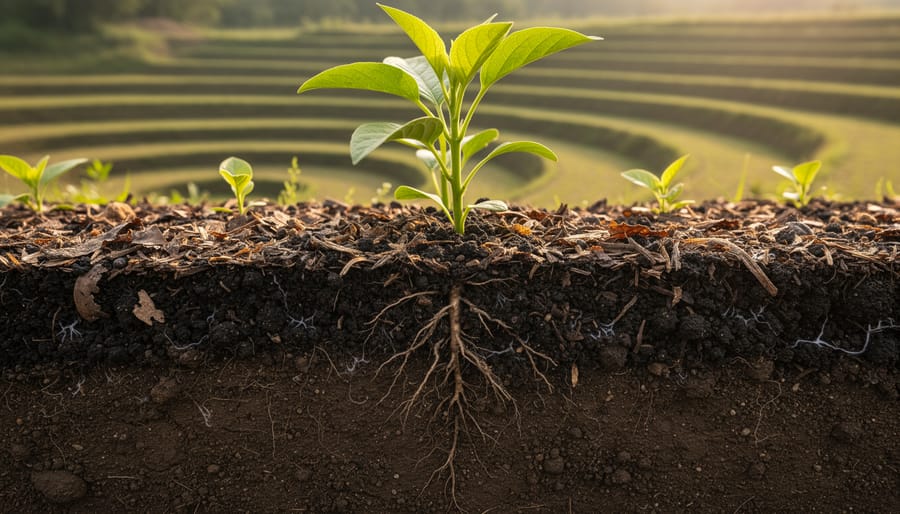
You don’t need expensive equipment or major infrastructure changes to start integrating traditional growing wisdom into your operation. Many Indigenous agricultural practices rely on careful observation and working with natural rhythms—skills you can begin developing immediately.
Start by observing soil temperature using your hand rather than relying solely on calendar dates. Indigenous farmers traditionally planted when soil felt warm enough to comfortably hold your hand in it for 30 seconds at 10 centimetres depth—roughly 10-15°C. This simple check often proves more reliable than fixed planting dates, especially with Alberta’s variable spring conditions.
Try companion planting combinations proven through generations of use. The Three Sisters method—corn, beans, and squash planted together—works well in southern Alberta’s Zone 3 gardens. Plant corn first when soil reaches appropriate temperature, add beans two weeks later when corn stands 15-20 centimetres tall, then squash another week after. The corn provides structure, beans fix nitrogen in soil, and squash leaves shade out weeds while retaining moisture.
Watch for natural indicators that signal planting times. Many Indigenous communities traditionally planted after observing specific bird migrations or when particular wildflowers bloomed. In Alberta, when trembling aspen leaves reach the size of a squirrel’s ear, soil temperatures typically suit cool-season crops like peas and lettuce.
Start small with a test plot of 100-200 square metres. Document what you observe throughout the season—temperature patterns, wildlife activity, plant performance, and soil conditions. These observations become your personal knowledge base, rooted in your specific land rather than generalized advice. This approach builds your confidence while respecting the patient, observational foundation of traditional agricultural knowledge.
Long-Term Integration Strategies for Whole-Farm Transformation
Transforming your entire farm operation to incorporate Indigenous agricultural wisdom represents a significant commitment, but the long-term benefits for soil health, biodiversity, and farm resilience can be substantial. These comprehensive approaches move beyond single practices to reshape how you view your land as an interconnected system.
Polyculture systems, inspired by traditional Indigenous gardens like the Three Sisters method, integrate multiple crop species that support each other. Rather than monoculture rows, consider intercropping systems where nitrogen-fixing plants support heavy feeders, while ground covers suppress weeds and retain moisture. Alberta farmers have successfully adapted these principles, growing pulse crops alongside cereals to reduce fertilizer needs while improving yields.
Agroforestry principles offer another pathway, combining trees, shrubs, and crops in ways that mirror natural ecosystems. Shelterbelts aren’t just windbreaks—they create microclimates, provide wildlife habitat, and can produce additional income through berries, nuts, or medicinal plants. Indigenous communities have long understood how strategic tree placement protects crops while enriching the broader landscape.
Watershed-scale thinking expands your perspective beyond property lines. Water management practices that consider the entire watershed, including wetland preservation and riparian buffer zones, reflect Indigenous understanding of interconnected systems. These approaches benefit your farm while supporting neighbouring operations and downstream communities.
Pursuing these transformative methods requires investment and planning, but multiple funding opportunities exist. The Canadian Agricultural Partnership offers environmental stewardship programs, while Growing Forward initiatives support innovation in sustainable practices. Provincial programs through Alberta Agriculture and Irrigation provide additional support for farmers transitioning to integrated systems. Regional conservation groups often offer cost-sharing for watershed and biodiversity projects.
Integrating Indigenous knowledge into your farming practices isn’t about replacing the modern techniques and tools that have served you well. Rather, it’s about enriching your existing approach with wisdom that has sustained communities and landscapes for thousands of years. Think of it as adding another tool to your agricultural toolkit, one that has been refined through generations of careful observation and adaptation to our specific Canadian environment.
The dual benefits are clear. Environmental stewardship becomes more intuitive when you incorporate practices like companion planting, rotational grazing patterns informed by traditional land management, and natural pest control methods. These approaches work with nature’s rhythms rather than against them, reducing input costs while building soil health and biodiversity. At the same time, this integration strengthens economic resilience. Diversified crops, reduced dependency on expensive inputs, and enhanced ecosystem services create a buffer against market volatility and climate uncertainty.
For Alberta farmers specifically, this means learning from Nations who have managed these prairies, parklands, and foothills for millennia. Their understanding of local weather patterns, soil conditions, and plant relationships offers practical insights you won’t find in conventional agricultural manuals.
Taking the first step is simpler than you might think. Reach out to local Indigenous communities, attend knowledge-sharing events, or connect with organizations facilitating these partnerships. Approach these conversations with genuine curiosity and respect, recognizing that you’re building relationships, not just extracting information.
This investment in learning from Indigenous partners pays dividends far beyond your fields. It strengthens community connections, preserves invaluable knowledge, and positions your operation for long-term success. Your farm’s future, and the health of the land you steward, will benefit from this integration of time-tested wisdom with modern innovation.