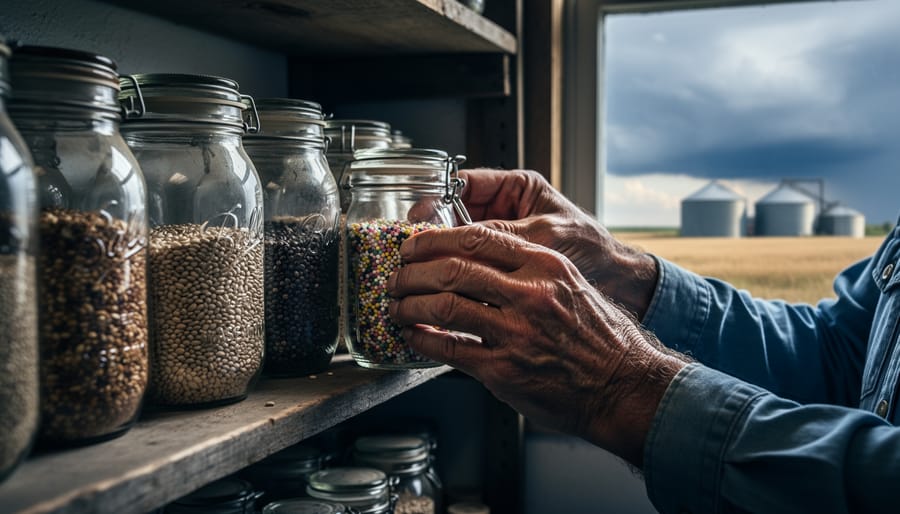
Build a diverse seed collection by preserving heritage varieties alongside modern cultivars that demonstrate drought tolerance, early maturity, and disease resistance—traits increasingly vital as Alberta faces recent crop challenges. Store seeds in cool, dry conditions at 4°C with silica gel packets to maintain 6-8% moisture content, ensuring viability for three to five years while tracking germination rates annually.
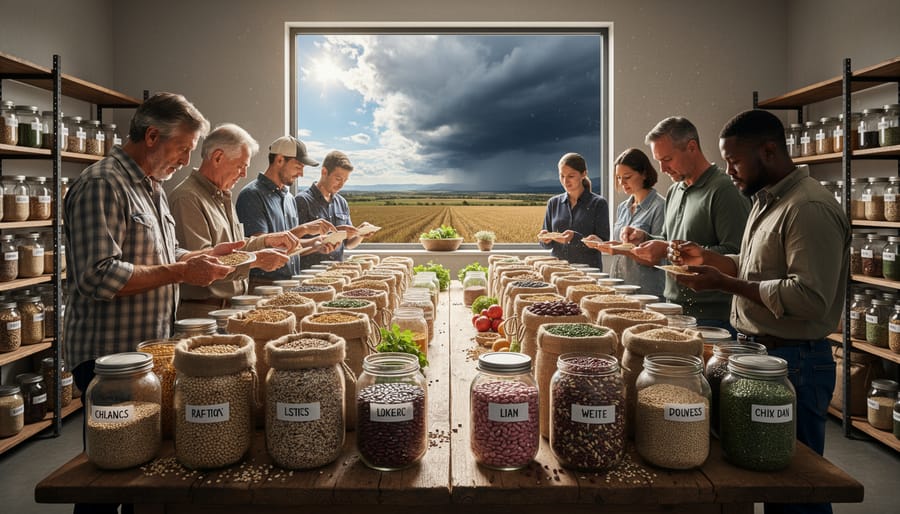
Establish regional seed-sharing networks through local agricultural societies and community groups to exchange climate-adapted varieties proven in your area. Document performance data for each variety, noting days to maturity, water requirements, and stress tolerance, creating a personalized knowledge base that guides future planting decisions.
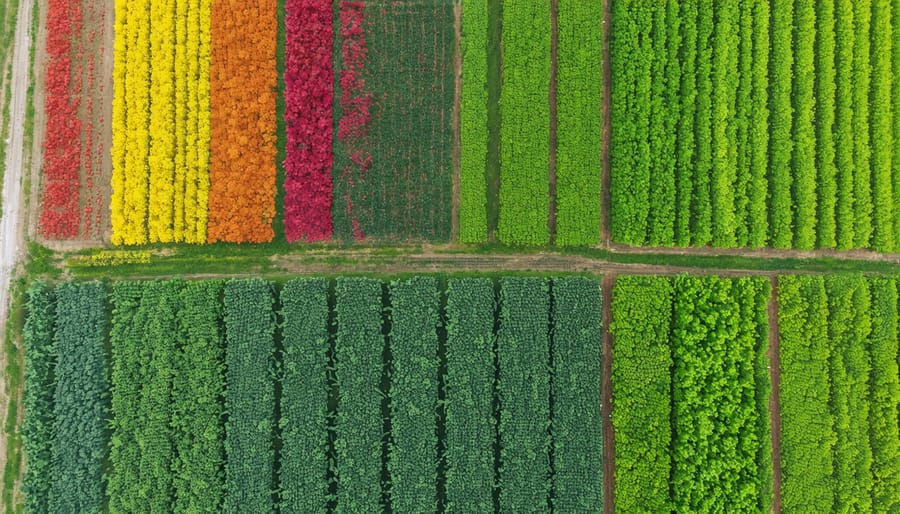
Diversify planting schedules by succession seeding every two weeks and selecting varieties with staggered maturity dates, reducing total crop loss risk during unexpected weather events. Allocate 20% of growing space to trial new varieties each season, identifying resilient candidates before committing larger acreage.
Partner with regional seed libraries and university extension programs to access professional storage facilities and expert guidance on seed selection for specific microclimates. These collaborations provide backup storage options and connect you with research on emerging climate-adapted varieties developed for Canadian prairie conditions.
Climate resilience through seed banking transforms uncertainty into opportunity, empowering you to adapt your operation while preserving agricultural biodiversity for future generations. This practical approach combines traditional knowledge with modern preservation techniques, building food security from the ground up.
Why Traditional Seed Sources Are Failing Alberta Farmers
The Hidden Cost of Genetic Uniformity
When you plant commercial hybrid canola or wheat varieties across your fields, you’re working with crops bred for consistency in ideal conditions. But here’s the challenge: these seeds often carry minimal genetic variation, which means limited ability to respond when conditions shift unexpectedly.
Consider this example from central Alberta. During the 2021 drought, farmers growing commercial durum wheat varieties experienced widespread crop failure, while a neighbour maintaining heritage Red Fife wheat saw reduced but harvestable yields. The difference? Heritage varieties carry diverse genetic traits that help some plants survive stress even when others struggle.
This matters more each season. Commercial barley bred for predictable precipitation patterns can’t quickly adapt when rainfall comes in intense bursts followed by extended dry spells. The seeds simply lack the genetic toolkit to respond.
Dr. Maria Schneider, a plant geneticist at the University of Alberta, explains it clearly: “Commercial breeding narrows genetic diversity to maximize specific traits like yield or disease resistance. We’ve essentially traded adaptability for short-term performance.”
The solution isn’t abandoning commercial varieties entirely. It’s about maintaining diverse seed collections alongside them, giving your operation options when standard varieties can’t handle what the season delivers. This approach provides insurance that complements modern farming practices.
When Your Usual Varieties Stop Performing
Many Alberta producers are experiencing firsthand what climate change looks like in their fields. Take the case of canola growers in the Peace Region who, in 2021, watched established varieties wilt under unprecedented heat domes that pushed temperatures above 40°C during flowering, devastating pod development. Similarly, wheat producers near Lethbridge have reported increased fusarium head blight in varieties that previously showed reliable resistance, as warming springs create conditions favourable to the pathogen.
In central Alberta, several barley operations faced unexpected challenges when traditional seeding windows shifted. Varieties selected for their historical performance suddenly matured too quickly during hotter-than-normal summers, reducing yields by 15-20%. Meanwhile, producers near Red Deer discovered their go-to pea varieties becoming vulnerable to new pest pressures, as milder winters allowed populations to survive that would have previously been controlled by cold snaps reaching -30°C or lower.
These aren’t isolated incidents. Agricultural extension specialists across the province report similar patterns: crops encountering stress outside their adapted range, forcing producers to rethink variety selection strategies they’ve relied on for decades.
What Climate-Resilient Seed Banking Actually Means
The Three Levels of Seed Banking
Seed banking operates at three complementary levels, each playing a vital role in building climate resilience for Canadian agriculture.
On-farm seed saving represents the foundation of this system. This practice involves selecting and storing seeds from your best-performing plants each season. Alberta farmer Sarah McKenzie has maintained her own seed collection for over fifteen years, developing wheat varieties that consistently outperform commercial options in her region’s unpredictable conditions. She saves approximately 10-15% of her harvest annually for replanting, focusing on plants that demonstrate drought tolerance and early maturity.
Community seed exchange programs create the next level of protection. These grassroots networks allow farmers to share genetic diversity and access varieties suited to local conditions. The Calgary Seed Library, established in 2016, now serves over 300 members who exchange seeds adapted to southern Alberta’s climate. Members contribute surplus seeds and borrow varieties they wish to trial, creating a living collection that evolves with regional climate patterns.
Institutional preservation efforts provide long-term security through professional storage facilities. Plant Gene Resources of Canada, based in Saskatoon, maintains over 110,000 seed accessions in climate-controlled vaults. These institutions serve as insurance policies, preserving genetic material that communities and individual farmers can access when local collections face catastrophic loss. The University of Saskatchewan’s Crop Development Centre also actively works with producers to preserve heritage varieties while developing new climate-adapted lines.
Together, these three levels create a robust safety net that protects agricultural biodiversity while giving you practical options for strengthening your farm’s resilience.
Building Your On-Farm Seed Bank: Practical Steps
Selecting Climate-Adaptive Varieties to Preserve
Building an effective seed bank starts with selecting varieties proven to handle Alberta’s evolving climate patterns. Focus on preserving seeds that demonstrate multiple adaptive traits rather than single characteristics.
Heat tolerance has become increasingly critical as Alberta experiences more frequent temperature spikes above 30°C during the growing season. Look for varieties that maintain productivity during heat stress and show strong pollen viability at elevated temperatures. Drought resistance is equally essential, particularly for dryland farming operations. Priority should go to climate-adapted varieties with deep root systems and efficient water use.
Shorter growing season varieties deserve special attention as unpredictable spring frosts and early fall freezes compress the reliable growing window. Save seeds from crops that mature 7-10 days earlier than traditional varieties while maintaining yield quality. Cold hardiness remains relevant despite warming trends, as late spring and early fall temperature swings continue challenging producers.
Consider varieties with proven performance in your specific microclimate. Randy Dueck, a fourth-generation farmer near Coaldale, emphasizes tracking which varieties consistently outperform others during challenging seasons. Document environmental conditions alongside harvest data to identify patterns over multiple growing years.
Don’t overlook disease resistance and pest tolerance, as warming temperatures allow new threats to establish in Alberta. Preserving genetically diverse seeds within each crop type provides flexibility for future selection as climate patterns continue shifting.
Storage Methods That Work in Canadian Climates
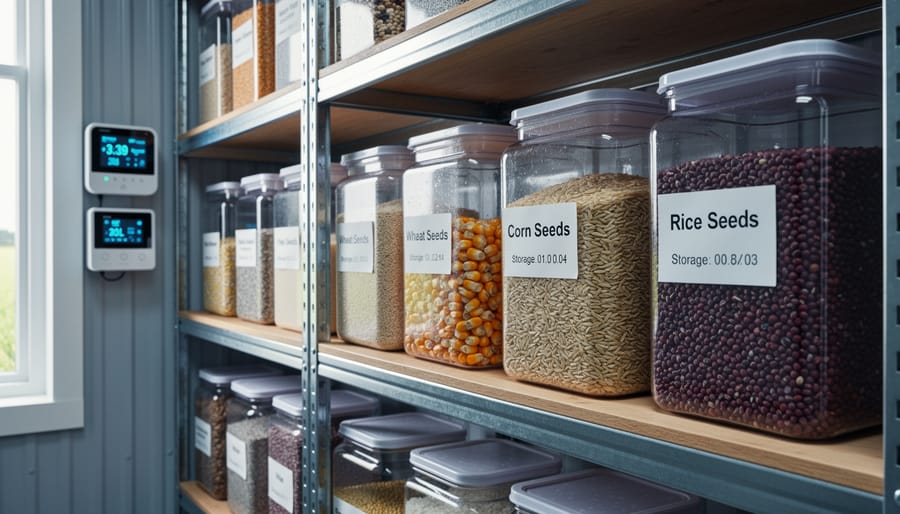
Successful seed storage in Canadian climates requires attention to two critical factors: temperature and humidity. The ideal storage temperature ranges between -18°C to 4°C, with most home freezers working perfectly at around -18°C. For humidity, aim to keep seeds at 20-40% relative humidity to prevent mold growth while avoiding excessive dryness that can damage seed coats.
For Alberta farmers working within tight budgets, simple solutions can be remarkably effective. Food-grade glass jars with tight-sealing lids work exceptionally well, as do vacuum-sealed bags that remove excess moisture. Consider adding food-grade silica gel packets to absorb any remaining humidity. A standard chest freezer in your basement or shop can store thousands of seed samples for years.
Mark Weston, a seed saver from Red Deer, shares his practical approach: “I use clean mason jars with new lids and label everything with the variety name and collection date. My chest freezer maintains a steady -20°C year-round, and I’ve successfully germinated tomato seeds stored for seven years.”
Before freezing, ensure seeds are thoroughly dry. Spread them on paper towels in a low-humidity area for at least two weeks. Test dryness by bending a seed between your fingers; it should snap rather than bend. This simple preparation step significantly extends storage life.
For those without freezer space, a cool, dark basement corner maintaining 10-15°C can work for one to two years of storage, though germination rates will decline faster than frozen samples.
Testing and Maintaining Seed Viability
Maintaining seed viability requires regular testing and attention. A simple germination test every 6-12 months helps you track your seed bank’s health and identify when stocks need refreshing.
To conduct a basic germination test, place 10 seeds between moist paper towels inside a sealed container or bag. Keep them at room temperature (18-22°C) and check daily for sprouting. After 7-14 days, count how many germinated. An 80% success rate or higher indicates good viability, while anything below 50% signals it’s time to grow out fresh stock.
Alberta farmer Tom Richardson from Lacombe County tests his canola and wheat seeds each spring before planting season. “It takes 15 minutes and saves me from discovering problems in the field,” he explains. His simple spreadsheet tracks variety names, test dates, germination rates, and notes about storage conditions.
Create a refresh schedule based on typical seed lifespans. Most vegetable seeds remain viable for 3-5 years under proper storage, though some crops like parsnips and onions decline faster. Plan to grow out and harvest fresh seeds before viability drops significantly.
Keep detailed records including collection dates, source information, test results, and storage locations. This documentation becomes invaluable when selecting adapted varieties and planning future crops, building your farm’s climate resilience over time.
Alberta’s Community Seed Banking Initiatives
How to Connect With Regional Seed Networks
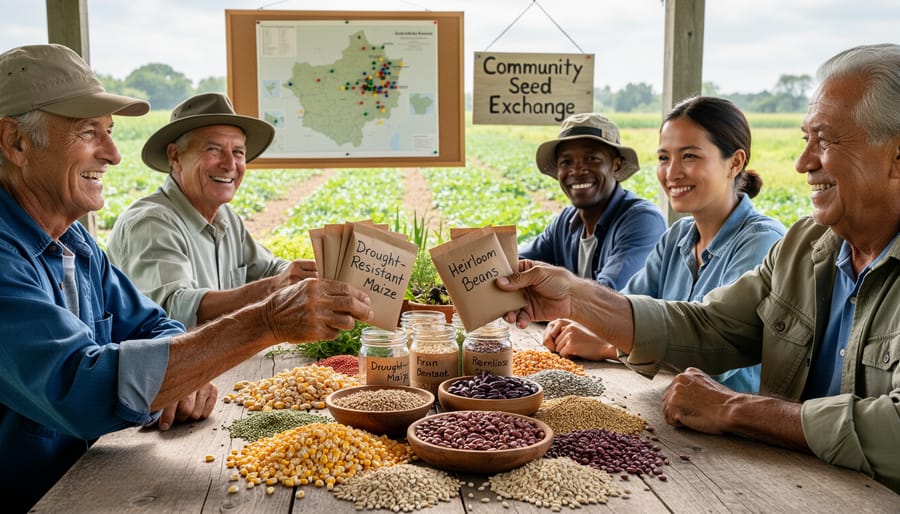
Connecting with regional seed networks strengthens your farm’s climate resilience while supporting agricultural biodiversity across Alberta. Start by reaching out to Seeds of Diversity Canada, which maintains a national seed library network and offers guidance on establishing local exchanges. Their Alberta chapters regularly host seed swaps where farmers share heritage and climate-adapted varieties.
The University of Alberta’s Department of Agricultural, Food and Nutritional Science provides research-backed recommendations on suitable seed varieties for changing Prairie conditions. Contact them at 780-492-4933 or through their website for consultation services and access to regional trial results.
Join community-building networks like your local Agricultural Service Board, which coordinates seed preservation initiatives and connects farmers facing similar climate challenges. Many county offices facilitate quarterly meetups where members exchange seeds and share success stories.
To contribute effectively, document your seed varieties’ performance including germination rates, heat tolerance, and moisture requirements. This information helps fellow farmers make informed selections. Most networks welcome both experienced seed savers and beginners, offering mentorship programs to build your preservation skills while strengthening regional food security.
Preserving Indigenous and Heritage Varieties
For thousands of years, Indigenous peoples across the Prairie provinces cultivated and stewarded crop varieties uniquely adapted to our challenging growing conditions. These heritage seeds carry genetic traits that modern plant breeding sometimes overlooks—deep drought tolerance, rapid maturation for short growing seasons, and resilience to temperature extremes that are becoming increasingly common with climate change.
Dr. Leanne Betasamosake Simpson, an Michi Saagiig Nishnaabeg scholar, emphasizes that Indigenous seed knowledge represents “not just genetic diversity, but relationships built over generations of careful observation and selection.” In Alberta, varieties like the Blackfoot potato and traditional squash cultivars demonstrate remarkable adaptability to dry conditions and sudden weather shifts.
When approaching Indigenous agricultural knowledge, respectful engagement is paramount. This means recognizing Indigenous communities as knowledge holders and rights holders, not simply information sources. Several Alberta farmers have built meaningful partnerships with local Indigenous communities through seed-sharing initiatives that honor traditional protocols and ensure benefit-sharing arrangements.
Consider connecting with organizations like Indigenous Seed Keepers Network or contacting your local First Nation’s agricultural programs to learn about appropriate ways to participate in heritage seed preservation. These relationships often begin with listening and learning rather than extracting knowledge.
Heritage varieties offer practical climate resilience advantages for contemporary farming operations. Many possess genetic traits for water efficiency developed through centuries of selection in drought-prone environments. Traditional corn varieties, for example, often feature deeper root systems than modern hybrids, accessing moisture during dry spells that stress conventional crops.
Saskatchewan farmer Tom Ammeter incorporated several heritage bean varieties into his rotation after connecting with local Cree knowledge keepers. “These older varieties matured reliably even during our driest summers,” he reports. “They’ve become insurance against increasingly unpredictable weather patterns.”
Preserving these varieties strengthens our collective seed security while honoring the agricultural innovation of Indigenous peoples. By thoughtfully incorporating heritage seeds into your seed banking efforts, you’re safeguarding genetic resources that may prove invaluable as climate conditions continue shifting across the Prairies.

Managing Seed Banking Alongside Modern Farming Operations
Legal Considerations for Seed Saving in Canada
Understanding your rights around seed saving helps you build climate resilience while staying compliant with Canadian law. In Canada, farmers have significant freedom to save seeds from their harvest for replanting on their own farms. This practice is protected under the Plant Breeders’ Rights Act, which allows you to save, condition, and store seeds from most crop varieties you’ve legally purchased.
However, there are important considerations. Some newer varieties come with contractual agreements that restrict seed saving, particularly certain genetically modified crops. Before saving seed, review your seed purchase agreements and variety tags. Public domain varieties and heritage seeds typically carry no restrictions, making them excellent choices for building your seed bank.
You can also participate in informal seed exchanges with other farmers in your community, though selling saved seed commercially requires meeting specific quality standards and potentially obtaining licenses. Organizations like Seeds of Diversity Canada provide resources about variety rights and preservation practices. The good news is that most traditional and open-pollinated varieties remain freely available for saving and sharing, supporting both your farm’s resilience and collaborative community efforts to adapt to climate change.
Expert Insights: What Agricultural Scientists Say About Seed Resilience
Dr. Sarah Chen, a plant geneticist at the University of Alberta, has spent the past decade studying how heritage seed varieties respond to climate stress. “What we’re seeing is remarkable,” she explains. “Many older cultivars possess genetic traits that modern hybrids have lost through selective breeding. These traits—like deeper root systems and variable germination patterns—are exactly what farmers need as weather patterns become less predictable.”
Her research team recently identified several heritage barley varieties that maintained yields during the 2021 heat dome, while conventional varieties saw 30-40% losses. “These resilient varieties aren’t just surviving—they’re teaching us which genetic markers to look for in future breeding programs,” Dr. Chen notes.
At Seeds of Diversity Canada, conservationist Mark Peterson emphasizes the practical value of seed banking for individual farms. “We encourage farmers to save seed from their best-performing plants each season. You’re essentially conducting your own selection trial, identifying which varieties adapt best to your microclimate.” He points to a Saskatchewan wheat farmer who developed a drought-tolerant strain simply by saving seed from plants that thrived during dry years.
Dr. James Kowalski, an extension specialist with Alberta Agriculture and Irrigation, recommends starting small. “Begin with one or two crops you know well. Keep detailed notes about germination rates, days to maturity, and yield performance. This data becomes invaluable over time.” He suggests farmers connect with regional seed libraries to access diverse genetics without significant upfront costs.
The consensus among experts is clear: building seed resilience isn’t about abandoning modern agriculture—it’s about integrating time-tested genetic diversity as insurance against climate uncertainty. As Dr. Chen puts it, “Your seed bank is your adaptation toolkit.”
Seed banking represents more than just a backup plan—it’s a powerful expression of your agency as a farmer in the face of climate uncertainty. By preserving seeds adapted to your land and conditions, you’re actively building resilience rather than waiting for solutions from elsewhere. This practice connects risk management with community strength, creating networks of knowledge and genetic diversity that benefit everyone involved.
Getting started doesn’t require elaborate infrastructure or significant investment. Begin by selecting your most resilient plants this season—those that thrived despite drought, heat, or unexpected weather patterns. Save seeds from 5-10 of your best performers, label them with detailed notes about growing conditions, and store them properly in a cool, dry location. Even this modest beginning contributes to your farm’s adaptive capacity.
For those ready to expand their efforts, connecting with existing seed libraries, regional exchanges, or organizations like Seeds of Diversity can provide invaluable support, resources, and community. Many Alberta farmers are already engaged in collaborative preservation projects, sharing varieties and techniques that strengthen regional food security.
The climate resilience strategies you implement today—including seed banking—create options for tomorrow. Your decisions about which varieties to preserve and share directly influence your farm’s future adaptability. This work matters, and your participation in seed preservation contributes to a more resilient agricultural community across Canada. Start small, stay consistent, and trust in the value of what you’re building.