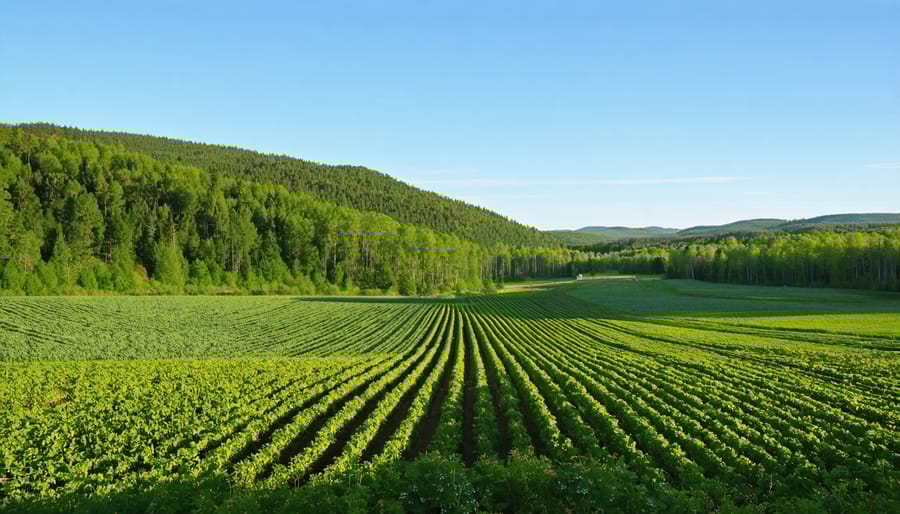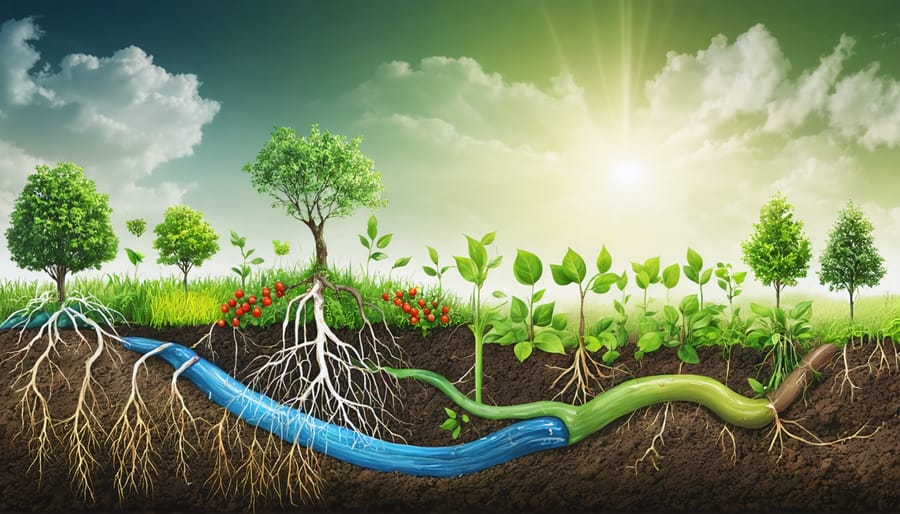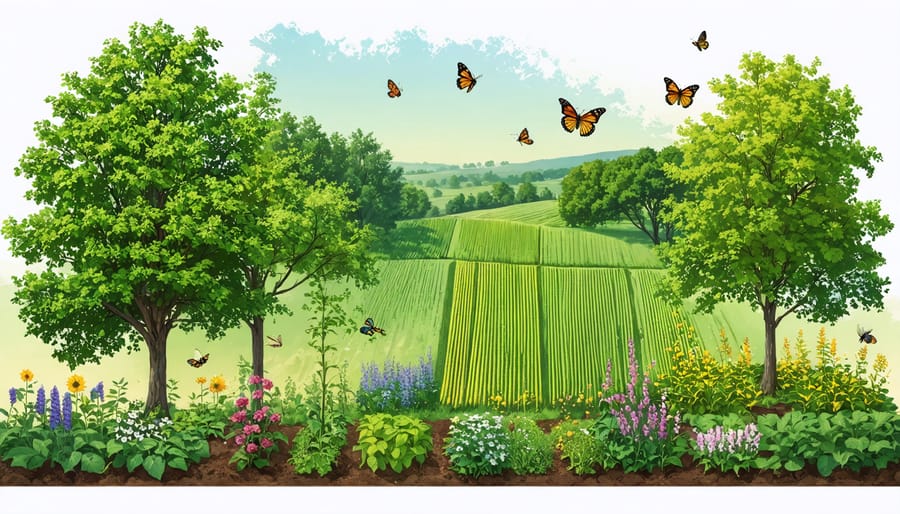
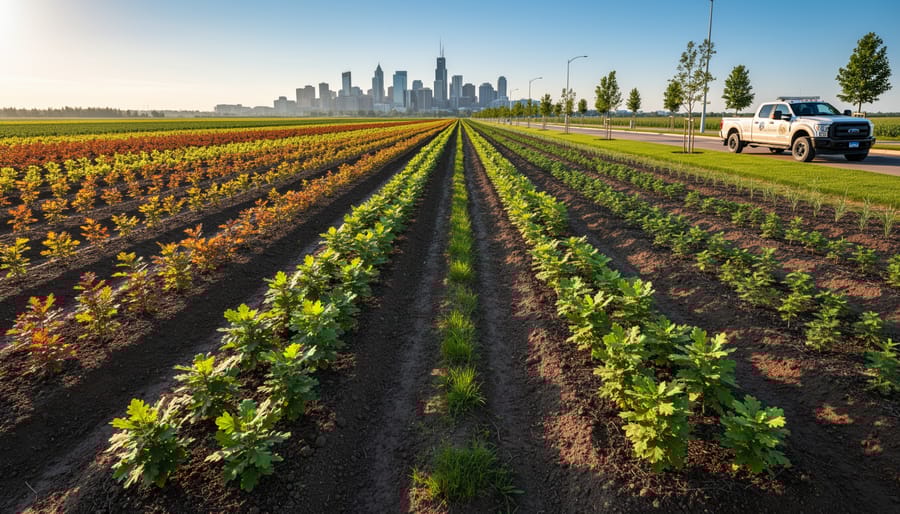
Recognize that the same trees cleaning city air can create new revenue streams for your farm operation. Urban forestry programs across Alberta are purchasing native seedlings, windbreak species, and ornamental stock from rural producers at premium prices, with municipalities like Edmonton committing to plant 2 million trees by 2050. Position your farm to supply this growing market by diversifying 5-10% of your acreage into tree nursery production, focusing on hardy species like bur oak, white spruce, and green ash that thrive in prairie conditions.
Connect with urban ecology initiatives that bridge the gap between rural production and city sustainability goals. Agroforestry systems you already use—shelterbelts, alley cropping, silvopasture—demonstrate the same principles urban planners are now adopting in parks, boulevards, and green corridors. These shared practices create opportunities for knowledge exchange, contract growing arrangements, and collaborative research projects that benefit both communities.
Explore the economic multiplier effect of urban greening on agricultural markets. As cities invest in green infrastructure, demand increases for mulch, compost, native plant materials, and specialized equipment services that farms can provide. Calgary’s urban forest management alone generates over 15,000 cubic metres of wood waste annually, creating opportunities for mobile chipping services, biomass processing, and value-added wood products.
Leverage technical resources available through municipal urban forestry departments. Many cities offer free soil testing, tree health assessments, and species selection guidance that applies equally to farm windbreaks and woodlots. Building relationships with urban foresters opens doors to bulk purchasing discounts on seedlings, access to specialized equipment, and early notice of contract opportunities that can supplement farm income during slower agricultural seasons.
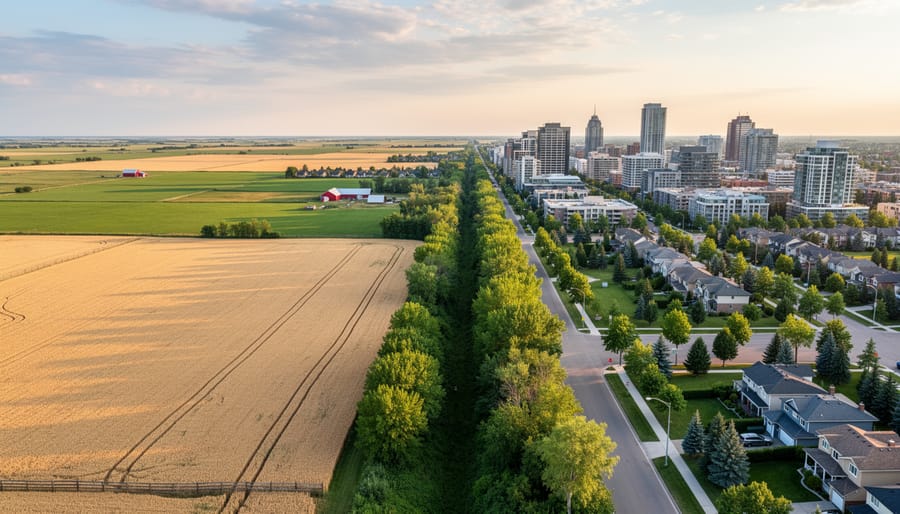
The Urban-Rural Connection: How City Trees Support Agricultural Communities
Economic Opportunities for Rural Tree Growers
Urban greening projects across Canada are creating valuable income streams for rural tree growers, and Alberta farmers are already tapping into this growing market. As municipalities expand their tree canopy goals, the demand for native seedlings and nursery stock continues to rise, opening doors for agricultural producers to diversify their operations.
Rural growers can supply urban forestry initiatives with native species like balsam poplar, white spruce, and Manitoba maple, which thrive in prairie conditions and require less maintenance once established. Starting a small nursery operation requires approximately 0.4 to 2 hectares of land, with seedlings typically ready for market within 2-3 years. Many farmers find this complements existing operations well, as nursery stock can generate revenue during slower agricultural seasons.
In central Alberta, a network of farmers partnered with Edmonton and surrounding municipalities through a regional greening program. These producers grow containerized native trees and shrubs specifically for urban parks and residential developments. The arrangement provides farmers with purchase agreements that guarantee markets for their stock, while cities benefit from locally adapted plants with higher survival rates.
“We started with 5,000 seedlings and now supply three municipalities annually,” explains Mark Lindstrom, a mixed farmer near Leduc. “It’s become a reliable income source that uses land we couldn’t cultivate effectively.”
Getting started involves connecting with your municipal parks department or regional planning commission to understand their planting schedules and species preferences. Some municipalities offer technical support and even initial funding for farmers willing to grow specific native varieties. This partnership model strengthens rural-urban connections while supporting environmental goals that benefit everyone.
Shared Climate Solutions Across the Urban-Rural Divide
Urban forests and rural agroforestry systems aren’t competitors – they’re partners in addressing regional climate challenges. When cities plant trees and farmers integrate climate-resilient farming practices through agroforestry, both contribute to a connected landscape that benefits everyone.
Consider carbon sequestration across Alberta’s regions. Urban forests can store approximately 7-10 tonnes of carbon per hectare annually, while agricultural shelterbelts and riparian buffers on farms add significantly to regional carbon capture. Together, these systems create a comprehensive carbon management strategy that extends far beyond city limits.
Air quality improvements flow both ways. Urban trees filter particulate matter and pollutants that affect rural areas downwind, while agricultural windbreaks reduce dust and soil particles that drift toward urban centers. During wildfire season, this interconnected green infrastructure provides crucial filtration across the entire region.
Temperature regulation demonstrates perhaps the most practical collaboration. Urban heat islands can raise temperatures 2-5 degrees Celsius compared to surrounding areas, affecting weather patterns that impact nearby agricultural lands. Meanwhile, strategically placed farm shelterbelts moderate wind patterns and microclimates that extend into urban edges.
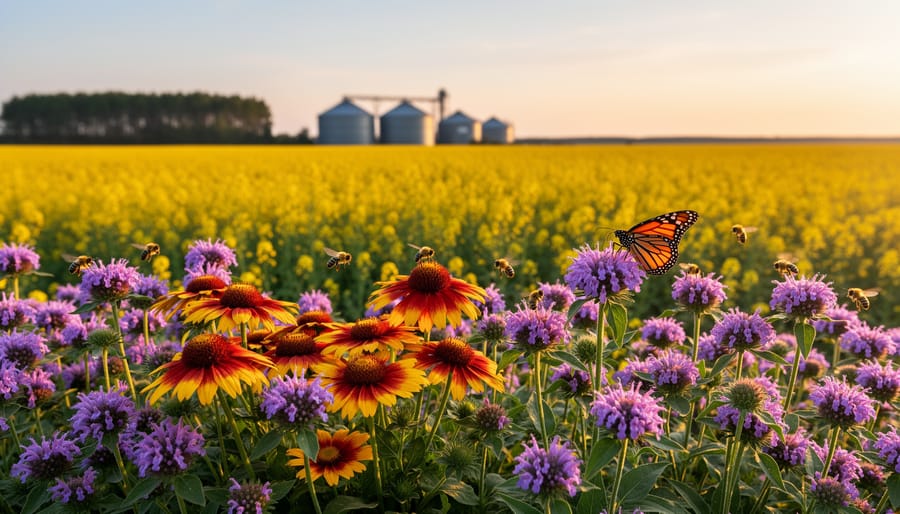
Saskatchewan farmer James Hartman, who established 8 kilometers of shelterbelts connecting to Edmonton’s greenbelt initiatives, notes: “We’re seeing better pollinator movement, improved air quality readings, and more stable weather patterns. Urban and rural tree planting isn’t separate work – it’s one system supporting our shared environment and agricultural productivity.”
Agroforestry Principles That Work in Both Urban and Rural Settings
Alley Cropping and Urban Food Forests
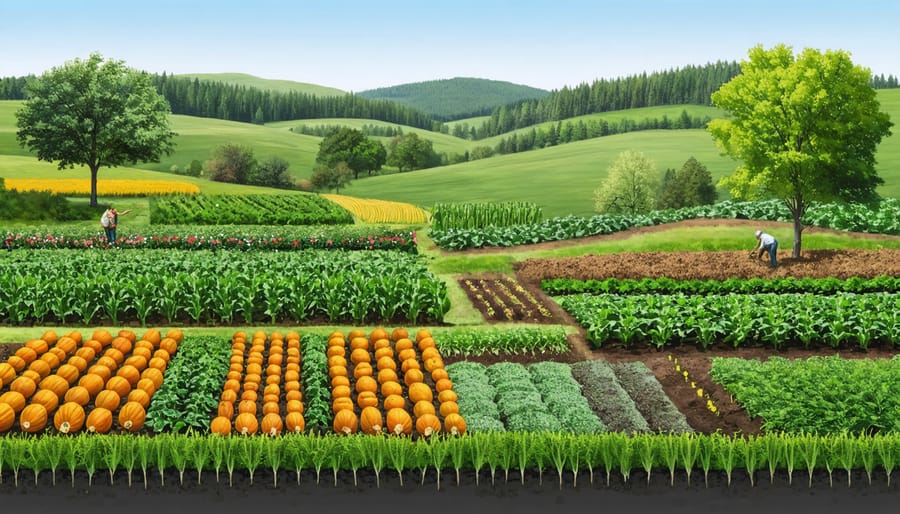
Alley cropping, a traditional agroforestry practice where crops grow between rows of trees or shrubs, is finding new life in urban settings across Alberta. Urban food forests adapt this model by creating productive landscapes that combine fruit and nut trees, berry shrubs, and perennial vegetables in parks, community gardens, and even residential yards.
For Alberta’s growing zones (primarily zones 2-4), species selection is critical for success. Hardy fruit trees like Evans cherry, Pembina plum, and hardy apple varieties such as Norland or Goodland perform well in urban microclimates, which typically offer 5-10 degrees Celsius more warmth than surrounding rural areas. Haskap berries, saskatoons, and sour cherries make excellent mid-story plantings, while cold-hardy herbs and perennial vegetables occupy the understory.
Edmonton’s food forest initiatives demonstrate practical implementation. Local grower Sarah Chen reports her community project yields over 200 kilograms of fruit annually from a half-hectare site. “We planted disease-resistant cultivars in 4-metre rows with 2-metre spacing, allowing maintenance equipment access while maximizing production,” she explains.
These urban systems offer rural farmers several opportunities. Many municipalities seek agricultural expertise for establishing food forests, creating consulting opportunities. Additionally, urban projects provide testing grounds for new perennial varieties before scaling up to farm operations. The key is matching plant selections to your specific microclimate while planning for 3-5 years before significant production begins.
Windbreak Design: From Farm Fields to City Blocks
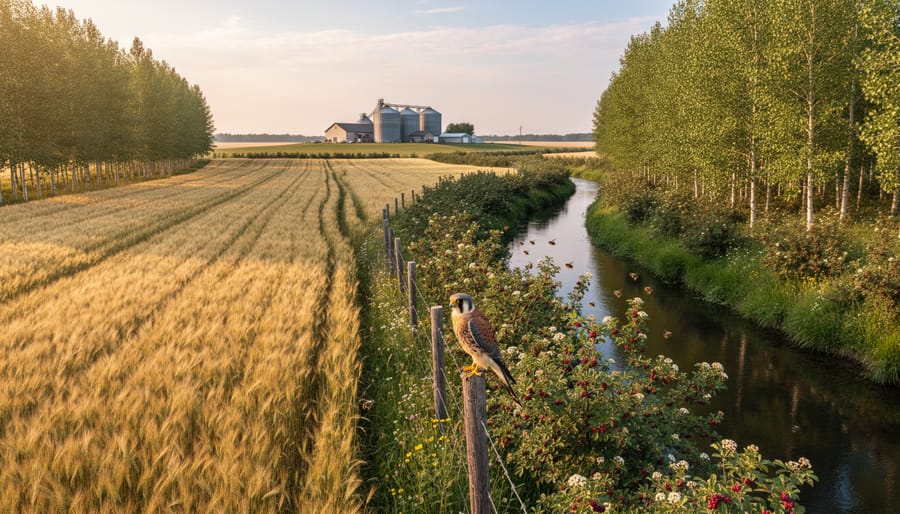
The windbreak strategies you’ve perfected on your farm translate remarkably well to urban settings, and cities across Canada are taking notice. Just as your shelterbelt reduces wind speeds by 50-70% across 300 metres of cropland, urban windbreaks create similar protective zones that lower heating costs and improve comfort in residential neighbourhoods.
A recent Edmonton study measured temperature differences of up to 3°C between tree-lined streets and exposed areas during winter months. These planted corridors function exactly like your farmyard shelterbelts, blocking prevailing winds and reducing the energy needed to heat buildings. For urban residents, this means 15-25% lower heating bills in winter and reduced air conditioning costs in summer.
Calgary’s urban forestry department has documented that strategic tree placement along transportation corridors cuts snow removal costs by reducing drift accumulation, a benefit Alberta farmers know well from field experience. The same principles apply: position conifers on the windward side, use deciduous trees to allow winter sun penetration, and maintain adequate spacing for root development.
Urban planners increasingly consult agricultural experts when designing green infrastructure. Your knowledge of species selection, spacing ratios, and seasonal wind patterns provides valuable insight for creating effective urban microclimates. This cross-pollination of expertise opens consulting opportunities while demonstrating how farm-tested solutions address city challenges.

Soil Health Management Across Landscapes
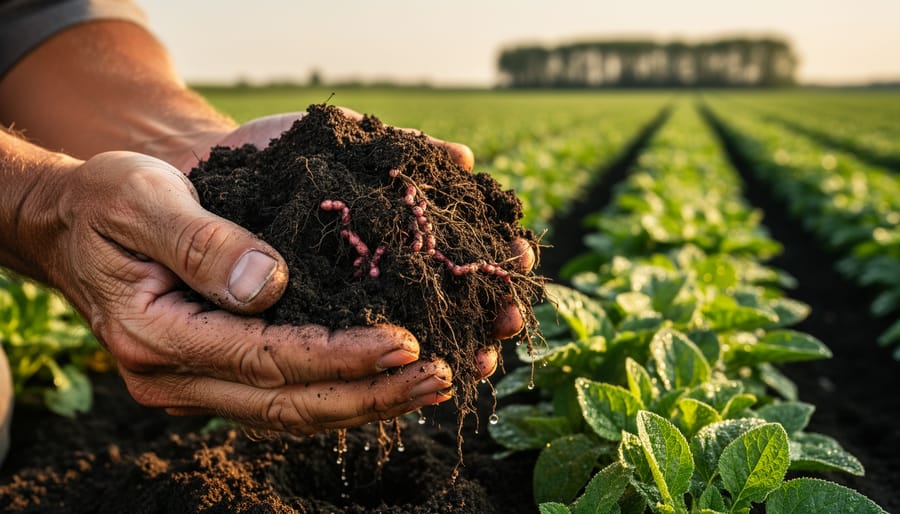
The techniques Alberta farmers use to build healthy soil translate directly to urban landscapes—they just need adapting to different conditions. Urban soils often face compaction, contamination, and depleted organic matter, similar to degraded agricultural land. Your knowledge of composting, mulching, and cover cropping can help restore these spaces while creating new markets for your materials.
Cities need organic amendments, and farms have them. Composted manure, wood chips from windbreaks, and straw mulch all improve urban soil structure and increase carbon sequestration. Many municipalities now purchase these materials locally, creating revenue streams while solving urban soil challenges.
The principles behind agroforestry soil building work in both settings. Adding organic matter, protecting soil biology, and maintaining living roots year-round boost carbon storage whether you’re managing 400 hectares or 400 square metres. Edmonton’s urban forest management team, for example, now sources wood chip mulch from regional farmers, applying 7 to 10 centimetres depth around trees—the same practice that improves orchard soil health on farms. This knowledge exchange benefits everyone while addressing climate goals through practical, proven methods.
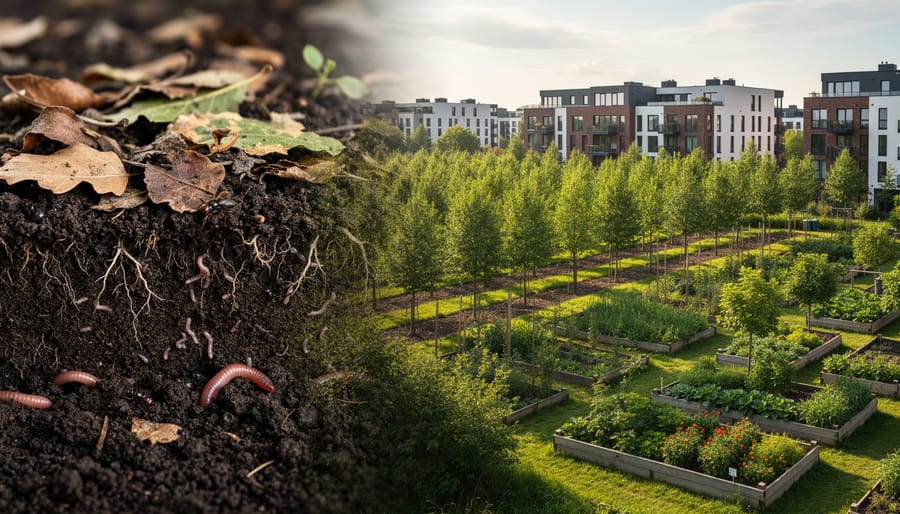
Urban Greening Techniques That Improve Rural Farming Practices
Intensive Growing Systems for Small Acreages
Small-scale and hobby farmers across Alberta are discovering that intensive growing systems can transform underutilized land into productive income streams. These high-density methods, borrowed from urban agriculture practices, work exceptionally well on parcels as small as 0.2 hectares.
Vertical growing systems, container gardens, and raised bed operations allow you to produce significant yields in compact spaces. Market gardens using intensive techniques can generate $50,000 to $75,000 per hectare annually, far exceeding traditional crop returns. These systems work particularly well on marginal land that might be too small or irregular for conventional farming equipment.
Consider incorporating shade-tolerant crops beneath existing trees or alongside windbreaks, creating productive agroforestry spaces. Mushroom cultivation, microgreens, and specialty herbs thrive in controlled environments and command premium prices at farmers’ markets and restaurants.
Local agricultural extension offices report growing interest from farmers using these methods to diversify revenue. One central Alberta producer transformed a 0.4-hectare unused corner into a profitable salad green operation, supplying three Edmonton restaurants year-round using season-extending techniques.
The key is matching your growing system to available space and market demand. Start small, test your markets, and scale gradually as you build expertise and customer relationships.
Storm Water Management Innovations
Urban stormwater management techniques offer practical solutions you can adapt to your Alberta farm operations. Bioswales, essentially vegetated channels that slow and filter water runoff, capture precipitation before it leaves your property. These shallow, planted depressions can reduce water loss by 30-40% while filtering sediments and nutrients.
Rain gardens work similarly, using deep-rooted native plants to absorb runoff from buildings, driveways, and compacted areas. A rain garden measuring just 9 square metres can manage runoff from approximately 280 square metres of impervious surface. Prairie grasses like big bluestem and native wildflowers thrive in these installations, requiring minimal maintenance once established.
Vernon Smith, a water management specialist near Lacombe, integrated bioswales along his field edges, capturing spring melt that previously eroded topsoil. “We’re holding an extra 50 millimetres of water on-site now,” he notes. These same farm water management strategies help buffer against Alberta’s increasingly unpredictable precipitation patterns, storing moisture during heavy rainfall events and maintaining soil hydration during dry spells. Implementation costs typically range from $30-$60 per square metre, with systems functioning effectively for 20-plus years.
Community Engagement Models That Work
Urban greening projects succeed when they tap into genuine community ownership and participation. Cities like Edmonton have demonstrated that tree-planting initiatives gain momentum when residents help select species, maintain plantings, and celebrate milestones together. This same approach translates remarkably well to farm settings.
Consider adapting these proven strategies for your operation. Host seasonal u-pick events where families don’t just harvest produce but learn about your sustainability practices. One Alberta farmer near Red Deer increased repeat visitors by 40% after introducing monthly farm walks that educated participants about shelterbelts and soil health. These walks created ambassadors who spread word-of-mouth recommendations throughout their networks.
Collaboration amplifies impact. Partner with local schools for educational programming or establish community garden plots on marginal land. A mixed farm outside Calgary transformed 0.4 hectares into shared growing space, strengthening relationships with urban transplants while generating modest rental income.
The key is making people feel invested in your land’s story. When community members participate in planting hedgerows or selecting heritage crop varieties, they become stakeholders in your success. This engagement builds the loyal customer base essential for direct marketing and agritourism ventures, while fostering the rural-urban connections that benefit everyone involved.

Building Your Farm’s Agroforestry System: Practical Steps
Site Assessment and Species Selection for Alberta
Evaluating your farm’s potential for agroforestry starts with understanding your site’s unique characteristics. Begin by assessing your soil type, drainage patterns, and sun exposure across different areas of your property. Most Alberta farms have varying microclimates that can support different tree and shrub species, creating diverse opportunities for integration with existing agricultural operations.
For farms in Alberta’s agricultural heartland (zones 2b-3b), native species like bur oak, green ash, and Manitoba maple offer excellent windbreak potential while supporting local ecosystems. These hardy trees withstand temperature extremes from minus 40 degrees Celsius in winter to plus 30 in summer. Saskatoon berry and chokecherry shrubs provide dual benefits as both conservation plantings and revenue-generating crops, with growing demand from urban markets for locally-sourced fruit.
In southern Alberta’s drier regions, consider drought-tolerant species like caragana and buffaloberry for shelterbelt systems. Northern farmers working in zone 2a should focus on ultra-hardy options including white spruce, trembling aspen, and pin cherry.
Local agricultural extension offices provide free site assessment resources, and connecting with nearby Conservation Districts can unlock technical support and potential cost-share programs. Gerald Thompson, an agroforestry specialist from Leduc County, notes that “the most successful projects start with matching species to existing site conditions rather than trying to modify the land extensively.”
Testing soil pH and conducting a simple percolation test helps identify suitable planting locations, ensuring your investment thrives for decades while enhancing both farm productivity and environmental benefits.
Funding and Support Resources
Several funding opportunities exist to support Alberta farmers exploring agroforestry and urban greening initiatives. Agriculture and Agri-Food Canada’s Agricultural Climate Solutions program offers grants up to $250,000 for projects that enhance carbon sequestration through tree planting and sustainable land management practices.
At the provincial level, the Alberta Conservation and Climate Resilience Grant Program provides funding for environmental stewardship projects, including agroforestry systems that connect rural and urban landscapes. Emissions Reduction Alberta occasionally funds innovative projects that demonstrate climate benefits through integrated tree and crop systems.
Municipal governments in Alberta’s urban-adjacent areas increasingly offer technical assistance and partnership opportunities for farmers interested in contributing to urban forest corridors. Edmonton’s River Valley Alliance and Calgary’s Urban Forest Management team actively seek rural partnerships for greening initiatives.
For those weighing financial commitments, understanding the costs and considerations is essential before applying.
Application tips: Start conversations early with program officers, emphasize measurable environmental outcomes, and highlight community benefits. Many successful applicants partner with conservation organizations or academic institutions to strengthen their proposals. The Alberta Association of Agricultural Societies can connect you with experienced grant writers familiar with agroforestry applications.
Year-One Implementation Timeline
Starting your agroforestry journey in Alberta requires careful timing aligned with our short growing season. In March and April, focus on planning: assess your land, order tree seedlings from local nurseries, and secure necessary permits. May is prime planting time once soil temperatures reach 10°C—start with hardy species like hybrid poplar or willow. During June and July, establish irrigation systems and monitor young plantings closely, as our region receives only 400-450mm of annual precipitation. August through September involves implementing windbreaks and preparing infrastructure for winter protection. As temperatures drop in October, mulch around new trees and document first-year growth patterns. November and December are ideal for attending workshops, connecting with organizations like the Alberta Land Institute, and refining your second-year strategy. This measured approach accounts for Alberta’s 120-day growing season and sets your agroforestry system up for long-term success. Remember, local farmers who’ve implemented similar systems report seeing measurable benefits within three years.
Expert Insights: Making Agroforestry Work in the Canadian Prairies
Dr. Sarah Chen, an agroforestry specialist at the University of Alberta, has worked with over 40 Prairie farms implementing tree-based systems. “The biggest shift happens when farmers stop seeing trees as competition and start viewing them as infrastructure,” she explains. “A well-planned shelterbelt isn’t just windbreak—it’s livestock protection, snow management, and future revenue all in one.”
This perspective resonates with Mark Thiessen, who farms near Lacombe, Alberta. Five years ago, he established a hybrid poplar system alongside his grain operation. “The first two years were about patience and learning,” Mark shares. “Now those trees buffer my fields from wind erosion, and I’m already seeing improved soil moisture retention in adjacent crop rows.”
The challenge most Prairie farmers face isn’t whether agroforestry works—it’s making it work within their specific context. James Kort, a research scientist with Agriculture and Agri-Food Canada, addresses this directly. “Cold hardiness and drought tolerance are non-negotiable in our region,” he notes. “We recommend native species like Manitoba maple, green ash, and Scots pine for shelterbelts, while hybrid poplars and willows excel in riparian restoration projects.”
Water management proves critical for establishment success. Jennifer Huang, an urban forestry consultant who bridges city and rural projects, emphasizes practical solutions. “Start small with 0.4 to 0.8 hectares, establish drip irrigation for the first three growing seasons, and mulch heavily,” she advises. “These steps dramatically increase survival rates in our dry climate.”
Economic concerns frequently arise during planning stages. Mark’s experience offers reassurance: “My establishment costs ran about $2,500 per hectare, but government programs covered roughly 60 percent. The carbon credit potential and future timber value make the math work.”
For farmers considering agroforestry, these experts recommend connecting with peers who’ve navigated similar challenges. Canadian agroforestry success stories demonstrate that with proper planning and regional expertise, tree-based systems thrive even in demanding Prairie conditions.
Dr. Chen summarizes the opportunity clearly: “Urban centres increasingly value rural environmental stewardship. Farmers implementing agroforestry aren’t just improving their operations—they’re building bridges between urban and rural communities while enhancing long-term farm resilience.”
Urban forestry and urban greening aren’t just city concerns—they represent real opportunities for Alberta’s farming community. The connection between healthy urban forests and thriving rural agricultural operations creates a partnership that benefits everyone involved. When cities invest in tree planting and green infrastructure, they’re creating markets for nursery stock, generating demand for agricultural expertise, and building awareness about the vital role trees play in our environment.
For farmers considering their next steps, agroforestry offers a practical entry point. Start small: plant a shelterbelt of 50 to 100 trees along a field edge, or integrate berry-producing shrubs into existing pasture systems. These modest beginnings can evolve into significant diversification opportunities while improving soil health, water retention, and biodiversity on your operation. The techniques you develop translate directly to urban forestry projects, positioning you as a knowledgeable partner for municipal initiatives.
Don’t wait for opportunities to come to you. Reach out to your local municipal parks department or regional conservation authority. Many urban centers across Alberta are actively seeking partnerships with agricultural producers who understand tree care, soil management, and long-term planning. Your expertise matters in these conversations, and the economic benefits—from seedling sales to consulting opportunities—can supplement your farm income while strengthening the broader community.
The divide between urban and rural isn’t as wide as it seems. By engaging with urban greening efforts, you’re not only expanding your operation’s potential but also building bridges that help city residents understand and value agricultural life. Together, we’re creating greener, more resilient communities across Alberta.