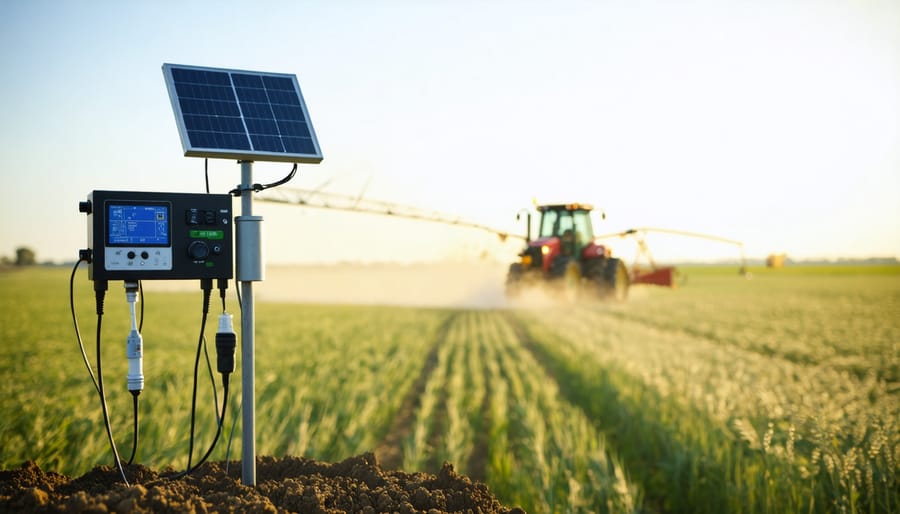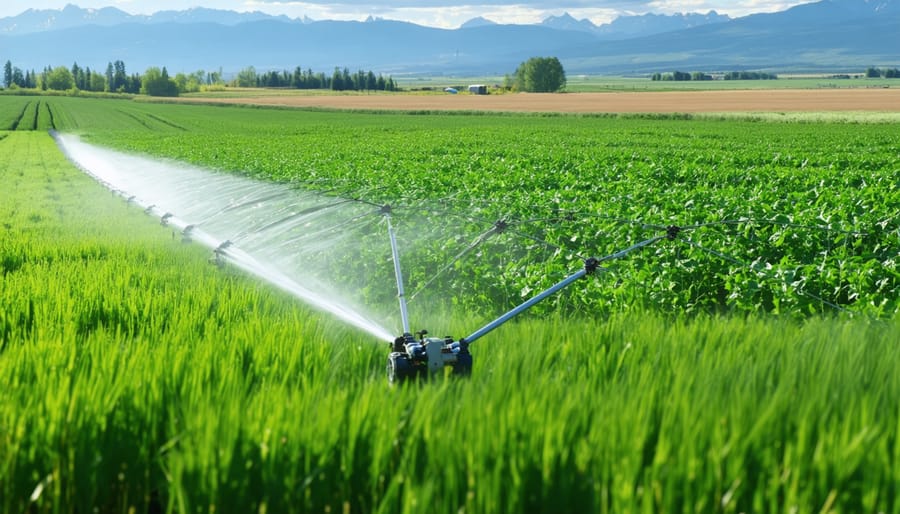
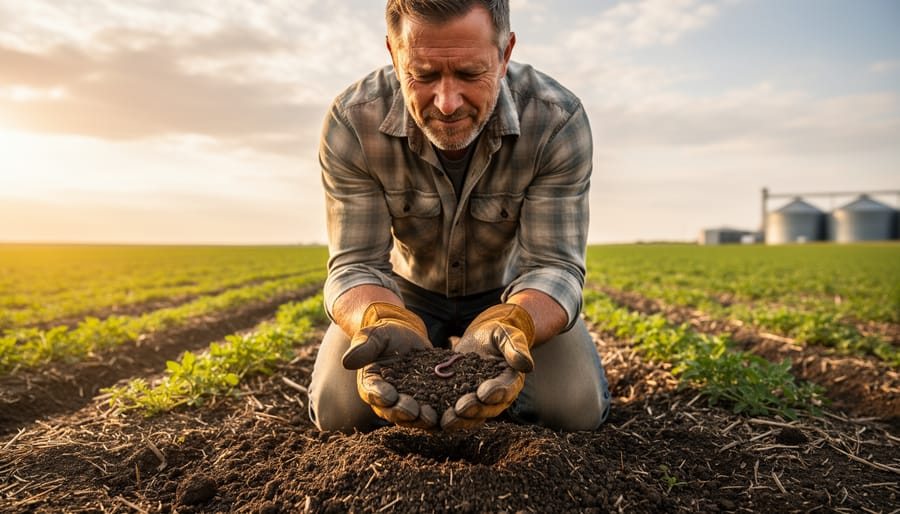
Your soil is more than dirt—it’s a living ecosystem that directly determines your crop yields, input costs, and long-term farm profitability. Across Canadian prairies, farmers are discovering that strategic soil management isn’t just about sustainability—it’s about building resilience against our increasingly unpredictable growing seasons while reducing fertilizer expenses by 20-30% annually.
The foundation of productive agriculture starts beneath your boots. Healthy soil with robust organic matter content (ideally 3-5% in prairie conditions) retains moisture during Alberta’s dry spells, supports beneficial microbial populations, and releases nutrients when your crops need them most. Yet many operations unknowingly deplete their soil’s capacity through practices that seemed efficient in the short term but compromise long-term productivity.
Whether you’re managing 160 hectares near Red Deer or 2,000 hectares in the Peace Country, understanding soil health principles gives you control over your operation’s future. This guide brings together proven techniques from Canadian farmers who’ve transformed their soil quality, expert insights adapted to our climate realities, and a clear educational pathway to help you make confident decisions about soil management investments. You’ll discover practical approaches that fit real farming schedules and budgets—because improving soil health shouldn’t mean sacrificing this season’s bottom line.
What Soil Health Actually Means for Your Bottom Line
The Five Pillars of Productive Soil
Healthy, productive soil rests on five interconnected pillars that work together to support thriving crops and sustainable farm operations. Understanding these fundamentals helps you make informed decisions about soil management on your land.
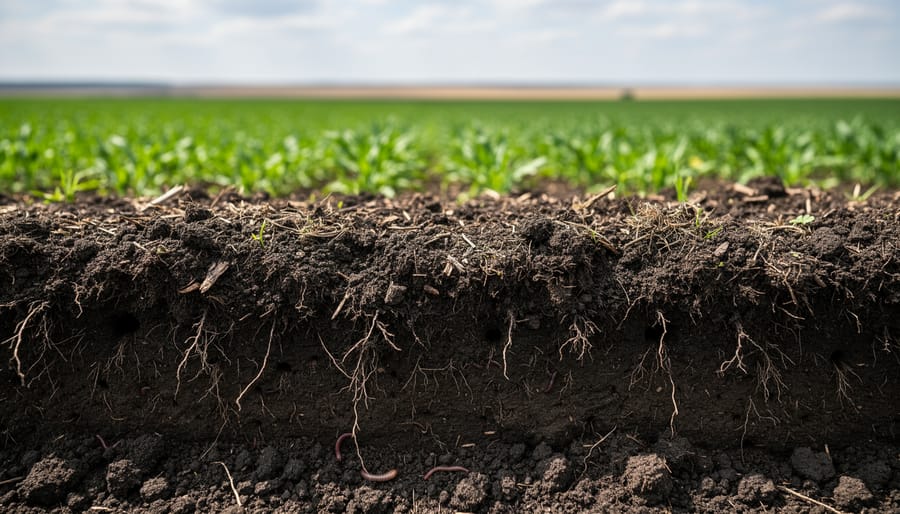
Soil structure determines how well your fields handle moisture and root development. Good structure features aggregates—clumps of soil particles bound together—that create pore spaces for air and water movement. Red Deer farmer Tom Harrison improved his heavy clay soils by reducing tillage and adding compost, which increased aggregate stability by 40% over three years. You’ll know your structure is improving when you can easily push a wire flag into the soil and see earthworm channels.
Organic matter serves as the foundation for soil fertility, typically ranging from 2-6% in Alberta soils. Each 1% increase in organic matter helps soil hold an additional 170,000 litres of water per hectare. Cover crops, crop residue management, and manure applications all build organic matter over time.
Biological diversity brings your soil to life. Healthy soil contains billions of bacteria, fungi, protozoa, and other organisms per gram. These workers break down organic matter, cycle nutrients, and protect crops from disease. A Lethbridge producer discovered that diversifying her rotation from wheat-canola to include pulses doubled beneficial fungi populations within two seasons.
Water retention and management ensures crops access moisture when needed. Practices like maintaining surface residue and building organic matter improve infiltration and reduce evaporation—critical during Alberta’s dry periods.
Nutrient balance means providing crops with adequate nutrition without excess or deficiency. Regular soil testing, typically every three years, guides fertilizer decisions and prevents nutrient loss through leaching or runoff. Peace Country farmers have reduced fertilizer costs by 15% while maintaining yields through precision nutrient management based on soil test results.
How Alberta’s Climate Challenges Your Soil
Alberta’s unique climate presents distinct challenges that directly influence how you manage your soil throughout the year. Understanding these regional conditions helps you make informed decisions that protect and enhance your soil’s productivity.
The province’s freeze-thaw cycles are particularly demanding on soil structure. When temperatures fluctuate around freezing during spring and fall, water in the soil expands and contracts repeatedly. This process can break down soil aggregates, compact certain areas, and create surface crusting that restricts water infiltration and seedling emergence. Managing residue cover becomes essential during these transitional periods, as even a moderate layer of crop residue can buffer temperature extremes and reduce the severity of these cycles.
Moisture variability across Alberta creates another layer of complexity. From the relatively humid Peace Region to the drier southeast, precipitation patterns vary significantly. Some areas may receive adequate moisture one year and face drought conditions the next. This unpredictability makes building soil organic matter particularly valuable, since each 1% increase in organic matter can help soil hold approximately 20,000 additional litres of water per hectare, providing a crucial buffer during dry spells.
The short growing season, typically ranging from 100 to 120 frost-free days in most agricultural areas, limits your window for building soil health through cover crops or extended rotations. However, many Alberta farmers have found success with quick-maturing cover crop species planted immediately after harvest or using overwintering varieties that establish in fall and resume growth in spring, maximizing the brief growing window while protecting soil during vulnerable periods.
Core Soil Management Practices That Work in Canadian Conditions
Cover Cropping Between Growing Seasons
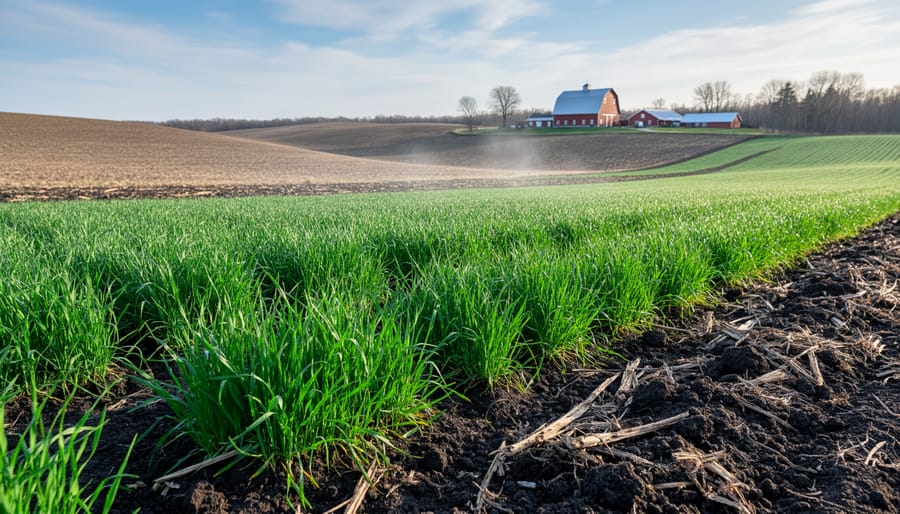
Cover cropping between growing seasons offers Alberta farmers a powerful tool to protect and enhance soil health during vulnerable periods. With our relatively short growing season, typically running from May to September, strategic planning becomes essential for successful implementation.
Species selection depends largely on your planting window and primary goals. For early fall seeding after wheat or canola harvest (late August to early September), winter-hardy options like fall rye, winter wheat, or hairy vetch work exceptionally well. These species establish quickly and survive Alberta winters, providing early spring biomass. If you’re working with a September planting window, consider faster-growing annuals like oats, field peas, or annual ryegrass, which provide valuable ground cover before winter kill.
For maximum benefit, many Alberta producers have found success with simple mixtures. A combination of cereals and legumes, such as oats with field peas or fall rye with hairy vetch, balances quick establishment with nitrogen fixation. Start with two to three species rather than complex mixes as you’re learning the practice.
Timing proves critical in our climate. Aim to seed within two weeks of harvest to capture remaining soil moisture and maximize growing degree days before frost. Dr. Monika Gorzelak from the University of Alberta emphasizes that even 30 to 45 days of growth can deliver meaningful erosion protection and root activity.
Spring termination depends on your main crop timeline. Chemical termination typically occurs two to three weeks before seeding, while winter-killed covers can be directly seeded into. Track soil moisture carefully, as spring cover crop growth can deplete reserves needed for your cash crop establishment.
Reduced Tillage and No-Till Systems
Transitioning from conventional tillage to reduced or no-till systems doesn’t have to happen overnight. Many Alberta farmers have found success taking a gradual approach, starting with one quarter-section or field to build confidence and learn what works on their specific land.
The shift begins with understanding that reduced tillage means disturbing the soil less frequently or less intensely, while no-till involves seeding directly into undisturbed soil with specialized equipment. For heavy clay soils common across the Prairies, this transition can initially feel challenging, but the long-term benefits of improved soil structure and moisture retention make it worthwhile.
Weed management is often the biggest concern. Without the “clean slate” of conventional tillage, you’ll need to integrate other strategies. This includes diverse crop rotations that naturally suppress weeds, strategic use of cover crops, and occasionally spot-treating problem areas. Many farmers report that after two to three years, weed pressure actually decreases as beneficial soil organisms establish and crop residues create natural suppression.
Soil compaction worries are valid, especially during wet springs. The solution involves being strategic about field access timing and using equipment with tracks or flotation tires to distribute weight. Investing in a good no-till drill with row cleaners and adequate down pressure makes a significant difference.
Local agronomist Jennifer McLeod, who works with farmers near Red Deer, notes that “patience and observation are your best tools during transition. Watch how your soil responds, adjust as needed, and connect with neighbours who’ve made the switch successfully.”
Crop Rotation Strategies for Soil Building
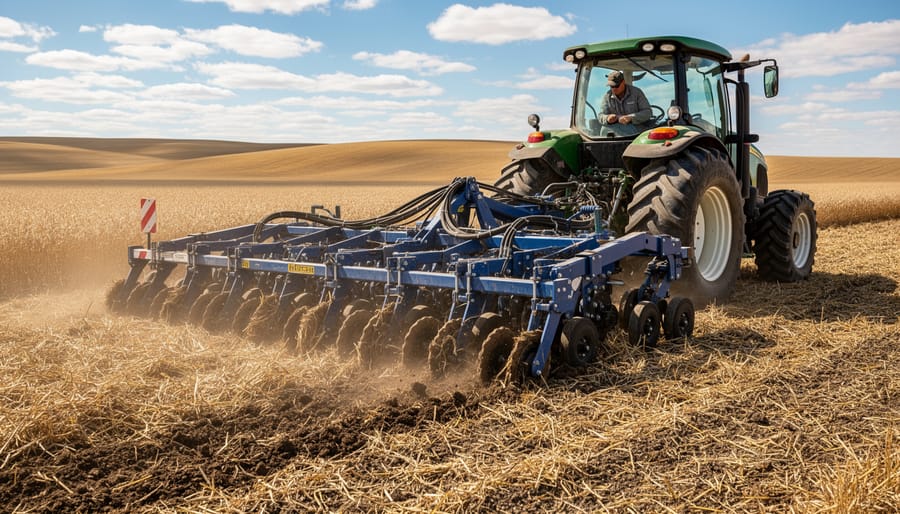
Smart crop rotation is one of your most powerful tools for building healthy, productive soil while naturally managing pests and diseases. By alternating crops with different nutrient needs and root structures, you’re essentially giving your soil a varied workout that strengthens it year after year.
In Alberta’s mixed farming operations, a common four-year rotation might include canola, followed by wheat or barley, then a pulse crop like peas or lentils, and finally another cereal. This pattern works beautifully because the pulse crops fix nitrogen in the soil, reducing fertilizer needs for the following cereal crop. Meanwhile, canola’s deep taproot breaks up compacted layers and adds organic matter when residue is incorporated.
Another effective approach combines a cereal with a forage crop like alfalfa or clover for hay production. The perennial forages build soil structure through extensive root systems and can remain productive for three to four years before returning to annual crops. This extended break from cereals dramatically reduces disease pressure and improves water infiltration.
The key is matching your rotation to your specific operation. Darren Brunsdon, a central Alberta farmer, shared that adding field peas to his wheat-canola rotation increased his organic matter by 0.8 percent over five years while cutting his nitrogen costs by 30 percent on post-pulse acres.
Consider your market opportunities, equipment capabilities, and soil type when designing rotations. Even adding one different crop family to your current system can start breaking pest cycles and diversifying your soil biology. Track your results over multiple years to see which combinations work best for your land.
Organic Matter Management and Composting
Building soil organic matter is one of the most effective ways to improve soil health, water retention, and long-term productivity. For Alberta farmers, this means working with readily available materials like crop residues, livestock manure, and compost to enhance soil structure and fertility.
Incorporating crop residues after harvest is a straightforward starting point. Leaving straw, stalks, and root systems in the field adds organic material that breaks down over time, feeding soil microorganisms and improving soil structure. Many farmers in central Alberta have found success with minimal tillage approaches that keep residues on the surface, protecting soil from erosion while gradually building organic matter levels.
Manure management offers dual benefits for mixed farming operations. Properly aged or composted manure provides valuable nutrients while increasing organic matter content. Spreading manure in fall or early spring, at rates of 10 to 20 tonnes per hectare, allows nutrients to integrate before planting. Work with your local agrologist to test manure nutrient levels and adjust application rates accordingly.
Composting takes organic matter management a step further. Whether you’re composting crop residues, manure, or other farm organic materials, the process creates a stable soil amendment rich in beneficial microbes. Small-scale composting systems can be managed right on your farm, providing cost-effective soil improvement.
These practices contribute to carbon sequestration benefits, helping your operation build resilience while supporting environmental goals. Start with one practice and expand as you see results in your fields.
Learning from Alberta Farmers Who’ve Made the Switch
Case Study: Transitioning 400 Hectares to No-Till in Central Alberta
When Trevor Morrison decided to transition his 400-hectare grain operation near Lacombe to no-till in 2018, he knew the change wouldn’t happen overnight. “The first year was humbling,” Trevor admits. “We saw yields drop about 15 percent on some fields as the soil adjusted.”
Trevor’s equipment investments totaled approximately $85,000, including a no-till air seeder with precise seed placement capabilities and a high-clearance sprayer for managing cover crops. He sold his conventional tillage equipment, which offset about half the cost.
By year three, the operation reached a turning point. Soil organic matter increased from 3.2 percent to 4.1 percent across the farm. Fuel costs dropped by $12,000 annually, and labour requirements decreased significantly during seeding. “We’re now planting 400 hectares in the same time it used to take us to do 280,” Trevor notes.
The five-year results proved compelling. Wheat yields recovered to match previous levels by year four, then exceeded them by 8 percent in year five. Canola showed similar patterns. Soil water retention improved dramatically, helping crops withstand Alberta’s increasingly variable precipitation patterns.
Trevor’s biggest lesson? “Start small if you’re nervous. We began with our poorest quarter-section, which gave us confidence before expanding.” He also emphasizes patience. “The soil needs time to rebuild its structure. Don’t judge success after one season.”
Today, Trevor’s operation serves as a demonstration site for neighbouring farmers curious about no-till transitions.
Case Study: Integrating Livestock for Soil Regeneration
When Derek and Michelle Thompson purchased their 160-hectare operation near Lacombe, Alberta in 2015, soil compaction and declining yields told a clear story: decades of continuous cropping had depleted their land. Rather than increasing chemical inputs, they chose a different path—integrating livestock through rotational grazing.
The Thompsons started small, introducing 50 cattle to graze cover crops after harvest. Using temporary electric fencing, they moved animals to fresh paddocks every three days during the growing season. “We were skeptical at first,” Derek admits, “but within two years, we noticed earthworm populations returning and water infiltration improving dramatically.”
Their system now includes multi-species cover crops specifically designed for grazing. Cattle consume the biomass while their hooves break soil crusts and their manure deposits nutrients directly where needed. The managed animal impact stimulates microbial activity without causing compaction, thanks to short grazing periods followed by extended rest.
By year four, soil organic matter increased from 2.8 percent to 4.1 percent in managed areas. The couple documented a 35 percent reduction in synthetic fertilizer costs while diversifying income through direct beef sales. “The livestock don’t just improve our soil—they’ve made our operation more resilient financially,” Michelle explains.
The Thompsons now mentor other Alberta producers transitioning to integrated systems, sharing practical insights gained through careful observation and record-keeping. Their success demonstrates that rebuilding soil health and farm profitability can happen simultaneously.
Building Your Soil Health Education Plan
Soil Testing and Baseline Assessment
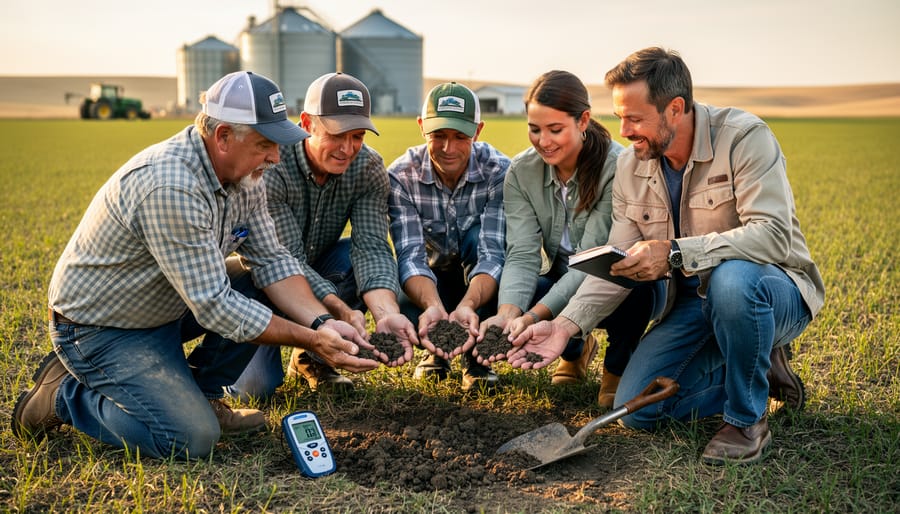
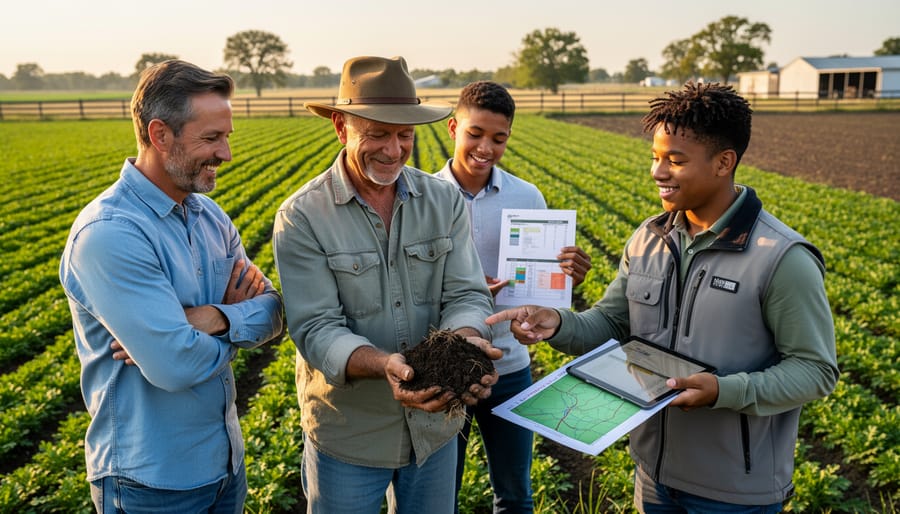
Before making any changes to your management practices, understanding your soil’s current condition is essential. Start by collecting soil samples in early spring or fall when the soil is workable. Take 15-20 samples from different areas of each field, avoiding unusual spots like old manure piles or near fence lines. Mix these together to create one composite sample per zone, aiming for a depth of 15 centimetres for cropland.
Send your samples to an accredited lab—many Alberta farmers use provincial or university-affiliated testing services. Request a comprehensive analysis including pH, organic matter, nitrogen, phosphorus, potassium, and micronutrients. Testing costs typically range from $30-80 per sample, a worthwhile investment considering the decisions you’ll make based on these results.
When your results arrive, don’t worry if the numbers seem overwhelming at first. Focus on comparing your levels to the optimal ranges provided for your specific crops. Pay special attention to organic matter content, as this is your key indicator of overall soil health. Most Alberta soils naturally contain 2-4 percent organic matter, though this varies by region.
Document everything in a simple spreadsheet or farm management app. Include GPS coordinates, sample dates, and results. This baseline becomes your starting point for measuring progress. Retest every three years to track improvements and adjust your practices accordingly.
Accessing Local Workshops and Expert Resources
Building your soil health knowledge doesn’t have to be a solo journey. Canadian farmers have access to numerous educational opportunities designed specifically for our growing conditions and challenges.
Provincial extension services remain invaluable resources, offering free or low-cost workshops, soil testing guidance, and one-on-one consultations. Alberta Agriculture and Irrigation regularly hosts field days and seminars focused on soil conservation practices tailored to prairie conditions.
Agricultural colleges like Olds College and Lakeland College provide hands-on training programs ranging from short courses to certificate programs in sustainable soil management. These institutions often partner with local farmers to demonstrate real-world applications.
Farmer networks and peer-learning groups offer tremendous value through shared experiences. Organizations like the Alberta Soil Conservation Association connect producers facing similar soil challenges, facilitating knowledge exchange and collaborative problem-solving.
Online platforms have expanded access considerably. The Canadian Organic Growers website, provincial agriculture portals, and webinar series from universities provide flexible learning options you can access from your kitchen table. Many feature Canadian case studies demonstrating proven techniques in conditions just like yours, making the transition from learning to implementation much smoother.
Creating Your Implementation Timeline
Starting your soil health journey doesn’t mean overhauling everything at once. Begin by selecting one or two practices that align with your current operation and resources. Many Alberta farmers find success starting with cover crops on a small test plot—perhaps 10 to 20 acres—during the first season while maintaining their regular rotation on remaining land.
Set measurable goals for each growing season. Year one might focus on establishing baseline soil tests and trying no-till on a portion of your fields. By year two, you can expand successful practices based on observed results like improved water infiltration or reduced input costs. Track changes in soil organic matter, which typically increases by 0.1 to 0.3 percent annually with consistent management.
Budget for gradual equipment changes and potential yield fluctuations during the transition period, which usually spans three to five years. Connect with local agronomists or agricultural extension services who understand prairie conditions—they can help you adjust your timeline based on your specific soil type, climate zone, and crop mix.
Remember that neighbouring farms may progress at different rates depending on their starting point and goals. Review your plan each fall, celebrate small wins like reduced erosion or better soil structure, and adjust your approach based on what the land tells you.
Common Mistakes and How to Avoid Them
Even experienced farmers can encounter challenges when shifting to improved soil management practices. Understanding these common pitfalls helps you navigate the transition more smoothly and achieve better results for your operation.
One frequent mistake is applying amendments without proper soil testing. Many Alberta farmers have learned this lesson the hard way, discovering that guessing at nutrient needs often leads to wasted inputs and imbalanced soil chemistry. Before making any changes, invest in a comprehensive soil test from a reputable lab. Test every 1-2 years to track progress and adjust your management plan accordingly.
Expecting immediate results is another common pitfall. During a recent interview with a Saskatchewan agronomist working with Alberta producers, she emphasized that soil health improvements typically require 3-5 years of consistent management. Think of it as building a savings account rather than winning a lottery. Set realistic timelines and track incremental improvements in organic matter, water infiltration, and crop performance.
Overworking soil remains surprisingly prevalent, especially when farmers first adopt conservation practices. Excessive tillage destroys soil structure and microbial communities. Reduce tillage gradually, starting with one field or zone, and allow yourself time to learn new equipment and techniques. Many successful Alberta farmers transitioned to reduced tillage systems over several seasons rather than making abrupt changes.
Ignoring crop rotation diversity limits soil health gains significantly. Single crop or simple wheat-canola rotations miss opportunities to break pest cycles and build soil organic matter. Consider integrating pulse crops or cover crops into your rotation, even if it means stepping outside your comfort zone initially.
Finally, trying to implement too many changes simultaneously often leads to frustration and burnout. Choose 1-2 practices to focus on each growing season, master them, then expand your soil health toolkit gradually. This measured approach, recommended by agricultural extension specialists across the Prairies, creates sustainable, lasting change on your farm.
Investing in soil health is one of the most impactful decisions you can make for your farm’s future. The benefits extend far beyond a single growing season—healthier soil means improved crop yields, greater resilience to drought and extreme weather, reduced input costs, and a more sustainable operation for generations to come. While the science behind soil management can seem overwhelming at first, remember that every expert farmer started with a single step.
You don’t need to overhaul your entire operation overnight. Start with one field or one practice that resonates with your current situation. Test your soil, try cover cropping on a small section, or adjust your tillage approach gradually. These small experiments will build your confidence and provide valuable insights specific to your land. Document what works and what doesn’t—this personal knowledge becomes your most valuable resource.
Connecting with fellow farmers and agricultural professionals amplifies your learning. Join local workshops, participate in field days, and don’t hesitate to reach out to agronomists familiar with Canadian growing conditions. The farming community thrives on shared knowledge, and your experiences can help others while they help you navigate challenges unique to our climate.
Soil health management is not a destination but a continuous journey of observation, adaptation, and improvement. The resources available today—from government programs to research institutions—make it easier than ever to access support. Take advantage of educational opportunities, stay curious about emerging practices, and remember that investing time in learning pays dividends in the field. Join the Organic Farming, The Canadian Way community to connect with like-minded farmers, access practical resources, and continue growing your knowledge alongside others committed to building healthier, more productive soil.