Enroll in accredited pest management courses through provincial agricultural colleges or online platforms that offer certificates recognized by Canadian regulatory bodies. Universities like the University of Alberta and Olds College provide specialized programs covering integrated pest management, pest biology, and sustainable control methods tailored to prairie growing conditions.
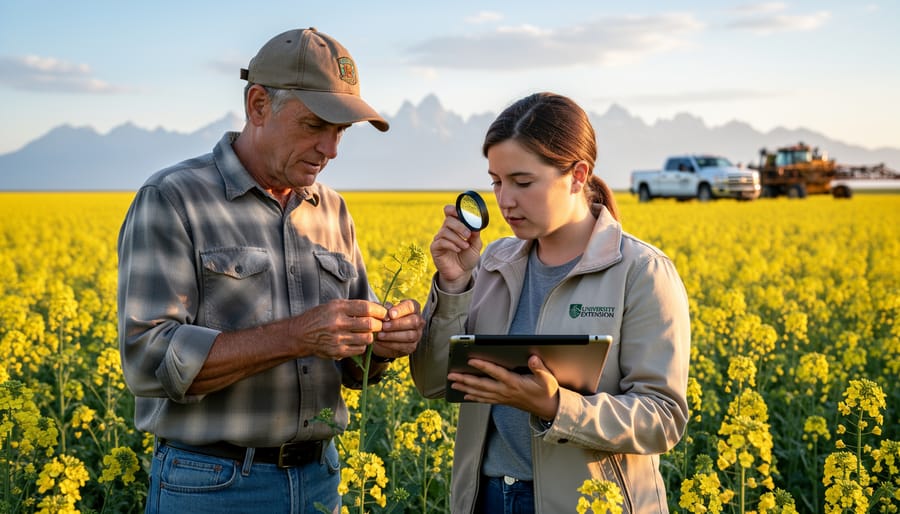
Connect directly with extension specialists who deliver hands-on workshops throughout Alberta’s agricultural regions. These sessions demonstrate proper pesticide application techniques, pest identification in field settings, and economic threshold calculations that prevent unnecessary chemical applications while protecting your yields.
Access industry-recognized certifications that satisfy provincial pesticide applicator requirements while bridging the knowledge gap between traditional farming practices and science-based pest control strategies. Programs typically range from 40 to 120 hours of instruction, with flexible scheduling options including evening classes and winter sessions designed around farming calendars.
Leverage online learning modules from institutions like the University of Guelph’s Ridgetown Campus, which allow you to complete coursework at your own pace while managing farm operations. These programs cost between $500 and $2,000 depending on certification level, with many provinces offering subsidies or grants to offset educational expenses for active producers.
The investment in structured pest management education delivers measurable returns through reduced input costs, improved crop protection, and compliance with evolving regulatory standards that affect market access for Canadian agricultural products.
What Is a Pest Management University?
The Canadian Landscape: PMU Programs Across the Country
Canadian farmers have access to several pest management university initiatives designed to build knowledge and practical skills for sustainable crop protection. These programs complement traditional farm-based learning programs by offering structured curriculum focused on integrated pest management strategies.
Agriculture and Agri-Food Canada collaborates with provincial institutions to deliver comprehensive online courses covering pest identification, monitoring techniques, and biological control methods. These digital platforms allow producers to learn at their own pace while managing daily farm operations.
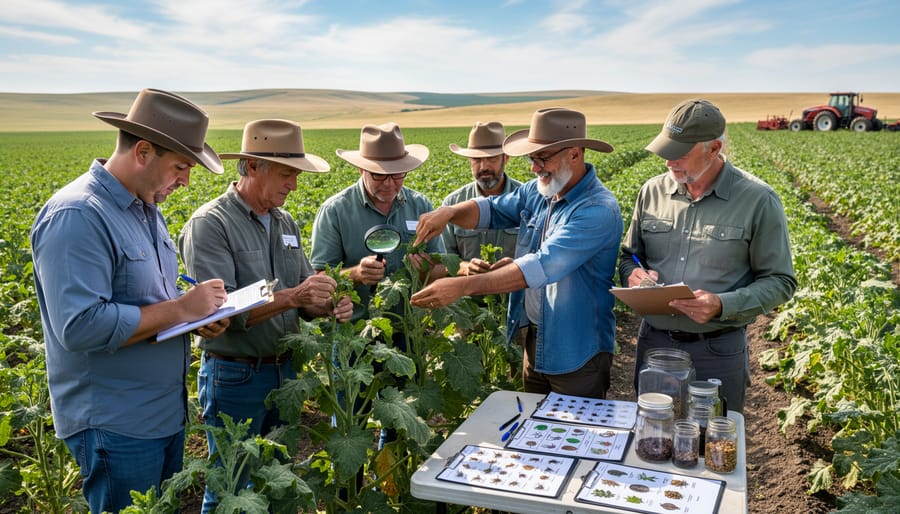
For Alberta farmers, the University of Alberta’s Faculty of Agricultural, Life and Environmental Sciences offers regional workshops and field days throughout the growing season. These hands-on sessions address local pest pressures specific to prairie conditions, from cereal crop diseases to canola insects. Olds College also provides short courses that combine classroom learning with practical field assessments.
The Prairie Pest Monitoring Network connects producers with research scientists, creating opportunities for collaborative learning. Farmers can access real-time pest alerts, regional forecasting models, and expert consultation through this platform.
Many programs now feature case studies from Alberta operations, demonstrating successful implementation of integrated pest management. For example, central Alberta grain producers have reduced insecticide applications by 40 percent after participating in IPM training programs, while maintaining yields and improving soil health. These programs emphasize economically viable solutions that work within existing farming systems, making them accessible regardless of operation size or experience level.
Core Learning Areas That Matter to Your Farm
Integrated Pest Management Fundamentals
Integrated Pest Management (IPM) represents a practical, science-based approach that helps you protect your crops while reducing chemical inputs and maintaining profitability. Rather than relying solely on pesticides, IPM combines multiple strategies to keep pest populations below economically damaging levels.
The foundation of IPM starts with accurate pest identification. Knowing exactly which pest you’re dealing with allows you to choose the most effective control method. Many pest management university programs train farmers to distinguish between beneficial insects and harmful ones, preventing unnecessary treatments that can disrupt your field’s natural balance.
Understanding economic thresholds is another critical component. This means determining the pest population level at which the cost of control equals the potential crop damage. For instance, a few aphids won’t justify the expense and environmental impact of spraying, but a rapidly growing population might. This approach protects both your bottom line and the environment.
Regular monitoring techniques form the backbone of successful IPM. Programs teach you systematic scouting methods, including trap placement, visual inspections, and keeping detailed records. Many Alberta farmers have found that weekly field checks during growing season help catch problems early when they’re easier and cheaper to manage.
The IPM decision-making framework guides you through evaluating all available options: cultural practices like crop rotation, biological controls using beneficial insects, mechanical methods, and yes, targeted pesticide use when necessary. This integrated approach has helped countless Canadian operations reduce chemical costs by 30 to 50 percent while maintaining or improving yields.
Disease Recognition and Management
Pest Management University programs equip Alberta farmers with essential skills to recognize and manage crop diseases that thrive in our unique climate. Understanding disease identification is the foundation of effective management, and these courses walk you through recognizing early symptoms of common threats like fusarium head blight in wheat, blackleg in canola, and clubroot in brassicas.
Learning extends beyond simple identification. PMU programs teach you to understand disease cycles, helping you recognize when pathogens are most active and vulnerable to intervention. This knowledge is particularly valuable in Alberta, where our short growing season and variable moisture patterns create specific disease pressure windows. For example, understanding how clubroot spores survive in soil for up to 20 years helps you make informed decisions about field rotation schedules.
The curriculum emphasizes preventative strategies that reduce reliance on chemical controls. You’ll explore crop rotation techniques tailored to Alberta conditions, learning how proper sequencing can break disease cycles effectively. Programs also cover selecting disease-resistant varieties suited to our region, a practical tool that many farmers find immediately applicable to their operations.
Biological control methods receive significant attention, introducing you to beneficial microorganisms and natural antagonists that suppress disease development. These approaches align with sustainable agriculture goals while maintaining crop health and profitability. Case studies from Alberta farms demonstrate real-world success stories, showing how integrated disease management strategies have reduced losses while improving soil health over time. This practical, evidence-based approach ensures you leave with confidence to implement these strategies on your own operation.

Beneficial Insects and Natural Predators
Understanding and supporting beneficial insects is a cornerstone of effective pest management education, particularly valuable for farmers pursuing organic certification or reducing chemical inputs. Pest management university programs teach participants how to identify key beneficial species like ladybugs, lacewings, parasitic wasps, and ground beetles that naturally control pest populations in Alberta crops.
These courses emphasize practical habitat management strategies that create welcoming environments for natural predators. You’ll learn to establish hedgerows, maintain flowering borders, and preserve untilled areas that provide shelter and alternate food sources for beneficial insects throughout the growing season. This knowledge helps you design farm landscapes that work with nature rather than against it.
Educational modules also address common practices that inadvertently harm beneficial populations. Broad-spectrum pesticide applications, excessive tillage, and removal of all crop residue can devastate natural predator communities. Programs guide you through timing interventions to minimize impact on beneficials while still managing pest thresholds effectively.
For Canadian producers, case studies from Prairie farms demonstrate measurable results: reduced pest pressure, lower input costs, and improved soil health. These real-world examples show that investing time in understanding biological control creates long-term economic and environmental benefits for your operation.
Soil Health and Pest Resistance
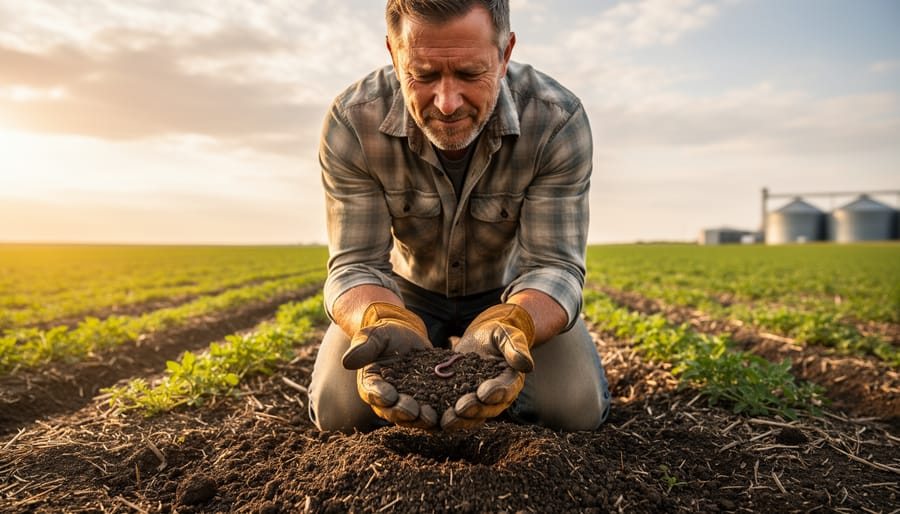
Healthy soil forms the foundation of effective pest management, acting as your farm’s first line of defense against crop damage. Pest Management University programs recognize this critical connection and teach farmers how thriving soil ecosystems naturally suppress pest populations through beneficial organisms, balanced nutrient cycles, and robust plant immunity.
When soil biology flourishes with diverse microorganisms, earthworms, and beneficial insects, crops develop stronger root systems and enhanced natural defenses. Alberta farmers participating in PMU courses learn practical techniques to build soil organic matter, optimize pH levels, and encourage beneficial predator populations that keep harmful pests in check. Research from Prairie regions demonstrates that fields with organic matter above 4 percent show significantly reduced pest pressure compared to depleted soils.
These university programs integrate soil testing protocols, cover cropping strategies, and composting methods directly into pest management curricula. Rather than treating soil health and pest control as separate issues, PMU courses demonstrate how sustainable farming practices create resilient agricultural systems. Participants gain hands-on experience analyzing soil samples, interpreting biological indicators, and adjusting management practices to support both soil vitality and crop protection—a holistic approach that reduces chemical inputs while improving long-term farm productivity and profitability.
Real Results: Alberta Farmers Who’ve Applied PMU Knowledge
When Jim Hendricks from Lacombe County first attended a pest management education program through Olds College in 2019, his canola fields were facing mounting challenges with flea beetles and clubroot. Like many farmers, Jim had relied heavily on prophylactic insecticide applications, spending approximately $45 per acre on pest control measures that weren’t delivering the results he needed.
Through the program, Jim learned about economic thresholds and scouting protocols that transformed his approach. “I was treating problems that didn’t exist yet, and missing early warning signs of real threats,” he explains. By implementing weekly field scouting and using the threshold guidelines he learned, Jim reduced his insecticide applications by 60 percent in the first season. His cost savings reached $18,000 across 600 acres, while his yields actually improved by 8 percent due to better-timed interventions and healthier beneficial insect populations.
Sarah and Tom Chen operate a mixed grain and pulse farm near Taber, where kochia resistance had become their biggest headache. After participating in a University of Alberta Extension pest management workshop, they implemented a comprehensive integrated approach combining crop rotation adjustments, strategic tillage timing, and targeted herbicide applications with different modes of action.
“The program helped us understand that we weren’t just fighting weeds—we were managing an entire ecosystem,” Sarah notes. Within two growing seasons, the Chens saw their resistant kochia populations decrease by 70 percent. Their herbicide costs dropped from $38 per acre to $26 per acre, and they’ve maintained these results for three consecutive years. The knowledge gained about herbicide rotation has proven invaluable, preventing resistance development in other weed species on their operation.
Brad Morrison’s vegetable operation near Brooks struggled with aphid infestations that threatened his organic certification goals. Through pest management education focused on biological control, Brad learned to identify and encourage beneficial insects like lady beetles and lacewings. He installed insectary strips with flowering plants and adjusted his spray schedules to protect natural predators.
The results exceeded his expectations. Brad eliminated two scheduled insecticide applications entirely, saving $4,200 annually while maintaining his organic status. His aphid damage dropped to economically insignificant levels, and he’s now mentoring three neighbouring farmers on implementing similar strategies.
These farmers share a common thread: education gave them confidence to move beyond calendar-based applications toward truly integrated pest management. Their success demonstrates that investing time in structured learning delivers measurable returns through reduced input costs, improved environmental outcomes, and more resilient farming systems.
How to Access Pest Management Education in Your Region

Online Courses and Certification Programs
Distance learning has revolutionized access to pest management education, breaking down geographical barriers for Alberta farmers. Several universities and agricultural institutions now offer flexible online learning platforms with self-paced modules that fit around busy farming schedules. These programs cover integrated pest management strategies, identification techniques, and sustainable control methods specific to Canadian growing conditions.
The University of Alberta offers certificate programs in crop protection that include modules on pest biology and ecology adapted to Prairie ecosystems. Olds College provides distance learning options focusing on pest monitoring and threshold management relevant to Alberta’s climate zones. Many programs feature live webinars with agricultural extension specialists who understand regional challenges, from canola flea beetles to grasshopper management.
Most certification programs can be completed in 6 to 12 months, with no requirement to travel to campus. Farmers receive recognized credentials that demonstrate their commitment to professional pest management practices. These courses often include practical assignments that apply directly to your operation, making the learning immediately valuable and actionable for your fields.
Regional Workshops and Hands-On Training
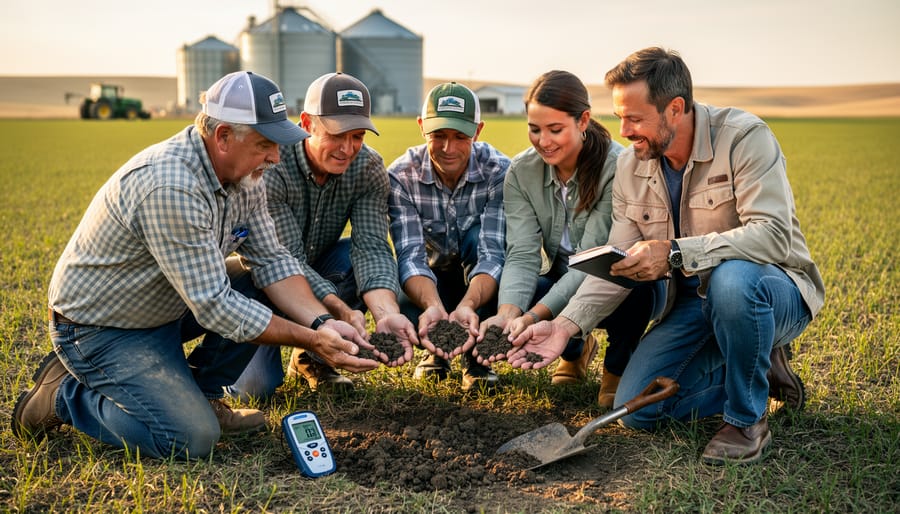
While online pest management courses offer tremendous flexibility, nothing quite replaces the value of getting your hands dirty and learning alongside fellow producers. Throughout Alberta and across the Prairie provinces, numerous regional workshops and field days bring pest management education directly to your community.
These in-person training sessions typically run during shoulder seasons when field work slows down. You’ll find workshops covering integrated pest management strategies, pesticide application safety, proper equipment calibration, and emerging pest identification. Field days during the growing season allow you to see management techniques in action on working farms, examining real-world challenges and solutions with agronomists and researchers.
Provincial agriculture departments, crop commissions, and university extension offices regularly host these events. Many are free or low-cost, making them accessible investment opportunities for your operation. Agricultural service boards in your county often coordinate local training sessions tailored to regional pest pressures specific to Alberta’s diverse growing zones.
To stay informed about upcoming workshops, subscribe to newsletters from Alberta Agriculture and Irrigation, check your regional Agricultural Service Board website, and connect with local grower associations. Many extension offices maintain email lists announcing training opportunities months in advance, helping you plan attendance around your farm schedule. These collaborative learning environments build valuable networks while strengthening your pest management knowledge base.
Expert Perspective: Making PMU Education Work for Your Operation
We spoke with Jennifer MacLeod, a certified crop advisor with over 15 years of experience working with grain and oilseed producers across Alberta, about making pest management education work in real farming operations.
“The biggest mistake I see is farmers treating education like an all-or-nothing commitment,” MacLeod explains. “You don’t need to complete an entire program at once. Start with one module that addresses your most pressing challenge—maybe it’s identifying beneficial insects or understanding resistance management. Apply what you learn that season, see the results, then move to the next topic.”
MacLeod recommends blocking out education time during natural slow periods in your operation. “Winter months are ideal for theory-heavy content like pest biology and IPM principles. Save the shorter, practical videos for spring when you’re busy but need quick refreshers before making in-field decisions.”
When it comes to measuring return on investment, she suggests tracking specific metrics. “If you take a course on economic thresholds, document your spray decisions before and after. Many of my clients find they reduce unnecessary applications by 15 to 30 percent in the first year, which easily pays for their education investment and then some.”
The most common implementation challenge? Trying to change everything at once. “Pick one new practice per season,” MacLeod advises. “Maybe this year you focus on improving your scouting routine. Next year, you integrate trap crops. Incremental changes stick better and give you time to troubleshoot.”
For farmers worried about course quality, MacLeod suggests looking for programs with Canadian case studies and regional pest profiles. “Content developed for Iowa or Texas often doesn’t translate well here. You want education that reflects your climate, crop mix, and the specific pest pressures we face in Western Canada.”
Her final advice is simple: “The farmers who get the most value are those who share what they learn with their networks. Join a discussion group, compare notes with neighbours, or participate in online forums. Education becomes more valuable when you can discuss real-world application with peers facing similar challenges.”
Investing in pest management education isn’t just about learning new techniques—it’s about securing the long-term sustainability and farm profitability that every Alberta producer deserves. The knowledge gained through pest management university programs translates directly into reduced input costs, healthier crops, and more resilient farming systems that can weather the challenges of our changing climate.
If you’re considering pest management education, start small. Register for a single workshop or webinar that addresses your most pressing pest challenge. You’ll quickly discover that these learning opportunities connect you with a supportive community of fellow farmers and experts who understand the unique conditions of Alberta agriculture. The conversations during coffee breaks and the relationships built through these programs often prove as valuable as the formal curriculum itself.
Ready to take the next step? Contact your local agricultural extension office or visit the Organic Agriculture Centre of Canada’s website to explore upcoming pest management courses and workshops. Many programs offer flexible scheduling and online options to accommodate busy farm schedules.
When Alberta farmers embrace informed pest management practices, the collective impact strengthens our entire agricultural sector. Your commitment to learning today builds a more sustainable, productive, and profitable tomorrow for all of us in this farming community.