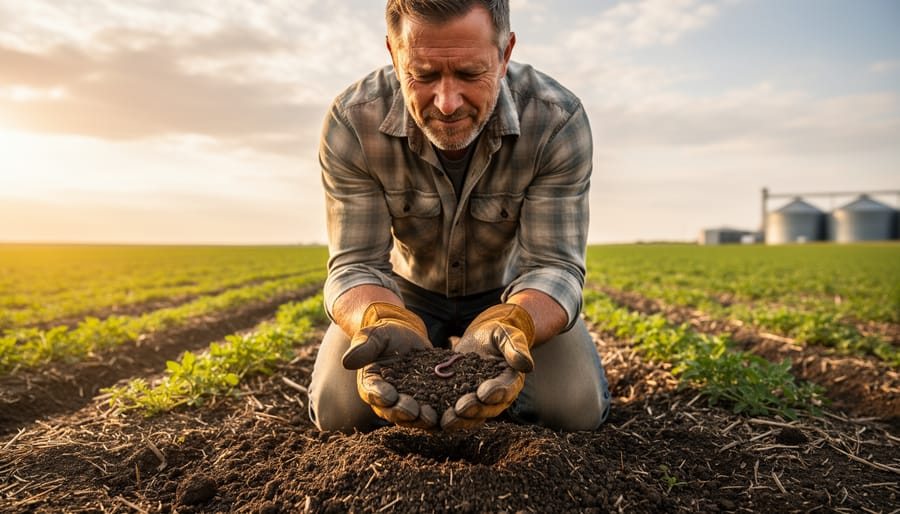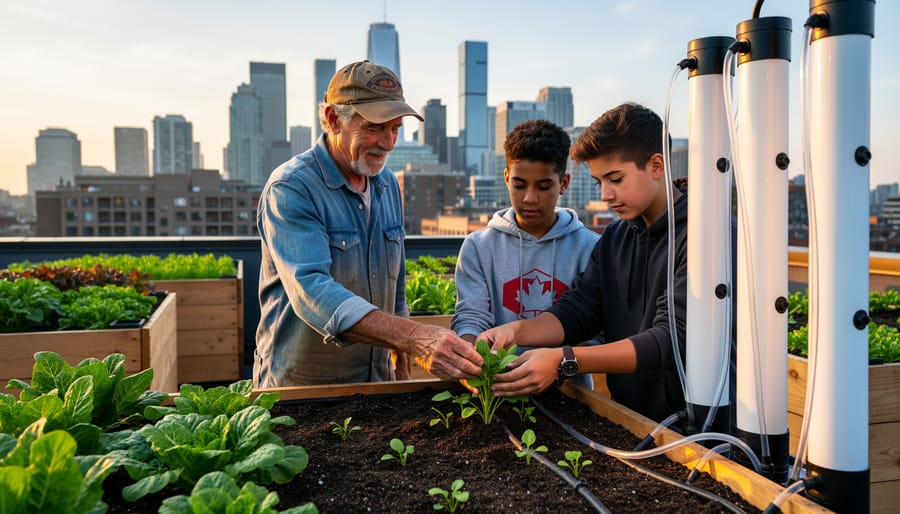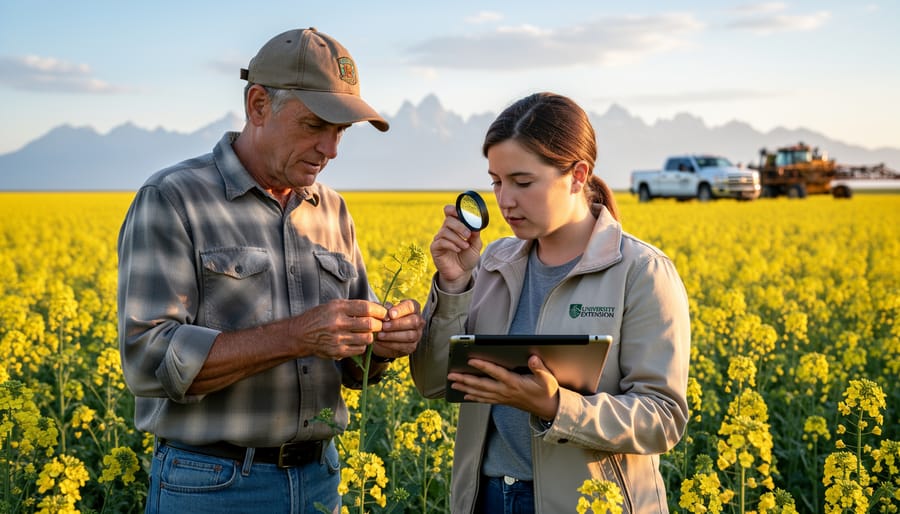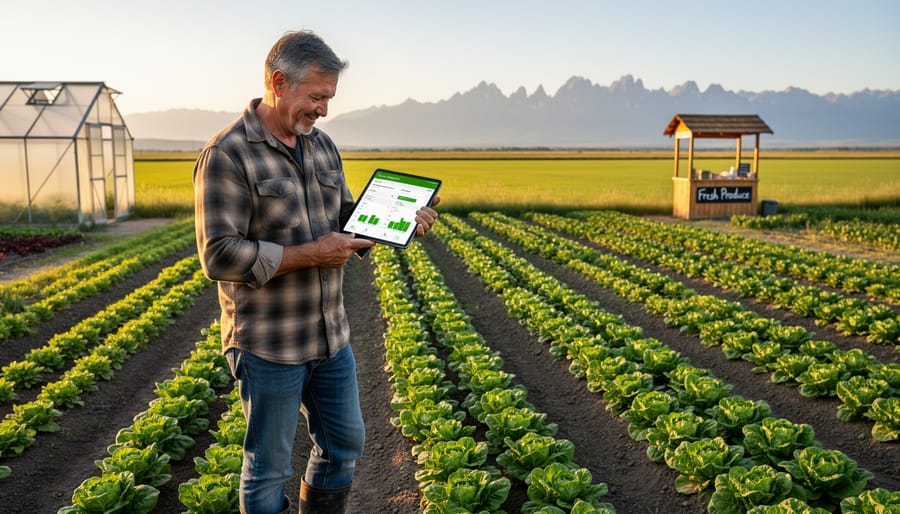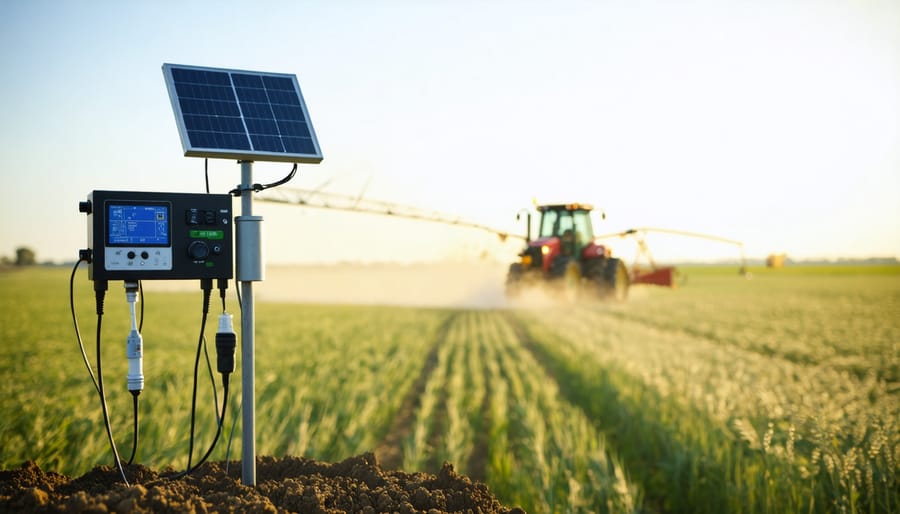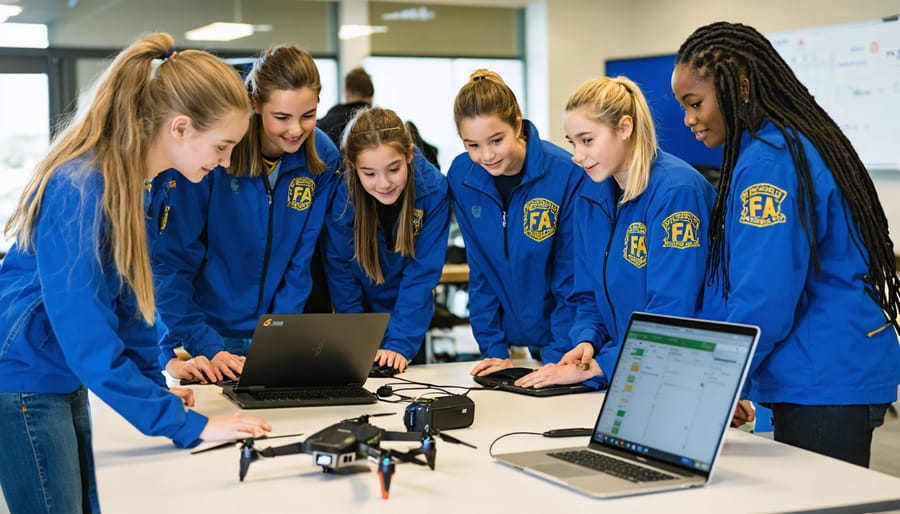
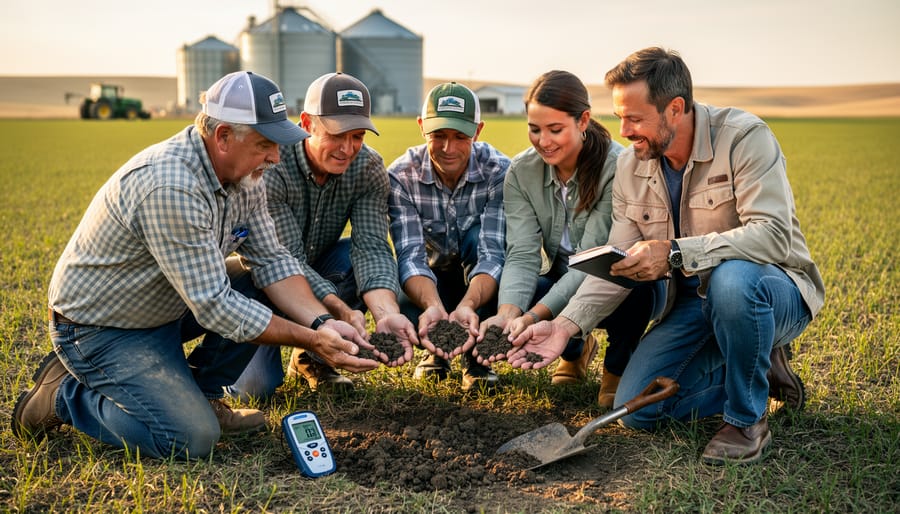
Transform how your farm team learns by implementing the 4-H experiential learning cycle: Experience, Share, Process, and Apply. This proven framework moves beyond passive instruction to create lasting knowledge through hands-on practice. Start with a concrete farm experience—whether testing soil pH, calibrating equipment, or evaluating livestock condition—then immediately gather your team to share observations and reactions. Process what happened by analyzing why certain outcomes occurred, connecting practical results to underlying agricultural principles. Finally, apply these insights by adjusting your farm practices and planning the next learning cycle.
Canadian agricultural educators have used this model for decades to develop everything from precision agriculture skills to sustainable livestock management techniques. The beauty of the 4-H approach lies in its flexibility: a 15-minute equipment troubleshooting session follows the same cycle as a season-long crop rotation experiment. For Alberta farmers facing increasingly complex challenges—from climate adaptation to market diversification—this structured yet adaptable framework ensures your team doesn’t just complete tasks but truly understands the reasoning behind each farming decision.
The experiential learning model creates competent, confident farm operators who can think critically when faced with unexpected situations. Rather than memorizing procedures, your team develops the analytical skills to solve novel problems independently, building the agricultural expertise your operation needs for long-term success.
What Makes the 4-H Experiential Learning Model Different
The Four Pillars Explained
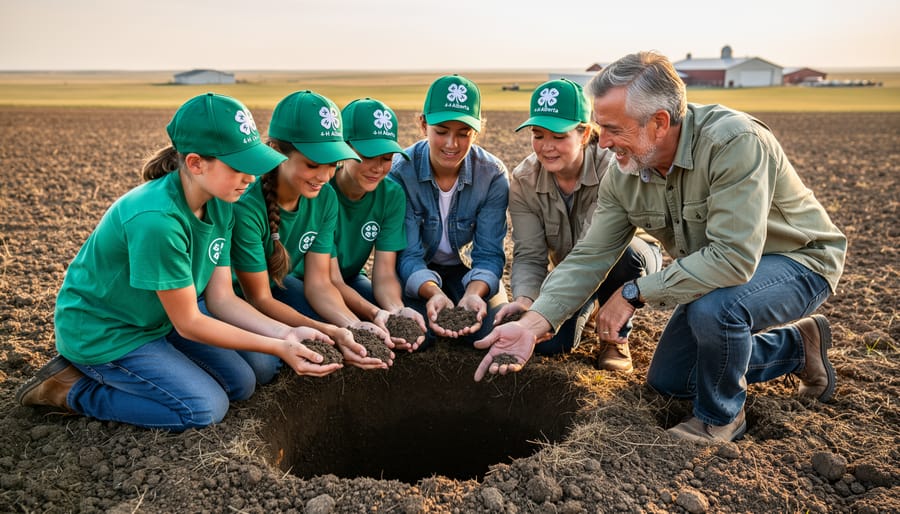
The 4-H model organizes learning around four interconnected pillars, each essential for developing well-rounded agricultural knowledge and practice. Understanding how these components work together helps farmers and agricultural educators create more effective learning experiences.
Head represents the cognitive dimension where critical thinking and decision-making skills develop. In sustainable agriculture, this means analyzing soil health data, understanding crop rotation benefits, or evaluating the financial viability of regenerative practices. Alberta farmer Tom Henderson explains it well: “The Head component taught me to question why I farm the way I do. It’s about understanding the science behind sustainable practices, not just following tradition.” This pillar encourages learners to research, compare options, and make informed choices based on evidence.
Heart encompasses the values, attitudes, and motivations that drive agricultural decisions. This pillar asks farmers to consider their relationship with the land, their commitment to environmental stewardship, and their role in community food systems. When producers connect emotionally to sustainable practices, they’re more likely to persist through challenges. Heart learning might involve reflecting on long-term farm legacy goals or understanding the broader impact of soil conservation on future generations.
Hands focuses on developing practical, hands-on skills through direct experience. This is where theory meets practice on actual farmland. Whether learning to operate precision agriculture equipment, practice proper composting techniques, or implement integrated pest management, the Hands component ensures farmers can confidently execute sustainable methods. Skills develop through repetition, experimentation, and learning from both successes and setbacks.
Health considers physical well-being, mental resilience, and the sustainability of farming practices. This pillar recognizes that healthy farmers create healthy food systems. It addresses work-life balance, stress management during challenging growing seasons, and ensuring farming practices don’t compromise operator safety or long-term land productivity.
The Experience Cycle in Action
The 4-H experiential learning model operates through a continuous three-phase cycle: Do, Reflect, and Apply. This hands-on approach aligns naturally with farm-based learning approaches and mirrors how farmers traditionally acquire knowledge through direct experience.
Let’s explore how this cycle works using a practical composting example familiar to Alberta farmers.
In the Do phase, you actively engage in the experience. A farmer might establish a new composting system, mixing crop residues with livestock manure at specific ratios, monitoring moisture levels, and turning the pile regularly. This hands-on activity creates the foundation for learning.
The Reflect phase follows naturally. Here, you step back and examine what happened. Questions guide this process: What temperature did the compost reach? How long did decomposition take? What challenges emerged with maintaining proper carbon-to-nitrogen ratios? Did certain materials break down faster than expected? This reflection connects experience to understanding.
Finally, the Apply phase transforms observations into future action. Based on your composting results, you might adjust ingredient ratios, modify turning schedules, or experiment with different materials. Perhaps you discovered that adding more straw improved aeration, so you’ll incorporate this adjustment moving forward.
This cycle doesn’t end after one rotation. Each application becomes a new Do phase, creating an ongoing spiral of improvement. Through repeated cycles, farmers develop deeper expertise and confidence in sustainable practices, building skills that strengthen both their operations and the broader agricultural community.
Why Alberta Farms Need Experiential Learning Now
Bridging the Knowledge Gap in Sustainable Practices
For many Canadian farmers, the gap between understanding a sustainable practice in theory and successfully implementing it on their operation can feel insurmountable. This is precisely where the 4-H experiential learning model proves its value. Rather than simply attending workshops about cover cropping or reduced tillage, farmers benefit from actually getting their hands in the soil, testing techniques on small plots, and observing results firsthand.
Take the experience of Mark Jensen, a grain farmer near Lacombe, Alberta, who struggled for years with soil compaction issues. After attending several conventional seminars on reduced tillage, he still felt uncertain about making the switch. It wasn’t until he participated in a demonstration project where he could operate different equipment, examine soil profiles side-by-side, and discuss observations with peers that the practice clicked. “Seeing the difference in soil structure between conventional and reduced tillage plots, and being able to dig in and feel it myself, gave me the confidence to transition 40 hectares that first season,” Jensen explains.
This hands-on approach is particularly effective for practices like organic amendments and cover crop integration, where timing, application rates, and species selection vary significantly by region and soil type. The 4-H model’s reflection component encourages farmers to analyze what worked, what didn’t, and why, leading to better decision-making and higher adoption rates than theoretical instruction alone can achieve.
Building Climate Resilience Through Practice
Climate change isn’t waiting for perfect solutions, and neither should farmers. The 4-H experiential learning model offers a practical pathway for building resilience by turning your own fields into living laboratories. Rather than relying solely on external research, this approach empowers you to test climate adaptation strategies suited to your specific conditions.
The beauty of experiential learning lies in its iterative nature. You begin with a question relevant to your operation—perhaps testing drought-resistant crop varieties or exploring new water conservation techniques. Through hands-on experimentation, you observe what works and what doesn’t, then refine your approach based on real outcomes from your land.
Alberta farmer Janet Morrison from Red Deer County exemplifies this approach. Facing increasingly unpredictable precipitation patterns, she dedicated a portion of her grain operation to testing three different cover crop combinations over two growing seasons. “I learned more from those trial plots than any workshop could teach me,” Morrison shares. “Seeing the soil moisture retention differences firsthand gave me the confidence to scale up practices across my entire operation.”
This learn-by-doing methodology accelerates adaptation because it generates location-specific knowledge. Your soil composition, microclimate, and management practices create unique conditions that generic recommendations can’t address. By documenting your observations and reflecting on outcomes, you develop expertise that’s immediately applicable and can be shared with neighbours facing similar challenges.
Implementing the 4-H Model on Your Farm
Starting Small: Trial Plots and Test Areas
The beauty of experiential learning lies in starting where you are, with what you have. You don’t need to transform your entire operation overnight. Instead, begin with small-scale trial plots that allow you to test new practices while managing risk.
Consider dedicating a quarter-hectare plot to experiment with organic fertilizer alternatives. One central Alberta grain farmer we spoke with started with just 0.2 hectares, comparing his conventional nitrogen application against compost tea and biochar amendments. He kept detailed records of input costs, labour time, and yield differences across the season. While his conventional plot initially showed faster growth, the organic amendments caught up by mid-season, and his soil tests revealed improved organic matter content by harvest.
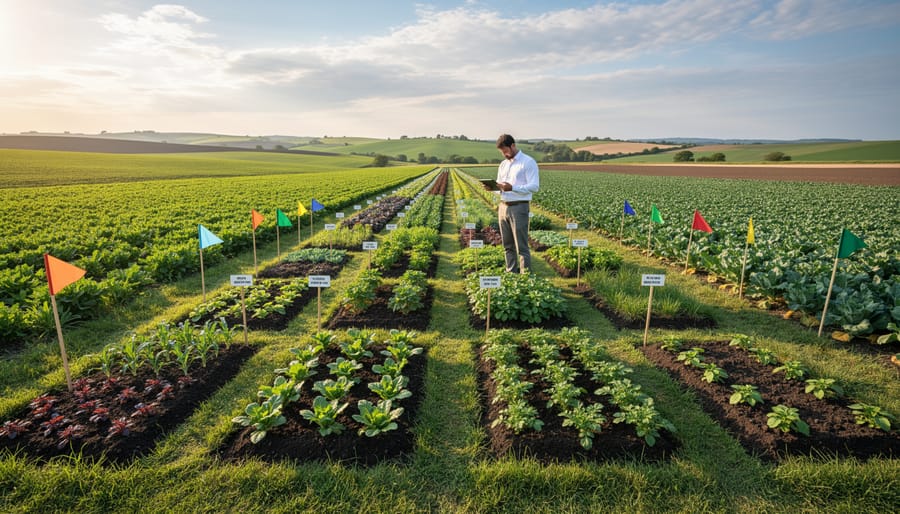
Trial plots work especially well for testing new crop varieties suited to our changing climate. Select three to five varieties of the same crop and plant them in adjacent strips of identical soil. Mark each variety clearly with weather-resistant tags and establish a simple observation schedule. Walk your trial area weekly, noting emergence dates, disease resistance, and response to weather events.
Pollinator strips offer another excellent learning experiment with multiple benefits. Start with a 3-metre-wide strip along a field edge, seeding it with native wildflower mixes suited to Alberta conditions. Document pollinator activity, changes in beneficial insect populations, and any impacts on adjacent crop health.
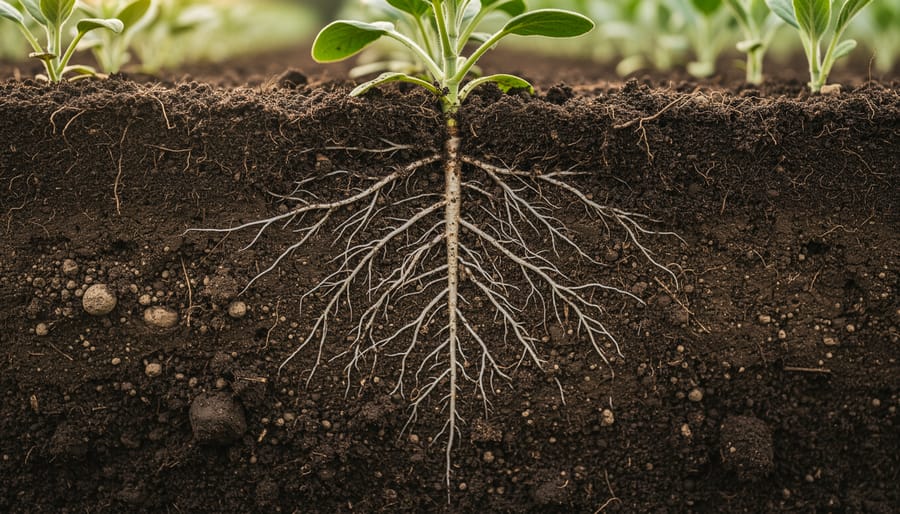
The key to successful trials is consistent record-keeping. Use a dedicated notebook, smartphone app, or simple spreadsheet to track observations, weather conditions, inputs applied, and outcomes. Photograph your plots regularly to create a visual timeline. These records transform your trial from a simple test into valuable learning data you can reflect upon and share with your community.
Creating a Reflection Practice
Building a reflection practice doesn’t need to be complicated or time-consuming. The key is finding a method that fits naturally into your existing farm routine and helps you capture insights while they’re fresh.
Seasonal journals offer one of the simplest approaches. Keep a notebook in your truck or by the kitchen table where you can jot down observations after significant farm activities. Note what worked, what didn’t, and any questions that arose. Alberta farmer Tom Chen from Red Deer County found that spending just ten minutes each Sunday evening reviewing his week helped him spot patterns he’d otherwise miss, like how soil moisture levels affected his canola emergence rates across different field sections.
Photo documentation provides another powerful reflection tool. Take pictures throughout your growing season or livestock cycles. When you review these images later, they trigger memories and reveal details you might have forgotten. Many farmers now use their smartphones to create dated photo albums that become invaluable reference points for future planning.
Informal peer discussions can deepen your learning considerably. Consider organizing monthly coffee meet-ups with neighbouring farmers to share experiences from recent projects or challenges. These conversations often reveal that others faced similar issues and found creative solutions you can adapt to your operation.
The reflection phase transforms everyday farm work into genuine learning opportunities. Choose one method to start with this season, and adjust as you discover what yields the most valuable insights for your decision-making process.
Canadian Success Stories: 4-H Learning in Practice
Case Study: Soil Health Recovery Through Hands-On Testing
When Mark Henderson’s canola yields dropped 20% over three years on his farm near Lacombe, he knew something had to change. Rather than immediately purchasing expensive inputs, Mark decided to apply the 4-H experiential learning model to understand what was happening beneath his fields.
Starting with the “Do” phase, Mark conducted his first soil tests in spring 2021, taking samples from both his struggling fields and a neighbouring productive pasture. The results were striking: his cropland showed only 2.1% soil organic matter compared to 4.8% in the pasture. Water infiltration rates were equally concerning at just 12mm per hour.
Through the “Reflect” stage, Mark realized years of continuous cropping without organic matter additions had degraded his soil structure. This reflection led him to the “Learn” phase, where he researched composting methods and cover crop systems suitable for Alberta’s short growing season.
In the “Apply” phase, Mark implemented two experimental approaches. He established test strips using fall rye and hairy vetch cover crops on 8 hectares, while creating on-farm compost from livestock bedding and crop residues to apply on another 6 hectares.
After two growing seasons of hands-on experimentation and adjustment, Mark’s results were remarkable. Soil organic matter increased to 3.4% in composted areas and 3.1% where cover crops grew. Water infiltration improved to 28mm per hour, and his canola yields rebounded to previous levels while reducing fertilizer costs by approximately $45 per hectare.
Case Study: Transitioning to Organic Methods
When the Morrison family from Lacombe, Alberta, decided to transition their 240-hectare grain operation to organic certification in 2019, they knew they were entering unfamiliar territory. Rather than diving in headfirst, they embraced the 4-H experiential learning model to guide their three-year conversion journey.
“We started by doing our homework,” explains Sarah Morrison, who manages the operation with her husband Tom. “We attended workshops, talked to certified organic farmers, and studied soil health principles. That experience phase was crucial because we needed to understand what we were getting into.”
Their first year focused on a 40-hectare trial plot where they tested different green manure combinations and mechanical weed control methods. Some experiments succeeded while others didn’t yield expected results. “Our initial attempt with broadcast seeding for weed suppression was a disaster,” Sarah admits. “But that’s where reflection came in. We sat down after harvest, analyzed what went wrong, and adjusted our approach.”
The reflect phase became their most valuable tool. The Morrisons kept detailed field notes, tracking everything from germination rates to equipment modifications. They joined a peer learning group with other transitioning farmers, sharing challenges and solutions monthly.
Through continuous adjustment, they refined their practices. By year two, they’d developed effective crop rotation strategies and identified equipment modifications that reduced labour costs by 30 percent. Their trial-and-error approach, grounded in systematic reflection, transformed initial setbacks into learning opportunities. Today, they’re fully certified and mentoring three neighbouring farms through similar transitions, demonstrating how experiential learning creates resilient, adaptable agricultural systems.
Building a Learning Community Around Your Farm
Finding Your Learning Partners
Learning doesn’t happen in isolation, and the 4-H model thrives when you connect with others who share your commitment to agricultural innovation. Start by reaching out to Alberta Agriculture and Irrigation, which offers extension services specifically designed to support farmers exploring new practices. Their field staff understand local conditions and can connect you with research-based resources.
Consider joining regional farming networks or commodity groups where producers openly share their experiences with different approaches. These conversations provide invaluable perspectives you won’t find in textbooks. Many Alberta communities host informal coffee row gatherings or field days where experiential learning happens naturally through peer-to-peer exchange.
Organizations like the Alberta Soil Conservation Association and local Agricultural Service Boards facilitate learning circles where farmers at various stages can reflect together on what’s working. Don’t overlook online forums and social media groups focused on Canadian sustainable agriculture, where you can ask questions and follow others’ learning journeys year-round.
Diverse perspectives strengthen your reflection phase of the 4-H cycle. A livestock producer might offer insights that transform how a grain farmer thinks about soil health, while younger farmers often bring fresh approaches to traditional challenges. Embrace these connections as essential partners in your continuous agricultural education.
Hosting On-Farm Learning Events
Organizing on-farm learning events creates powerful opportunities for farmers to share knowledge and build practical skills together. Start by identifying a specific topic that addresses current challenges in your community, whether it’s regenerative soil practices, water management, or livestock handling techniques. Choose a date during a quieter farming period and keep your initial event small, around 10-15 participants, to encourage meaningful interaction.
Consider hosting a half-day field walk where farmers can observe practices in action, followed by a hands-on component. Set up demonstration plots showing side-by-side comparisons of different techniques, allowing participants to examine root systems, measure soil depth, or test equipment. These collaborative agricultural initiatives work best when farmers can touch, question, and discuss in real time.
Keep logistics simple. Provide basic refreshments, arrange carpooling if farms are remote, and share a one-page summary of key learning points afterward. Alberta farmers have successfully used these informal gatherings to test new crop varieties, troubleshoot pest management, and evaluate equipment before making investment decisions. The key is creating a comfortable space where experienced and beginning farmers feel equally welcome to contribute their observations and ask questions.
Resources and Next Steps for Experiential Ag-Education
Whether you’re an established farmer looking to mentor the next generation or an agricultural educator seeking proven frameworks, several Canadian resources can support your experiential learning journey.
Start with 4-H Canada, which offers comprehensive program guides, curriculum resources, and facilitator training specifically designed for agricultural contexts. Their provincial branches provide hands-on workshops and networking opportunities. In Alberta, 4-H Alberta delivers district-level support and connects you with over 6,000 young members actively engaged in agricultural projects.
The Canadian Agricultural Youth Council provides leadership development programs that incorporate experiential learning principles. Their peer-to-peer mentorship model demonstrates how the do-learn-reflect cycle works in professional farm settings.
For those interested in broader educational frameworks, explore sustainable agriculture programs offered through regional institutes and universities. Olds College’s Centre for Innovation and Agriculture Alberta’s Growing Forward programs both emphasize experiential approaches in their farmer education initiatives.
Practical tools to enhance your experiential learning practice include reflection journals, project planning templates available through provincial 4-H offices, and digital platforms like FarmLead that facilitate peer learning communities.
Consider connecting with local Agricultural Service Boards and extension offices, which often coordinate farm mentorship programs and field days built around experiential principles. Many Alberta municipalities now offer small grants for on-farm educational initiatives.
The Organic Agriculture Centre of Canada provides online courses and webinars focusing on experiential teaching methods for sustainable farming practices. Their resources include downloadable activity guides adaptable to your operation’s specific needs.
Start small by implementing one project using the do-learn-reflect-apply cycle, document your experience, and share learnings with your agricultural community. Building experiential learning capacity takes time, but the investment pays dividends in developing skilled, thoughtful future farmers.
The journey toward sustainable agriculture doesn’t require massive overhauls overnight. The 4-H experiential learning model shows us that meaningful change happens through hands-on exploration, thoughtful reflection, and continuous improvement. Whether you’re considering cover cropping, exploring water conservation techniques, or experimenting with integrated pest management, this model gives you a proven framework to learn confidently from every attempt.
Start small. Choose one sustainability practice that addresses a specific challenge on your farm. Apply the Do-Reflect-Apply cycle to that single experiment. Document what works, understand why certain approaches succeed or fail, and adjust your methods accordingly. These incremental steps build both knowledge and confidence.
Remember, you’re not alone in this process. Alberta’s farming community thrives on shared wisdom and collective progress. Connect with neighboring farmers who are also experimenting with sustainable practices. Share your experiences at local agricultural events or through farmer networks. Every small success you achieve contributes to a larger movement of regenerative agriculture across our province.
The future of farming in Alberta depends on our willingness to learn, adapt, and support each other. Your first experiment starts today.