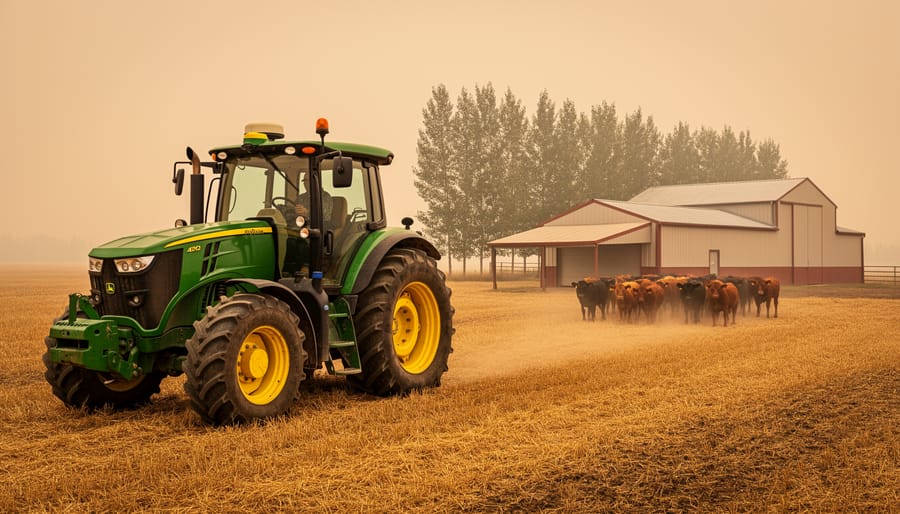
Monitor air quality indices daily through the Alberta Air Quality Health Index and establish clear operational thresholds—when readings exceed 7, move livestock to sheltered areas and postpone field work that stirs up dust. Install MERV 13 or higher filters in equipment cabs, livestock barns, and storage facilities to reduce particulate matter exposure by up to 85 percent during active smoke events.
Create physical barriers against smoke intrusion by sealing gaps in building structures with weather stripping and caulking, particularly in livestock housing where respiratory health directly impacts productivity. During peak smoke periods, increase ventilation rates during early morning hours when air quality typically improves, then seal buildings during afternoon smoke intensification.
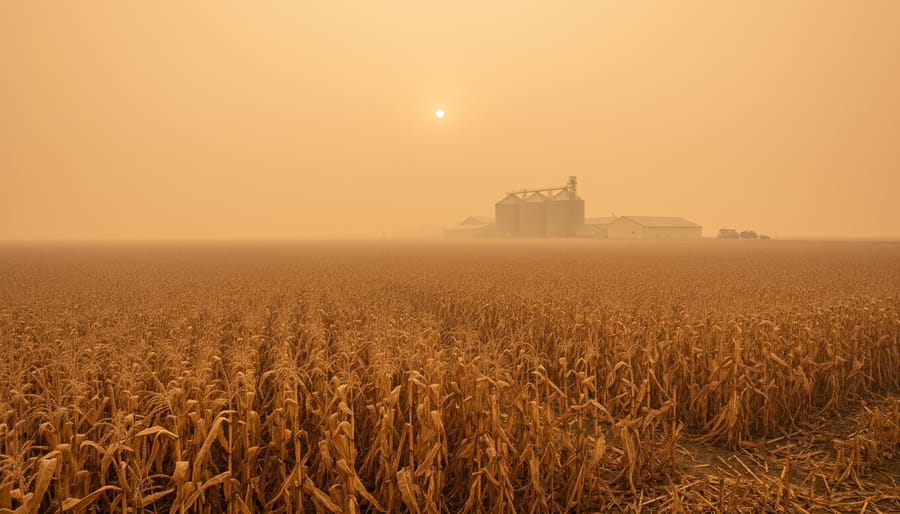
Wildfire smoke has transformed from an occasional inconvenience to a recurring agricultural threat across Alberta. The 2023 wildfire season alone saw over 2.2 million hectares burned province-wide, blanketing farming regions in hazardous air quality for weeks. This smoke carries fine particulate matter (PM2.5) that penetrates deep into lungs of both humans and livestock, while also depositing harmful compounds onto crops and pastures.
The agricultural impacts extend beyond immediate health concerns. Smoke stress reduces livestock weight gains by 10 to 15 percent during prolonged exposure, delays crop maturation, and compromises forage quality. For Alberta farmers already navigating climate variability, understanding and mitigating smoke pollution has become essential to maintaining productive, profitable operations.
This isn’t about accepting smoke events as unavoidable—it’s about building resilience through strategic planning and practical action. By integrating smoke management into your broader climate-smart practices, you protect your investment, safeguard animal welfare, and position your operation for long-term sustainability. The following strategies combine immediate protective measures with forward-thinking approaches drawn from Alberta farmers who’ve successfully navigated recent smoke seasons.
Understanding Wildfire Smoke Pollution: What’s Really in the Air
How Smoke Affects Plant Health and Crop Yields
When wildfire smoke blankets your fields, it creates an invisible barrier that directly impacts your bottom line. Understanding these effects helps you make informed decisions about crop management during smoke events.
The most immediate impact occurs with photosynthesis. Dense smoke can reduce sunlight penetration by 30-50%, according to Agriculture and Agri-Food Canada research. Your crops literally can’t see the sun properly. For canola, which requires abundant light during its flowering and pod-fill stages, this reduction can decrease yields by 10-15% when smoke persists for more than a week during critical growth periods. Alberta canola growers reported these exact losses during the 2018 and 2021 smoke events.
Wheat and barley face similar challenges. University of Alberta studies show that prolonged smoke exposure during grain fill can reduce kernel weight and protein content. One central Alberta wheat farmer documented a half-bushel-per-acre daily loss when thick smoke covered his fields for 12 consecutive days in July 2021. That translates to significant economic impact across hundreds of acres.
The particulate matter in smoke creates additional stress beyond light reduction. Fine particles settle on leaf surfaces, physically blocking stomata where gas exchange occurs. This double-whammy effect slows growth rates and can extend your growing season by several days, which becomes problematic when you’re already racing against Alberta’s short season and early frost dates.
For livestock producers, smoke affects feed quality in real-time. Hay and silage harvested during smoky conditions can have reduced nutritional value and may contain deposited particulates. Saskatchewan research found that smoke-affected forage showed 8-12% lower digestibility scores compared to clean conditions.
Dr. Maria Chen, an agronomist at Olds College, explains it plainly: “Think of smoke as putting sunglasses on your crops. They’re still growing, but everything slows down. The longer those sunglasses stay on during critical growth stages, the more yield you’ll sacrifice.” This straightforward reality makes monitoring smoke conditions and adjusting your management practices essential for protecting your investment.
The Hidden Risks to Livestock and Soil Health
Wildfire smoke doesn’t just affect crops and human health—it poses significant threats to livestock welfare and the long-term productivity of your soil. Understanding these hidden impacts helps you protect both animal health and land quality during smoke events.
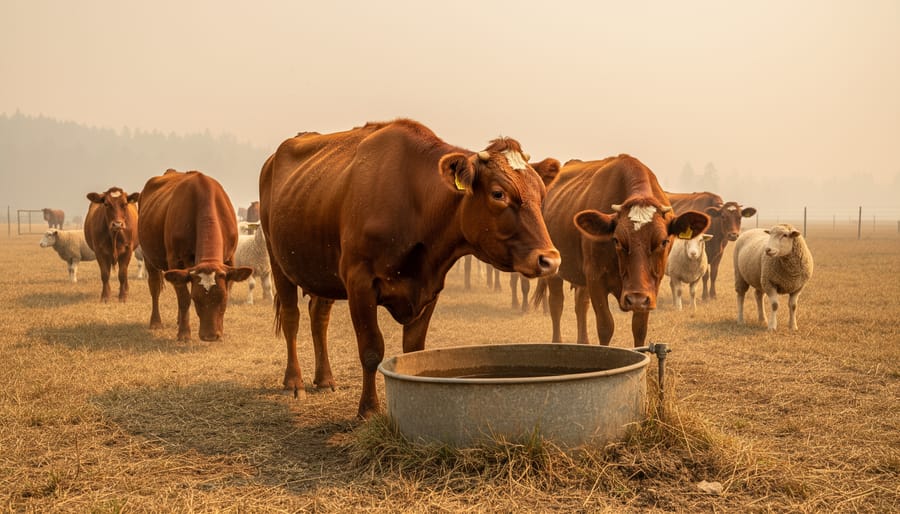
Respiratory problems emerge as the most immediate concern for livestock exposed to wildfire smoke. Cattle, sheep, and poultry experience increased coughing, nasal discharge, and labored breathing when particulate matter concentrations rise. Young animals and those with pre-existing conditions face heightened vulnerability. Dr. Sarah Mitchell, a veterinarian working with Alberta ranchers since 2018, reports that dairy operations often see a 15-20% drop in milk production during prolonged smoke exposure, even when animals show no obvious distress signs.
Behavioral changes signal stress levels that impact your bottom line. Livestock reduce grazing time, spend more hours near water sources, and consume less feed when smoke blankets pastures. This translates to slower weight gain in beef cattle and decreased feed efficiency across all species. Integrating smoke preparedness into your livestock management strategies becomes essential for maintaining productivity.
Soil health faces longer-term consequences from ash deposition. While light ash layers can temporarily increase pH and add nutrients like calcium and potassium, heavy deposits alter soil chemistry dramatically. Organic farmers particularly need to monitor these changes, as ash can affect microbial communities crucial for nutrient cycling. A 2022 study of Alberta farms post-wildfire found that excessive ash increased soil alkalinity by 0.5-1.2 pH units in affected areas, requiring amendments to restore balance.
Testing soil pH and nutrient levels after significant smoke events helps you adjust your organic fertility programs appropriately and maintain certification standards.
Reading the Signs: Monitoring Smoke Levels on Your Farm
Low-Cost Monitoring Tools Every Farm Should Have
Investing in reliable monitoring tools and data doesn’t have to break the bank. Several accessible air quality monitors can help you make informed decisions during wildfire smoke events.
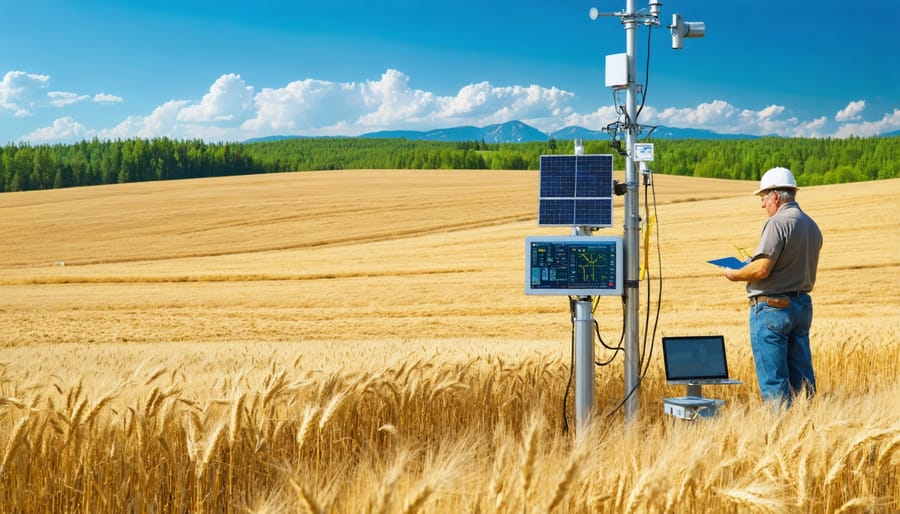
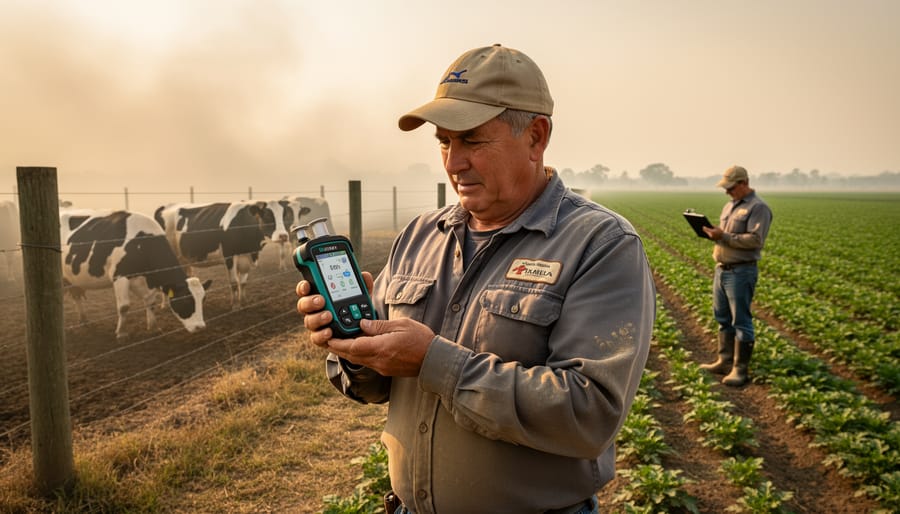
For basic monitoring, the PurpleAir sensor (around $300-$350 CAD) provides real-time PM2.5 readings and connects to your smartphone. These devices are available through Amazon.ca or directly from PurpleAir’s website with shipping to Canada. The Temtop M2000 (approximately $200-$250 CAD) offers a handheld option that measures PM2.5, PM10, and temperature, making it portable for checking air quality in barns or greenhouses.
When selecting a monitor, prioritize devices that measure PM2.5 specifically, as these fine particles pose the greatest health risk to livestock and workers. Look for models with real-time data display and the ability to track trends over hours or days.
Understanding readings is straightforward. PM2.5 levels below 12 micrograms per cubic metre are considered good. Readings between 12-35 indicate moderate conditions where sensitive animals may need protection. Above 55, implement protective measures like keeping livestock indoors and limiting outdoor work.
Many Alberta farmers supplement purchased monitors with free government resources. Environment Canada’s Air Quality Health Index and Alberta’s airborne particulate monitoring network provide regional data, though farm-level readings offer more precise decision-making information. Consider purchasing one quality monitor for your operation’s main area, then use regional data to complement your on-site measurements.
Immediate Protection Strategies During Smoke Events
Protecting Livestock and Workers
When wildfire smoke blankets your operation, protecting both livestock and workers requires immediate, decisive action. Understanding when and how to implement safety protocols can mean the difference between maintaining herd health and facing serious respiratory issues or productivity losses.
Start monitoring the Air Quality Health Index (AQHI) daily during wildfire season. When readings reach 7 or above (high risk), begin implementing protective measures. Move livestock to barns or sheltered areas with adequate ventilation systems that can filter incoming air. If full shelter isn’t possible, provide windbreaks and covered feeding areas that reduce direct smoke exposure.
Adjust feeding schedules to cooler, clearer times of day, typically early morning before smoke intensifies. Ensure continuous access to fresh, clean water sources, as animals increase water consumption during smoke events and water can become contaminated with ash. Plan for 20-30% additional water capacity during extended smoke periods.
For farm workers, mandatory protocols should kick in at AQHI 7. Provide N95 respirators for anyone working outdoors and train staff on proper fitting techniques. Jason Timmermans, a cattle producer near Drayton Valley, implemented a “no outdoor work” policy during the 2023 smoke events when visibility dropped below 1 kilometre. “We lost some productivity, but protecting our team was non-negotiable,” he explains.
Halt all strenuous outdoor activities when AQHI reaches 10 or higher. This includes sorting cattle, equipment repairs requiring physical exertion, and field work. Create indoor alternative tasks for these periods, such as equipment maintenance, record-keeping, or planning activities.
Consider installing air quality monitors at multiple farm locations to track real-time conditions. Document all smoke-related decisions and health observations, as this information proves valuable for insurance claims and refining future response protocols.
Crop Management During High-Smoke Days
When wildfire smoke settles over your fields, quick thinking can make the difference between protecting your investment and watching quality decline. Here’s how to navigate those hazy days effectively.
Consider adjusting irrigation schedules during heavy smoke periods. Smoke particles can settle on leaf surfaces and reduce photosynthesis by up to 30%, meaning your crops need less water temporarily. Over-irrigation during these times can lead to root problems without the usual benefit of robust growth. Monitor soil moisture closely and scale back as needed.
Harvest timing becomes critical when smoke rolls in. For vegetable and berry growers, smoke taint is a real concern—compounds can be absorbed within 24 to 48 hours of exposure. If possible, delay harvest until smoke clears and monitor air quality indexes diligently. One Peace River berry farmer shared that waiting just three extra days after a 2023 smoke event saved their entire crop from off-flavours that would have made the harvest unsellable.
For grain crops approaching maturity, the decision is more nuanced. Light to moderate smoke may actually suppress certain pest populations, particularly flying insects that avoid reduced visibility conditions. However, prolonged exposure can delay ripening.
Sensitive crops like lettuce, spinach, and other leafy greens benefit from temporary shade cloth or row covers during peak smoke days. This creates a barrier against particle deposition while maintaining adequate growing conditions. The small investment in covering materials pays dividends in marketable quality when smoke becomes a regular seasonal concern.
Building Long-Term Resilience: Proactive Farm Planning
Infrastructure Investments That Pay Off
Strategic infrastructure investments can significantly reduce wildfire smoke exposure while delivering long-term operational benefits for your farm. Here’s what’s proven effective for Alberta producers.
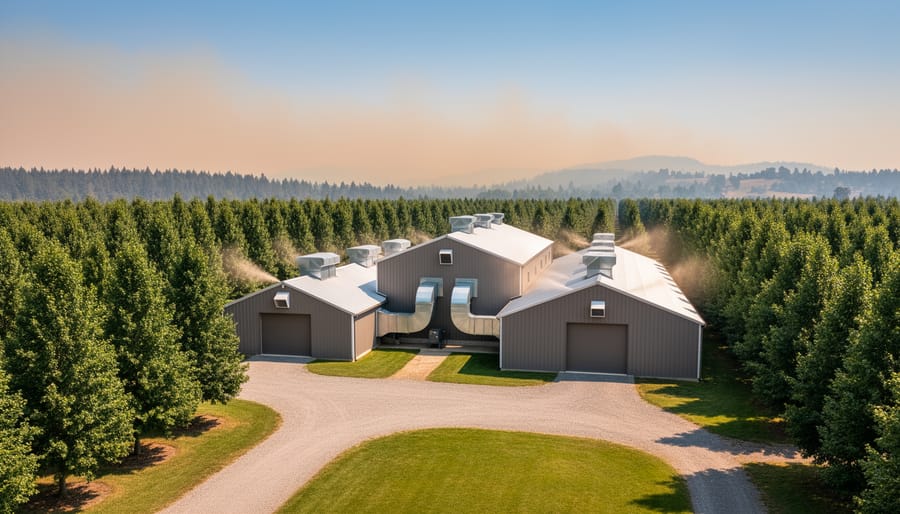
Barn ventilation systems top the priority list. Modern systems with particulate filtration can reduce indoor smoke concentrations by 60-80 percent during heavy smoke events. Positive pressure ventilation systems work particularly well, maintaining clean air inside barns while keeping contaminated air out. Initial investment ranges from $5,000 to $25,000 depending on building size, but producers report reduced respiratory illness in livestock and improved feed conversion rates that offset costs within 3-5 years.
“We installed filtered ventilation in our dairy barn three years ago,” says Jennifer Morrison, who farms near Westlock. “During the 2023 smoke season, our milk production stayed consistent while neighbours without systems saw 8-12 percent drops. The system paid for itself in one bad smoke year.”
Shelterbelts provide natural filtration and windbreaks that reduce smoke particle movement across your property. Strategic tree placement along prevailing wind directions creates buffer zones for livestock and reduces particulate matter by 20-30 percent in protected areas. While trees take years to mature, they require minimal maintenance once established and increase property values.
Water storage infrastructure ensures you can continue operations when smoke grounds aerial firefighting or limits visibility for water delivery. Investing in above-ground tanks (10,000-50,000 litres) provides both smoke-season security and drought resilience, typically costing $2,000-$15,000 installed.
Alberta’s Agricultural Service Board offers grants covering up to 50 percent of environmental infrastructure costs through their Environmental Stewardship and Climate Resilience Program. The Canadian Agricultural Partnership also provides cost-sharing for climate adaptation infrastructure. Contact your local Municipal District office to explore available funding—many Alberta producers have secured $10,000-$30,000 in combined support for smoke-mitigation projects. Application deadlines typically fall in early spring, so plan ahead for next year’s funding cycles.
Crop Selection and Diversification for Smoke Resilience
Growing the right crops can significantly reduce your vulnerability to wildfire smoke damage. Research from Agriculture and Agri-Food Canada shows that certain varieties demonstrate superior tolerance to particulate matter and reduced light conditions during smoke events.
For grain crops, shorter-season varieties of wheat and barley offer a strategic advantage. AC Lacombe wheat and CDC Copeland barley mature 7-10 days earlier than standard varieties, allowing you to complete critical flowering stages before peak smoke season in July and August. These varieties work particularly well in central and northern Alberta where smoke events typically intensify mid-summer.
Diversification spreads your risk across multiple crops with different smoke sensitivities. Root vegetables like potatoes and carrots show remarkable resilience since their edible portions develop underground, protected from surface-level particulate deposition. Dean Pike, an organic farmer near Lacombe, shifted 30 percent of his acreage to root crops after consecutive smoke-impacted seasons. “The diversification saved our revenue stream when smoke damaged our cereal yields,” he explains.
Pulse crops present mixed opportunities. While lentils are moderately smoke-tolerant, chickpeas struggle with extended low-light conditions. Consider climate-resilient crop varieties like CDC Maxim peas, which demonstrate better recovery rates after smoke exposure.
Timing your planting schedule strategically can help crops avoid peak vulnerability periods. Plant early-maturing varieties by late April to push flowering windows into June, before major smoke events typically arrive. For fall crops like winter wheat, planting in late August positions them past critical development stages during the following summer’s smoke season.
Organic producers should prioritize heritage varieties known for stress resilience, including Red Fife wheat and Norline oats, which historically performed well under challenging environmental conditions across the prairies.
Emergency Preparedness: Your Farm Smoke Action Plan
A written smoke action plan transforms reactive scrambling into organized response when wildfire smoke threatens your operation. Start by designating one person as your farm’s air quality monitor during fire season. This individual checks the Alberta Air Quality Health Index daily and records readings in a shared location, whether that’s a whiteboard in your shop or a group text thread.
Create clear decision triggers based on AQI levels. At AQI 1-3 (low to moderate risk), continue normal operations but monitor conditions. At AQI 4-6 (moderate to high risk), implement protective measures like reducing outdoor work hours and ensuring livestock have barn access. At AQI 7-10+ (very high to extreme risk), activate emergency protocols including halting non-essential fieldwork and moving vulnerable animals indoors.
Your supply checklist should include N95 or P100 respirators for each worker, plastic sheeting and duct tape for sealing structures, extra air filters for equipment cabs, backup water supplies for livestock, and emergency feed if pastures become unsafe. Store these supplies in an accessible location marked clearly on your farm map.
Communication protocols matter tremendously. Establish a phone tree or messaging system to reach all workers quickly. Include neighbours in your network, particularly if you share wildfire protection strategies or can assist each other during emergencies. Document veterinarian contact information and alternative housing locations for livestock. Review and update your plan each spring before fire season begins, incorporating lessons from previous years.
Real Stories from Alberta: Farmers Who’ve Adapted Successfully
When wildfire smoke blanketed central Alberta during the record-breaking 2023 fire season, Tom Hendricks knew his cattle operation near Lacombe was in trouble. His 200-head beef herd showed signs of respiratory distress, and pasture quality deteriorated rapidly under the smoke canopy.
“We’d see the cattle bunched up near water sources, breathing heavy. Some stopped grazing entirely,” Tom recalls. “I knew we had to act fast or face serious losses.”
Tom’s first move was installing air quality monitors at three locations across his 600-hectare property. The investment of $1,200 gave him real-time data to make informed decisions. When Air Quality Health Index readings exceeded 7, he moved cattle to pastures with natural windbreaks and implemented supplemental feeding to reduce grazing time outdoors.
He also retrofitted his barn with basic filtration, adding sealed doors and MERV-13 filters to existing ventilation systems for approximately $3,500. “The difference inside was remarkable. We measured particulate matter levels 60 percent lower than outside air,” he explains.
The results spoke clearly. While neighbouring operations reported respiratory issues in 15-20 percent of their herds, Tom’s intervention kept problems to under 5 percent. His veterinary costs for the season increased only marginally, roughly $800, compared to potential losses that could have reached $30,000 or more.
Meanwhile, Sarah Chen, who operates a 120-hectare vegetable farm near Red Deer, faced different challenges. Smoke reduced photosynthesis in her high-value crops, threatening both yield and quality.
Sarah invested $8,000 in shade cloth systems that could be quickly deployed over sensitive crops like lettuce and spinach. “The cloth reduced light but also filtered larger particulate matter. We maintained 85 percent of normal yield during heavy smoke periods,” she notes. Without protection, she estimates losses could have reached 40 percent.
She also adjusted her irrigation schedule, increasing frequency by 20 percent during smoke events to help plants cope with heat stress and wash particulate matter from leaf surfaces. Her water costs rose $600 for the season, but crop quality remained market-ready.
Both farmers emphasize that early preparation made the difference. “Don’t wait until you can’t see across your field,” Tom advises. “Have your plan ready, equipment on hand, and know your trigger points for action.”
Their combined investments, under $15,000, protected operations worth substantially more and provided frameworks they’ll use for years ahead.
Expert Perspective: What Agricultural Scientists Are Learning
Dr. Sarah Mitchell, an agricultural researcher with Agriculture and Agri-Food Canada’s Lethbridge Research and Development Centre, has spent the past four years studying wildfire smoke impacts on Alberta crops. Her work provides valuable insights for farmers navigating increasingly smoky growing seasons.
“What we’re learning is that smoke exposure affects different crops in surprisingly specific ways,” Dr. Mitchell explains. “Canola, for instance, shows reduced photosynthesis rates at lower smoke concentrations than wheat. But the duration of exposure matters as much as intensity. Three days of moderate smoke can sometimes cause more cumulative damage than one day of heavy smoke.”
Her research team has documented yield reductions ranging from 8 to 22 percent in smoke-affected fields, with the highest losses occurring when smoke arrives during critical growth stages. “Timing is everything. Smoke during flowering or grain fill periods creates the most significant impacts,” she notes.
When asked about emerging solutions, Dr. Mitchell emphasizes prevention and timing adjustments. “We’re seeing Alberta farmers experiment with earlier seeding dates to push flowering periods ahead of typical wildfire season. Others are diversifying crop portfolios to spread risk. These aren’t perfect solutions, but they’re practical steps farmers can take now.”
She also highlights the importance of documenting smoke events. “Keep detailed records of when smoke arrives, how long it persists, and subsequent crop performance. This data helps with insurance claims and informs future planting decisions.”
Dr. Mitchell recommends farmers monitor the Alberta Agriculture wildfire smoke advisory system and connect with local agricultural fieldmen who can provide region-specific guidance. “Your neighbours’ experiences matter too. Community knowledge-sharing is incredibly valuable for understanding how smoke affects your specific microclimate and soil conditions.”
For those seeking additional research updates, Dr. Mitchell suggests checking the Alberta Crop Industry Development Fund website, which regularly publishes applied research findings relevant to prairie farmers. “The science is evolving quickly, and staying informed helps you make better decisions for your operation.”
Wildfire smoke is an escalating challenge for Alberta agriculture, but it doesn’t have to threaten your livelihood or long-term viability. By building knowledge about smoke impacts, preparing your operation with practical protective measures, and connecting with your community for shared resources and support, you can develop genuine resilience against this growing threat. These aren’t just reactive emergency measures—they’re investments in the sustainability and future-proofing of your farm.
The strategies we’ve explored align directly with broader sustainable agriculture goals: protecting soil health, maintaining animal welfare, conserving resources, and building adaptive capacity. When you install proper ventilation systems, develop grazing rotation plans for smoke events, or coordinate with neighbours on equipment sharing, you’re not just addressing wildfire smoke—you’re creating a more resilient operation capable of weathering multiple climate-related challenges.
The Alberta producers already implementing these practices have shown that preparation makes the difference between devastating losses and manageable disruptions. Their experiences confirm that starting small and building gradually works better than waiting for the perfect solution.
The time to act is now, before the next smoke event arrives. Begin by assessing your most vulnerable areas, whether that’s livestock facilities, field operations, or worker safety protocols. Connect with your local agricultural extension office, review your insurance coverage, and start conversations with neighbouring farms about mutual support systems. Alberta Agriculture and Irrigation offers comprehensive resources and planning tools specifically designed for our regional conditions. Every step you take today strengthens your operation for tomorrow.