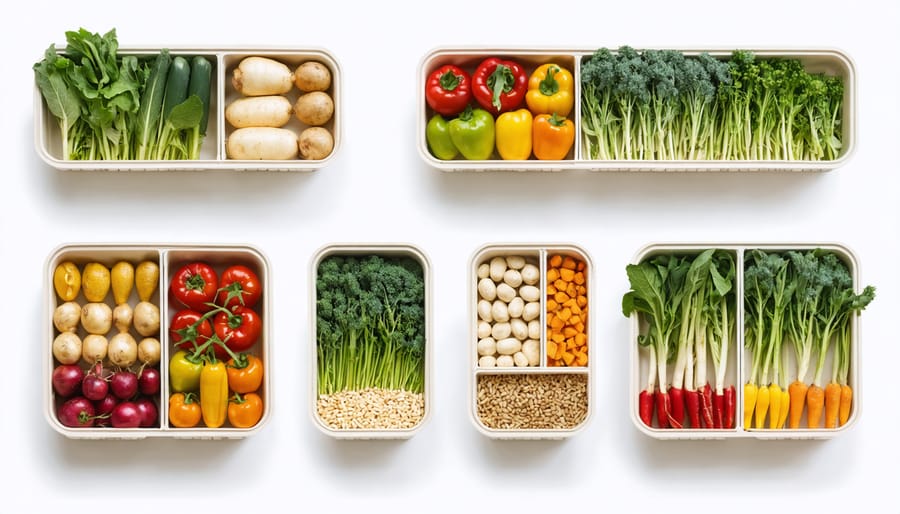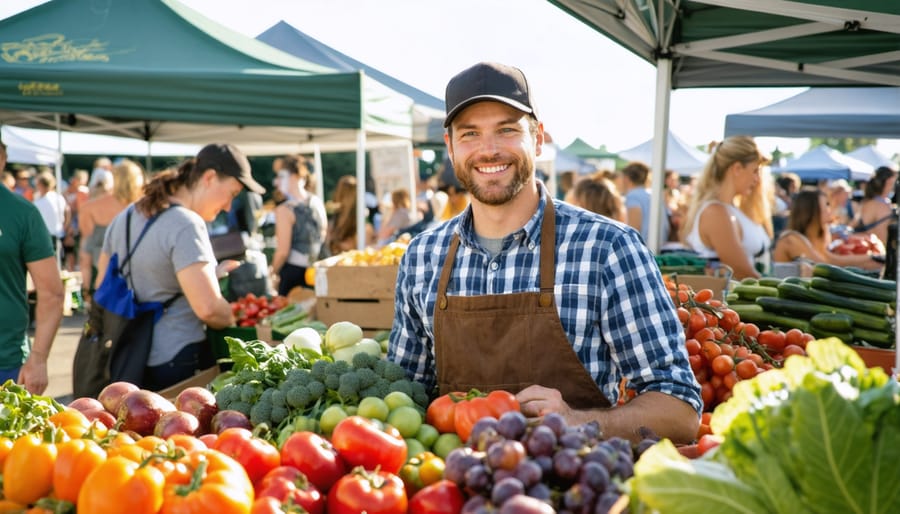
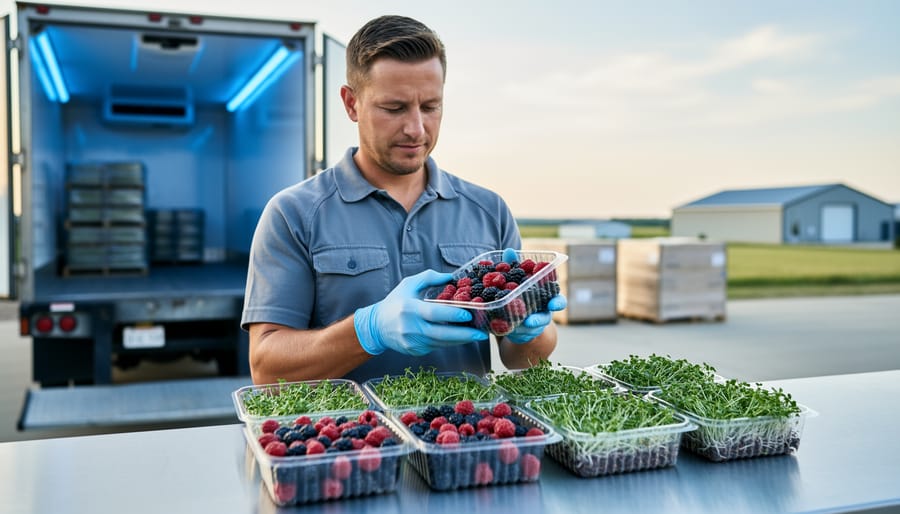
Evaluate your current packaging by calculating actual product loss percentages from field to customer—most Alberta producers discover 15-30% of their harvest value disappears due to inadequate packaging, particularly for delicate items like berries, greens, and heritage tomatoes. Research and development packaging applies scientific testing and innovation to solve these real-world challenges, transforming how your products reach consumers through local food networks and broader markets.
Start by documenting your product’s specific vulnerabilities—measure moisture loss in storage, track bruising during transport, and note temperature fluctuations your packaging experiences in typical Alberta conditions, where summer heat can reach 30°C and winter transport presents sub-zero challenges. Partner with packaging suppliers who conduct real-world testing rather than relying solely on laboratory results; companies like Cascades and Comet Packaging offer Canadian-climate trials that reveal whether materials maintain integrity through prairie temperature swings and humidity variations.
Request modified atmosphere packaging trials for high-value crops, which can extend shelf life by 3-7 days for items like microgreens and cut herbs—this extension often means the difference between premium pricing and discounted sales. Consider biodegradable options that align with consumer sustainability expectations while meeting performance standards; recent innovations in mushroom-based and agricultural waste packaging provide composting compatibility without sacrificing protection during the critical 48-72 hour window from harvest to sale.
The investment in proper R&D packaging typically returns 200-400% through reduced waste, extended market reach, and premium positioning—making it one of the most impactful operational improvements available to today’s agricultural producers.
What R&D Packaging Actually Means for Your Farm

The Real Cost of Traditional Packaging Methods
Every growing season, Canadian farmers face a challenging reality: traditional packaging methods quietly drain profits through preventable losses. Consider a mid-sized Alberta vegetable operation that discovered 18 percent of their premium greenhouse tomatoes were downgraded or rejected due to bruising and moisture damage during transport to Edmonton markets. That’s nearly one in five tomatoes losing value before reaching consumers.
The financial impact extends beyond visible damage. A Saskatchewan berry grower shared that standard plastic clamshells allowed ethylene gas buildup, reducing their strawberries’ shelf life by three days. Those missing days meant lost contracts with grocery chains requiring minimum freshness guarantees. The result? Selling premium berries at processing prices, cutting revenue by 40 percent.
Temperature fluctuations present another hidden cost. Without proper insulation and ventilation design, a Fraser Valley lettuce producer found their product arriving at distribution centers with core temperatures seven degrees higher than optimal. Quality degradation was immediate, and retailers refused shipments.
These aren’t isolated incidents. Across Canadian agriculture, inadequate packaging creates a domino effect: damaged products, rejected shipments, strained buyer relationships, and missed premium market opportunities. For many producers, packaging appears as just another line item, but treating it as afterthought rather than investment means leaving significant revenue on the table.
The good news? Understanding these costs is the first step toward addressing them. Modern research and development in packaging offers practical solutions designed specifically for Canadian growing conditions and market requirements.
How Modern R&D Changes the Game
Modern packaging research and development directly tackles the unique challenges Alberta farmers face throughout the growing and distribution cycle. Temperature swings present one of the biggest hurdles—products that endure scorching summer days in the field can face sudden overnight cooling, while winter shipments might experience -30°C conditions outdoors before entering heated warehouses. Today’s smart packaging solutions incorporate insulation technologies and phase-change materials that maintain stable internal temperatures, protecting sensitive produce during these extreme transitions.
Moisture management has also seen significant innovation. Research teams in Edmonton and Calgary have developed breathable films specifically calibrated for crops like carrots, potatoes, and leafy greens. These materials regulate humidity levels inside packages, preventing both desiccation and condensation-related spoilage that commonly occurs during the 800-kilometre journey from farm to urban markets.
Transportation stress testing represents another critical area where R&D makes measurable differences. Modern packaging undergoes rigorous vibration and compression trials that simulate hours on rough rural roads and stacking in transport trucks. Materials now absorb impact better while using less plastic overall.
According to Dr. Sarah Chen, a packaging researcher at the University of Alberta, “We’re seeing protective performance improve by 40 percent while reducing material weight by 25 percent compared to designs from just five years ago.” These advancements mean fewer damaged berries, intact greenhouse tomatoes, and reduced losses that directly impact your profitability and market reputation.
Breakthrough Packaging Technologies Making Waves in Canadian Agriculture
Biodegradable and Compostable Materials That Actually Work
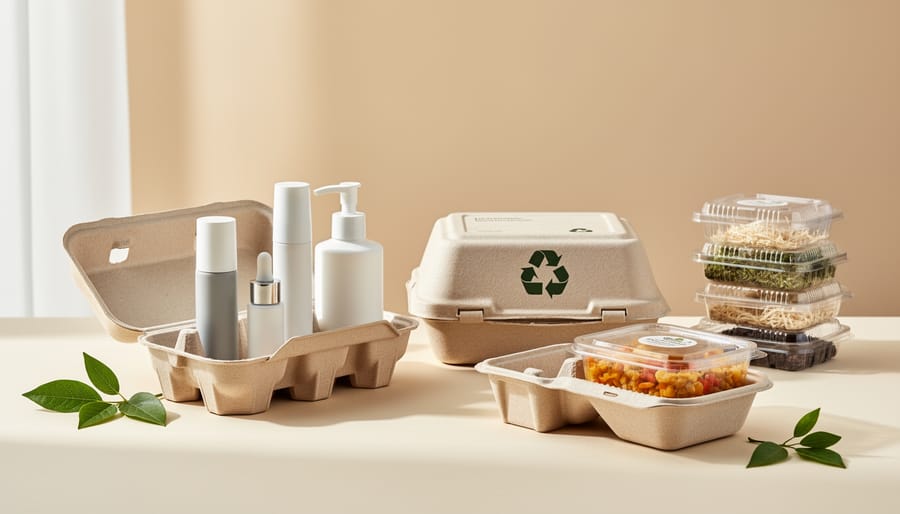
Plant-based packaging alternatives have advanced significantly, offering Alberta farmers viable options that protect products without compromising environmental values. Materials derived from cornstarch, mushroom mycelium, and agricultural waste are now performing comparably to conventional plastics in many applications.
Cornstarch-based containers have proven particularly effective for berry and small produce packaging. A 2023 trial at a central Alberta berry operation found these containers maintained structural integrity for up to 14 days under refrigeration, matching traditional plastic clamshells. The key difference? They break down completely in commercial composting facilities within 90 days.
Cold weather performance remains a critical consideration for Canadian conditions. Recent developments in PLA (polylactic acid) blends now withstand temperatures down to minus 20 degrees Celsius without becoming brittle. This makes them suitable for winter farmers’ market applications and cold storage facilities common across the prairies.
Mushroom-based packaging, grown from agricultural byproducts and mycelium, offers excellent cushioning for delicate items like eggs or specialty vegetables. A Saskatchewan egg producer reported zero breakage increases after switching from foam to mycelium trays, with the added benefit of customers composting packaging at home.
The practical reality: not all biodegradable options suit every product. Root vegetables and hardy crops transition easily, while moisture-sensitive items may require hybrid solutions. Start by testing compostable packaging with one product line, gathering customer feedback before expanding. Many Alberta farmers report that transparently communicating packaging choices strengthens customer relationships and supports premium pricing that offsets slightly higher material costs.
Smart Packaging That Monitors Your Product
Imagine checking your smartphone to see exactly how your strawberries held up during transport from the field to the grocery store cooler. Smart packaging makes this possible through embedded technologies that monitor product conditions in real time.
Temperature indicators are leading the charge in Canadian agriculture. These small, often colour-changing labels attach to packaging and provide instant visual confirmation that cold chain requirements have been met. For Alberta vegetable growers shipping lettuce to distant markets, these indicators offer peace of mind and accountability. If a shipment experiences temperature fluctuations, you’ll know immediately rather than discovering spoilage upon arrival.
Freshness sensors take monitoring a step further by detecting gases released as produce ripens or deteriorates. These sensors can alert distributors when berry shipments need priority handling or when storage conditions require adjustment. Several Ontario berry operations have reduced waste by 15 to 20 percent using this technology, and Alberta producers are beginning to explore similar applications for sensitive crops.
QR code tracking systems connect everyone in the supply chain, from field to consumer. When you scan a code, you access harvest dates, storage temperatures, and handling information. This transparency builds consumer trust while giving you valuable feedback about how your products perform post-harvest.
The investment varies depending on your operation size and needs. Start small by testing temperature indicators on your most valuable or perishable products. Many Alberta farmers report that the reduction in rejected shipments alone justifies the modest cost of these monitoring tools.

Modified Atmosphere Packaging for Extended Freshness
Modified atmosphere packaging, or MAP, works by adjusting the air composition inside your packaging to slow down natural deterioration processes. Instead of the regular atmosphere we breathe—roughly 21% oxygen and trace amounts of carbon dioxide—MAP creates a customized environment that keeps your produce fresher, longer.
Here’s how it helps your crops: reducing oxygen levels slows respiration in fruits and vegetables, which means they maintain quality and nutritional value much longer. At the same time, elevated carbon dioxide levels inhibit mold and bacterial growth without any chemical preservatives. The exact gas mixture depends on what you’re packaging. Leafy greens typically need 3-5% oxygen with 10-15% carbon dioxide, while berries perform best with slightly different ratios.
Alberta berry producers have seen remarkable results with MAP technology. One Peace River region strawberry grower reported extending shelf life from 3-4 days to 10-12 days using modified atmosphere packaging, which opened doors to markets previously out of reach due to transportation times.
The practical application is straightforward. You’ll need specialized packaging film that maintains the gas barrier and either passive MAP systems—where produce respiration naturally creates the desired atmosphere—or active systems that flush packages with pre-mixed gases. Start small with your highest-value crops to test effectiveness under your specific conditions.
Root vegetables, cut produce, and fresh herbs all benefit from MAP, though each requires different gas compositions. Many Alberta producers find that investing in MAP equipment pays for itself within one growing season through reduced waste and access to premium markets demanding longer shelf life guarantees.
Alberta Farmers Already Using Advanced Packaging Solutions

Vegetable Grower Reduces Waste by 40% with New Containers
When Three Hills vegetable producer Mark Jensen noticed nearly half his lettuce and leafy greens were wilting before reaching consumers, he knew something had to change. His operation, which supplies several Edmonton farmers’ markets and CSA programs, was losing approximately $18,000 annually to spoilage.
In spring 2023, Jensen partnered with a packaging consultant to transition from solid plastic clamshells to ventilated container designs. The new packaging featured strategically placed vents that allowed ethylene gas to escape while maintaining optimal humidity levels for delicate greens.
The implementation took six weeks from consultation to full adoption. Jensen invested $4,200 in new containers and modified his packing line setup. Within the first harvest cycle, he observed a noticeable difference. Lettuce remained crisp for up to five additional days, and customer complaints about wilted products dropped significantly.
By season’s end, Jensen documented a 40 percent reduction in post-harvest waste. His financial return was equally impressive. The initial investment paid for itself within four months, and he projected annual savings of $12,000 moving forward. Even better, his market customers began requesting his produce specifically, noting the superior freshness.
Jensen’s advice to fellow growers considering the switch? Start small with your highest-value crops. Test the containers through a complete market cycle before scaling up, and track your waste metrics carefully to measure real impact.
Berry Farm Expands Market Reach with Temperature-Controlled Packaging
When Lethbridge-based Prairie Blush Berry Farm faced a common problem in 2022, they turned to packaging innovation for answers. Owner Jennifer Kwong had built a thriving operation producing premium strawberries and raspberries, but her market reach was limited to a 100-kilometre radius. Beyond that distance, berries arrived bruised and overripe, resulting in rejected orders and lost revenue.
The breakthrough came through collaboration with a packaging specialist at Olds College who introduced Jennifer to temperature-controlled insulated containers. These weren’t your standard coolers. The new packaging incorporated phase-change materials that maintained consistent temperatures between 2-4 degrees Celsius for up to 48 hours, even during Alberta’s unpredictable spring weather.
The initial investment seemed daunting at roughly $8 per reusable container, compared to $0.50 for traditional cardboard flats. Jennifer started small, testing the system with three Calgary restaurants located 200 kilometres away. The results were immediate. Chefs reported receiving berries in the same condition as local suppliers, opening doors that were previously closed.
Within six months, Prairie Blush expanded distribution to Edmonton and even Saskatoon, tripling their customer base. The containers proved their worth quickly, with each unit completing over 30 cycles in the first year. Jennifer faced early challenges with container tracking and return logistics, eventually implementing a deposit system that achieved a 92 percent return rate.
Today, the farm processes 4,000 kilograms of berries weekly during peak season, with 60 percent now traveling beyond their original distribution zone. The packaging investment paid for itself within eight months through reduced waste and premium pricing for guaranteed freshness.
Expert Perspectives: What Packaging Scientists Say About Farm-to-Table Needs
Canadian packaging researchers are seeing a significant shift in how agricultural products move from field to market, and their insights can help you make smarter packaging decisions for your operation.
Dr. Sarah Chen, a food packaging scientist at the University of Alberta, emphasizes the importance of breathable packaging for Alberta-grown produce. “We’re developing modified atmosphere packaging specifically calibrated for our climate conditions,” she explains. “Temperature fluctuations during transport between rural Alberta and urban markets create unique challenges that generic packaging doesn’t address.” Her research shows that province-specific packaging solutions can extend shelf life by 3-5 days compared to standard options.
The future of farm-to-table packaging is heading toward smart technology integration. Dr. Michael Kowalski from Agriculture and Agri-Food Canada notes that affordable time-temperature indicators will become mainstream within two years. “Farmers won’t need to guess if their cold chain was maintained,” he says. “These visual indicators will provide immediate feedback and help build consumer trust.” This technology is particularly valuable for organic producers and direct-market farmers who rely heavily on product quality reputation.
Sustainability remains a top priority, but experts caution against oversimplified solutions. “Compostable packaging sounds ideal, but it needs proper infrastructure,” warns Dr. Jennifer Mills, an agricultural systems researcher. “We’re working on packaging that performs well during transport but breaks down quickly in typical farm composting conditions—something that actually works for rural producers, not just urban consumers.”
What should you watch for? Experts recommend keeping an eye on:
Regional packaging cooperatives where farmers pool resources for bulk purchasing and testing
Biodegradable moisture-control inserts designed for root vegetables and leafy greens
Returnable container programs gaining traction in farmers’ market networks
Antimicrobial packaging derived from agricultural waste products
The message from researchers is clear: packaging innovation isn’t just about prettier boxes. It’s about creating systems that work within your existing operation while genuinely reducing waste and improving product quality. Start small, test thoroughly, and choose solutions that align with both your production scale and regional infrastructure.
Practical Steps to Evaluate Packaging Options for Your Operation
Assessing Your Current Packaging Performance
Before investing in new packaging R&D solutions, take stock of where you currently stand. Start by tracking product loss across your supply chain for at least one full season. Measure waste at harvest, during storage, in transport, and at point of sale. Calculate the percentage of product that reaches consumers in sellable condition versus what’s damaged or discarded. This baseline data reveals where packaging improvements can make the biggest financial impact.
Next, gather feedback from your buyers and end customers. Are products arriving with bruising, moisture damage, or temperature fluctuations? What do retailers and consumers say about ease of handling, shelf appeal, and freshness? Direct conversations with buyers at farmers’ markets or through distributor channels often uncover packaging weaknesses you haven’t noticed.
Document your current packaging costs per unit, including materials, labour for packing, and any specialized equipment. Compare these figures against your product loss rates to identify where upgraded packaging might pay for itself through reduced waste.
Finally, assess how your packaging performs in Alberta’s specific conditions—extreme temperature swings during transport, dry winter air, and summer heat. Understanding these environmental stressors helps you prioritize which R&D packaging innovations will deliver real results for your operation.
Questions to Ask Before Investing in New Packaging
Before committing to new packaging solutions, evaluate several key factors to ensure your investment aligns with your farm’s goals and market demands.
Start with a thorough cost analysis. Calculate not just the upfront packaging expense, but also storage requirements, equipment needs, and labour time. Compare these costs against potential benefits like reduced spoilage, extended shelf life, and improved customer retention. For direct-to-consumer sales, premium packaging might justify higher prices, while wholesale operations often require cost-effective bulk solutions.
Assess scalability carefully. Will your chosen packaging accommodate seasonal production fluctuations? Can you easily increase order volumes as your business grows? Test minimum order quantities with suppliers to avoid excess inventory or storage challenges.
Evaluate supplier reliability by requesting references from other Canadian farmers and reviewing lead times, especially during peak seasons. Local suppliers may offer advantages in shipping costs and emergency restocking.
Consider environmental impact through recyclability, compostability, and carbon footprint. Many Alberta consumers increasingly value sustainable packaging choices.
Finally, gather customer feedback through surveys or sampling programs. What resonates with farmers’ market shoppers may differ from restaurant buyer preferences. Understanding these distinctions helps you make informed packaging decisions that strengthen market positioning.
Starting Small: Pilot Testing Strategies
Before investing heavily in new packaging solutions, start with controlled pilot tests that protect your budget while providing valuable insights. Select a small portion of your harvest—perhaps 50 to 100 kilograms—and package it using your proposed method alongside your current approach. This side-by-side comparison reveals real-world performance differences.
Track specific metrics that matter to your operation: weight loss percentage, visible quality changes, shelf life extension, and customer feedback. A berry producer near Red Deer recently tested modified atmosphere packaging on just 20 flats of strawberries, discovering a three-day shelf life improvement that justified the investment.
Document everything with photos, temperature logs, and cost calculations. Include transportation conditions, as Alberta’s temperature swings can significantly impact results. Ask your buyers to provide honest feedback about presentation, handling ease, and perceived value.
Consider timing your pilot during shoulder seasons when stakes are lower. Partner with a local retailer or farmers market vendor willing to participate in your trial. Their input on customer reactions and handling logistics proves invaluable.
Most importantly, give your pilot test adequate time—usually two to four weeks minimum. Rush decisions based on limited data often lead to costly mistakes. Small-scale testing transforms packaging decisions from expensive gambles into informed investments backed by your own farm’s evidence.
Environmental Impact: Making Packaging Work for Soil Health and Sustainability
Smart packaging choices directly impact your farm’s environmental footprint and can strengthen your commitment to sustainable agriculture. When evaluating R&D packaging options, consider how materials align with composting systems already in place on your operation and whether they support organic certification requirements.
Many Alberta farmers are discovering that biodegradable and compostable packaging materials integrate seamlessly into existing farm waste management systems. Unlike conventional plastic packaging that accumulates in landfills, certified compostable materials break down into nutrient-rich soil amendments within 90 to 180 days under proper conditions. This creates a closed-loop system where packaging returns value to the soil rather than becoming waste.
When selecting materials, look for certifications like BPI (Biodegradable Products Institute) or CMA (Compost Manufacturing Alliance) standards. These verify that packaging will decompose without leaving harmful residues that could compromise organic soil health. Kelvin Heppner, an organic grain farmer near Lethbridge, transitioned to compostable bags for his direct-to-consumer flour sales and reports that customers appreciate the environmental integrity. “It reinforces our whole-farm approach to sustainability,” he notes.
Reducing plastic waste doesn’t mean sacrificing product protection. Modern bio-based films derived from corn starch or cellulose offer comparable barrier properties to petroleum-based plastics while supporting soil health when composted. Some innovative producers are even exploring mushroom-based packaging and seaweed films that provide cushioning and moisture control.
Consider how packaging choices complement zero-waste distribution methods you may already employ. Reusable container systems, while requiring initial investment, eliminate single-use packaging entirely and build customer loyalty through deposit-return programs.
Start by calculating your current packaging waste volume in kilograms per season. Then pilot test sustainable alternatives with a portion of your production. Track decomposition rates, customer feedback, and any changes in product quality. This data-driven approach helps you make confident decisions that benefit both your operation and the environment.
Resources and Support for Canadian Farmers Exploring Packaging Innovation
Upgrading your packaging systems doesn’t mean going it alone. Canadian farmers have access to numerous resources designed specifically to support agricultural innovation and sustainability initiatives.
Agriculture and Agri-Food Canada (AAFC) offers the Canadian Agricultural Partnership, which provides cost-share funding for projects that improve competitiveness and sustainability, including packaging upgrades. The program typically covers up to 50 percent of eligible project costs. Alberta Agriculture and Irrigation administers regional programs that complement federal initiatives, offering technical expertise and financial assistance for value-added agriculture projects.
Research institutions across the country are actively working on packaging solutions tailored to Canadian conditions. The University of Alberta’s Food Processing Development Centre provides hands-on support, testing facilities, and guidance for farmers developing or improving their packaging systems. The University of Guelph and the Vineland Research and Innovation Centre also conduct packaging research with direct applications for farm operations.
Industry associations serve as valuable knowledge hubs. Alberta Farm Fresh Producers Association connects growers with packaging suppliers and shares best practices among members. The Canadian Horticultural Council and Food and Beverage Ontario offer workshops, webinars, and networking opportunities focused on packaging innovation and market requirements.
For funding opportunities beyond government programs, consider the Farm Credit Canada AgriSpirit Fund, which supports community-based agricultural projects, and regional economic development corporations that often have specific streams for agricultural innovation.
Many packaging suppliers also provide free consultations and pilot programs, allowing you to test solutions before making significant investments. Don’t hesitate to reach out—these organizations exist to help farmers like you succeed in bringing quality products to market more effectively.
As Canadian farmers, you understand better than anyone that your product’s journey doesn’t end at harvest. The hours spent preparing soil, monitoring crops, and bringing in the harvest deserve protection right through to the consumer’s table. Packaging isn’t simply about finding a container for your produce—it’s about safeguarding the quality, nutritional value, and marketability you’ve invested so much effort into creating.
Research and development in packaging represents a genuine investment in your farm’s future. When you explore innovative packaging solutions tailored to Canadian conditions, you’re not just adopting new technology; you’re making a strategic decision to reduce losses, extend shelf life, and open doors to premium markets that value quality and sustainability.
The Alberta producers we’ve discussed in this article didn’t revolutionize their operations overnight. They started by asking questions, consulting with packaging specialists, and testing solutions on a manageable scale. Whether you’re shipping canola, berries, or specialty vegetables, there’s likely an R&D packaging option that fits both your product needs and your budget.
Take that first step. Connect with packaging researchers at Alberta universities, attend agricultural trade shows focusing on post-harvest innovation, or reach out to fellow farmers who’ve successfully made the transition. Your hard work deserves packaging that preserves its value from farm gate to dinner plate. The future of your operation may well depend on the protective barrier you choose today.