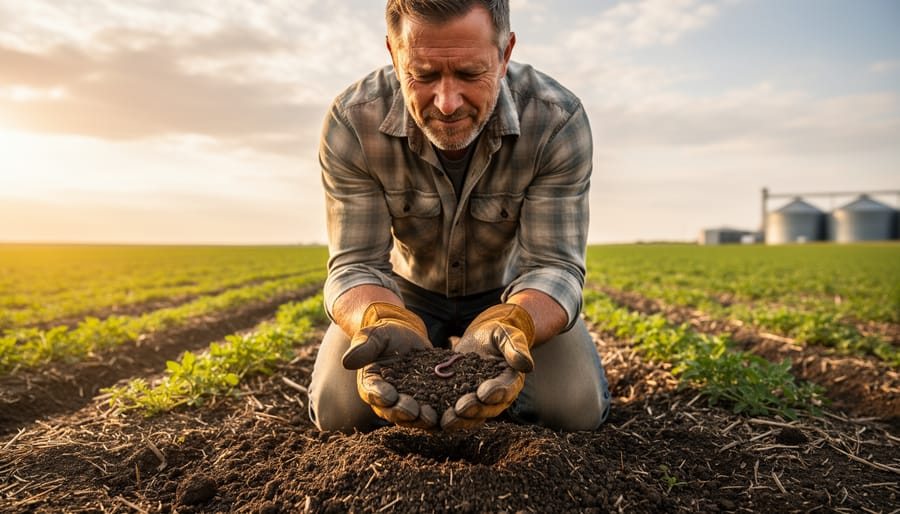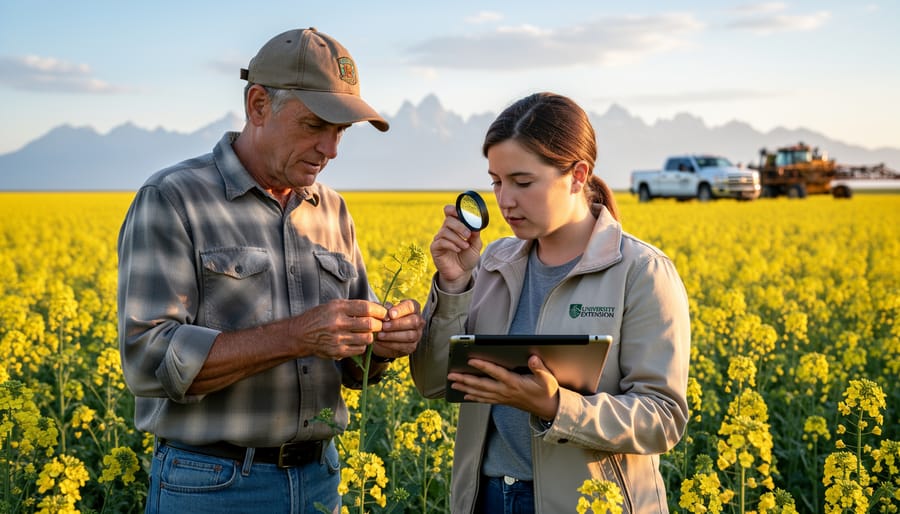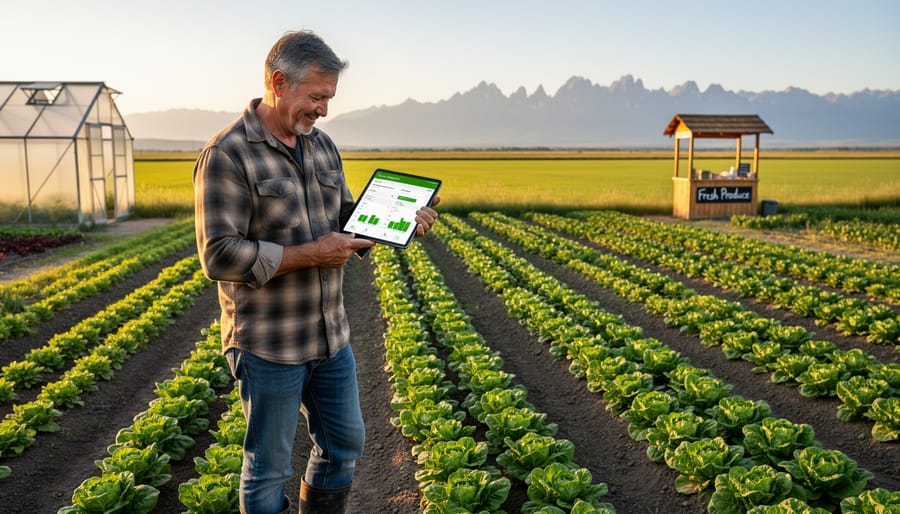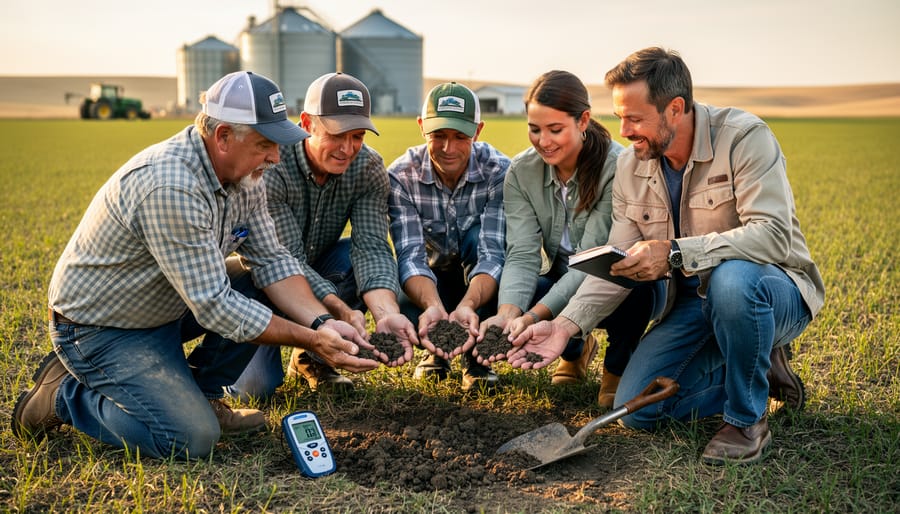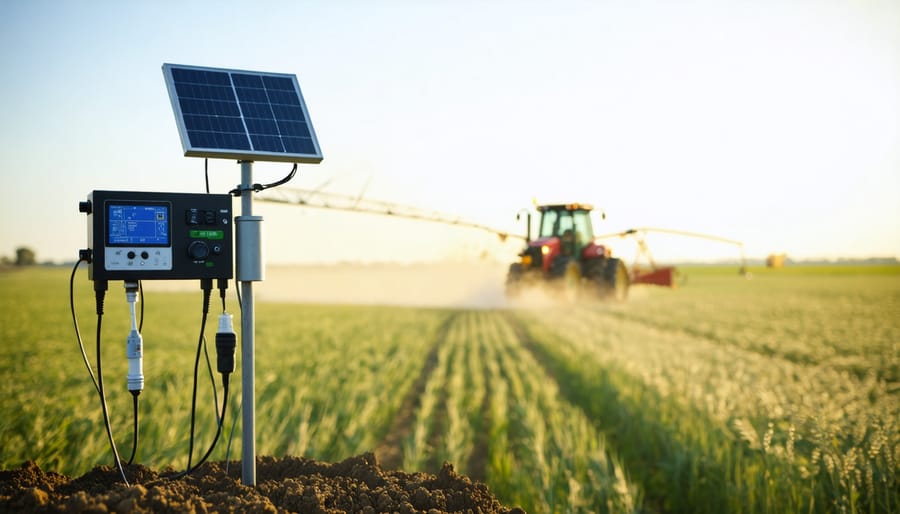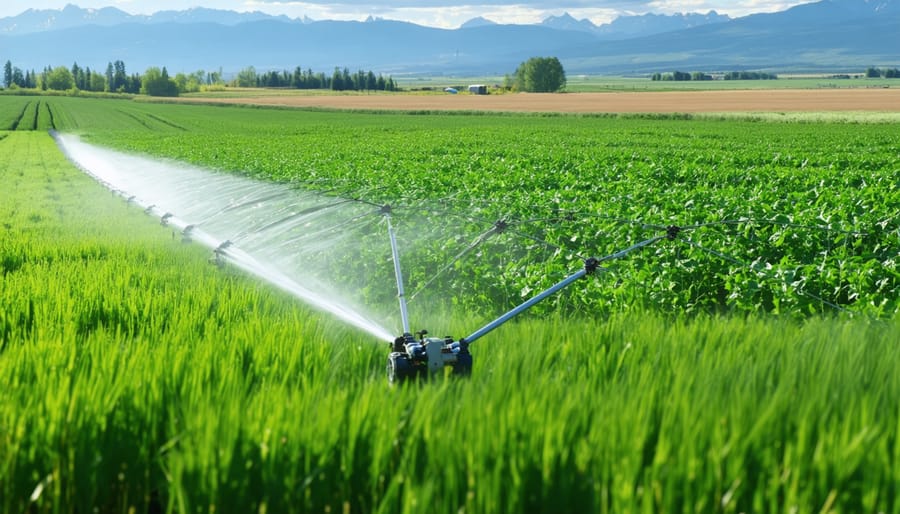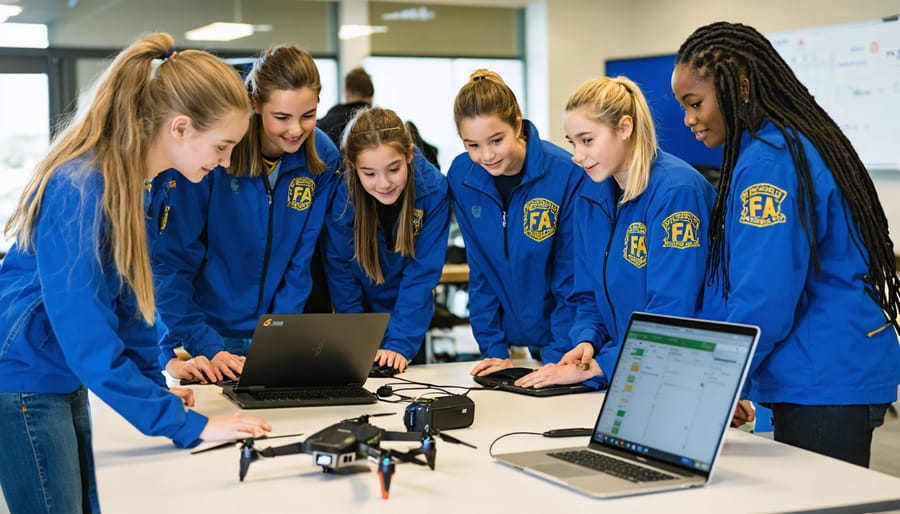
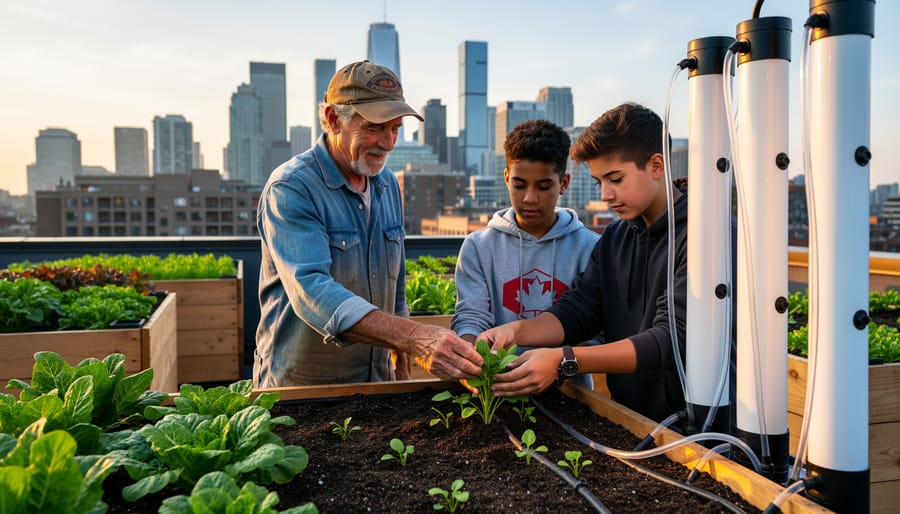
Connect your existing farming knowledge to urban agriculture education programs by recognizing that controlled environment growing, crop rotation principles, and pest management strategies apply equally in city settings—the same fundamentals you use on 160 hectares work in a 160-square-metre rooftop garden. Start by visiting established urban farms in Edmonton or Calgary to observe how vertical growing systems, season extension techniques, and intensive planting methods can inform your own operation’s efficiency while opening dialogue about food security with urban consumers who often misunderstand agricultural realities.
Partner with local schools, community colleges, or agricultural extension programs to share your expertise through guest lectures or farm tours, positioning yourself as a bridge between rural production and urban food literacy. These connections create opportunities for knowledge exchange—urban growers often pioneer innovative water conservation and waste reduction techniques that translate back to conventional farming operations. The movement of urban agriculture transforming Alberta demonstrates how education initiatives strengthen entire regional food systems rather than creating competition.
Develop mentorship relationships with aspiring urban farmers who bring fresh perspectives on direct marketing, community engagement, and technology integration that can diversify your farm’s revenue streams. Many successful Alberta producers now incorporate urban agriculture education into their business models through workshop hosting, consulting services, or value-added product development informed by urban consumer preferences.
Urban agriculture education creates pathways for young Canadians to enter farming without requiring massive capital investment in land, building the next generation of agricultural professionals while strengthening public understanding of where food originates. This educational approach addresses labour shortages, builds political support for agricultural policy, and creates resilient local food networks that benefit both urban and rural communities through shared climate adaptation strategies and market access.
The Surprising Link Between Urban and Rural Agriculture
What Urban Growers Are Learning From Rural Practices
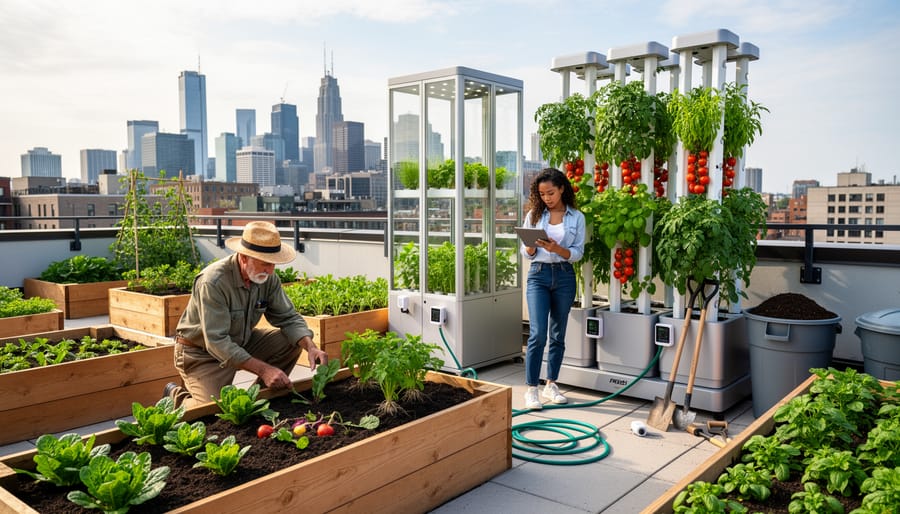
Urban farmers are discovering that centuries-old agricultural wisdom holds valuable lessons for maximizing productivity in limited spaces. Across Canadian cities, urban agriculture programs are actively integrating traditional farming techniques, creating a knowledge exchange that benefits both sectors.
Soil management has emerged as a critical area where rural practices directly enhance urban outcomes. Traditional composting methods, adapted from rural homesteads, now form the backbone of many urban growing operations. In Calgary, several community gardens have adopted the three-bin composting system common on Alberta farms, transforming kitchen scraps and yard waste into nutrient-rich soil amendments within 90 days. This approach reduces reliance on commercial fertilizers while building soil organic matter levels above 5 percent, comparable to productive farmland.
Crop rotation principles, long practiced by prairie grain farmers, are being scaled down for urban plots measuring just 10 to 20 square metres. Urban growers are learning to alternate heavy feeders like tomatoes with nitrogen-fixing legumes, followed by root vegetables, mimicking the four-year rotation cycles that preserve soil health on larger operations. This practice reduces pest pressure and disease while maintaining soil fertility naturally.
Seasonal planning techniques transferred from rural contexts help urban farmers extend their growing seasons. By observing traditional planting calendars and frost date patterns familiar to rural Alberta producers, urban programs teach participants to time succession plantings effectively, ensuring continuous harvests from May through October. Cold frame construction methods borrowed from market gardeners allow urbanites to start seedlings four to six weeks earlier than direct seeding would permit.
How Cities Are Becoming Testing Grounds for Sustainable Methods
Cities are proving to be valuable innovation labs where agricultural methods can be tested, refined, and then adapted for broader implementation. Urban farms operate under unique constraints—limited space, minimal water access, and proximity to communities—which drives creative problem-solving that benefits rural operations.
Vertical growing systems developed in urban settings are now informing greenhouse expansions on Alberta farms, maximizing yield per square metre while reducing land pressure. These compact growing methods also demonstrate efficient resource use that translates well to controlled environment agriculture in rural contexts.
Water conservation techniques pioneered in cities—including drip irrigation, rainwater harvesting, and closed-loop systems—are being scaled up for field crop applications. Urban farmers in Calgary have successfully reduced water usage by 60 percent using these methods, providing measurable data that encourages rural adoption.
Organic pest management strategies also benefit from urban experimentation. With strict pesticide restrictions in populated areas, city growers have refined biological controls and companion planting techniques. These integrated pest management approaches are now helping conventional farmers reduce chemical inputs while maintaining crop health. Educational programs facilitate this knowledge transfer, ensuring innovations developed in urban test beds reach agricultural communities across the province.
Building Education Programs That Work for Both Worlds
Core Skills Every Urban Agriculture Program Should Teach
Whether you’re establishing community gardens or developing farm-based learning programs, certain foundational skills form the backbone of effective urban agriculture education. These competencies translate seamlessly between urban plots and rural acreages, making them valuable for learners across contexts.
Soil health management stands as the cornerstone skill. Participants should understand soil testing basics, interpret results, and learn how to build organic matter through amendments. In Alberta’s variable climate, teaching soil texture assessment and drainage patterns helps growers maximize limited urban spaces while applying these same principles to larger rural operations.
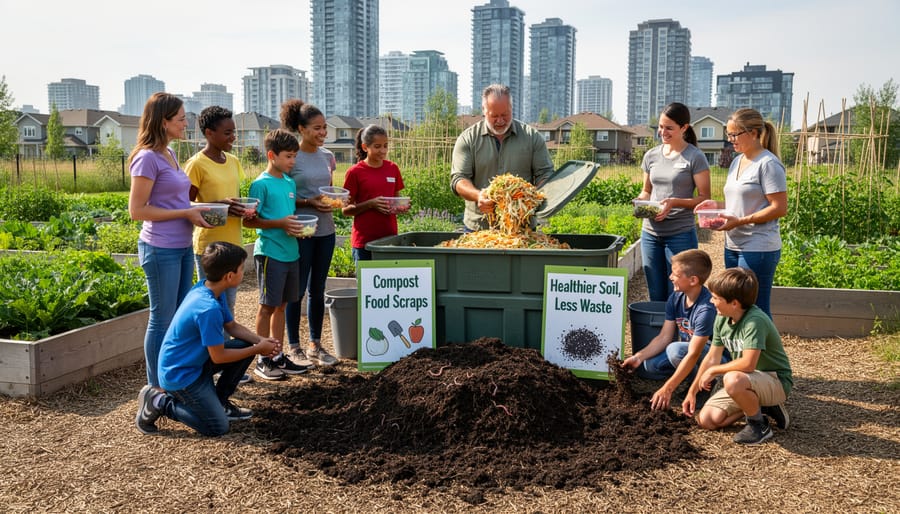
Composting techniques provide practical waste reduction solutions that benefit both sectors. Programs should cover hot and cold composting methods, carbon-to-nitrogen ratios, and troubleshooting common issues like odour or pests. Urban composters often pioneer small-scale systems that rural farmers can adapt for on-farm waste management.
Water management skills are increasingly critical as Alberta faces variable precipitation patterns. Effective programs teach drip irrigation setup, rainwater harvesting, moisture monitoring, and water conservation strategies. These techniques prove valuable whether managing a 2-square-metre balcony garden or a 200-hectare field.
Season extension methods help maximize short growing seasons. Cold frames, row covers, and hoop house basics allow urban growers to extend harvests while introducing concepts that scale up to commercial greenhouse operations.
Organic growing principles round out core competencies. Teaching integrated pest management, companion planting, and natural fertilization methods creates a shared knowledge base. Understanding biological pest controls and building soil fertility naturally applies universally, fostering collaboration between urban innovators and rural producers seeking sustainable alternatives to conventional approaches.
Creating Mentorship Links Between Rural Experts and Urban Learners
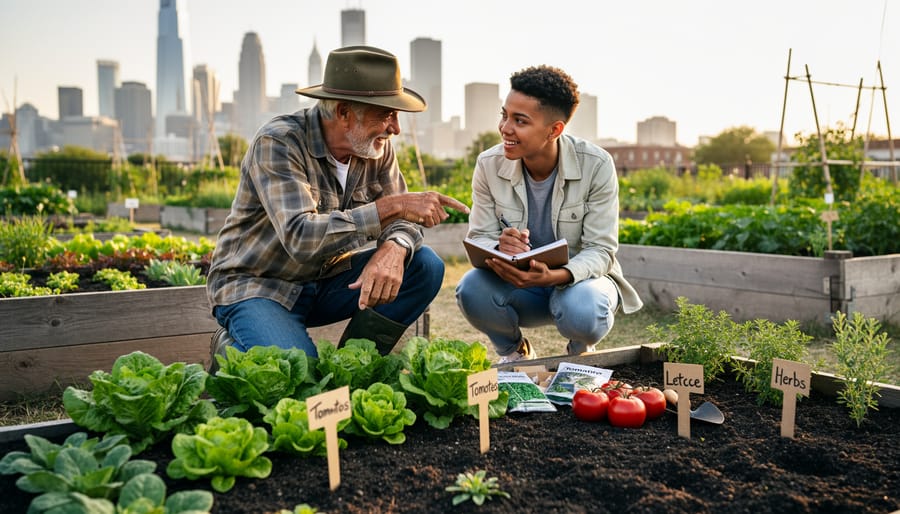
Bridging the gap between rural expertise and urban agriculture learners creates valuable opportunities for knowledge transfer between generations and across geographic boundaries. Several practical strategies make these connections possible and mutually beneficial.
Virtual consultation platforms allow experienced rural farmers to share their expertise with urban agriculture students through scheduled video calls. These one-on-one or small group sessions enable learners to ask specific questions about soil management, crop selection, and seasonal planning while rural mentors gain insights into innovative urban growing techniques like vertical farming and container gardening.
Seasonal workshop exchanges bring these groups together in person. Urban learners visit rural operations during key farming periods, experiencing large-scale planting and harvesting firsthand. Rural farmers reciprocate by touring urban agriculture projects, discovering space-efficient methods and direct marketing strategies.
A successful Alberta example comes from the Edmonton-area mentorship initiative launched in 2022. Five experienced grain and vegetable farmers from surrounding counties partnered with an urban agriculture training program, providing monthly virtual office hours and hosting three on-farm workshops annually. The program served 47 urban agriculture students in its first year, with participating rural mentors reporting increased appreciation for urban food security challenges.
Exchange programs lasting two to four weeks allow deeper learning. Urban students work alongside rural farming families during peak seasons, while rural farmers spend time at urban operations learning about community engagement and small-scale intensive production methods. These immersive experiences build lasting professional relationships and strengthen Alberta’s agricultural community across the rural-urban divide.
Real Results From Canadian Urban Agriculture Education
Alberta’s Urban-Rural Knowledge Exchange Initiative
Launched in 2021, Alberta’s Urban-Rural Knowledge Exchange Initiative has become a model for bridging the gap between city growers and traditional farmers. The program pairs urban agriculture operations in Edmonton and Calgary with established rural producers across the province, creating mentorship relationships that benefit both participants.
The initiative’s structure is straightforward: urban growers receive hands-on training at rural farms during planting and harvest seasons, while rural farmers gain exposure to innovative vertical farming techniques, aquaponics systems, and small-scale intensive production methods used in urban settings. Each partnership commits to quarterly exchanges and monthly virtual check-ins.
The results have exceeded initial expectations. After two years, participating urban farms reported a 34% reduction in their carbon footprint by adopting rural partners’ crop rotation strategies and soil management practices adapted for smaller spaces. Meanwhile, rural operations implementing urban-inspired techniques saw water usage decrease by an average of 22% per hectare.
Soil health metrics tell an equally compelling story. Urban growers working with rural mentors improved their soil organic matter content from an average of 2.1% to 4.3% within 18 months. These improvements translated directly to yield increases of 18-25% across various crops, from leafy greens to root vegetables.
The economic benefits have strengthened both sectors. Urban participants gained access to bulk purchasing cooperatives, reducing input costs by approximately $3,200 annually per operation. Rural farmers expanded their market reach by connecting with urban farm-to-table networks, generating an additional $8,500 in revenue per participating farm during the program’s second year.
Sara Chen, an Edmonton rooftop farmer paired with a Lacombe-area grain producer, shared her experience: “Learning soil biology fundamentals from someone who’s worked the land for three decades completely changed how I approach my urban plots. It’s knowledge you can’t get from books alone.”
How One Calgary Program Reduced Food Waste by 40%
The Calgary Urban Agriculture Initiative launched a pilot program in 2021 that connected urban gardens with local composting facilities, achieving a 40% reduction in residential food waste within 18 months. The program trained over 300 urban residents through hands-on workshops covering composting techniques, soil health management, and seasonal crop planning.
What made this initiative particularly valuable for surrounding agricultural regions was its circular approach. Finished compost from urban food waste was transported to partner farms within 100 kilometres of Calgary, providing nutrient-rich soil amendments at subsidized rates. According to program coordinator Sarah Chen, “We created a practical bridge between city and country. Urban participants learned agricultural fundamentals while rural producers gained access to quality compost materials.”
The program’s success demonstrates how urban agriculture education strengthens community food systems across regional boundaries. Participating farms reported improved soil organic matter levels and reduced fertilizer costs by an average of 25%. The initiative has since expanded to include youth education programs and partnerships with three additional Alberta municipalities, creating a replicable model that benefits both urban learners and rural agricultural operations through shared resources and knowledge exchange.
Tools and Resources for Starting Your Own Program
Grant Funding Available in Canada
Canadian farmers and agricultural educators have access to several funding streams that support urban agriculture education initiatives. At the federal level, the Canadian Agricultural Partnership offers grants through the AgriScience Program and AgriAssurance Program, which fund projects focused on agricultural innovation and sustainable practices. Agriculture and Agri-Food Canada also administers the AgriDiversity Program, supporting initiatives that increase participation in agriculture, including urban farming education.
In Alberta specifically, the Agricultural Opportunity Fund provides substantial support for projects that enhance agricultural knowledge and market development. Alberta Agriculture and Irrigation offers the Results Driven Agriculture Research program, which funds educational initiatives demonstrating measurable impact on agricultural practices. The Community and Regional Economic Support program through Alberta Community and Co-operative Association also supports urban agriculture projects with community development components.
When applying for grants, clearly demonstrate how your urban agriculture education program bridges rural and urban communities. Include measurable outcomes, community partnerships, and sustainability plans. Most successful applications feature collaboration between educational institutions, municipalities, and farming organizations. Consider forming partnerships with local food banks, schools, or community gardens to strengthen your proposal. Application deadlines typically fall in spring and fall cycles, so plan accordingly and connect with regional agricultural fieldmen who can provide guidance on provincial opportunities.
Partnership Models That Maximize Impact
Successful urban agriculture education requires strategic partnerships that blend diverse expertise and resources. Let’s explore collaboration models that work effectively in Canadian contexts, particularly for those looking to bridge urban and rural agricultural knowledge.
The Municipal-Education Institution Partnership represents one of the most stable models. Here, city governments provide land access and infrastructure while colleges or universities deliver curriculum and research expertise. Edmonton’s community garden network demonstrates this approach, where the city leases vacant lots to educational programs at minimal cost. The advantage is long-term stability and formal recognition, though municipal bureaucracy can slow decision-making. This works well for established programs seeking permanence.
The Multi-Stakeholder Collective brings together municipalities, farming organizations like the Alberta Farmers’ Market Association, schools, and environmental groups under shared governance. Calgary’s Urban Farm Foundation exemplifies this model, pooling resources from various sectors. Benefits include diverse funding streams and community buy-in, but coordinating multiple partners requires dedicated administration. This structure suits ambitious projects needing broad support.
The Farming Organization-Led Model places experienced agricultural groups at the helm, partnering with schools and municipalities as needed. Alberta producers with urban connections often prefer this approach because it keeps practical farming knowledge central. Advantages include operational efficiency and agricultural authenticity, though securing urban land access can be challenging without municipal partnership. This works particularly well for demonstration farms and apprenticeship programs.
Consider your community’s existing relationships and capacity when selecting a partnership structure. Starting with informal collaborations before formalizing arrangements often builds stronger foundations for long-term success.
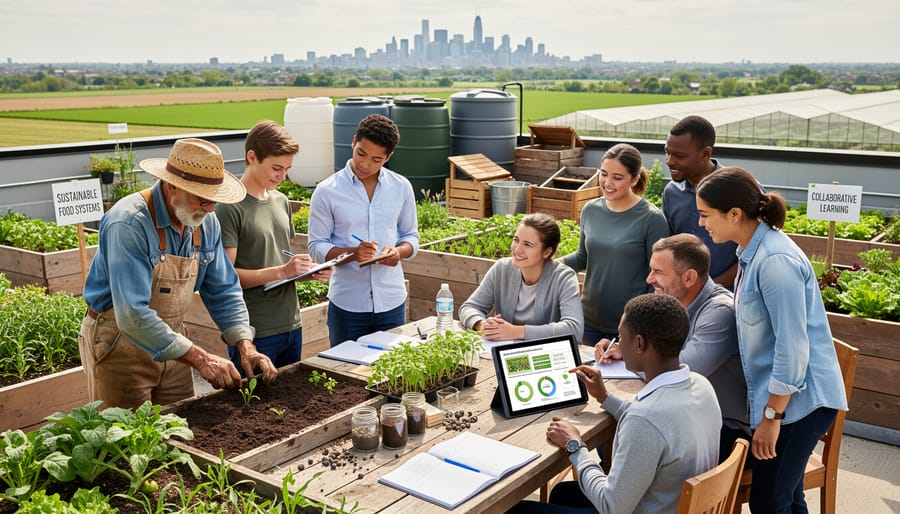
Expert Perspectives on the Future of Agro-Education
Dr. Sarah Chen, Director of Agriculture Education at the University of Alberta, sees urban agriculture education as a critical bridge between cities and rural communities. “We’re witnessing a knowledge exchange that benefits everyone,” she explains. “Urban producers bring innovation in vertical farming and controlled environment systems, while rural farmers share generations of soil management expertise. The future lies in creating education programs that facilitate this two-way conversation.”
Recent conversations with Manitoba farmer and educator James Thorvaldson reveal emerging opportunities in hybrid education models. “I’ve started hosting urban agriculture students on my grain operation outside Winnipeg,” he shares. “They’re fascinated by regenerative practices and carbon sequestration. Meanwhile, I’m learning about hydroponic nutrient management that could inform my fertigation systems. It’s been eye-opening for both sides.”
Dr. Patricia Kwon, a climate adaptation specialist working across the Prairies, emphasizes education’s role in addressing environmental challenges. “Urban agriculture education programs are becoming laboratories for climate resilience,” she notes. “Students experiment with drought-resistant varieties and water conservation techniques in controlled urban settings, then scale these solutions to larger rural operations. This accelerated learning cycle is invaluable as we face increasingly unpredictable weather patterns.”
Looking ahead, agricultural consultant David Bergeron from Edmonton predicts growing demand for educators who understand both urban and rural contexts. “We’re seeing Alberta schools develop integrated curricula that prepare students for diverse agricultural careers,” he says. “Five years from now, I expect most agricultural programs will include urban farming components, focusing on food security, local food systems, and sustainable intensification.”
The experts agree that technology integration will define the next decade of agro-education. Virtual reality farm tours, remote sensing workshops, and online mentorship programs are breaking down geographical barriers, allowing rural and urban learners to collaborate regardless of location. This digital transformation ensures Canadian agriculture education remains accessible, relevant, and responsive to both sectors’ evolving needs.
Urban agriculture education represents far more than classroom learning or hands-on training in city gardens. It’s a powerful connector that strengthens the entire agricultural ecosystem, bridging the gap between urban and rural communities while building a more resilient food system for all Canadians. When city dwellers learn about growing food, they develop deeper appreciation for the challenges and innovations that rural farmers face daily. Conversely, when rural agricultural professionals engage with urban agriculture initiatives, they discover new markets, collaborative opportunities, and innovative techniques that can enhance their own operations.
The knowledge shared through urban agriculture education programs creates ripple effects throughout our communities. An urban farmer learning about soil health becomes an advocate for sustainable practices. A rural producer mentoring city gardeners builds relationships that strengthen local food networks. An educator developing curriculum bridges worlds that traditionally operated independently. These connections matter more than ever as we face climate challenges, supply chain uncertainties, and the need for increased food security across Alberta and beyond.
Now is the time to get involved. Whether you’re a seasoned agricultural professional with decades of experience to share, someone curious about starting a small urban growing project, or an educator looking to develop meaningful programming, there’s a role for you in this movement. Consider mentoring new growers through community organizations, sharing your expertise at workshops, or collaborating with local schools and community gardens. Agricultural professionals can partner with urban programs to provide technical knowledge while gaining fresh perspectives on direct marketing and consumer education.
The future of sustainable agriculture depends on shared knowledge and strong communities. By participating in urban agriculture education initiatives, you’re not just teaching people to grow food. You’re building networks of informed producers and consumers, fostering innovation through diverse perspectives, and creating a more resilient agricultural sector that benefits everyone from downtown Edmonton to rural farms across the prairies. Take that first step today, connect with an initiative in your area, and become part of this growing movement toward agricultural sustainability and food security.